
The UK rental landscape is experiencing a dramatic transformation in 2026. After years of intense competition and soaring rents, the lettings market is finally showing signs of cooling—but not everywhere, and not for everyone. Understanding the Lettings Market Tenant Demand 2026: Valuation Impacts and Survey Due Diligence for Rising Rents has become essential for landlords, investors, and property professionals navigating this evolving terrain.
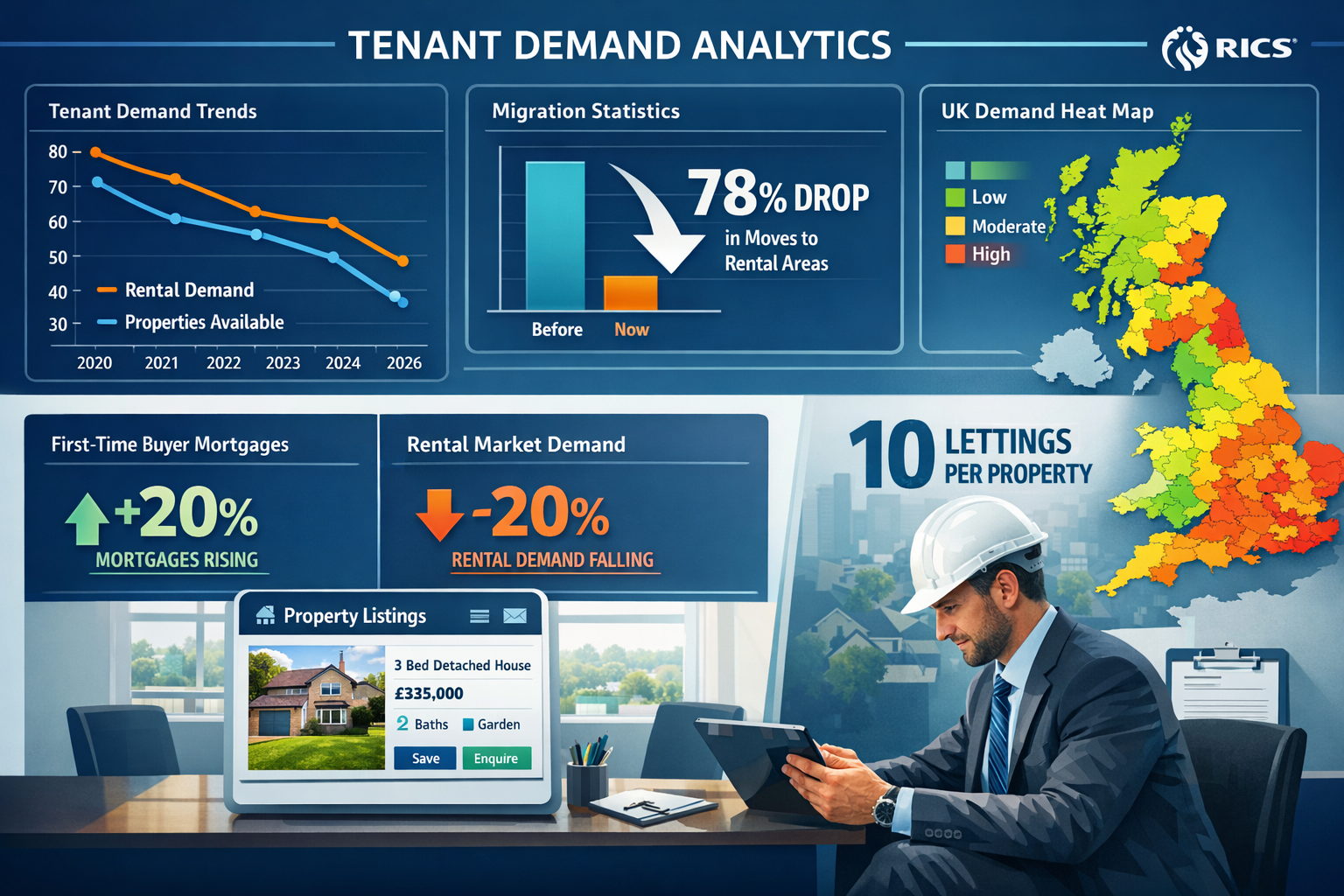
Recent data reveals a striking 20% decline in tenant demand compared to February 2025, marking the lowest levels seen in six years outside London[1]. This shift stems from collapsing net migration figures and improved mortgage affordability pushing renters toward homeownership. Yet paradoxically, rents continue rising—albeit at a more moderate pace—creating a complex market that demands careful analysis and professional due diligence.
Key Takeaways
📊 Tenant demand has dropped 20% compared to early 2025, reaching six-year lows outside London as net migration fell 78% and first-time buyer mortgages surged 20%[1]
💷 Rent growth is moderating to 2-3.5% annually in 2026, down significantly from recent double-digit increases, with significant regional variations across the UK[1][2]
🏘️ Regional disparities are widening, with Wales seeing 5.8% growth while other areas experience slower increases, requiring location-specific valuation approaches[2]
🔍 Professional survey due diligence has become critical for accurate rental valuations as market dynamics shift and property condition directly impacts achievable rents
⚖️ Market rebalancing favors landlords with quality properties in high-demand areas, while those with poorly maintained stock face increasing challenges
Understanding the 2026 Tenant Demand Landscape
The Demand Decline: What's Driving the Change?
The Lettings Market Tenant Demand 2026: Valuation Impacts and Survey Due Diligence for Rising Rents story begins with understanding why tenant demand has fallen so dramatically. Three primary factors are reshaping the rental landscape:
Net Migration Collapse 🌍
Net migration to the UK plummeted by an extraordinary 78% in the two years to June 2025[1]. This represents one of the most significant demographic shifts in recent UK history. International students and workers—historically major contributors to rental demand—have decreased substantially, directly reducing pressure on the lettings market.
First-Time Buyer Momentum 🏡
First-time buyer mortgage volumes rose 20% in the nine months to September 2025[1]. Improved mortgage affordability and government schemes have enabled thousands of renters to transition into homeownership. This exodus from the rental sector has fundamentally altered demand dynamics, particularly for family-sized properties.
Market Rebalancing ⚖️
Properties are now letting more quickly with less fierce competition. Rightmove data shows an average of 10 lettings per property in 2025[3], compared to far more intense competition in previous years when dozens of prospective tenants would compete for a single property.
Regional Variations in Demand Patterns
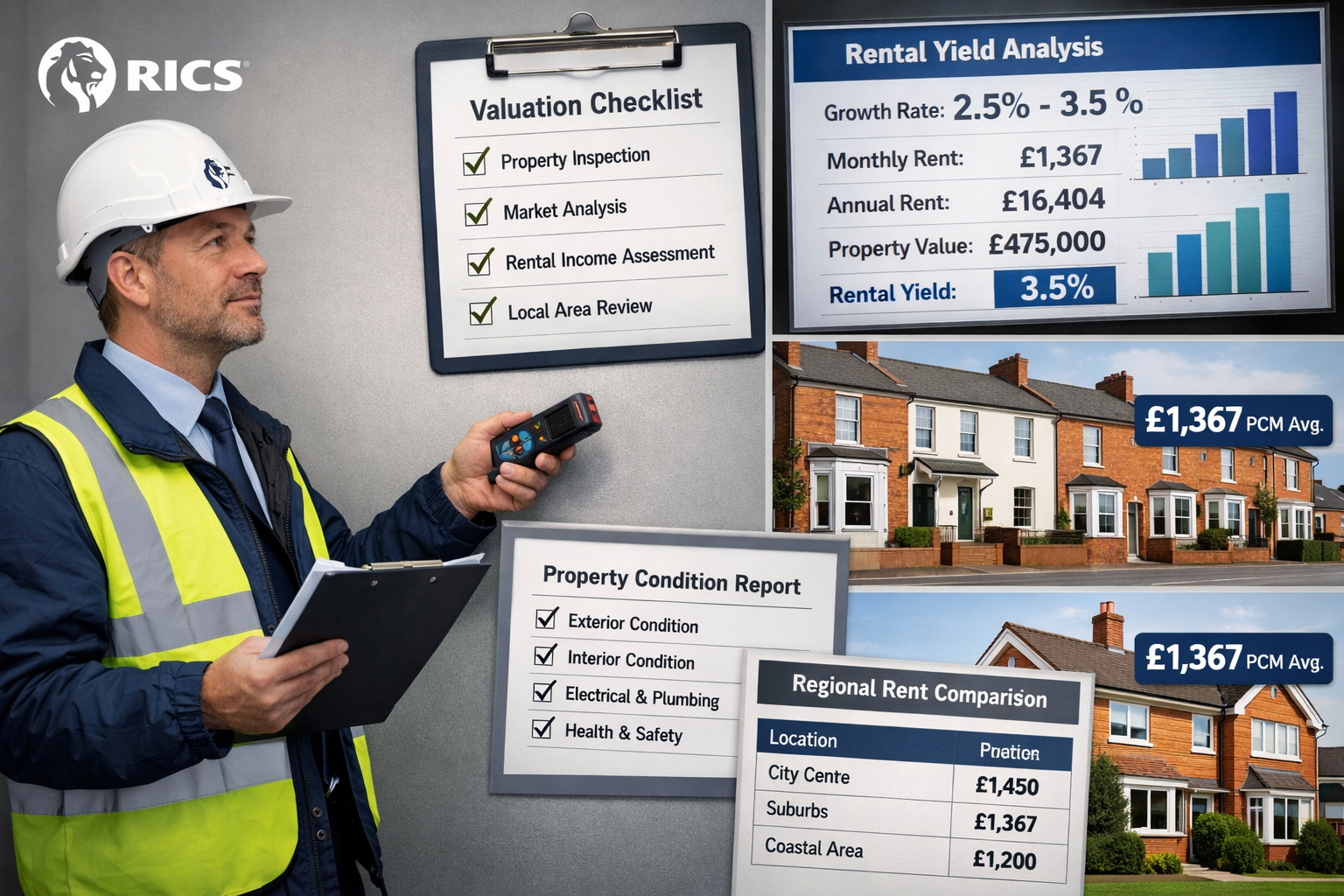
The demand picture varies considerably across UK regions. According to the Office for National Statistics, average UK monthly private rents increased 3.5% in the 12 months to January 2026, reaching £1,367 per month[2]. However, this national average masks significant regional disparities:
| Region | Annual Rent Growth | Average Monthly Rent | Demand Level |
|---|---|---|---|
| Wales | 5.8% | £826 | Strong |
| England (Average) | ~3.5% | £1,400+ | Moderate |
| Scotland | Variable | £900-£1,200 | Moderate |
| London | 2-3% | £2,000+ | Cooling but stable |
These variations reflect local economic conditions, employment opportunities, and housing supply constraints. For property professionals conducting RICS valuations, understanding these regional nuances is essential for accurate rental assessments.
Valuation Impacts: How Changing Demand Affects Property Values
Rental Growth Forecasts and Their Implications
The Lettings Market Tenant Demand 2026: Valuation Impacts and Survey Due Diligence for Rising Rents narrative centers on moderating but persistent rent increases. Industry experts provide varied but consistently modest projections:
- Zoopla: 2.5% rent growth forecast[1]
- Savills: 2% rent growth projection[4]
- RICS: 3% rent growth forecast[4]
- Rightmove: 2% average rent increases[3]
This represents a dramatic slowdown from the 10-15% annual increases seen in 2021-2023. For landlords and investors, this moderation has several critical implications:
Yield Compression 📉
With purchase prices remaining relatively stable while rent growth slows, gross rental yields are compressing. Properties that previously delivered 5-6% yields may now only achieve 4-5%, requiring more careful financial analysis before acquisition.
Quality Premium Widening ⭐
Well-maintained properties in desirable locations continue commanding premium rents, while poorly maintained stock struggles to achieve market rates. The gap between top-tier and lower-quality rental properties is widening significantly.
Valuation Methodology Shifts 📊
Traditional valuation approaches based on recent comparable transactions may not fully capture current market dynamics. Professional surveyors must incorporate forward-looking demand indicators and condition assessments into their commercial valuations and residential rental appraisals.
The Critical Role of Property Condition in Rental Valuations
In a cooling demand environment, property condition becomes increasingly important to rental valuations. Tenants now have more choice and are more selective about property quality, energy efficiency, and amenities.
Energy Performance Certificates (EPCs) 🔋
Properties with poor EPC ratings (below C) face increasing challenges. Upcoming regulations may prohibit letting properties with ratings below C, making energy efficiency assessments critical to valuation work. A comprehensive building survey should evaluate energy performance and potential improvement costs.
Structural Integrity 🏗️
Deferred maintenance issues that might have been overlooked during high-demand periods now directly impact rental values. Properties requiring significant repairs command lower rents or may struggle to let entirely. Professional Level 3 building surveys provide detailed condition assessments essential for accurate valuations.
Modern Amenities 💡
Properties with updated kitchens, bathrooms, and modern heating systems command premium rents. The valuation differential between modernized and dated properties has widened considerably in 2026.
Survey Due Diligence: Essential Checklists for Rising Rent Environments
Pre-Acquisition Survey Requirements
For investors and landlords considering acquisitions in the Lettings Market Tenant Demand 2026: Valuation Impacts and Survey Due Diligence for Rising Rents environment, comprehensive survey due diligence is non-negotiable. The following checklist ensures thorough property assessment:
Structural Survey Elements 🔍
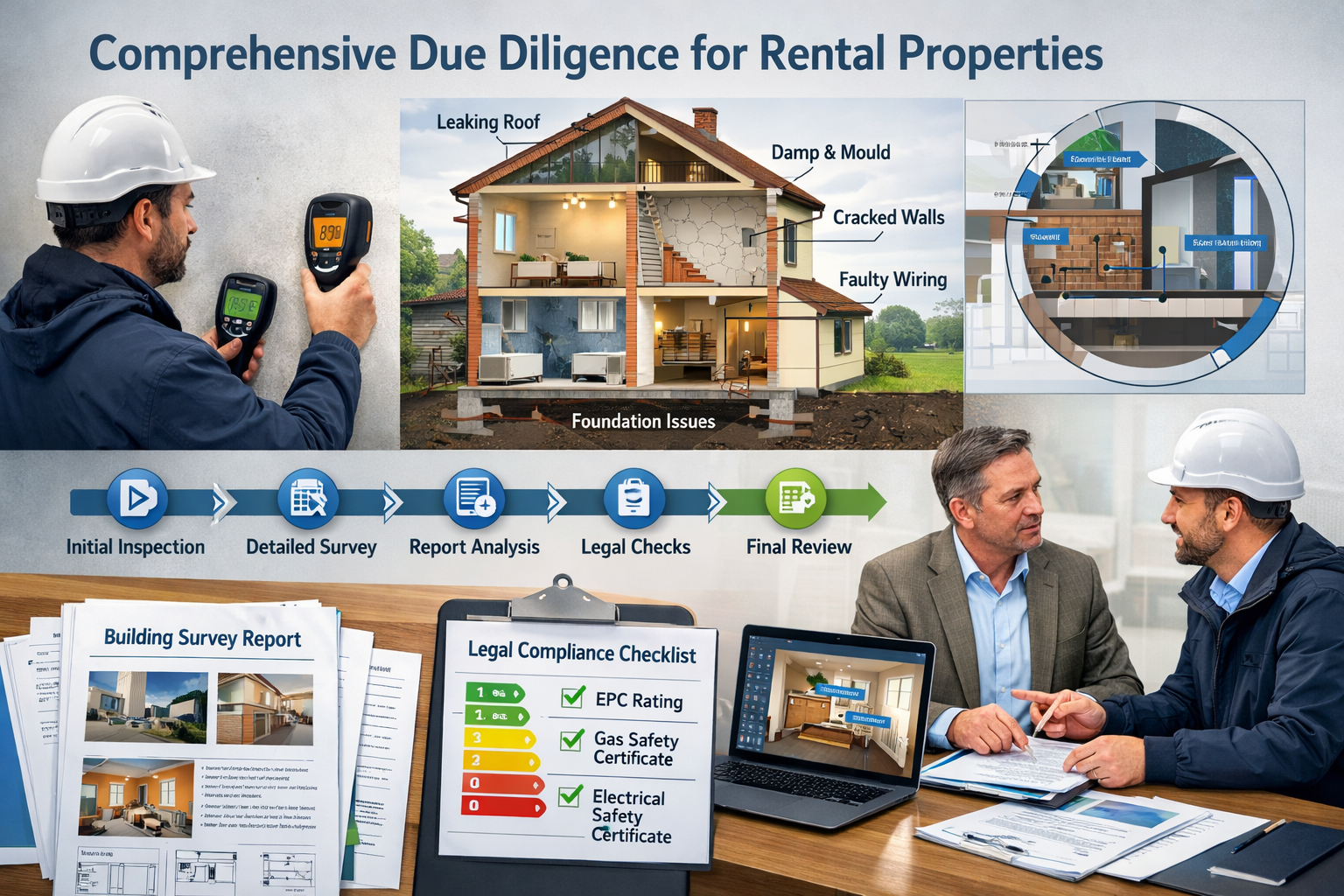
✅ Foundation and structural integrity assessment
✅ Roof condition and remaining lifespan evaluation
✅ Damp and moisture ingress testing
✅ Electrical system safety and capacity review
✅ Plumbing and heating system condition
✅ Window and door condition and security
✅ External envelope and weatherproofing
Professional surveyors conducting homebuyer surveys or more detailed inspections should document all defects and provide repair cost estimates. These figures directly impact rental valuation calculations and investment return projections.
Regulatory Compliance Verification 📋
✅ EPC rating and improvement recommendations
✅ Gas safety certificate validity
✅ Electrical Installation Condition Report (EICR)
✅ Fire safety compliance (particularly for HMOs)
✅ Smoke and carbon monoxide detector installation
✅ Legionella risk assessment
✅ Planning permission for any alterations
Non-compliance with any regulatory requirement can delay letting, reduce achievable rents, or result in significant penalties. When conducting rent reviews, compliance status should be verified and factored into valuations.
Rental Yield Optimization Through Survey Insights
Strategic use of survey findings can significantly improve rental yields. Understanding which improvements deliver the strongest return on investment is essential:
High-Impact Improvements 💰
- Energy efficiency upgrades (insulation, boiler replacement, double glazing)
- Kitchen and bathroom modernization
- Cosmetic improvements (decoration, flooring, lighting)
- Security enhancements (modern locks, alarm systems, secure entry)
- Garden and external maintenance
A detailed condition survey report helps prioritize these improvements based on cost-benefit analysis. In the current market, tenants increasingly expect modern, energy-efficient properties and are willing to pay premium rents for them.
Maintenance Planning 🛠️
Survey findings should inform long-term maintenance planning. Creating a 5-year maintenance schedule based on surveyor recommendations helps:
- Prevent emergency repairs that disrupt tenancies
- Budget accurately for capital expenditure
- Maintain property condition and rental values
- Demonstrate professionalism to quality tenants
For landlords managing multiple properties, stock condition surveys provide comprehensive portfolio assessments and maintenance planning frameworks.
Valuation Methodology for Rental Properties in 2026
Professional valuers must adapt their methodologies to reflect current market conditions when assessing the Lettings Market Tenant Demand 2026: Valuation Impacts and Survey Due Diligence for Rising Rents:
Comparative Method Adjustments 📐
Traditional comparable evidence remains important but requires careful adjustment for:
- Time adjustments: Recent transactions may not reflect current demand levels
- Condition differentials: Quality gaps between properties are widening
- Location micro-markets: Demand varies significantly even within small geographic areas
- Tenant profile matching: Family vs. professional vs. student markets behave differently
Investment Method Refinements 💼
For investment valuations, consider:
- Realistic void periods: Increased from 2-3 weeks to 4-6 weeks in many markets
- Management costs: More competitive markets may require professional management
- Maintenance provisions: Aging stock requires higher maintenance budgets
- Tenant finding costs: May increase as competition for quality tenants intensifies
Residual Method for Development 🏗️
For build-to-rent developments or conversions:
- Conservative rent assumptions: Use lower quartile of forecast ranges
- Extended letting periods: Allow for slower initial take-up
- Higher specification standards: Quality expectations have increased
- Sustainability premiums: Energy-efficient properties command measurable premiums
Regional Market Analysis and Location-Specific Due Diligence
London Market Dynamics
London's lettings market exhibits unique characteristics in 2026. While overall UK demand has fallen sharply, London maintains relatively stable demand due to:
- International employment hubs continuing to attract professional tenants
- Limited housing supply constraining rental stock availability
- Transport connectivity supporting commuter demand
- Educational institutions generating student accommodation demand
However, rent growth in London is moderating to 2-3% annually[4], below the national average in some areas. For surveyors working in London, understanding micro-market variations between boroughs is essential. A chartered surveyor in Hammersmith faces different market conditions than one in North London.
Regional Growth Hotspots
Outside London, certain regions demonstrate stronger rental growth:
Wales 🏴
Leading UK rent growth at 5.8% annually[2], Wales benefits from:
- Relatively affordable property prices attracting relocating families
- Strong employment growth in Cardiff and Swansea
- Limited new rental supply
- Quality of life factors driving migration from England
Southeast Commuter Zones 🚂
Areas with strong transport links to London continue performing well:
These locations benefit from hybrid working patterns, allowing tenants to balance London employment with lower-cost, higher-quality accommodation.
Due Diligence for Regional Investments
When conducting valuations outside familiar territories, additional due diligence is essential:
Local Market Research 🔬
- Employment sector analysis and major employer stability
- Transport infrastructure and connectivity
- Development pipeline and future supply
- Local authority housing policies and regulations
- Demographic trends and population projections
Comparable Evidence Verification ✅
- Verify asking rents vs. achieved rents (marketing inflation is common)
- Confirm letting periods and void rates
- Assess tenant quality and payment reliability
- Review local management costs and fee structures
Professional surveyors should maintain networks across regions or partner with local specialists to ensure accurate market intelligence.
Risk Factors and Mitigation Strategies
Regulatory and Legislative Risks
The Lettings Market Tenant Demand 2026: Valuation Impacts and Survey Due Diligence for Rising Rents landscape includes significant regulatory considerations:
Upcoming Legislation ⚖️
Several proposed regulations could impact rental valuations:
- Renters' Rights Bill: Potential changes to tenancy agreements and eviction processes
- EPC minimum standards: Possible requirement for C-rating or above
- Selective licensing expansion: More local authorities implementing landlord licensing
- Decent Homes Standard: Extension to private rented sector
Surveyors must stay informed about legislative developments and factor compliance costs into valuations. Properties requiring significant upgrades to meet new standards may see valuation impacts.
Compliance Cost Provisioning 💷
When valuing rental properties, include provisions for:
- EPC upgrades: £5,000-£15,000 for typical properties
- Electrical safety compliance: £300-£800 for EICR and remedial work
- Fire safety improvements: £1,000-£10,000 depending on property type
- Licensing fees: £500-£1,000 annually in selective licensing areas
Market Volatility and Economic Factors
Interest Rate Sensitivity 📈
With many landlords operating on mortgaged properties, interest rate changes significantly impact:
- Rental yields: Higher mortgage costs reduce net returns
- Property values: Investment demand fluctuates with financing costs
- Refinancing risk: Fixed-rate mortgages ending in 2026-2027 may face higher rates
Valuation reports should include sensitivity analysis showing impact of interest rate changes on investment returns.
Economic Recession Risks 📉
Economic uncertainty in 2026 creates potential risks:
- Employment instability: May increase tenant arrears and void periods
- Demand fluctuations: Economic downturns typically reduce rental demand
- Tenant quality: May see shift toward lower-income, higher-risk tenants
Conservative valuation assumptions should account for these possibilities, particularly for properties in economically vulnerable areas.
Professional Standards and Best Practices
RICS Valuation Standards Compliance
All rental property valuations should comply with RICS Valuation – Global Standards (Red Book). Key requirements include:
Valuation Basis 📏
Clearly state whether valuing on:
- Market Value: Price achievable in open market
- Market Rent: Rental income achievable under standard tenancy
- Investment Value: Value to specific investor with particular requirements
Assumptions and Special Assumptions 📝
Document all assumptions, including:
- Property condition (if not fully inspected)
- Tenancy status and terms
- Regulatory compliance
- Market conditions and comparables used
Limitations and Caveats ⚠️
Clearly state any limitations:
- Areas not inspected
- Information not verified
- Market data constraints
- Uncertainty factors
For detailed guidance on professional surveying standards, consult resources on what chartered surveyors do.
Technology Integration in Survey Due Diligence
Modern survey practice increasingly incorporates technology:
Digital Survey Tools 📱
- Thermal imaging cameras: Identify insulation defects and heat loss
- Moisture meters: Detect damp issues not visible to naked eye
- Laser measuring devices: Ensure accurate floor area calculations
- Drone surveys: Assess roof and chimney condition safely
- 3D scanning: Create detailed property models for records
Data Analytics 📊
- Rental yield calculators: Model different scenarios and assumptions
- Comparable evidence databases: Access comprehensive transaction data
- Market trend analysis: Identify emerging patterns and forecast changes
- Risk assessment tools: Quantify investment risks systematically
Reporting Software 💻
Modern survey reports should include:
- Professional photographs and annotated images
- Floor plans and measured surveys
- Condition ratings and defect schedules
- Repair cost estimates and prioritization
- Executive summaries for investor decision-making
Investment Strategy Recommendations for 2026
Optimal Property Profiles for Current Market
Given the Lettings Market Tenant Demand 2026: Valuation Impacts and Survey Due Diligence for Rising Rents environment, certain property types offer superior prospects:
High-Demand Property Characteristics ⭐
✅ Energy efficient (EPC rating B or C minimum)
✅ Modern amenities (updated kitchen, bathroom, heating)
✅ Good locations (transport links, schools, amenities)
✅ Appropriate size (1-2 beds in urban areas, 3-4 beds in family zones)
✅ Low maintenance (newer construction or recently refurbished)
✅ Secure tenure (freehold or long leasehold)
Properties meeting these criteria continue achieving premium rents and shorter void periods despite overall demand softening.
Portfolio Optimization Strategies
For landlords with existing portfolios:
Dispose of Underperformers 🔄
Consider selling properties that:
- Require significant capital expenditure
- Generate below-market yields
- Face regulatory compliance challenges
- Are located in declining demand areas
Use proceeds to acquire better-performing assets or reduce debt.
Upgrade Existing Stock 🔧
Strategic improvements can significantly enhance rental values:
- Energy efficiency upgrades delivering EPC improvements
- Kitchen and bathroom modernization
- Cosmetic improvements and regular decoration
- Garden improvements and external maintenance
A professional building survey helps identify optimal improvement opportunities.
Diversify Geographically 🗺️
Reduce concentration risk by diversifying across:
- Multiple regions with different economic drivers
- Urban and suburban locations
- Different tenant demographics (professional, family, student)
This approach reduces vulnerability to localized market downturns.
Future Outlook: Beyond 2026
Long-Term Rental Market Fundamentals
Despite short-term demand softening, several factors support long-term rental market strength:
Structural Housing Shortage 🏘️
The UK continues building insufficient homes to meet population growth and household formation. This fundamental supply constraint supports long-term rental demand and values.
Demographic Trends 👥
- Aging population requiring specialized accommodation
- Later homeownership (average first-time buyer age increasing)
- Urbanization continuing despite recent suburban migration
- Single-person households increasing as proportion of total
Economic Factors 💼
- Mortgage affordability challenges persist despite recent improvements
- Deposit requirements remain significant barrier to homeownership
- Flexible employment patterns favor renting over buying
- International mobility supporting rental demand in major cities
Emerging Opportunities
Build-to-Rent Sector 🏗️
Institutional investment in purpose-built rental accommodation is expanding, offering:
- Professional management standards
- Purpose-designed amenities and facilities
- Long-term stable returns
- Portfolio diversification opportunities
Niche Markets 🎯
Specialized rental sectors showing growth:
- Later living: Accommodation for active retirees
- Co-living: Shared facilities with private bedrooms
- Serviced accommodation: Short-term rentals and corporate lets
- Student housing: Purpose-built student accommodation
These sectors require specialized knowledge but can offer superior returns.
Sustainable and Green Rentals 🌱
Properties with exceptional environmental credentials command increasing premiums:
- Solar panels and renewable energy
- Excellent insulation and air-tightness
- Heat pumps and modern heating systems
- Water efficiency measures
- Sustainable materials and construction
Forward-thinking investors are positioning for upcoming regulatory changes by exceeding current standards.
Conclusion
The Lettings Market Tenant Demand 2026: Valuation Impacts and Survey Due Diligence for Rising Rents landscape presents both challenges and opportunities for property professionals, landlords, and investors. While tenant demand has declined significantly—down 20% from early 2025—rents continue rising at a moderate 2-3.5% annually, creating a more balanced but complex market environment[1][2].
Key success factors in this evolving market include:
🔍 Comprehensive due diligence: Professional surveys and condition assessments are essential for accurate valuations and investment decisions
📊 Regional market understanding: National averages mask significant variations, with Wales seeing 5.8% growth while other areas experience slower increases[2]
⚖️ Quality focus: Well-maintained, energy-efficient properties in good locations continue commanding premium rents and shorter void periods
📋 Regulatory compliance: Staying ahead of legislative changes protects values and ensures continued lettability
💡 Strategic positioning: Optimal property profiles, portfolio optimization, and emerging sector opportunities offer superior returns
Actionable Next Steps
For landlords and investors navigating the 2026 lettings market:
-
Commission professional surveys for all potential acquisitions and existing properties requiring assessment—consider comprehensive building surveys for detailed condition analysis
-
Review portfolio performance against current market benchmarks and identify underperforming assets for disposal or improvement
-
Develop maintenance plans based on survey findings to preserve property condition and rental values
-
Verify regulatory compliance across all properties and budget for necessary upgrades, particularly EPC improvements
-
Monitor regional markets closely for emerging opportunities and changing demand patterns
-
Consider professional valuation for accurate rental assessments reflecting current market conditions—explore RICS valuation services for authoritative opinions
-
Engage qualified professionals for complex decisions—whether building surveyors, valuers, or property consultants
The lettings market in 2026 rewards those who combine thorough due diligence, professional expertise, and strategic thinking. While the days of effortless double-digit rent growth have passed, well-positioned landlords with quality properties can continue achieving solid returns in this more balanced market environment.
References
[1] Our Forecasts For The Lettings Market In 2026 – https://www.landlordzone.co.uk/news/our-forecasts-for-the-lettings-market-in-2026
[2] February2026 – https://www.ons.gov.uk/economy/inflationandpriceindices/bulletins/privaterentandhousepricesuk/february2026
[3] Rental Price Tracker – https://hub.rightmove.co.uk/rental-price-tracker/
[4] leslieandcompanyuk – https://leslieandcompanyuk.com/blog/rent-forecasts-2026-what-london-landlords-really-need-to-know/51499
[5] National Property Lettings Market Report – https://www.fineandcountry.co.uk/insights/property-market-reports/national-property-lettings-market-report
[6] Lettings Market Valuations Assessing Rental Properties As Tenant Demand Surges In 2026 3 – https://nottinghillsurveyors.com/blog/lettings-market-valuations-assessing-rental-properties-as-tenant-demand-surges-in-2026-3
[7] 2026 Rental Market Outlook Trends Residential Landlords Should Watch – https://jacobs-steel.co.uk/2026-rental-market-outlook-trends-residential-landlords-should-watch/
[8] Lettings Market Outlook 2026 – https://lovettinternational.com/lettings-market-outlook-2026/
