
The North West England property market is experiencing a remarkable resurgence in early 2026, with buyer enquiries climbing and prices trending upward while other UK regions struggle. According to the RICS January 2026 Survey Insights: Building Survey Protocols for Surging Buyer Enquiries in North West England, the region stands out as a beacon of recovery, presenting both opportunities and challenges for property professionals. This surge demands enhanced survey protocols that can keep pace with accelerated transaction volumes while maintaining rigorous quality standards.
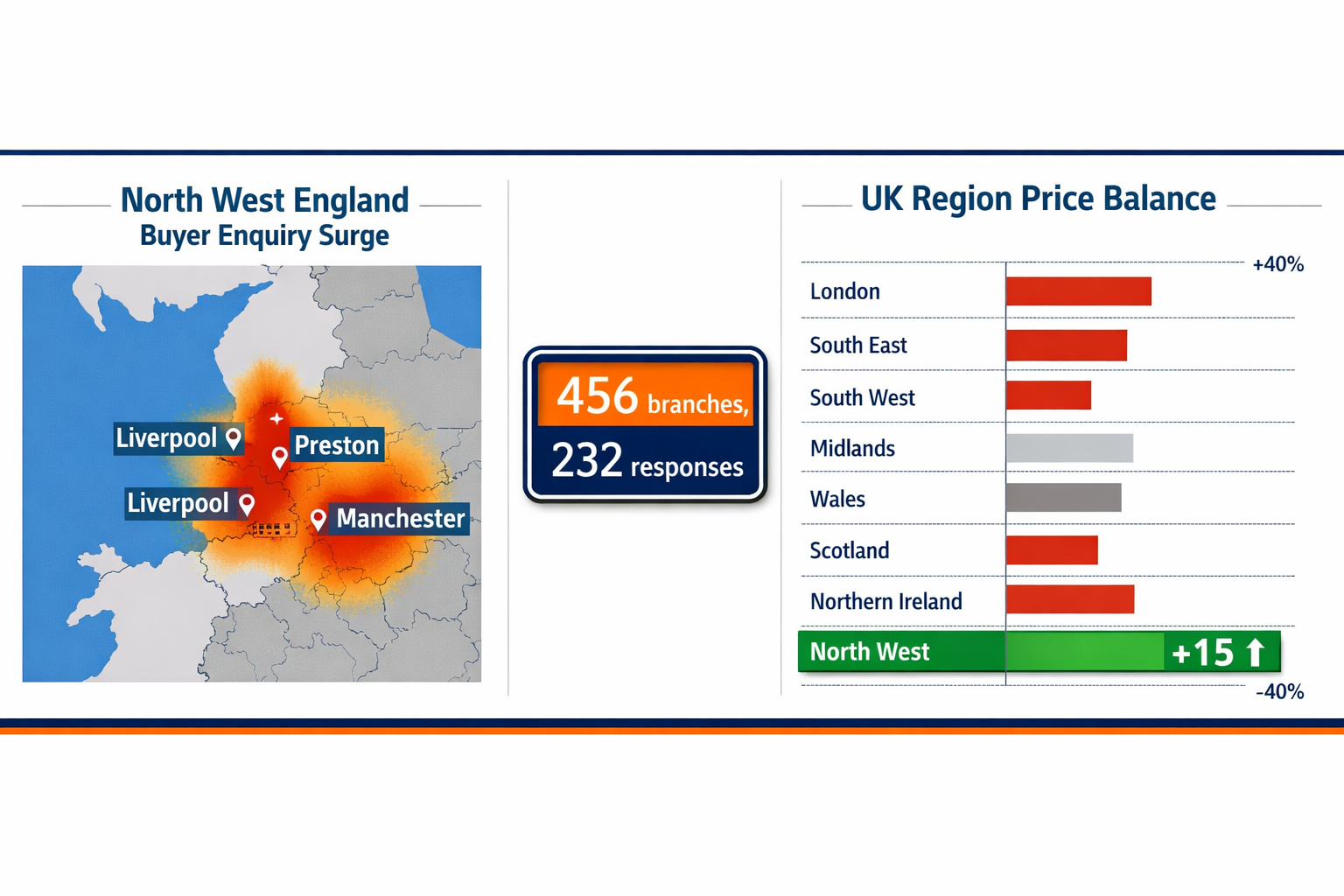
The latest RICS data reveals that respondents in the North West and North of England report prices on an upward trajectory, contrasting sharply with negative readings in London, the South West, South East, and East Anglia[2]. This regional divergence signals a fundamental shift in the UK housing market, requiring surveyors to adapt their building survey protocols to accommodate increased demand without compromising thoroughness.

Key Takeaways
✅ North West England leads UK recovery with positive price balance readings while southern regions show negative trends, creating concentrated demand for survey services
✅ 456 branches across 232 survey responses provide comprehensive RICS data methodology, establishing reliable market intelligence for protocol development
✅ Three-tier RICS survey standards (Levels 1-3) offer scalable solutions for varying property complexity and buyer urgency in high-volume markets
✅ Enhanced Level 3 protocols become essential for thorough defect identification amid rapid transaction growth and new building standards implementation
✅ Technology integration and standardized checklists enable surveyors to maintain quality while processing increased enquiry volumes efficiently
Understanding the RICS January 2026 Survey Methodology and North West Market Dynamics
The RICS January 2026 Survey Insights: Building Survey Protocols for Surging Buyer Enquiries in North West England draws from a robust sample of 456 branches across the UK, representing 232 individual responses from qualified surveyors and estate agents[2]. This comprehensive data collection methodology provides reliable market intelligence that informs professional practice standards.
Regional Performance Divergence
The January 2026 survey reveals a stark regional divide in the UK property market:
| Region | Price Balance | Market Sentiment | Buyer Enquiry Trend |
|---|---|---|---|
| North West England | Positive (+10 to +15) | Upward trajectory | Increasing |
| North of England | Positive | Upward trajectory | Increasing |
| London | Negative | Declining | Decreasing |
| South East | Negative | Stagnant | Flat |
| South West | Negative | Declining | Decreasing |
| East Anglia | Negative | Stagnant | Flat |
It's crucial to understand that a price balance reading of +10 does not mean prices increased by 10%. Rather, it indicates that 10% more surveyors reported price increases than decreases over the preceding three months[2]. This nuanced interpretation helps professionals accurately assess market momentum.
Early Signs of Broader Recovery
Capital Economics' analysis of the January 2026 RICS survey identifies "green shoots of recovery," suggesting the broader economy strengthened at the start of the year[7]. This economic strengthening lends tentative support to expectations that house prices will exceed most forecasts throughout 2026, particularly in regions like the North West where fundamentals remain strong.
For surveyors operating in this environment, the challenge becomes balancing increased workload with maintaining the rigorous standards expected in professional building surveys. The surge in buyer enquiries creates pressure to expedite surveys, but cutting corners can expose both clients and professionals to significant risk.
RICS January 2026 Survey Insights: Enhanced Level 3 Survey Protocols for High-Volume Markets
The RICS January 2026 Survey Insights: Building Survey Protocols for Surging Buyer Enquiries in North West England necessitate enhanced protocols that maintain thoroughness while accommodating increased transaction volumes. The three-tier RICS survey framework provides the foundation for this approach[1].
The Three-Tier RICS Survey Framework
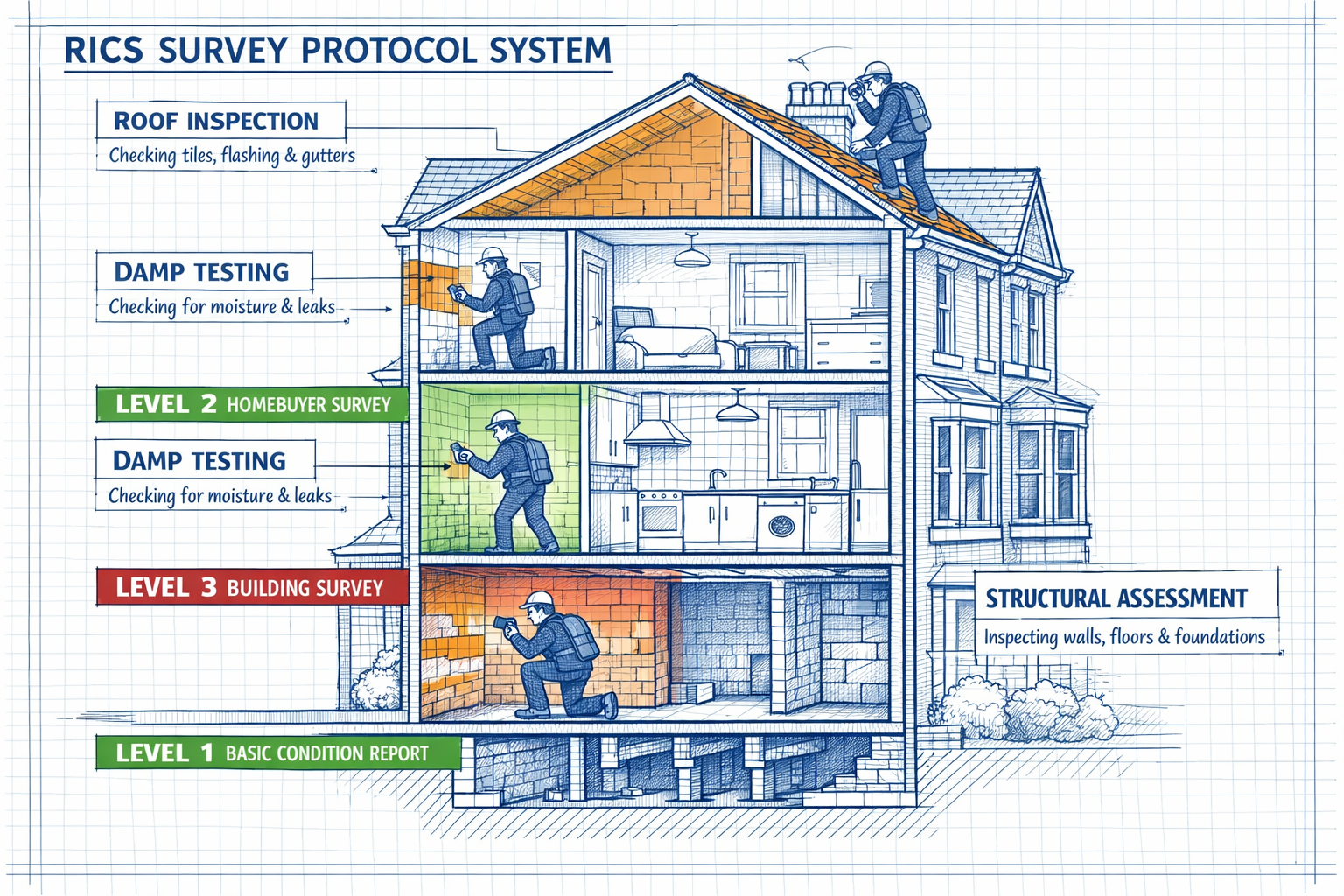
Level 1: RICS Condition Report 📋
- Basic visual inspection suitable for newer, conventional properties
- Traffic light rating system (red, amber, green)
- Limited detail on construction methods or defects
- Fastest turnaround time for straightforward transactions
Level 2: RICS HomeBuyer Report 🏠
- More detailed than Level 1, covering visible defects
- Suitable for conventional properties in reasonable condition
- Includes market valuation and insurance reinstatement cost
- Balances detail with efficiency for standard purchases
Level 3: RICS Building Survey 🔍
- Most comprehensive examination available
- Essential for older, altered, or unusual properties
- Detailed analysis of construction, condition, and defects
- Recommended for North West Victorian terraces and conversions
Understanding what a Level 3 building survey entails becomes critical when dealing with the diverse housing stock prevalent across Manchester, Liverpool, and surrounding areas. The North West's architectural heritage includes substantial Victorian and Edwardian housing stock that requires thorough examination.
Enhanced Level 3 Checklist for North West Properties
Given the region's specific housing characteristics and the current market surge, surveyors should implement enhanced Level 3 protocols:
Structural Assessment 🏗️
- Foundation examination with particular attention to clay soil subsidence common in Greater Manchester
- Load-bearing wall integrity assessment in converted properties
- Roof structure evaluation including traditional slate and modern replacements
- Chimney stack condition and lateral movement indicators
- Evidence of structural movement or settlement patterns
Building Envelope Analysis 🧱
- Solid wall construction moisture penetration assessment
- Cavity wall tie corrosion in 1930s-1970s properties
- Pointing condition and brick deterioration patterns
- Window and door frame condition including modern UPVC replacements
- Rainwater goods capacity and condition
Services and Systems ⚡
- Electrical installation age and compliance with current regulations
- Central heating system efficiency and boiler condition
- Plumbing materials identification (lead pipe replacement status)
- Drainage system functionality and connection verification
- Damp-proof course presence and effectiveness
Energy Efficiency and Future Standards 🌱
- Current EPC rating and improvement potential
- Insulation levels in roof spaces, walls, and floors
- Glazing performance and thermal efficiency
- Compliance pathway toward Future Homes Standards
- Retrofit potential for net-zero requirements
The UK Government's publication of the Future Homes and Buildings Standards represents a significant development for survey protocols[3]. RICS CEO Justin Young described this as "a positive step towards net zero, strengthening building regulations to deliver low-carbon, energy-efficient homes fit for the future"[3]. Surveyors must now evaluate properties not just on current condition but also on their adaptability to emerging energy standards.
Technology Integration for Efficiency
To handle increased volumes without compromising quality, surveyors should integrate modern technology:
Digital Survey Tools 📱
- Tablet-based survey software with standardized templates
- Photographic documentation with automatic geo-tagging
- Voice-to-text dictation for on-site observations
- Cloud-based report generation for faster turnaround
Advanced Diagnostic Equipment 🔬
- Thermal imaging cameras for insulation and moisture detection
- Moisture meters for accurate damp diagnosis
- Laser distance measurers for precise dimensional recording
- Drone surveys for inaccessible roof areas and large properties
Quality Assurance Systems ✅
- Standardized checklists ensuring comprehensive coverage
- Peer review protocols for complex findings
- Client communication templates for consistent messaging
- Continuous professional development tracking
These technological enhancements enable surveyors to maintain the thoroughness expected in a comprehensive Level 3 building survey while processing more instructions efficiently.
Adapting Survey Protocols to RICS January 2026 Survey Insights and Regional Market Conditions
The RICS January 2026 Survey Insights: Building Survey Protocols for Surging Buyer Enquiries in North West England require surveyors to adapt their approach based on specific regional characteristics and emerging regulatory frameworks.
Regional Property Typology Considerations
Victorian and Edwardian Terraces 🏘️
- Predominant housing type across Manchester, Liverpool, and Preston
- Common issues: solid wall damp penetration, roof deterioration, subsidence
- Survey focus: structural movement, damp patterns, original features preservation
- Typical survey duration: 3-4 hours for thorough Level 3 examination
1930s Semi-Detached Properties 🏡
- Widespread across suburban North West locations
- Common issues: cavity wall tie failure, render problems, outdated services
- Survey focus: cavity wall condition, roof covering life expectancy, service upgrades
- Typical survey duration: 2.5-3.5 hours for comprehensive assessment
Modern New Builds and Conversions 🏗️
- Increasing supply in urban regeneration areas
- Common issues: snagging defects, incomplete work, specification deviations
- Survey focus: compliance verification, defect identification, warranty coverage
- Typical survey duration: 2-3 hours with detailed photographic documentation
For those considering whether a homebuyer survey is worth the investment, the North West market conditions in 2026 make professional inspection more valuable than ever. Rising prices and increased competition create pressure to proceed quickly, but undiscovered defects can cost thousands in unexpected repairs.
RICS Standards Updates and Professional Development
RICS is undertaking significant updates to professional standards in 2026:
Home Survey Standards Second Edition 📚
- Strengthening various areas of survey practice
- Incorporating consumer insights and feedback
- Reflecting technological changes in the profession
- Providing further clarification on reporting requirements
7th Edition Code of Measuring Practice 📏
- Scheduled for release in 2026 with Q1 consultation
- Updated measurement standards for modern property types
- Integration of digital measurement technologies
- Standardization across commercial and residential sectors
Retrofit and Sustainability Pathways ♻️
- New membership pathways building expertise in retrofit
- Positioning surveyors as central to UK's energy transition
- Supporting government net-zero targets
- Enhancing professional competence in sustainable construction
Understanding what surveyors do and their evolving role becomes increasingly important as the profession adapts to these regulatory changes. Surveyors must now possess expertise spanning traditional building pathology, modern construction techniques, and emerging sustainability standards.
Managing Client Expectations in a Fast-Moving Market
The surge in buyer enquiries creates specific challenges for client communication:
Setting Realistic Timelines ⏰
- Standard Level 3 survey: 5-7 working days from instruction to report
- Complex or large properties: 10-14 working days for thorough examination
- Rush services: Available but with premium pricing and scope limitations
- Weather dependencies: External inspections subject to safe access conditions
Explaining Survey Limitations 📋
- Non-invasive nature of standard surveys
- Areas not accessible during inspection
- Specialist investigations that may be recommended
- Difference between survey and valuation purposes
Addressing Common Concerns 💬
- "Will the survey delay my purchase?" – Proper timeline management prevents delays
- "Can you prioritize my survey?" – Fair queue management with urgent options
- "Why does it cost so much?" – Professional indemnity, expertise, and time investment
- "What if problems are found?" – Negotiation leverage and informed decision-making
For buyers experiencing house survey anxiety, understanding the process and maintaining realistic expectations helps reduce stress. The competitive North West market makes some buyers reluctant to commission surveys, fearing delays will cost them the property. However, proceeding without professional inspection exposes them to potentially catastrophic financial risk.
Regulatory and Advocacy Context
RICS' advocacy work in early 2026 shapes the regulatory environment for surveyors:
Single Construction Regulator Proposal 🏛️
- Government proposals for unified regulatory oversight
- RICS emphasizes need for strong industry engagement
- Focus on competence and outcomes rather than process
- Frameworks supporting innovation while raising standards
Scotland Manifesto 2026 Priorities 🏴
- Boosting housing delivery across all tenures
- Accelerating Scotland's retrofit programme
- Addressing skills and capacity challenges
- Emphasizing high-quality data and early surveyor engagement
These regulatory developments underscore the profession's evolving role in housing policy delivery and building safety. Surveyors must stay informed about regulatory changes while maintaining focus on core professional competencies.
Quality Assurance in High-Volume Environments
Maintaining quality when processing increased instructions requires systematic approaches:
Standardized Protocols ✓
- Comprehensive checklists for each property type
- Mandatory photographic documentation standards
- Consistent report formatting and terminology
- Quality control review before report release
Professional Indemnity Considerations 🛡️
- Adequate insurance coverage for increased workload
- Clear scope of service documentation
- Professional limitations clearly communicated
- Appropriate disclaimers for non-inspected areas
Continuing Professional Development 📖
- Regular training on emerging building techniques
- Updates on regulatory changes and standards
- Peer learning and case study review
- Technology skills development for efficiency tools
Surveyors should consult resources like the complete guide to building surveyors to understand best practices in service delivery and client management.
Practical Implementation Strategies
For Individual Practitioners 👤
- Invest in digital survey tools and training
- Develop standardized templates for common property types
- Build relationships with specialist contractors for complex issues
- Implement appointment scheduling systems to manage demand
For Survey Firms 🏢
- Recruit additional qualified surveyors to handle volume
- Implement quality assurance review processes
- Develop training programmes for junior staff
- Create client communication protocols for consistency
For Clients and Buyers 🔑
- Book surveys early in the transaction process
- Choose appropriate survey level for property type
- Ask questions and engage with the surveyor
- Act on recommendations promptly to avoid transaction delays
The various types of surveyors and their specializations means buyers should ensure they're engaging a qualified building surveyor for residential property inspections, not a valuation surveyor or quantity surveyor whose expertise lies elsewhere.
Conclusion: Positioning for Success in North West England's Growing Market
The RICS January 2026 Survey Insights: Building Survey Protocols for Surging Buyer Enquiries in North West England present both opportunity and challenge for property professionals. The region's positive market trajectory, contrasting with struggles elsewhere in the UK, creates concentrated demand for quality survey services that can accommodate rapid transaction volumes without compromising thoroughness.
Key success factors for surveyors operating in this environment include:
🎯 Enhanced Level 3 protocols specifically adapted to North West property typologies, addressing common issues in Victorian terraces, pre-war semi-detached homes, and modern conversions
🎯 Technology integration through digital survey tools, advanced diagnostic equipment, and quality assurance systems that enable efficiency without sacrificing detail
🎯 Regulatory awareness of emerging standards including Future Homes requirements, updated RICS codes of practice, and sustainability pathways that shape property assessment
🎯 Client communication excellence that manages expectations, explains limitations, and positions surveys as essential risk management rather than transaction obstacles
🎯 Professional development commitment ensuring expertise remains current with building techniques, regulatory changes, and technological advances
The data showing 456 branches contributing to 232 survey responses demonstrates the breadth of professional insight informing market analysis[2]. This collective intelligence provides confidence in the North West's recovery trajectory while highlighting the need for adequate surveying capacity to serve increased demand.
For buyers navigating this competitive market, commissioning an appropriate building survey remains essential despite pressure to move quickly. The upward price trajectory makes informed decision-making more valuable than ever—discovering significant defects before completion provides negotiation leverage and prevents costly surprises.
For surveyors, the challenge lies in scaling operations to meet demand while maintaining the professional standards that protect both clients and practitioners. Enhanced protocols, technological tools, and systematic quality assurance create the framework for sustainable growth.
Actionable Next Steps
For Property Buyers 🏠
- Commission surveys early in your property search to avoid delays
- Choose the appropriate survey level based on property age and type
- Engage with your surveyor to understand findings and implications
- Factor survey costs into your budget as essential due diligence
For Surveying Professionals 📊
- Review and update survey protocols to reflect regional property characteristics
- Invest in technology and training to improve efficiency
- Implement quality assurance systems for consistent service delivery
- Monitor RICS updates on standards and regulatory developments
For Industry Stakeholders 🤝
- Support capacity building through training and professional development
- Advocate for realistic transaction timelines that accommodate proper inspection
- Promote public awareness of survey value in risk management
- Collaborate on data sharing to improve market intelligence
The North West England property market's resurgence in early 2026 signals broader economic recovery and creates genuine opportunity for well-prepared professionals. By implementing enhanced survey protocols that balance thoroughness with efficiency, surveyors position themselves as essential facilitators of safe, informed property transactions in a growing market.
The RICS January 2026 survey data provides clear evidence that regional markets are diverging, with the North West leading recovery while other areas lag. This geographical concentration of activity demands strategic resource allocation and specialized expertise in regional property characteristics. Surveyors who adapt their protocols accordingly will thrive in this environment while maintaining the professional standards that protect public interest and uphold the profession's reputation.
References
[1] Building Survey Protocols For New Build Properties In 2026 Spotting Defects Amid 2 5 Price Growth Forecasts – https://nottinghillsurveyors.com/blog/building-survey-protocols-for-new-build-properties-in-2026-spotting-defects-amid-2-5-price-growth-forecasts
[2] Uk Residential Market Survey January 2026 – https://www.rics.org/content/dam/ricsglobal/documents/market-surveys/uk-residential-market-survey/UK-Residential-Market-Survey_January-2026.pdf
[3] Rics Ceo Comments On The Publication Of The Future Homes And Building Standards – https://www.rics.org/news-insights/rics-ceo-comments-on-the-publication-of-the-future-homes-and-building-standards
[4] Building Survey Protocols For Uk Office To Residential Conversions Rics Standards Amid 2026 Urban Recovery – https://nottinghillsurveyors.com/blog/building-survey-protocols-for-uk-office-to-residential-conversions-rics-standards-amid-2026-urban-recovery
[5] Uk Influence And Advocacy Update January 2026 – https://www.rics.org/news-insights/uk-influence-and-advocacy-update-january-2026
[7] Uk Rics Residential Market Survey Jan 2026 – https://www.capitaleconomics.com/publications/uk-housing-market-update/uk-rics-residential-market-survey-jan-2026
