
The UK property market is showing signs of recovery in 2026, with forecasts predicting modest price growth of 2-5% across most regions. For buyers considering new build properties, this optimistic outlook presents both opportunities and challenges. While new homes offer modern amenities and energy efficiency, they also carry unique risks that demand thorough inspection. Building Survey Protocols for New Build Properties in 2026: Spotting Defects Amid 2-5% Price Growth Forecasts have become essential tools for protecting investments in an increasingly competitive market where construction quality varies significantly between developers.
The introduction of stricter regulations through the New Homes Quality Code March 2026 Update has transformed buyer protections, yet defects remain commonplace in new builds due to rapid construction timelines and human error. Professional snagging surveys now represent a critical safeguard, with independent assessments starting at £320 providing comprehensive defect identification before completion. As transaction volumes recover and buyers return to the market, understanding proper survey protocols becomes paramount for making informed purchasing decisions.
Key Takeaways
✅ Professional snagging surveys are essential for new build properties, with pre-completion inspections now standard practice under the updated New Homes Quality Code, helping identify defects before final purchase.
✅ Survey costs start at £320 for independent professional assessments, representing valuable insurance against costly post-completion repairs that could undermine the 2-5% price appreciation forecasts.
✅ RICS standards provide three survey levels tailored to property complexity, with Level 3 surveys offering the most comprehensive examination for higher-value new builds or properties with unique features.
✅ Follow-up inspections after moving in are strongly recommended, as many defects only become apparent during actual occupancy, ensuring comprehensive warranty coverage during the initial guarantee period.
✅ Building Safety Regulator priorities focus on higher-risk buildings through 2026, with approximately 40% of occupied HRBs scheduled for assessment, affecting buyer confidence and lending criteria for affected properties.
Understanding Building Survey Protocols for New Build Properties in 2026
The Evolution of New Build Survey Standards
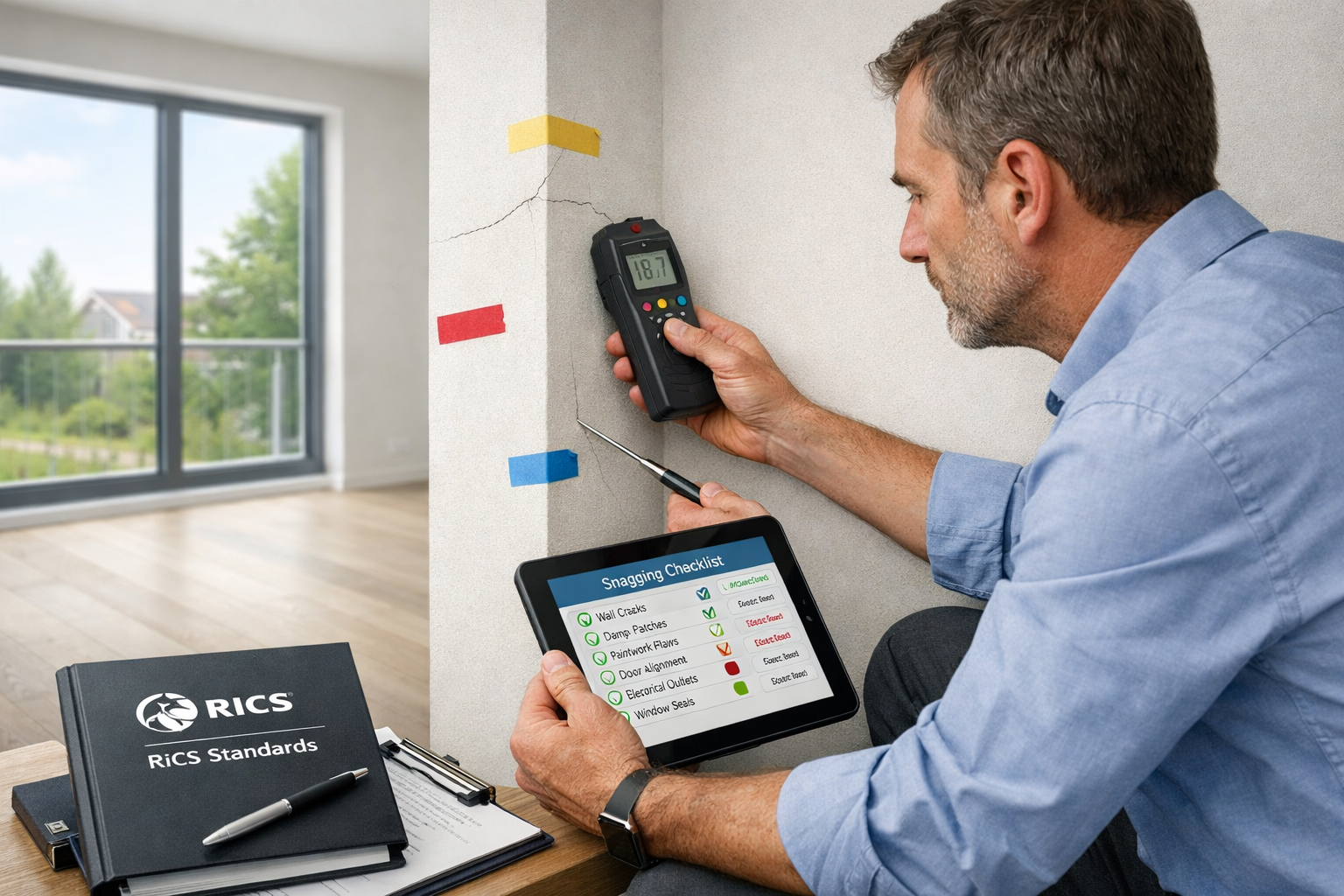
The landscape of new build property surveys has undergone significant transformation in recent years. The RICS Home Survey Standard, implemented in March 2021, established three distinct survey levels designed to match property characteristics with appropriate inspection depth [4]. For new builds specifically, the March 2026 update to the New Homes Quality Code introduced stricter requirements around marketing, pricing, inspections, and aftercare provisions [7].
Developers registered under the New Homes Quality Code must now provide buyers with the right to a professional pre-completion snagging inspection before property handover [1]. This represents a fundamental shift in buyer protections, acknowledging that new builds commonly contain defects despite being freshly constructed.
Why New Builds Require Specialized Survey Protocols
Many buyers mistakenly assume that new build properties don't require surveys since everything is brand new and covered by warranty. This misconception can prove costly. New homes frequently contain defects resulting from:
- Rapid construction timelines that prioritize speed over meticulous finishing
- Human error during installation of fixtures, fittings, and finishes
- Material defects that may not be immediately visible
- Inadequate quality control during the building process
According to industry data, most defects identified in snagging surveys are cosmetic in nature, but structural and functional issues do occur [1]. Professional inspection ensures these problems are documented and rectified before completion, protecting buyers from future disputes with developers.
RICS Survey Levels for New Build Properties
Understanding which survey level suits a new build purchase is crucial for adequate protection:
| Survey Level | Scope | Best For | Typical Cost Range |
|---|---|---|---|
| Level 1 (Condition Report) | Basic condition assessment | Brand new properties from reputable developers | £300-£500 |
| Level 2 (HomeBuyer Report) | Detailed condition report with advice | Standard new builds, apartments | £400-£800 |
| Level 3 (Building Survey) | Comprehensive structural examination | Complex new builds, high-value properties | £600-£1,500+ |
For most new build purchases, a specialized snagging survey combined with a Level 2 HomeBuyer Report provides comprehensive coverage. Those considering our complete guide to building surveyors in London will find detailed information about selecting appropriate survey levels for different property types.
The Pre-Completion Snagging Inspection Process
Pre-completion inspections follow a systematic room-by-room methodology designed to identify defects before final purchase. The process typically includes:
-
Exterior Assessment 🏠
- Brickwork and mortar quality
- Window and door installation
- Roofing and guttering
- Drainage systems
- External finishes and paintwork
-
Interior Examination 🔍
- Wall and ceiling finishes
- Floor coverings and tiling
- Kitchen and bathroom installations
- Electrical fixtures and switches
- Plumbing and heating systems
- Door and window operation
- Built-in storage and joinery
-
Documentation and Reporting 📋
- Photographic evidence of each defect
- Detailed written descriptions
- Priority categorization (critical, major, minor)
- Recommendations for remediation
Inspection reports are typically delivered within two days of the on-site visit, with findings shared with both the buyer and house builder [1]. This rapid turnaround ensures defects can be addressed before completion deadlines.
For those wondering do you need a survey on a new build, the answer increasingly points toward yes, particularly given the modest price growth forecasts that make protecting your investment essential.
Common Defects in New Build Properties and Detection Methods
Cosmetic Defects: Minor but Numerous
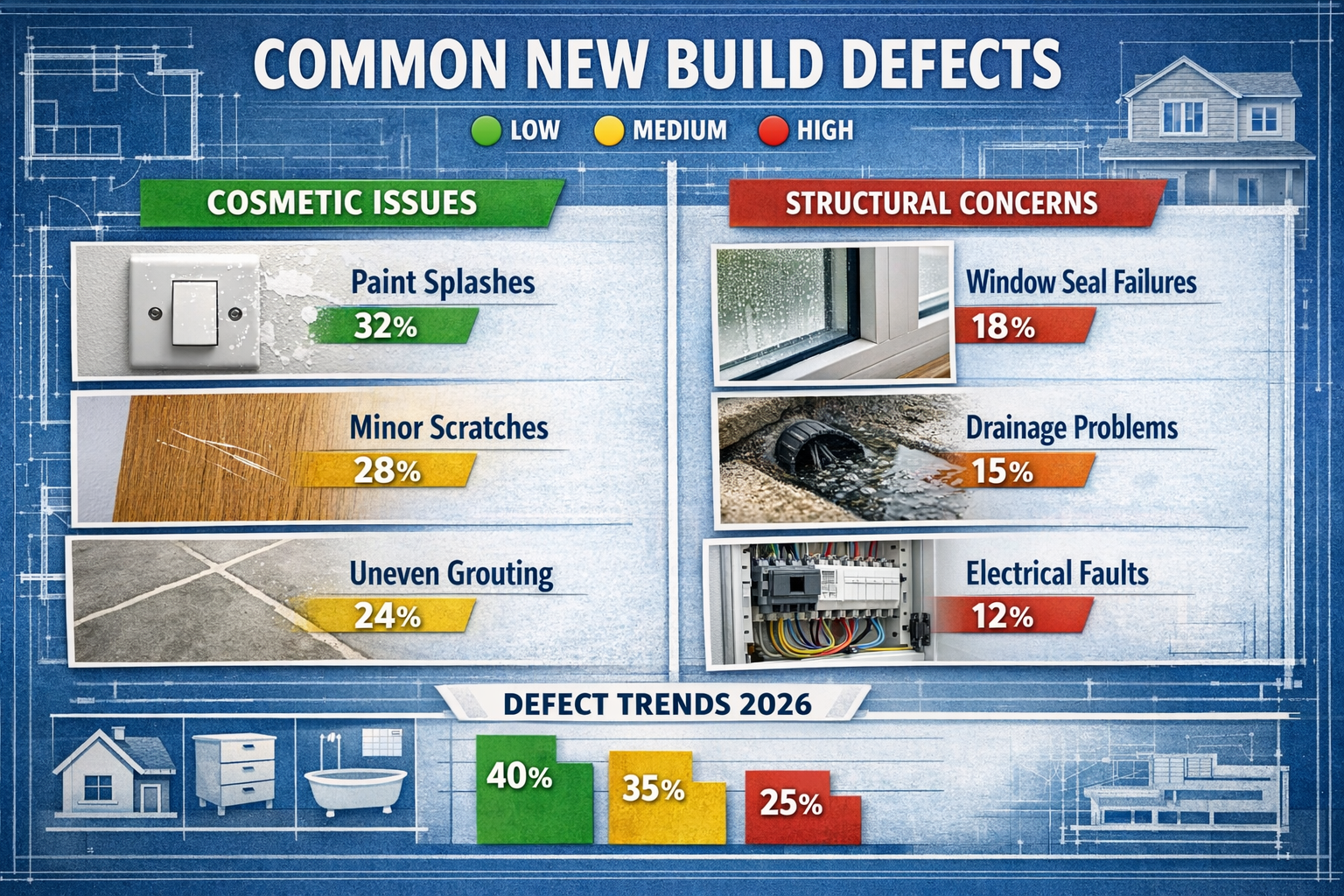
The majority of snagging issues fall into the cosmetic category, though their cumulative impact can be significant. Common cosmetic defects include:
Paint and Decoration Issues 🎨
- Paint splashes on fixtures, floors, or windows
- Uneven paint coverage or missed areas
- Poor cutting-in around edges and corners
- Visible brush marks or roller texture
Finishing Defects
- Scratched or damaged door frames
- Chipped tiles or poorly grouted joints
- Gaps in sealant around baths and sinks
- Damaged skirting boards or architraves
- Poorly fitted carpets or flooring
While these issues don't affect structural integrity, they diminish the "new home" experience buyers expect. Professional surveyors document these defects comprehensively, ensuring developers address them before handover.
Functional Defects: Impact on Daily Living
Functional defects affect how the property operates and can significantly impact comfort and usability:
Plumbing and Heating Problems 💧
- Leaking taps or pipes
- Inadequate water pressure
- Noisy or inefficient heating systems
- Poorly positioned radiators
- Drainage issues or slow-draining fixtures
Electrical Concerns ⚡
- Non-functioning switches or outlets
- Incorrectly wired lighting circuits
- Missing or damaged socket faceplates
- Inadequate earthing or bonding
- Incomplete electrical certification
Window and Door Issues
- Poorly fitted windows that don't open or close properly
- Gaps allowing drafts or water penetration
- Damaged seals or broken glazing units
- Doors that stick or don't latch correctly
- Missing or damaged hardware
These functional defects require immediate attention as they can worsen over time and potentially void warranty coverage if not reported promptly.
Structural Concerns: The Critical Few
While less common, structural defects represent the most serious category and can have long-term implications:
- Foundation settlement causing cracks in walls
- Inadequate damp-proofing leading to moisture ingress
- Roof defects affecting weatherproofing
- Structural movement in walls or floors
- Building regulation non-compliance
The Building Safety Regulator's focus on assessing approximately 40% of occupied Higher-Risk Buildings (HRBs) by April 2026 reflects ongoing concerns about construction quality in certain property types [2]. Buildings with un-remediated aluminium composite material (ACM) cladding receive priority assessment regardless of height [2].
For properties requiring specialized examination, our structural surveys provide comprehensive structural analysis beyond standard snagging inspections.
Detection Methods and Survey Tools
Modern building surveyors employ various tools and techniques to identify defects:
Visual Inspection Tools
- High-resolution cameras for documentation
- Endoscopes for viewing concealed spaces
- Mirrors and inspection lights for awkward areas
Measurement and Testing Equipment
- Moisture meters for detecting damp
- Laser levels for checking alignment
- Thermal imaging cameras for insulation gaps
- Spirit levels for checking plumb and level
Documentation Technology
- Tablet-based inspection software
- Cloud-based reporting systems
- Digital floor plans for defect mapping
- Photographic annotation tools
Professional surveyors combine these tools with extensive experience to identify issues that untrained buyers might miss. Understanding what surveyors look for in a house survey helps buyers appreciate the value of professional inspection.
The Importance of Follow-Up Inspections
Even the most thorough pre-completion inspection has limitations. Many defects only become apparent during actual occupancy when:
- Heating systems are used extensively
- Plumbing receives regular use
- Weather conditions test weatherproofing
- Natural settlement occurs
- Seasonal changes affect the building
Follow-up snagging surveys after moving in are strongly advised to identify issues not caught during pre-completion inspections [1]. Most new build warranties provide a 2-year defects liability period, making post-occupation inspection within the first 12-18 months particularly valuable.
For comprehensive defect documentation, our understanding snagging survey costs in the UK guide provides detailed pricing information and value analysis.
Building Survey Protocols Amid 2026 Property Market Forecasts

The 2-5% Price Growth Context
Property market forecasts for 2026 predict modest but positive growth across most UK regions, with new build properties expected to participate in this recovery [5]. This anticipated appreciation creates important considerations for buyers:
Investment Protection 💷
With properties expected to gain 2-5% in value, protecting that investment through proper due diligence becomes crucial. A £400,000 new build could appreciate by £8,000-£20,000 over the year, making the £320-£800 cost of professional survey appear minimal by comparison.
Lending Confidence
Mortgage lenders increasingly require comprehensive surveys for new builds, particularly for properties in developments with known issues or buildings subject to Building Safety Regulator assessment. Properties with unresolved defects or missing certifications may face valuation reductions or lending restrictions.
Warranty Validity
Most new build warranties require defects to be reported within specific timeframes. Professional survey documentation provides the evidence needed to ensure warranty claims are processed without dispute, protecting the investment as property values rise.
RICS Standards and Warranty Assessment
The Royal Institution of Chartered Surveyors (RICS) provides the professional framework ensuring survey quality and consistency. RICS-qualified surveyors adhere to strict standards covering:
- Professional indemnity insurance protecting clients
- Continuing professional development requirements
- Code of conduct obligations
- Quality assurance procedures
- Complaints handling mechanisms
When assessing new build warranties, RICS surveyors evaluate:
-
Warranty Provider Credibility
- NHBC (National House Building Council)
- LABC Warranty
- Premier Guarantee
- Other approved schemes
-
Coverage Adequacy
- Structural defects (typically 10 years)
- Non-structural defects (typically 2 years)
- Exclusions and limitations
- Claims procedures
-
Developer Compliance
- Building regulation approvals
- Completion certificates
- Energy performance certificates
- Required documentation
Understanding what does a property surveyor do helps buyers appreciate how RICS standards protect their interests during the purchase process.
Regional Variations in Survey Requirements
Different regions across the UK present unique challenges for new build surveys:
London and South East 🏙️
- Higher property values justify comprehensive Level 3 surveys
- Greater prevalence of high-rise developments requiring cladding assessment
- More complex building systems in urban developments
- Higher surveyor costs offset by property values
Our chartered surveyors in London service covers all London boroughs, with specialized teams in Fulham, Battersea, and Clapham.
Regional Markets
- Different construction methods and materials
- Local developer reputation variations
- Regional building regulation interpretation
- Climate-specific weatherproofing requirements
Transaction Recovery and Survey Demand
As property transactions recover in 2026, survey demand is increasing significantly. This creates several implications:
Booking Lead Times ⏰
Popular surveyors may have 2-4 week waiting lists during peak seasons. Buyers should book surveys immediately after offer acceptance to avoid completion delays.
Quality Variations
Increased demand may tempt some buyers to use less qualified inspectors. Insisting on RICS-qualified surveyors ensures professional standards and adequate insurance protection.
Cost Pressures
Survey fees may increase with demand, but this remains a small percentage of overall transaction costs and property value.
For timing considerations, our guide on how long do house surveys take provides realistic expectations for scheduling.
Building Safety Regulations in 2026
Building safety remains a critical focus throughout 2026, with several key developments affecting new build purchases:
Higher-Risk Building Assessments 🏢
The Building Safety Regulator's plan to assess 40% of occupied HRBs by April 2026 represents approximately 65% of residential dwellings across England [2]. This prioritization affects:
- Lending criteria for affected buildings
- Insurance availability and costs
- Resale values and marketability
- Buyer confidence and demand
Fire Safety Strategies
Mandatory fire safety strategies for higher-risk buildings require:
- Comprehensive fire risk assessments
- Clear evacuation procedures
- Regular safety inspections
- Resident information provisions
Cladding Remediation
Buildings with un-remediated ACM cladding receive priority assessment [2], with significant implications for:
- Property valuations
- Mortgage availability
- Service charge costs
- Completion timelines
Building safety regulations represent a significant change in how buildings must be managed through 2026 [3], making professional survey advice essential for understanding implications.
Integrating Survey Results with Purchase Decisions
Professional survey reports provide the foundation for informed decision-making:
Negotiation Leverage 💪
Documented defects give buyers concrete evidence for:
- Price reductions reflecting remediation costs
- Delayed completion until defects are rectified
- Retention of funds pending satisfactory repairs
- Withdrawal from purchase if issues are severe
Risk Assessment
Survey findings help buyers evaluate:
- Whether defects are acceptable given price and location
- Long-term maintenance implications
- Potential warranty claim complications
- Resale value impact
Professional Advice
RICS surveyors provide recommendations on:
- Defect severity and urgency
- Estimated remediation costs
- Specialist investigations required
- Negotiation strategies
For those comparing survey options, our article on difference between Level 2 and Level 3 survey clarifies which approach suits different property types and buyer needs.
Conclusion
Building Survey Protocols for New Build Properties in 2026: Spotting Defects Amid 2-5% Price Growth Forecasts represent essential protection for buyers entering a recovering property market. While modest price appreciation offers encouraging prospects, the prevalence of defects in new builds—ranging from cosmetic finishing issues to serious structural concerns—demands professional inspection before completion.
The March 2026 update to the New Homes Quality Code has strengthened buyer protections, with developers now required to facilitate pre-completion snagging inspections. Combined with RICS survey standards and the Building Safety Regulator's ongoing assessment program, buyers have access to more comprehensive safeguards than ever before. However, these protections only deliver value when buyers actively engage professional surveyors and act on their findings.
Actionable Next Steps
For buyers considering new build properties in 2026:
-
Book a Professional Survey Early 📅
- Contact RICS-qualified surveyors immediately after offer acceptance
- Allow 2-4 weeks for scheduling during peak periods
- Budget £320-£800 for comprehensive snagging inspection
-
Choose the Right Survey Level 🎯
- Level 2 HomeBuyer Report for standard new builds
- Level 3 Building Survey for complex or high-value properties
- Specialized snagging survey for defect documentation
-
Review Warranty Coverage Carefully 📋
- Verify warranty provider credentials
- Understand coverage periods and exclusions
- Document all defects within specified timeframes
-
Plan Follow-Up Inspection 🔄
- Schedule post-occupation survey within 12-18 months
- Document any new defects discovered during occupancy
- Submit warranty claims before coverage expires
-
Verify Building Safety Compliance ✅
- Request all building regulation certificates
- Confirm fire safety documentation for higher-risk buildings
- Check cladding status if applicable
The modest 2-5% price growth forecast for 2026 creates a favorable environment for new build purchases, but only when buyers protect their investment through proper due diligence. Professional building survey protocols provide the foundation for confident purchasing decisions, comprehensive defect identification, and effective warranty utilization. As transaction volumes recover and competition increases, those who invest in thorough professional surveys will be best positioned to benefit from market appreciation while avoiding costly post-completion surprises.
Whether purchasing in London, the Home Counties, or regional markets, engaging qualified surveyors ensures new build properties meet quality expectations and provide the solid foundation for long-term value growth in the years ahead.
References
[1] Need Snagging List New Build Home – https://hoa.org.uk/advice/guides-for-homeowners/i-am-buying/need-snagging-list-new-build-home/
[2] Building Safety Regulator Strategic Plan 2023 To 2026 – https://www.gov.uk/government/publications/building-safety-regulator-strategic-plan-2023-to-2026/building-safety-regulator-strategic-plan-2023-to-2026
[3] Things About Building Surveying You Need To Know In 2026 – https://mcessex.co.uk/2026/01/23/things-about-building-surveying-you-need-to-know-in-2026/
[4] House Surveys Uk The Costs Types And Benefits Of An Rics Home Survey – https://www.rics.org/consumer-guides/house-surveys-uk-the-costs-types-and-benefits-of-an-rics-home-survey
[5] Property Buying Predictions For 2026 What New Build Buyers Should Expect – https://snagmastersw.co.uk/property-buying-predictions-for-2026-what-new-build-buyers-should-expect/
[7] The New Homes Quality Code March 2026 Update What You Need To Know – https://www.walkermorris.co.uk/comment-opinion/the-new-homes-quality-code-march-2026-update-what-you-need-to-know/
