
{"cover":"Professional landscape format (1536×1024) hero image featuring bold text overlay 'Revolutionizing Property Surveys: How AI and Machine Learning Predict Floods and Landslides in 2026' in extra large 72pt white sans-serif font with dark gradient shadow for maximum contrast, positioned in upper third using rule of thirds composition. Background shows dramatic split-screen composition: left side displays futuristic AI neural network visualization with glowing blue nodes analyzing topographical terrain data, right side shows realistic 3D terrain mapping with color-coded flood risk zones in blues and landslide zones in reds and oranges overlaid on hillside property. Foreground includes translucent holographic interface displaying real-time probability maps, satellite imagery, and LiDAR point clouds. Color palette: deep navy blue, electric cyan, warning orange, white accents. High-tech professional aesthetic with magazine cover quality, editorial photography style, cinematic lighting, ultra-sharp focus","content":["Detailed landscape format (1536×1024) illustration showing AI-powered landslide prediction system in action during Hong Kong case study. Central focus on large curved monitor displaying real-time landslide probability heat map with five-minute update intervals, color-coded risk zones from green (low) to red (high) across mountainous terrain. Left side shows data input visualization: rainfall sensors, geotechnical monitoring equipment, satellite feeds streaming into neural network represented by glowing interconnected nodes. Right side displays output dashboard with 95.6% accuracy metric prominently shown, historical comparison graph showing improvement from 70% to 90%+ accuracy, and 3D slope analysis. Include visual representation of 22 million data points as particle cloud, 60,000 slopes as wireframe models. Professional geotechnical engineering aesthetic with technical blueprints, measurement annotations, timestamp indicators, clean modern UI design, high contrast blues and whites","Detailed landscape format (1536×1024) technical diagram illustrating GIS and LiDAR integration workflow for property survey risk assessment. Top section shows drone with LiDAR scanner capturing point cloud data over residential properties on sloped terrain, with visible laser beams creating detailed topographical mesh. Middle section displays layered GIS data integration: satellite imagery base layer, elevation contours, historical flood zones in translucent blue overlay, landslide susceptibility areas in orange gradient, property boundaries in white lines. Bottom section shows AI processing pipeline with machine learning algorithms analyzing combined datasets, outputting predictive risk maps with probability percentages for specific properties. Include visual elements: 3D terrain models, cross-sectional slope analysis, water flow simulation arrows, soil composition indicators, real-time weather data feeds. Color scheme: earth tones, technical blues, warning reds, professional surveying aesthetic with measurement scales and coordinate grids","Detailed landscape format (1536×1024) infographic showing practical implementation roadmap for surveyors adopting AI flood and landslide prediction. Left column displays step-by-step implementation phases as ascending staircase: Phase 1 data collection (historical records, slope characteristics), Phase 2 system integration (GIS platforms, sensor networks), Phase 3 AI model training (machine learning algorithms, validation testing), Phase 4 operational deployment (real-time monitoring dashboards). Right side shows benefits visualization: accuracy improvement chart with dramatic upward curve from 70% to 95%, time savings clock showing analysis reduced from days to minutes, cost reduction graph, risk mitigation shield icon. Center features modern surveyor using tablet displaying AI-powered risk assessment overlay on property site, with augmented reality visualization of subsurface conditions and predicted hazard zones. Include icons for satellite data, weather monitoring, continuous learning loops, professional certification badges. Clean infographic style with modern typography, professional color palette of navy, teal, orange accents, white space"]
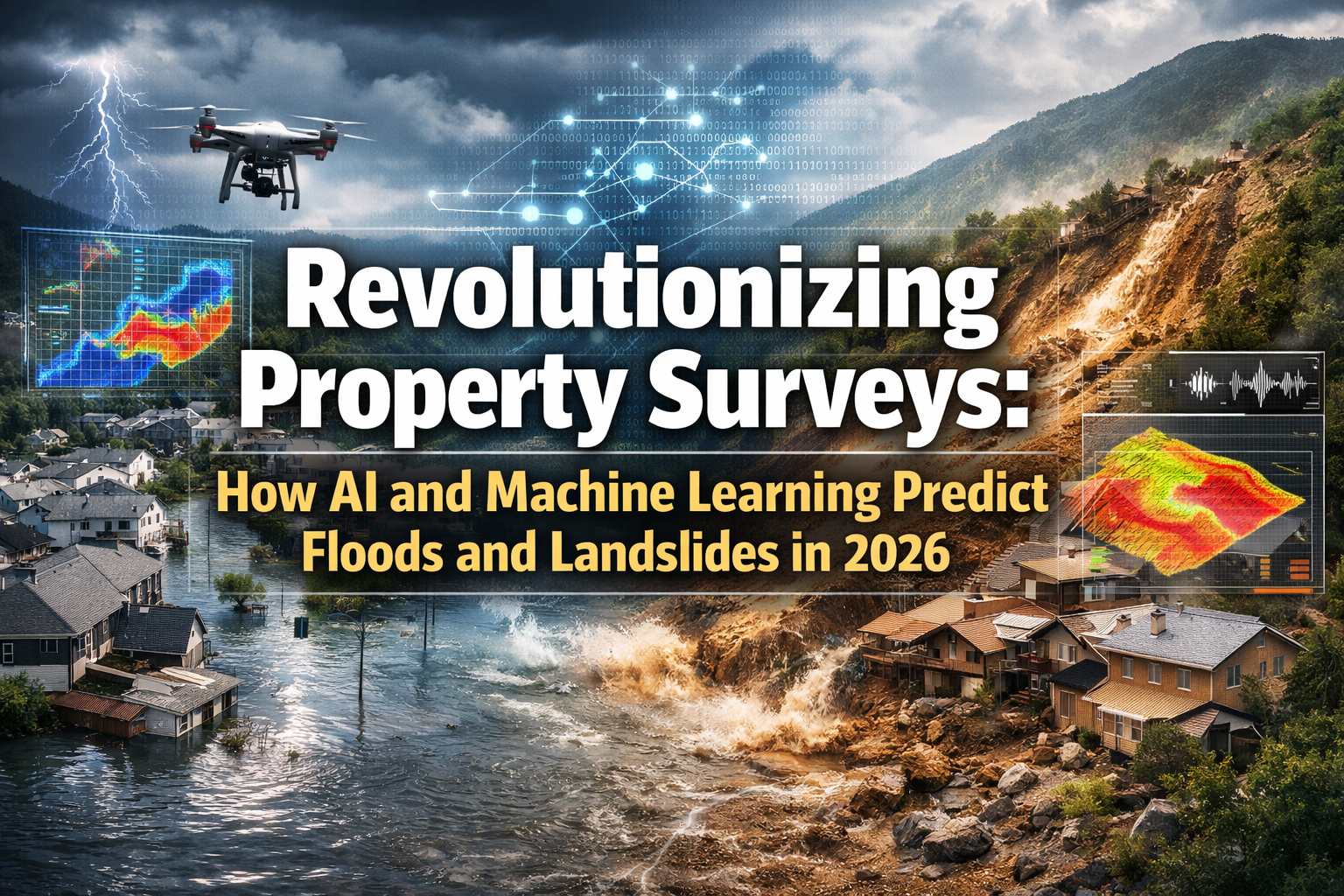
The ground beneath a property tells stories that traditional surveys often miss. In 2026, artificial intelligence is rewriting the rules of property risk assessment, transforming how surveyors detect and predict catastrophic events like floods and landslides before they happen. Revolutionizing Property Surveys: How AI and Machine Learning Predict Floods and Landslides in 2026 represents more than technological advancement—it's a fundamental shift in protecting property investments and human lives. 🏡⚡
When Hong Kong's Geotechnical Engineering Office announced their AI-enhanced landslide prediction system in October 2025, the implications rippled across the global surveying industry. The system's ability to boost forecasting accuracy from approximately 70 percent to over 90 percent marked the most significant upgrade in slope safety history[1]. This breakthrough demonstrates how machine learning algorithms, trained on millions of data points, can identify patterns invisible to human analysis and traditional methods.
For property surveyors, developers, and homebuyers, this technological revolution offers unprecedented capabilities. AI systems now analyze satellite imagery, LiDAR scans, historical weather patterns, and geological data simultaneously—generating real-time risk assessments that would have taken weeks or months using conventional approaches. The integration of these technologies into standard property survey practices is transforming due diligence from reactive documentation to proactive risk prediction.
Key Takeaways
- Accuracy breakthrough: AI-powered landslide prediction systems achieve over 90% accuracy compared to traditional methods' 70%, with some frameworks reaching 95.6% in satellite imagery analysis[1][2]
- Real-time monitoring: Modern AI systems generate updated landslide and flood probability maps every five minutes, enabling immediate response to changing conditions[1]
- Massive data integration: Machine learning models trained on 22 million slope data points, 60,000 man-made slopes, and 380 historical rainfall events provide comprehensive risk assessment[1]
- Rapid deployment: Full operational AI prediction systems are being deployed in 2026, with proven field trial results from dynamic testing in 2025[1]
- Surveyor implementation: Practical integration of AI tools with GIS and LiDAR technologies offers surveyors actionable steps to enhance property assessments and protect client investments
Understanding the AI Revolution in Property Risk Assessment
The Traditional Limitations of Conventional Surveys
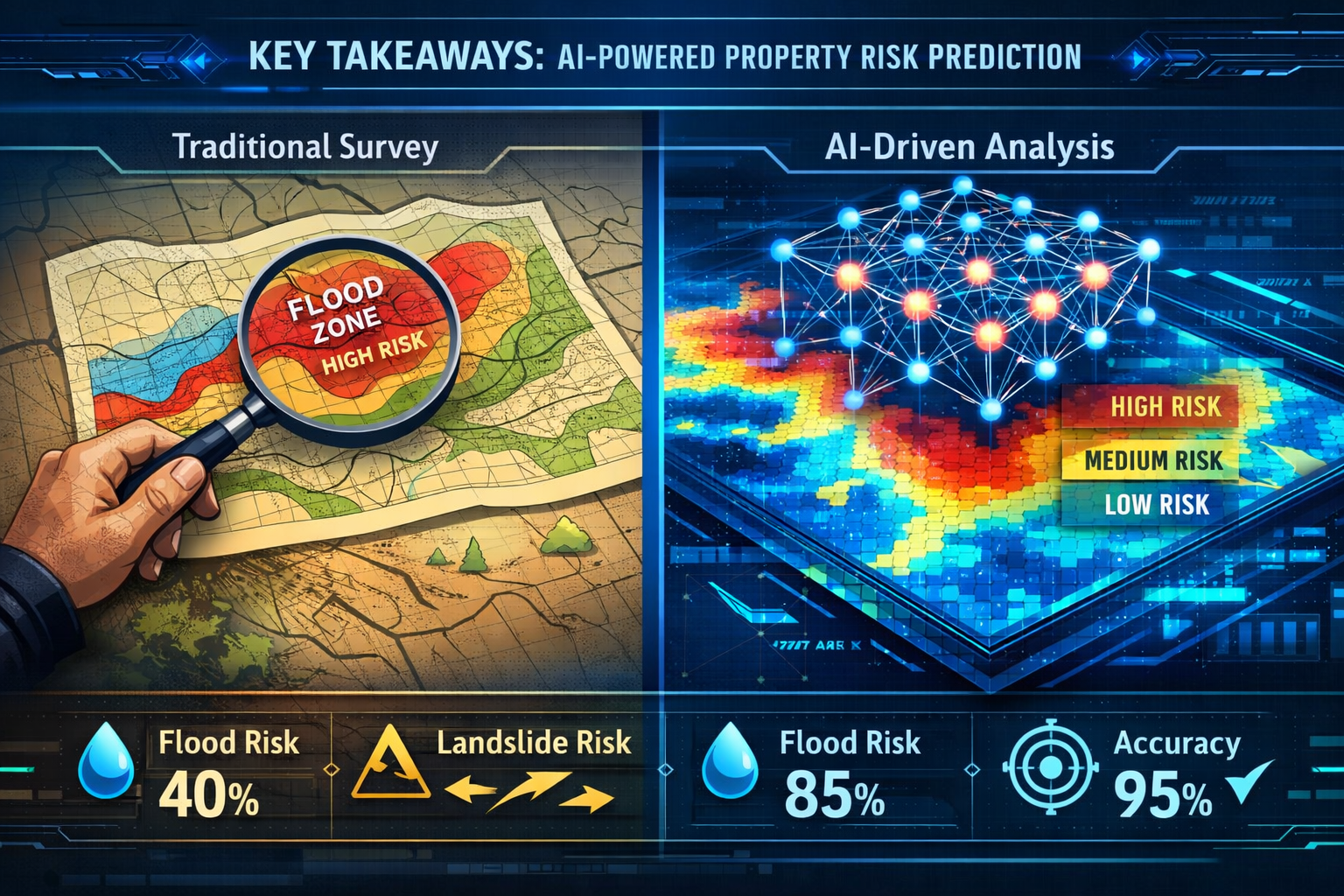
Traditional property surveys have served the real estate industry for decades, but they face inherent limitations when assessing dynamic environmental risks. Conventional house surveys typically rely on visual inspection, historical records, and static geographical data. These methods excel at identifying existing structural issues but struggle to predict future catastrophic events like landslides or flooding.
Key limitations of traditional approaches include:
- Static analysis: Surveys capture conditions at a single point in time without accounting for changing environmental factors
- Limited data scope: Human surveyors can only process a fraction of the relevant geological, meteorological, and historical data
- Subjective interpretation: Risk assessment depends heavily on individual surveyor experience and judgment
- Slow response times: Manual analysis of complex terrain and weather patterns takes days or weeks
- Reactive rather than predictive: Traditional methods identify existing problems but rarely forecast future risks
The consequences of these limitations are significant. Property buyers may unknowingly invest in high-risk locations, developers may proceed with unsuitable construction projects, and communities may lack adequate warning systems for natural disasters. The financial and human costs of landslides and floods run into billions annually, with many incidents occurring in areas where better prediction could have enabled preventive measures.
How Machine Learning Transforms Risk Prediction
Machine learning fundamentally changes the equation by processing vast datasets to identify complex patterns that predict future events. Unlike rule-based systems that follow predetermined logic, machine learning algorithms learn from historical data to make increasingly accurate predictions as they process more information.
The Hong Kong landslide prediction system exemplifies this transformation. Trained on 380 historical rainfall events linked to documented landslides between 1996 and 2023, the AI model identified subtle correlations between rainfall intensity, duration, soil saturation levels, slope characteristics, and landslide probability[1]. This analysis incorporated data from 60,000 man-made slopes and 2,700 recorded landslip reports—a dataset no human team could comprehensively analyze.
"The AI engine was trained on 22 million slope data points, enabling it to detect risk patterns that would be impossible to identify through traditional analysis methods."[1]
The system's continuous learning capability represents another crucial advantage. As new rainfall events occur and slope performance data accumulates, the AI model automatically refines its predictions without manual reprogramming[1]. This creates a virtuous cycle where prediction accuracy improves over time, adapting to changing climate patterns and environmental conditions.
For flood prediction, AI systems employ similar methodologies. Researchers at Cornell University developed machine learning models that improve flood projections under climate change scenarios, analyzing how extreme precipitation events will evolve in frequency and intensity[6]. These models process climate data, topographical information, drainage patterns, and historical flood records to generate probabilistic forecasts for specific locations.
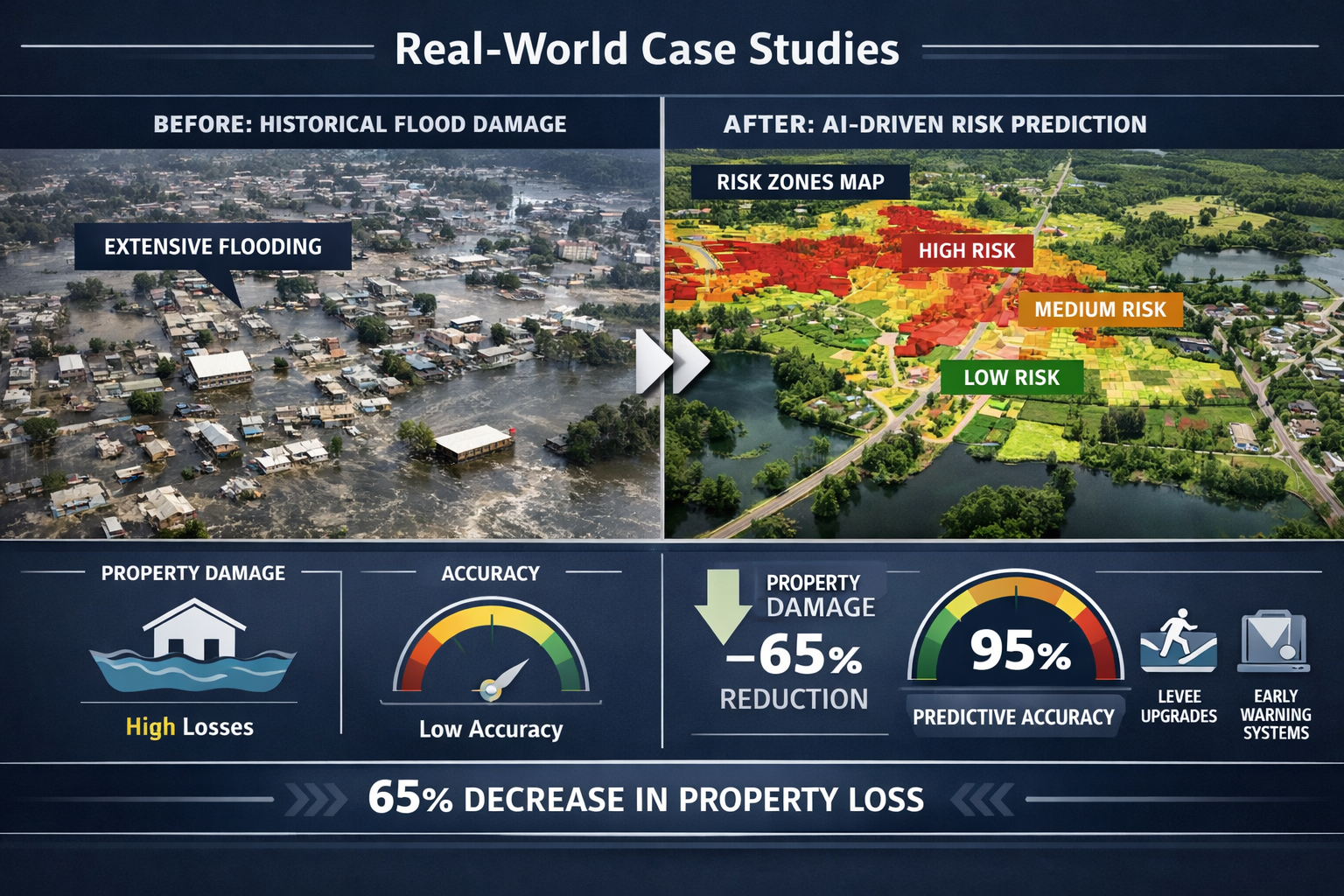
Real-World Case Studies: AI-Driven Risk Prediction in Action
Hong Kong's Groundbreaking Landslide Prediction System
Hong Kong's deployment of AI-enhanced landslide prediction in 2026 provides the most comprehensive real-world case study of this technology's practical application. Presented by Raymond Cheung Wai-man, head of the Geotechnical Engineering Office, and Edward Chu Kei-hong, senior geotechnical engineer, the system represents years of development and testing[1].
System Architecture and Capabilities:
The Hong Kong system operates through several integrated components:
- Data Collection Network: Real-time meteorological stations, geotechnical monitoring sensors, and satellite feeds continuously stream data into the central AI engine
- Processing Infrastructure: Machine learning algorithms analyze incoming data against historical patterns every five minutes
- Output Dashboard: A custom operational interface generates updated landslide probability maps showing risk levels across the territory[1]
- Alert System: Automated notifications trigger when risk thresholds are exceeded in specific zones
During dynamic live testing in April and May 2025, the system demonstrated reliable early detection of risk zones and accurately predicted reported landslides before they occurred[1]. This field validation proved the model's real-world effectiveness beyond laboratory simulations.
The accuracy improvement from 70% to over 90% translates directly into practical benefits:
| Metric | Traditional Methods | AI-Enhanced System | Improvement |
|---|---|---|---|
| Prediction Accuracy | ~70% | >90% | +20 percentage points |
| Update Frequency | Daily or less | Every 5 minutes | 288x faster |
| Data Points Analyzed | Thousands | 22 million | 11,000x more comprehensive |
| False Positive Rate | High | Significantly reduced | Better resource allocation |
For property surveyors conducting Level 3 building surveys in mountainous or hilly regions, access to this type of predictive data fundamentally changes risk assessment capabilities. Rather than relying solely on historical incident reports and visual slope inspection, surveyors can now provide clients with probabilistic forecasts of future landslide risk based on comprehensive AI analysis.
Taiwan Earthquake Response: Rapid Landslide Detection
Following the April 3, 2024 Taiwan 7.4 magnitude earthquake, researchers demonstrated AI's capability for rapid disaster response. Lorenzo Nava from Cambridge's Departments of Earth Sciences and Geography led a team that identified 7,000 landslides within three hours of satellite imagery acquisition[2].
This unprecedented speed resulted from an AI framework that achieved 95.6% accuracy in identifying landslides from satellite imagery[2]. The system combined:
- Optical satellite images: High-resolution visual data captured in clear weather conditions
- Radar data: Synthetic aperture radar (SAR) that penetrates cloud cover and captures images at night[2]
- Machine learning classification: Algorithms trained to recognize landslide signatures in diverse imagery types
The multi-satellite approach addresses a critical challenge in disaster response: poor weather conditions often obscure optical imagery precisely when rapid assessment is most needed. By integrating radar data that functions regardless of cloud cover or darkness, the AI system maintains operational capability under all conditions[2].
For property surveyors, this technology offers transformative applications beyond disaster response. The same satellite imagery analysis can assess landslide susceptibility for properties during routine surveys, identifying historical slope failures and current risk indicators that ground-level inspection might miss. When integrated with comprehensive property surveys, this aerial perspective provides crucial context for risk assessment.
UCLA's Predictive Landslide Modeling
Researchers at UCLA developed artificial intelligence systems that predict landslides by analyzing geological, meteorological, and topographical data patterns. Their work demonstrates how machine learning can forecast slope failures days or weeks in advance, providing critical warning time for evacuation and preventive measures[3].
The UCLA approach focuses on identifying precursor conditions that indicate elevated landslide risk:
- Soil moisture saturation levels approaching critical thresholds
- Rainfall intensity and duration patterns associated with historical failures
- Slope angle and geological composition vulnerabilities
- Vegetation cover changes that affect soil stability
- Seismic activity that may destabilize slopes
By monitoring these factors continuously and comparing current conditions against historical failure patterns, the AI system generates risk scores for specific locations. This probabilistic approach acknowledges uncertainty while providing actionable intelligence for decision-makers.
Property surveyors can leverage similar methodologies when assessing sites in landslide-prone regions. Rather than simply noting that a property sits on a slope, AI-enhanced surveys can quantify risk levels based on comprehensive analysis of local conditions and historical patterns.
Integrating GIS and LiDAR Data with AI for Enhanced Property Assessments
Geographic Information Systems (GIS) as the Foundation
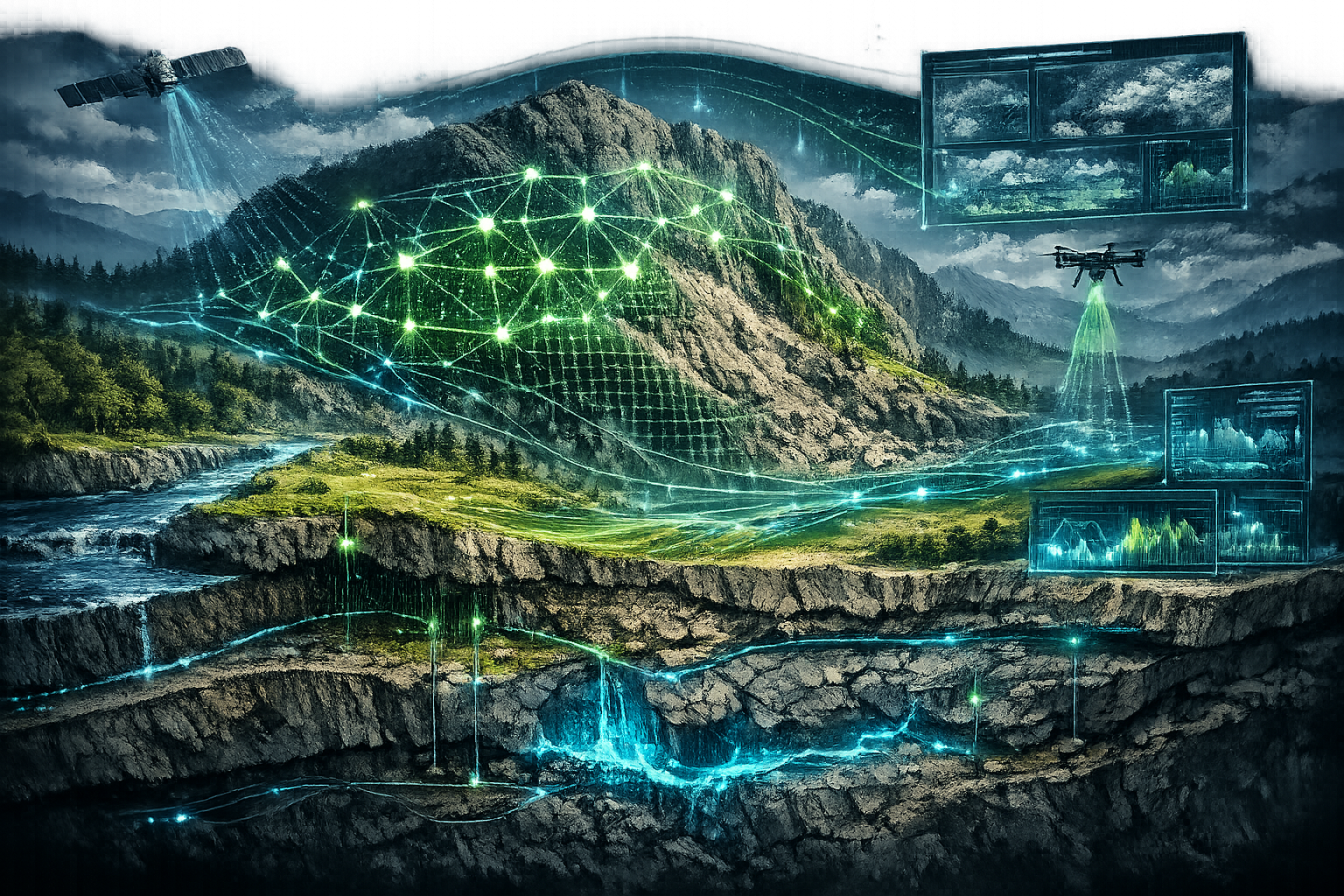
Geographic Information Systems provide the spatial framework that makes AI-powered risk prediction possible. GIS platforms integrate multiple data layers—topography, hydrology, geology, land use, infrastructure, and historical hazard zones—into unified spatial databases that machine learning algorithms can analyze.
Key GIS data layers for flood and landslide prediction:
🗺️ Elevation and Topography: Digital elevation models (DEMs) reveal slope angles, drainage patterns, and terrain features that influence water flow and slope stability
💧 Hydrology: Stream networks, watershed boundaries, floodplains, and historical flood extents define water-related risks
🪨 Geology: Soil types, bedrock composition, fault lines, and geological formations indicate structural stability
🏘️ Land Use: Development patterns, impervious surfaces, and vegetation cover affect water absorption and runoff
📊 Historical Hazards: Documented landslides, floods, and other events provide training data for AI models
Modern GIS platforms like ArcGIS, QGIS, and specialized surveying software enable surveyors to overlay these data layers and visualize complex spatial relationships. When integrated with AI analysis, these systems transform from static mapping tools into dynamic prediction engines.
For surveyors conducting Level 2 surveys or more comprehensive assessments, GIS integration provides context that ground-level inspection cannot capture. A property may appear stable during visual inspection, but GIS analysis might reveal it sits within a historical flood zone or on geological formations prone to slope failure.
LiDAR Technology: Precision Terrain Mapping
Light Detection and Ranging (LiDAR) technology revolutionizes terrain mapping by providing centimeter-level accuracy in three-dimensional surface measurements. LiDAR systems mounted on aircraft or drones emit laser pulses that bounce off surfaces, measuring return times to calculate precise distances and create detailed point clouds representing terrain features.
LiDAR advantages for risk assessment:
- Vegetation penetration: Laser pulses penetrate tree canopy to measure ground surface beneath, revealing terrain features hidden by vegetation
- High resolution: Point clouds with millions of measurements per square kilometer capture subtle topographical features
- Change detection: Repeat LiDAR surveys identify ground movement, erosion, or other changes indicating instability
- 3D modeling: Point cloud data generates accurate digital terrain models for slope analysis and water flow simulation
When combined with AI analysis, LiDAR data enables sophisticated risk modeling. Machine learning algorithms can analyze micro-topographical features that correlate with landslide susceptibility, identify drainage patterns that concentrate flood risk, and detect subtle ground deformation that precedes slope failure.
The integration workflow typically follows these steps:
- LiDAR acquisition: Aerial or drone-based scanning captures point cloud data for the property and surrounding area
- Point cloud processing: Raw data is filtered, classified (ground vs. vegetation vs. structures), and converted to usable formats
- Terrain model generation: Digital elevation models and 3D surface representations are created from classified points
- GIS integration: Terrain models are imported into GIS platforms alongside other spatial data layers
- AI analysis: Machine learning algorithms analyze integrated datasets to generate risk predictions
For property surveyors, this technology is increasingly accessible. Drone-mounted LiDAR systems have become affordable enough for mid-sized surveying firms, while cloud-based processing services handle the computational demands of point cloud analysis. The result is survey capabilities that were exclusive to major engineering projects just a few years ago, now available for routine property assessments.
Real-Time Monitoring and Continuous Assessment
The true power of AI-driven prediction emerges when systems operate continuously rather than producing one-time assessments. The Hong Kong landslide system's five-minute update cycle exemplifies this approach, fusing real-time meteorological and geotechnical monitoring data to track changing conditions[1].
Components of continuous monitoring systems:
📡 Weather stations: Rainfall intensity, accumulation, temperature, and atmospheric pressure measurements feed into prediction models
🔬 Soil moisture sensors: Ground-based instruments measure saturation levels that indicate landslide risk
📏 Ground movement monitors: Inclinometers and GPS stations detect slope deformation before visible failure occurs
🛰️ Satellite monitoring: Regular imagery updates track changes in vegetation, surface water, and ground conditions
🌊 Stream gauges: Water level and flow rate measurements indicate flood risk and drainage system capacity
When integrated through AI platforms, these data streams enable dynamic risk assessment that responds to changing conditions. A property might have low landslide risk under normal conditions, but heavy rainfall could elevate risk levels within hours. Continuous monitoring systems detect these transitions and update risk assessments accordingly.
For surveyors, this creates opportunities for ongoing client relationships beyond one-time survey reports. Subscription-based monitoring services can provide property owners with continuous risk updates, alerting them when conditions warrant attention. This proactive approach aligns with the broader trend toward comprehensive property risk management rather than reactive problem-solving[5].
Implementation Steps for Surveyors Adopting AI Risk Prediction
Phase 1: Data Collection and Infrastructure Development
Surveyors beginning their AI journey must first establish robust data collection capabilities. This foundational phase determines the quality and comprehensiveness of future risk predictions.
Essential data categories to collect:
- Historical property records: Past survey reports, maintenance records, insurance claims, and documented issues
- Local hazard data: Government databases of floods, landslides, subsidence, and other geological events
- Environmental monitoring: Rainfall records, temperature data, soil conditions, and vegetation changes
- Topographical information: Elevation data, slope measurements, drainage patterns, and watershed boundaries
- Geological surveys: Soil composition, bedrock characteristics, fault lines, and underground water sources
Many surveyors already collect portions of this data during routine assessments. The key is systematizing collection and storing information in formats compatible with AI analysis. This typically means:
- Digitizing paper records and legacy data
- Adopting standardized data formats and classification systems
- Implementing database systems that support spatial and temporal queries
- Establishing partnerships with government agencies and research institutions for access to broader datasets
- Investing in data collection tools like GPS units, moisture meters, and drone systems
The infrastructure investment varies based on firm size and specialization. Small surveying practices might start with cloud-based GIS subscriptions and partnerships with data providers, while larger firms may develop proprietary databases and sensor networks. The critical factor is data quality and consistency—AI models trained on incomplete or inconsistent data produce unreliable predictions.
Phase 2: System Integration and Platform Selection
With data collection established, surveyors must select and integrate the technological platforms that will power their AI capabilities. This phase requires careful evaluation of available solutions and strategic decisions about build-versus-buy approaches.
Platform options for surveyors:
🔧 Commercial AI platforms: Ready-made solutions from companies specializing in geospatial AI and risk prediction
- Advantages: Immediate deployment, professional support, proven algorithms
- Considerations: Subscription costs, limited customization, dependency on vendor
💻 Open-source frameworks: Machine learning libraries like TensorFlow, PyTorch, and scikit-learn combined with GIS platforms
- Advantages: Customization flexibility, no licensing fees, community support
- Considerations: Requires technical expertise, longer development time, ongoing maintenance
🤝 Hybrid approaches: Commercial platforms for core functionality supplemented with custom development
- Advantages: Balance of convenience and customization
- Considerations: Integration complexity, multiple vendor relationships
For most surveying firms, hybrid approaches offer optimal value. Commercial GIS platforms like ArcGIS or QGIS provide robust spatial analysis capabilities, while specialized AI services handle machine learning processing. Custom development focuses on firm-specific workflows and client reporting requirements.
Integration checklist:
- ✅ GIS platform selection and configuration
- ✅ Data import and standardization procedures
- ✅ AI/ML service integration (cloud-based or local)
- ✅ Workflow automation for routine analyses
- ✅ Client reporting and visualization tools
- ✅ Mobile field data collection systems
- ✅ Quality control and validation procedures
The integration phase typically takes 3-6 months for small to medium firms, with ongoing refinement as staff gain experience with new systems. Training represents a critical component—surveyors must understand both the capabilities and limitations of AI tools to use them effectively during property assessments.
Phase 3: AI Model Training and Validation
Training machine learning models requires both technical expertise and domain knowledge. Surveyors must either develop in-house capabilities or partner with data scientists who understand property risk assessment.
Training process overview:
- Data preparation: Historical data is cleaned, labeled, and formatted for machine learning algorithms
- Feature selection: Relevant variables (rainfall, slope angle, soil type, etc.) are identified as model inputs
- Algorithm selection: Appropriate machine learning methods are chosen based on prediction goals
- Training: Models learn patterns from historical data linking conditions to outcomes (landslides, floods)
- Validation: Model predictions are tested against reserved data not used during training
- Refinement: Parameters are adjusted to improve accuracy and reduce false positives/negatives
The Hong Kong system's training on 380 historical rainfall events and 2,700 landslip reports illustrates the data requirements for robust models[1]. Surveyors in regions with limited historical records may need to supplement local data with broader regional or national datasets, adjusting for local conditions.
Validation is critical to ensure models produce reliable predictions rather than spurious correlations. Common validation approaches include:
- Cross-validation: Data is divided into multiple subsets, with models trained on some subsets and tested on others
- Temporal validation: Models trained on older data are tested on more recent events to ensure they capture current conditions
- Spatial validation: Models developed for one area are tested in similar regions to verify generalizability
- Expert review: Experienced surveyors evaluate predictions against professional judgment to identify anomalies
For surveyors without data science expertise, partnerships with universities or specialized consultants can provide model development services. Alternatively, pre-trained models from research institutions or government agencies can be adapted to local conditions with appropriate calibration.
Phase 4: Operational Deployment and Continuous Improvement
The final implementation phase transitions from development to routine operational use. This requires establishing workflows that integrate AI predictions into standard surveying practices.
Operational integration strategies:
📋 Survey protocol updates: Incorporate AI risk assessments into standard survey checklists and reporting templates
🎯 Risk-based prioritization: Use AI predictions to identify properties requiring enhanced investigation or monitoring
📱 Field tools: Equip surveyors with mobile access to AI predictions during site visits
📊 Client reporting: Develop clear visualizations and explanations of AI-generated risk assessments
⚠️ Alert systems: Implement notifications for properties where risk levels change significantly
The Hong Kong system's operational dashboard provides a model for professional deployment[1]. Surveyors need similar interfaces that present complex AI predictions in accessible formats for both professional users and property owner clients.
Continuous improvement mechanisms:
- Regular model retraining as new data accumulates
- Feedback loops where surveyor observations refine AI predictions
- Performance monitoring to track prediction accuracy over time
- Algorithm exploration to test new machine learning approaches[1]
- Integration of emerging data sources (new satellites, sensor types, climate models)
The AI model's autonomous improvement capability, as implemented in Hong Kong, represents the ideal endpoint—systems that automatically enhance their predictions without manual intervention[1]. However, human oversight remains essential to catch anomalies, validate significant predictions, and ensure models don't develop biases or errors.
For surveyors, this means establishing quality assurance procedures where AI predictions are reviewed by experienced professionals before inclusion in client reports. Over time, as confidence in model accuracy grows, the review process can become more selective, focusing on high-risk predictions or unusual cases.
Practical Applications: Transforming Property Survey Deliverables
Enhanced Risk Reporting for Homebuyers
Traditional survey reports identify existing conditions but rarely quantify future risks. AI-powered predictions transform this by providing probabilistic risk assessments that help homebuyers make informed decisions.
Enhanced survey report components:
🏠 Flood Risk Analysis
- Historical flood frequency and severity for the property location
- Predicted flood probability under current and future climate scenarios
- Estimated flood depths and extents for various return periods (10-year, 100-year events)
- Comparison to surrounding properties and regional averages
⛰️ Landslide Susceptibility Assessment
- Slope stability analysis based on terrain, geology, and vegetation
- Rainfall thresholds that elevate landslide risk
- Historical landslide incidents within defined radius
- Seasonal risk variations and long-term trends
💧 Drainage and Subsidence Evaluation
- Surface water flow patterns and accumulation zones
- Groundwater conditions and seasonal variations
- Soil subsidence risk based on composition and moisture dynamics
- Infrastructure impacts on natural drainage
These assessments provide actionable intelligence that helps buyers understand not just current property condition but future risk exposure. A comprehensive Level 3 survey enhanced with AI predictions offers dramatically greater value than traditional approaches.
Commercial Property Due Diligence
For commercial properties, AI-enhanced risk assessment addresses both immediate concerns and long-term investment viability. Developers, investors, and corporate buyers require sophisticated analysis that quantifies risk exposure and potential mitigation costs.
Commercial applications include:
- Development site selection: AI analysis identifies locations with optimal risk profiles before land acquisition
- Insurance optimization: Detailed risk data supports negotiations for appropriate coverage and premiums
- Asset valuation: Risk predictions inform property valuations and investment decisions
- Regulatory compliance: Documentation of hazard assessments for planning approvals and environmental permits
- Portfolio management: Continuous monitoring of risk across multiple properties enables proactive management
The speed of AI analysis particularly benefits commercial transactions, where rapid due diligence timelines often compress survey schedules. Systems that generate comprehensive risk assessments within hours rather than weeks provide competitive advantages in fast-moving markets.
Infrastructure Planning and Development
Beyond individual property assessments, AI-powered risk prediction supports broader infrastructure planning and community development. Surveyors working with developers, municipalities, and utilities can provide insights that shape land use decisions and infrastructure investments.
Infrastructure applications:
🏗️ Master planning: Identify suitable areas for development based on comprehensive risk analysis
🛣️ Transportation corridors: Route selection that avoids high-risk zones for floods and landslides
💡 Utility placement: Underground infrastructure siting that accounts for subsidence and flood risks
🌳 Green infrastructure: Optimal placement of drainage systems, retention ponds, and vegetative buffers
🏘️ Resilient design: Building code recommendations and design standards based on local risk profiles
These applications align with growing emphasis on climate adaptation and resilient development. As extreme weather events increase in frequency and intensity, AI-powered risk prediction becomes essential for sustainable infrastructure planning.
Challenges and Considerations for AI Implementation
Data Quality and Availability Issues
The accuracy of AI predictions depends fundamentally on the quality and comprehensiveness of training data. Surveyors implementing these systems face several data-related challenges:
Common data limitations:
- Incomplete historical records: Many regions lack comprehensive documentation of past floods and landslides
- Inconsistent formats: Legacy data exists in incompatible formats requiring extensive conversion
- Spatial gaps: Monitoring networks may not cover all areas uniformly
- Temporal limitations: Climate change means historical patterns may not predict future conditions
- Proprietary restrictions: Valuable data may be held by private entities or government agencies with access limitations
Addressing these challenges requires strategic approaches:
- Data partnerships: Collaborate with government agencies, research institutions, and industry organizations to access broader datasets
- Standardization efforts: Participate in industry initiatives to establish common data formats and sharing protocols
- Synthetic data generation: Use simulation models to supplement limited historical records
- Transfer learning: Adapt models trained on data-rich regions to areas with limited records
- Continuous collection: Implement ongoing monitoring to build comprehensive datasets over time
Surveyors must also recognize that AI models inherit biases present in training data. If historical records under-represent certain property types, geological conditions, or geographic areas, predictions for those categories may be less reliable. Transparency about these limitations in client reporting maintains professional integrity.
Professional Liability and Regulatory Considerations
AI-enhanced predictions introduce new professional liability questions that surveyors must address proactively. When AI systems predict future events rather than documenting current conditions, the potential for incorrect predictions and associated liability increases.
Key liability considerations:
⚖️ Standard of care: How do AI predictions affect professional standards and expectations?
📄 Disclosure requirements: What must surveyors disclose about AI model limitations and uncertainty?
🛡️ Insurance coverage: Do professional liability policies cover AI-generated predictions?
📋 Regulatory compliance: Are there specific regulations governing AI use in property surveys?
🤝 Client agreements: How should contracts address AI predictions and associated uncertainties?
Best practices for managing these risks include:
- Clear communication: Explain that AI predictions are probabilistic, not deterministic
- Uncertainty quantification: Report confidence intervals and probability ranges, not single-point predictions
- Human oversight: Maintain professional review of AI outputs before client delivery
- Documentation: Record model versions, input data, and assumptions underlying predictions
- Insurance consultation: Verify that professional liability coverage extends to AI-enhanced services
Regulatory frameworks for AI in surveying are still evolving. Surveyors should engage with professional organizations and regulatory bodies to help shape appropriate standards that protect both practitioners and clients while enabling beneficial technology adoption.
Cost-Benefit Analysis for Different Firm Sizes
The investment required for AI implementation varies dramatically based on firm size, specialization, and implementation approach. Surveyors must carefully evaluate costs against potential benefits.
Implementation cost categories:
| Cost Category | Small Firm (1-5 surveyors) | Medium Firm (6-20 surveyors) | Large Firm (20+ surveyors) |
|---|---|---|---|
| Software/Platforms | £5,000-15,000/year | £15,000-50,000/year | £50,000-200,000/year |
| Data Acquisition | £2,000-10,000/year | £10,000-30,000/year | £30,000-100,000/year |
| Training/Education | £3,000-8,000 | £10,000-25,000 | £25,000-75,000 |
| Technical Support | £5,000-12,000/year | £15,000-40,000/year | £40,000-120,000/year |
| Hardware/Infrastructure | £3,000-8,000 | £10,000-30,000 | £30,000-100,000+ |
Potential benefits:
✅ Revenue enhancement: Premium pricing for AI-enhanced surveys (15-30% higher fees)
✅ Market differentiation: Competitive advantage in acquiring clients seeking advanced risk assessment
✅ Efficiency gains: Faster analysis enables higher survey volume with same staff
✅ Risk reduction: More accurate predictions reduce liability exposure and insurance costs
✅ Service expansion: New revenue streams from continuous monitoring and consulting services
For small firms, cloud-based platforms and data partnerships offer lower-cost entry points. Medium firms can justify more substantial investments in proprietary systems and specialized staff. Large firms may develop comprehensive in-house capabilities with dedicated data science teams.
The business case strengthens in regions with high natural hazard exposure, where property buyers and developers place premium value on accurate risk assessment. Firms specializing in commercial building surveys or high-value residential properties may find AI implementation particularly profitable.
The Future Landscape: AI Trends Shaping Surveying in 2026 and Beyond
Emerging Technologies and Capabilities
The AI systems deployed in 2026 represent just the beginning of technological transformation in property surveying. Several emerging capabilities promise even more dramatic advances in coming years.
Next-generation technologies:
🤖 Autonomous inspection: Drones and robots equipped with AI perform routine site inspections with minimal human supervision
🔮 Predictive maintenance: AI systems forecast when property components will fail, enabling proactive repairs
🌐 Digital twins: Virtual property replicas continuously updated with sensor data enable sophisticated simulation and analysis
📡 IoT integration: Networks of smart sensors provide real-time property condition monitoring
🧠 Explainable AI: Advanced systems that clarify their reasoning processes, building trust and enabling professional validation
The convergence of these technologies creates possibilities that extend far beyond current capabilities. Imagine continuous AI monitoring of every property in a surveyor's portfolio, with automatic alerts when conditions warrant attention. Or AI systems that simulate the impact of proposed renovations on flood risk or structural stability before construction begins.
Climate Change Adaptation and Resilience
As climate change intensifies extreme weather events, AI-powered risk prediction becomes increasingly critical for property resilience. The systems deployed in 2026 must account for non-stationary climate conditions where historical patterns no longer predict future risks.
Climate adaptation applications:
🌡️ Dynamic risk mapping: AI models that incorporate climate projections to predict how risks will evolve over property lifetimes
🌊 Sea level rise assessment: Integration of coastal flooding predictions with property-specific vulnerability analysis
🌪️ Extreme event modeling: Simulation of unprecedented weather events beyond historical experience
🏡 Adaptation planning: AI-generated recommendations for property modifications that reduce climate risks
The Cornell University research on AI-improved flood projections under climate change demonstrates this direction[6]. As these models mature, surveyors will provide clients with forward-looking risk assessments that account for changing climate conditions over 20, 50, or 100-year timeframes.
This capability transforms property investment decisions. Buyers can evaluate not just current risk but how climate change will affect property value and insurability over their ownership period. Developers can design infrastructure and buildings that remain resilient as conditions change.
Professional Evolution and Skills Development
The integration of AI into surveying requires professional evolution beyond technical implementation. Surveyors must develop new skills and adapt professional practices to maximize technology benefits while maintaining essential human judgment.
Evolving professional competencies:
📊 Data literacy: Understanding data quality, statistical concepts, and analytical limitations
💻 Technical proficiency: Comfort with GIS platforms, AI tools, and digital workflows
🎓 Continuous learning: Commitment to ongoing education as technologies evolve rapidly
🗣️ Communication skills: Ability to explain complex AI predictions to non-technical clients
⚖️ Ethical judgment: Navigating professional responsibilities in AI-augmented practice
Professional organizations and educational institutions are responding with updated curricula and certification programs. The future surveyor combines traditional field skills with digital competencies, using AI as a powerful tool that enhances rather than replaces professional expertise.
This evolution mirrors transformations in other professions where AI augments human capabilities. Radiologists use AI to identify anomalies in medical images but retain responsibility for diagnosis and treatment recommendations. Similarly, surveyors will use AI for comprehensive risk analysis while maintaining professional judgment about property conditions and client recommendations.
Conclusion: Embracing the AI Revolution in Property Surveys
Revolutionizing Property Surveys: How AI and Machine Learning Predict Floods and Landslides in 2026 represents a watershed moment in property risk assessment. The technology deployed this year—achieving over 90% prediction accuracy, processing 22 million data points, and generating real-time risk updates every five minutes—fundamentally transforms what's possible in surveying practice[1].
For property surveyors, the implications are profound. Traditional surveys that document existing conditions evolve into comprehensive risk assessments that predict future hazards with unprecedented accuracy. Clients receive actionable intelligence that protects investments and potentially saves lives. The profession gains powerful tools that enhance both service quality and business viability.
The case studies from Hong Kong, Taiwan, and UCLA demonstrate that AI-powered prediction is not speculative future technology—it's operational reality in 2026[1][2][3]. Systems are detecting landslides before they occur, identifying thousands of slope failures within hours of earthquakes, and forecasting flood risks under changing climate conditions. Surveyors who integrate these capabilities gain competitive advantages while providing superior client value.
Actionable Next Steps for Surveyors
For firms ready to begin AI implementation:
- Assess current capabilities: Evaluate existing data collection, digital infrastructure, and staff technical skills
- Start small: Implement pilot projects in specific service areas or geographic regions before full-scale deployment
- Build partnerships: Collaborate with technology providers, data sources, and technical experts to accelerate implementation
- Invest in training: Ensure staff develop necessary competencies through formal education and hands-on experience
- Engage clients: Communicate the value of AI-enhanced surveys and gather feedback on reporting preferences
- Monitor developments: Stay informed about emerging technologies, regulatory changes, and industry best practices
- Contribute to standards: Participate in professional organizations shaping AI guidelines and ethical frameworks
For property buyers and developers:
- Request AI-enhanced surveys: Ask surveyors about their capabilities for predictive risk assessment
- Evaluate long-term risks: Consider not just current conditions but how climate change and environmental factors will affect properties over time
- Invest in monitoring: For high-value properties, consider ongoing AI-powered monitoring services beyond one-time surveys
- Factor risk into decisions: Use predictive assessments to inform purchase prices, insurance coverage, and property modifications
- Demand transparency: Ensure surveyors clearly explain AI predictions, confidence levels, and underlying assumptions
The revolution in property surveys through AI and machine learning is not coming—it's here in 2026. The question is not whether to adopt these technologies but how quickly and effectively to integrate them into professional practice. Surveyors who embrace this transformation will lead the industry forward, providing unprecedented value to clients while advancing the profession's capabilities.
The ground beneath our properties tells stories of past events and future risks. With AI and machine learning, we're finally learning to read those stories with the accuracy and foresight necessary to protect investments, communities, and lives. The future of property surveying has arrived—and it's more powerful than anyone imagined.
References
[1] Ai Enhanced Landslide Model Ready For 2026 Deployment In Hong Kong – https://www.geoengineer.org/news/ai-enhanced-landslide-model-ready-for-2026-deployment-in-hong-kong
[2] 2025 07 Ai Landslides Disaster Response – https://phys.org/news/2025-07-ai-landslides-disaster-response.html
[3] Artificial Intelligence Can Predict Landslides – https://newsroom.ucla.edu/releases/artificial-intelligence-can-predict-landslides
[4] The Future Of Land Surveying Technology And Upcoming Trends In 2026 – https://metricop.com/blogs/land-surveying/the-future-of-land-surveying-technology-and-upcoming-trends-in-2026
[5] Ai And Machine Learning In Property Surveying Predicting Risks And Automating Analysis – https://nottinghillsurveyors.com/blog/ai-and-machine-learning-in-property-surveying-predicting-risks-and-automating-analysis
[6] Ai Improves Flood Projections Under Climate Change – https://news.cornell.edu/stories/2026/01/ai-improves-flood-projections-under-climate-change
[7] Artificial Intelligence Ai Disaster Risk Reduction – https://www.preventionweb.net/collections/artificial-intelligence-ai-disaster-risk-reduction
