
Imagine walking through a building that doesn't yet exist, watching as sensors predict when its elevator will need maintenance three months from now, or simulating how it will withstand a hurricane before breaking ground. This isn't science fiction—it's the transformative power of Real-Time 3D Digital Twins for Property Development: Interactive Models That Update Live. In 2026, property developers are moving beyond static blueprints and traditional surveys, embracing dynamic virtual replicas that continuously evolve with real-world conditions. These living digital models are revolutionizing how we plan, construct, and manage properties by transforming land behavior analysis from a one-time snapshot into an ongoing, predictive conversation.
Key Takeaways
- 🏗️ Real-time digital twins integrate IoT sensors, AI, and historical data to create living 3D models that continuously update, replacing static property surveys with dynamic monitoring systems
- 💰 Cost reduction of up to 30% in maintenance expenses through predictive failure analysis and AI-powered automation that makes digital twin technology accessible beyond luxury developments
- 🌍 Pre-construction simulation enables developers to test building performance under various scenarios—from energy consumption to natural disaster resilience—before investing in physical construction
- 📊 Comprehensive data integration combines BIM, laser scanning, GIS data, and real-time sensor feeds into unified models that support faster decision-making and collaborative design iteration
- 🎯 Priority adoption in 2026 focuses on mission-critical sectors including healthcare, higher education, social housing, and large commercial portfolios where operational complexity demands continuous monitoring
Understanding Digital Twin Technology in Property Development
What Are Real-Time 3D Digital Twins?
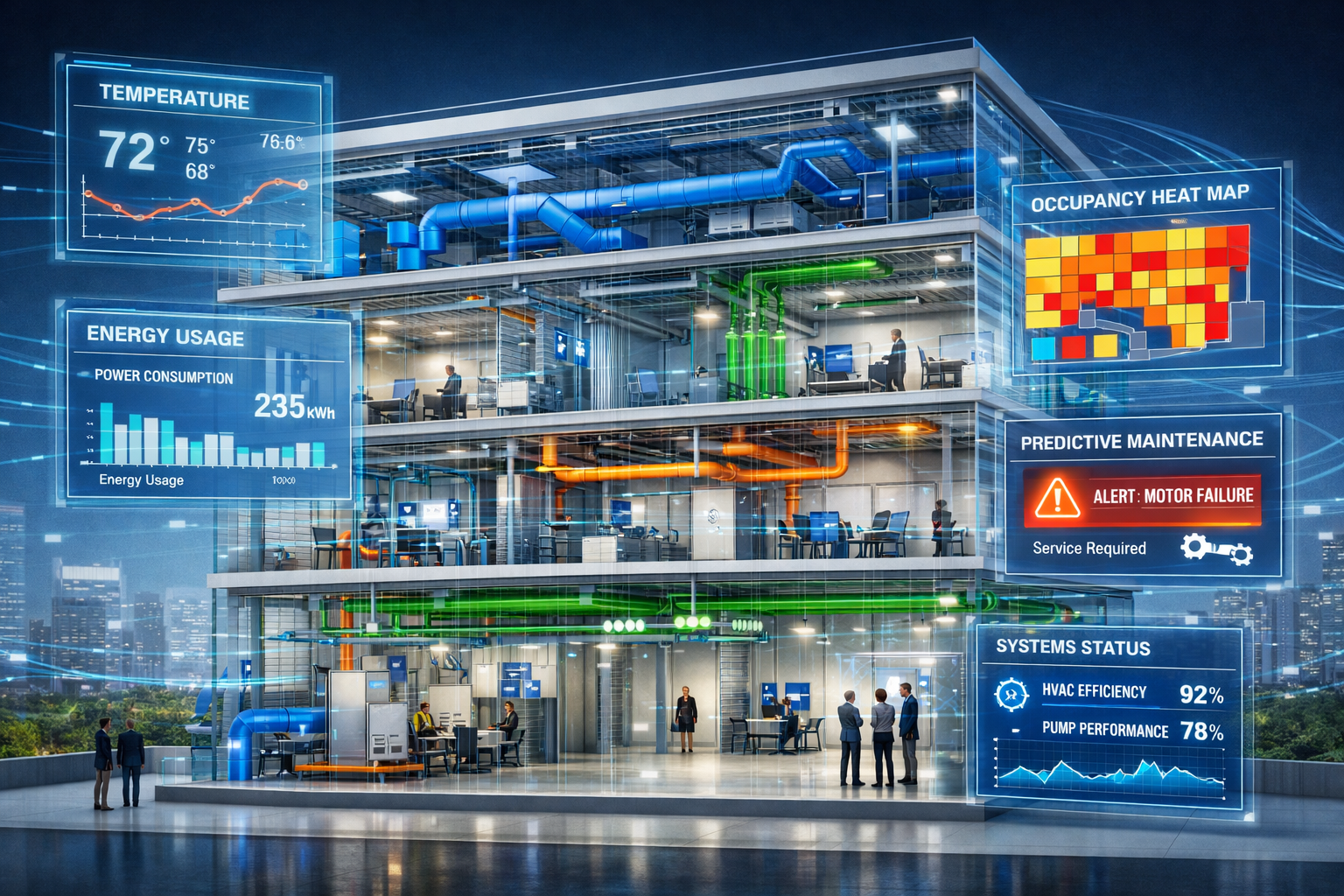
Digital twins are sophisticated virtual replicas of physical properties that go far beyond traditional 3D renderings or architectural visualizations. Unlike static models that freeze a building's design at a single point in time, Real-Time 3D Digital Twins for Property Development: Interactive Models That Update Live function as dynamic, continuously evolving representations that mirror their physical counterparts in real-time[3].
These advanced systems integrate multiple data streams to create a comprehensive digital ecosystem:
- Building Information Modeling (BIM) data containing detailed architectural specifications
- Point cloud data from laser scanning that captures precise spatial measurements
- Geographic Information System (GIS) data for contextual site analysis
- IoT sensor networks providing continuous environmental and operational monitoring
- Historical maintenance records and performance analytics
- AI algorithms that analyze patterns and predict future conditions
The result is a living digital model that doesn't just show what a property looks like—it reveals how it performs, predicts how it will behave, and enables stakeholders to test interventions before implementing them physically[4].
How Digital Twins Differ from Traditional 3D Models
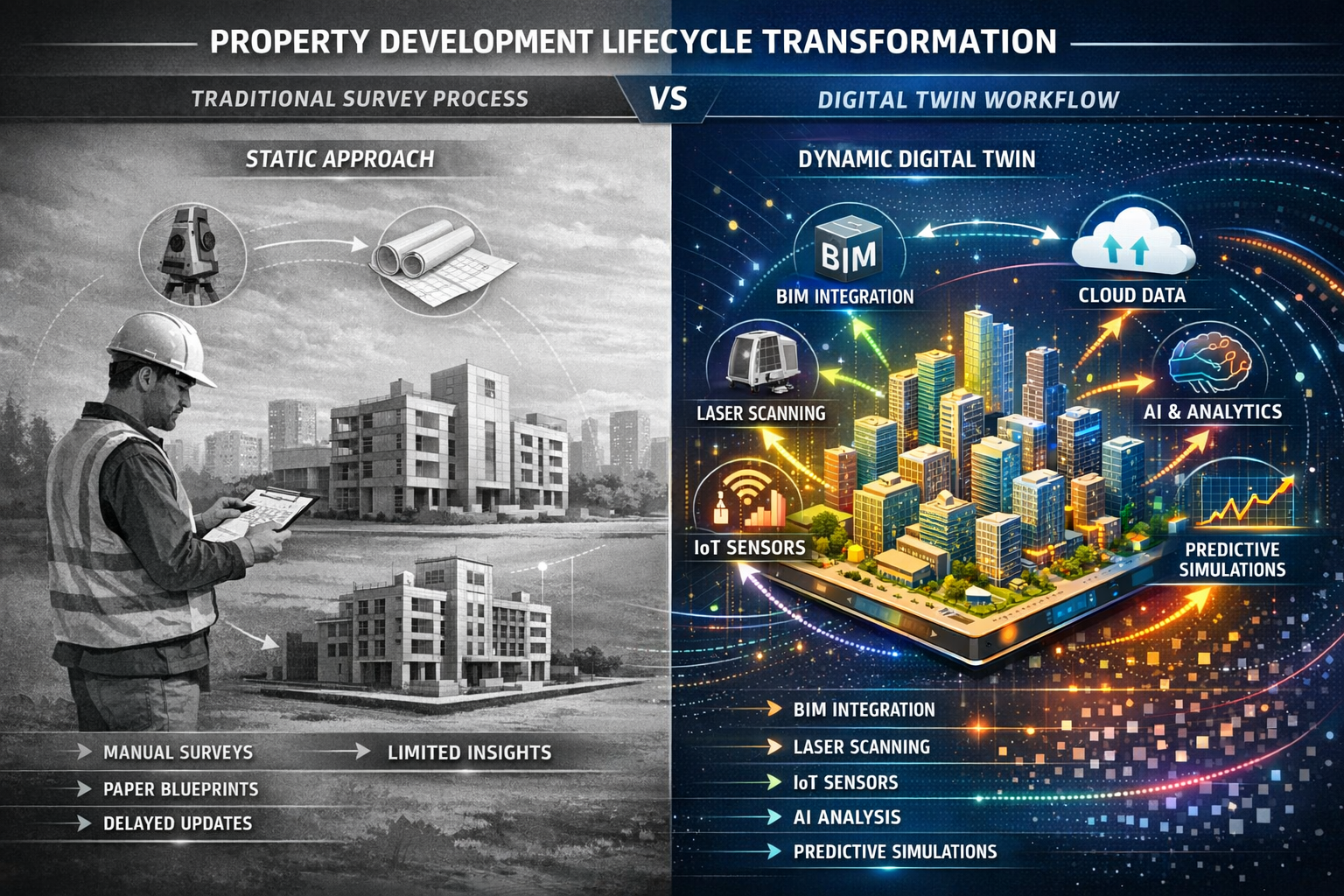
Traditional architectural renderings and 3D models serve valuable purposes during design phases, but they remain fundamentally static. Once created, they require manual updates and cannot reflect changing real-world conditions. In contrast, digital twins offer several transformative advantages:
| Traditional 3D Models | Real-Time Digital Twins |
|---|---|
| Static snapshot at design phase | Continuous real-time updates |
| Manual updates required | Automatic data synchronization |
| Visual representation only | Integrated performance analytics |
| Limited to design validation | Lifecycle monitoring and prediction |
| Single-purpose visualization | Multi-stakeholder collaboration platform |
When conducting comprehensive condition survey reports, traditional methods capture property conditions at a specific moment. Digital twins transform this approach by maintaining an ongoing record that automatically updates as conditions change, creating a dynamic baseline for comparison[3].
The Technology Stack Behind Interactive Models
Creating Real-Time 3D Digital Twins for Property Development: Interactive Models That Update Live requires a sophisticated integration of technologies working in harmony:
Data Capture Technologies:
- 📸 Laser scanning and photogrammetry for precise spatial documentation
- 🛰️ Drone surveys for aerial perspectives and site context
- 📱 Mobile scanning applications for rapid updates
- 🔍 IoT sensors for continuous environmental monitoring
Processing and Intelligence:
- 🤖 AI-powered component recognition that automatically categorizes building elements, distinguishing load-bearing walls from decorative partitions and reducing creation costs significantly[3]
- ☁️ Cloud computing platforms for data storage and processing
- 🧠 Machine learning algorithms for predictive analytics
- 📊 Data integration engines that synthesize multiple sources
Visualization and Interaction:
- 🖥️ Web-based 3D viewers accessible from any device
- 🥽 Virtual reality interfaces for immersive experiences
- 📱 Mobile applications for field access
- 🎮 Real-time rendering engines for smooth interaction
This technology stack enables project management teams to monitor construction progress, validate design decisions, and coordinate across disciplines with unprecedented efficiency.
Transforming Static Surveys into Dynamic Monitoring Tools
From Point-in-Time Assessments to Continuous Intelligence
Traditional property surveys—whether Level 2 or Level 3 building surveys—provide valuable insights at a specific moment. However, properties are dynamic entities that change over time due to environmental factors, usage patterns, and natural aging. Digital twins bridge this gap by transforming one-time assessments into continuous intelligence platforms.
"Digital twins are no longer static 3D models but living, dynamic representations that integrate real-time data from IoT sensors, historical maintenance records, and AI to provide continuous monitoring of building performance." [3]
This shift has profound implications for property development:
Before Digital Twins:
- Annual or periodic inspections reveal problems after they develop
- Maintenance schedules based on manufacturer recommendations rather than actual conditions
- Limited ability to predict performance issues
- Reactive approach to building management
With Real-Time Digital Twins:
- ⚡ Continuous monitoring detects anomalies as they emerge
- 🎯 Predictive maintenance schedules interventions before failures occur
- 📈 Performance optimization based on actual usage patterns
- 🔄 Proactive management prevents costly emergency repairs
For instance, when integrated with inspection software, digital twins can reduce maintenance costs by up to 30% through predictive failure analysis. Sensors might detect unusual vibrations in a pump, triggering AI analysis that predicts likely failure time, enabling scheduled maintenance before a catastrophic breakdown disrupts operations[3].
Simulating Land and Building Behavior Under Various Conditions
One of the most powerful applications of Real-Time 3D Digital Twins for Property Development: Interactive Models That Update Live is the ability to simulate how properties will perform under different scenarios before committing to physical construction. This capability transforms risk assessment and planning processes across multiple dimensions.
Environmental Performance Simulation:
Developers can evaluate building energy consumption patterns under various climate scenarios, testing how design modifications impact operational costs. For example, the University of North Texas is currently using digital twins to create 3D campus building models and evaluate solar panel placement potential, optimizing renewable energy integration before installation[2].
Structural Resilience Testing:
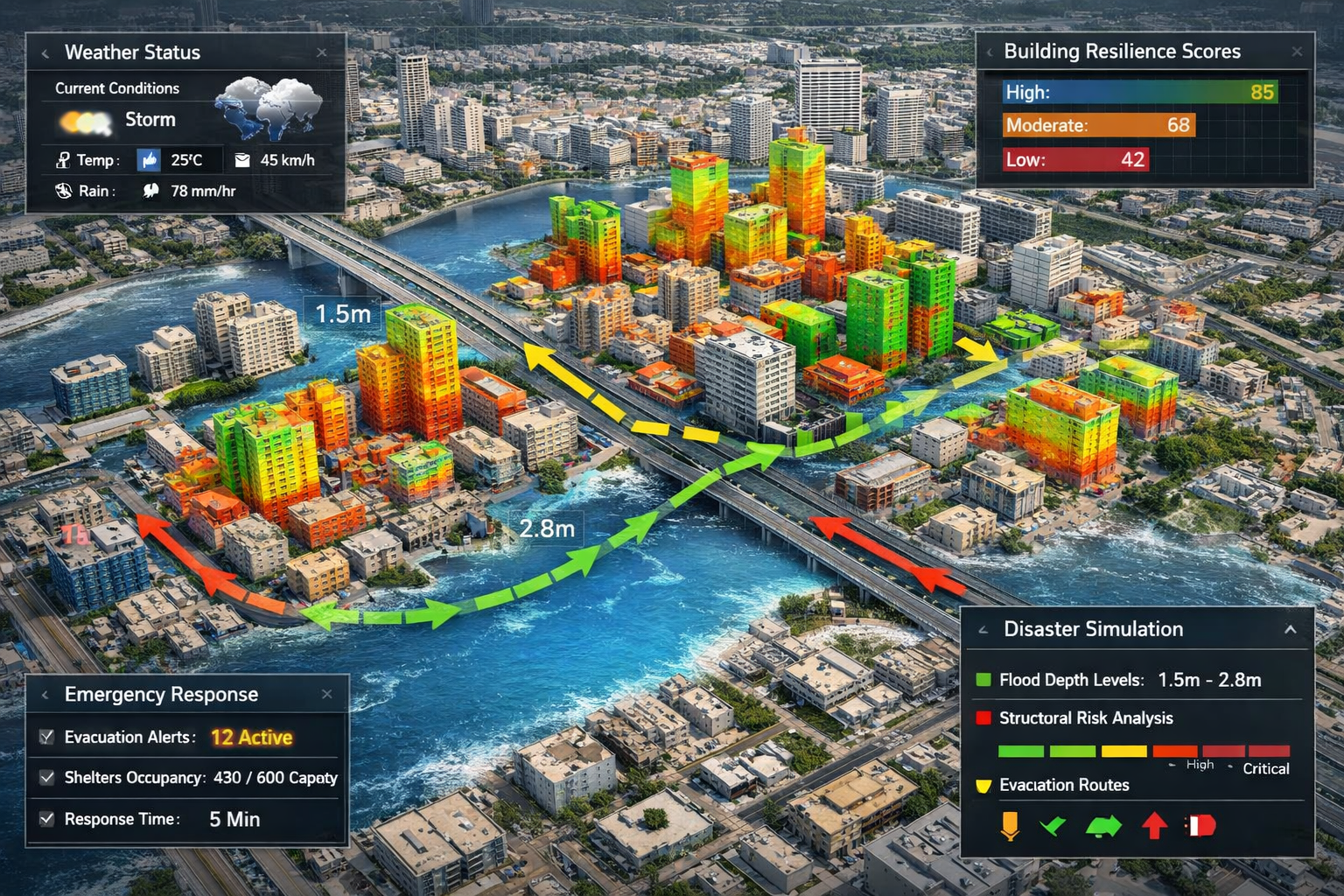
Digital twins enable sophisticated modeling of property behavior during extreme events. City planners and emergency managers use these models to simulate infrastructure resilience during floods, hurricanes, and other natural disasters, enabling safer community planning and more informed development decisions[2]. This capability is particularly valuable when assessing subsidence risks or evaluating foundation performance on challenging soil conditions.
Occupancy and Usage Scenarios:
Before construction begins, developers can test how buildings will function under different occupancy levels and usage patterns:
- 🏢 Elevator system strain during peak hours
- ❄️ Cooling load changes in response to occupancy density
- 🚶 Pedestrian flow and spatial efficiency
- ♿ ADA compliance and inclusive design validation[1]
Material Behavior Analysis:
Digital twins allow engineers to simulate how different materials will age and perform over decades, considering local climate conditions, usage patterns, and maintenance protocols. This insight supports more informed material selection and lifecycle cost analysis.
Integration with IoT Sensors and Real-Time Data Feeds
The true power of Real-Time 3D Digital Twins for Property Development: Interactive Models That Update Live emerges when virtual models connect to physical sensor networks, creating a bidirectional flow of information between the digital and physical worlds.
Common IoT Sensor Applications:
| Sensor Type | Monitoring Focus | Development Application |
|---|---|---|
| Temperature/Humidity | Climate control efficiency | HVAC system optimization |
| Occupancy Sensors | Space utilization | Layout refinement and amenity planning |
| Energy Meters | Consumption patterns | Sustainability validation |
| Structural Sensors | Settlement and movement | Foundation performance tracking |
| Water Flow Monitors | Leak detection | Plumbing system integrity |
| Air Quality Sensors | Indoor environment | Ventilation system effectiveness |
These sensors continuously feed data into the digital twin, enabling it to reflect current conditions with remarkable accuracy. When combined with AI analysis, this real-time data enables predictive insights that would be impossible with static surveys alone.
For example, during party wall construction work, sensors can monitor vibration levels and structural movement in adjacent properties, providing objective evidence of impacts and enabling immediate corrective action if thresholds are exceeded.
Benefits of Real-Time 3D Digital Twins for Property Development
Accelerated Design Iteration and Collaboration
Traditional property development involves sequential workflows where architects create designs, engineers validate structural feasibility, and stakeholders review proposals in separate, often disconnected processes. Real-Time 3D Digital Twins for Property Development: Interactive Models That Update Live fundamentally transform this paradigm by creating a unified collaboration platform.
Rapid Design Refinement:
Architects can refine designs in real-time, testing spatial configurations and usage patterns without waiting for formal review cycles. The ability to simulate environmental impacts immediately—such as natural lighting patterns, acoustic performance, or thermal efficiency—enables faster iteration and more informed design decisions[1].
Virtual Collaboration Across Disciplines:
Multiple stakeholders can interact with the same digital twin simultaneously, regardless of physical location:
- 👷 Construction teams validate buildability and sequencing
- 🏗️ Structural engineers assess load paths and material requirements
- 💡 MEP consultants coordinate systems integration
- 💼 Clients and investors visualize proposals and provide feedback
- 🏛️ Planning authorities review compliance with regulations
This collaborative environment reduces miscommunication, minimizes design conflicts, and accelerates approval processes. When combined with comprehensive condition surveys, digital twins ensure that renovation and development projects account for existing conditions with precision.
Cost Reduction Through Predictive Maintenance and Automation
The financial benefits of digital twin technology extend throughout the property lifecycle, from initial development through decades of operations.
Construction Phase Savings:
- 🎯 Clash detection identifies conflicts between building systems before construction, preventing costly rework
- 📦 Material optimization through accurate quantity takeoffs and waste reduction
- ⏱️ Schedule optimization by simulating construction sequences and identifying bottlenecks
- 🔧 Quality control through comparison of as-built conditions against digital models
Operational Phase Efficiency:
AI-powered automation significantly reduces the cost of maintaining digital twins, making the technology accessible beyond luxury properties to residential portfolios and affordable housing developments[3]. The ability to automatically scan and categorize building components—distinguishing structural elements from finishes—streamlines updates and ensures model accuracy without manual intervention.
Predictive Maintenance ROI:
The integration of digital twins with inspection software delivers measurable returns:
- 💰 Up to 30% reduction in maintenance costs through predictive failure analysis[3]
- 🛠️ Extended equipment lifespan through optimized maintenance timing
- ⚡ Reduced emergency repairs by addressing issues before failure
- 📊 Data-driven budgeting based on actual performance rather than estimates
For properties requiring schedule of condition reports, digital twins provide an evolving baseline that automatically documents changes over time, streamlining dispute resolution and lease negotiations.
Enhanced Stakeholder Engagement and Marketing
Real-Time 3D Digital Twins for Property Development: Interactive Models That Update Live create unprecedented opportunities for engaging potential buyers, tenants, and investors throughout the development process.
Immersive Virtual Experiences:
Developers can offer potential buyers and renters immersive 3D virtual tours at any project stage, even before construction begins. Real estate agents can send remote accessibility assessments directly from the digital model, streamlining the sales process regardless of construction status[1].
Benefits for Different Stakeholders:
🏠 Prospective Buyers/Tenants:
- Explore properties remotely with realistic visualization
- Customize finishes and layouts virtually
- Understand space functionality before commitment
- Access properties 24/7 without physical visits
💼 Investors and Lenders:
- Review progress against milestones objectively
- Assess risk through performance simulations
- Validate sustainability claims with data
- Monitor asset performance post-completion
🏛️ Planning Authorities:
- Evaluate proposals in context with surrounding development
- Assess compliance with regulations interactively
- Understand community impacts through simulation
- Streamline approval processes with comprehensive information
This enhanced engagement reduces transaction friction, accelerates sales cycles, and creates differentiation in competitive markets.
Sustainability and Carbon Tracking
As environmental regulations tighten and stakeholder expectations evolve, the ability to monitor and optimize sustainability performance becomes increasingly critical. Digital twins enable quantitative evaluation of design decisions on environmental impacts.
Carbon Monitoring Capabilities:
Digital twins aggregate data from energy meters and environmental sensors to track carbon output continuously, providing real-time visibility into a property's environmental footprint[1]. This capability supports:
- 📉 Baseline establishment for carbon reduction targets
- 🔄 Design optimization to minimize embodied and operational carbon
- 📊 Compliance reporting for building performance standards
- 🎯 Tenant engagement through transparent sustainability metrics
Energy Optimization:
By simulating building performance under various operational scenarios, developers can identify opportunities to reduce energy consumption before construction. Digital twins enable testing of:
- ☀️ Solar orientation and passive design strategies
- 🌡️ HVAC system sizing and control strategies
- 💡 Lighting design and natural daylight integration
- 🏢 Building envelope performance and thermal bridging
This pre-construction optimization ensures that sustainability goals translate into actual performance rather than remaining theoretical aspirations.
Implementation Considerations and Best Practices
Selecting the Right Digital Twin Platform
The digital twin market has expanded rapidly, with platforms offering varying capabilities, integration options, and pricing models. Selecting the appropriate solution requires careful evaluation of project requirements and organizational capabilities.
Key Evaluation Criteria:
✅ Data Integration Capabilities:
- Compatibility with existing BIM and CAD tools
- Support for multiple data formats (point clouds, GIS, IoT)
- API availability for custom integrations
- Real-time data synchronization performance
✅ Scalability and Performance:
- Ability to handle large, complex models
- Multi-user collaboration support
- Cloud vs. on-premise deployment options
- Mobile and web accessibility
✅ Analytics and Intelligence:
- Built-in AI and machine learning capabilities
- Predictive maintenance algorithms
- Customizable dashboards and reporting
- Alert and notification systems
✅ User Experience:
- Intuitive interface for non-technical stakeholders
- Training and support resources
- VR/AR compatibility for immersive experiences
- Accessibility features for inclusive design validation[1]
✅ Cost Structure:
- Licensing models (per-user, per-project, enterprise)
- Implementation and customization costs
- Ongoing maintenance and support fees
- Total cost of ownership over project lifecycle
For organizations already conducting RICS building surveys, integration with existing surveying workflows should be a priority consideration.
Data Quality and Management Strategies
The value of Real-Time 3D Digital Twins for Property Development: Interactive Models That Update Live depends entirely on the quality and currency of underlying data. Establishing robust data governance practices ensures model accuracy and reliability.
Data Quality Fundamentals:
🎯 Accuracy Standards:
- Define acceptable tolerances for spatial measurements
- Establish verification protocols for sensor data
- Implement quality control checkpoints during data capture
- Regular calibration of measurement equipment
📋 Data Governance Framework:
- Clear ownership and accountability for data quality
- Standardized naming conventions and metadata
- Version control and change management procedures
- Access controls and security protocols
🔄 Update Protocols:
- Scheduled synchronization intervals for different data types
- Automated validation rules to detect anomalies
- Manual review processes for critical updates
- Documentation of changes and their sources
Integration with Traditional Surveys:
Digital twins complement rather than replace traditional surveying practices. For instance, periodic Level 2 surveys can validate digital twin accuracy and identify discrepancies requiring model updates. Similarly, specific defect reports can be linked directly to affected components in the digital model, creating a comprehensive maintenance history.
Addressing Privacy and Security Concerns
As digital twins collect and integrate vast amounts of data—including potentially sensitive information about building systems, occupancy patterns, and operational vulnerabilities—robust security measures become essential.
Security Considerations:
🔒 Data Protection:
- Encryption of data in transit and at rest
- Secure authentication and authorization protocols
- Regular security audits and penetration testing
- Compliance with data protection regulations (GDPR, etc.)
🛡️ Access Control:
- Role-based permissions limiting data visibility
- Audit trails tracking access and modifications
- Segregation of sensitive operational data
- Third-party access management for contractors
⚠️ Operational Security:
- Isolation of building control systems from public networks
- Redundancy and backup strategies
- Disaster recovery planning
- Incident response procedures
Privacy Implications:
When digital twins incorporate occupancy sensors and usage data, privacy considerations emerge. Best practices include:
- Anonymization of individual occupant data
- Transparent communication about data collection
- Opt-in mechanisms for detailed tracking
- Regular privacy impact assessments
Training and Change Management
Successful implementation of Real-Time 3D Digital Twins for Property Development: Interactive Models That Update Live requires more than technology deployment—it demands organizational change and capability development.
Stakeholder Training Programs:
Different user groups require tailored training approaches:
👷 Construction Teams:
- Field data capture techniques
- Mobile application usage
- Quality control verification
- As-built documentation procedures
🏗️ Design Professionals:
- Model creation and updating workflows
- Simulation and analysis tools
- Collaboration protocols
- Design validation methodologies
💼 Facility Managers:
- Dashboard interpretation and monitoring
- Maintenance workflow integration
- Alert response procedures
- Reporting and analytics
📊 Executive Stakeholders:
- Strategic benefits and ROI understanding
- High-level dashboard navigation
- Decision support capabilities
- Performance metric interpretation
Change Management Strategies:
- 🎯 Start with pilot projects to demonstrate value
- 📣 Communicate benefits clearly to all stakeholders
- 🏆 Identify and empower internal champions
- 📈 Measure and share success metrics
- 🔄 Iterate based on user feedback
Industry Applications and Use Cases in 2026
Mission-Critical and Complex Operational Environments
In 2026, the strongest operational adoption of Real-Time 3D Digital Twins for Property Development: Interactive Models That Update Live is occurring in sectors where operational complexity and mission-critical requirements justify the investment[5].
Higher Education Institutions:
Universities face unique property management challenges with diverse building types, complex infrastructure, and continuous operational demands. Digital twins enable:
- 🎓 Campus master planning with simulation of growth scenarios
- 🔧 Deferred maintenance prioritization based on predictive analytics
- ⚡ Energy optimization across distributed facilities
- 🚨 Emergency response planning and evacuation modeling
The University of North Texas exemplifies this application, using digital twins to create 3D campus building models and evaluate solar panel placement potential, optimizing renewable energy integration across their facilities[2].
Healthcare Facilities:
Hospitals and medical centers cannot afford unexpected system failures or operational disruptions. Digital twins provide:
- 🏥 Critical system monitoring (HVAC, power, medical gas)
- 🦠 Infection control through airflow simulation
- 🚑 Patient flow optimization and capacity planning
- 🔧 Predictive maintenance preventing service interruptions
Social Housing Portfolios:
Local authorities and housing associations managing large residential portfolios benefit from:
- 🏘️ Portfolio-wide performance monitoring
- 💰 Maintenance cost optimization across properties
- ♿ Accessibility compliance tracking and planning
- 📊 Tenant service improvement through data-driven insights
Commercial Real Estate:
Large commercial portfolios leverage digital twins for:
- 🏢 Multi-property performance benchmarking
- 💼 Tenant experience enhancement through environmental optimization
- 📈 Asset value preservation through proactive maintenance
- 🌱 ESG reporting with verifiable sustainability metrics
Residential Development and Sales
Beyond operational applications, digital twins are transforming how residential properties are marketed and sold.
Pre-Construction Marketing:
Developers can showcase projects before breaking ground, offering potential buyers:
- 🏡 Immersive virtual tours of unbuilt properties
- 🎨 Customization visualization of finishes and layouts
- 🌅 Environmental context including views and sunlight patterns
- 📍 Neighborhood integration showing proximity to amenities
Construction Progress Transparency:
Buyers investing in off-plan properties gain unprecedented visibility:
- 📸 Real-time construction updates integrated into the digital model
- ✅ Quality verification through comparison with design intent
- 📅 Completion timeline tracking with milestone visualization
- 💬 Direct communication channels for questions and concerns
Post-Occupancy Value:
Digital twins continue providing value after sale:
- 📖 Digital owner's manual with interactive building information
- 🔧 Maintenance guidance specific to installed systems
- 📊 Performance monitoring for energy and environmental conditions
- 🏠 Resale marketing with comprehensive property documentation
Urban Planning and Infrastructure
City planners and infrastructure developers are leveraging digital twins to model entire districts and transportation networks, enabling comprehensive planning that accounts for complex interdependencies.
Natural Disaster Resilience:
City planners and emergency managers use digital twins to model property and infrastructure resilience during floods, hurricanes, and other natural disasters, enabling safer community planning[2]. These simulations inform:
- 🌊 Flood risk assessment and mitigation strategies
- 💨 Wind load analysis for extreme weather events
- 🔥 Fire spread modeling and evacuation planning
- 🏗️ Seismic performance evaluation for earthquake zones
Transportation Integration:
Digital twins enable simulation of how new developments impact transportation networks:
- 🚗 Traffic flow and parking demand
- 🚇 Public transit accessibility and capacity
- 🚶 Pedestrian and cycling infrastructure
- 🚚 Service and delivery access
Utility Infrastructure Coordination:
Before excavation begins, digital twins can integrate data about existing underground utilities, preventing conflicts and enabling efficient coordination between:
- 💧 Water and sewer systems
- ⚡ Electrical distribution
- 🔥 Gas networks
- 📡 Telecommunications infrastructure
This comprehensive planning reduces construction delays and prevents costly damage to existing infrastructure, similar to how party wall surveys prevent conflicts with adjacent properties.
Future Trends and Emerging Opportunities
AI-Powered Automation and Intelligence
The integration of artificial intelligence with digital twin technology is accelerating rapidly, enabling capabilities that were impossible just a few years ago.
Automated Component Recognition:
AI algorithms can now automatically scan and categorize building components, distinguishing load-bearing walls from decorative partitions with minimal human intervention[3]. This automation:
- ⏱️ Reduces creation time from weeks to days
- 💰 Lowers implementation costs making technology accessible to more projects
- 🎯 Improves accuracy through consistent classification
- 🔄 Enables rapid updates as buildings evolve
Predictive Analytics Evolution:
Machine learning models are becoming increasingly sophisticated at predicting:
- 🔧 Equipment failure timing with greater precision
- 📉 Performance degradation patterns before they become critical
- 💰 Lifecycle cost projections based on actual usage
- 🌡️ Energy consumption optimization opportunities
Generative Design Integration:
AI is beginning to suggest design modifications that optimize for multiple objectives simultaneously:
- 💡 Energy efficiency improvements
- 💵 Construction cost reduction
- ⏳ Schedule acceleration
- ♿ Accessibility enhancement
- 🌱 Environmental impact minimization
Integration with Augmented and Virtual Reality
While desktop and mobile interfaces provide valuable access to digital twins, immersive technologies are creating new possibilities for interaction and understanding.
Virtual Reality Applications:
VR headsets enable stakeholders to experience properties at human scale:
- 👷 Construction coordination meetings in virtual space
- 🏡 Client presentations with immersive walkthroughs
- 🎓 Training simulations for maintenance procedures
- 🚨 Emergency response rehearsals in realistic environments
Augmented Reality Field Applications:
AR devices overlay digital twin information onto physical spaces:
- 📱 On-site verification comparing as-built to design
- 🔧 Maintenance guidance showing hidden systems and procedures
- 🏗️ Installation assistance with step-by-step visual instructions
- ✅ Quality inspection highlighting deviations from specifications
Blockchain for Data Integrity and Transactions
Blockchain technology is emerging as a solution for ensuring data integrity and enabling new transaction models in property development.
Immutable Record Keeping:
Blockchain can provide tamper-proof documentation of:
- 📋 Building permits and approvals
- ✅ Inspection records and certifications
- 🔧 Maintenance history and modifications
- 🏆 Performance certifications and warranties
Smart Contract Applications:
Automated execution of agreements based on digital twin data:
- 💰 Performance-based payments to contractors
- 🌡️ Energy performance guarantees with automatic verification
- 🔧 Maintenance service agreements triggered by sensor data
- 🏢 Lease terms adjusted based on actual space utilization
Standardization and Interoperability
As digital twin adoption accelerates, industry efforts to establish standards and ensure interoperability are gaining momentum.
Emerging Standards:
- 📐 ISO 23247 for digital twin framework and requirements
- 🏗️ buildingSMART standards for data exchange
- 🌐 Digital Twin Consortium specifications
- 🇬🇧 UK BIM Framework integration guidelines
Benefits of Standardization:
- 🔄 Data portability between platforms and projects
- 🤝 Vendor independence reducing lock-in risks
- 📈 Ecosystem growth through broader tool compatibility
- 💼 Professional development with transferable skills
Overcoming Implementation Challenges
Addressing the Skills Gap
The rapid evolution of digital twin technology has created a significant skills gap, with demand for qualified professionals outpacing supply.
Skill Development Strategies:
🎓 Educational Partnerships:
- Collaboration with universities on curriculum development
- Internship programs providing hands-on experience
- Continuing professional development courses
- Industry certifications and credentials
👥 Internal Capability Building:
- Cross-training existing staff on new technologies
- Mentorship programs pairing experienced and junior staff
- Learning communities sharing best practices
- Investment in training time and resources
🤝 External Expertise:
- Partnerships with specialized consultants
- Technology vendor training and support
- Industry association resources
- Peer learning networks
Managing Data Volume and Complexity
Real-Time 3D Digital Twins for Property Development: Interactive Models That Update Live generate enormous volumes of data, creating challenges for storage, processing, and analysis.
Data Management Solutions:
☁️ Cloud Infrastructure:
- Scalable storage accommodating growth
- Distributed processing for complex simulations
- Global accessibility for distributed teams
- Automatic backup and redundancy
🎯 Data Lifecycle Management:
- Automated archival of historical data
- Tiered storage based on access frequency
- Retention policies aligned with regulatory requirements
- Efficient retrieval and restoration processes
📊 Analytics Optimization:
- Pre-computed metrics for common queries
- Real-time processing for critical alerts
- Batch processing for periodic reports
- Edge computing for local sensor processing
Demonstrating Return on Investment
Securing organizational buy-in for digital twin implementation requires clear demonstration of value and return on investment.
ROI Measurement Framework:
💰 Direct Cost Savings:
- Maintenance cost reduction (up to 30%)[3]
- Construction rework avoidance
- Energy consumption optimization
- Insurance premium reductions
⏱️ Time Savings:
- Accelerated design iterations
- Faster approval processes
- Reduced coordination meetings
- Streamlined handover procedures
📈 Revenue Enhancement:
- Premium pricing for technology-enabled properties
- Faster sales cycles and reduced vacancy
- Enhanced tenant satisfaction and retention
- Differentiation in competitive markets
🎯 Risk Mitigation:
- Reduced liability through better documentation
- Compliance verification and reporting
- Early problem detection preventing failures
- Improved stakeholder communication
Phased Implementation Approach:
Rather than attempting comprehensive deployment immediately, successful organizations often adopt a phased approach:
- 🎯 Pilot project demonstrating core capabilities
- 📊 Metrics collection validating benefits
- 📣 Success communication building organizational support
- 📈 Scaled deployment across additional projects
- 🔄 Continuous improvement based on lessons learned
Conclusion: Embracing the Future of Property Development
Real-Time 3D Digital Twins for Property Development: Interactive Models That Update Live represent far more than a technological advancement—they signal a fundamental transformation in how we conceive, create, and manage the built environment. By converting static surveys and one-time assessments into dynamic, continuously evolving intelligence platforms, digital twins enable developers to simulate land and building behavior under countless scenarios before committing resources to physical construction.
The benefits are compelling and measurable: up to 30% reduction in maintenance costs, accelerated design iteration, enhanced stakeholder engagement, and unprecedented sustainability tracking capabilities[3]. In 2026, mission-critical sectors including healthcare, higher education, social housing, and commercial real estate are leading adoption, driven by operational complexity and the need for continuous performance monitoring[5].
However, successful implementation requires more than technology deployment. Organizations must address data quality and governance, invest in skills development, manage security and privacy concerns, and demonstrate clear return on investment. Those who navigate these challenges effectively will gain significant competitive advantages in an increasingly sophisticated market.
Actionable Next Steps
For property developers, surveyors, and real estate professionals ready to explore digital twin technology:
✅ Assess your current capabilities and identify gaps in data infrastructure, technical skills, and organizational readiness
✅ Define clear objectives for digital twin implementation aligned with specific business challenges and opportunities
✅ Start with a pilot project that demonstrates value without requiring comprehensive organizational transformation
✅ Engage with professional surveyors experienced in integrating traditional survey methods with digital twin technology
✅ Invest in training to build internal capabilities and reduce dependence on external expertise
✅ Establish data governance frameworks ensuring quality, security, and compliance from the outset
✅ Measure and communicate results to build organizational support for expanded deployment
The transition from static property surveys to dynamic digital twins is not a distant future possibility—it's happening now in 2026. Organizations that embrace this transformation position themselves to deliver better buildings, optimize operational performance, and create more sustainable, resilient communities. The question is no longer whether to adopt digital twin technology, but how quickly you can integrate it into your development process to remain competitive in an evolving industry.
Whether you're planning a commercial building survey, managing a complex construction project, or optimizing an existing portfolio, Real-Time 3D Digital Twins for Property Development: Interactive Models That Update Live offer transformative capabilities that will define the future of property development.
References
[1] The Role Of Digital Twins In Modern Real Estate Development – https://pyramidsproperties.com/the-role-of-digital-twins-in-modern-real-estate-development/
[2] Digital Twins Are Changing The Game In Real Estate – https://trerc.tamu.edu/blog/digital-twins-are-changing-the-game-in-real-estate/
[3] Digital Twin Technology Why The Future Of Real Estate Is A Virtual Replica – https://nerdbot.com/2026/01/27/digital-twin-technology-why-the-future-of-real-estate-is-a-virtual-replica/
[4] Digital Twin Software Aims To Produce Affordable Housing Faster – https://www.asce.org/publications-and-news/civil-engineering-source/article/2025/09/22/digital-twin-software-aims-to-produce-affordable-housing-faster
[5] What Do Digital Twins Hold For 2026 From Visualisation To Smart Building Operations – https://www.twinview.com/insights/what-do-digital-twins-hold-for-2026-from-visualisation-to-smart-building-operations
