
The landscape of property taxation in England is undergoing a significant transformation. As 2026 unfolds, surveyors and property professionals face a critical challenge: accurately assessing high-value properties for the new High-Value Council Tax Surcharge (HVCTS). With the Valuation Office Agency (VOA) conducting targeted valuations throughout the year, preparing building surveys for high-value council tax surcharge valuations starting 2026 has become an urgent priority for chartered surveyors and property owners alike.
This comprehensive guide equips surveyors with the technical knowledge and RICS-compliant methodologies needed to navigate this new valuation regime. With April 2026 serving as the likely valuation benchmark and fewer than 1% of properties expected to exceed the £2 million threshold[3][5], precision in assessment has never been more critical.
Key Takeaways
- 🏛️ April 2026 serves as the valuation benchmark for properties assessed under the new HVCTS regime, with surcharges taking effect from April 2028
- 📊 Four distinct surcharge bands apply to properties valued at £2 million or above, ranging from £2,500 to £7,500 annually
- 🔍 Independent valuation methodology separate from existing Council Tax bands ensures fresh assessments based on current market conditions
- 📉 Subdued market growth forecasts require surveyors to apply conservative valuation approaches aligned with RICS Red Book standards
- ⚖️ Five-year revaluation cycles mean accurate 2026 assessments will impact property owners until at least 2031
Understanding the High-Value Council Tax Surcharge Framework
What Is the HVCTS and Why Does It Matter?
The High-Value Council Tax Surcharge represents a fundamental shift in how England taxes residential property wealth. Unlike traditional Council Tax, which relies on outdated 1991 valuations, the HVCTS employs a contemporary valuation approach specifically targeting properties worth £2 million or more[1][2].
The surcharge operates independently from existing Council Tax bands, creating an entirely separate assessment process. This distinction is crucial for surveyors preparing building evaluations, as historical valuation methodologies no longer apply.
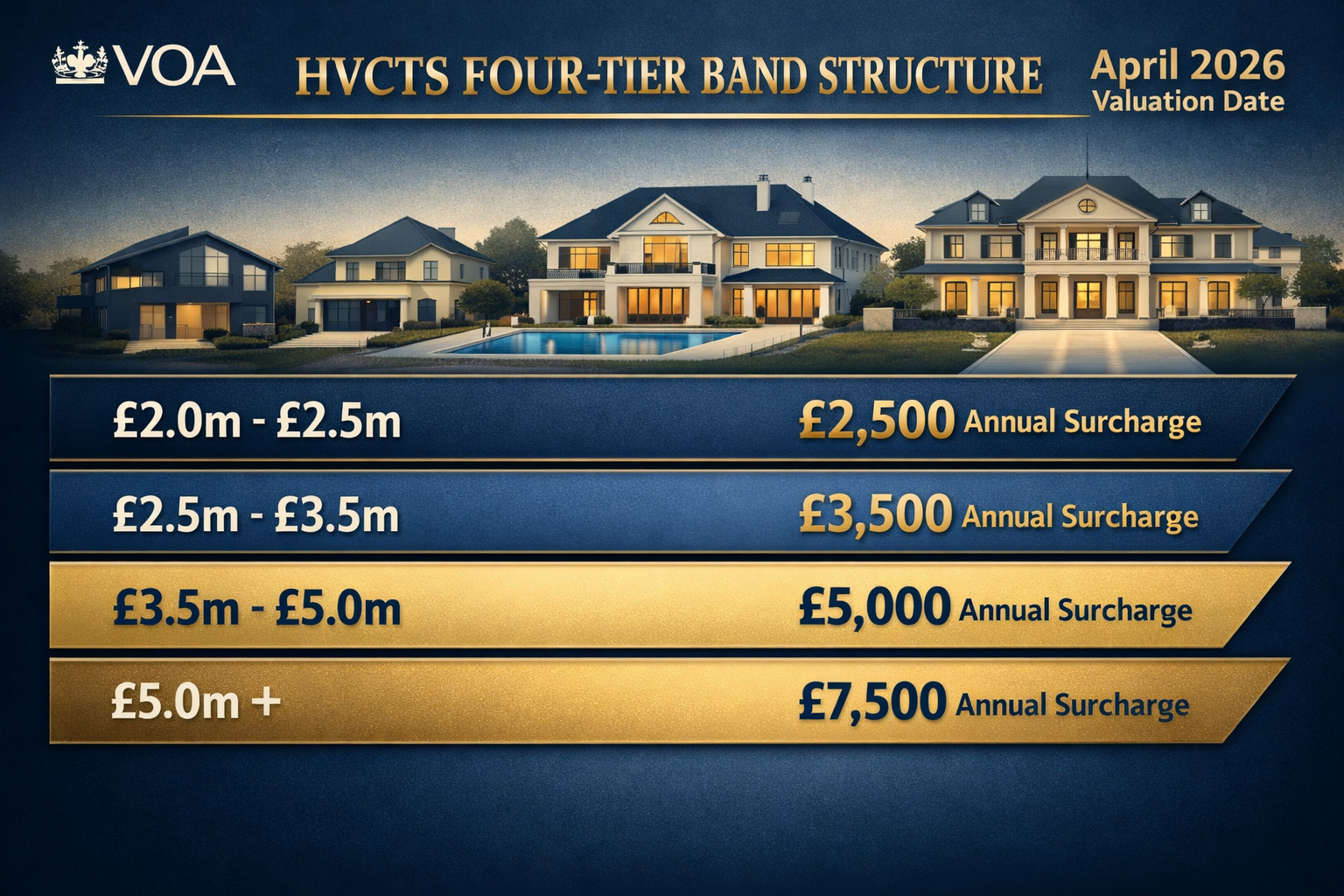
The Four-Tier Band Structure
Properties subject to the HVCTS fall into one of four clearly defined bands, each carrying specific annual surcharge obligations[3]:
| Property Value | Annual Surcharge | Percentage of Value (approx.) |
|---|---|---|
| £2.0m – £2.5m | £2,500 | 0.10% – 0.13% |
| £2.5m – £3.5m | £3,500 | 0.10% – 0.14% |
| £3.5m – £5.0m | £5,000 | 0.10% – 0.14% |
| £5.0m+ | £7,500 | ≤0.15% |
Understanding these thresholds is essential when preparing building surveys for high-value council tax surcharge valuations starting 2026, as even minor valuation differences can shift properties between bands, resulting in significant financial implications for owners.
Timeline and Implementation Schedule
The VOA has established a structured timeline for implementation[3]:
- Throughout 2026: Targeted valuation exercise conducted
- April 2026: Likely valuation benchmark date
- Early 2026: Public consultation details clarified[2]
- April 2028: Surcharges take effect
- Every 5 years thereafter: Mandatory revaluations
This timeline creates a compressed window for surveyors to complete accurate assessments while market conditions remain relatively stable.
Technical Considerations for Preparing Building Surveys for High-Value Council Tax Surcharge Valuations Starting 2026
RICS Valuation Standards and Methodology
When conducting surveys for HVCTS purposes, adherence to RICS Red Book Global Standards is non-negotiable. The valuation must reflect market value as of April 2026, defined as the estimated amount for which a property should exchange on the valuation date between a willing buyer and willing seller in an arm's-length transaction[1].
Key methodological requirements include:
✅ Comparable sales analysis using transactions from the relevant period
✅ Adjustment for market conditions reflecting subdued national growth forecasts
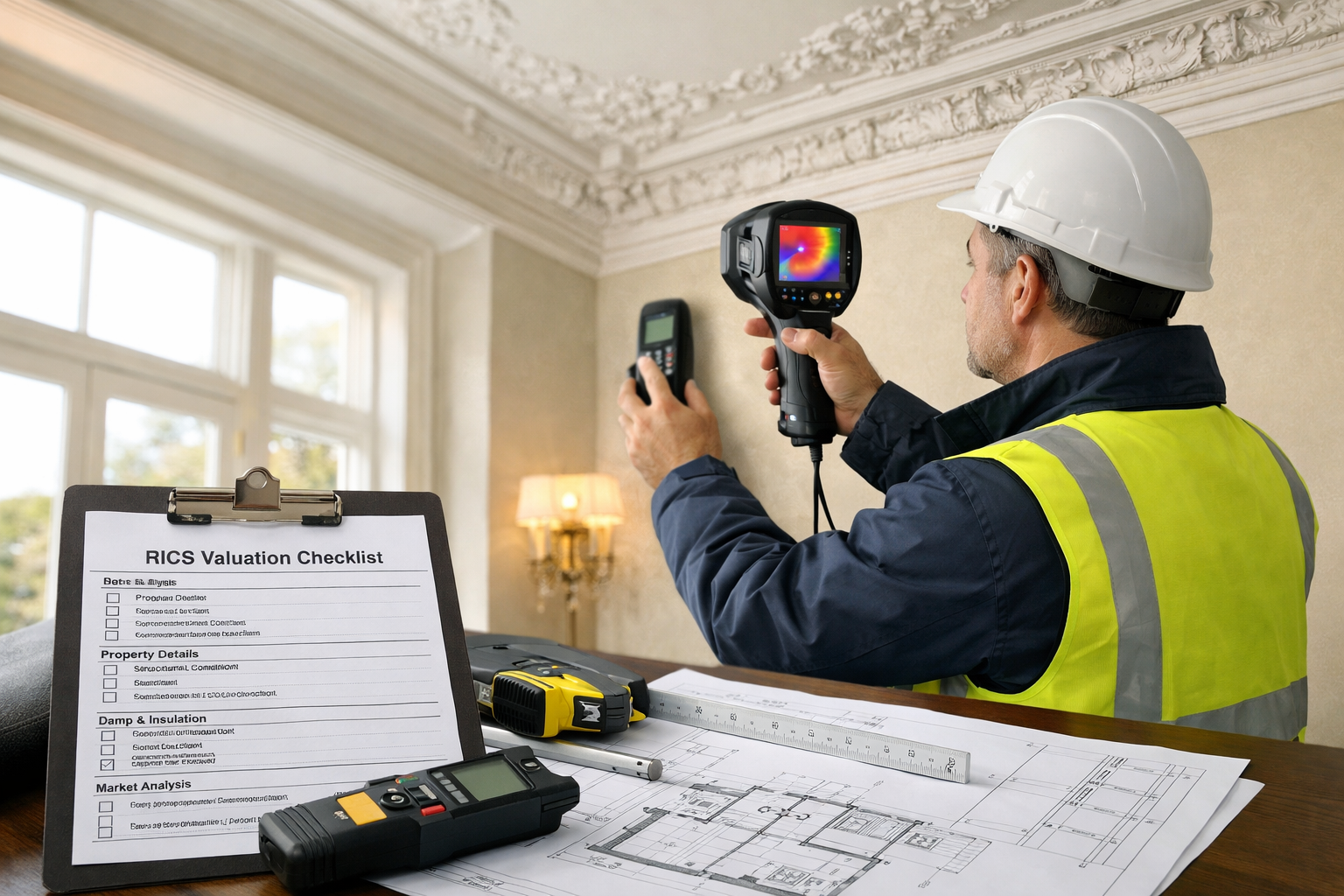
✅ Physical inspection documenting all value-influencing characteristics
✅ Location premium assessment accounting for neighborhood desirability
✅ Condition evaluation identifying deferred maintenance or enhancement works
Professional building surveys provide the foundation for defensible valuations that can withstand VOA scrutiny and potential appeals.
Property Characteristics That Influence Valuation
Surveyors must systematically evaluate multiple property attributes when preparing building surveys for high-value council tax surcharge valuations starting 2026:
Structural and Architectural Features:
- Period characteristics and architectural significance
- Quality of construction materials and workmanship
- Room dimensions, ceiling heights, and spatial flow
- Presence of heritage or listed building status
Accommodation and Layout:
- Total habitable floor area (measured to RICS standards)
- Number and configuration of bedrooms and bathrooms
- Presence of ancillary spaces (wine cellars, home offices, gyms)
- Outdoor amenities (gardens, terraces, swimming pools)
Condition and Specification:
- State of repair and recent refurbishment works
- Quality of fixtures, fittings, and finishes
- Energy efficiency ratings and sustainability features
- Smart home technology and modern conveniences
A comprehensive Level 3 building survey provides the detailed assessment necessary for accurate high-value property valuation.
Navigating Subdued Market Conditions
The 2026 valuation exercise occurs against a backdrop of subdued national property growth forecasts. This market context requires surveyors to apply conservative judgment when assessing values near band thresholds[4].
Critical considerations include:
- Recent comparable evidence weighted more heavily than historical trends
- Realistic market absorption periods for high-value properties
- Economic uncertainty factors affecting luxury property demand
- Geographic market variations between prime central locations and secondary markets
"The HVCTS valuation methodology must reflect genuine market conditions as of April 2026, not aspirational values or peak market pricing from previous years."
Surveyors should document their reasoning thoroughly, particularly when values fall close to the £2 million, £2.5 million, £3.5 million, or £5 million thresholds where band changes occur.
Conducting Comprehensive Property Assessments
Pre-Survey Preparation and Research
Effective preparation for building surveys for high-value council tax surcharge valuations starting 2026 begins well before the physical inspection. Thorough desktop research establishes context and identifies potential valuation complexities.
Essential preparatory steps:
- Land Registry research – Confirm ownership, title restrictions, and transaction history
- Planning history review – Identify approved extensions, alterations, or development potential
- Comparable sales analysis – Gather recent transactions for similar properties in the locality
- Local market intelligence – Understand neighborhood trends and demand drivers
- Previous valuation records – Review any existing professional valuations or surveys
This groundwork enables more efficient site inspections and supports robust valuation conclusions.
On-Site Inspection Protocols
The physical survey represents the cornerstone of accurate HVCTS valuations. Surveyors must adopt systematic inspection protocols that capture all value-relevant information.
Recommended inspection sequence:
External Assessment:
- Measure and record building footprint and external dimensions
- Photograph elevations from multiple angles
- Assess external condition, including roof, walls, windows, and doors
- Document parking facilities, garaging, and vehicular access
- Evaluate garden size, landscaping quality, and outdoor structures
Internal Assessment:
- Measure all principal rooms to calculate gross internal area (GIA)
- Document ceiling heights, particularly in reception rooms
- Assess quality of finishes, fixtures, and fittings
- Identify period features, architectural details, and craftsmanship
- Evaluate mechanical and electrical installations
- Inspect basement and loft spaces for usable accommodation
Specialized Areas:
- Swimming pools, gyms, and leisure facilities
- Wine cellars and temperature-controlled storage
- Home offices, studios, or ancillary buildings
- Security systems and smart home integration
Professional structural surveys may be necessary where significant defects or alterations are identified that could materially affect value.
Documentation and Evidence Gathering
Comprehensive documentation protects both surveyor and client should the VOA valuation be disputed. Photographic evidence, detailed measurements, and contemporaneous notes create an audit trail supporting the valuation conclusion.
Essential documentation includes:
📸 Photographic record – Minimum 50-100 images for high-value properties
📏 Measured floor plans – Prepared to RICS measurement standards
📋 Condition schedule – Detailed notes on repair status and defects
📊 Comparable evidence – Supporting sales data with adjustments explained
📝 Valuation report – Formal document complying with RICS standards
Understanding what surveyors look for in a house survey ensures no critical elements are overlooked during the inspection process.
Valuation Approaches and Market Analysis
The Comparative Method in High-Value Markets
For residential properties, the comparative method remains the primary valuation approach. This technique analyzes recent sales of similar properties, adjusting for differences in size, condition, location, and specification.
Applying the comparative method effectively:
- Identify truly comparable properties – Similar age, style, location, and specification
- Verify transaction details – Confirm sale prices, dates, and special conditions
- Apply systematic adjustments – Quantify differences in size, condition, and features
- Weight evidence appropriately – Prioritize recent, arm's-length transactions
- Sense-check conclusions – Ensure final valuation aligns with market reality
In subdued market conditions, surveyors must resist the temptation to rely on peak-market comparables from 2021-2022, instead focusing on transactions from late 2025 and early 2026.
Addressing Unique or Non-Standard Properties
High-value properties often possess unique characteristics that complicate comparative analysis. Period manor houses, architect-designed contemporary homes, or properties with exceptional grounds may have limited comparable evidence.
Strategies for valuing unique properties:
- Expand geographic search area – Look beyond immediate locality for similar property types
- Adjust for location premium – Quantify the value difference between areas
- Consider cost approach – Particularly for recently constructed bespoke properties
- Apply professional judgment – Document reasoning for valuation conclusions
- Seek specialist input – Consult colleagues with relevant market expertise
The distinction between Level 2 vs Level 3 surveys becomes particularly important for complex or unusual properties requiring detailed analysis.
Handling Properties Near Band Thresholds
Properties valued close to the £2 million, £2.5 million, £3.5 million, or £5 million thresholds demand exceptional care. A £50,000 valuation difference can result in £1,000 annual surcharge variations.
Best practices for threshold properties:
⚠️ Apply conservative assumptions – Avoid optimistic valuations in uncertain markets
⚠️ Document sensitivity analysis – Show how different assumptions affect value
⚠️ Provide clear reasoning – Explain why the property falls into a specific band
⚠️ Consider appeal implications – Ensure valuation is defensible if challenged
⚠️ Communicate uncertainty – Be transparent about valuation confidence levels
Professional chartered surveyors understand that credibility depends on defensible, well-reasoned valuations rather than client-pleasing figures.
Appeals, Challenges, and Client Communication
Understanding the VOA Assessment Process
The VOA will conduct targeted valuations throughout 2026, issuing formal assessments that place properties into HVCTS bands[3]. Property owners will receive notification of their assessment and have the right to challenge valuations they believe to be incorrect.
The VOA assessment process typically involves:
- Desktop analysis using Land Registry data and property records
- Automated valuation models (AVMs) providing initial estimates
- Physical inspections for complex or high-value properties
- Formal banding decisions issued to property owners
- Appeals process for disputed valuations
Surveyors preparing independent assessments provide property owners with professional opinions that can support appeals if VOA valuations appear excessive.
Preparing for Potential Appeals
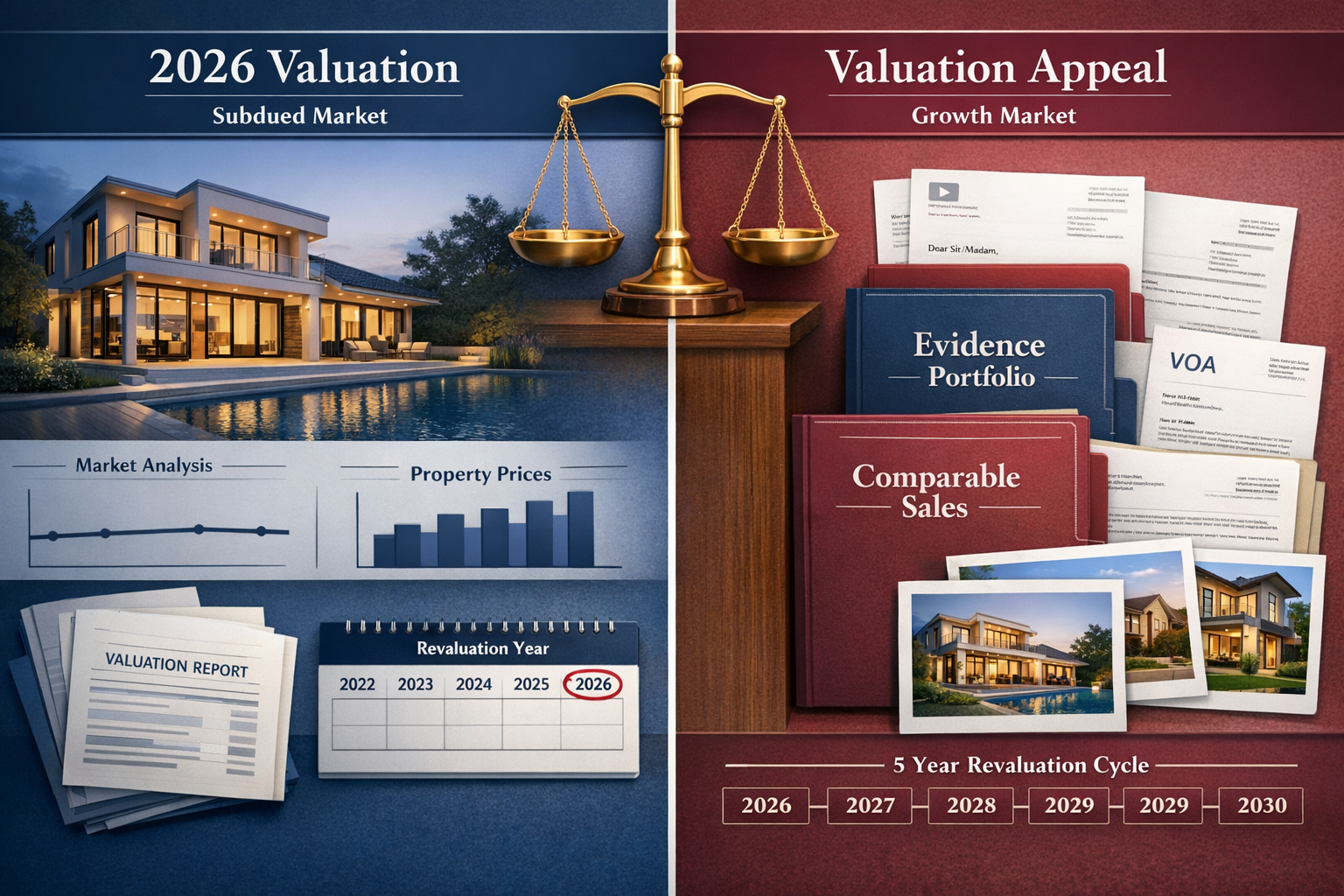
When preparing building surveys for high-value council tax surcharge valuations starting 2026, surveyors should anticipate the possibility of VOA disagreement and build robust evidence portfolios.
Components of an appeal-ready valuation:
✔️ Comprehensive comparable evidence – Multiple transactions supporting the conclusion
✔️ Detailed property description – Accurate floor areas and condition assessment
✔️ Photographic documentation – Visual evidence of property characteristics
✔️ Market context analysis – Explanation of subdued growth conditions
✔️ Professional credentials – RICS membership and relevant qualifications
The five-year revaluation cycle means that successful appeals can deliver substantial savings over extended periods[1].
Client Communication and Expectation Management
Property owners facing potential HVCTS liability often experience anxiety about the valuation process. Effective communication helps clients understand the methodology, timeline, and potential outcomes.
Key messages for clients:
- Independence of assessment – HVCTS valuations are separate from Council Tax bands
- Market value basis – Valuations reflect April 2026 market conditions, not purchase prices
- Appeal rights – Professional valuations support challenges to excessive assessments
- Long-term implications – Banding decisions remain in place until 2031
- Professional standards – RICS-compliant surveys provide credible evidence
Addressing house survey anxiety helps clients engage constructively with the process rather than avoiding necessary professional advice.
Specialized Considerations for Different Property Types
Period and Heritage Properties
Historic properties present unique valuation challenges due to their distinctive characteristics, potential listing restrictions, and specialized maintenance requirements.
Valuation considerations for period properties:
- Architectural significance – Rare or exceptional features command premiums
- Listed building constraints – Restrictions may limit alterations and affect value
- Maintenance costs – Higher ongoing expenses may dampen market demand
- Heritage appeal – Certain buyers pay premiums for authentic period character
- Comparable scarcity – Limited transaction evidence for unique properties
Specialized damp surveys or subsidence surveys may be necessary to fully understand condition issues affecting value.
New Build and Contemporary Properties
Modern high-specification properties require different analytical approaches, particularly regarding depreciation and specification obsolescence.
Key factors for contemporary properties:
- Build quality and warranty coverage – NHBC or similar protection
- Energy efficiency – EPC ratings increasingly influence value
- Smart home integration – Technology features and automation
- Specification level – Quality of fixtures, fittings, and finishes
- Developer reputation – Brand premium for prestigious developers
Understanding whether you need a survey on a new build helps surveyors advise clients appropriately.
Properties with Commercial Elements
High-value residential properties sometimes include commercial components such as home offices, studios, or ancillary rental units. These hybrid properties require careful analysis.
Valuation approach for mixed-use properties:
- Dominant use identification – Determine primary residential character
- Income potential – Consider rental value of commercial elements
- Planning status – Verify permitted uses and restrictions
- Market demand – Assess buyer appetite for mixed-use properties
- Separate valuation – Consider residential and commercial elements independently
Professional commercial building surveys may be appropriate for significant commercial components.
Technology and Innovation in Survey Preparation
Digital Measurement and Documentation Tools
Modern surveying technology enhances accuracy and efficiency when preparing building surveys for high-value council tax surcharge valuations starting 2026.
Beneficial technologies include:
🔧 Laser measurement devices – Accurate room dimensions and floor areas
📱 Digital floor plan software – Professional measured plans from site data
🚁 Drone surveys – Aerial photography and roof condition assessment
📷 360-degree photography – Comprehensive visual documentation
💾 Cloud-based reporting – Secure client access to survey documentation
Drone surveys prove particularly valuable for large estates or properties with extensive grounds where traditional photography cannot capture the full extent.
Automated Valuation Models (AVMs) and Their Limitations
While the VOA may employ AVMs in their assessment process, professional surveyors recognize the limitations of automated approaches for high-value properties.
AVM limitations include:
- Data scarcity – Limited comparable sales in high-value markets
- Unique feature recognition – Difficulty quantifying bespoke characteristics
- Condition assessment – Cannot evaluate actual property condition
- Market timing – May lag current market sentiment
- Geographic specificity – Struggle with micro-location premiums
Professional judgment informed by physical inspection remains essential for accurate high-value property valuation.
Conclusion
As 2026 progresses and the VOA conducts its targeted valuation exercise, surveyors face the critical responsibility of preparing building surveys for high-value council tax surcharge valuations starting 2026 with precision and professionalism. The introduction of the HVCTS represents the most significant change to residential property taxation in decades, affecting fewer than 1% of properties but with substantial financial implications for those impacted[5].
Success in this new valuation regime requires surveyors to combine technical expertise with market knowledge, applying RICS-compliant methodologies while navigating subdued growth forecasts. The April 2026 valuation benchmark creates a specific point-in-time assessment that will influence property tax obligations until at least 2031, making accuracy paramount.
Actionable Next Steps for Surveyors
- Review RICS Red Book standards – Ensure full compliance with professional valuation requirements
- Build comparable evidence databases – Gather recent high-value transaction data in your operating areas
- Invest in measurement technology – Adopt digital tools that enhance accuracy and documentation
- Develop appeal preparation protocols – Create systematic approaches to building defensible valuations
- Communicate proactively with clients – Educate property owners about the HVCTS and valuation process
- Monitor VOA guidance – Stay informed as public consultation details emerge in early 2026[2]
- Network with specialist colleagues – Share knowledge about unique property types and valuation challenges
The five-year revaluation cycle means that valuations prepared in 2026 will have enduring consequences. By applying rigorous methodology, comprehensive property assessment, and conservative judgment aligned with subdued market conditions, surveyors can deliver the accurate, defensible valuations that high-value property owners require.
For property owners seeking professional guidance, engaging qualified chartered surveyors early in the process ensures adequate preparation time and reduces the risk of excessive VOA assessments. The HVCTS may be new, but the fundamental principles of professional property valuation remain constant: accuracy, integrity, and evidence-based analysis.
References
[1] High Value Council Tax Surcharge – https://jonesandpartners.co.uk/high-value-council-tax-surcharge/
[2] High Value Council Tax Surcharge – https://www.gov.uk/government/news/high-value-council-tax-surcharge
[3] Hvcts Guide – https://www.crownluxuryhomes.com/hvcts-guide/
[4] High Value Council Tax Surcharge – https://www.uktaxpolicymap.com/taxing-work-and-wealth/high-value-council-tax-surcharge.aspx
[5] High Value Council Tax Surcharge – https://www.accaglobal.com/gb/en/technical-activities/technical-resources-search/2025/November/High-value-council-tax-surcharge.html
[6] Hannah Catt Writes For Tax Adviser On The Implications Of The Newly Introduced High Value Council Tax Surcharge In The Uk – https://www.charlesrussellspeechlys.com/en/news-and-events/in-the-press/2026/01/hannah-catt-writes-for-tax-adviser-on-the-implications-of-the-newly-introduced-high-value-council-tax-surcharge-in-the-uk/
[7] High Value Council Tax Surcharge What You Need To Know – https://www.greenwoods.co.uk/article/high-value-council-tax-surcharge-what-you-need-to-know/
[8] New Property Tax – https://hoa.org.uk/news/new-property-tax/
