
{"cover":"Professional landscape format (1536×1024) editorial hero image featuring bold text overlay 'Building Surveys for Institutional Buy-to-Let Surge 2026: Assessing Yields in Professional Landlord Investments' in extra large 72pt white sans-serif font with dark shadow and semi-transparent navy overlay box, positioned in upper third. Background shows modern UK apartment building exterior with professional surveyor in high-visibility vest examining brick facade with tablet and laser measuring device, architectural blueprints visible, upward trending yield graph overlay in corner. Color scheme: deep navy blue, white, gold accents. Magazine cover aesthetic, high contrast, sharp focus on surveyor and building details, professional real estate investment atmosphere.","content":["Landscape format (1536×1024) detailed illustration showing comprehensive building survey defect identification framework for multi-unit residential property. Split-screen composition: left side displays annotated cross-section of apartment building highlighting common institutional BTL defects (roof membrane deterioration, cavity wall tie corrosion, rising damp, structural cracks, outdated electrical systems), right side shows professional surveyor with thermal imaging camera and moisture meter conducting inspection. Include color-coded severity ratings (red-amber-green), percentage statistics overlay showing defect frequency in UK rental stock, RICS survey standards badge. Clean infographic style with technical precision, professional blue and white color palette.","Landscape format (1536×1024) sophisticated financial dashboard visualization displaying institutional buy-to-let yield assessment metrics for 2026. Central focus on interactive property portfolio performance chart showing gross yield percentages (5-8% range), net yield calculations after maintenance and management costs, capital appreciation projections (+22.2% five-year forecast), regional heat map of UK showing Yorkshire, North West, Scotland yield hotspots in gradient gold-to-green. Include rental income growth trajectory graph (+12% forecast), void period impact calculator, building condition grade correlation to yield performance. Modern fintech aesthetic with data visualization elements, professional navy, gold, and white color scheme, clean typography.","Landscape format (1536×1024) comprehensive visual guide showing surveyor conducting pre-acquisition building assessment for institutional investor. Scene depicts professional surveyor team inspecting large Victorian conversion property earmarked for BTL portfolio, using drone for roof survey, ground-penetrating radar for foundation assessment, and detailed photographic documentation system. Include checklist overlay showing critical inspection points: structural integrity (foundations, load-bearing walls), building envelope performance, M&E systems compliance, fire safety regulations, EPC rating potential, future maintenance liability forecasting. Split composition showing before-survey exterior and detailed findings report on tablet. Professional documentary photography style, natural lighting, authentic UK property setting, corporate blue and white branding elements."]"}

The institutional buy-to-let market is experiencing a remarkable resurgence in 2026, and professional landlords are returning with renewed confidence and capital[5]. As transaction volumes surge and property values climb across regional markets, one critical factor separates successful institutional investors from those facing costly surprises: comprehensive building surveys that accurately assess yield potential and identify hidden defects before acquisition. Understanding how to leverage Building Surveys for Institutional Buy-to-Let Surge 2026: Assessing Yields in Professional Landlord Investments has become essential for surveyors and investors navigating this bullish market environment.
With UK property values forecast to increase by 22.2% over the next five years and rental income projected to grow by 12%[2], institutional investors are deploying significant capital into multi-unit residential portfolios. However, the quality of building stock—with over 50% of UK properties older than 10 years[1][3]—presents both opportunity and risk. Professional surveyors equipped with robust defect-spotting frameworks can unlock alpha for their institutional clients by identifying properties with strong yield potential while flagging those with hidden maintenance liabilities that could erode returns.
Key Takeaways
✅ Market momentum is strong: Q4 2025 transaction volumes reached £19 billion, up 20% year-over-year, with institutional investors returning to BTL after years of uncertainty[3]
✅ Regional markets lead growth: Yorkshire, North West, Scotland, and Wales are forecast to deliver 27-29% capital appreciation over five years, outpacing London's performance[2]
✅ Building condition directly impacts yields: Comprehensive surveys identifying structural defects, M&E system failures, and compliance issues are essential for accurate yield assessment in institutional portfolios
✅ Rental income resilience: With tenant demand rising and landlord supply constrained, rental growth projections of 12% over five years support strong net yields for well-maintained properties[2][4]
✅ Defect-spotting frameworks deliver competitive advantage: Surveyors who systematically assess building envelope performance, future maintenance liability, and energy efficiency unlock superior returns for institutional clients
Understanding the 2026 Institutional Buy-to-Let Market Resurgence
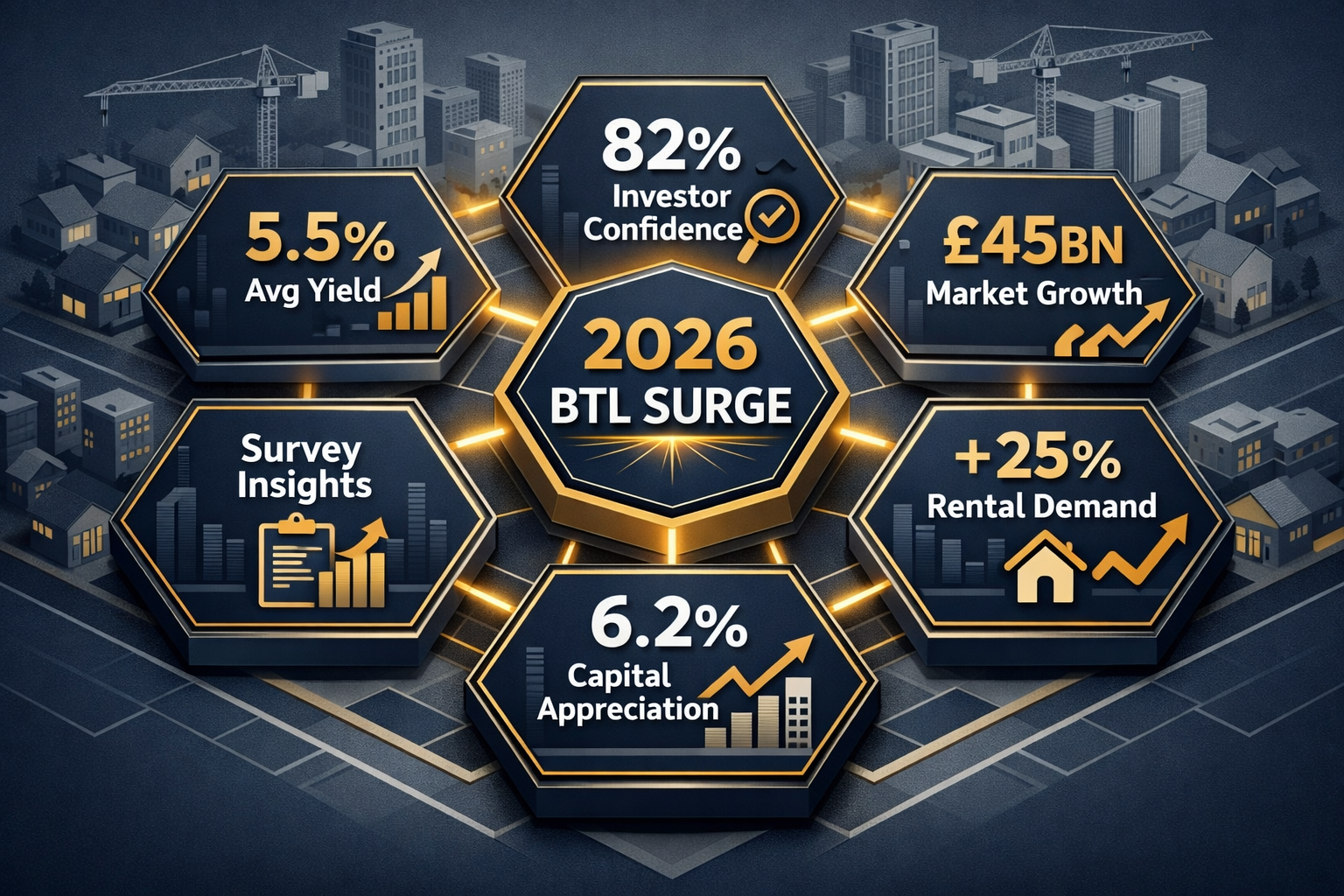
The institutional buy-to-let sector has transformed dramatically as 2026 unfolds. After years of regulatory uncertainty and tax changes that dampened investor enthusiasm, professional landlords are returning with substantial capital and sophisticated acquisition strategies[5]. This resurgence is driven by multiple converging factors that create a compelling investment thesis for institutional players.
Market Fundamentals Driving Institutional Interest
Transaction volumes tell a powerful story. The final quarter of 2025 recorded £19 billion in property investment activity, representing a 20% improvement over Q4 2024 and marking the strongest quarterly performance since mid-2022[3]. This rebound signals renewed confidence among institutional investors who had previously adopted a wait-and-see approach.
Schroders projects UK All Property total returns of 9-10% for 2026 and 8% per annum through 2030—substantially above the prior 10-year average of 4.3% per annum[3]. These projections reflect improving fundamentals across multiple property sectors, with residential assets showing particular strength.
The rental market dynamics further support institutional BTL strategies. RICS survey data indicates that tenant demand edged higher at the start of 2026 while landlord supply remains constrained[4]. This supply-demand imbalance is expected to keep rental prices firm in the near term, supporting yield resilience for professional landlords who can acquire and maintain quality stock.
Regional Growth Opportunities Reshaping Investment Strategy
Unlike previous property cycles dominated by London-centric investment, the 2026 surge is characterized by strong regional performance. Savills forecasts that Yorkshire and The Humber alongside the North West will see the strongest capital gains at +28.8%, with Scotland, Wales, and the North East following closely at +27.6%[2].
| Region | Five-Year Capital Growth Forecast | Rental Growth Forecast |
|---|---|---|
| Yorkshire & Humber | +28.8% | +13.2% |
| North West | +28.8% | +13.2% |
| Scotland | +27.6% | +12.8% |
| Wales | +27.6% | +12.8% |
| North East | +27.6% | +12.8% |
| London | +18.5% | +11.5% |
| UK Average | +22.2% | +12.0% |
This regional divergence creates opportunities for institutional investors to deploy capital in markets with stronger yield fundamentals and lower entry costs compared to the capital. However, it also demands sophisticated due diligence, as regional building stock often presents different defect profiles and maintenance challenges compared to newer London developments.
Policy Clarity and Reduced Uncertainty
One often-overlooked driver of the 2026 resurgence is policy stability. Following the Autumn Budget, there are no major new property tax changes on the horizon, providing a much clearer outlook for property investors[2]. This clarity allows institutional players to model long-term returns with greater confidence and commit capital to multi-year acquisition strategies.
Additionally, falling debt costs are making leveraged acquisitions more attractive. CBRE reports activity picking up driven by reduced borrowing costs and renewed interest from international buyers, with strong appetite for high-quality residential assets[1]. For institutional BTL investors, this improved financing environment enhances equity returns when combined with careful asset selection.
Building Surveys for Institutional Buy-to-Let Surge 2026: Critical Defect-Spotting Frameworks
As institutional capital flows into the buy-to-let sector, the role of comprehensive building surveys has never been more critical. Unlike individual landlords purchasing single properties, institutional investors acquiring multi-unit portfolios need systematic defect-spotting frameworks that can be applied consistently across dozens or hundreds of properties. These frameworks must balance thoroughness with efficiency while providing the detailed intelligence needed to accurately assess yield potential.
The Strategic Importance of Pre-Acquisition Surveys
For institutional investors, building surveys serve multiple strategic purposes beyond simple defect identification. They provide the foundation for:
🔍 Accurate acquisition pricing by quantifying immediate and future maintenance liabilities
📊 Yield modeling precision by identifying factors that will impact rental income and operational costs
⚡ Portfolio risk management by flagging properties with systemic issues that could affect multiple units
🎯 Capital expenditure planning by creating multi-year maintenance schedules aligned with asset management strategies
💰 Negotiation leverage by documenting defects that justify price reductions or vendor remediation
Professional surveyors conducting building surveys for institutional clients must understand that their work directly impacts investment returns. A missed structural issue or underestimated remediation cost can transform a seemingly attractive 7% gross yield into a marginal 4% net yield after accounting for necessary repairs.
Comprehensive Defect Identification for Multi-Unit Properties
Institutional BTL properties—typically apartment buildings, Victorian conversions, or purpose-built blocks—present unique survey challenges. A systematic approach should address these key areas:
1. Structural Integrity Assessment
The foundation of any building survey involves evaluating structural soundness. For multi-unit properties, this includes:
- Foundation and substructure examination: Settlement patterns, subsidence indicators, basement water ingress, underpinning evidence
- Load-bearing wall and column assessment: Structural cracks, movement indicators, alterations that may have compromised integrity
- Floor and ceiling structure: Deflection, bounce, signs of overloading, timber decay in older properties
- Roof structure evaluation: Truss condition, purlin integrity, spreading indicators, water damage to timber members
Institutional investors need to understand not just current defects but future liability exposure. A Level 3 building survey provides the comprehensive analysis required for properties of this complexity and value.
2. Building Envelope Performance
The external envelope determines both maintenance costs and energy efficiency—two critical factors affecting net yields:
- Roof covering condition: Remaining lifespan of tiles/slates, membrane integrity, flashing details, gutter and downpipe capacity
- Wall construction and condition: Cavity wall tie corrosion (particularly in 1960s-1980s stock), render failure, brickwork deterioration, thermal bridging
- Window and door performance: Single vs. double glazing, seal failure, frame deterioration, security compliance
- Damp penetration risks: Rising damp, penetrating damp, condensation issues, inadequate ventilation
For institutional portfolios, building envelope failures represent the highest category of unexpected capital expenditure. Systematic assessment using thermal imaging and moisture meters provides objective data for yield modeling.
3. Mechanical and Electrical Systems Evaluation
M&E systems in multi-unit properties often represent shared infrastructure requiring specialized assessment:
- Heating systems: Boiler age and efficiency, distribution pipework condition, radiator performance, communal vs. individual systems
- Electrical installations: Consumer unit compliance, wiring age, earthing and bonding adequacy, fire alarm systems
- Plumbing infrastructure: Water supply pipework material and condition, drainage systems, shared waste stacks
- Ventilation systems: Mechanical ventilation adequacy, extract fan operation, condensation control
Many institutional investors underestimate M&E replacement cycles. A building with 15-year-old boilers may appear to have 5-10 years of remaining life, but for a portfolio acquisition, the surveyor should flag the upcoming replacement liability and its impact on projected yields.
4. Regulatory Compliance and Safety Standards
Institutional landlords face heightened regulatory scrutiny. Surveys must assess:
- Fire safety compliance: Means of escape, fire doors, compartmentation, alarm systems, emergency lighting
- Energy Performance Certificate (EPC) ratings: Current ratings, improvement potential, minimum standards compliance (currently E or above for lettings)
- Electrical safety certification: EICR compliance, five-year testing cycles
- Gas safety requirements: Annual certification, appliance condition
- HMO licensing requirements: Where applicable, compliance with space standards, amenity provision, management regulations
Regulatory non-compliance can render properties unlettable, making this assessment critical for accurate yield calculations. Our guide on what surveyors look for in a house survey provides additional context on comprehensive inspection standards.
Defect Severity Classification for Investment Decision-Making
Not all defects carry equal weight in investment decisions. Professional surveyors should classify findings using a clear severity framework:
Category 1 – Critical (Red Flag): Defects requiring immediate attention or indicating fundamental problems
- Structural instability or progressive movement
- Major fire safety non-compliance
- Extensive damp penetration affecting habitability
- Dangerous electrical or gas installations
Category 2 – Significant (Amber Alert): Issues requiring remediation within 1-2 years
- Building envelope failures with moderate water ingress
- M&E systems nearing end-of-life
- EPC ratings below lettable standards
- Moderate structural defects requiring monitoring
Category 3 – Minor (Green Monitor): Maintenance items for planned programs
- Cosmetic deterioration
- Minor drainage issues
- Routine decoration requirements
- Localized repairs
This classification system allows institutional investors to quickly assess whether a property fits their investment criteria and what capital expenditure will be required to achieve target yields.
Assessing Yields in Professional Landlord Investments Through Survey Intelligence
The ultimate purpose of comprehensive building surveys in the institutional BTL context is to enable accurate yield assessment. Professional landlords evaluate properties based on financial returns, and survey findings directly impact every component of yield calculations. Understanding how to translate building condition into financial performance separates exceptional surveyors from those providing merely adequate service.
Translating Survey Findings into Yield Impact Analysis
Yield assessment for institutional BTL properties involves multiple financial metrics, each influenced by building condition:
Gross Yield Calculation and Survey Influence
Gross yield represents the annual rental income as a percentage of property value:
Gross Yield = (Annual Rental Income ÷ Property Purchase Price) × 100
Survey findings influence both sides of this equation. A property with significant defects may:
- Command lower rental income due to condition issues affecting tenant appeal
- Justify a reduced purchase price through negotiation based on documented defects
For example, a £300,000 property generating £21,000 annual rent (7% gross yield) might have undisclosed roof defects requiring £25,000 remediation. An effective survey identifies this issue, potentially reducing the purchase price to £275,000 and improving the gross yield to 7.6% while accounting for the necessary capital expenditure.
Net Yield Precision Through Maintenance Liability Forecasting
Net yield provides a more accurate picture by accounting for operating costs:
Net Yield = [(Annual Rental Income – Operating Costs) ÷ Property Purchase Price] × 100
Operating costs include:
- 🏠 Property management fees (typically 10-15% of rent)
- 🔧 Routine maintenance and repairs
- 📋 Insurance premiums
- 🏛️ Ground rent and service charges (where applicable)
- 💰 Void periods and tenant acquisition costs
- ⚡ Utilities for common areas
Survey findings directly impact maintenance cost projections. A building with aging M&E systems, deteriorating roof covering, and building envelope issues will have substantially higher operating costs than a well-maintained property, potentially reducing net yield by 2-3 percentage points.
Professional surveyors should provide multi-year maintenance liability forecasts that allow institutional investors to model net yields accurately across their intended holding period. This might include:
| Maintenance Item | Current Condition | Estimated Remaining Life | Replacement Cost | Annual Reserve |
|---|---|---|---|---|
| Roof covering | Fair (some slipped tiles) | 8-12 years | £45,000 | £4,500 |
| Boiler plant | Good (7 years old) | 8-10 years | £18,000 | £2,000 |
| External decoration | Poor (flaking paint) | Immediate | £12,000 | £2,400 |
| Window replacement | Fair (original double glazing) | 10-15 years | £35,000 | £2,800 |
| Total Annual Reserve | £11,700 |
This level of detail transforms a survey from a simple defect list into a strategic investment intelligence document.
Capital Appreciation Potential and Building Quality Correlation
While rental yield drives immediate returns, capital appreciation significantly impacts total returns for institutional investors. The 22.2% average UK property value increase forecast over five years represents substantial wealth creation potential[2], but not all properties will participate equally.
Survey findings correlate strongly with appreciation potential:
Premium Properties (Excellent Condition): Properties with minimal defects, modern M&E systems, high EPC ratings, and strong building envelope performance typically:
- Attract quality tenants willing to pay premium rents
- Experience lower void periods
- Require minimal capital expenditure
- Appreciate at or above market rates
- Maintain strong buyer demand at exit
Standard Properties (Good Condition with Minor Issues): Properties with Category 3 defects and well-maintained core systems typically:
- Achieve market-rate rents
- Experience normal void periods
- Require routine maintenance budgets
- Appreciate in line with market trends
- Attract steady buyer interest
Value-Add Properties (Significant Defects): Properties with Category 2 defects requiring capital investment typically:
- Initially command below-market rents
- May experience higher void periods
- Require substantial capital expenditure
- Can outperform market appreciation if improved strategically
- Appeal to specialist value-add investors
Problem Properties (Critical Issues): Properties with Category 1 defects typically:
- Struggle to achieve lettable standard
- Experience extended void periods
- Require major capital expenditure
- May underperform market appreciation
- Face limited buyer demand
For institutional investors, understanding this quality-appreciation correlation helps optimize portfolio composition. A mix of premium properties providing stable income and value-add properties offering appreciation upside can deliver superior risk-adjusted returns.
Regional Yield Variations and Survey Adaptation
The 2026 institutional BTL surge is characterized by strong regional performance, with Yorkshire, the North West, Scotland, and Wales leading capital growth forecasts[2]. However, regional markets present different building stock profiles requiring survey adaptation:
Northern Industrial Cities (Manchester, Leeds, Liverpool, Newcastle):
- Prevalent Victorian and Edwardian terraces converted to flats
- Common issues: Solid wall construction (damp challenges), original sash windows, aging roofs
- Survey focus: Damp penetration, thermal efficiency, conversion quality
- Typical gross yields: 6-8%
Scottish Markets (Glasgow, Edinburgh, Aberdeen):
- Tenement buildings with shared infrastructure
- Common issues: Communal repairs obligations, roof and chimney maintenance, stone facade deterioration
- Survey focus: Common parts condition, factoring arrangements, structural integrity of older stock
- Typical gross yields: 5-7%
Welsh Markets (Cardiff, Swansea, Newport):
- Mix of Victorian terraces and post-war developments
- Common issues: Render systems on exposed properties, cavity wall insulation retrofits, drainage
- Survey focus: Weather resistance, thermal performance, structural alterations
- Typical gross yields: 6-8%
Regional Cities (Birmingham, Bristol, Nottingham):
- Diverse stock including new-build, conversions, and older apartments
- Common issues: Variable build quality in conversions, cladding concerns in newer blocks
- Survey focus: Fire safety compliance, building envelope integrity, M&E system quality
- Typical gross yields: 5-7%
Professional surveyors operating across regions must adapt their defect-spotting frameworks to local building typologies while maintaining consistent reporting standards for institutional clients managing national portfolios.
Survey-Informed Acquisition Strategies for Institutional Investors
Armed with comprehensive survey intelligence, institutional investors can deploy several acquisition strategies optimized for the 2026 market:
1. Core Income Strategy: Acquiring premium properties with minimal defects, strong EPC ratings, and low maintenance liability to generate stable, predictable income streams with gross yields of 5-6% and net yields of 3.5-4.5%.
2. Core-Plus Strategy: Targeting good-quality properties with minor defects requiring modest capital expenditure (£5,000-£15,000 per unit) to improve rental income and achieve gross yields of 6-7% and net yields of 4.5-5.5%.
3. Value-Add Strategy: Acquiring properties with significant defects at discounted prices, investing substantial capital (£20,000-£50,000+ per unit) to remediate issues, improve EPC ratings, and achieve gross yields of 7-9% and net yields of 5.5-7% post-improvement.
4. Opportunistic Strategy: Purchasing distressed properties with critical issues at deep discounts, undertaking major renovation or conversion, and achieving gross yields of 8-10%+ through repositioning.
Each strategy requires different survey depth and focus. Core income acquisitions demand meticulous assessment of future maintenance liability to protect stable returns, while value-add strategies require detailed remediation cost estimates and improvement potential analysis.
Understanding these strategic applications helps surveyors provide tailored intelligence that directly supports their institutional clients' investment objectives. For properties requiring detailed structural analysis, our structural surveys service provides the comprehensive assessment institutional investors require.
Operational Excellence: Survey Delivery for Institutional Clients

Delivering building survey services to institutional BTL investors requires operational excellence that extends beyond technical competence. Professional landlords managing large portfolios have specific requirements around reporting formats, turnaround times, quality consistency, and portfolio-level intelligence that distinguish institutional work from individual buyer surveys.
Standardized Reporting Frameworks for Portfolio Consistency
Institutional investors acquiring multiple properties need standardized reporting that enables direct comparison across assets. A surveyor working with professional landlords should develop templated report structures that maintain consistency while allowing for property-specific details.
Effective institutional BTL survey reports typically include:
Executive Summary Section:
- Property overview (type, age, construction, number of units)
- Overall condition rating (A-E scale or similar)
- Critical defects summary (Category 1 issues requiring immediate attention)
- Estimated immediate remediation costs
- Estimated 5-year maintenance liability
- Yield impact assessment
- Investment recommendation (Proceed / Proceed with Conditions / Reject)
Detailed Technical Assessment:
- Structural condition analysis
- Building envelope performance
- M&E systems evaluation
- Regulatory compliance status
- Energy efficiency assessment
- External works and boundaries
- Photographic evidence (comprehensive, well-organized)
Financial Impact Analysis:
- Immediate remediation cost breakdown
- Multi-year maintenance reserve recommendations
- Rental income impact assessment
- Capital expenditure schedule (Years 1-10)
- Net yield adjustment calculations
Appendices:
- Defect register (sortable by severity, location, trade)
- Recommended specialist investigations
- Regulatory compliance checklist
- Comparable properties analysis (where available)
This structure provides institutional decision-makers with consistent information architecture across dozens or hundreds of properties, enabling efficient portfolio construction and risk management.
Turnaround Time Optimization for Competitive Acquisitions
The 2026 market resurgence has increased competition for quality BTL assets. Institutional investors often compete against other professional landlords, property companies, and well-capitalized individual investors. In competitive situations, survey turnaround time can determine acquisition success.
Professional surveyors serving institutional clients should establish clear service level agreements:
- Standard turnaround: 5-7 working days for single properties
- Expedited service: 2-3 working days for competitive situations (premium pricing)
- Portfolio surveys: Phased delivery with priority properties reported first
Technology adoption accelerates delivery:
- 📱 Mobile survey apps for on-site data capture and photo organization
- 💻 Template-based reporting software reducing formatting time
- 🤖 Automated defect categorization based on standardized terminology
- ☁️ Cloud-based delivery enabling immediate client access upon completion
For institutional clients conducting due diligence on portfolio acquisitions, phased reporting allows investment decisions to proceed while detailed analysis continues on lower-priority properties.
Quality Assurance and Peer Review Processes
Institutional investors rely on survey accuracy for multi-million-pound investment decisions. A missed defect or inaccurate cost estimate can result in significant financial loss and damaged client relationships. Robust quality assurance processes are essential for institutional-grade survey delivery.
Leading survey practices implement:
Technical Review Protocol:
- Peer review of all institutional reports by senior surveyor
- Standardized defect terminology and categorization
- Cost estimate verification against current market rates
- Photographic evidence quality control
- Regulatory compliance checklist verification
Continuous Improvement Systems:
- Post-acquisition feedback from clients on survey accuracy
- Defect database maintenance tracking actual vs. estimated costs
- Regular training on emerging building defects and construction methods
- RICS Continuing Professional Development (CPD) compliance
Professional Indemnity Insurance:
- Adequate coverage levels for institutional work (typically £5-10 million minimum)
- Clear scope of work documentation
- Limitation of liability clauses where appropriate
- Regular insurance provider review of survey processes
These quality systems provide institutional clients with confidence in survey reliability and protect surveyors from liability exposure on large-value engagements.
Multi-Property Portfolio Survey Coordination
Institutional investors frequently acquire portfolios of 5, 10, 20, or more properties in single transactions. Coordinating surveys across multiple properties requires project management capabilities beyond individual property assessment.
Effective portfolio survey coordination involves:
Pre-Survey Planning:
- Property prioritization based on client acquisition strategy
- Access coordination with vendors, managing agents, and tenants
- Resource allocation across survey team
- Specialist sub-consultant engagement (structural engineers, M&E consultants, environmental specialists)
Standardized Site Protocols:
- Consistent inspection methodology across all properties
- Standardized photography and documentation
- Uniform measurement and recording techniques
- Quality control checklists completed on-site
Portfolio-Level Reporting:
- Individual property reports with standardized structure
- Portfolio summary report highlighting:
- Aggregate immediate remediation costs
- Portfolio-wide maintenance liability (Years 1-10)
- Common defect patterns across properties
- Highest-risk assets requiring priority attention
- Portfolio yield impact assessment
- Strategic recommendations for asset management
This portfolio-level intelligence enables institutional investors to optimize capital allocation across their acquisitions, potentially selling or declining the weakest assets while proceeding with the strongest performers.
For commercial or mixed-use institutional BTL properties, our RICS commercial building survey service provides the specialized assessment these complex assets require.
Specialist Investigation Coordination
Comprehensive building surveys often identify issues requiring specialist investigation beyond the surveyor's scope. For institutional clients, efficiently coordinating these specialists is a valuable service differentiator.
Common specialist investigations for institutional BTL properties include:
Structural Engineering Assessment:
- Significant cracking or movement requiring structural calculations
- Alterations affecting load-bearing elements
- Foundation issues or subsidence investigation
- Roof structure defects requiring detailed analysis
Mechanical and Electrical Consultancy:
- Communal heating system condition and efficiency assessment
- Electrical installation testing and certification
- Ventilation system performance evaluation
- Renewable energy integration feasibility
Environmental Investigation:
- Asbestos surveys (particularly for pre-2000 properties)
- Ground contamination assessment
- Japanese knotweed and invasive species surveys
- Radon testing (in affected areas)
Building Pathology Specialists:
- Complex damp investigation
- Timber decay and infestation assessment
- Concrete deterioration analysis
- Cavity wall tie failure investigation
Professional surveyors should maintain networks of trusted specialists who understand institutional client requirements and can deliver rapid, cost-effective investigations. Coordinating these specialists and synthesizing their findings into the main survey report provides clients with comprehensive intelligence from a single point of contact.
Strategic Considerations for Surveyors in the 2026 Institutional BTL Market
The institutional buy-to-let surge presents significant opportunities for surveyors who can position themselves as strategic advisors rather than mere defect reporters. Understanding the broader market dynamics, investor motivations, and emerging trends enables surveyors to provide value-added intelligence that strengthens client relationships and commands premium fees.
Understanding Institutional Investor Objectives and Constraints
Institutional BTL investors operate under different constraints than individual landlords:
Return Requirements: Institutional investors typically target specific return profiles:
- Pension funds and insurance companies: 5-7% total returns with income stability
- Private equity real estate funds: 12-15%+ IRR with capital appreciation focus
- Real estate investment trusts (REITs): 7-10% total returns with dividend requirements
- Family offices: 8-12% returns with wealth preservation emphasis
Survey findings should be contextualized against these return requirements. A property requiring £50,000 remediation may be acceptable for a value-add fund targeting 15% IRR but unsuitable for a pension fund seeking stable 6% returns.
Regulatory and Governance Constraints: Institutional investors face:
- Investment mandate restrictions (property types, locations, risk profiles)
- ESG (Environmental, Social, Governance) requirements increasingly demanding high EPC ratings
- Board approval processes requiring detailed due diligence documentation
- Regulatory oversight from financial authorities
Surveyors should understand these constraints and structure reports to address institutional governance requirements, providing the detailed documentation investment committees need for approval decisions.
Portfolio Construction Objectives: Institutional investors build portfolios with:
- Geographic diversification across regions
- Property type diversification (houses, flats, HMOs)
- Tenant demographic targeting (professionals, students, families)
- Risk-return profile balancing (core, core-plus, value-add assets)
Survey intelligence should help clients understand where each property fits in their portfolio strategy and whether it complements or duplicates existing holdings.
Emerging Building Performance Standards and ESG Requirements
The institutional investment community is increasingly focused on Environmental, Social, and Governance (ESG) criteria, with building performance standards playing a central role. Surveyors who can assess properties against emerging ESG benchmarks provide valuable strategic intelligence.
Energy Performance and Carbon Reduction:
- Current minimum EPC rating for lettings: E (with exceptions)
- Anticipated future requirements: C rating likely by 2028-2030
- Net-zero carbon targets: Many institutional investors committed to portfolio-wide carbon neutrality by 2040-2050
Survey assessments should include:
- Current EPC rating and limiting factors
- Cost-effective improvement pathway to C rating
- Fabric-first improvement opportunities (insulation, glazing, airtightness)
- Renewable energy integration potential (solar PV, heat pumps)
- Estimated improvement costs vs. rental income uplift
Social Housing Quality Standards:
- Decent Homes Standard compliance (where applicable)
- Accessibility features for aging population
- Digital connectivity infrastructure
- Community amenity provision
Governance and Compliance:
- Fire safety compliance (particularly post-Grenfell scrutiny)
- Health and safety standards
- Tenant welfare considerations
- Regulatory compliance documentation
Properties that align with institutional ESG requirements command premium valuations and stronger investor demand, making ESG assessment a valuable survey component.
Technology Integration for Enhanced Survey Intelligence
Advanced surveyors are integrating technology to provide enhanced intelligence beyond traditional visual inspection:
Thermal Imaging:
- Heat loss identification
- Insulation defect detection
- Moisture ingress mapping
- Thermal bridging assessment
Drone Surveys:
- Roof condition assessment without access equipment
- Chimney and high-level detail inspection
- Photographic evidence from multiple angles
- Efficient survey of large or complex buildings
Moisture Detection Technology:
- Electronic moisture meters for quantitative readings
- Thermal imaging for hidden damp patterns
- Hygrometers for relative humidity assessment
- Calcium carbide testing for concrete floor slabs
3D Scanning and Digital Twins:
- Comprehensive spatial documentation
- Accurate floor area measurement
- Future renovation planning support
- Virtual property tours for remote investors
Data Analytics and Benchmarking:
- Defect frequency analysis across property types
- Cost estimation based on historical data
- Yield impact modeling
- Portfolio-level pattern recognition
Technology adoption enables surveyors to deliver more accurate, comprehensive, and valuable intelligence while improving operational efficiency. For properties requiring detailed structural analysis, advanced technology often complements traditional inspection methods.
Building Long-Term Institutional Client Relationships
The institutional BTL market offers surveyors the opportunity to build recurring client relationships rather than one-off transactional engagements. Professional landlords acquiring multiple properties annually represent valuable long-term clients.
Relationship-building strategies include:
Proactive Market Intelligence:
- Regular market updates on building defect trends
- Regional market condition reports
- Regulatory change alerts affecting BTL investments
- Yield trend analysis and forecasting
Portfolio Management Support:
- Post-acquisition condition monitoring
- Planned maintenance program development
- Periodic re-inspection services
- Capital expenditure optimization advice
Strategic Advisory Services:
- Acquisition target screening
- Portfolio composition analysis
- Disposal candidate identification
- Value-add opportunity assessment
Operational Excellence:
- Consistent service quality
- Responsive communication
- Transparent pricing
- Flexible engagement models (retainer arrangements, volume discounts)
Institutional clients value trusted advisor relationships with surveyors who understand their business, anticipate their needs, and consistently deliver high-quality intelligence. These relationships generate recurring revenue streams and referral opportunities as clients expand their portfolios.
For institutional clients requiring ongoing property assessment, services like dilapidation surveys can provide regular condition monitoring to protect investment value over time.
Positioning for the Multi-Year Growth Trajectory
The 2026 institutional BTL surge is not a short-term phenomenon. With five-year capital growth forecasts of 22.2% and rental income projections of 12% growth[2], institutional investors are committing to multi-year acquisition and portfolio expansion strategies.
Surveyors should position their practices for sustained growth in institutional work:
Capability Development:
- Expanding team capacity to handle increased volume
- Developing specialist expertise in multi-unit residential properties
- Building regional coverage to serve national institutional clients
- Investing in technology and systems for efficiency
Service Expansion:
- Adding complementary services (project monitoring, planned maintenance consulting, ESG assessment)
- Developing portfolio-level advisory capabilities
- Creating ongoing monitoring and inspection programs
- Offering asset management support services
Market Positioning:
- Establishing thought leadership through market commentary and insights
- Building case studies demonstrating institutional client success
- Developing marketing materials targeted at professional landlords
- Networking within institutional investment community
Operational Scaling:
- Implementing standardized processes for consistency at scale
- Developing training programs for junior surveyors
- Creating quality assurance systems
- Building specialist sub-consultant networks
The surveyors who invest in institutional capabilities now will be well-positioned to capture significant market share as professional landlords deploy billions of pounds into BTL portfolios over the coming years.
Practical Application: Case Studies in Survey-Driven Yield Assessment
To illustrate how Building Surveys for Institutional Buy-to-Let Surge 2026: Assessing Yields in Professional Landlord Investments translates into practical application, consider these representative case studies demonstrating different investment scenarios and survey approaches.
Case Study 1: Core Income Acquisition – Premium Apartment Block
Property Profile:
- Location: Manchester city center
- Type: Purpose-built apartment block (12 units)
- Age: 8 years old
- Purchase price: £2,400,000 (£200,000 per unit)
- Gross rental income: £156,000 per annum (£13,000 per unit)
- Advertised gross yield: 6.5%
Survey Approach:
The institutional investor, a pension fund seeking stable income, commissioned a comprehensive Level 3 survey focusing on:
- Building envelope integrity and weather-tightness
- M&E systems condition and remaining lifespan
- Fire safety compliance and certification
- EPC ratings and energy efficiency
- Common parts condition and management
- Future maintenance liability forecasting
Key Survey Findings:
✅ Structural condition: Excellent, no defects identified
✅ Building envelope: Good condition, minor sealant renewal required (£3,500)
✅ M&E systems: Well-maintained, 12+ years remaining life on major plant
⚠️ Fire safety: Minor non-compliance items requiring remediation (£8,000)
✅ EPC ratings: All units rated B, compliant with anticipated future requirements
✅ Common parts: Good condition, well-managed by existing agent
Maintenance Liability Forecast (10 years):
- Years 1-5: £45,000 (routine maintenance and minor repairs)
- Years 6-10: £85,000 (external decoration, lift refurbishment, minor plant replacements)
- Total 10-year reserve requirement: £130,000 (£13,000 per annum)
Yield Impact Assessment:
- Immediate remediation costs: £11,500
- Adjusted purchase price (negotiated): £2,390,000
- Annual operating costs (including reserves): £48,000
- Net yield: 4.5% (£108,000 net income ÷ £2,390,000)
Investment Recommendation: Proceed. Property meets pension fund criteria for stable, low-maintenance income generation with minimal risk. Survey confirmed advertised condition and identified only minor remediation items. Net yield of 4.5% plus anticipated capital appreciation of 28.8% over five years delivers total returns exceeding fund requirements.
This case demonstrates how comprehensive surveys on premium properties validate investment theses and provide confidence for core income strategies.
Case Study 2: Value-Add Opportunity – Victorian Conversion
Property Profile:
- Location: Leeds, residential suburb
- Type: Victorian semi-detached house converted to 4 flats
- Age: 1890s (converted 1990s)
- Purchase price: £320,000 (£80,000 per unit)
- Current rental income: £28,800 per annum (£7,200 per unit, below market)
- Advertised gross yield: 9.0%
Survey Approach:
The institutional investor, a value-add fund, commissioned a detailed survey focusing on:
- Structural integrity of conversion
- Building envelope performance and thermal efficiency
- M&E systems condition and upgrade requirements
- EPC ratings and improvement potential
- Regulatory compliance (particularly fire safety for converted property)
- Renovation cost estimation for value enhancement
Key Survey Findings:
⚠️ Structural condition: Fair, minor settlement cracks requiring monitoring, no immediate concern
🔴 Building envelope: Poor thermal performance, original single-glazed sash windows, inadequate loft insulation, solid wall construction with penetrating damp issues
🔴 M&E systems: Original 1990s boilers (end of life), outdated electrical installation requiring upgrade, inadequate ventilation causing condensation
🔴 Fire safety: Significant non-compliance, inadequate fire doors, missing compartmentation, no fire alarm system
🔴 EPC ratings: All units rated E (minimum lettable standard), limiting factors include single glazing, solid walls, inefficient heating
⚠️ Internal condition: Tired decoration, dated kitchens and bathrooms reducing rental appeal
Renovation Cost Estimate:
- Window replacement (secondary glazing to preserve character): £28,000
- Loft insulation upgrade: £3,500
- Internal wall insulation (selected walls): £12,000
- Boiler replacement (4 units): £16,000
- Electrical installation upgrade: £18,000
- Fire safety compliance (doors, compartmentation, alarm): £22,000
- Kitchen and bathroom refresh (4 units): £32,000
- External repairs and decoration: £15,000
- Total renovation budget: £146,500
Post-Renovation Projections:
- Improved EPC ratings: All units to C rating
- Enhanced rental income: £38,400 per annum (£9,600 per unit, market rate for refurbished property)
- Total investment: £466,500 (£320,000 purchase + £146,500 renovation)
- Post-renovation gross yield: 8.2%
- Post-renovation net yield: 6.1% (after operating costs)
Investment Recommendation: Proceed with conditions. Property represents strong value-add opportunity. Survey identified significant defects requiring substantial capital expenditure, but renovation creates modern, compliant, energy-efficient units commanding premium rents. Post-renovation yield of 6.1% plus anticipated capital appreciation of 28.8% over five years (enhanced by property improvements) delivers 15%+ IRR meeting fund requirements.
This case illustrates how detailed surveys on value-add properties quantify improvement costs and enable accurate post-renovation yield modeling, essential for value-add investment strategies.
Case Study 3: Portfolio Acquisition – Mixed Condition Assets
Property Profile:
- Location: Various locations across Yorkshire and North West
- Type: Portfolio of 18 properties (mix of houses and flats)
- Age: Varied (1900s-1980s)
- Purchase price: £2,160,000 (average £120,000 per unit)
- Gross rental income: £172,800 per annum (average £9,600 per unit)
- Advertised gross yield: 8.0%
Survey Approach:
The institutional investor, a regional BTL specialist, commissioned portfolio-wide surveys with:
- Standardized reporting across all 18 properties
- Consistent defect categorization and severity rating
- Individual property yield impact assessments
- Portfolio-level summary analysis
- Asset quality ranking for potential selective disposal
Portfolio Survey Findings Summary:
| Property Category | Count | Avg. Immediate Remediation | Avg. 5-Year Liability | Avg. Net Yield |
|---|---|---|---|---|
| Premium (A-Grade) | 4 | £2,500 | £18,000 | 5.8% |
| Good (B-Grade) | 7 | £8,500 | £32,000 | 5.2% |
| Fair (C-Grade) | 5 | £18,000 | £58,000 | 4.3% |
| Poor (D-Grade) | 2 | £42,000 | £95,000 | 2.8% |
Strategic Recommendations:
- Proceed with 16 properties (Premium, Good, and Fair categories): Combined investment £1,920,000, blended net yield 5.1%
- Decline 2 D-Grade properties or negotiate substantial price reduction: Properties require excessive remediation relative to yield potential
- Immediate capital allocation: £156,000 for remediation across 16 properties
- 5-Year maintenance reserves: £45,000 per annum across portfolio
Negotiation Outcome:
Based on survey findings, investor negotiated:
- Removal of 2 D-Grade properties from portfolio
- 8% price reduction on remaining 16 properties (£1,766,400 final purchase price)
- Vendor remediation of critical fire safety issues (£28,000 value)
Final Portfolio Metrics:
- Purchase price: £1,766,400
- Gross rental income: £153,600 (16 properties)
- Portfolio gross yield: 8.7%
- Portfolio net yield: 6.2% (after operating costs and reserves)
Investment Recommendation: Proceed with modified portfolio. Survey-driven asset selection eliminated underperforming properties while price negotiation based on documented defects improved overall portfolio yield. Blended net yield of 6.2% plus regional capital appreciation forecast of 28.8% delivers strong risk-adjusted returns.
This case demonstrates the power of portfolio-level survey intelligence enabling institutional investors to optimize acquisition composition and negotiate based on objective condition assessment.
These case studies illustrate how professional building surveys translate directly into investment performance, demonstrating the critical role surveyors play in institutional BTL success. For similar comprehensive assessment approaches, our Level 3 building survey guide provides detailed methodology examples.
Future-Proofing Institutional BTL Investments Through Survey Excellence

As the institutional buy-to-let market evolves through 2026 and beyond, surveyors who anticipate future trends and regulatory changes provide exceptional value to professional landlord clients. Future-proofing investment decisions requires looking beyond current condition to assess how properties will perform under emerging requirements and market conditions.
Anticipating Regulatory Evolution
The BTL regulatory environment continues to evolve. Surveyors should assess properties against anticipated future requirements, not just current standards:
Energy Efficiency Standards:
- Current: Minimum EPC rating E for new tenancies
- Likely by 2028-2030: Minimum EPC rating C for all lettings
- Survey implication: Assess improvement pathway and costs to C rating for all acquisitions
Fire Safety Requirements:
- Ongoing: Enhanced scrutiny following Grenfell Tower tragedy
- Anticipated: Stricter compartmentation, detection, and means of escape standards for multi-unit buildings
- Survey implication: Comprehensive fire safety assessment beyond current minimum compliance
Electrical Safety Certification:
- Current: EICR required every 5 years for rental properties
- Trend: Increasing scrutiny of installation quality and consumer unit standards
- Survey implication: Detailed electrical assessment, not just certification status
Decent Homes Standard Extension:
- Potential: Extension of social housing standards to private rental sector
- Survey implication: Assessment against enhanced space, amenity, and condition standards
Properties that already meet or easily achieve anticipated future standards offer superior long-term value and reduced regulatory risk.
Climate Resilience and Adaptation
Climate change is creating new building performance challenges. Forward-thinking surveys assess climate resilience:
Flood Risk Assessment:
- Current and projected flood risk based on Environment Agency data
- Building resilience features (flood-resistant materials, elevated services)
- Insurance availability and cost implications
Overheating Risk:
- Thermal performance in summer conditions (particularly relevant for top-floor flats)
- Ventilation adequacy
- Potential for passive cooling measures
Extreme Weather Resilience:
- Roof and building envelope capacity for increased storm intensity
- Drainage system adequacy for heavier rainfall events
- Structural resilience to wind loading
Water Efficiency:
- Current water consumption (particularly relevant in water-stressed regions)
- Potential for efficiency improvements
- Rainwater harvesting opportunities
Properties with strong climate resilience will maintain value and lettability as weather patterns change and environmental regulations tighten.
Technological Infrastructure and Connectivity
Modern tenants increasingly demand high-quality digital connectivity and smart home features. Surveys should assess:
Digital Infrastructure:
- Broadband availability and speeds
- Mobile phone signal quality
- Potential for fiber-optic connectivity
- Communal infrastructure in multi-unit buildings
Smart Home Readiness:
- Electrical infrastructure supporting smart devices
- Potential for smart heating controls
- Security system integration capability
- EV charging infrastructure (for properties with parking)
Properties with strong technological infrastructure command premium rents and attract quality tenants, supporting yield resilience.
Demographic Shifts and Changing Tenant Needs
The UK rental market is evolving with demographic changes. Surveys should consider adaptability to changing tenant needs:
Aging Population:
- Accessibility features (level access, wider doorways, bathroom adaptability)
- Ground-floor accommodation availability
- Proximity to amenities and transport
Remote Working:
- Space for home offices
- Adequate room sizes for multi-functional use
- Digital connectivity quality
Household Formation Changes:
- Flexibility for single-person households vs. families
- Potential for HMO conversion (where permitted)
- Communal amenity provision
Properties that can adapt to evolving tenant demographics maintain strong letting performance through market cycles.
Conclusion: Capitalizing on the 2026 Institutional BTL Surge Through Survey Excellence
The Building Surveys for Institutional Buy-to-Let Surge 2026: Assessing Yields in Professional Landlord Investments represents a significant opportunity for surveyors who can deliver the comprehensive intelligence professional landlords require. With transaction volumes rebounding to £19 billion quarterly, capital growth forecast at 22.2% over five years, and rental income projected to increase by 12%[2][3], institutional investors are deploying substantial capital into multi-unit residential portfolios across the UK.
Success in this market requires surveyors to evolve beyond traditional defect reporting to become strategic investment advisors who understand:
✅ How building condition translates directly into yield performance and investment returns
✅ The specific requirements of institutional clients operating under return targets, governance constraints, and ESG mandates
✅ Regional market dynamics and how building stock characteristics vary across Yorkshire, the North West, Scotland, Wales, and other growth markets
✅ Future regulatory trends and how to assess properties against anticipated requirements, not just current standards
✅ Technology integration opportunities that enhance survey accuracy, efficiency, and value
The case studies presented demonstrate that comprehensive surveys directly impact investment outcomes—validating core income acquisitions, quantifying value-add opportunities, and enabling portfolio optimization through selective asset acquisition.
Actionable Next Steps for Surveyors
For surveyors seeking to capitalize on the institutional BTL surge:
-
Develop standardized reporting frameworks that provide consistent information architecture across multiple properties, enabling institutional clients to compare assets efficiently
-
Build specialist expertise in multi-unit residential properties, understanding common defect patterns in conversions, purpose-built blocks, and regional building typologies
-
Invest in technology including thermal imaging, drone surveys, and moisture detection equipment that enhances survey accuracy and provides objective data for yield modeling
-
Create yield impact assessment capabilities that translate building condition into financial performance metrics institutional investors require for decision-making
-
Establish quality assurance processes including peer review, standardized terminology, and cost estimate verification that provide institutional clients with confidence in survey reliability
-
Network within the institutional investment community to understand client needs, build relationships, and position your practice for recurring engagement opportunities
-
Stay current on regulatory evolution including energy efficiency standards, fire safety requirements, and ESG trends affecting institutional investment decisions
For institutional investors acquiring BTL portfolios:
-
Commission comprehensive Level 3 surveys on all acquisition targets, recognizing that survey costs represent minimal expense relative to the investment value they protect
-
Engage surveyors early in the acquisition process to enable thorough assessment within transaction timelines and competitive offer situations
-
Request standardized reporting across portfolio acquisitions to enable direct comparison and portfolio-level analysis
-
Utilize survey intelligence for purchase price negotiation, identifying opportunities for vendor remediation or price reduction based on documented defects
-
Integrate survey findings into yield modeling, capital expenditure planning, and asset management strategies to optimize portfolio performance
-
Consider future-proofing assessments including climate resilience, technological infrastructure, and adaptability to demographic shifts that affect long-term value
The institutional buy-to-let market resurgence of 2026 creates a multi-year growth trajectory for surveyors who can deliver the comprehensive, strategic intelligence professional landlords require. With regional markets forecast to deliver 27-29% capital appreciation over five years[2] and rental income growth supporting strong yields, institutional capital will continue flowing into BTL portfolios throughout the remainder of the decade.
Surveyors who position themselves as trusted advisors rather than transactional service providers will capture significant market share in this expanding sector. The combination of technical excellence, operational efficiency, strategic insight, and client relationship management separates exceptional practices from those providing merely adequate service.
The opportunity is substantial. The time to act is now. By developing the capabilities, processes, and expertise that institutional BTL investors require, surveyors can build thriving practices serving professional landlords deploying billions of pounds into the UK rental market over the coming years.
For professional building survey services tailored to institutional investment requirements, our team provides the comprehensive assessment and strategic intelligence that professional landlords need to make confident acquisition decisions. Whether evaluating single properties or coordinating portfolio-wide surveys across multiple regions, our standardized reporting frameworks, rapid turnaround times, and yield-focused analysis support successful institutional BTL investment strategies.
The 2026 institutional buy-to-let surge is underway. With the right survey intelligence, professional landlords can identify high-yield opportunities, avoid costly defect surprises, and build portfolios that deliver strong risk-adjusted returns through the current market cycle and beyond.
References
[1] Are Successful Investors Back In The High Value Property Market For 2026 – https://togethermoney.com/blog/are-successful-investors-back-in-the-high-value-property-market-for-2026
[2] Why Buy To Let Is Still Worth It In 2026 – https://www.propertynotify.co.uk/investment/why-buy-to-let-is-still-worth-it-in-2026/
[3] Uk Real Estate Market Commentary January 2026 – https://www.schroders.com/en-gb/uk/institutional/insights/uk-real-estate-market-commentary—january-2026/
[4] Market Confidence Edges Higher In Early 2026 – https://www.winkworth.co.uk/articles/market-confidence-edges-higher-in-early-2026
[5] Institutional Buy To Let Valuation Surveys Assessing High Yield Opportunities In The 2026 Recovery – https://nottinghillsurveyors.com/blog/institutional-buy-to-let-valuation-surveys-assessing-high-yield-opportunities-in-the-2026-recovery
[6] Property Market Predictions 2026 – https://www.cityrise.co.uk/property-market-predictions-2026/
