
After years of unprecedented market volatility, property prices across the UK are finally showing signs of stabilization in 2026. While this brings relief to homeowners and investors alike, it also creates a perfect storm for property valuation disputes. When markets fluctuate wildly, valuations are clearly contentious. But when prices stabilize, the margins narrow—and disagreements over seemingly small differences in valuation can escalate into costly legal battles. Expert Witness Valuations in 2026's Stabilizing Market: RICS Standards for Mortgage Disputes and Property Disagreements have never been more critical for surveyors, legal professionals, and property stakeholders navigating this new landscape.
As mortgage lenders reassess their portfolios and property owners contest valuations that impact their financial futures, the demand for credible, RICS-accredited expert witnesses is surging. These professionals must navigate complex regulatory frameworks, maintain absolute independence, and deliver evidence that withstands rigorous cross-examination in tribunals and courts. The Royal Institution of Chartered Surveyors (RICS) has responded to these evolving challenges with significant updates to their expert witness standards, ensuring that surveyors are equipped to serve justice while protecting their professional integrity.
Key Takeaways
✅ RICS launched a major consultation in August 2025 for the 5th edition of "Surveyors acting as expert witnesses"—the first comprehensive update since 2014—addressing modern challenges including AI integration, digital evidence, and enhanced conflict of interest disclosure requirements[1].
⚖️ Expert witnesses owe their primary duty to the tribunal, not the client, requiring complete independence and unbiased evidence that falls strictly within their proven expertise, a principle reinforced throughout the updated standards[1].
💰 Clear fee guidance on conditional and deferred fees protects professional independence and addresses previous ambiguities that created ethical dilemmas for surveyors instructed by solicitors on conditional fee arrangements[1][2].
🌍 Global applicability with local legal recognition ensures the standards work across different jurisdictions while maintaining core professional principles, essential for cross-border property disputes and international mortgage portfolios[1].
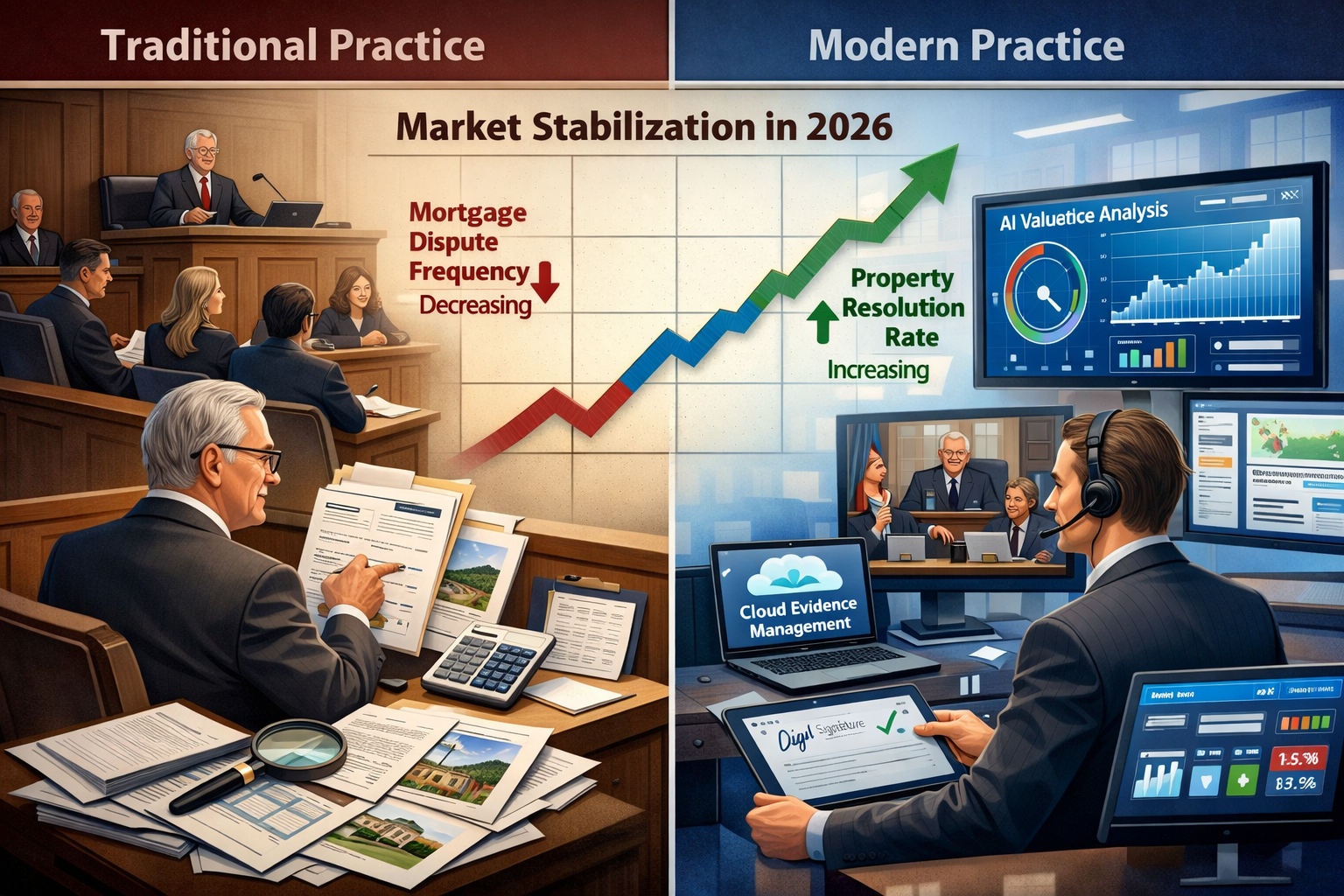
📊 Market stabilization in 2026 increases dispute frequency as narrow valuation margins create contentious disagreements in mortgage disputes, matrimonial settlements, and property disagreements requiring expert witness intervention.
Understanding the Role of Expert Witnesses in Property Valuation Disputes
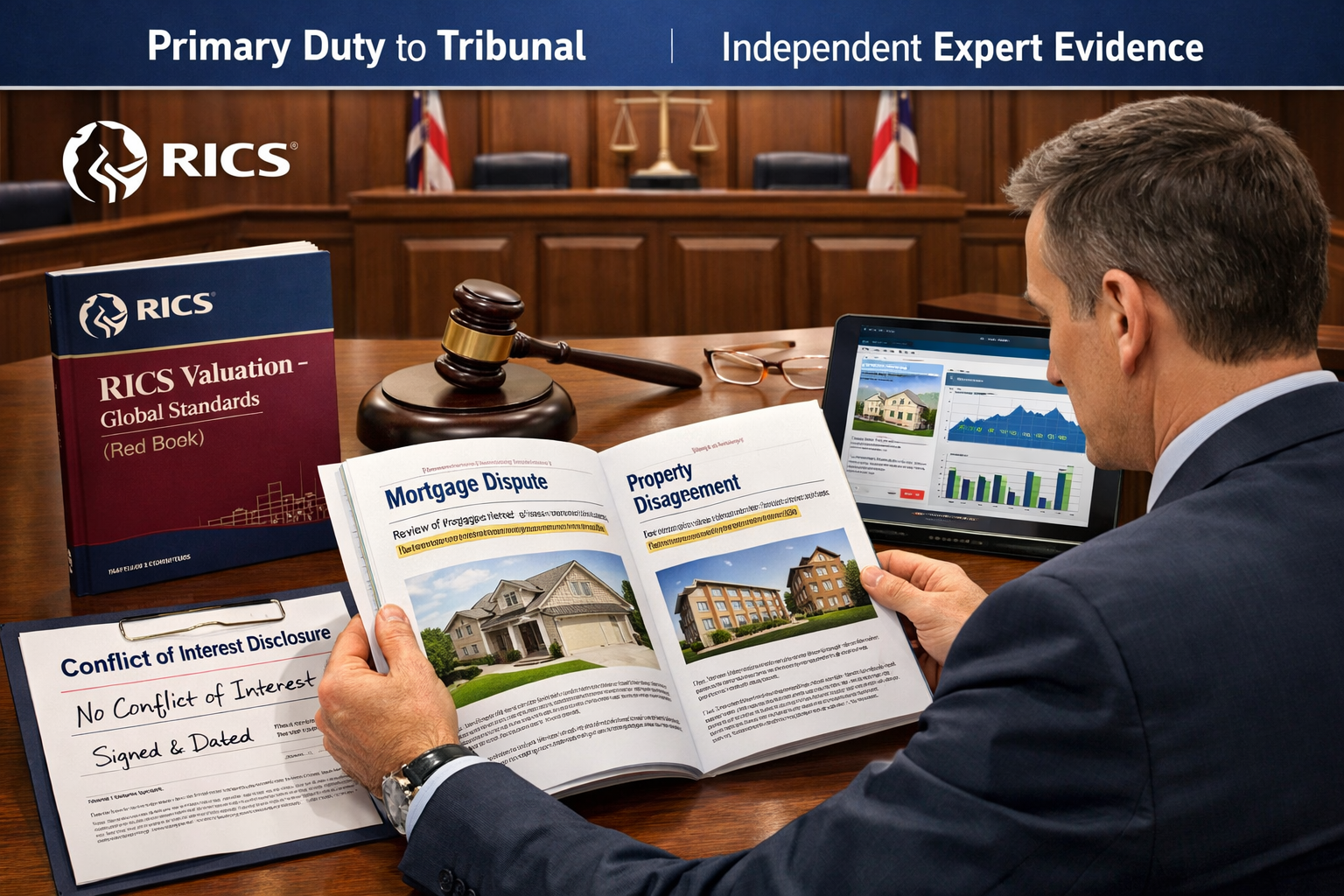
What Makes an Expert Witness Different from a Standard Valuer?
The distinction between a standard property valuer and an expert witness is fundamental. While both professionals may hold RICS valuations qualifications, their roles diverge significantly when legal proceedings commence. A standard valuer acts on behalf of their client, providing advice that serves that client's interests. An expert witness, however, owes their primary duty to the court or tribunal, not to the party instructing them[1].
This critical difference means expert witnesses must:
- Provide independent, unbiased opinions regardless of whether those opinions favor their instructing party
- Stay strictly within their area of proven expertise and clearly identify when questions fall outside their competence
- Disclose any conflicts of interest that might compromise their independence
- Prepare reports that meet legal evidential standards, not just professional valuation guidelines
The RICS standards emphasize that expert witnesses must never act as advocates for their instructing party. Their evidence must be objective, balanced, and focused solely on assisting the tribunal in reaching a just decision[1][5].
Common Types of Property Disputes Requiring Expert Witness Valuations
In 2026's stabilizing market, several categories of property disputes consistently require expert witness testimony:
🏠 Mortgage Disputes and Lender Disagreements
When property values are contested between borrowers and lenders, particularly in cases of repossession, refinancing disputes, or allegations of negligent valuation, expert witnesses provide crucial independent assessments. The stabilizing market of 2026 has created situations where even small valuation differences can determine whether a borrower faces foreclosure or successfully refinances.
💔 Matrimonial Property Settlements
Divorce proceedings frequently require matrimonial valuation expert witnesses to determine fair market values for property division. In stabilizing markets, spouses may disagree on whether to use historical peak values or current stabilized values, creating contentious disputes that require expert resolution.
⚖️ Probate and Estate Valuation Disputes
Beneficiaries often challenge probate valuation figures, particularly when substantial tax implications or inheritance distributions are at stake. Expert witnesses must navigate complex questions about valuation dates, market conditions, and appropriate comparable evidence.
🏢 Commercial Property and Lease Disputes
Commercial property surveyors acting as expert witnesses frequently address rent review disputes, dilapidations claims, and business rates appeals. The stabilizing market affects commercial valuations differently than residential, requiring specialized expertise.
🔨 Compulsory Purchase and Compensation Claims
When properties are acquired through compulsory purchase orders, expert witnesses determine fair compensation values, often involving complex legal tests and statutory frameworks beyond standard valuation practice.
The 2026 Market Context: Why Stabilization Increases Disputes
Paradoxically, market stabilization often generates more valuation disputes than volatile markets. During periods of rapid price increases or decreases, valuations are clearly directional. But in stabilizing markets like 2026, several factors converge to create contentious disagreements:
📉 Narrow Valuation Margins: When comparable properties sell within tight price ranges, small methodological differences in valuation approach can produce significantly different conclusions.
🔍 Increased Scrutiny: Lenders, insurers, and legal parties scrutinize valuations more carefully when markets stabilize, questioning assumptions that might have been accepted during volatile periods.
⏰ Timing Sensitivity: In stabilizing markets, the specific valuation date becomes critical, as values may be transitioning from decline to stability or from growth to plateau.
💼 Portfolio Reassessments: Financial institutions reassess their property portfolios during stabilization, often discovering valuations that no longer align with current market realities, triggering disputes with borrowers or previous valuers.
RICS Standards for Expert Witness Valuations in 2026's Stabilizing Market
The 5th Edition Update: Key Changes and Enhancements
In August 2025, RICS launched a comprehensive public consultation for the 5th edition of "Surveyors acting as expert witnesses"—the first major revision since 2014[1]. This update reflects the evolving legal landscape, technological advancements, and lessons learned from a decade of practice. The consultation period concluded in October 2025, with the final standards expected to guide expert witness practice throughout 2026 and beyond.
🤖 AI and Digital Evidence Provisions
The updated standards explicitly address the use of artificial intelligence in valuation analysis and evidence preparation. Expert witnesses must:
- Disclose AI tool usage in their reports and methodology sections
- Validate AI-generated analysis with professional judgment and independent verification
- Understand the limitations of AI tools and avoid over-reliance on automated outputs
- Ensure data quality when AI systems analyze comparable evidence or market trends[1]
This guidance is particularly relevant in 2026, as AI-powered valuation platforms have become commonplace, but their outputs still require expert interpretation and validation.
⚠️ Enhanced Conflict of Interest Requirements
The 5th edition provides clearer requirements for identifying and disclosing conflicts of interest, along with explanations of legal consequences for non-compliance[1]. Expert witnesses must now:
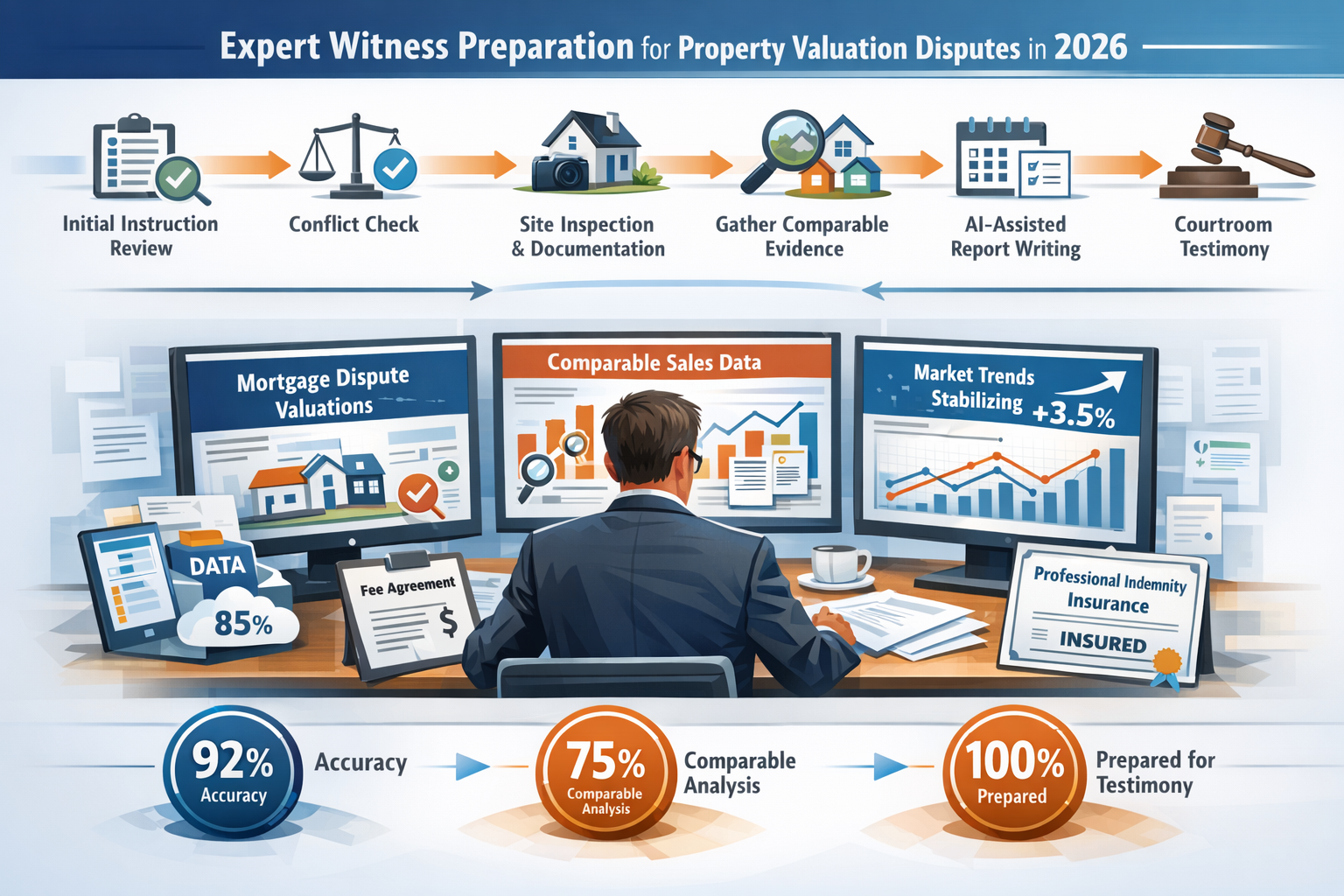
- Conduct systematic conflict checks before accepting instructions
- Disclose not only direct conflicts but also potential perceived conflicts
- Document their conflict assessment process
- Understand that failure to disclose conflicts can result in evidence being excluded and professional sanctions
💷 Fee Guidance and Professional Independence
Following a February 2023 amendment that addressed conditional fee arrangements[2], the 5th edition provides comprehensive fee guidance:
- Conditional fees are prohibited for expert witnesses themselves (fees cannot depend on case outcome)
- Deferred fee arrangements require careful documentation to protect independence
- Experts can accept instructions from solicitors on conditional fees, provided the expert's own fee is unconditional[2]
- Fee disputes must not compromise independence or the expert's duty to the tribunal
This clarity protects both expert witnesses and the legal system from arrangements that might compromise objectivity.
Aligning Expert Witness Practice with RICS Red Book Standards
The RICS Red Book Global Standards govern mandatory rules and best practices for valuation professionals, ensuring consistency with International Valuation Standards (IVS) across international markets[3][4]. When acting as expert witnesses, surveyors must understand how Red Book requirements interact with expert witness duties.
📕 Red Book Compliance in Expert Reports
Expert witness valuations typically must comply with Red Book standards, particularly:
- VPS 1: Terms of engagement (adapted for legal instructions)
- VPS 2: Inspections, investigations and records
- VPS 3: Valuation reports
- VPS 4: Bases of value, assumptions and special assumptions
- VPS 5: Valuation approaches and methods[4]
However, expert witnesses must clearly identify when legal requirements override Red Book provisions. For example, tribunal directions may specify valuation assumptions that differ from Red Book guidance, and the expert's duty to the court takes precedence[1].
🌐 International Valuation Standards Alignment
As of 2023, over 78% of cross-border real estate investment firms in North America required RICS-aligned valuations in their acquisition due diligence[3]. This international recognition makes RICS-accredited expert witnesses particularly valuable in cross-border disputes involving UK property interests.
The Valuation Professional Standards Board (VPSB) governs standard development and focuses on ethical obligations, risk management in valuations, and ensuring public confidence in the valuation profession[3]. Expert witnesses should stay informed about VPSB guidance, which increasingly addresses dispute resolution scenarios.
Specific Requirements for Mortgage Disputes and Property Disagreements
Expert Witness Valuations in 2026's Stabilizing Market: RICS Standards for Mortgage Disputes and Property Disagreements require particular attention to several specialized areas:
Mortgage Lending Valuation Disputes
When expert witnesses address mortgage lending disputes, they must understand:
- Lending valuation methodology differs from market valuation, incorporating forced sale scenarios and lender risk assessment
- Regulatory requirements from the Financial Conduct Authority (FCA) and Prudential Regulation Authority (PRA) that govern lending valuations
- Negligence allegations often center on whether the original valuer followed appropriate methodology for the lending context
- Market conditions at the valuation date must be reconstructed accurately, particularly important in 2026 when referencing earlier volatile periods
Property Boundary and Rights Disputes
Expert witnesses in property disagreement cases involving boundaries, easements, or rights of way must:
- Consider how boundary disputes affect overall property values
- Understand the interaction between party wall agreements and property valuations
- Address valuation impacts of disputed access rights or restrictive covenants
- Provide evidence on diminution in value caused by boundary encroachments
Leasehold and Freehold Valuation Disputes
Freehold valuation disputes and leasehold extension cases require expert witnesses to:
- Apply statutory valuation frameworks under the Leasehold Reform Act
- Calculate marriage value and hope value in accordance with legal precedents
- Address relativity of lease values as lease terms diminish
- Consider the impact of building safety issues and cladding remediation on valuations in 2026
Preparing Expert Witness Reports That Withstand Scrutiny
Essential Components of a Compliant Expert Report
A robust expert witness report must include specific elements that satisfy both RICS standards and legal evidential requirements:
1️⃣ Statement of Truth and Expert Declaration
Every expert report must include a clear statement that:
- The expert understands their duty to the tribunal
- The expert has complied with that duty
- The report includes all facts relevant to the opinions expressed
- The expert believes the facts stated are true and the opinions expressed are correct[1][5]
2️⃣ Qualifications and Expertise Statement
Expert witnesses must clearly establish their credentials:
- Professional qualifications (MRICS, FRICS designations)
- Relevant experience in the specific property type and dispute category
- Previous expert witness experience and training
- Continuing professional development in valuation and expert witness practice
3️⃣ Instructions and Scope Definition
The report must clearly identify:
- Who instructed the expert and when
- The specific questions the expert has been asked to address
- Any limitations on the scope of the investigation
- Documents and information relied upon
4️⃣ Methodology and Approach
Transparency in methodology is essential:
- Valuation approach selected (comparative, income, cost) and justification
- Inspection details and limitations
- Comparable evidence selection criteria
- Adjustments made and rationale
- Any AI tools or software used in the analysis[1]
5️⃣ Assumptions and Special Assumptions
Following Red Book VPS 4 requirements[4], experts must clearly state:
- Assumptions made (e.g., good title, no environmental contamination)
- Special assumptions required by legal instructions
- Impact of assumptions on the valuation conclusion
- Sensitivity analysis showing how different assumptions affect value
6️⃣ Reasoned Conclusions
The expert's opinions must be:
- Clearly stated and unambiguous
- Supported by evidence and reasoning
- Within the expert's area of competence
- Balanced, acknowledging alternative viewpoints where appropriate
Common Pitfalls and How to Avoid Them
Even experienced surveyors can encounter challenges when transitioning to expert witness roles. Understanding common pitfalls helps avoid costly mistakes:
❌ Advocacy Creep
Problem: Gradually shifting from independent expert to advocate for the instructing party.
Solution: Regularly review the primary duty to the tribunal. If evidence doesn't support the instructing party's position, state that clearly[1].
❌ Exceeding Expertise Boundaries
Problem: Opining on matters outside proven competence (e.g., a residential valuer commenting on complex commercial lease structures).
Solution: Clearly identify expertise limitations and decline instructions or recommend additional experts for specialized questions[5].
❌ Inadequate Conflict Checks
Problem: Failing to identify prior relationships with parties, properties, or related matters.
Solution: Implement systematic conflict checking procedures before accepting instructions, documenting the process[1].
❌ Insufficient Comparable Evidence
Problem: Relying on limited or inappropriate comparable evidence, particularly in stabilizing markets where recent transactions are most relevant.
Solution: Conduct thorough market research, explain comparable selection criteria, and acknowledge evidence limitations.
❌ Template Over-Reliance
Problem: Using report templates without adequate customization, creating generic reports that don't address specific case issues.
Solution: The 5th edition includes specific risk mitigation guidance for template usage[1]. Customize every report to the specific property and dispute.
❌ Inadequate Fee Agreements
Problem: Unclear fee arrangements that could compromise independence or create disputes.
Solution: Follow the enhanced fee guidance in the 5th edition, ensuring fees are unconditional and clearly documented[1][2].
Documentation and Evidence Management in 2026
Modern expert witness practice requires sophisticated evidence management, particularly given the digital evidence provisions in the updated RICS standards[1]:
📱 Digital Evidence Collection
- Photograph properties comprehensively with metadata-enabled devices
- Use drone photography where appropriate and legally permitted
- Maintain cloud-based evidence repositories with access logs
- Ensure digital evidence authenticity and chain of custody
🗂️ Comparable Evidence Databases
- Maintain searchable databases of comparable transactions
- Document evidence sources (Land Registry, property portals, direct market knowledge)
- Update databases regularly to reflect market stabilization trends in 2026
- Retain evidence even after case completion for potential challenges
🔒 Data Protection and Confidentiality
- Comply with UK GDPR requirements when handling personal data
- Implement secure storage for confidential case materials
- Understand disclosure obligations versus confidentiality duties
- Obtain appropriate consents for evidence use
Expert Witness Valuations in Mortgage Disputes: Specialized Considerations
Negligent Valuation Claims
One of the most common scenarios requiring expert witnesses involves allegations that a surveyor provided a negligent valuation that caused financial loss. These cases have particular nuances in 2026's stabilizing market:
Establishing the Standard of Care
Expert witnesses must establish what a reasonably competent surveyor would have concluded at the relevant valuation date. This requires:
- Reconstructing market conditions as they existed at the valuation date
- Identifying comparable evidence available to the original valuer
- Assessing whether the valuation fell within an acceptable range of professional opinion
- Distinguishing between professional negligence and legitimate differences in valuation judgment
In stabilizing markets, the range of acceptable professional opinion may narrow, making negligence claims more contentious.
Causation and Loss Assessment
Beyond establishing negligence, expert witnesses must often address:
- Whether the negligent valuation caused the alleged loss
- What the correct valuation should have been
- The quantum of loss suffered by the claimant
- Mitigation factors and intervening market changes
Lender-Specific Considerations
When mortgage lenders are parties to disputes, expert witnesses must understand:
- Lending valuation differs from market valuation, incorporating forced sale discounts
- Lenders' specific valuation requirements and internal policies
- Regulatory frameworks governing mortgage lending valuations
- The distinction between valuation for lending purposes and valuations for other purposes
Repossession and Forced Sale Valuations
Property repossessions create unique valuation challenges that frequently require expert witness evidence:
Market Value vs. Forced Sale Value
Expert witnesses must clearly distinguish between:
- Market value: The estimated amount for which a property should exchange on the valuation date between a willing buyer and a willing seller in an arm's length transaction[4]
- Forced sale value: A reduced value reflecting constraints on marketing time and negotiation leverage
The 2026 stabilizing market affects forced sale discounts differently than volatile markets, as buyers may be more willing to transact when price trends are predictable.
Reasonable Marketing Period Assumptions
Tribunal questions often focus on:
- What constitutes a reasonable marketing period in current market conditions
- How forced sale constraints affect achievable prices
- Whether lenders have fulfilled obligations to obtain best prices
- The impact of property condition and location on forced sale scenarios
Refinancing and Valuation Disputes
As interest rates and lending criteria evolve in 2026, refinancing disputes have become increasingly common:
Valuation for Refinancing Purposes
Expert witnesses addressing refinancing disputes must consider:
- Whether the property value supports the requested loan-to-value ratio
- How market stabilization affects refinancing prospects
- The impact of property improvements or deterioration since original purchase
- Comparable evidence for similar refinancing transactions
Lender Valuation Panel Standards
Many disputes arise from differences between:
- Lender panel valuer conclusions
- Independent valuer opinions
- Automated valuation models (AVMs) used by lenders
Expert witnesses must understand how lender panel requirements and AVM methodologies differ from traditional valuation approaches, particularly as AI-powered tools become more prevalent[1].
Property Disagreements Beyond Mortgages: Expert Witness Applications
Boundary Disputes and Property Rights
Expert Witness Valuations in 2026's Stabilizing Market: RICS Standards for Mortgage Disputes and Property Disagreements extend well beyond mortgage-related cases. Boundary disputes frequently require valuation evidence:
Diminution in Value Analysis
When boundary encroachments or disputes are established, expert witnesses often must quantify:
- The reduction in property value caused by the encroachment or disputed boundary
- The value of land in dispute
- The impact on property marketability and usability
- Potential remediation costs versus value impacts
Party Wall Matters
While party wall surveyors typically handle party wall disputes under the Party Wall Act 1996, expert witnesses may be required when:
- Damage to property claims exceed party wall award provisions
- Negligence is alleged in party wall surveyor appointments
- Valuation impacts of party wall works are disputed
- Understanding when you need a party wall agreement becomes legally contentious
Development and Planning Disputes
Property development disputes often involve complex valuation questions:
Residual Land Valuation
Expert witnesses may need to provide evidence on:
- Development site valuations using residual methodology
- The impact of planning permissions or refusals on land value
- Overage and clawback provisions in development agreements
- Viability assessments for planning purposes
Betterment and Injurious Affection
In compulsory purchase and infrastructure projects:
- Betterment (increase in value) to retained land
- Injurious affection (decrease in value) from nearby development
- Severance impacts when part of a property is acquired
- Temporary loss and disturbance compensation
Lease Disputes and Commercial Property Disagreements
Commercial property disputes require specialized expertise:
Rent Review and Lease Renewal
Expert witnesses in commercial lease disputes address:
- Market rent determinations under lease review provisions
- Comparable evidence from similar commercial properties
- The impact of lease terms, tenant improvements, and market conditions
- Statutory frameworks under the Landlord and Tenant Act 1954
Dilapidations Claims
Dilapidations surveys often lead to disputes requiring expert evidence on:
- The scope of tenant repair obligations
- Appropriate repair and reinstatement costs
- Diminution in value versus cost of repairs
- Supersession arguments (where landlord redevelopment plans reduce claims)
Service Charge Disputes
Commercial and residential service charge disputes may require expert evidence on:
- Reasonableness of service charge costs
- Appropriate apportionment methodologies
- The impact of service charge disputes on property values
- Comparable evidence for service charge levels
Courtroom Preparation and Testimony Skills for Expert Witnesses
Pre-Trial Procedures and Expert Meetings
Modern civil procedure rules emphasize early expert engagement and collaborative dispute resolution:
Joint Expert Instructions
In many cases, parties jointly instruct a single expert witness, requiring:
- Balanced consideration of both parties' positions
- Clear communication with both legal teams
- Absolute impartiality in evidence and conclusions
- Careful management of conflicts between parties' expectations and expert duties[1]
Expert Meetings and Joint Statements
Courts frequently direct expert witnesses to meet and prepare joint statements identifying:
- Areas of agreement on factual matters and methodology
- Remaining areas of disagreement and reasons for differences
- The range of values or conclusions the experts consider reasonable
- Questions requiring tribunal determination rather than expert opinion
These meetings require professional courtesy, clear communication, and focus on assisting the tribunal rather than advocating for instructing parties[5].
Written Questions to Experts
Following report exchange, parties may submit written questions to experts, requiring:
- Prompt, substantive responses
- Willingness to reconsider opinions if new evidence warrants
- Clarity when questions exceed the expert's expertise or available evidence
- Maintenance of independence despite potentially hostile questioning
Effective Courtroom Testimony Techniques
Even the most thorough expert report can be undermined by poor courtroom performance. Effective testimony requires:
🎯 Preparation and Familiarization
- Review all case materials thoroughly before testimony
- Revisit the site if significant time has passed since inspection
- Understand the legal issues and how valuation evidence addresses them
- Prepare for likely cross-examination challenges
- Practice explaining technical concepts in accessible language
🗣️ Clear Communication
- Speak directly to the judge or tribunal, not to the lawyers
- Avoid jargon or explain technical terms when necessary
- Use visual aids (photographs, maps, comparable evidence schedules) effectively
- Maintain composure and professionalism under cross-examination
- Admit limitations or uncertainties honestly
⚖️ Maintaining Independence
- Resist pressure to modify opinions to favor the instructing party
- Acknowledge when cross-examination reveals valid points
- Distinguish between facts, professional judgment, and speculation
- Concede errors or oversights if identified, explaining their impact on conclusions
📊 Presenting Valuation Evidence
- Explain methodology clearly before presenting conclusions
- Use comparable evidence schedules to demonstrate reasoning
- Address adjustments transparently, explaining each factor
- Present ranges or alternative scenarios when appropriate
- Connect valuation conclusions to the legal questions at issue
Remote and Hybrid Hearings in 2026
The COVID-19 pandemic permanently transformed tribunal procedures, and by 2026, hybrid and remote hearings are commonplace:
Virtual Testimony Considerations
- Ensure reliable technology and backup systems
- Arrange professional, distraction-free environments
- Manage visual aids and screen sharing effectively
- Maintain eye contact with the camera when addressing the tribunal
- Understand platform-specific procedures and limitations
Digital Evidence Presentation
The updated RICS standards address digital evidence provisions[1], requiring expert witnesses to:
- Present digital evidence clearly in virtual settings
- Ensure document legibility when screen-shared
- Navigate between multiple documents efficiently
- Maintain evidence integrity in digital formats
Building a Credible Expert Witness Practice in 2026
Professional Development and Accreditation
Surveyors seeking to establish themselves as credible expert witnesses should pursue:
📚 Specialized Training
- RICS expert witness training courses and workshops
- Cross-examination skills development
- Report writing for legal proceedings
- Understanding civil procedure rules and tribunal processes
- Continuing professional development in specialized property sectors
🏆 Professional Recognition
- RICS accreditation as an expert witness
- Membership in expert witness professional organizations
- Building a track record of tribunal appointments and published decisions
- Developing recognized expertise in specific dispute categories
📖 Staying Current with Standards
The 5th edition of "Surveyors acting as expert witnesses" represents a significant update[1]. Expert witnesses must:
- Participate in consultation processes for standard development
- Attend training on new requirements when standards are updated
- Review guidance from the RICS Valuation Professional Standards Board[3]
- Monitor legal developments affecting expert witness practice
Marketing Expert Witness Services Ethically
Building an expert witness practice requires careful marketing that maintains professional standards:
✅ Appropriate Marketing Activities
- Highlighting relevant qualifications and experience
- Describing areas of expertise and property specializations
- Publishing thought leadership on valuation methodology and standards
- Networking with legal professionals and dispute resolution practitioners
- Maintaining a professional online presence showcasing expertise
❌ Inappropriate Marketing Practices
- Guaranteeing favorable outcomes or specific conclusions
- Emphasizing success rates for instructing parties
- Offering conditional or success-based fees[1][2]
- Misrepresenting qualifications or experience
- Soliciting instructions in ways that compromise independence
Risk Management and Professional Indemnity Insurance
Expert witness work carries significant professional risks:
🛡️ Professional Indemnity Requirements
- Ensure adequate professional indemnity insurance coverage for expert witness work
- Understand policy exclusions and limitations for tribunal work
- Consider separate expert witness insurance if primary policy excludes litigation work
- Maintain coverage for extended periods, as claims may arise years after testimony
⚠️ Risk Mitigation Strategies
The 5th edition includes specific risk mitigation guidance for high-volume cases[1]:
- Implement quality assurance procedures for report review
- Maintain comprehensive file documentation
- Use checklists to ensure compliance with RICS standards
- Seek peer review for complex or high-value cases
- Document decision-making processes and methodology selection
📋 Complaint and Disciplinary Procedures
Expert witnesses must understand:
- RICS disciplinary procedures for professional misconduct
- Tribunal powers to exclude evidence or order cost sanctions
- Potential civil liability for negligent expert evidence
- Reputational risks from poor performance or ethical breaches
Case Studies: Expert Witness Valuations in 2026's Stabilizing Market
Case Study 1: Mortgage Lending Valuation Dispute in a Stabilizing Market
Background: A borrower alleged that a surveyor's negligent over-valuation in 2023 (during market volatility) led to excessive lending and subsequent financial loss when the market stabilized in 2026 at significantly lower values.
Expert Witness Challenge: Reconstruct market conditions in 2023, assess whether the original valuation was negligent using information available at that time, and determine whether market stabilization or negligence caused the loss.
Key Issues Addressed:
- The appropriate valuation methodology for the property type in 2023 market conditions
- Comparable evidence available to the original valuer versus evidence available with hindsight
- The range of reasonable professional opinion in a volatile market
- Causation analysis distinguishing market movements from negligent over-valuation
- Quantum of loss attributable to negligence versus market stabilization
Outcome: The expert witness provided balanced evidence acknowledging that while the original valuation was at the upper end of reasonable range, it fell within acceptable professional judgment given market conditions and available evidence at the time. The tribunal found no negligence, emphasizing the importance of assessing valuations based on contemporaneous information rather than hindsight.
Lessons for Expert Witnesses:
- Carefully reconstruct historical market conditions
- Distinguish between negligence and legitimate professional disagreement
- Resist hindsight bias when assessing past valuations
- Clearly explain the range of reasonable professional opinion
Case Study 2: Matrimonial Property Settlement Valuation
Background: Divorcing spouses disputed the value of their family home for property settlement purposes. One spouse argued for valuation at the market peak (2022), while the other advocated for current stabilized value (2026).
Expert Witness Challenge: Determine the appropriate valuation date under matrimonial law, provide valuations at multiple dates if required, and explain the impact of market stabilization on property value.
Key Issues Addressed:
- Legal requirements for valuation date in matrimonial proceedings
- Market value at separation date versus trial date
- The trajectory of market changes from peak to stabilization
- Appropriate comparable evidence for each valuation date
- The impact of property improvements or deterioration during the separation period
Outcome: The expert witness provided valuations at three key dates (separation, petition, and trial), clearly explaining market movements and comparable evidence for each. The tribunal adopted the trial date valuation, reflecting the stabilized market value.
Lessons for Expert Witnesses:
- Understand legal requirements for valuation dates in different dispute types
- Be prepared to provide multiple valuations at different dates
- Clearly explain market movements and their impact on value
- Remain neutral on legal questions while providing comprehensive valuation evidence
Case Study 3: Commercial Lease Renewal Rent Determination
Background: A commercial landlord and tenant disputed the appropriate rent for a lease renewal in 2026, with the landlord arguing that market stabilization supported higher rents, while the tenant emphasized economic uncertainties.
Expert Witness Challenge: Determine market rent for the premises considering stabilizing market conditions, comparable evidence from similar commercial properties, and the specific lease terms.
Key Issues Addressed:
- Comparable evidence from recent commercial lettings in the area
- Adjustments for differences in property characteristics, lease terms, and location
- The impact of market stabilization on commercial rental values
- Tenant improvements and their impact on rent determination
- Economic factors affecting commercial property demand in 2026
Outcome: The expert witnesses (one for each party) met and prepared a joint statement identifying agreed facts and a narrow range of disagreement. The tribunal determined rent within that range, emphasizing the value of expert collaboration.
Lessons for Expert Witnesses:
- Engage constructively in expert meetings and joint statements
- Focus on areas of genuine professional disagreement rather than advocacy
- Provide transparent comparable evidence and adjustment methodology
- Understand sector-specific factors affecting commercial valuations
The Future of Expert Witness Valuations: Trends Beyond 2026
Technology Integration and AI-Assisted Valuations
The RICS 5th edition's provisions for AI use[1] represent just the beginning of technological transformation in expert witness practice:
🤖 AI-Powered Comparable Analysis
- Machine learning algorithms identifying relevant comparable evidence
- Automated adjustment calculations based on property characteristics
- Predictive analytics for market trend analysis
- Natural language processing for legal document review
Expert Witness Responsibilities:
- Validate AI-generated analysis with professional judgment
- Understand AI tool limitations and potential biases
- Disclose AI usage in reports and methodology sections
- Maintain ultimate professional responsibility for conclusions
⚖️ Blockchain and Evidence Authentication
- Immutable records of property transactions and valuations
- Enhanced evidence authenticity and chain of custody
- Smart contracts for automated valuation triggers
- Distributed ledger technology for land registry integration
Regulatory Evolution and Global Harmonization
🌍 International Valuation Standards Convergence
The trend toward global harmonization continues:
- Greater alignment between RICS Red Book and International Valuation Standards[3][4]
- Cross-border recognition of expert witness qualifications
- Standardized methodologies for international property disputes
- Enhanced guidance for valuations in multiple jurisdictions
📊 Data Transparency and Market Intelligence
- Increased availability of transaction data and market analytics
- Enhanced comparable evidence databases
- Real-time market indicators and indices
- Greater transparency in valuation methodology and assumptions
Sustainability and ESG Considerations in Valuations
By 2026, environmental, social, and governance (ESG) factors significantly impact property valuations:
🌱 Climate Risk and Property Values
Expert witnesses must address:
- Flood risk, climate change impacts, and adaptation costs
- Energy efficiency ratings and their impact on value
- Sustainability certifications (BREEAM, LEED) and market premiums
- Future regulatory changes affecting property usability and value
🏗️ Building Safety and Cladding Issues
Ongoing building safety concerns require expert evidence on:
- The impact of cladding and fire safety issues on valuations
- Remediation costs and their effect on property values
- Marketability of properties with building safety concerns
- Lender attitudes and lending restrictions for affected properties
Conclusion: Positioning for Success in Expert Witness Valuations
As 2026's stabilizing property market creates new challenges and opportunities for valuation disputes, surveyors who position themselves as credible, RICS-compliant expert witnesses will find growing demand for their services. Expert Witness Valuations in 2026's Stabilizing Market: RICS Standards for Mortgage Disputes and Property Disagreements require a unique combination of technical expertise, professional integrity, and communication skills that distinguish expert witnesses from standard valuation practitioners.
Key Success Factors for Expert Witnesses
✅ Commit to the Primary Duty: Never forget that your duty is to the tribunal, not the instructing party. This fundamental principle underpins all expert witness practice[1].
✅ Stay Current with Standards: The RICS 5th edition represents significant evolution in expert witness requirements. Continuous professional development and engagement with standard updates are essential[1][5].
✅ Embrace Technology Responsibly: AI and digital tools enhance efficiency and analysis, but expert judgment remains paramount. Understand, validate, and disclose technology usage[1].
✅ Specialize Strategically: Develop deep expertise in specific property types or dispute categories rather than attempting to cover all areas. Credibility comes from demonstrated competence.
✅ Invest in Communication Skills: Technical excellence means nothing if you cannot explain complex valuation concepts clearly to tribunals and withstand rigorous cross-examination.
✅ Manage Risks Proactively: Implement robust quality assurance, maintain comprehensive documentation, ensure adequate insurance, and understand potential liabilities.
Actionable Next Steps
For surveyors seeking to develop or enhance expert witness practices:
1️⃣ Complete RICS Expert Witness Training: Formal training in expert witness procedures, report writing, and courtroom testimony is essential before accepting instructions.
2️⃣ Review the 5th Edition Standards: Thoroughly study the updated "Surveyors acting as expert witnesses" standards and implement compliant procedures[1].
3️⃣ Develop Specialized Expertise: Identify specific property sectors or dispute types where you have genuine expertise and focus your expert witness practice accordingly.
4️⃣ Build Legal Networks: Develop relationships with solicitors, barristers, and dispute resolution practitioners who instruct expert witnesses in your specialty areas.
5️⃣ Create Robust Templates and Procedures: Develop compliant report templates, conflict check procedures, and quality assurance systems that meet RICS requirements while allowing case-specific customization[1].
6️⃣ Seek Mentorship: Learn from experienced expert witnesses through mentorship, peer review, and observation of tribunal proceedings.
7️⃣ Stay Informed on Market Developments: Monitor market stabilization trends, regulatory changes, and emerging issues that will drive future disputes requiring expert evidence.
For those seeking expert witness services for mortgage disputes or property disagreements, ensure your appointed expert:
- Holds appropriate RICS qualifications and demonstrable expertise in the relevant property type
- Understands their duty to the tribunal and commits to independence
- Has current professional indemnity insurance covering expert witness work
- Provides clear, transparent fee arrangements that protect independence[1][2]
- Demonstrates familiarity with current RICS standards and Red Book requirements[3][4]
The stabilizing market of 2026 presents both challenges and opportunities. Property disputes will continue to require independent, credible expert evidence from surveyors who understand not only valuation methodology but also their critical role in the justice system. By embracing RICS standards, maintaining absolute professional integrity, and developing specialized expertise, surveyors can build successful expert witness practices that serve both their professional development and the broader public interest in fair, evidence-based dispute resolution.
Whether you're a surveyor considering expert witness work or a legal professional seeking qualified experts, understanding the evolving landscape of Expert Witness Valuations in 2026's Stabilizing Market: RICS Standards for Mortgage Disputes and Property Disagreements is essential for navigating property disputes successfully. The combination of market stabilization, updated professional standards, and technological advancement creates a dynamic environment where expertise, integrity, and adaptability determine success.
For comprehensive valuation services and expert guidance, explore our RICS valuations services and connect with our team of experienced chartered surveyors who understand the complexities of modern property disputes and expert witness requirements.
References
[1] Rics Launches Global Consultation On Updated Expert Witness Standard – https://www.rics.org/news-insights/rics-launches-global-consultation-on-updated-expert-witness-standard
[2] Surveyors Acting As Expert Witnesses – https://www.rics.org/profession-standards/rics-standards-and-guidance/sector-standards/dispute-resolution-standards/surveyors-acting-as-expert-witnesses
[3] Breaking Down The Rics Valuation What Every Valuer Should Know – https://globalvaluation.com/breaking-down-the-rics-valuation-what-every-valuer-should-know/
[4] Valuation Standards – https://www.rics.org/profession-standards/rics-standards-and-guidance/sector-standards/valuation-standards
[5] New Expert Witness Guidance For Rics Members – https://www.nmrk.com/en-gb/perspectives/new-expert-witness-guidance-for-rics-members
