
The UK's 5G network rollout has triggered a 340% increase in party wall disputes involving telecommunications infrastructure since 2024, as mobile operators race to install masts within metres of residential boundaries. As telecom firms accelerate deployments to meet government connectivity targets in 2026, chartered surveyors face unprecedented challenges navigating Party Wall Surveys for 5G Mast Installations: RICS Protocols Amid 2026 Telecom Infrastructure Expansion—a complex intersection of property law, neighbour relations, and cutting-edge technology infrastructure.

The Royal Institution of Chartered Surveyors is currently consulting on the draft 8th edition of Party Wall Legislation and Procedure, with feedback sought from surveyors, legal professionals, and dispute resolution practitioners through an 8-week consultation period running across April and May 2026 [1]. While the consultation addresses evolving practice standards, the specific protocols for telecommunications infrastructure—particularly 5G mast foundations adjacent to party walls—remain an emerging area of professional practice that demands careful attention.
Key Takeaways
- 5G mast foundations often trigger Party Wall Act 1996 requirements when excavations occur within 3-6 metres of adjoining properties, requiring formal notice procedures
- RICS members must comply with updated professional standards as of March 9, 2026, affecting how surveyors approach telecommunications infrastructure projects [3]
- Neighbour concerns about electromagnetic field (EMF) exposure and vibration from mast installations are escalating disputes, requiring surveyors to address non-structural issues in party wall awards
- Proper notice procedures and comprehensive party wall awards can prevent costly delays in 5G rollout programmes while protecting adjoining owners' rights
- Specialist knowledge combining telecommunications engineering, structural assessment, and party wall legislation is now essential for surveyors working on telecom infrastructure projects
Understanding Party Wall Act Requirements for 5G Telecommunications Infrastructure
When Do 5G Mast Installations Trigger Party Wall Notices?
The Party Wall etc. Act 1996 applies to 5G mast installations in three primary scenarios:
1. Section 1 Works (Building on the Line of Junction) 🏗️
When a telecom operator proposes to construct a mast foundation directly on or astride the boundary line between properties, a Line of Junction Notice must be served. This situation is relatively uncommon for 5G installations but may occur in dense urban environments where space is constrained.
2. Section 2 Works (Adjacent Excavations) 📏
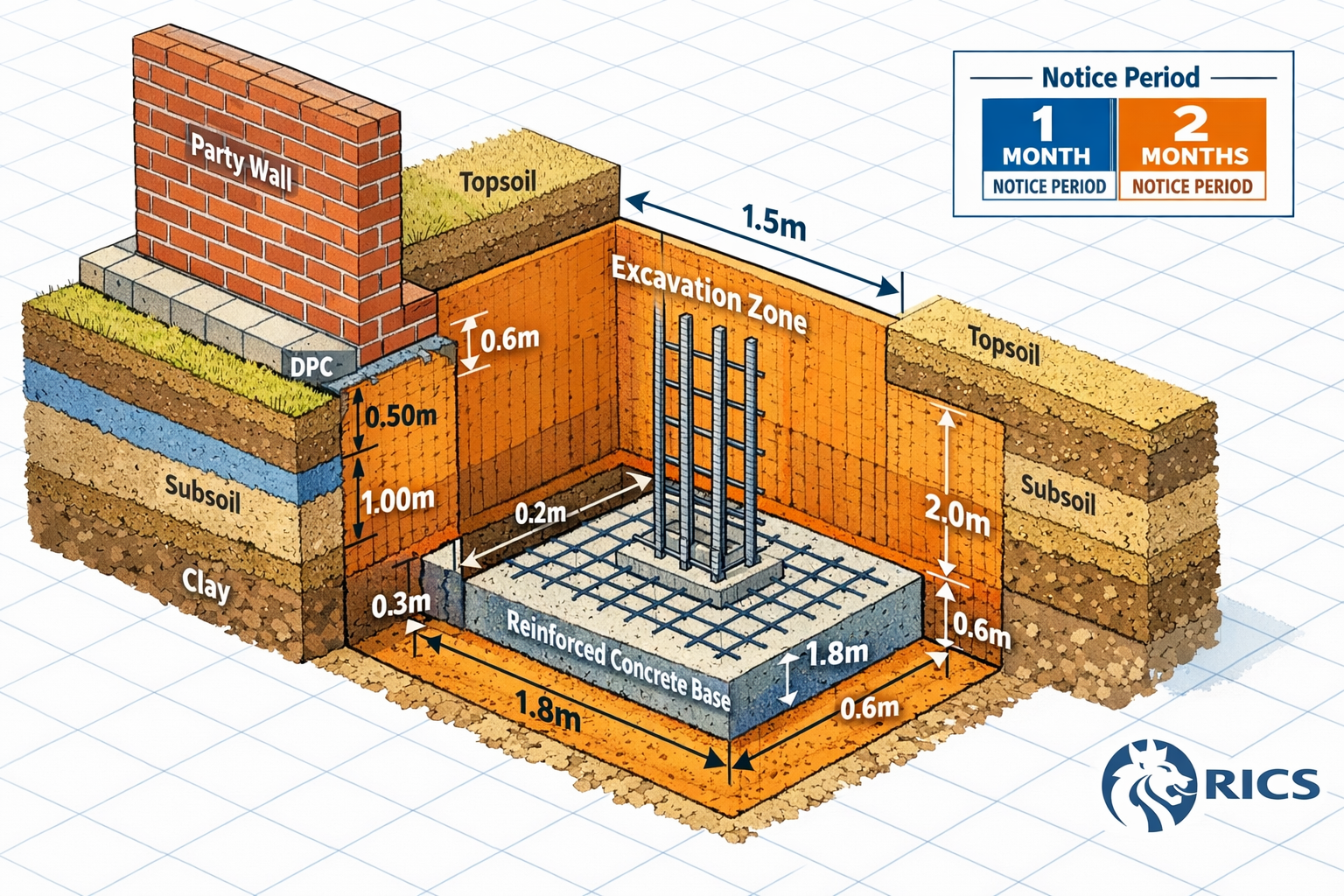
This is the most common trigger for 5G mast installations. Section 2 requires notice when:
- Excavating within 3 metres of a neighbouring building or structure, where the excavation will go deeper than the neighbour's foundations
- Excavating within 6 metres of a neighbouring building or structure, where the excavation will cut a line drawn downwards at 45 degrees from the bottom of the neighbour's foundations
Most 5G mast foundations require excavations of 2-4 metres depth, frequently triggering Section 2(2) notice requirements in residential areas.
3. Section 6 Works (Existing Party Structures) 🧱
When installing equipment on or adjacent to an existing party wall—such as mounting small-cell 5G equipment on shared boundary walls or chimneys—Section 6 notices may be required.
For comprehensive guidance on party wall procedures, refer to our complete guide to party wall surveys.
Notice Periods and Timelines for Telecom Projects
Telecommunications operators must serve appropriate notices:
| Notice Type | Minimum Notice Period | When Required |
|---|---|---|
| Line of Junction Notice | 1 month | Building on boundary line |
| Party Structure Notice | 2 months | Work to existing party wall |
| Adjacent Excavation Notice | 1 month | Excavations within 3m or 6m |
⚠️ Critical consideration: Unlike residential extensions where homeowners can adjust timelines, telecom operators often work to strict deployment schedules tied to network rollout commitments. Delays caused by party wall disputes can cost operators £5,000-£15,000 per week in contractor standby costs.
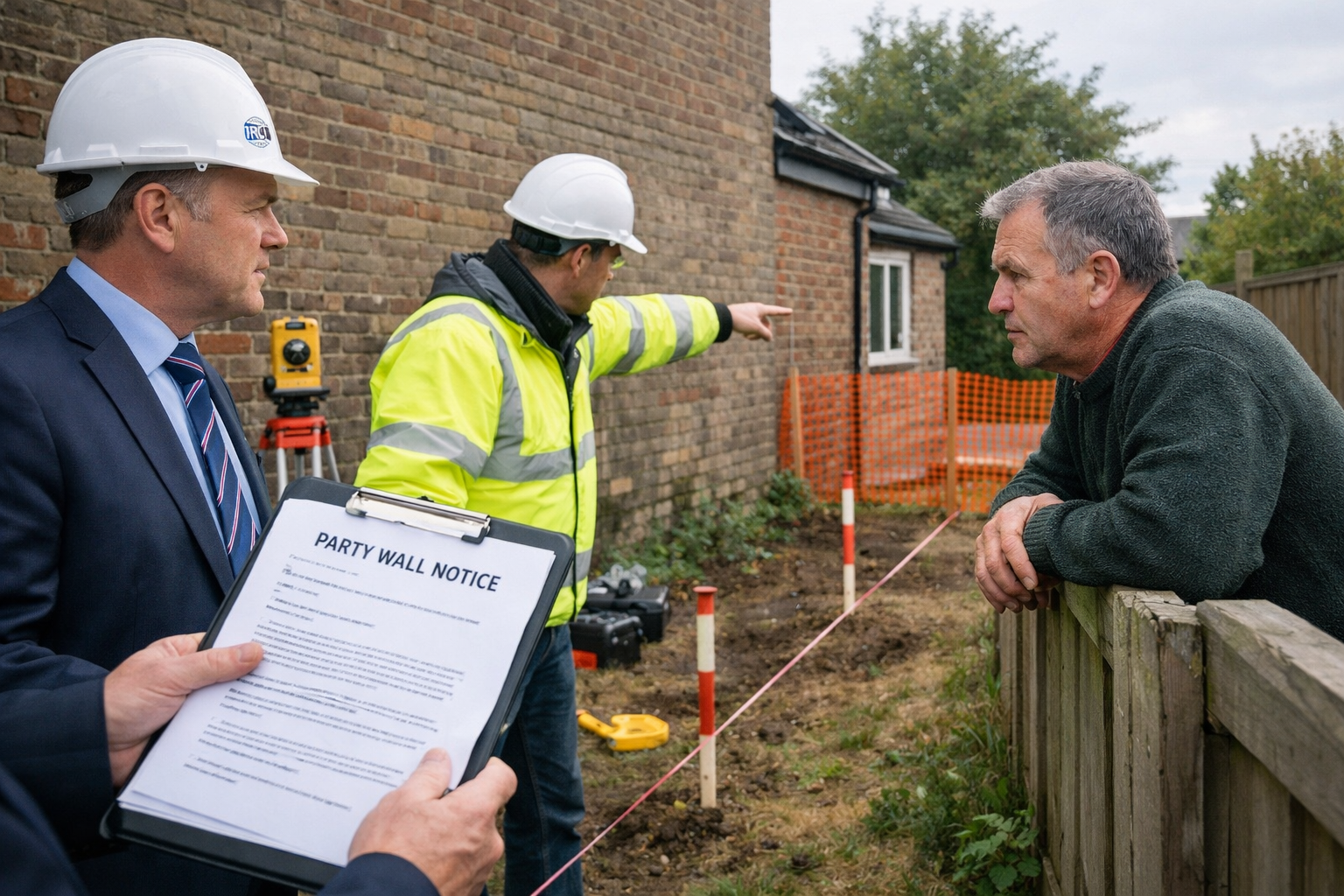
Understanding how to write a party wall letter correctly is essential for telecom project managers to avoid invalidating notices and restarting the statutory timeline.
Party Wall Surveys for 5G Mast Installations: RICS Protocols and Professional Standards
The RICS Consultation and 2026 Standards Update
The RICS consultation launched in April 2026 represents the first major update to party wall practice guidance since the 7th edition [1][2]. While the consultation document seeks feedback on general practice standards, surveyors working on telecommunications infrastructure must consider several evolving professional requirements:
Updated Compliance Obligations 📋
As of March 9, 2026, RICS members and regulated firms must comply with updated standards affecting their party wall work [3]. These changes emphasize:
- Enhanced documentation requirements for complex engineering projects
- Clearer guidance on managing conflicts of interest in commercial developments
- Improved dispute resolution protocols
Application to Telecommunications Projects
Although the consultation materials available do not specifically address 5G infrastructure [4], surveyors must apply RICS principles to telecommunications installations:
- Competence: Surveyors must possess adequate knowledge of telecommunications engineering, foundation design, and potential impacts on adjoining properties
- Independence: Maintaining impartiality when appointed to act for both parties (as agreed surveyor) or when representing individual parties
- Technical rigour: Conducting thorough inspections and preparing comprehensive schedules of condition
- Clear communication: Explaining technical aspects of 5G installations to lay clients concerned about EMF exposure and structural impacts
"The intersection of telecommunications infrastructure and party wall legislation creates unique challenges requiring surveyors to expand their technical knowledge beyond traditional building work." — Industry observation on evolving practice standards
Conducting Party Wall Surveys for 5G Mast Installations
A comprehensive party wall survey for a 5G mast installation should include:
Pre-Works Schedule of Condition 📸
- Detailed photographic record of adjoining properties (internal and external)
- Identification of existing cracks, settlement, or structural defects
- Documentation of proximity-sensitive features (conservatories, extensions, garden structures)
- Baseline vibration readings if sensitive equipment or structures are present
Foundation Design Review 🔍
- Assessment of proposed mast foundation depth and proximity to boundaries
- Review of ground investigation reports and soil conditions
- Evaluation of potential impacts on adjoining foundations
- Consideration of alternative foundation designs to minimize intrusion
Access Requirements 🚪
- Identification of access routes for construction vehicles and equipment
- Assessment of temporary works requirements (scaffolding, hoarding, crane access)
- Coordination with adjoining owners for necessary access permissions
For detailed information on surveyor responsibilities, see our guide on what a party wall surveyor does.
Drafting Party Wall Awards for Telecommunications Infrastructure
A party wall award for a 5G mast installation must address specific considerations beyond typical residential projects. Learn more about what a party wall award is in our comprehensive guide.
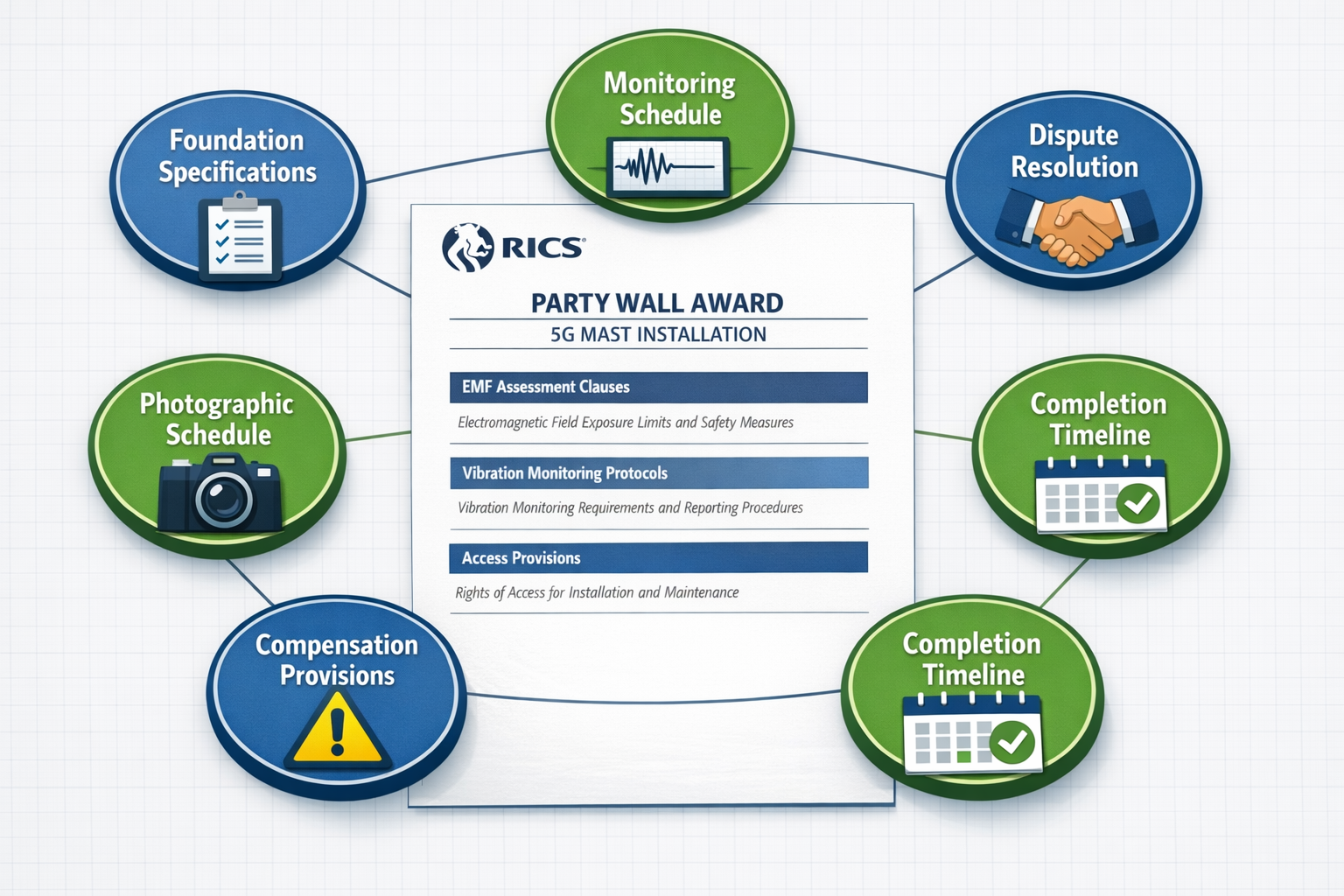
Essential Award Clauses 📝
1. Foundation Specifications
- Detailed description of mast foundation type, depth, and dimensions
- Requirements for underpinning or protective measures if adjoining foundations are affected
- Specifications for foundation monitoring during installation
2. Vibration Monitoring Protocols
- Baseline vibration measurements before works commence
- Continuous monitoring during piling or excavation operations
- Trigger levels for stopping work if vibration exceeds safe thresholds (typically 10-15mm/s PPV for residential structures)
3. EMF Assessment Clauses ⚡
While EMF exposure is regulated by Public Health England (now UK Health Security Agency) and generally falls outside party wall legislation, surveyors should:
- Reference compliance with ICNIRP (International Commission on Non-Ionizing Radiation Protection) guidelines
- Include provisions for sharing EMF assessment reports with adjoining owners
- Address adjoining owner concerns through clear communication rather than dismissal
4. Working Hours and Access ⏰
- Restricted working hours in residential areas (typically 8am-6pm weekdays, 8am-1pm Saturdays)
- Notice requirements for crane operations or abnormal deliveries
- Emergency contact procedures for out-of-hours issues
5. Photographic Schedule and Monitoring
- Comprehensive photographic schedule attached to the award
- Regular monitoring visits during construction (weekly or bi-weekly)
- Post-completion inspection within 1-2 months of mast activation
6. Compensation Provisions 💷
- Clear procedures for claiming compensation for damage
- Timelines for remedial works
- Dispute resolution mechanisms if parties disagree on causation
Access our party wall award guidance for templates and additional resources.
Managing Neighbour Disputes and Concerns in 5G Mast Installations
Common Objections and How to Address Them
"I'm concerned about health risks from 5G radiation" 🏥
This is the most frequent objection to 5G mast installations. Surveyors should:
- Acknowledge concerns respectfully without dismissing them
- Explain that party wall legislation addresses structural matters, not health regulations
- Direct adjoining owners to authoritative sources (UK Health Security Agency, Ofcom)
- Note that 5G installations must comply with strict EMF exposure limits set by government regulators
- Include EMF compliance certificates in award documentation
"The vibration from construction will damage my property" 🔨
Legitimate structural concerns that fall squarely within party wall remit:
- Conduct baseline vibration surveys before works commence
- Specify monitoring protocols in the award
- Set clear trigger levels for stopping work
- Establish procedures for immediate inspection if damage occurs
- Ensure adequate insurance coverage is in place
"I don't want a mast near my property—it will devalue my home" 📉
Property value concerns are common but complex:
- Party wall legislation cannot prevent otherwise lawful development
- Surveyors should focus on preventing and compensating for physical damage
- Planning and telecommunications regulations govern whether a mast can be installed
- Adjoining owners cannot use party wall procedures to veto approved developments
Understanding when a neighbour can legally refuse a party wall agreement helps clarify the limits of objection rights.
Dispute Resolution Strategies
When disputes arise during Party Wall Surveys for 5G Mast Installations: RICS Protocols Amid 2026 Telecom Infrastructure Expansion projects, surveyors have several tools:
1. Third Surveyor Appointment 👥
When the building owner's surveyor and adjoining owner's surveyor cannot agree, they may appoint a third surveyor to resolve specific disputes. This mechanism is particularly valuable for technical disagreements about foundation design or monitoring protocols.
2. Enhanced Communication 📞
Many disputes stem from misunderstanding rather than genuine technical disagreement:
- Hold pre-commencement meetings with all parties present
- Provide plain-language explanations of technical matters
- Share visual aids (diagrams, photos, simulations) to illustrate proposed works
- Offer site visits so adjoining owners can understand the scale and nature of works
3. Alternative Foundation Solutions 🔧
When excavation depth or proximity causes concern, consider:
- Screw pile foundations instead of traditional concrete pads
- Reduced excavation depth with wider foundation footprint
- Protective barriers or sheet piling to isolate excavations from adjoining foundations
For comprehensive guidance on resolving conflicts, see our article on party wall disputes.
Technical Considerations Specific to 5G Mast Foundations
Foundation Types and Party Wall Implications
Monopole Masts 📡
Single-pole structures typically require:
- Concrete foundation pad: 2-4 metres deep, 3-5 metres diameter
- Excavation volume: 20-50 cubic metres
- Construction period: 2-4 weeks
- Party wall trigger: Almost always requires Section 2 notice in urban areas
Lattice Towers 🗼
Multi-leg tower structures with:
- Multiple foundation pads at each leg position
- Depth: 3-6 metres per pad
- Wider site footprint increasing likelihood of boundary proximity
- Party wall trigger: Frequently requires multiple notices for different excavation locations
Rooftop Installations 🏢
Small-cell 5G equipment mounted on existing buildings:
- May involve work to party walls or shared chimneys
- Requires Section 6 Party Structure Notice
- Lower excavation impact but potential structural loading concerns
- See our guide on party wall shared chimneys
Slim-Line Urban Masts 🌆
Designed for constrained urban sites:
- Reduced foundation footprint (1.5-2 metres diameter)
- Greater depth (3-5 metres) to compensate for smaller base
- Often installed on pavements or narrow strips near boundaries
- High likelihood of triggering party wall requirements
Ground Conditions and Risk Assessment
Surveyors must consider soil conditions when assessing party wall risks:
| Ground Type | Risk Level | Key Considerations |
|---|---|---|
| Clay | High | Shrinkage/expansion cycles, sensitive to moisture changes |
| Sand/Gravel | Medium | Good drainage but potential for ground movement during excavation |
| Rock | Low-Medium | Stable but may require blasting or heavy machinery (vibration concerns) |
| Made Ground | High | Unpredictable behavior, may contain voids or weak zones |
| Peat/Organic | Very High | Compressible, unsuitable for standard foundations |
Protective Measures 🛡️
When ground conditions or proximity create elevated risk:
- Temporary sheet piling to support excavations
- Underpinning of adjoining foundations before mast installation
- Ground improvement techniques (grouting, soil stabilization)
- Extended monitoring periods post-installation
For excavation-specific guidance, review our information on party wall excavation notices.
The 2026 Telecom Infrastructure Expansion: Scale and Implications
Government Targets and Industry Rollout Plans
The UK government has set ambitious targets for 5G coverage:
- 85% geographic coverage by end of 2027
- Shared Rural Network programme extending coverage to previously unserved areas
- Urban densification with small-cell installations every 200-300 metres in city centres
This expansion translates to:
- Approximately 8,000-12,000 new mast installations across 2026-2027
- 30-40% of new installations in residential areas triggering party wall requirements
- £2-3 billion in infrastructure investment by major operators (EE, Vodafone, O2, Three)
Implications for Surveyors and Property Owners
Increased Workload 📈
Chartered surveyors can expect:
- Rising demand for party wall services related to telecommunications
- Need for specialist knowledge combining structural, RF engineering, and legal expertise
- Opportunities for surveyors who develop telecommunications infrastructure competencies
Standardization Efforts 📊
Industry bodies and major operators are working toward:
- Template party wall notices for common mast installation scenarios
- Standard award clauses addressing telecommunications-specific issues
- Pre-agreed monitoring protocols to streamline the process
Professional Development 🎓
Surveyors should consider:
- CPD courses on telecommunications infrastructure
- Collaboration with RF engineers and telecom planners
- Familiarity with Electronic Communications Code (ECC) and planning regulations affecting telecoms
To find qualified professionals, see our guide on how to find a reliable party wall surveyor near you.
Cost Implications and Fee Responsibilities
Who Pays for Party Wall Surveys in 5G Installations?
Under the Party Wall Act 1996, the building owner (in this case, the telecommunications operator) is responsible for:
- Their own surveyor's fees
- The adjoining owner's surveyor's fees (if appointed)
- The third surveyor's fees (if required)
- All reasonable costs associated with the party wall process
For 5G mast installations, typical costs include:
Surveyor Fees 💰
- Building owner's surveyor: £1,500-£3,500 per project
- Adjoining owner's surveyor: £1,200-£2,800 per adjoining property
- Third surveyor (if required): £2,000-£5,000 for dispute resolution
Additional Costs
- Schedule of condition photography: £300-£800 per property
- Structural monitoring equipment: £500-£1,500
- Vibration monitoring: £800-£2,000 for duration of works
- Award preparation and service: £400-£800
For detailed cost breakdowns, see our article on who pays for a party wall surveyor.
Budgeting for Telecom Infrastructure Projects
Telecommunications operators should budget:
- £5,000-£15,000 per mast installation for party wall costs (where applicable)
- Additional 10-15% contingency for complex sites or multiple adjoining properties
- 2-4 months timeline extension to accommodate party wall procedures
These costs, while significant, represent only 2-3% of typical mast installation budgets (£250,000-£500,000 per site) and are essential for legal compliance and maintaining good community relations.
Best Practices for Surveyors Handling 5G Mast Party Wall Matters
Pre-Appointment Considerations
✅ Verify Competence
Before accepting appointment on a 5G mast project:
- Assess your knowledge of telecommunications infrastructure
- Consider whether specialist engineering input is needed
- Ensure you have adequate professional indemnity insurance for commercial/industrial projects
✅ Check for Conflicts of Interest
- Declare any previous work for the telecom operator or adjoining owners
- Ensure independence if acting as agreed surveyor
- Follow RICS guidance on managing conflicts
✅ Clarify Scope and Fees
- Provide clear fee quotations covering all anticipated work
- Explain the party wall process to clients unfamiliar with telecommunications projects
- Set realistic timelines accounting for consultation periods and potential disputes
During the Survey and Award Process
✅ Comprehensive Documentation
- Photograph all adjoining properties thoroughly (internal and external)
- Document existing defects with detailed descriptions and measurements
- Use video recordings for complex areas or where movement is evident
✅ Technical Review
- Obtain and review foundation design calculations
- Assess ground investigation reports
- Consider alternative foundation solutions if risks are elevated
✅ Clear Communication
- Explain technical matters in plain language
- Address EMF and health concerns sensitively
- Provide regular updates to all parties
✅ Robust Award Drafting
- Include all necessary protective provisions
- Specify monitoring protocols clearly
- Establish dispute resolution procedures
- Set realistic timelines for each phase of work
Post-Award Monitoring
✅ Regular Site Visits
- Conduct inspections at key construction stages
- Monitor compliance with award conditions
- Document any deviations from agreed procedures
✅ Responsive Communication
- Respond promptly to adjoining owner concerns
- Investigate reported issues immediately
- Maintain detailed records of all communications
✅ Final Inspection
- Complete post-construction inspection within agreed timeframe
- Compare condition to pre-works schedule
- Address any damage claims fairly and promptly
For additional guidance on surveyor responsibilities, review our comprehensive article on what party wall surveyors do.
Conclusion: Navigating the Future of Party Wall Surveys for 5G Infrastructure
The intersection of Party Wall Surveys for 5G Mast Installations: RICS Protocols Amid 2026 Telecom Infrastructure Expansion represents a significant evolution in party wall practice. As the UK accelerates its 5G rollout to meet government connectivity targets, chartered surveyors must adapt their expertise to address the unique challenges posed by telecommunications infrastructure adjacent to residential boundaries.
The RICS consultation on updated party wall practice guidance [1][2] provides an opportunity for the profession to formalize best practices for telecommunications projects, though surveyors must currently apply existing principles to these novel scenarios. With compliance obligations taking effect from March 9, 2026 [3], professionals working in this field must ensure their practices meet evolving standards while managing the heightened neighbour concerns about vibration, EMF exposure, and property impacts.
Key Actions for Surveyors
- Enhance your technical knowledge of telecommunications infrastructure through CPD and collaboration with RF engineers
- Develop template documentation for common 5G mast installation scenarios while maintaining flexibility for site-specific factors
- Engage with the RICS consultation process to contribute to emerging guidance on telecommunications infrastructure [4]
- Build relationships with major telecom operators to understand their rollout programmes and standardize procedures
- Stay informed about evolving regulations affecting both party walls and telecommunications deployment
Key Actions for Property Owners
- Respond promptly to party wall notices from telecommunications operators—delays can complicate the process
- Appoint a qualified surveyor with experience in commercial or infrastructure projects, not just residential extensions
- Focus concerns on legitimate structural and access issues rather than attempting to prevent lawful development
- Engage constructively with the process—party wall procedures exist to protect your interests while allowing necessary infrastructure development
- Document everything and maintain your own photographic records before works commence
Key Actions for Telecommunications Operators
- Budget adequately for party wall costs and timeline extensions in project planning
- Serve notices early to avoid delays in critical deployment schedules
- Provide comprehensive information to surveyors and adjoining owners about foundation design and construction methods
- Invest in community engagement beyond statutory party wall requirements to address broader concerns
- Develop standard protocols in collaboration with industry bodies and professional surveyors
The 2026 telecommunications expansion presents both challenges and opportunities for the surveying profession. By applying rigorous RICS protocols, maintaining professional standards, and developing specialist expertise, surveyors can facilitate essential infrastructure development while protecting the rights and properties of adjoining owners.
For additional support with party wall matters, explore our party wall FAQ or learn about party wall services available to guide you through the process.
References
[1] Rics Launches Consultation On Updated Party Wall Practice Guidance – https://www.rics.org/news-insights/rics-launches-consultation-on-updated-party-wall-practice-guidance
[2] Rics Consults On Updated Party Wall Practice Guidance – https://www.lexisnexis.co.uk/legal/news/rics-consults-on-updated-party-wall-practice-guidance
[3] Rics Standards 2026 – https://nottinghillsurveyors.com/blog/tag/rics-standards-2026
[4] Rics Launches Consultation Updated Party Wall Practice Guidance – https://todaysconveyancer.co.uk/rics-launches-consultation-updated-party-wall-practice-guidance/
