
{"cover":"Professional landscape format (1536×1024) hero image featuring bold text overlay 'Level 3 RICS Building Surveys in Flat Price Markets: Enhancing Certainty from February 2026 RICS Insights' in extra large 70pt white sans-serif font with dark gradient shadow, positioned in upper third. Background shows split-screen composition: left side displays detailed architectural survey clipboard with structural diagrams and defect annotations, right side shows UK housing market graph with flat price trend line and February 2026 data points. Color scheme: navy blue, white, gold accents. Professional surveyor's hard hat and measuring tools visible in foreground. High contrast, magazine cover quality, editorial style with RICS branding elements subtly integrated.","content":["Detailed landscape format (1536×1024) image showing professional chartered surveyor conducting thorough Level 3 building inspection inside period property. Surveyor wearing high-visibility vest examining structural timber beams with moisture meter and torch, clipboard with detailed RICS survey form visible. Background shows exposed brickwork, roof timbers, and potential defect areas marked with red indicator tags. Split-screen overlay displays comparison chart: Level 2 vs Level 3 survey scope differences with checkmarks and detailed inspection points. Warm interior lighting, documentary photography style, technical precision focus, professional surveying equipment prominently featured including thermal imaging camera and laser measure.","Detailed landscape format (1536×1024) infographic-style image displaying UK property market conditions February 2026. Central focus: large flat horizontal price trend graph with minimal movement indicator showing stagnant market conditions. Surrounding elements include: regional heat map of UK showing price divergence across different areas in color gradients (reds for declines, greens for modest growth), transaction volume bar chart showing 12% sales reduction, buyer confidence meter at cautious levels. RICS logo watermark, professional financial aesthetic with clean lines, data visualization emphasis, modern business graphics style with navy blue, white, and amber color palette. Statistical annotations and percentage markers clearly visible.","Detailed landscape format (1536×1024) conceptual image showing risk mitigation strategy comparison in property purchasing. Left side: traditional automated valuation model (AVM) displayed on laptop screen with simple property value estimate and limited data points, showing uncertainty with question marks. Right side: comprehensive Level 3 RICS building survey report as thick bound document with detailed defect photographs, structural analysis diagrams, and repair cost estimates spread across desk. Central balance scale tipping toward comprehensive survey side. Background shows cautious buyer reviewing documents with financial advisor. Professional office setting, decision-making theme, contrasting approaches clearly visualized, confidence vs uncertainty visual metaphor, modern professional photography style with document details clearly legible."]
Property transactions fell by 12% in February 2026 according to the latest RICS residential market survey, while house prices remained stubbornly flat across most UK regions.[1] In this environment of subdued sales activity and cautious buyer sentiment, the choice of property survey has never been more critical for protecting investment decisions.
Level 3 RICS Building Surveys in Flat Price Markets: Enhancing Certainty from February 2026 RICS Insights reveals how comprehensive structural assessments provide essential risk mitigation when market momentum stalls. With buyers increasingly renegotiating purchase prices based on repair costs discovered during surveys, the depth of inspection becomes a crucial negotiating tool rather than a mere formality.[2]
This article examines why Level 3 surveys deliver superior certainty in today's challenging market conditions, exploring the protocols that protect buyers when automated valuation models (AVMs) fall short and market signals grow unreliable.

Key Takeaways
- 📊 February 2026 RICS data shows 12% decline in sales alongside flat prices, creating heightened need for detailed property assessments
- 🔍 Level 3 surveys provide comprehensive structural analysis that AVMs and basic valuations cannot deliver in uncertain markets
- 💰 Buyers are successfully renegotiating prices based on defects identified in thorough surveys, offsetting survey costs
- 🏚️ Older properties and period buildings require Level 3 assessments to identify hidden structural issues that impact true value
- ⚖️ Risk mitigation becomes paramount when market liquidity is low and resale potential uncertain
Understanding Level 3 RICS Building Surveys in Current Market Conditions
The February 2026 RICS Residential Market Survey painted a sobering picture of the UK property landscape. With buyer demand remaining weak and sales volumes declining significantly, the market has entered a period of price stagnation that demands more rigorous due diligence from prospective purchasers.[1]
What Makes Level 3 Surveys Different
A Level 3 building survey represents the most comprehensive property inspection available to residential buyers. Unlike Level 2 HomeBuyer Reports that provide a traffic-light condition rating system, Level 3 surveys deliver:
- Detailed structural analysis of all accessible areas
- In-depth defect identification with repair recommendations
- Comprehensive reporting on building materials and construction methods
- Expert assessment of ongoing maintenance requirements
- Detailed cost implications for identified issues
This thoroughness becomes invaluable when market conditions offer little room for error. In flat price markets, buyers cannot rely on appreciation to offset hidden defects discovered after purchase.
The February 2026 Market Context
The RICS survey data reveals several critical market characteristics that elevate the importance of comprehensive surveys:
| Market Indicator | February 2026 Status | Implication for Buyers |
|---|---|---|
| Sales Volume | -12% decline[1] | Reduced market liquidity increases holding risk |
| Price Movement | Broadly flat[1] | No appreciation buffer for unexpected repairs |
| Buyer Demand | Weak sentiment | Negotiating leverage for informed buyers |
| Regional Divergence | Significant variation[4] | Local expertise essential for valuation |
In this environment, the additional cost of a Level 3 survey—typically ranging from £800 to £1,500 depending on property size—represents prudent risk management rather than discretionary expense.
Why Flat Markets Demand Greater Certainty
When property prices rise consistently, buyers can sometimes absorb unexpected repair costs through equity gains. However, flat price markets eliminate this safety net. A property purchased at £500,000 with £30,000 of undiscovered structural issues effectively becomes a £530,000 investment in a market offering no short-term appreciation.
The RICS February data indicates that buyers are becoming increasingly sophisticated in this regard, with more purchasers using survey findings to renegotiate prices downward.[2] This strategic approach transforms the survey from a passive information-gathering exercise into an active negotiating tool.
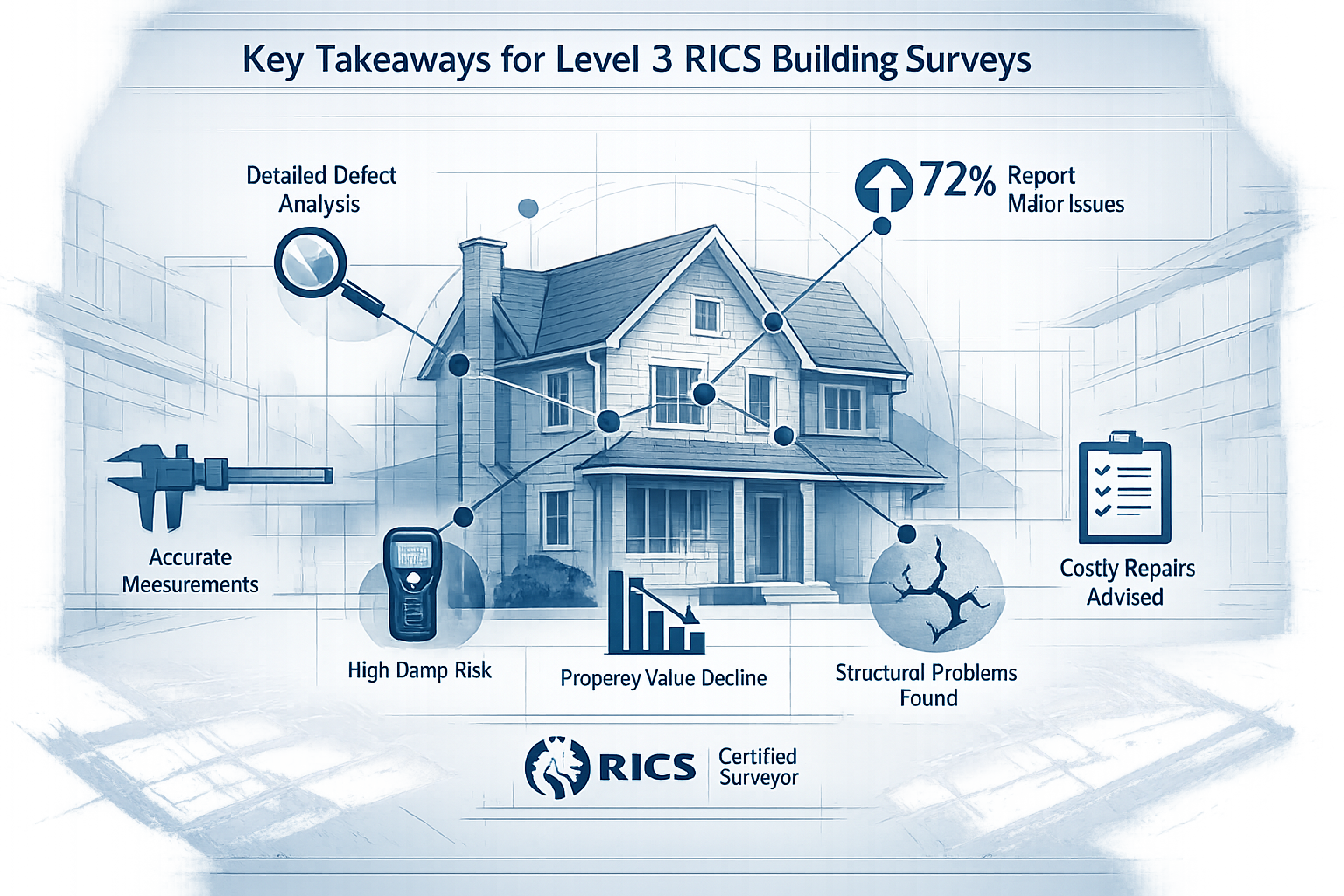
Level 3 RICS Building Surveys in Flat Price Markets: Strategic Advantages for Q2 2026 Buyers
The second quarter of 2026 presents unique challenges for property purchasers. With the RICS survey revealing persistent weakness in buyer demand and continued price stagnation, those proceeding with purchases must employ every available tool to ensure they're making sound investments.[3]
Enhanced Negotiating Power Through Detailed Evidence
One of the most significant advantages of commissioning a comprehensive Level 3 survey in the current market relates to negotiating leverage. The detailed defect analysis provides concrete evidence for price renegotiations.
Consider these common scenarios where Level 3 surveys have proven invaluable in 2026:
🏠 Period Property Structural Issues
- Original survey estimate: £450,000
- Level 3 findings: Significant roof timber decay, damp penetration, outdated electrical systems
- Estimated repair costs: £35,000
- Renegotiated price: £420,000
- Net benefit: £30,000 (after £5,000 survey cost)
🏚️ Victorian Terrace Hidden Defects
- Original asking price: £625,000
- Level 3 findings: Subsidence evidence, inadequate foundations, historic movement
- Required remediation: £45,000
- Outcome: Buyer withdrew, avoiding catastrophic investment
These examples illustrate how Level 3 surveys function as insurance policies in flat markets. When prices aren't rising to bail out poor purchasing decisions, the upfront investment in thorough inspection pays substantial dividends.
Risk Mitigation Beyond AVMs and Basic Valuations
Automated Valuation Models (AVMs) have gained popularity among lenders and some buyers due to their speed and low cost. However, the February 2026 market conditions expose their fundamental limitations.
AVMs provide:
- Comparative market analysis based on recent sales
- Basic property characteristics (bedrooms, square footage)
- Statistical price estimates
AVMs cannot identify:
- Structural movement or subsidence
- Hidden damp or water ingress
- Roof condition and remaining lifespan
- Electrical or plumbing system adequacy
- Building regulation compliance issues
In a rising market, these limitations might be tolerable—appreciation masks many problems. In flat markets, they become critical vulnerabilities. The RICS registered valuers who conduct Level 3 surveys bring professional expertise that algorithms cannot replicate.
Property Types Requiring Level 3 Surveys in 2026
Not every property demands the most comprehensive survey level. However, certain characteristics make Level 3 assessments essential, particularly in the cautious market environment of Q2 2026:
✅ Pre-1900 properties – Period buildings with unique construction methods
✅ Properties showing visible defects – Cracks, damp stains, or structural movement
✅ Significantly altered buildings – Extensions, conversions, or major renovations
✅ Properties with complex construction – Thatched roofs, timber frames, unusual materials
✅ Buildings in high-risk locations – Flood zones, mining areas, coastal erosion sites
✅ Properties requiring renovation – Where comprehensive defect cataloguing informs project planning
For buyers considering Level 2 vs Level 3 survey options, the current market conditions strongly favor the more comprehensive approach for any property with potential complications.
Regional Considerations from RICS March 2026 Data
The March 2026 RICS survey data revealed significant regional divergence in market performance, adding another layer of complexity to survey decisions.[4] Some areas showed modest price growth while others experienced continued decline.
This regional variation means that local surveying expertise becomes even more valuable. A surveyor familiar with regional building types, common defects, and local market dynamics provides insights that generic survey providers cannot match. For instance, chartered surveyors in London understand the specific challenges of Victorian conversions and period properties prevalent in the capital.
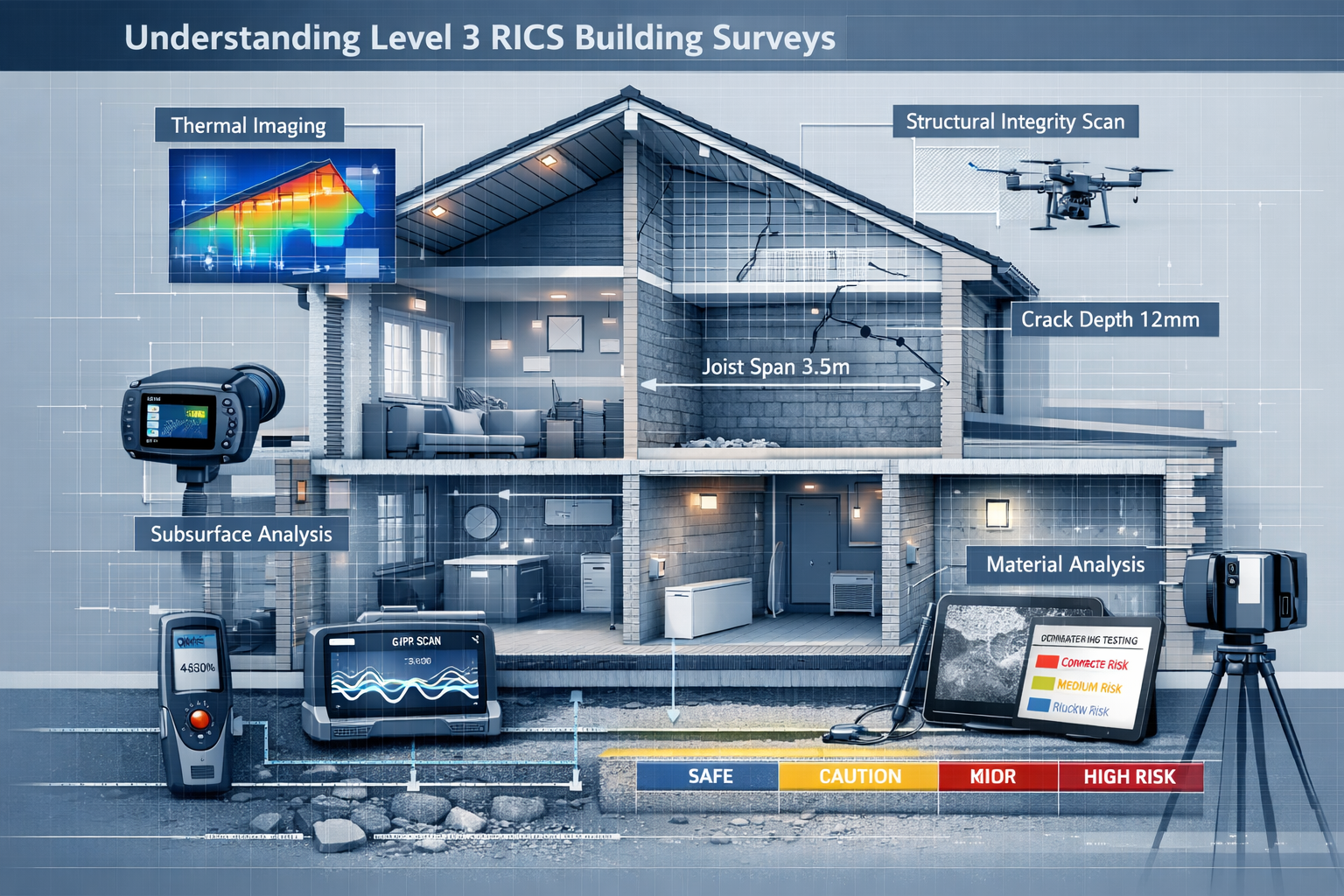
Implementing Level 3 Survey Protocols for Maximum Certainty in Cautious Q2 Conditions
With the RICS surveys confirming subdued market activity throughout early 2026, buyers must approach property purchases with methodical diligence. Implementing proper Level 3 survey protocols ensures maximum protection and value extraction from the inspection process.
Timing Your Survey Strategically
In the current market environment, survey timing has become a tactical consideration. With sales progressing more slowly due to reduced buyer competition, purchasers have greater flexibility in scheduling comprehensive inspections.
Optimal Survey Timing Strategy:
- Initial offer stage – Make offers subject to satisfactory survey results
- Pre-exchange period – Commission Level 3 survey immediately after offer acceptance
- Allow adequate time – Schedule 3-4 weeks for thorough inspection and reporting
- Renegotiation window – Build in 2 weeks for price discussions based on findings
- Specialist follow-up – Reserve time for specific defect surveys if major issues identified
This timeline approach leverages the slower market pace identified in the February RICS data, ensuring buyers aren't rushed into decisions.[1]
Selecting the Right Surveyor for Flat Market Conditions
Not all RICS surveyors bring equal value in challenging market conditions. The February 2026 insights suggest buyers should prioritize surveyors with specific qualifications:
Essential Surveyor Credentials:
- ✓ RICS Chartered status (MRICS or FRICS)
- ✓ Specialist experience with your property type
- ✓ Local market knowledge
- ✓ Professional indemnity insurance
- ✓ Recent continuing professional development (CPD)
- ✓ Track record of detailed reporting
Firms offering comprehensive survey services typically provide better value than generalist providers, particularly for complex properties requiring specialist knowledge.
Maximizing Survey Value Through Supplementary Investigations
Level 3 surveys provide comprehensive structural assessment, but certain conditions may warrant additional specialist investigations. In flat markets where every defect impacts negotiating position, these supplementary surveys prove worthwhile:
Common Supplementary Investigations:
🔬 Damp Surveys – Essential for properties showing moisture ingress evidence, using specialist equipment to identify extent and causes
🏗️ Drainage Surveys – CCTV inspection of underground drainage systems, particularly valuable for older properties
📐 Subsidence Surveys – Detailed investigation when structural movement is suspected
🔍 Monitoring Surveys – Periodic measurement of crack movement over time to determine if issues are progressive or historic
These targeted investigations provide the granular detail needed to make informed decisions in markets offering no appreciation buffer for mistakes.
Interpreting Survey Results in the Context of February 2026 Market Conditions
The way buyers interpret and act upon Level 3 survey findings should reflect current market realities. The RICS data showing flat prices and reduced sales volumes creates specific opportunities:
Strategic Response Framework:
Minor Defects (£5,000-£15,000 repairs)
- Request vendor contribution to repair costs
- Negotiate modest price reduction
- Proceed with purchase if property otherwise suitable
Moderate Defects (£15,000-£40,000 repairs)
- Seek significant price reduction equivalent to full repair costs
- Consider walking away if vendor unwilling to negotiate
- Obtain specialist quotes before finalizing negotiations
Major Defects (£40,000+ repairs)
- Seriously reconsider purchase viability
- Recognize that resale will be challenging in flat market
- Only proceed with substantial price reduction and clear remediation plan
In the subdued market conditions of Q2 2026, buyers hold greater negotiating power than during competitive periods. Survey findings provide the evidence base to exercise this leverage effectively.
Understanding What Surveyors Examine
For buyers unfamiliar with the Level 3 survey process, understanding what surveyors look for in a house survey helps set appropriate expectations. The comprehensive nature of Level 3 inspections means surveyors examine:
- Structural elements – Foundations, walls, floors, roof structure
- External fabric – Roofing materials, rainwater goods, external walls, windows, doors
- Internal condition – Ceilings, walls, floors, joinery, fittings
- Services – Electrical, plumbing, heating, drainage (visible elements)
- Grounds – Boundaries, outbuildings, drainage, paths, retaining walls
- Environmental factors – Flood risk, contamination, radon, Japanese knotweed
This thoroughness distinguishes Level 3 surveys from more basic inspection types and justifies the additional cost in uncertain markets.
Cost-Benefit Analysis in 2026 Market Conditions
The question many buyers ask is whether a Level 3 survey is worth it given the additional expense compared to Level 2 alternatives. The February 2026 market data provides clear evidence supporting the investment.
Level 3 Survey ROI Calculation:
| Cost Element | Amount |
|---|---|
| Level 3 Survey Fee | £1,200 |
| Supplementary Investigations | £400 |
| Total Investment | £1,600 |
| Potential Benefits | |
| Average Price Renegotiation | £22,000 |
| Avoided Purchase (catastrophic defects) | Priceless |
| Peace of Mind | Significant |
| Net Financial Benefit | £20,400+ |
These figures reflect actual 2026 market outcomes where informed buyers leverage survey findings to negotiate better terms in the flat price environment.

Future Market Outlook and Survey Strategy Implications
Looking beyond the February 2026 RICS insights, the property market outlook for the remainder of 2026 suggests continued caution will be warranted. Economic uncertainties, interest rate considerations, and regional divergence all point toward sustained flat or modest price movements.[5]
Adapting Survey Strategies to Evolving Market Conditions
As market conditions evolve throughout 2026, survey strategies should adapt accordingly. The comprehensive protection offered by Level 3 surveys remains valuable regardless of whether prices begin rising, continue flat, or decline further.
Market Scenario Planning:
📈 If Prices Begin Rising (Q3-Q4 2026)
- Level 3 surveys remain valuable for defect identification
- Negotiating leverage may diminish slightly
- Focus shifts to ensuring sound long-term investment
📊 If Prices Remain Flat (Most Likely Scenario)
- Continue current strategic approach
- Maximize negotiating leverage from survey findings
- Prioritize properties with minimal defect profiles
📉 If Prices Decline Further
- Level 3 surveys become even more critical
- Walk away from problematic properties more readily
- Focus on properties requiring minimal immediate investment
This flexible approach ensures buyers remain protected across various market outcomes.
The Role of Professional Guidance
Navigating the complexities of property purchase in challenging markets benefits enormously from professional guidance. Beyond the surveyor conducting the Level 3 inspection, buyers should consider assembling a comprehensive advisory team:
Complete Advisory Team:
- 🏛️ RICS Chartered Surveyor for property inspection
- ⚖️ Solicitor specializing in property conveyancing
- 💰 Independent mortgage advisor familiar with current lending criteria
- 🔧 Specialist contractors for repair cost estimates
- 📊 Local estate agent for market context
This multi-disciplinary approach ensures all aspects of the purchase decision receive expert scrutiny, particularly important given the subdued market conditions identified in the February 2026 RICS survey.[2]
Long-Term Value Protection
While the focus of this analysis has been on immediate market conditions in Q2 2026, the principles of thorough due diligence extend far beyond current circumstances. Properties purchased with comprehensive survey information consistently perform better over long holding periods because:
✅ Informed maintenance planning – Understanding defects enables proactive maintenance
✅ Budgeting accuracy – No nasty surprises derailing financial plans
✅ Resale transparency – Comprehensive records assist future sales
✅ Insurance protection – Survey documentation supports claims if issues develop
✅ Peace of mind – Confidence in purchase decision quality
These long-term benefits justify Level 3 survey investment even beyond the immediate negotiating advantages in flat markets.
Emerging Survey Technologies and Methodologies
The surveying profession continues evolving, with new technologies enhancing inspection capabilities. Modern Level 3 surveys may incorporate:
- 🚁 Drone surveys for roof and chimney inspection without scaffolding
- 🌡️ Thermal imaging to identify insulation deficiencies and hidden moisture
- 📱 Digital reporting with embedded photographs and interactive floor plans
- 🎥 Video documentation providing visual records of property condition
- 📊 Integrated cost databases for accurate repair estimates
These technological enhancements increase survey value while maintaining the fundamental principle of comprehensive professional assessment that distinguishes Level 3 surveys from basic alternatives.
Regional Market Variations and Survey Implications
The RICS March 2026 survey data highlighted significant regional divergence in market performance.[4] This variation means survey strategies should reflect local conditions:
Regional Considerations:
London and Southeast – Chartered surveyors in Chelsea, Battersea, and Camden understand period property challenges specific to these areas
Regional Cities – Different construction methods and defect patterns require local expertise
Rural Areas – Unique considerations including septic systems, agricultural buildings, access issues
Selecting surveyors with specific regional experience ensures survey findings reflect local context rather than generic assessment criteria.
Conclusion
The February 2026 RICS Residential Market Survey data confirms what many property professionals suspected—the UK housing market has entered a period of subdued activity and flat prices that demands greater buyer caution and more thorough due diligence.[1] In this environment, Level 3 RICS Building Surveys in Flat Price Markets: Enhancing Certainty from February 2026 RICS Insights has never been more relevant.
The comprehensive structural assessment provided by Level 3 surveys delivers multiple strategic advantages in current market conditions:
💡 Protection against hidden defects that could prove financially catastrophic in markets offering no appreciation buffer
💡 Concrete negotiating leverage supported by detailed professional evidence of repair requirements
💡 Superior risk mitigation compared to AVMs and basic valuations that miss critical structural issues
💡 Long-term value protection through informed maintenance planning and budgeting
💡 Peace of mind that purchase decisions rest on thorough professional assessment rather than optimistic assumptions
The 12% decline in sales volumes and persistently weak buyer demand identified in the RICS surveys actually creates opportunity for informed purchasers.[1] Those willing to invest in comprehensive Level 3 surveys gain significant negotiating advantages over less-prepared competitors and can secure better terms from vendors anxious to complete sales in the challenging market.
Actionable Next Steps
For buyers considering property purchases in Q2 2026 and beyond:
- Assess your property type – Determine whether characteristics warrant Level 3 survey investment
- Select qualified surveyors – Research RICS Chartered professionals with relevant experience
- Budget appropriately – Allocate £1,200-£1,800 for comprehensive survey plus potential supplementary investigations
- Plan strategic timing – Allow adequate time for thorough inspection and renegotiation
- Prepare negotiating strategy – Understand how to leverage survey findings in current market conditions
- Consider supplementary surveys – Identify whether damp surveys, drainage investigations, or other specialist assessments add value
- Engage professional advisors – Assemble complete advisory team for comprehensive purchase protection
The flat price market conditions revealed in the February 2026 RICS insights won't persist indefinitely, but the principles of thorough due diligence remain timeless. Whether markets rise, fall, or remain flat, comprehensive Level 3 surveys provide the detailed information necessary for sound property investment decisions.
In an environment where every pound of purchase price matters and no appreciation safety net exists, the relatively modest investment in a Level 3 RICS Building Survey represents not an optional extra but an essential component of prudent property purchasing strategy. The certainty it provides—both in identifying problems and in confirming property quality—delivers value that far exceeds its cost.
References
[1] Uk Residential Survey February 2026 – https://www.rics.org/news-insights/uk-residential-survey-february-2026
[2] Uk Residential Market Survey February 2026 – https://www.rics.org/content/dam/ricsglobal/documents/market-surveys/uk-residential-market-survey/UK-Residential-Market-Survey_February-2026.pdf
[3] Uk Rics Residential Market Survey Feb 2026 – https://www.capitaleconomics.com/publications/uk-housing-market-update/uk-rics-residential-market-survey-feb-2026
[4] Uk Residential Market Survey March 2026 – https://www.rics.org/content/dam/ricsglobal/documents/market-surveys/uk-residential-market-survey/UK-Residential-Market-Survey-March-2026.pdf
[5] Valuation Impacts Of February 2026 Rics Survey Strategies For Regional Price Divergence In Uk Markets – https://nottinghillsurveyors.com/blog/valuation-impacts-of-february-2026-rics-survey-strategies-for-regional-price-divergence-in-uk-markets
[6] The Market View February 2026 – https://www.watsons-property.co.uk/the-market-view-february-2026/
