
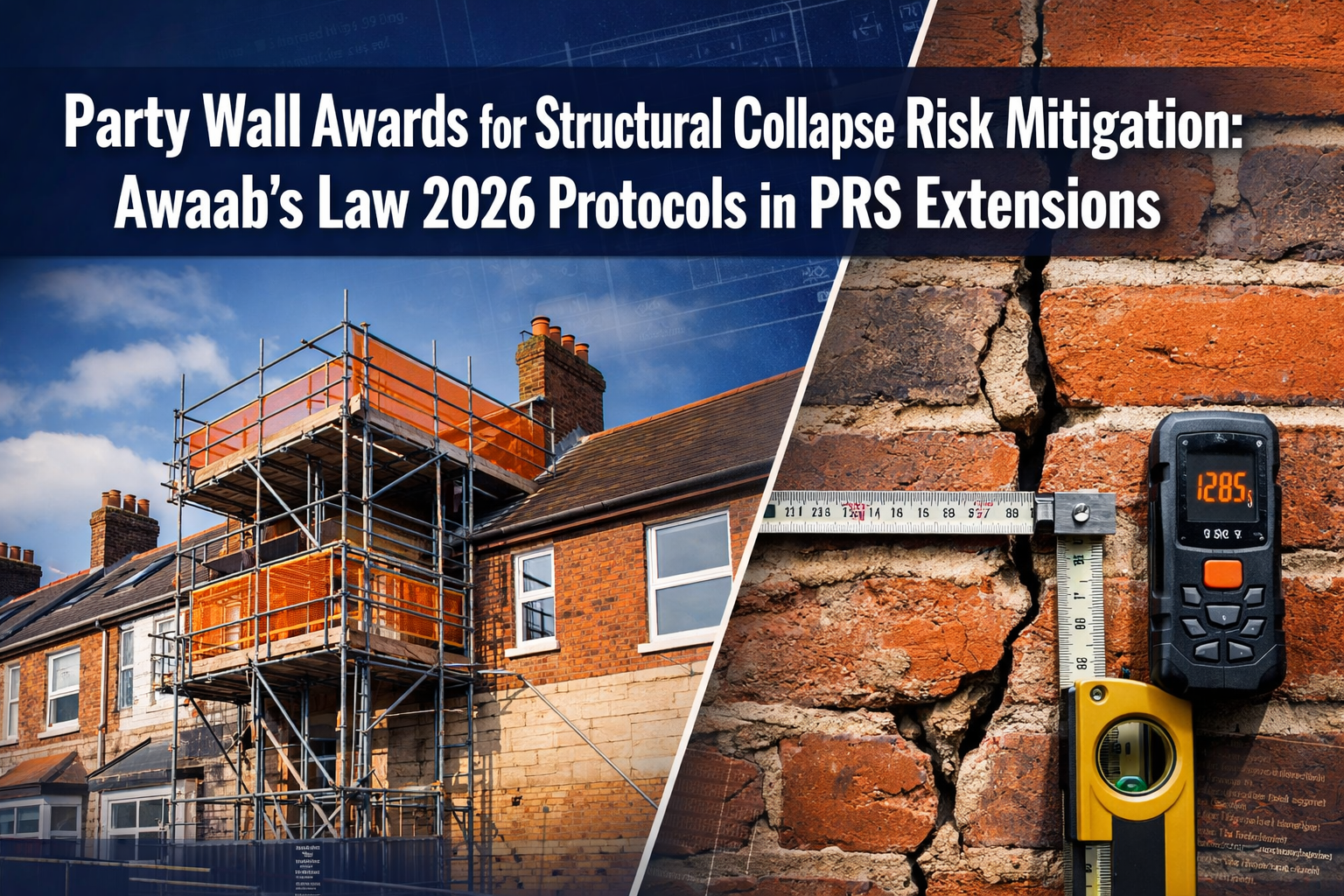
Recent government data reveals that structural failures in rental property extensions account for over 40% of serious party wall disputes in urban areas. As Awaab's Law extends to the Private Rented Sector (PRS) in 2026, party wall surveyors face unprecedented responsibilities in documenting pre-works conditions for structural collapse risk mitigation. The intersection of Party Wall Awards for Structural Collapse Risk Mitigation: Awaab's Law 2026 Protocols in PRS Extensions creates a new compliance framework that demands precise technical documentation and proactive hazard identification[3].
The regulatory landscape for rental properties has transformed dramatically. With Phase 1 implementation already active for social housing since October 2025, the PRS extension introduces investigation and remediation timelines for hazards far beyond moisture issues—encompassing electrical dangers, fire risks, and critically, structural collapse scenarios[3]. Party wall surveyors must now integrate these expanded hazard categories into their award documentation, creating a comprehensive record that protects both building owners and tenants.
Key Takeaways
- Expanded hazard scope: Awaab's Law 2026 protocols require party wall awards to address structural collapse risks alongside traditional boundary concerns in PRS extensions
- Strict investigation timelines: Landlords must investigate complaints within 10 working days and respond to Category 1 emergencies within 24 hours under Phase 1 protocols[4]
- Pre-works documentation critical: Party wall awards now serve as legal baseline records for structural condition before extension works commence
- Multi-phase implementation: PRS consultation is underway with full compliance expected across 2026-2027 as phases 2 and 3 roll out[2]
- Surveyor liability increases: Professional indemnity considerations expand as awards must capture broader structural and safety hazards
Understanding the Regulatory Framework for Party Wall Awards and Awaab's Law 2026
The convergence of party wall legislation and Awaab's Law creates a complex regulatory environment for PRS extensions. The Party Wall etc. Act 1996 has long governed boundary works, but the 2026 protocols introduce mandatory structural safety assessments that extend beyond traditional scope.
The Evolution of Awaab's Law
Awaab's Law emerged from tragic circumstances, initially targeting damp and mould in social housing. Phase 1 implementation in October 2025 established clear investigation and remediation timelines for social landlords[2]. The government's commitment to extend these protections to the PRS represents a significant policy expansion, with consultation details emerging throughout 2026.
The New Decent Homes Standard underpins these requirements, establishing baseline expectations for wall structures, roofs, external doors and windows, and mechanical systems in rental properties[2]. When landlords undertake extension works affecting party walls, they must now demonstrate compliance with both party wall protocols and Awaab's Law hazard mitigation standards.
Key Timeline Requirements
Understanding the investigation and response deadlines is crucial for party wall surveyors drafting awards:
| Hazard Category | Investigation Deadline | Remediation Start | Notes |
|---|---|---|---|
| Category 1 Emergency | 24 hours | Immediate | Life-threatening structural risks[4] |
| Serious Cases | 10 working days | 5 working days | Significant collapse potential |
| Standard Hazards | 10 working days | Reasonable timeframe | Documented in award |
These timelines directly impact how party wall awards must be structured. Surveyors need to identify potential structural collapse risks before works commence, establishing a baseline that allows rapid assessment if issues arise during construction.
For property owners navigating these requirements, understanding the complete party wall process becomes essential to compliance.
Party Wall Awards for Structural Collapse Risk Mitigation in PRS Extension Projects
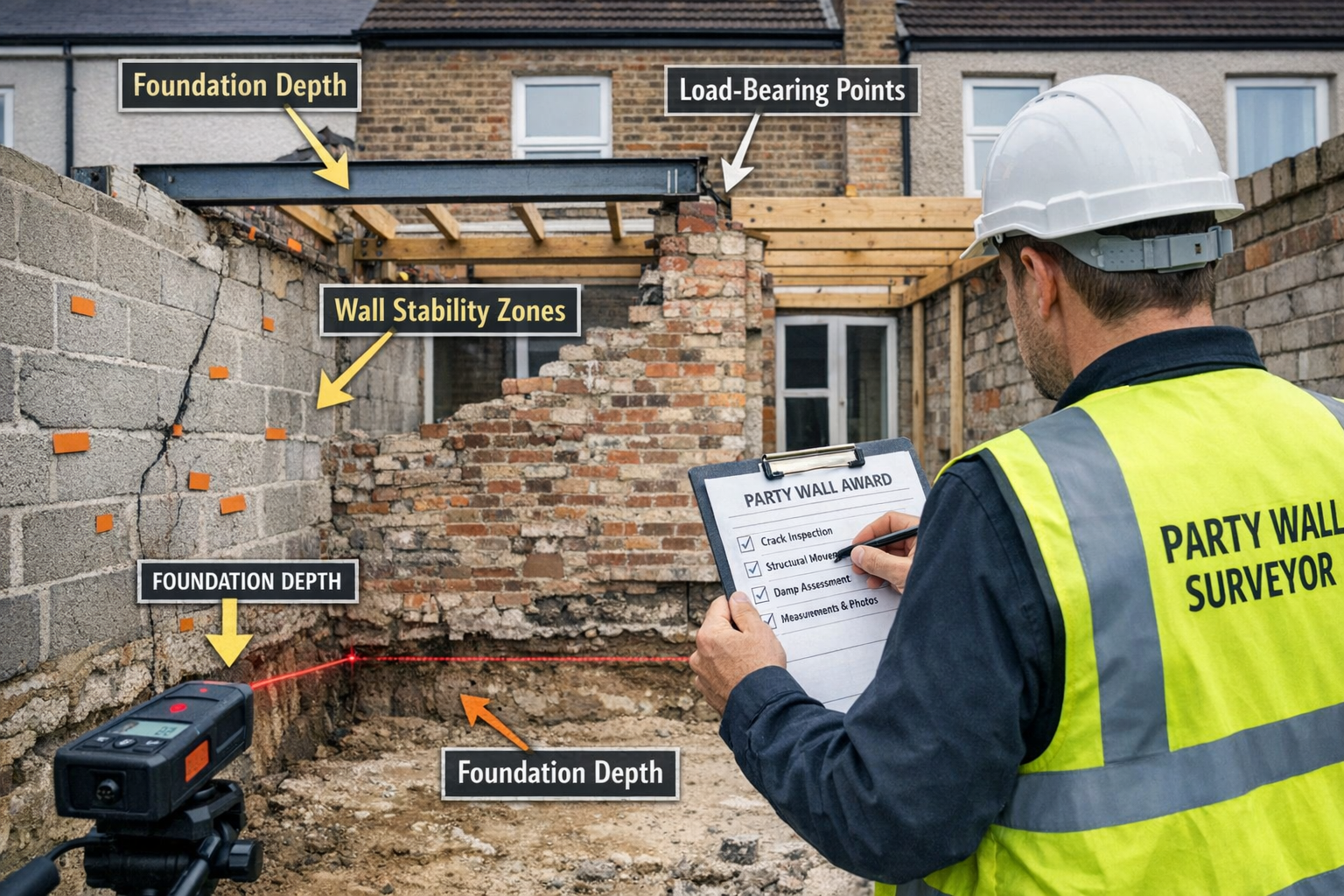
The traditional party wall award focused primarily on boundary rights, excavation depths, and damage prevention. Under Party Wall Awards for Structural Collapse Risk Mitigation: Awaab's Law 2026 Protocols in PRS Extensions, surveyors must now incorporate comprehensive structural safety assessments that align with rental property hazard categories.
Structural Collapse Risk Factors in Extension Works
PRS extensions present specific structural collapse risks that must be documented in party wall awards:
Foundation and Load Distribution Issues 🏗️
- Inadequate foundation depth relative to adjacent properties
- Differential settlement potential
- Soil bearing capacity variations
- Existing subsidence or heave indicators
Party Wall Structural Integrity 🧱
- Pre-existing cracks or movement in shared walls
- Deteriorated mortar joints or spalling brickwork
- Inadequate wall thickness for proposed loads
- Missing or damaged wall ties
Extension Design Vulnerabilities ⚠️
- Insufficient lateral restraint provisions
- Inadequate beam calculations for new openings
- Temporary works stability during construction
- Progressive collapse prevention measures
When drafting awards, surveyors must explicitly address these factors. A comprehensive party wall award now includes specific clauses requiring the building owner to demonstrate structural adequacy through engineer's calculations and method statements.
Pre-Works Condition Documentation Standards
The evidential value of party wall awards has increased substantially under the 2026 protocols. Awards must now include:
Photographic Evidence Requirements
- High-resolution images of all party wall surfaces (both sides)
- Dated photographs with metadata preserved
- Close-up documentation of any existing defects
- Video walkthroughs for complex structures
Technical Survey Data
- Crack monitoring baseline measurements
- Verticality assessments using laser levels
- Moisture content readings in structural elements
- Thermal imaging for hidden defects
Structural Engineering Input
- Pre-works structural assessment reports
- Load calculations for existing party walls
- Engineer's certification of current stability
- Risk assessment for proposed works
This documentation serves dual purposes: protecting the adjoining owner from construction damage and providing the baseline for Awaab's Law compliance assessments. If structural issues emerge during or after extension works, this pre-works record becomes crucial evidence.
Property owners undertaking loft conversions or extensions should consult experienced party wall surveyors who understand these expanded documentation requirements.
Awaab's Law 2026 Protocols: Integrating Hazard Categories into Party Wall Awards
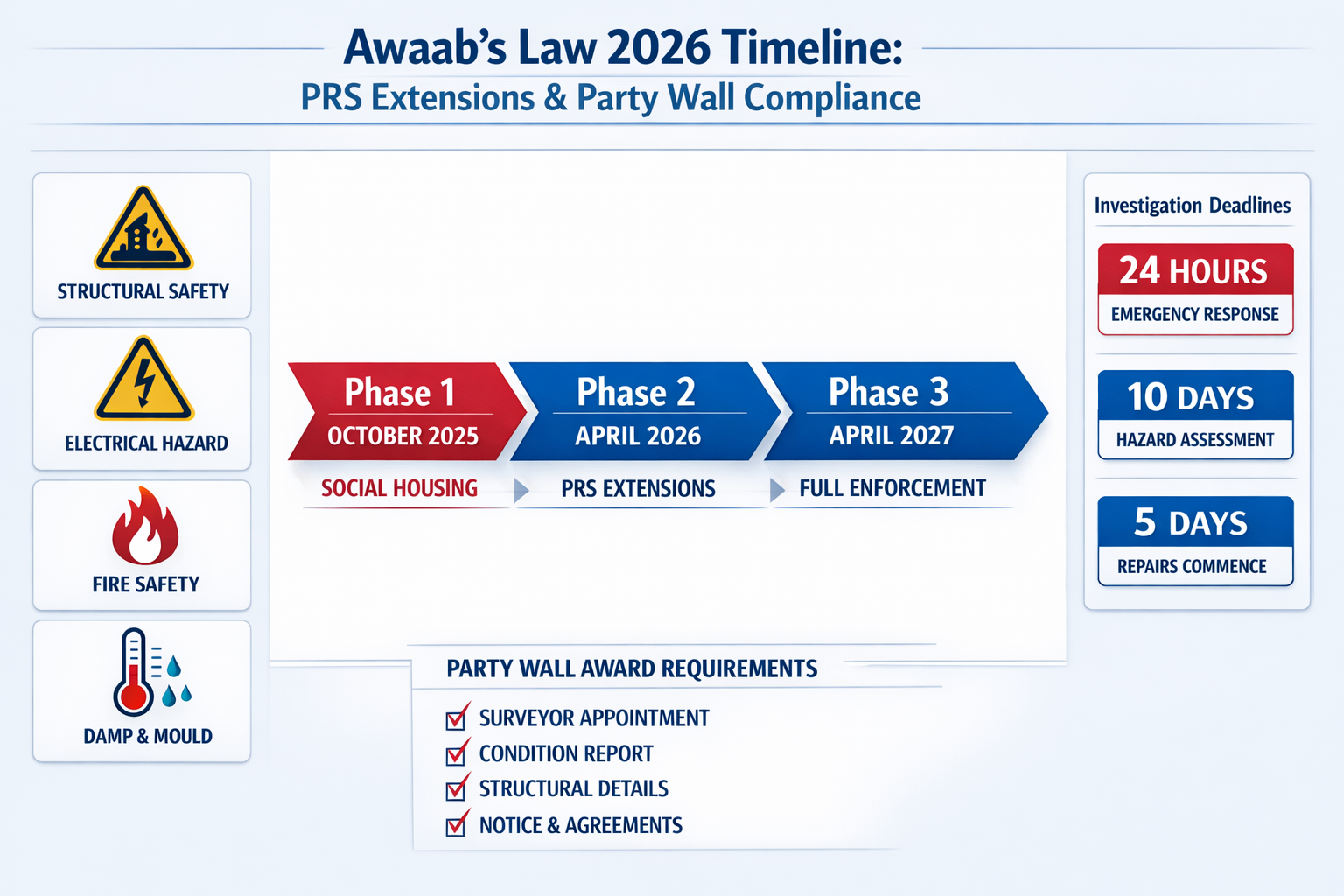
The 2026 extensions introduce investigation and remediation timelines for hazards far beyond moisture issues—encompassing electrical dangers, fire risks, and temperature-related concerns[3]. For party wall surveyors, this means awards must address how extension works might create or exacerbate these hazards.
Expanded Hazard Categories Relevant to Party Wall Works
Structural Collapse and Falling Hazards
- Load-bearing wall modifications during extensions
- Temporary structural instability during construction
- Inadequate propping or shoring arrangements
- Risk of masonry or debris falling from height
Fire Safety Considerations 🔥
- Party wall fire resistance ratings
- Cavity barriers and fire stopping requirements
- Means of escape implications in multi-unit buildings
- Combustible material storage during construction
Electrical and Mechanical Hazards ⚡
- Services running through party walls
- Electrical cable protection during drilling/cutting
- Gas pipe proximity to excavation works
- Ventilation system impacts
The government's consultation on PRS implementation emphasizes that landlords will face the same investigation and remediation timelines as social housing providers[2]. This creates direct liability for building owners undertaking extension works that affect rental properties.
Award Clauses for Hazard Mitigation
Modern party wall awards must include specific clauses addressing Awaab's Law compliance:
Pre-Commencement Requirements Clause
"The Building Owner shall provide evidence of compliance with Awaab's Law hazard assessment protocols before commencing works, including structural engineer's certification that the proposed works do not create Category 1 hazards as defined in the Housing Health and Safety Rating System (HHSRS)."
Monitoring and Inspection Clause
"The Building Owner shall permit the Adjoining Owner's surveyor to conduct hazard monitoring inspections at reasonable intervals during works, with particular attention to structural stability, fire safety provisions, and electrical/mechanical service protection."
Emergency Response Clause
"In the event that works create or reveal Category 1 emergency hazards, the Building Owner shall cease works immediately and notify all parties within 2 hours, with remediation plans submitted within the 24-hour emergency response timeline established under Awaab's Law Phase 1 protocols[4]."
These clauses transform party wall awards from simple boundary agreements into comprehensive safety management documents. Surveyors drafting awards for PRS extensions must ensure building owners understand these expanded obligations.
For complex structural scenarios, engaging structural survey specialists alongside party wall surveyors provides comprehensive risk assessment.
Step-by-Step Drafting Guide: Party Wall Awards for Structural Collapse Risk Mitigation
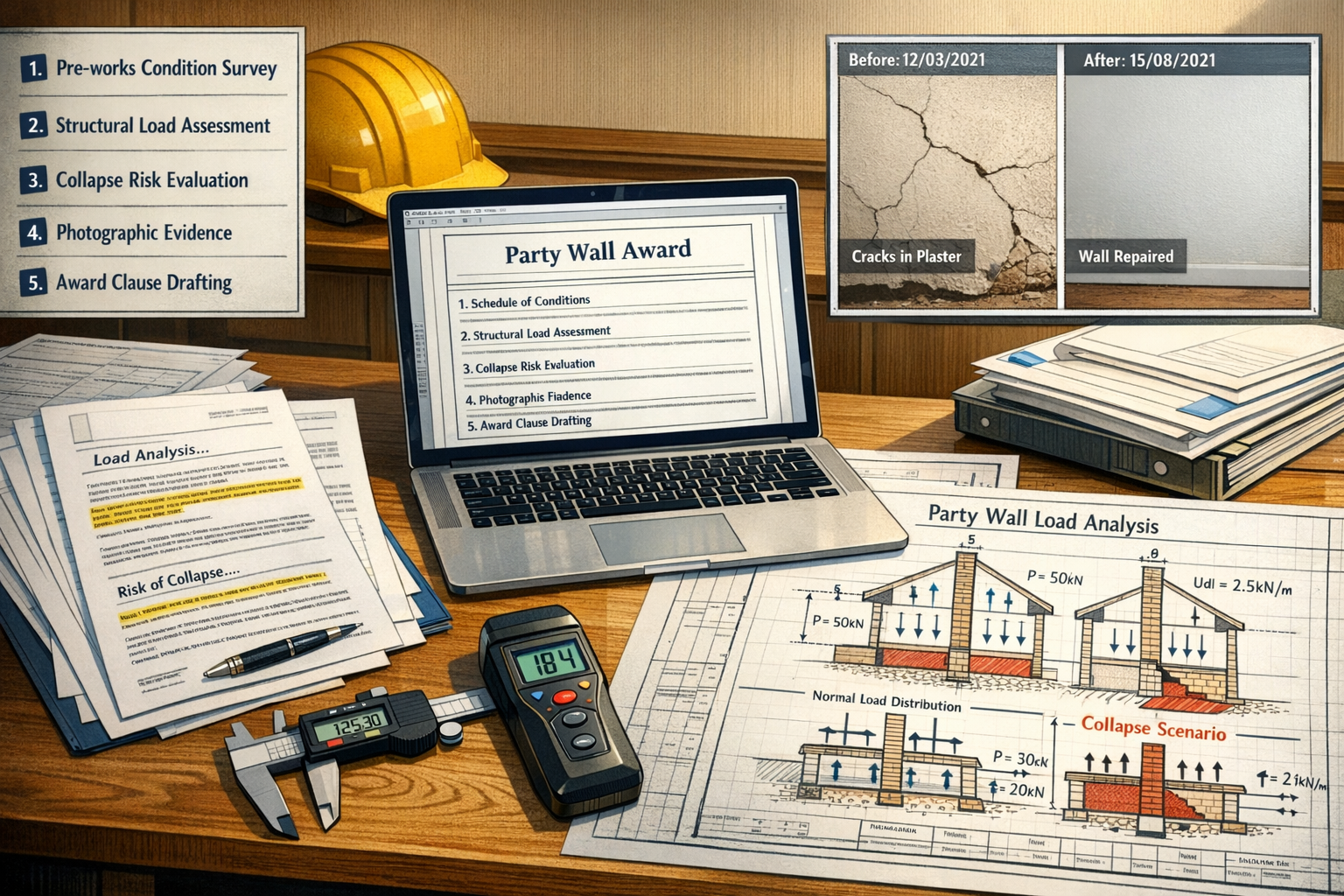
Creating compliant party wall awards under the 2026 protocols requires systematic approach that integrates traditional party wall concerns with Awaab's Law hazard mitigation. This step-by-step framework ensures comprehensive documentation.
Phase 1: Initial Assessment and Hazard Identification
Step 1: Property Classification
- Confirm whether properties are PRS, social housing, or owner-occupied
- Identify applicable Awaab's Law phase and timelines
- Determine HHSRS hazard categories relevant to proposed works
- Review existing building survey reports for known defects
Step 2: Structural Condition Baseline
- Conduct thorough inspection of party wall structures
- Document existing cracks, movement, or deterioration
- Engage structural engineer for pre-works assessment
- Establish crack monitoring points with baseline measurements
Step 3: Hazard Risk Assessment
- Identify potential Category 1 and Category 2 hazards
- Assess structural collapse risk factors specific to extension design
- Evaluate fire safety implications of party wall penetrations
- Document electrical and mechanical service locations
This initial phase provides the foundation for award drafting. The roles and responsibilities of party wall surveyors expand significantly under these protocols, requiring deeper technical expertise.
Phase 2: Award Document Drafting
Step 4: Standard Party Wall Clauses
Begin with traditional party wall award components:
- Description of proposed works
- Rights granted to building owner
- Protection measures for adjoining property
- Access arrangements for inspections
- Dispute resolution procedures
Step 5: Awaab's Law Compliance Clauses
Integrate 2026 protocol requirements:
- Pre-commencement hazard assessment obligations
- Investigation timeline acknowledgments
- Emergency response procedures
- Remediation responsibility allocations
- Monitoring and reporting requirements
Step 6: Structural Collapse Mitigation Specifications
Include detailed technical requirements:
- Temporary works design and certification
- Shoring and propping specifications
- Load transfer calculations and approval process
- Progressive collapse prevention measures
- Structural monitoring frequency and thresholds
Step 7: Documentation and Evidence Standards
Establish clear record-keeping requirements:
- Photographic evidence protocols
- Structural monitoring log requirements
- Engineer's certification submission timelines
- Completion certification standards
Phase 3: Implementation and Monitoring
Step 8: Pre-Commencement Verification
- Review and approve structural engineer's calculations
- Verify temporary works designs
- Confirm insurance coverage adequacy
- Establish communication protocols for emergencies
Step 9: Construction Phase Oversight
- Conduct scheduled monitoring inspections
- Document compliance with award conditions
- Address deviations or emerging risks promptly
- Maintain contemporaneous records
Step 10: Completion and Sign-Off
- Final structural condition assessment
- Comparison with baseline documentation
- Certification of Awaab's Law compliance
- Archive complete award file for future reference
This systematic approach ensures Party Wall Awards for Structural Collapse Risk Mitigation: Awaab's Law 2026 Protocols in PRS Extensions achieve their dual purpose: protecting adjoining owners while ensuring rental property safety compliance.
Property owners seeking to understand party wall agreements should recognize that 2026 protocols significantly expand documentation requirements beyond historical norms.
Professional Practice Considerations for Surveyors
The expanded scope of party wall awards under Awaab's Law 2026 creates important professional practice implications for surveyors.
Professional Indemnity Insurance
Surveyors must review their professional indemnity coverage to ensure adequate protection for:
- Structural collapse risk assessments
- Hazard identification and categorization
- Emergency response timeline compliance
- Extended liability periods for rental properties
The integration of HHSRS hazard assessment into party wall work represents a significant scope expansion that may require enhanced coverage limits.
Continuing Professional Development
Staying current with 2026 protocols requires ongoing education in:
- Housing Health and Safety Rating System methodology
- Structural engineering principles for collapse risk assessment
- Fire safety regulations affecting party walls
- Emergency response procedures and timelines
RICS members should prioritize CPD activities addressing the intersection of party wall practice and rental property safety regulations.
Collaboration with Other Professionals
Complex PRS extension projects often require multi-disciplinary teams:
- Structural Engineers: Load calculations, temporary works design, collapse risk assessment
- Building Control: Regulatory compliance verification
- Fire Safety Consultants: Party wall fire resistance and compartmentation
- Legal Advisors: Liability allocation and contract drafting
Effective party wall surveyors coordinate these specialists to ensure comprehensive compliance.
Common Challenges and Practical Solutions
Challenge 1: Adjoining Owner Resistance to Expanded Documentation
Some adjoining owners may view enhanced documentation requirements as unnecessary delays. Solution: Clearly explain how comprehensive pre-works records protect their interests and establish baseline conditions for damage claims.
Challenge 2: Building Owner Cost Concerns
The additional surveys and engineering input increase project costs. Solution: Emphasize that upfront investment in proper documentation reduces liability exposure and prevents costly disputes or regulatory enforcement actions.
Challenge 3: Tight Construction Timelines
Emergency response requirements may conflict with construction schedules. Solution: Build contingency time into project plans and establish clear communication protocols for rapid decision-making if hazards emerge.
Challenge 4: Ambiguous Hazard Categorization
Determining whether structural risks constitute Category 1 or Category 2 hazards requires judgment. Solution: Adopt conservative approach, consulting structural engineers for borderline cases and documenting decision rationale thoroughly.
For property owners facing party wall disputes related to structural concerns, understanding these challenges helps facilitate resolution.
Future Developments and Ongoing Consultation
The government's commitment to extending Awaab's Law to the PRS includes ongoing consultation throughout 2026[2]. Key areas under consideration include:
Policy Details for PRS Implementation
- Specific investigation and remediation timelines for private landlords
- Enforcement mechanisms and penalty structures
- Exemptions or modified requirements for smaller landlords
- Integration with existing PRS licensing schemes
Phases 2 and 3 Hazard Categories
The initial Phase 1 focus on damp, mould, and emergency hazards will expand over the next two years to cover remaining HHSRS hazards excluding overcrowding[2]. This progressive implementation allows the sector to adapt incrementally.
Digital Compliance Tools
Technology providers are developing digital platforms to help landlords meet Awaab's Law requirements, including automated inspection scheduling, hazard tracking, and compliance reporting[4]. Party wall surveyors should monitor these developments for potential integration into award management workflows.
Surveyors and property owners should actively monitor government consultations and industry guidance as the 2026 protocols evolve. The Party Wall Act framework provides the foundation, but practical implementation will continue developing through case law and regulatory guidance.
Cost Implications and Fee Structures
The expanded scope of party wall awards under Awaab's Law 2026 protocols necessarily affects fee structures. Surveyors should transparently communicate these cost implications to clients:
Enhanced Survey Costs 💰
- Additional time for comprehensive hazard assessment
- Structural engineer consultation fees
- Specialized equipment for baseline documentation
- Extended monitoring during construction phase
Typical Fee Increases
While costs vary by project complexity, surveyors should expect:
- Standard party wall awards: Traditional fees
- Awards with basic Awaab's Law compliance: 20-30% premium
- Complex PRS extensions with multiple hazards: 40-60% premium
These increases reflect genuine additional work and professional liability. Property owners should budget accordingly and recognize that comprehensive awards reduce overall project risk.
For detailed guidance on costs, review our party wall surveyor pricing guide.
Conclusion
Party Wall Awards for Structural Collapse Risk Mitigation: Awaab's Law 2026 Protocols in PRS Extensions represents a fundamental evolution in party wall practice. The convergence of boundary law and rental property safety regulations creates new responsibilities for surveyors, building owners, and landlords alike.
The key principles for compliance include:
✅ Comprehensive pre-works documentation establishing structural condition baselines before extension works commence
✅ Explicit hazard identification addressing structural collapse risks alongside traditional party wall concerns
✅ Clear timeline acknowledgment incorporating Awaab's Law investigation and remediation deadlines into award clauses
✅ Multi-disciplinary collaboration engaging structural engineers and specialists for complex assessments
✅ Proactive monitoring protocols ensuring emerging risks are identified and addressed within regulatory timeframes
As Phase 1 implementation matures and PRS consultation progresses throughout 2026, best practices will continue evolving. Surveyors who embrace these expanded responsibilities position themselves as essential advisors in an increasingly regulated rental property market.
Actionable Next Steps
For Party Wall Surveyors:
- Review and update standard award templates to incorporate Awaab's Law clauses
- Establish relationships with structural engineers for collaboration on complex projects
- Pursue CPD in HHSRS methodology and hazard assessment
- Review professional indemnity coverage with insurance advisors
For Building Owners Planning PRS Extensions:
- Engage experienced party wall surveyors early in project planning
- Budget for enhanced survey and engineering costs
- Build contingency time into construction schedules for compliance verification
- Ensure contractors understand emergency response requirements
For Landlords with PRS Properties:
- Monitor government consultation outcomes for final PRS implementation details
- Conduct proactive structural assessments of properties before extension works
- Review existing party wall awards for adequacy under 2026 protocols
- Establish relationships with compliant contractors and surveyors
The integration of structural collapse risk mitigation into party wall practice reflects broader trends toward enhanced tenant protection and building safety. By adopting systematic approaches to award drafting and hazard documentation, surveyors fulfill their professional obligations while protecting all parties' interests.
For personalized guidance on your specific project, contact experienced party wall surveyors who understand the nuances of Awaab's Law 2026 protocols and can ensure comprehensive compliance.
References
[1] Building Surveys And Awaabs Law 2026 Extensions Identifying Electrical Fire And Temperature Hazards In Prs Properties – https://nottinghillsurveyors.com/blog/building-surveys-and-awaabs-law-2026-extensions-identifying-electrical-fire-and-temperature-hazards-in-prs-properties
[2] The New Decent Homes Standard Policy Statement – https://www.gov.uk/government/consultations/consultation-on-a-reformed-decent-homes-standard-for-social-and-privately-rented-homes/outcome/the-new-decent-homes-standard-policy-statement
[3] Awaabs Law Extensions To Prs In 2026 Party Wall And Building Survey Protocols For New Hazard Categories – https://nottinghillsurveyors.com/blog/awaabs-law-extensions-to-prs-in-2026-party-wall-and-building-survey-protocols-for-new-hazard-categories
[4] How Digital Tools Help Social Landlords Meet Awaabs Law – https://www.trimble.com/blog/construction/en-US/article/how-digital-tools-help-social-landlords-meet-awaabs-law
[5] Expert Witness Preparation For Awaabs Law 2026 Expansions Testifying On New Rental Hazards Like Fire And Electrical Risks – https://nottinghillsurveyors.com/blog/expert-witness-preparation-for-awaabs-law-2026-expansions-testifying-on-new-rental-hazards-like-fire-and-electrical-risks
