
Two-year-old Awaab Ishak died from prolonged exposure to mould in his social housing flat—a tragedy that sparked sweeping legislative reform. As of April 2026, the regulatory landscape for rental properties continues to evolve, with building surveyors now facing unprecedented scrutiny in identifying hazards that extend far beyond damp and mould. Understanding Building Surveys and Awaab's Law 2026 Extensions: Identifying Electrical, Fire, and Temperature Hazards in PRS Properties has become essential for property professionals navigating this complex compliance environment.
The implementation of Awaab's Law represents the most significant shift in housing safety standards in decades. While Phase 1 focused exclusively on emergency hazards and damp/mould issues in social housing from October 2025, the anticipated Phase 2 expansion in 2026 will introduce comprehensive requirements for electrical safety, fire risks, and temperature extremes[1][2]. For building surveyors and property managers in the Private Rented Sector (PRS), adapting inspection protocols to meet these evolving standards is no longer optional—it's a legal and moral imperative.
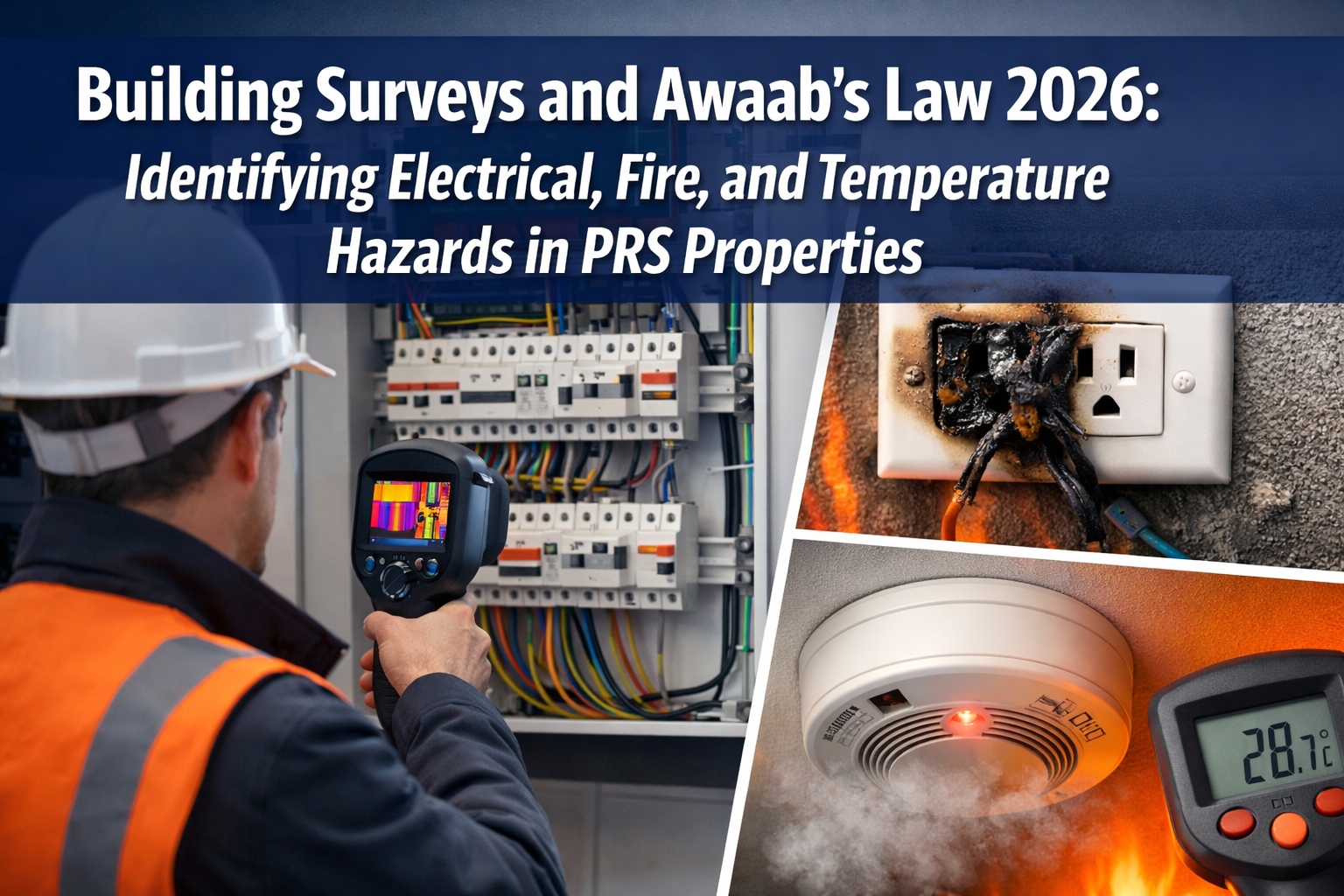
Key Takeaways
- Phase 1 is active: Since October 2025, social housing providers must address emergency hazards within 24 hours and investigate significant damp/mould within 10 working days[1]
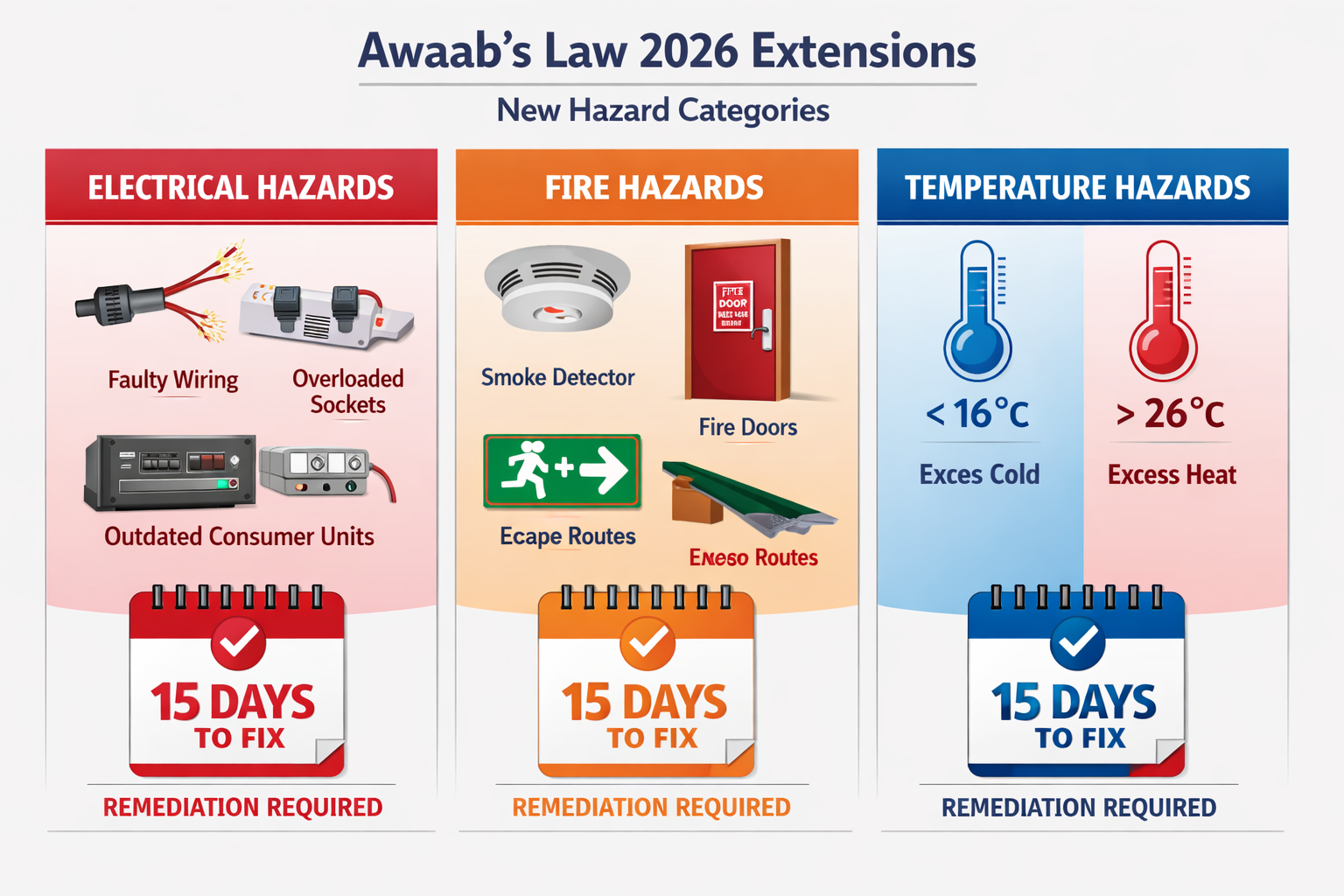
- Phase 2 expansion coming: The 2026 extension will cover electrical hazards, fire risks, excess cold, excess heat, structural issues, and hygiene problems with a 15-day remediation window[2]
- PRS extension pending: While Awaab's Law currently applies only to social housing, secondary legislation will extend requirements to private rental properties[1]
- New inspection protocols required: Building surveyors must develop comprehensive assessment frameworks that identify all regulated hazards during property surveys
- Fire safety regulations active: Personal Emergency Evacuation Plans (PEEPs) became mandatory on 6 April 2026, requiring detailed fire risk assessments for vulnerable residents[1]
Understanding Awaab's Law: From Tragedy to Transformation
Awaab's Law emerged from the Housing Ombudsman's investigation into the death of Awaab Ishak, whose family had repeatedly reported severe mould issues to their housing provider. The resulting legislation, formally incorporated into the Social Housing (Regulation) Act 2023, establishes strict timeframes for addressing health hazards in rental properties[3].
Current Phase 1 Requirements
Phase 1 came into force on 27 October 2025, establishing two critical timelines for social housing providers[1]:
Emergency Hazards ⚠️
- Response time: 24 hours
- Scope: Immediate threats to life or serious injury
- Examples: Gas leaks, electrical fires, structural collapse risks, severe flooding
Damp and Mould Issues 💧
- Investigation deadline: 10 working days
- Remediation timeline: Reasonable timeframe based on severity
- Requirements: Professional assessment, root cause analysis, comprehensive remediation plan
These requirements apply exclusively to social housing providers, including local authorities and registered housing associations[4]. However, the framework established by Phase 1 provides a clear template for what building surveyors should expect when Phase 2 extends to additional hazard categories.
The 2026 Phase 2 Expansion
While no specific implementation date has been confirmed for 2026, Phase 2 will significantly expand the scope of regulated hazards[2]. Building surveyors conducting Level 3 building surveys must prepare to identify and document:
Newly Regulated Hazards in Phase 2:
- Electrical hazards – Faulty wiring, inadequate earthing, overloaded circuits
- Fire hazards – Missing detectors, blocked escape routes, combustible materials
- Excess cold – Inadequate heating, poor insulation, thermal bridging
- Excess heat – Overheating risks, inadequate ventilation, solar gain issues
- Falls on stairs – Defective handrails, uneven treads, inadequate lighting
- Structural collapse – Load-bearing defects, foundation issues, deterioration
- Hygiene issues – Inadequate sanitation, pest infestations, waste management
The 15-working-day remediation window for Phase 2 hazards creates significant compliance pressure for landlords and property managers[2]. This compressed timeline makes thorough initial inspections absolutely critical.
Building Surveys and Awaab's Law 2026 Extensions: Electrical Hazard Identification
Electrical hazards represent one of the most dangerous yet frequently overlooked risks in rental properties. According to industry data, electrical faults cause approximately 7,000 domestic fires annually in the UK. Under the Phase 2 expansion, building surveyors must implement systematic electrical safety assessments as part of comprehensive property inspections.
Critical Electrical Hazards in PRS Properties
Outdated Consumer Units 🔌
Modern electrical safety standards require consumer units with residual current devices (RCDs) that trip within milliseconds of detecting a fault. Many older PRS properties still have outdated fuse boxes without adequate protection. Surveyors should check:
- Presence of RCD protection on all circuits
- Consumer unit age and compliance with 18th Edition Wiring Regulations
- Evidence of DIY modifications or non-compliant additions
- Adequate labelling and circuit identification
Overloaded Circuits and Sockets
With increasing electrical demands from modern appliances and devices, circuit overloading has become endemic in rental properties. Warning signs include:
- Multiple extension leads daisy-chained together
- Warm or discoloured sockets and switches
- Frequent circuit breaker trips
- Burning smells or scorch marks around outlets
Inadequate Earthing and Bonding
Proper earthing protects occupants from electric shock if a fault occurs. During structural surveys, inspectors should verify:
- Main earthing conductor connection and condition
- Supplementary bonding in bathrooms and kitchens
- Earth continuity throughout the installation
- Cross-bonding of gas and water services
Electrical Inspection Protocol for Building Surveyors
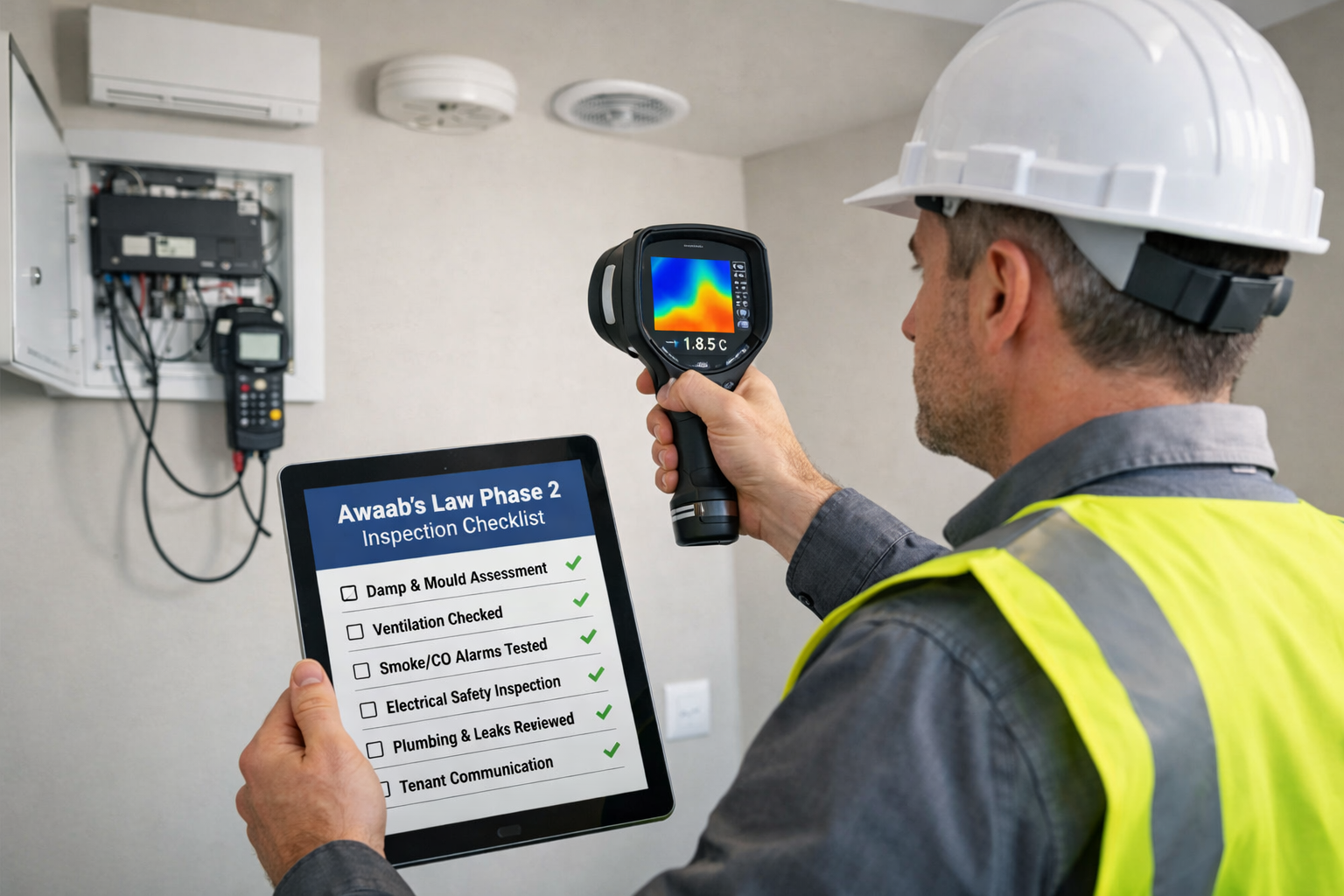
While building surveyors are not qualified electricians, they play a crucial role in identifying visible electrical hazards and recommending specialist testing. A comprehensive inspection should include:
Visual Assessment Checklist:
- ✅ Consumer unit location, accessibility, and condition
- ✅ Visible wiring condition (perished insulation, exposed conductors)
- ✅ Socket and switch condition (cracks, burns, looseness)
- ✅ Presence and condition of smoke and carbon monoxide detectors
- ✅ Outdoor electrical installations (garden sockets, external lighting)
- ✅ Evidence of water ingress near electrical installations
- ✅ Adequate lighting in circulation areas and staircases
Recommended Specialist Testing:
When visual inspection reveals concerns, surveyors should recommend:
- Electrical Installation Condition Report (EICR) – Mandatory every five years for PRS properties, but more frequent testing may be needed for older installations
- Portable Appliance Testing (PAT) – For landlord-supplied appliances in furnished properties
- Thermal imaging surveys – To identify hidden electrical hotspots and overloading issues
The integration of Building Surveys and Awaab's Law 2026 Extensions: Identifying Electrical, Fire, and Temperature Hazards in PRS Properties requires surveyors to move beyond basic visual inspections toward comprehensive risk assessment frameworks.
Fire and Temperature Hazards: The New Compliance Frontier
The Phase 2 expansion places fire safety and temperature control at the forefront of rental property compliance. These interconnected hazards require sophisticated assessment techniques that many traditional building surveys have not historically addressed in detail.
Fire Hazard Assessment in PRS Properties
The Fire Safety (Residential Evacuation Plans) (England) Regulations 2025 came into effect on 6 April 2026, introducing mandatory Personal Emergency Evacuation Plans (PEEPs) for vulnerable residents[1]. This regulatory change fundamentally alters how building surveyors must approach fire risk assessment.
Key Fire Hazards to Identify:
Detection and Warning Systems 🔥
- Smoke alarm coverage (required in every circulation space and habitable room)
- Heat detector placement in kitchens
- Carbon monoxide detector installation near combustion appliances
- Interconnected alarm systems in multi-storey properties
- Battery condition and mains power connection
- Alarm age (replacement recommended every 10 years)
Escape Routes and Emergency Exits
Surveyors conducting commercial building surveys and residential inspections must assess:
- Clear, unobstructed escape routes from all habitable rooms
- Final exit accessibility (locks that can be opened without keys from inside)
- Adequate emergency lighting in common areas
- Fire door condition (self-closing mechanisms, intumescent strips, smoke seals)
- Window escape viability from upper floors
- External fire escape condition and accessibility
Fire Load and Combustible Materials
Modern building surveys must evaluate:
- Combustible cladding materials (post-Grenfell scrutiny)
- Storage of flammable materials in common areas
- Condition of gas installations and appliances
- Electrical equipment that could become ignition sources
- Accumulation of waste or debris creating fire risks
Temperature Hazard Identification: Excess Cold and Heat
The inclusion of temperature extremes in Phase 2 reflects growing recognition of health impacts from inadequate thermal comfort. Building surveyors must now systematically assess both excess cold and excess heat risks.
Excess Cold Assessment ❄️
Excess cold occurs when properties cannot maintain adequate heating, typically defined as 18°C in bedrooms and 21°C in living areas. Health impacts include:
- Increased respiratory infections
- Cardiovascular strain
- Hypothermia risk for vulnerable occupants
- Exacerbation of chronic conditions
Survey Protocol for Cold Hazards:
| Assessment Area | Key Indicators | Documentation Required |
|---|---|---|
| Heating System | Boiler age, efficiency rating, radiator coverage | Photograph heating controls, service records |
| Insulation | Loft insulation depth, cavity wall treatment, floor insulation | Thermal imaging where accessible |
| Glazing | Single/double/triple glazing, condition of seals, draughts | Window condition photos, draught test results |
| Thermal Bridging | Cold spots at junctions, condensation patterns | Thermal imaging of problem areas |
| Ventilation | Adequate ventilation without excessive heat loss | Trickle vent condition, extractor fan operation |
Excess Heat Assessment ☀️
Overheating has become an increasingly serious concern, particularly in modern properties with large glazed areas and inadequate ventilation. The health risks include:
- Heat exhaustion and heat stroke
- Sleep disruption affecting mental health
- Dehydration and associated complications
- Exacerbation of cardiovascular conditions
Survey Protocol for Heat Hazards:
- Solar gain analysis – Orientation, glazing ratios, shading provision
- Ventilation capacity – Openable window area, cross-ventilation potential, mechanical ventilation
- Thermal mass – Building materials that absorb and release heat
- Insulation paradox – Well-insulated properties that trap heat in summer
- Urban heat island effects – Location factors in dense urban areas
When conducting homebuyer surveys, temperature hazard assessment should include seasonal considerations and recommendations for monitoring temperature extremes throughout the year.
Adapting Building Survey Protocols for Awaab's Law Compliance
The expansion of Awaab's Law requires fundamental changes to how building surveyors approach property inspections. Traditional survey methodologies focused primarily on structural integrity and visible defects must now incorporate comprehensive health and safety hazard identification.
Comprehensive Inspection Framework
Pre-Inspection Preparation
Before arriving at the property, surveyors should:
- Review property history – Previous survey reports, maintenance records, tenant complaints
- Identify vulnerable occupants – Children, elderly residents, individuals with health conditions
- Gather regulatory context – Local authority enforcement notices, housing health and safety rating system (HHSRS) assessments
- Prepare specialist equipment – Thermal imaging cameras, moisture meters, electrical testing equipment, air quality monitors
Systematic Inspection Methodology
A compliant inspection under Building Surveys and Awaab's Law 2026 Extensions: Identifying Electrical, Fire, and Temperature Hazards in PRS Properties should follow this structured approach:
Phase 1: External Assessment
- Building envelope condition (water ingress points)
- External electrical installations
- Fire escape routes and accessibility
- Ventilation provision (air bricks, vents)
- Drainage and water management systems
Phase 2: Internal Systematic Survey
- Room-by-room hazard identification
- Electrical installation visual inspection
- Fire safety equipment verification
- Heating system assessment
- Ventilation and air quality evaluation
- Damp and mould investigation
- Temperature monitoring at multiple locations
Phase 3: Specialist Testing Recommendations
- EICR requirements
- Gas safety certification
- Thermal performance testing
- Air quality sampling
- Structural engineer referral if needed
Technology Integration in Modern Building Surveys
Advanced technology has become essential for identifying hazards that may not be visible during traditional inspections:
Thermal Imaging Cameras 📷
- Identify cold spots indicating insulation defects
- Detect overheating electrical components
- Reveal hidden moisture behind surfaces
- Map thermal bridging and air leakage
Moisture Meters and Hygrometers
- Quantify moisture levels in building materials
- Monitor relative humidity for mould risk
- Track moisture migration patterns
- Provide objective data for damp investigations
Electrical Testing Equipment
- Socket testers for basic electrical safety checks
- Non-contact voltage detectors for live circuit identification
- Thermal imaging for electrical hotspot detection
- RCD testing devices for protection verification
Environmental Monitoring
- Temperature data loggers for 24-hour monitoring
- CO₂ sensors for ventilation adequacy
- Air quality monitors for pollutant detection
- Lux meters for lighting adequacy assessment
Documentation and Reporting Standards
The 15-day remediation timeline for Phase 2 hazards means survey reports must be clear, actionable, and prioritized. Effective reporting should include:
Hazard Categorization System:
🔴 Category 1: Immediate Action Required (24 hours)
- Imminent risk to life or serious injury
- Examples: Exposed live electrical wiring, severe gas leaks, imminent structural collapse
🟠 Category 2: Urgent Action Required (10 working days)
- Significant health hazards requiring investigation
- Examples: Widespread damp and mould, major heating system failure in winter
🟡 Category 3: Standard Action Required (15 working days)
- Phase 2 hazards requiring remediation
- Examples: Inadequate fire detection, excess cold/heat conditions, electrical safety concerns
🟢 Category 4: Monitoring and Maintenance
- Potential hazards requiring ongoing attention
- Examples: Minor insulation improvements, routine maintenance items
Essential Report Components:
- Executive Summary – Prioritized hazard list with remediation timelines
- Photographic Evidence – Dated, location-tagged images of all identified hazards
- Technical Analysis – Detailed explanation of each hazard and associated risks
- Remediation Recommendations – Specific, actionable steps with cost estimates
- Specialist Referrals – Clear identification of issues requiring expert assessment
- Compliance Statement – Explicit reference to Awaab's Law requirements and timelines
- Follow-up Protocol – Recommended re-inspection schedule
Understanding the difference between Level 2 and Level 3 surveys becomes crucial when determining the appropriate depth of investigation for Awaab's Law compliance.
Private Rented Sector Implications and Preparation
While Awaab's Law currently applies only to social housing, the extension to the Private Rented Sector is inevitable. The Renters' Rights Act received Royal Assent on 27 October 2025, but secondary legislation implementing PRS requirements remains pending[1].
Preparing for PRS Extension
Proactive Compliance Strategies
Smart landlords and property managers are not waiting for mandatory implementation. Early adoption of Awaab's Law standards provides:
- Risk mitigation – Reduced liability for tenant health issues
- Competitive advantage – Higher-quality properties attract better tenants
- Future-proofing – Avoiding costly retrofits when regulations take effect
- Reputation protection – Demonstrating commitment to tenant welfare
Investment Priorities for PRS Landlords
-
Electrical Safety Upgrades
- Consumer unit replacement with RCD protection
- Rewiring of outdated installations
- Regular EICR testing (every 5 years minimum)
- Installation of surge protection devices
-
Fire Safety Enhancements
- Interconnected smoke and heat alarm systems
- Fire door upgrades with proper seals and closers
- Emergency lighting in multi-storey properties
- Clear escape route maintenance
-
Thermal Performance Improvements
- Loft insulation to minimum 270mm depth
- Cavity wall insulation where applicable
- Double glazing replacement of single-glazed windows
- Heating system upgrades to modern condensing boilers
- Smart thermostats for better temperature control
-
Ventilation System Upgrades
- Mechanical ventilation with heat recovery (MVHR) in airtight properties
- Humidity-controlled extractor fans in bathrooms and kitchens
- Trickle vents in all habitable rooms
- Passive stack ventilation where appropriate
The Role of Building Surveys in PRS Compliance
Regular building surveys serve multiple functions in the PRS compliance framework:
Acquisition Due Diligence
When purchasing PRS properties, comprehensive surveys identify compliance gaps before completion, allowing:
- Accurate budgeting for necessary upgrades
- Negotiation leverage on purchase price
- Realistic assessment of investment viability
- Compliance timeline planning
Ongoing Compliance Monitoring
Annual or biennial surveys provide:
- Early identification of emerging hazards
- Documentation of property condition over time
- Evidence of proactive maintenance for legal protection
- Prioritized maintenance planning
Tenant Complaint Investigation
When tenants report hazards, independent surveys offer:
- Objective assessment of reported issues
- Expert opinion on remediation requirements
- Timeline guidance for compliance
- Documentation for dispute resolution
Portfolio Management
For landlords with multiple properties, systematic survey programs enable:
- Risk-based prioritization across portfolio
- Bulk procurement of remediation works
- Consistent compliance standards
- Efficient capital expenditure planning
Practical Checklists for Building Surveyors
Electrical Hazard Inspection Checklist
Consumer Unit and Distribution
- Consumer unit location is accessible and properly labeled
- RCD protection present on all circuits
- No signs of overheating (discoloration, burning smell)
- Adequate circuit capacity for property size
- Main switch operates correctly
- Consumer unit complies with current regulations
- No DIY modifications or non-compliant additions
Wiring and Installations
- Visible wiring in good condition (no perished insulation)
- No exposed conductors or junction boxes
- Cable routes protected from damage
- Appropriate cable types for locations (e.g., outdoor-rated for external use)
- No overloaded sockets or excessive use of extension leads
- Sockets and switches securely fixed and undamaged
Earthing and Bonding
- Main earthing conductor visible and connected
- Supplementary bonding present in bathrooms
- Cross-bonding of gas and water services
- Earth clamps tight and corrosion-free
Safety Devices
- Smoke alarms in all required locations
- Carbon monoxide detectors near combustion appliances
- Emergency lighting in common areas (if applicable)
Recommendations
- EICR required (date of last test: _________)
- Specialist electrical contractor needed for: _______
- Urgent remediation items: _______
Fire Hazard Inspection Checklist
Detection and Alarm Systems
- Smoke alarms in every circulation space
- Smoke alarms in every habitable room
- Heat detector in kitchen
- CO detectors near all combustion appliances
- Alarms interconnected (if multi-storey)
- Alarms tested and functional
- Battery backup present (if mains-powered)
- Alarm age less than 10 years
Escape Routes
- Clear escape route from every room
- Final exit doors openable without key from inside
- No obstructions in hallways or staircases
- Adequate lighting in escape routes
- Fire doors present where required
- Fire door self-closing mechanisms functional
- Intumescent strips and smoke seals intact
- External fire escapes accessible (if present)
Fire Load Assessment
- No accumulation of combustible materials
- Flammable liquids stored safely
- No evidence of unsafe smoking practices
- Electrical equipment in good condition
- Gas appliances serviced annually
- No unsafe use of portable heaters
Building-Specific Factors
- Cladding materials assessed (if applicable)
- Common area fire safety adequate (if applicable)
- Fire risk assessment completed for building
- PEEPs in place for vulnerable residents
Temperature Hazard Inspection Checklist
Excess Cold Assessment
- Heating system present and functional
- Boiler age: _______ (service date: _______)
- Radiators in all habitable rooms
- Heating controls accessible and functional
- Loft insulation present (depth: _____mm)
- Cavity wall insulation (if applicable)
- Double glazing throughout (or equivalent)
- No significant draughts identified
- Thermal imaging shows no major cold spots
- Property can maintain 18°C in bedrooms, 21°C in living areas
Excess Heat Assessment
- Adequate ventilation provision
- Openable windows in all habitable rooms
- Cross-ventilation possible
- Mechanical ventilation in bathrooms and kitchens
- External shading (blinds, shutters) present
- No excessive solar gain through glazing
- Adequate thermal mass to moderate temperature
- No evidence of overheating complaints
- Property unlikely to exceed 26°C in summer
Recommendations
- Heating system upgrade required
- Insulation improvements needed
- Ventilation enhancement necessary
- Temperature monitoring recommended
- Thermal performance testing advised
The Future of Building Surveys in Rental Property Compliance
The evolution of Awaab's Law represents a fundamental shift in how society views rental property standards. Building surveyors are no longer simply identifying structural defects—they are protecting tenant health and wellbeing through comprehensive hazard identification.
Emerging Trends and Considerations
Digital Survey Platforms
Advanced software solutions are emerging that:
- Integrate hazard identification with compliance timelines
- Generate automated remediation schedules
- Track compliance across property portfolios
- Provide real-time reporting to landlords and regulators
Continuous Monitoring Technology
Smart home technology enables:
- Real-time temperature and humidity monitoring
- Automated alerts for electrical faults
- Smoke and CO detection with remote notifications
- Data-driven maintenance scheduling
Regulatory Evolution
Future developments likely include:
- Extension to all private rental properties
- Shorter remediation timelines for serious hazards
- Increased penalties for non-compliance
- Mandatory periodic inspections by qualified surveyors
- Integration with energy efficiency requirements
Professional Development Requirements
Building surveyors must invest in:
- Specialized training in hazard identification
- Thermal imaging certification
- Understanding of building physics and indoor air quality
- Legal knowledge of housing regulations
- Technology skills for advanced survey equipment
The integration of Building Surveys and Awaab's Law 2026 Extensions: Identifying Electrical, Fire, and Temperature Hazards in PRS Properties represents not just a compliance requirement but a professional evolution toward more comprehensive property assessment.
Conclusion
The tragic death of Awaab Ishak catalyzed a transformation in rental property standards that will define housing safety for generations. As Phase 2 of Awaab's Law rolls out in 2026, building surveyors face both a challenge and an opportunity—to elevate their practice and truly protect tenant health through comprehensive hazard identification.
Building Surveys and Awaab's Law 2026 Extensions: Identifying Electrical, Fire, and Temperature Hazards in PRS Properties requires surveyors to adopt new methodologies, invest in advanced technology, and develop expertise across multiple disciplines. The 15-day remediation timeline for electrical, fire, and temperature hazards leaves no room for ambiguity—surveys must be thorough, reports must be clear, and recommendations must be actionable.
For landlords and property managers, proactive compliance offers significant advantages. Early adoption of Awaab's Law standards reduces legal risk, protects vulnerable tenants, and future-proofs property investments against inevitable regulatory expansion to the Private Rented Sector.
Actionable Next Steps
For Building Surveyors:
- Invest in thermal imaging and electrical testing equipment
- Complete specialized training in hazard identification
- Develop comprehensive inspection checklists aligned with Phase 2 requirements
- Establish relationships with specialist contractors for referrals
- Update report templates to include Awaab's Law compliance sections
For PRS Landlords:
- Commission comprehensive Level 3 building surveys for all rental properties
- Prioritize electrical safety upgrades and EICR testing
- Implement fire safety enhancements including interconnected alarms
- Address thermal performance through insulation and heating improvements
- Establish proactive maintenance programs to prevent hazard development
For Property Managers:
- Develop tenant reporting systems for hazard identification
- Create rapid response protocols for emergency hazards
- Implement portfolio-wide compliance tracking
- Budget for systematic property upgrades
- Document all maintenance and remediation work comprehensively
The extension of Awaab's Law to electrical, fire, and temperature hazards represents more than regulatory compliance—it embodies a commitment to ensuring that no tenant suffers preventable harm in their home. Building surveyors stand at the forefront of this mission, equipped with the knowledge, technology, and professional standards to identify hazards before they become tragedies.
As the regulatory framework continues to evolve throughout 2026 and beyond, staying informed and adapting inspection protocols will separate leading professionals from those merely meeting minimum standards. The future of rental property safety depends on the thoroughness, expertise, and commitment of building surveyors who understand that their work protects not just property values, but human lives.
References
[1] Awaabs Law Comes Into Force What Does It Mean For Construction – https://www.trowers.com/insights/2025/november/awaabs-law-comes-into-force-what-does-it-mean-for-construction
[2] The Key Changes In 2026 That You Need To Be Aware Of – https://selo.global/the-key-changes-in-2026-that-you-need-to-be-aware-of/
[3] Awaabs Law Explained – https://firntec.com/blog/awaabs-law-explained
[4] Awaabs Law Uk Landlords – https://www.landlordstudio.com/uk-blog/awaabs-law-uk-landlords
