
{"cover":"Professional landscape format (1536x1024) editorial hero image showing a charming single-storey brick bungalow undergoing modern retrofit work, scaffolding on one side, chartered surveyor in high-visibility vest and hard hat examining exterior walls with digital tablet and laser measuring device, thermal imaging camera visible, insulation materials stacked nearby, solar panels being installed on roof, bright natural daylight, clean architectural photography style, muted earth tones with pops of safety orange and technology blue, sharp focus on surveyor in foreground with bungalow slightly blurred in background, professional construction documentation aesthetic, no text overlays or annotations","content":["Landscape format (1536x1024) detailed cutaway technical illustration of a bungalow cross-section showing comprehensive building survey checkpoints, exposed foundation with moisture barriers highlighted in blue, wall cavity insulation in yellow, roof structure with ventilation paths marked in green, electrical and plumbing systems color-coded, structural beams and load-bearing walls emphasized with red outlines, damp-proof course clearly visible, loft insulation layers shown, windows with energy efficiency ratings indicated by color gradients, professional architectural diagram style with clean lines and annotations using icons rather than text, isometric perspective, educational construction manual aesthetic","Landscape format (1536x1024) professional photograph of modern energy retrofit installation in progress on a bungalow, close-up of installer fitting external wall insulation panels to brick facade, high-performance triple-glazed window frame being positioned, heat pump unit visible on ground beside property, thermal imaging overlay showing heat loss patterns in contrasting infrared colors (purple for cold, red for warm areas), installer wearing branded workwear, tools and materials organized neatly, bright overcast daylight providing even illumination, documentary construction photography style, shallow depth of field focusing on insulation work, technical precision aesthetic","Landscape format (1536x1024) sophisticated infographic-style visualization showing bungalow property value uplift comparison, split-screen composition with 'before retrofit' bungalow on left in muted grays and 'after retrofit' same bungalow on right in vibrant colors, upward-trending arrow graphs overlaid showing percentage increases in property value, EPC rating certificates changing from D to B grade shown as floating elements, pound sterling symbols and percentage figures integrated into architectural elements, clean modern data visualization aesthetic with teal and gold accent colors, professional property marketing photography quality, depth and dimension through layered graphic elements"]}

The UK property market is experiencing an unprecedented surge in bungalow demand, yet supply remains critically constrained. As bungalow plots sell out significantly faster than house plots on mixed developments, homeowners and investors are turning to retrofit opportunities to capitalize on this undersupplied market.[3] Building Surveys for Bungalow Retrofits in 2026 Demand Boom: Assessing Value Uplifts and Compliance has become essential for property professionals navigating this transformative landscape, particularly as RICS quality enhancement initiatives raise standards across the sector.
With demand for new build bungalows at 7% of new builds but strongly growing—driven by an ageing population and limited supply of single-storey homes—the retrofit market presents compelling opportunities.[3] However, successful bungalow retrofits require comprehensive building surveys that assess structural integrity, energy performance potential, and compliance with evolving regulations.
Key Takeaways
✅ Bungalow demand exceeds supply by significant margins in 2026, with plots selling faster than traditional houses, creating strong retrofit investment opportunities
✅ Comprehensive building surveys are critical for identifying structural capacity, energy retrofit potential, and compliance gaps before committing to bungalow renovation projects
✅ Value uplifts from retrofits can be substantial when properly assessed and executed, particularly through energy efficiency improvements and accessibility enhancements
✅ RICS quality initiatives are strengthening survey standards for retrofit projects, with new competence pathways and enhanced consumer protections
✅ Whole-house assessment approaches provide the most reliable foundation for retrofit planning, avoiding costly mistakes and maximizing return on investment
Understanding the 2026 Bungalow Retrofit Opportunity
The Demographic Drivers Behind Bungalow Demand
The surge in bungalow popularity reflects fundamental demographic shifts across the UK. An ageing population increasingly seeks single-level living that eliminates stair-related mobility challenges. Meanwhile, accessibility-conscious buyers of all ages recognize the long-term value of adaptable housing stock.
Current new build supply cannot meet this latent demand. When developers include bungalows in mixed schemes, these units consistently sell out first, demonstrating clear market preference.[3] This supply-demand imbalance creates significant opportunities for retrofit specialists who can transform existing bungalow stock to meet contemporary expectations.
Why Retrofits Make Financial Sense
Existing bungalows often occupy generous plots in established neighborhoods with mature gardens and convenient amenities. These location advantages, combined with the scarcity of new builds, make retrofit investments particularly attractive when properly executed.
The Warm Homes Plan launched in 2026 provides additional incentive, offering targeted support for low-income households and a universal offer to households able to invest in energy efficiency improvements.[4] These programs can significantly offset retrofit costs while delivering measurable value uplifts.
The Role of Building Surveys in Retrofit Success
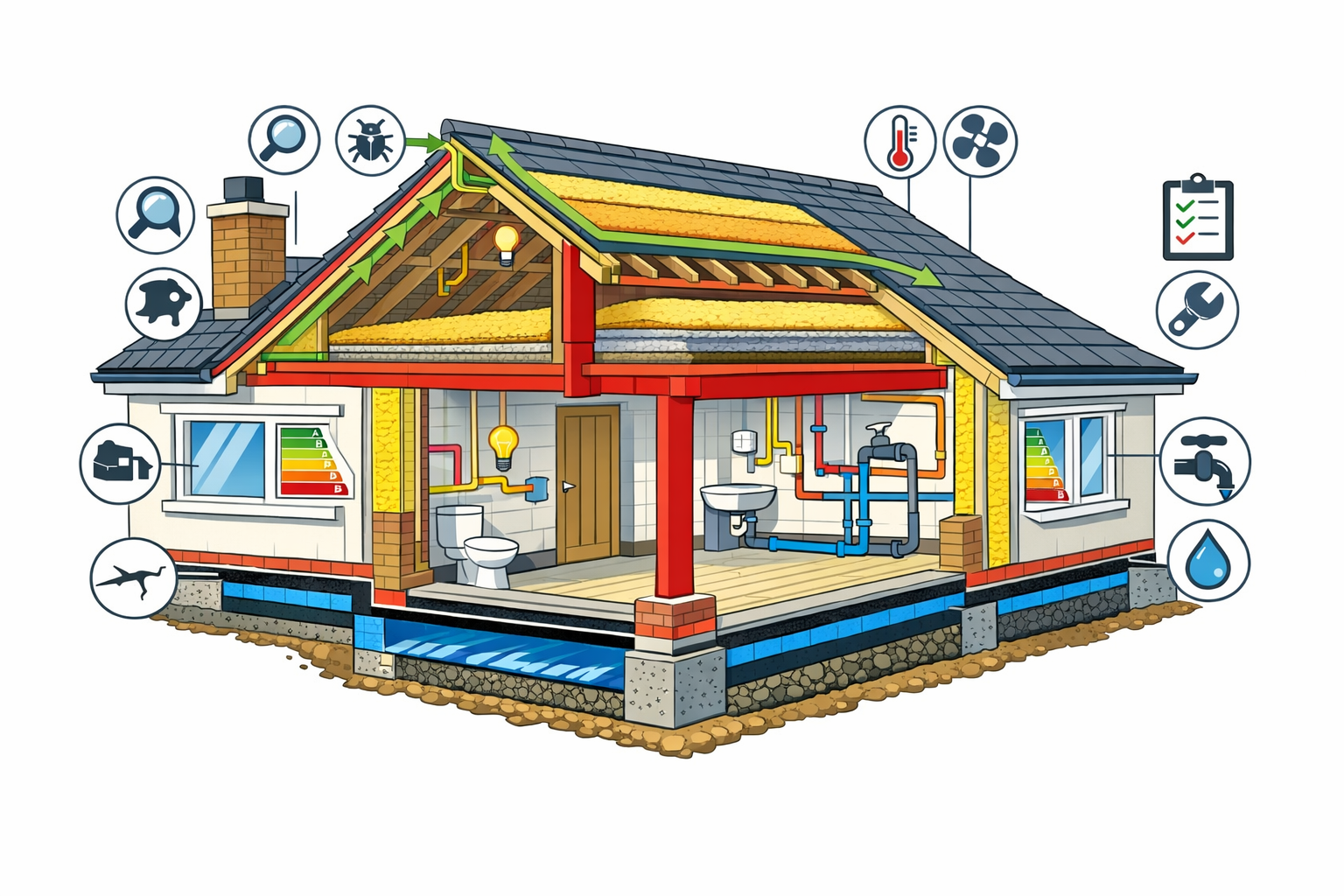
Professional building surveys form the foundation of successful retrofit projects. Unlike standard homebuyer surveys, retrofit-focused assessments must evaluate:
- 🏗️ Structural capacity for potential extensions or loft conversions
- ⚡ Energy performance baseline and improvement potential
- 💧 Moisture management and ventilation adequacy
- 🔧 Services condition and upgrade requirements
- 📋 Compliance gaps with current building regulations
RICS members conducting these surveys now participate in enhanced quality frameworks developed through recent industry summits, ensuring assessments reflect consumer insight and technological changes.[2]
Building Surveys for Bungalow Retrofits: Essential Assessment Criteria
Structural Integrity Evaluation
A comprehensive Level 3 building survey provides the detailed structural analysis essential for retrofit planning. Surveyors must assess:
Foundation Condition: Many post-war bungalows were built with shallow foundations that may require underpinning before significant alterations. Settlement patterns, cracking, and ground movement indicators require careful documentation.
Load-Bearing Capacity: Roof strengthening for solar panel installation or loft conversion requires accurate assessment of existing structural members. Surveyors should identify timber condition, beam sizing, and connection integrity.
Wall Construction: Cavity wall construction varies significantly across different build periods. Understanding wall composition is critical for insulation retrofit planning and ensuring proper moisture management.
Roof Structure: Bungalow roofs often present opportunities for living space creation, but structural surveys must confirm adequate headroom potential and load capacity before clients invest in planning applications.
Energy Performance Assessment
Energy retrofit represents the most significant value-add opportunity for bungalow improvements in 2026. Building surveys must establish baseline performance and identify improvement pathways:
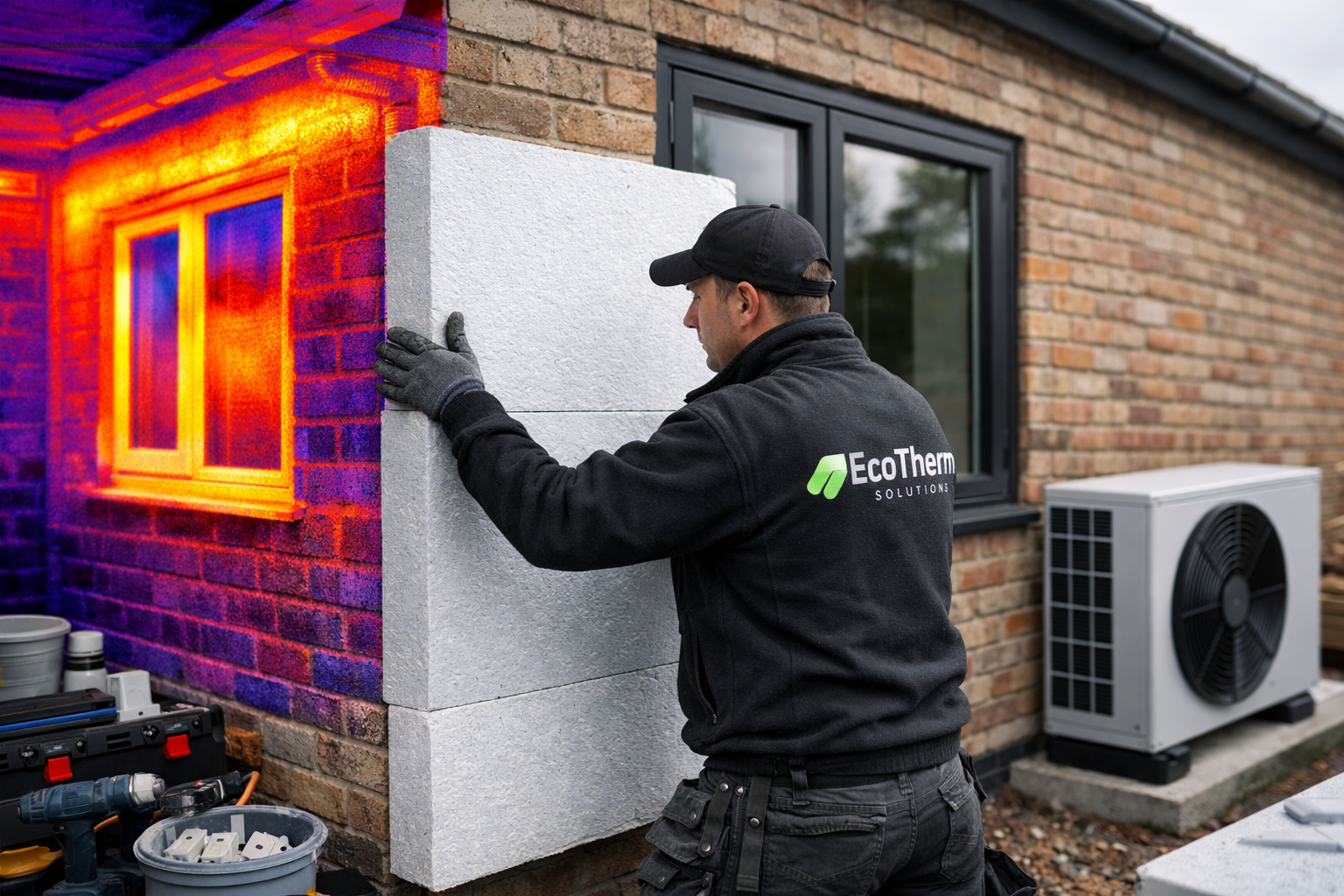
Thermal Envelope Analysis: Surveyors should document existing insulation levels in walls, roofs, and floors. Thermal imaging can reveal heat loss patterns and moisture ingress risks that conventional surveys might miss.
Ventilation Systems: Older bungalows often lack adequate ventilation, creating condensation and mould risks. Retrofit surveys must assess whether existing ventilation can accommodate improved airtightness or requires upgrading.
Heating System Evaluation: The transition to heat pumps requires careful assessment of heat distribution systems, electrical capacity, and external space for equipment placement. Surveyors should flag compatibility issues early in the planning process.
Glazing Performance: Window replacement offers significant energy savings but requires assessment of opening sizes, structural support, and heritage considerations for period properties.
Compliance and Regulatory Considerations
Building Regulations Compliance: Retrofit work must meet current Part L (conservation of fuel and power) and Part F (ventilation) standards. Surveys should identify where existing construction falls short and what upgrades trigger regulatory requirements.
Planning Permissions: While many internal retrofits fall under permitted development, external alterations may require planning consent. Surveyors familiar with local planning policies provide valuable guidance on likely approval challenges.
Listed Building Constraints: Period bungalows may have listing restrictions that limit retrofit options. Early identification of these constraints prevents costly abortive work.
Party Wall Considerations: Semi-detached and terraced bungalows require party wall compliance for certain retrofit works, adding procedural requirements to project timelines.
Assessing Value Uplifts from Bungalow Retrofits
Energy Efficiency Improvements and Market Value
Research consistently demonstrates that energy-efficient homes command premium prices. In the undersupplied bungalow market, properties with strong EPC ratings attract particular interest from downsizers and accessibility-focused buyers.
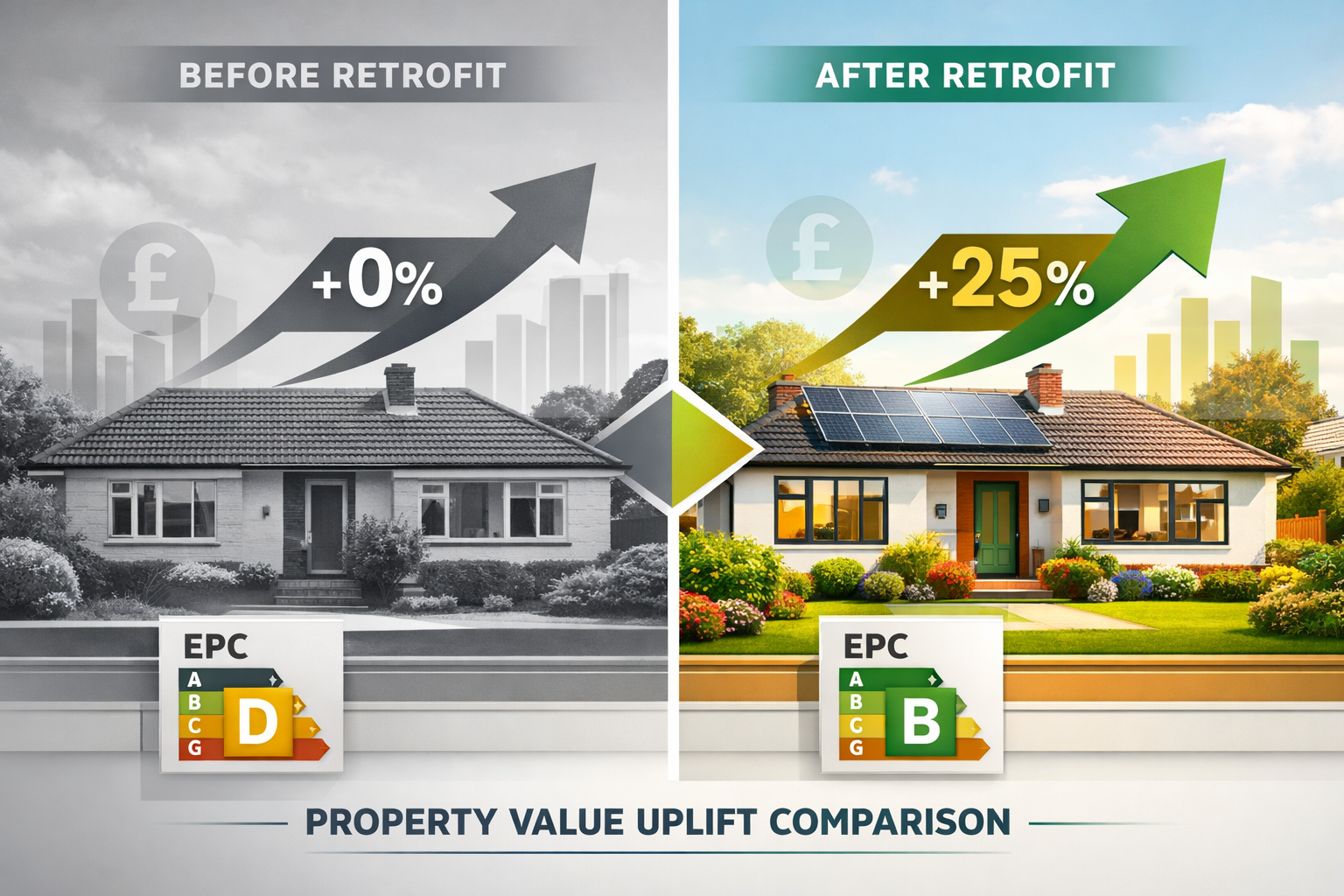
EPC Rating Improvements: Moving from a D or E rating to B or A can increase property values by 5-15% depending on local market conditions. The relationship between building surveys and EPC performance has become increasingly important as buyers factor running costs into purchase decisions.[5]
Running Cost Reductions: Lower energy bills represent tangible value that buyers can calculate. Surveys that quantify potential savings through specific retrofit measures help justify investment decisions.
Future-Proofing Value: With rental sector EPC requirements tightening, retrofit investments protect against regulatory obsolescence, maintaining long-term lettability and resale value.
Space Optimization and Extension Potential
Many bungalows occupy plots that allow extension or reconfiguration. Building surveys that identify these opportunities add significant value:
Loft Conversion Viability: Converting unused roof space creates additional bedrooms without increasing footprint. Surveys must assess headroom, structural capacity, and access feasibility.
Single-Storey Extensions: Ground-level extensions often fall under permitted development rights. Surveyors can identify optimal extension locations while flagging potential drainage, foundation, or boundary issues.
Internal Reconfiguration: Non-structural wall removal can transform dated layouts into open-plan living spaces that appeal to modern buyers. Surveys should clearly identify load-bearing versus partition walls.
Accessibility and Universal Design Features
The demographic drivers behind bungalow demand mean accessibility features deliver measurable value premiums:
Level Access Thresholds: Removing steps and creating flush thresholds throughout the property increases appeal to mobility-impaired buyers.
Wet Room Conversions: Accessible bathroom facilities with walk-in showers command strong market interest from older buyers and families with accessibility needs.
Wider Doorways and Circulation: Properties modified to accommodate wheelchair users access a specialized market segment with limited housing options and strong purchasing power.
Assistive Technology Infrastructure: Pre-wiring for smart home systems, emergency call systems, and automated controls appeals to forward-thinking buyers.
Quantifying Return on Investment
Professional building surveys enable accurate ROI calculations by establishing:
| Retrofit Measure | Typical Cost Range | Value Uplift | Payback Period |
|---|---|---|---|
| External Wall Insulation | £8,000-£15,000 | 3-7% | 8-12 years |
| Heat Pump Installation | £10,000-£18,000 | 4-8% | 10-15 years |
| Loft Conversion | £25,000-£45,000 | 15-25% | 5-8 years |
| Solar PV System | £5,000-£9,000 | 2-4% | 12-18 years |
| Accessible Wet Room | £6,000-£12,000 | 5-10% | 7-10 years |
These figures vary significantly by location, property condition, and market dynamics. Detailed structural surveys provide the accurate cost baselines essential for reliable ROI projections.
RICS Quality Enhancement Initiatives for Retrofit Surveys
The Quality in Retrofit Summit Impact
In early 2026, RICS hosted a Quality in Retrofit Summit at their headquarters in partnership with the Retrofit Academy. This gathering of retrofit leaders highlighted critical needs for strengthening home survey practices to better serve the retrofit market.[2]
Feedback from the summit emphasized:
Enhanced Survey Scope: Traditional surveys often overlook retrofit-specific considerations. RICS is developing guidance to ensure assessments address energy performance, moisture risk, and ventilation adequacy.
Consumer Insight Integration: Homeowners pursuing retrofits need clear, actionable information about improvement options and costs. Survey reports must communicate technical findings in accessible language.
Technological Integration: Thermal imaging, moisture meters, and digital documentation tools should become standard survey equipment rather than optional extras.
Quality Assurance Protocols: Retrofit projects carry heightened risks around damp, mould, and unintended consequences. Surveys must identify these risks before work commences.
New Residential Retrofit Pathway to Membership
RICS launched a residential retrofit pilot pathway to membership in 2026, recognizing that retrofit competence requires specialized knowledge beyond traditional surveying skills.[4] This pathway ensures professionals conducting retrofit assessments understand:
- Whole-house system thinking and interdependencies
- Building physics and moisture management
- Energy modeling and performance prediction
- Retrofit standards including Passivhaus and EnerPHit principles
- Risk management specific to retrofit interventions
Property owners commissioning building surveys for retrofit projects should verify that surveyors possess appropriate retrofit competencies, not just general surveying qualifications.
Whole-House Assessment Approaches
RICS guidance increasingly emphasizes whole-house assessment methodologies that recognize buildings as integrated systems rather than collections of separate components.[4] This approach prevents common retrofit failures such as:
Unintended Condensation: Improving airtightness without adequate ventilation traps moisture, creating mould and structural damage risks.
Thermal Bridging: Partial insulation upgrades can create cold spots where condensation concentrates, undermining energy savings and creating decay risks.
System Incompatibilities: Installing heat pumps without addressing distribution system inadequacies leads to poor performance and occupant dissatisfaction.
Overheating Risks: Improved insulation without appropriate shading and ventilation strategies can create uncomfortable summer conditions.
Professional surveyors trained in whole-house thinking identify these interdependencies during initial assessments, enabling integrated retrofit designs that deliver intended benefits without unintended consequences.
Neighborhood-Level Retrofit Planning
Beyond individual property assessments, RICS members increasingly participate in neighborhood-level retrofit planning programs that coordinate improvements across multiple properties.[4] These initiatives offer:
Economies of Scale: Coordinated procurement reduces material and labor costs for participating homeowners.
Shared Learning: Early adopters' experiences inform later participants, reducing risk and improving outcomes.
Infrastructure Planning: Coordinated retrofits enable strategic electrical grid upgrades to support widespread heat pump and EV charger adoption.
Heritage Sensitivity: Neighborhood approaches can develop consistent solutions for period properties, maintaining streetscape character while improving performance.
Practical Checklist: Commissioning Building Surveys for Bungalow Retrofits
Pre-Survey Preparation
Before engaging a surveyor, property owners should:
✅ Define retrofit objectives: Clarify whether priorities include energy efficiency, space creation, accessibility improvements, or combinations thereof
✅ Gather existing documentation: Locate original plans, previous survey reports, EPC certificates, and building control approvals
✅ Identify budget parameters: Understanding available investment helps surveyors prioritize recommendations
✅ Research planning constraints: Check local authority planning portals for conservation areas, Article 4 directions, or listing designations
Selecting the Right Survey Level
Level 2 Surveys (RICS HomeBuyer Reports) provide adequate assessment for straightforward energy efficiency retrofits in relatively modern bungalows without significant defects or alteration plans.
Level 3 Surveys (Building Surveys) are essential for:
- Properties built before 1960
- Bungalows with known defects or unusual construction
- Projects involving structural alterations or extensions
- Properties where comprehensive retrofit is planned
Consult our guide on Level 2 vs Level 3 surveys to determine the appropriate assessment level for specific circumstances.
Specialist Surveys to Consider
Depending on survey findings and retrofit plans, additional specialist assessments may include:
🔬 Damp Surveys: Essential for properties showing moisture ingress signs before planning retrofit interventions that affect breathability
🏭 Asbestos Surveys: Required before disturbing materials in bungalows built between 1950-2000
🌡️ Thermal Imaging: Identifies heat loss patterns and hidden defects not visible during standard inspections
⚡ Electrical Condition Reports: Assesses whether existing wiring can support heat pumps, solar systems, and modern appliance loads
🚰 Drainage Surveys: Confirms drainage adequacy before extensions or significant water use changes
Questions to Ask Your Surveyor
When commissioning surveys for retrofit projects, ensure surveyors can address:
- What retrofit-specific training or qualifications do you hold?
- Can you provide thermal imaging as part of the assessment?
- Will your report identify energy improvement opportunities and estimated costs?
- Do you understand whole-house system interactions and moisture risk?
- Can you recommend retrofit specialists or coordinate with my design team?
- Will you provide a prioritized improvement schedule aligned with my budget?
Interpreting Survey Reports for Retrofit Planning
Professional survey reports should deliver:
Clear Defect Prioritization: Distinguishing between issues requiring immediate attention versus those that can be addressed during planned retrofit work.
Retrofit Opportunity Identification: Explicit recommendations for energy efficiency, space optimization, and accessibility improvements with indicative costs.
Risk Warnings: Clear explanation of moisture, structural, or compliance risks associated with contemplated retrofit measures.
Sequencing Guidance: Logical ordering of interventions to avoid abortive work (e.g., addressing structural issues before cosmetic improvements).
Specialist Referrals: Recommendations for additional investigations or specialist input where survey findings indicate specific concerns.
Navigating Compliance in the 2026 Retrofit Landscape
Building Regulations for Retrofit Work
Understanding which improvements trigger Building Regulations approval prevents costly compliance failures:
Controlled Services: Replacing heating systems, installing new electrical circuits, or upgrading drainage requires Building Control notification or certification by registered installers.
Thermal Element Replacement: Replacing windows, doors, roof coverings, or floors triggers insulation upgrade requirements to meet current U-value standards.
Material Alterations: Structural changes including wall removal, loft conversions, or extensions require full Building Regulations approval.
Consequential Improvements: Major renovations may trigger requirements to upgrade other building elements to improve overall energy performance.
Building surveys should identify which planned works fall under regulatory control and flag potential compliance challenges early in planning.
EPC Requirements and Rental Sector Implications
The rental sector faces increasingly stringent EPC requirements. Properties with ratings below C may face lettability restrictions in coming years. Retrofit surveys for buy-to-let bungalows must assess:
- Current EPC rating and improvement potential
- Cost-effective pathways to achieve minimum standards
- Exemption eligibility where improvements are technically unfeasible
- Timeline for compliance with emerging regulations
Fire Safety Considerations
While bungalows present lower fire risk than multi-storey properties, retrofits must maintain adequate fire safety:
Escape Routes: Loft conversions must provide compliant escape windows or alternative egress routes.
Fire Resistance: Alterations affecting compartmentation (such as creating open-plan layouts) require careful consideration of fire spread risks.
Detection Systems: Modern Building Regulations require interconnected smoke and heat detection throughout residential properties.
Accessibility Standards
While private residential properties aren't subject to accessibility regulations, incorporating accessible design principles future-proofs bungalows and maximizes market appeal:
Lifetime Homes Standards: Voluntary standards that ensure properties can adapt to changing occupant needs.
Wheelchair Accessible Housing: Higher accessibility standard suitable for wheelchair users, commanding premium values in undersupplied markets.
Building surveys can assess feasibility of meeting these voluntary standards and quantify associated costs and value uplifts.
Case Study: Successful Bungalow Retrofit Value Uplift
Consider a typical 1960s two-bedroom bungalow in a suburban location:
Pre-Retrofit Condition:
- EPC Rating: D (55 points)
- Market Value: £325,000
- Annual Energy Costs: £1,850
- Key Issues: Poor insulation, single glazing, inefficient boiler, limited storage
Building Survey Recommendations:
- External wall insulation (£12,000)
- Air source heat pump (£14,000)
- Solar PV system (£7,000)
- Loft conversion creating third bedroom (£35,000)
- Accessible wet room (£9,000)
Post-Retrofit Outcomes:
- EPC Rating: B (82 points)
- Market Value: £425,000 (30.7% increase)
- Annual Energy Costs: £750 (59% reduction)
- Total Investment: £77,000
- Net Value Gain: £100,000
- ROI: 129.9%
This example demonstrates how comprehensive building surveys enable strategic retrofit planning that delivers substantial value uplifts while improving energy performance and accessibility.
Future-Proofing Bungalow Investments Through Quality Surveys
Anticipating Regulatory Changes
The retrofit landscape continues evolving rapidly. Quality building surveys help property owners anticipate likely regulatory directions:
Tightening EPC Standards: Minimum energy performance requirements will likely continue rising across both rental and owner-occupied sectors.
Embodied Carbon Considerations: Future regulations may address whole-life carbon, favoring retrofit over demolition and rebuild.
Water Efficiency: Emerging standards around water consumption may influence fixture and appliance specifications.
Biodiversity Net Gain: Garden and landscaping decisions may face requirements to support ecological diversity.
Surveyors with retrofit expertise help clients make decisions aligned with likely regulatory trajectories, protecting long-term investment value.
Technology Integration Opportunities
Modern building surveys should identify opportunities to integrate smart technologies:
Energy Management Systems: Infrastructure for monitoring and optimizing energy consumption.
Smart Heating Controls: Zoned heating and remote management capabilities that maximize heat pump efficiency.
EV Charging Preparation: Electrical capacity and installation routes for future vehicle charging.
Assistive Technologies: Wiring and connectivity for emergency call systems, automated lighting, and remote monitoring.
Climate Resilience Assessment
Climate change impacts require consideration in retrofit planning:
Overheating Risk: Improved insulation without adequate ventilation and shading strategies can create uncomfortable summer conditions.
Flood Resilience: Properties in flood-risk areas benefit from resilient construction techniques and materials.
Water Management: Sustainable drainage systems and rainwater harvesting reduce flood risk and water consumption.
Extreme Weather Durability: Material selections should account for projected increases in extreme weather events.
Building surveys that incorporate climate resilience thinking deliver long-term value protection beyond immediate improvement benefits.
Conclusion
The 2026 bungalow demand boom creates exceptional opportunities for property owners and investors willing to undertake strategic retrofits. However, success depends fundamentally on comprehensive building surveys that assess structural integrity, energy performance potential, compliance requirements, and value uplift opportunities.
Building Surveys for Bungalow Retrofits in 2026 Demand Boom: Assessing Value Uplifts and Compliance represents more than technical due diligence—it's the foundation for investment decisions that can deliver substantial financial returns while contributing to housing stock sustainability and accessibility.
RICS quality enhancement initiatives ensure that retrofit-focused surveys meet rising professional standards, incorporating whole-house assessment approaches, consumer-focused communication, and technological integration. Property owners should seek surveyors with specific retrofit competence rather than relying solely on general surveying qualifications.
Actionable Next Steps
🎯 Commission a comprehensive Level 3 building survey from a RICS-qualified surveyor with demonstrated retrofit expertise before committing to bungalow purchase or retrofit investment
🎯 Request retrofit-specific assessment including thermal imaging, energy improvement opportunities, and compliance requirements as part of survey scope
🎯 Develop a phased improvement plan based on survey findings, prioritizing structural and moisture issues before energy efficiency interventions
🎯 Explore available funding through the Warm Homes Plan and other support schemes to offset retrofit costs
🎯 Engage specialist consultants for areas requiring deeper investigation, such as structural engineering, energy modeling, or heritage conservation
🎯 Monitor regulatory developments affecting EPC requirements, building standards, and planning policies that may impact retrofit decisions
🎯 Consider whole-house system interactions rather than piecemeal improvements to avoid unintended consequences and maximize value uplift
The undersupplied bungalow market, combined with demographic demand drivers and supportive policy frameworks, creates a compelling case for strategic retrofit investment. Quality building surveys transform this opportunity from speculative risk into informed, value-generating decisions that serve both financial objectives and broader sustainability goals.
References
[1] What Homeowners Are Searching For Finding Retrofit – https://www.refurbandretrofit.com/what-homeowners-are-searching-for-finding-retrofit/
[2] Uk Resi Survey Jan 2026 Report Shows Early Signs Market Recovery Despite Caution – https://www.rics.org/news-insights/uk-resi-survey-jan-2026-report-shows-early-signs-market-recovery-despite-caution
[3] New Build Demand Trends 2026 – https://www.new-builds.co.uk/blog/new-build-demand-trends-2026
[4] Retrofit Leaders Meet Rics Hq Discuss Importance Transformative Projects – https://www.rics.org/news-insights/retrofit-leaders-meet-rics-hq-discuss-importance-transformative-projects
[5] Building Surveys For Energy Performance Certificates In 2026 Navigating Epc Upgrades And Retrofit Mandates For Uk Buyers – https://nottinghillsurveyors.com/blog/building-surveys-for-energy-performance-certificates-in-2026-navigating-epc-upgrades-and-retrofit-mandates-for-uk-buyers
[6] Passivhaus Retrofit In The Uk 2nd Edition V1.4 260121 – https://passivhaus.uk/wp-content/uploads/2026/01/Passivhaus-Retrofit-in-the-UK-2nd-edition-v1.4-260121.pdf
[7] Detail – https://www.passivhaustrust.org.uk/news/detail/?nId=1537
