
With energy costs continuing to climb and the UK government implementing stricter retrofit standards, property buyers in 2026 face a landscape transformed by new Energy Performance Certificate (EPC) requirements. Building Surveys for Energy Performance Certificates in 2026: Navigating EPC Upgrades and Retrofit Mandates for UK Buyers has become essential knowledge for anyone entering the property market. Professional building surveyors now integrate thermal imaging technology, compliance assessments, and detailed retrofit cost projections into their evaluations, helping buyers avoid costly surprises and maximize long-term energy savings.
The government's Warm Homes Plan announcement in January 2026 fundamentally changed the rules. Private landlords in England and Wales must now achieve an EPC C rating by 1 October 2030, but the new assessment methodology makes this significantly harder than before[4][5]. For buyers, this means understanding not just the current EPC rating, but also the true cost and feasibility of meeting future compliance standards.
Key Takeaways
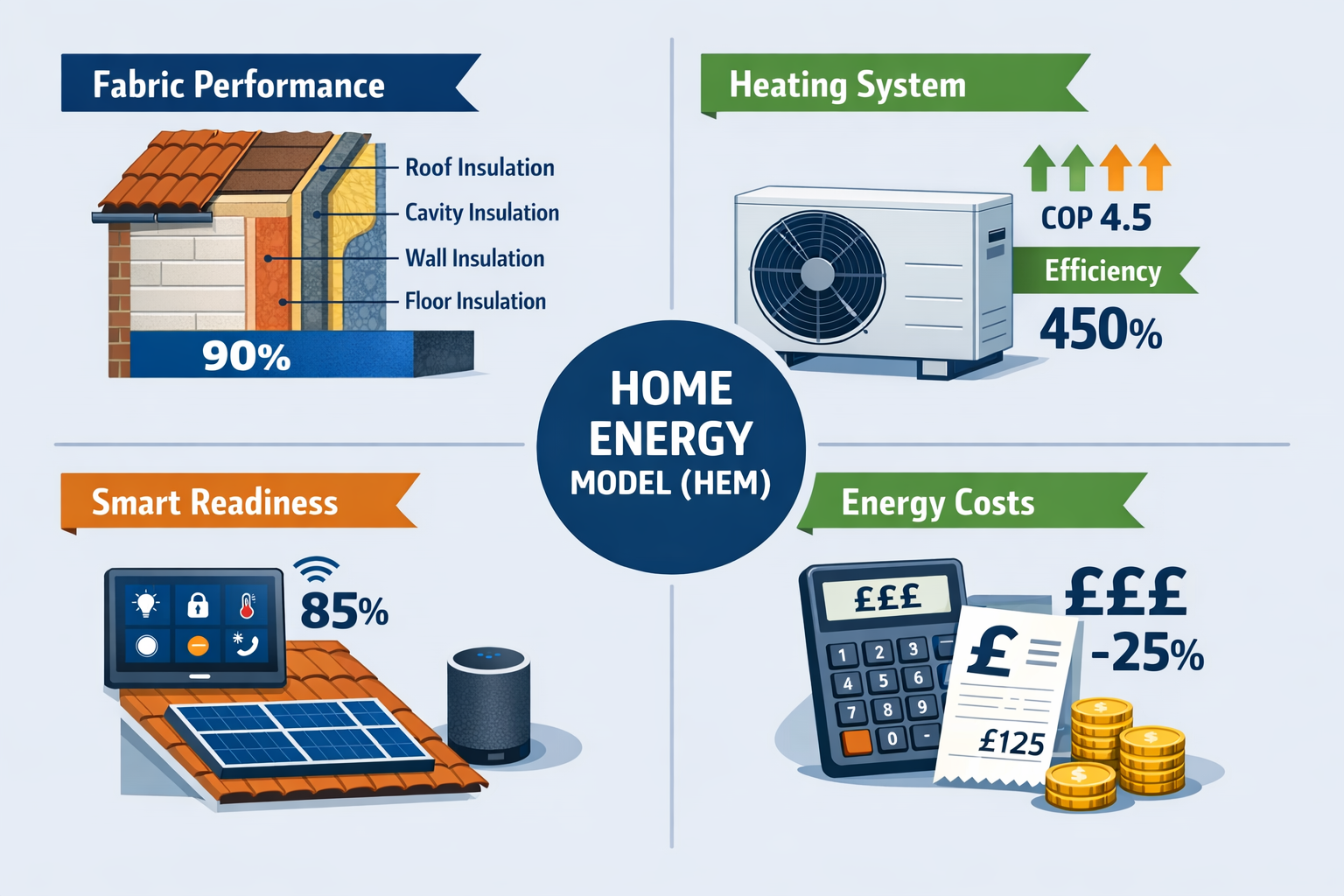
- 🏠 New EPC methodology launches October 2029: The Home Energy Model (HEM) replaces current assessment systems with four headline metrics focusing on fabric performance, heating systems, smart readiness, and energy costs[5]
- 💷 Stricter C-rating requires renewable upgrades: Meeting the new EPC C standard will likely require heat pumps or solar panels, making it considerably harder than current C-ratings[4]
- 📋 Evidence documentation is critical: Without proper invoices, photos, and specification sheets for improvements, properties default to worst-case ratings regardless of actual upgrades[2]
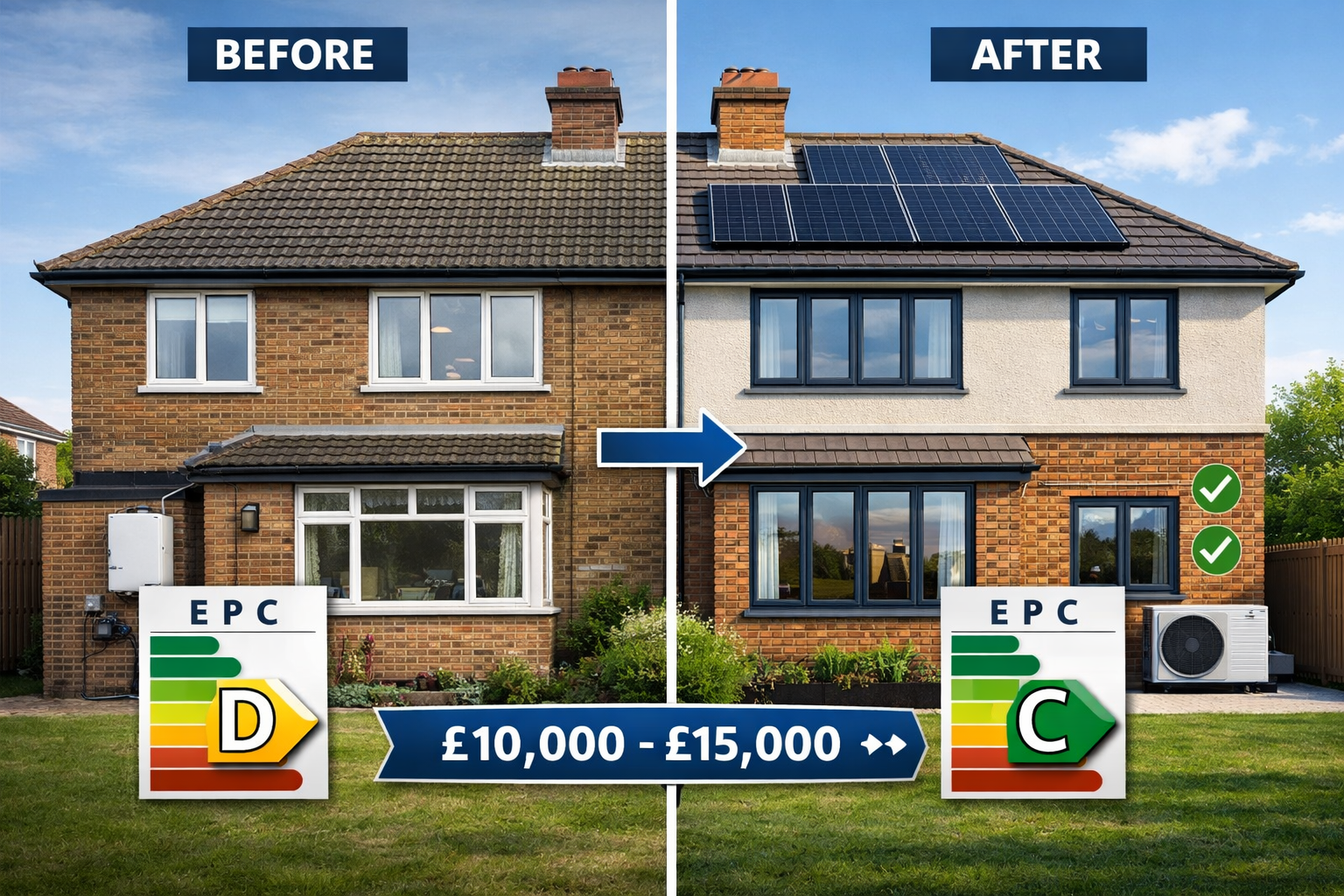
- ⚖️ Exemption caps set at £10,000-£15,000: Landlords can qualify for exemptions by spending up to £15,000 on improvements, though the government is considering reducing this to £10,000[1][2]
- 🔍 Building surveys now include thermal assessments: Professional surveyors integrate infrared imaging and compliance forecasting to help buyers understand true retrofit costs and timelines
Understanding the 2026 EPC Landscape and Government Reforms
The regulatory environment surrounding Energy Performance Certificates underwent dramatic transformation in early 2026. The government's consultation on the Home Energy Model: Energy Performance Certificates, launched on 21 January 2026, established a completely new framework for evaluating property energy efficiency[5].
The Warm Homes Plan and New Compliance Timeline
Under the Warm Homes Plan, private landlords in England and Wales face mandatory EPC C rating requirements with staggered deadlines[4]:
| Tenancy Type | Compliance Deadline | Key Requirement |
|---|---|---|
| New tenancies | 2028 | Must achieve EPC C or secure valid exemption |
| Existing tenancies | 1 October 2030 | Must achieve EPC C or secure valid exemption |
| HMO properties | Late 2026 (expected) | Full dwelling EPC required when single room is let[1][3] |
The implications for property buyers are significant. A property purchased today with an EPC D or E rating represents not just a purchase price, but also a substantial retrofit liability that must be addressed within clearly defined timelines.
Four Headline Metrics Replacing Traditional EPC Scoring
The new Home Energy Model fundamentally changes how properties are assessed. Instead of the simplified A-G scale based primarily on energy consumption, the 2026 system evaluates four distinct performance areas[1][5]:
1. Fabric Performance 🏗️
This metric measures how well the building retains heat through insulation quality, wall construction, roof insulation, and glazing standards. Properties with solid walls, single glazing, or minimal loft insulation score poorly in this category.
2. Heating System 🔥
Gas boilers receive significantly lower scores under the new methodology, while heat pumps, renewable heating systems, and modern electric heating score substantially better. This represents the most dramatic shift from previous EPC calculations[4].
3. Smart Readiness 💡
Properties equipped with smart meters, battery storage systems, solar panels, and intelligent heating controls receive enhanced ratings. This metric rewards technological integration and renewable energy generation capacity.
4. Energy Cost 💰
The actual projected cost of heating and powering the property remains a core metric, but now sits alongside the other three performance indicators rather than dominating the overall rating.
For buyers commissioning a Level 3 building survey, understanding these four metrics helps identify which improvements deliver the greatest rating improvement for the investment required.
Building Surveys for Energy Performance Certificates in 2026: What Professional Assessments Now Include
Modern building surveys in 2026 have evolved far beyond traditional structural inspections. Professional surveyors now integrate energy performance assessments as a core component of comprehensive property evaluations, particularly when buyers need to understand retrofit requirements and compliance timelines.
Thermal Imaging and Infrared Technology Integration
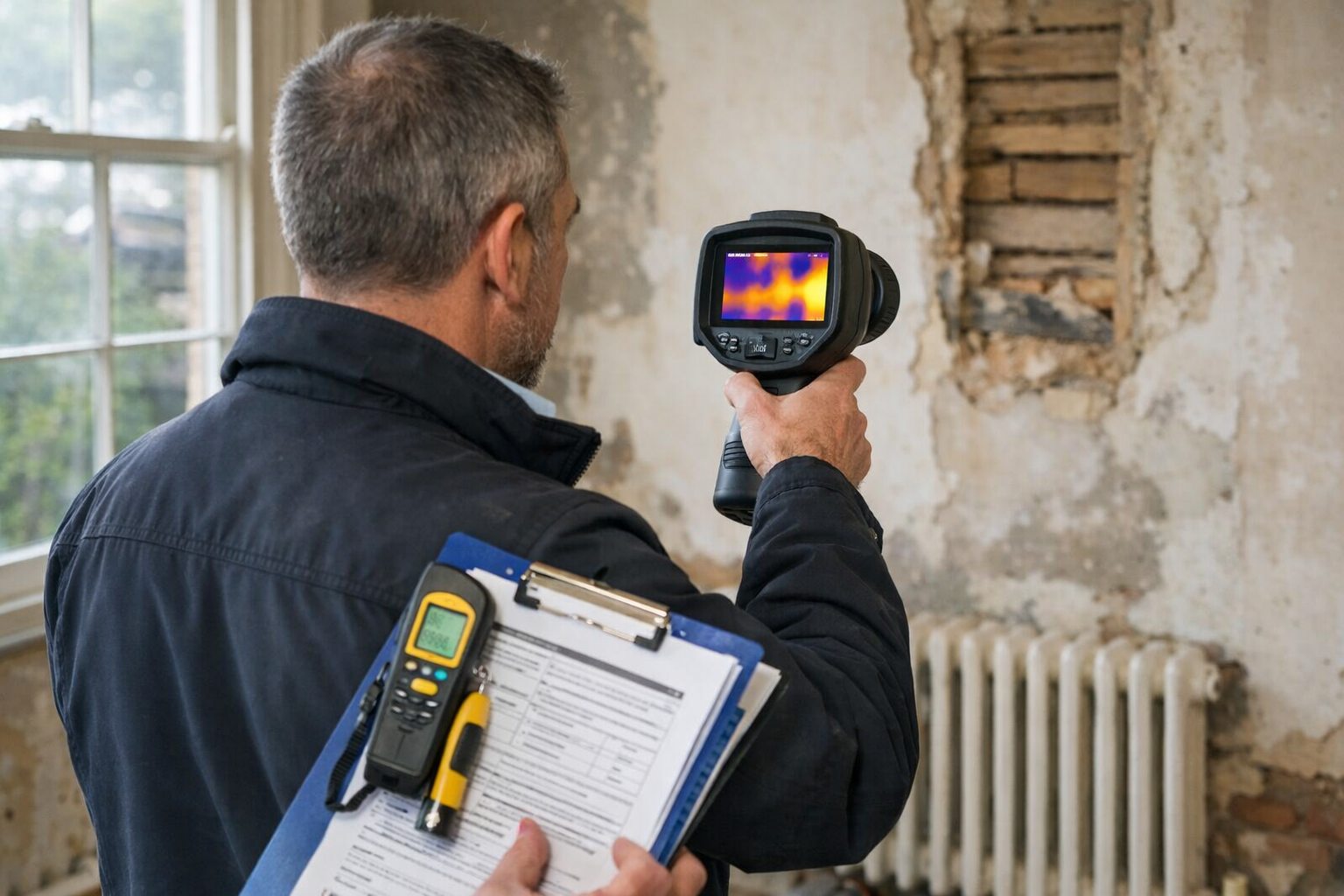
Professional building surveyors increasingly deploy thermal imaging cameras during property inspections. These infrared assessments reveal:
- Heat loss patterns through walls, roofs, and floors
- Insulation gaps and thermal bridging issues
- Air leakage points around windows, doors, and junctions
- Hidden moisture problems that affect both structure and energy performance
- Heating system efficiency and distribution patterns
A comprehensive RICS building survey with thermal imaging provides visual evidence of exactly where energy efficiency improvements will deliver the greatest impact. This technology transforms abstract EPC ratings into concrete, actionable data.
EPC Compliance Forecasting and Retrofit Cost Projections
When buyers commission building surveys in 2026, they should expect detailed sections addressing:
Current EPC Position
Professional surveyors analyze the existing EPC certificate, identifying which of the four headline metrics present the greatest challenges and opportunities.
Pathway to Compliance
Surveyors outline specific improvement measures required to achieve EPC C under the new Home Energy Model methodology, including:
- Insulation upgrades (loft, cavity wall, solid wall, floor)
- Glazing improvements (double or triple glazing)
- Heating system replacement (heat pump installation)
- Renewable energy integration (solar panels, battery storage)
- Smart technology implementation (smart meters, controls)
Itemized Cost Estimates
Detailed breakdowns of improvement costs help buyers understand the total investment required, not just the purchase price. These estimates should reference the £10,000-£15,000 exemption thresholds established under the new regulations[1][2].
Timeline and Phasing Options
Professional surveyors provide realistic implementation schedules, helping buyers understand whether improvements can be phased over time or require immediate attention to meet compliance deadlines.
The Critical Importance of Evidence Documentation
One of the most significant changes under the 2026 EPC framework involves the evidence gap penalty. Under previous systems, assessors could make favorable assumptions about property improvements. The new rules eliminate this flexibility[2].
"Without documentary evidence—invoices, photos, specification sheets—the system defaults to the worst possible rating, meaning landlords could effectively pay for C-rated improvements but be legally classified as D-rated."
For buyers, this means:
✅ Request all improvement documentation during the purchase process
✅ Verify previous EPC assessments included proper evidence
✅ Maintain comprehensive records of any post-purchase improvements
✅ Photograph all work before, during, and after completion
✅ Retain all invoices and specifications from contractors
A thorough building survey checklist should include verification of existing improvement documentation to ensure the property's EPC rating accurately reflects its actual performance.
Navigating EPC Upgrades: Strategic Approaches for UK Property Buyers
Understanding the new EPC landscape is only the first step. Buyers need practical strategies for navigating upgrade requirements while protecting their financial interests and ensuring compliance with evolving regulations.
Properties with Existing EPC C Ratings: Understanding Transition Provisions
If a property already holds an EPC C rating under the current system, buyers might assume they're protected from additional requirements. However, the transition provisions contain important nuances[1]:
Existing C-Rated Properties
Landlords with current EPC C ratings need not obtain new certificates until their existing EPC expires. However, upon expiration (EPCs are valid for 10 years), the property must meet the new MEES standard or qualify for an exemption.
The C-Rating Gap
A property rated EPC C under the old methodology may not achieve EPC C under the new Home Energy Model. The stricter assessment criteria, particularly regarding heating systems and smart readiness, mean many current C-rated properties will drop to D or E ratings when reassessed[4].
Strategic Timing Considerations
Buyers should verify:
- The issue date of the current EPC
- How many years remain before renewal
- Whether the property would likely maintain its C rating under HEM methodology
- The estimated cost to achieve C rating under new standards
Exemption Pathways and Financial Thresholds
The 2026 regulations provide specific exemption routes for properties where achieving EPC C proves financially prohibitive or technically impossible[1][2].
Financial Cap Exemption
Landlords (and by extension, buyers planning to let properties) can qualify for exemptions by demonstrating they've invested up to the financial threshold in energy efficiency improvements:
- Current threshold: £15,000
- Proposed reduction: £10,000 (under government consideration)
- Key requirement: Improvements must be undertaken, not just quoted
This exemption applies regardless of the final EPC rating achieved. If a property starts at EPC E and £15,000 of improvements only raise it to EPC D, the exemption still applies[1].
Technical Impossibility Exemptions
Some properties cannot physically achieve EPC C due to:
- Listed building constraints
- Conservation area restrictions
- Structural limitations (solid wall properties where external insulation is prohibited)
- Third-party consent requirements that cannot be obtained
Professional surveyors can identify these constraints during Level 2 surveys or more comprehensive Level 3 assessments, helping buyers understand whether exemption applications may be necessary.
Heat Pump Requirements and Heating System Upgrades
The most significant—and expensive—change under the new EPC methodology involves heating systems. Gas boilers score poorly under the Home Energy Model, while heat pumps receive substantially higher ratings[4][5].
Heat Pump Installation Considerations
| Factor | Details | Typical Cost Range |
|---|---|---|
| Air Source Heat Pump | Most common retrofit option; requires outdoor unit and internal modifications | £7,000-£13,000 |
| Ground Source Heat Pump | Higher efficiency but requires significant groundwork | £20,000-£35,000 |
| Radiator Upgrades | Existing radiators often require enlargement or replacement | £2,000-£5,000 |
| Hot Water Cylinder | New insulated cylinder typically required | £1,000-£2,500 |
| Electrical Upgrades | Consumer unit and supply upgrades often necessary | £1,500-£3,000 |
For many properties, heat pump installation alone consumes the majority of the £10,000-£15,000 exemption threshold, leaving limited budget for insulation, glazing, or other improvements[2].
Solar Panels and Smart Technology Integration
The new "smart readiness" metric creates opportunities for buyers to improve EPC ratings through technology rather than purely structural improvements[5].
High-Impact Smart Upgrades
🔋 Solar PV Panels: £5,000-£8,000 (4kW system)
Generates renewable electricity, reduces energy costs, and significantly improves smart readiness scores.
🔌 Battery Storage: £4,000-£6,000
Stores solar energy for use during peak pricing periods, enhancing both cost and smart readiness metrics.
📱 Smart Heating Controls: £200-£500
Programmable thermostats, zone controls, and app-based management improve efficiency scores at relatively low cost.
⚡ Smart Meters: Free from energy suppliers
Required for accurate monitoring and optimization of energy consumption patterns.
Professional surveyors can assess roof orientation, structural capacity for solar panels, and electrical infrastructure adequacy during comprehensive building inspections.
Building Surveys for Energy Performance Certificates in 2026: Practical Implementation for Buyers
Armed with understanding of the regulatory landscape and upgrade options, buyers need concrete strategies for incorporating EPC considerations into their property purchase decisions.
Integrating EPC Assessments into the Survey Process
When commissioning building surveys in 2026, buyers should specifically request:
1. Dedicated EPC Compliance Section
The survey report should include a standalone section addressing:
- Current EPC rating and validity period
- Assessment under new HEM methodology (projected rating)
- Specific improvements required for EPC C compliance
- Itemized cost estimates for each improvement
- Recommended implementation sequence
2. Thermal Imaging Evidence
Request thermal imaging photographs showing:
- External wall heat loss patterns
- Roof and loft insulation effectiveness
- Window and door thermal performance
- Heating system distribution efficiency
These images provide visual proof of energy performance issues and support retrofit planning.
3. Heating System Assessment
Detailed evaluation of existing heating infrastructure:
- Boiler age, efficiency rating, and remaining lifespan
- Radiator sizing and distribution adequacy
- Hot water cylinder condition and insulation
- Suitability for heat pump retrofit (pipe sizing, radiator capacity)
4. Documentation Verification
Confirmation that all previous improvements are properly documented with:
- Original invoices and receipts
- Specification sheets for materials used
- Photographic evidence of installation
- Building control certificates where applicable
A comprehensive Level 3 building survey provides the depth of investigation necessary for thorough EPC compliance assessment.
Negotiating Purchase Price Based on EPC Retrofit Requirements
The discovery of significant EPC upgrade requirements provides legitimate grounds for price negotiation. Buyers should approach these discussions strategically:
Calculate Total Compliance Cost
Add together:
- All required improvements to achieve EPC C
- Professional fees (architects, building control, EPC assessors)
- Disruption costs (temporary accommodation if required)
- VAT (20% on most improvement works)
Present Evidence-Based Negotiation
Use the building survey report to demonstrate:
- Specific deficiencies identified through professional assessment
- Itemized cost estimates from qualified surveyors
- Regulatory compliance timelines creating urgency
- Risk of penalties for non-compliance (up to £30,000)[1]
Consider Three Negotiation Approaches
💷 Price Reduction: Request reduction equal to full retrofit cost
🔧 Seller Completion: Require seller to complete improvements before completion
📋 Retention: Hold back funds in escrow until improvements completed post-purchase
Timeline Planning: When to Complete EPC Upgrades
Strategic timing of EPC improvements can significantly impact both cost and disruption:
Pre-Purchase Completion
Advantages: Move into compliant property; avoid post-purchase project management
Disadvantages: Seller controls contractor selection; quality may vary; timeline delays completion
Immediate Post-Purchase (Before Occupation)
Advantages: Control over contractor selection; coordinate with other renovation work; property vacant during disruption
Disadvantages: Requires additional financing; delays move-in; temporary accommodation costs
Phased Implementation
Advantages: Spreads costs over time; allows for technology price reductions; can prioritize high-impact improvements
Disadvantages: Multiple disruption periods; may miss compliance deadlines; potentially higher overall costs
For properties intended for letting, the 2028 deadline for new tenancies creates urgency that owner-occupiers don't face, influencing optimal timing decisions[4].
Selecting Qualified Surveyors and EPC Assessors
The quality of building surveys and EPC assessments varies significantly. Buyers should prioritize:
RICS Chartered Surveyors
Members of the Royal Institution of Chartered Surveyors maintain professional standards and carry professional indemnity insurance. Verify credentials through the RICS surveyor qualification verification process.
Thermal Imaging Certification
Not all surveyors hold thermal imaging qualifications. Request confirmation of:
- Level 1 or Level 2 thermography certification
- Calibrated equipment with recent service records
- Experience with residential thermal surveys
EPC Assessor Accreditation
EPC assessors must be registered with an approved accreditation scheme:
- Elmhurst Energy
- Stroma Certification
- Quidos
- Sterling Accreditation
Verify assessor registration through the official EPC register before commissioning assessments.
Local Market Knowledge
Surveyors with experience in your specific area understand:
- Regional construction methods and common defects
- Local contractor costs for retrofit work
- Planning authority requirements and conservation constraints
- Typical EPC performance for property types in the area
Special Considerations: HMO Properties and Multi-Unit Buildings
The 2026 reforms introduced specific changes affecting houses in multiple occupation (HMOs) and properties with multiple dwelling units.
New HMO EPC Requirements
Previously, HMO properties let by the room could obtain EPCs for individual rooms rather than the entire dwelling. The 2026 reforms eliminate this approach[1][3]:
New Requirement: When a single room in an HMO is let, a valid EPC for the whole property must be obtained.
Implementation Timeline: Expected to come into force in late 2026[3]
Implications for Buyers:
- HMO properties require more comprehensive EPC assessments
- Retrofit costs apply to the entire building, not individual rooms
- Compliance costs are substantially higher for HMO investments
- Existing room-based EPCs become invalid under new rules
Buyers considering HMO investments should commission building surveys that assess the entire property's energy performance, not just individual letting units.
Continuous EPC Validity Requirements
Another significant 2026 reform addresses EPC validity during tenancies[1]:
Current Rules: Landlords need valid EPCs only when marketing properties; EPCs can lapse during ongoing tenancies with sitting tenants.
Proposed New Rules: Landlords must maintain current, valid EPCs throughout tenancies, not just at tenancy changes.
Impact: Properties require EPC renewal every 10 years regardless of tenancy status, increasing compliance monitoring requirements and potential reassessment under stricter HEM methodology.
Enforcement and Penalty Structure
The 2026 reforms substantially increased penalties for EPC non-compliance, creating significant financial risk for landlords and investment property buyers[1]:
| Violation | Previous Penalty | 2026 Penalty |
|---|---|---|
| No valid EPC | £200 | Up to £5,000 |
| MEES non-compliance (minor) | £500 minimum | £1,000-£5,000 |
| MEES non-compliance (serious) | £2,000 maximum | Up to £30,000 |
| False information | £1,000 | Up to £5,000 |
These penalties apply per property and per breach, meaning landlords with multiple non-compliant properties face cumulative fines potentially reaching hundreds of thousands of pounds.
Long-Term Value: EPC Ratings and Property Marketability
Beyond regulatory compliance, EPC ratings increasingly influence property values and marketability in 2026.
Market Premium for High-Rated Properties
Research indicates that properties with higher EPC ratings command price premiums:
- EPC A-B properties: 5-10% premium over comparable EPC D properties
- EPC C properties: 2-5% premium over comparable EPC D properties
- EPC E-G properties: 5-15% discount compared to EPC C equivalents
As the 2028-2030 compliance deadlines approach, this premium-discount spread is widening. Buyers increasingly factor retrofit costs into their purchase decisions, reducing demand for lower-rated properties.
Mortgage Availability and Green Financing
Mortgage lenders in 2026 increasingly differentiate products based on property energy performance:
Green Mortgages
Lenders offer preferential rates (typically 0.1-0.5% lower) for properties rated EPC A-C, recognizing lower default risk and alignment with ESG commitments.
Retrofit Financing
Specialized mortgage products incorporate improvement costs into the loan, allowing buyers to:
- Finance both purchase and retrofit in a single mortgage
- Benefit from improved property value post-improvement
- Spread retrofit costs over the mortgage term (typically 25-35 years)
Valuation Adjustments
Mortgage valuers increasingly adjust property values downward for poor EPC ratings, particularly where compliance costs exceed the exemption thresholds.
Future-Proofing Against Further Regulatory Changes
The 2026 reforms represent a step toward the UK's net-zero commitments, not the final destination. Buyers should anticipate:
Potential Future Requirements:
- EPC B standard by 2035-2040
- Mandatory renewable energy generation
- Zero-carbon heating systems across all properties
- Enhanced smart home integration requirements
Properties that achieve only the minimum EPC C compliance may face additional upgrade requirements within 5-10 years. Buyers with long-term ownership horizons should consider exceeding current standards to minimize future retrofit needs.
Conclusion: Strategic Property Purchasing in the New EPC Era
Building Surveys for Energy Performance Certificates in 2026: Navigating EPC Upgrades and Retrofit Mandates for UK Buyers requires a fundamentally different approach to property evaluation than previous years. The convergence of stricter regulatory standards, new assessment methodologies, and enhanced enforcement creates both challenges and opportunities for informed buyers.
Key Action Steps for Buyers
✅ Commission Comprehensive Building Surveys
Engage RICS-qualified surveyors who integrate thermal imaging and EPC compliance assessments into their reports.
✅ Request Detailed Retrofit Cost Analysis
Obtain itemized estimates for achieving EPC C compliance under the new Home Energy Model methodology, including all four headline metrics.
✅ Verify Improvement Documentation
Ensure all previous energy efficiency improvements are properly documented with invoices, specifications, and photographic evidence to avoid evidence gap penalties.
✅ Calculate Total Ownership Cost
Add retrofit requirements to the purchase price to understand the true cost of property ownership and compliance.
✅ Negotiate Based on Evidence
Use professional survey findings to negotiate purchase price reductions, seller-completed improvements, or retention arrangements.
✅ Plan Implementation Timeline
Develop realistic schedules for completing improvements that account for compliance deadlines, particularly the 2028 deadline for new tenancies.
✅ Consider Future Requirements
Evaluate properties not just against current EPC C standards, but anticipated future requirements for EPC B or net-zero compliance.
The Value of Professional Guidance
The complexity of the 2026 EPC landscape makes professional guidance invaluable. Qualified building surveyors provide:
- Technical expertise in assessing energy performance and retrofit feasibility
- Cost certainty through detailed improvement estimates
- Risk mitigation by identifying compliance challenges before purchase
- Negotiating leverage through evidence-based survey findings
- Long-term planning support for phased improvement implementation
For buyers navigating the transformed property market of 2026, comprehensive building surveys represent not an optional expense, but an essential investment in informed decision-making. The cost of a thorough Level 3 building survey pales in comparison to the tens of thousands of pounds at stake in retrofit requirements and compliance penalties.
Looking Ahead
The October 2029 implementation of the Home Energy Model assessment methodology will mark another significant transition point[1][6]. Properties assessed under current EPC standards will require reassessment under the stricter HEM framework, potentially revealing previously hidden compliance gaps.
Buyers who invest in comprehensive energy performance assessments today position themselves to:
- Avoid costly surprises when EPCs require renewal under new methodology
- Maximize property value through strategic, evidence-based improvements
- Ensure compliance with evolving regulatory requirements
- Reduce energy costs through targeted efficiency upgrades
- Enhance marketability in an increasingly sustainability-conscious market
The transformed EPC landscape of 2026 rewards informed, strategic buyers who recognize that property value extends beyond purchase price to encompass long-term energy performance, regulatory compliance, and environmental sustainability. Professional building surveys that integrate thermal imaging, compliance forecasting, and detailed retrofit planning provide the foundation for confident property purchasing in this new era.
References
[1] Energy Performance Certificates Epc – https://www.nrla.org.uk/resources/energy-efficiency/energy-performance-certificates-epc
[2] Epc Requirements Uk Landlords Underinsurance – https://www.cardinus.com/epc-requirements-uk-landlords-underinsurance/
[3] Reforms To The Energy Performance Of Buildings Regime Partial Government Response – https://www.gov.uk/government/consultations/reforms-to-the-energy-performance-of-buildings-regime/outcome/reforms-to-the-energy-performance-of-buildings-regime-partial-government-response
[4] Watch – https://www.youtube.com/watch?v=S7J7gFY08bc
[5] New Epc Rules – https://theindependentlandlord.com/new-epc-rules/
[6] New Energy Efficiency Rules For Rental Properties – https://www.simplybusiness.co.uk/knowledge/landlord-regulation/new-energy-efficiency-rules-for-rental-properties/
[7] Epcs And Mees Is 2026 The Year For Reform – https://www.reedsmith.com/articles/epcs-and-mees-is-2026-the-year-for-reform/
[8] Epc Mees Reform Warm Homes Plan Key Updates Living Sector0 – https://www.hsfkramer.com/notes/realestatedevelopment/2026-posts/epc-mees-reform-warm-homes-plan-key-updates-living-sector0
