
The British property market stands on the brink of its most significant transformation in decades. As 2026 unfolds, building surveyors across the United Kingdom face a fundamental shift in how, when, and why they conduct property assessments. The government's proposed homebuying reforms—centered on mandatory upfront condition assessments—promise to revolutionize the traditional property transaction process, moving critical surveys from post-offer afterthoughts to pre-listing requirements. For surveying professionals, this represents both an unprecedented opportunity and a substantial operational challenge that demands immediate strategic preparation.
The Impact of Homebuying Reforms on Building Surveyors: Mandatory Upfront Condition Assessments in 2026 extends far beyond simple procedural changes. These reforms signal a complete reimagining of the surveyor's role in property transactions, with projections indicating that average survey spending per property could surge from £38 to £380—a staggering tenfold increase[2]. This seismic shift will fundamentally alter business models, capacity requirements, and the competitive landscape for surveying practices nationwide.
Key Takeaways
- 📈 Dramatic demand increase: Survey volumes are projected to surge as property condition assessments become mandatory before listing, with average spending per property increasing from £38 to £380[2]
- ⏰ Timeline shift: Surveys will move from post-offer to pre-listing requirements, fundamentally changing when and how building surveyors operate in the transaction process[1]
- 🔧 Minimum 24-month preparation period: RICS has emphasized that surveyors need at least two years to build capacity, develop standards, and implement operational changes before full reform implementation[3]
- 💼 Comprehensive assessment packages: Mandatory condition reports will be bundled with legal information, searches, and property-specific data, creating integrated information packages for buyers[2]
- 🎯 Professional standards elevation: The reforms propose mandatory qualifications and quality standards, raising the bar for surveying professionals and potentially reshaping market competition[2][5]
Understanding the Proposed Homebuying Reforms Framework
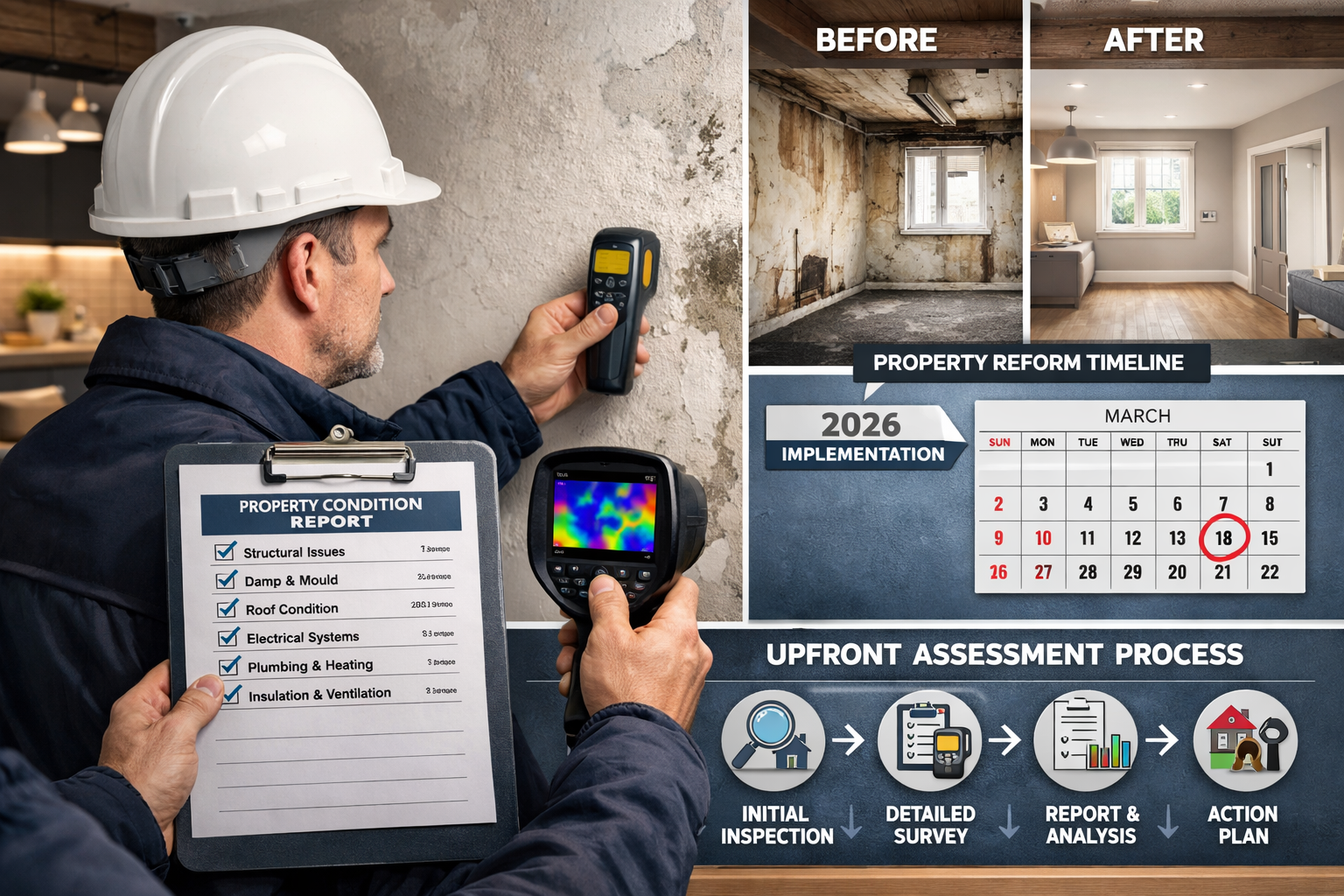
The government's consultation on homebuying and selling reform represents the most comprehensive overhaul of the UK property transaction system in modern history. At its core, the proposal seeks to address longstanding inefficiencies that have plagued the market for decades—particularly the high rate of failed transactions and the lack of transparency that leaves buyers making offers on properties without adequate information.
The Current State of Property Transactions
Under the existing system, property surveys typically occur after a buyer has made an offer and committed emotionally and financially to a purchase. This creates a problematic dynamic where critical structural issues may only surface late in the process, leading to renegotiations, reduced offers, or complete transaction failures. Currently, sellers face average costs of approximately £800 for failed transactions[2], representing significant financial waste across the market.
The traditional timeline places surveyors in a reactive position, responding to buyer requests after offers are accepted. This approach has several drawbacks:
- Limited market transparency before offers are made
- High transaction failure rates due to late-discovered issues
- Inefficient use of professional resources across multiple failed attempts
- Extended transaction timelines averaging several months
- Buyer frustration with unexpected survey findings
For building surveyors, this has meant unpredictable workflow patterns, with demand concentrated around offer acceptance rather than distributed throughout the sales process. Many properties receive multiple surveys from different potential buyers, creating redundant work and inefficiency.
The Mandatory Upfront Assessment Model
The proposed reforms fundamentally restructure this timeline by requiring sellers and estate agents to work with conveyancers and surveyors to carry out searches and a property condition assessment prior to property listing[2]. This represents a complete reversal of the current process, with profound implications for surveying practices.
Under the new framework, sellers would be required to commission a comprehensive property condition assessment before their property can be marketed. This assessment would be:
✅ Tailored to property age and type, ensuring appropriate depth of investigation
✅ Conducted by qualified professionals meeting mandatory standards
✅ Made available to all potential buyers from the outset
✅ Bundled with complementary information including legal documentation and searches
✅ Standardized across the market to ensure consistency and comparability
The government consultation explicitly outlines that this upfront information package would include[2]:
| Information Category | Components |
|---|---|
| Legal Documentation | Title information, seller identity verification, leasehold terms and charges, building safety information |
| Standard Searches | Local authority searches, drainage and water searches, environmental searches |
| Property Assessment | Age and type-appropriate condition assessment, structural evaluation, defect identification |
| Additional Details | Flood risk information, floor plans, energy performance certificates |
This comprehensive approach aims to provide buyers with a complete picture of the property before they make offers, reducing the likelihood of surprises and transaction failures. For surveyors, this creates a fundamentally different engagement model—working for sellers rather than buyers, and conducting assessments before market interest has been established rather than after.
Implementation Timeline and Government Approach
Recognizing the magnitude of these changes, the government has explicitly stated that implementation "would not happen immediately" and plans to "work with industry to understand how and when this should be introduced"[2]. This acknowledgment reflects awareness of the substantial capacity, training, and infrastructure development required across the surveying sector.
The Royal Institution of Chartered Surveyors (RICS) has been actively engaged with government throughout the consultation process, providing crucial industry perspective. RICS has been "clear with government that, particularly in relation to reforms to upfront information, a minimum 24-month implementation period will be essential"[3] to allow for:
🔹 Capacity building across surveying practices
🔹 Standard development for assessment methodologies
🔹 Guidance creation for practitioners
🔹 Technology infrastructure deployment
🔹 Professional training and qualification programs
This realistic timeline recognizes that the surveying industry cannot simply flip a switch and accommodate a potential tenfold increase in demand overnight. Strategic planning, resource allocation, and systematic preparation will be essential for successful implementation.
Analyzing the Impact of Homebuying Reforms on Building Surveyors: Mandatory Upfront Condition Assessments in 2026
The Impact of Homebuying Reforms on Building Surveyors: Mandatory Upfront Condition Assessments in 2026 manifests across multiple dimensions—from business economics and operational workflows to professional standards and competitive dynamics. Understanding these impacts is crucial for surveying practices preparing for the transition.
Financial Impact and Business Model Transformation
Perhaps the most striking aspect of the reforms is the projected tenfold increase in average survey spending per property, from approximately £38 to £380[2]. This dramatic shift reflects the transition from a market where many properties receive no formal survey to one where every listed property requires a comprehensive condition assessment.
For individual surveying practices, this represents both opportunity and challenge:
Opportunity Factors:
- 💰 Increased revenue per transaction with higher-value assessments
- 📊 More predictable workflow tied to listing rather than offers
- 🎯 Expanded market reach as surveys become universal rather than selective
- 🤝 New client relationships with sellers and estate agents
- 📈 Market growth as overall transaction volumes increase
Challenge Factors:
- ⚠️ Capacity constraints requiring significant expansion
- 💼 Recruitment and training demands for qualified surveyors
- 🔧 Technology investment in digital reporting and workflow systems
- 📋 Quality assurance requirements under mandatory standards
- ⏱️ Timeline pressures for pre-listing completion
The government's impact assessment projects that while survey costs for sellers will increase substantially (to approximately £710 in fixed costs including the £380 property condition assessment), overall transaction costs are expected to fall due to reduced failures and increased efficiency[2]. Conveyancing costs for sellers are expected to decrease by £250 due to increased competition, while buyer conveyancing costs should fall by £340[2].
For surveyors, this creates a fundamentally different revenue model. Rather than competing for individual buyer instructions after offers are accepted, practices will need to develop relationships with sellers, estate agents, and conveyancers to secure instructions at the pre-listing stage. This may favor larger, more established practices with existing market relationships, though it also creates opportunities for specialized providers focused on efficient, standardized assessments.
Operational and Workflow Implications
The shift to mandatory upfront assessments fundamentally changes when and how building surveyors operate within the property transaction timeline. Current workflows are heavily concentrated around offer acceptance, with surveyors responding to buyer instructions within tight timeframes to avoid delaying transactions.
The new model distributes this demand differently:
Traditional Timeline:
- Property listed without survey
- Buyer makes offer
- Offer accepted
- Buyer instructs surveyor
- Survey conducted (1-2 weeks)
- Report delivered
- Potential renegotiation or withdrawal
Reformed Timeline:
- Seller instructs surveyor before listing
- Upfront assessment conducted
- Property listed with assessment available
- Buyers review assessment before offering
- Offers made with full knowledge
- Reduced post-offer survey demand
- Faster transaction completion
This timeline shift has several operational implications for surveying practices:
🔄 Demand predictability: Survey demand will correlate with listing intentions rather than offer acceptances, potentially providing more advance notice and smoother workflow planning.
📅 Seasonal patterns: The traditional spring/summer listing surge may create more pronounced capacity challenges as sellers prepare properties for market simultaneously.
🤝 Client relationship changes: Surveyors will need to develop stronger relationships with estate agents and sellers rather than focusing primarily on buyer-side work.
📱 Digital delivery requirements: With assessments available to multiple potential buyers, efficient digital delivery and presentation become crucial.
⚡ Turnaround expectations: Sellers preparing to list may have different timeline expectations than buyers racing to complete purchases, potentially allowing for more measured assessment processes.
The industry is already anticipating these changes, with forecasts indicating "an uplift in volumes across both lending and surveys" for 2026, and lenders projecting increased volumes with a strong start to the year[1]. This suggests that surveying practices are already experiencing early indicators of the coming transformation, even before formal implementation.
Professional Standards and Qualification Requirements
The government consultation proposes mandatory qualifications for estate agents, and by extension, quality standards for surveyors and conveyancers involved in the upfront assessment process[2][5]. This elevation of professional standards represents a significant shift toward greater regulation and accountability in the property transaction ecosystem.
For building surveyors, this likely means:
Enhanced Qualification Pathways:
- 🎓 Specific credentials for upfront condition assessments
- 📚 Continuing professional development (CPD) requirements
- 🏆 Quality assurance and peer review processes
- 📋 Standardized reporting formats and methodologies
- ✅ Accreditation schemes for approved providers
RICS has offered to support government with research to better understand industry capacity and resourcing, while continuing to "stress the importance of a clear, realistic timetable so surveyors and businesses can plan and prepare effectively"[3]. This collaborative approach suggests that professional bodies will play a central role in developing the standards and frameworks that govern upfront assessments.
The emphasis on mandatory qualifications may create barriers to entry for less experienced practitioners while providing competitive advantages to established, credentialed surveyors. Practices will need to invest in ensuring their teams meet whatever qualification standards are ultimately adopted, potentially requiring additional training, examination, or certification processes.
For homeowners seeking surveying services, these enhanced standards should provide greater confidence in the quality and reliability of condition assessments. Understanding what different survey levels entail becomes even more important as the market transitions to mandatory upfront assessments.
Market Capacity and Resource Challenges
One of the most pressing concerns surrounding the Impact of Homebuying Reforms on Building Surveyors: Mandatory Upfront Condition Assessments in 2026 is whether the industry has sufficient capacity to meet the dramatically increased demand. RICS has specifically highlighted capacity and resource concerns, offering to support government research to better understand these constraints[3].
The capacity challenge operates on multiple levels:
Workforce Capacity:
- Current surveyor availability versus projected demand
- Training pipeline for new entrants to the profession
- Retention of experienced practitioners
- Geographic distribution of surveying resources
- Specialization in different property types and ages
Technological Capacity:
- Digital reporting and delivery systems
- Workflow management platforms
- Integration with estate agent and conveyancer systems
- Data storage and accessibility infrastructure
- Quality assurance and review tools
Operational Capacity:
- Physical office and administrative infrastructure
- Scheduling and logistics management
- Client communication and relationship management
- Compliance and regulatory reporting
- Financial and business management systems
The 24-month minimum implementation period advocated by RICS[3] provides crucial time for the industry to address these capacity constraints systematically rather than through crisis response. Surveying practices that begin capacity planning now—even before final reform details are confirmed—will be better positioned to capitalize on the opportunities while managing the challenges.
Some practices may choose to specialize in upfront condition assessments, developing streamlined processes and economies of scale. Others may maintain broader service offerings while adding upfront assessments to their portfolio. The market will likely see consolidation in some areas and new entrants in others as the competitive landscape adjusts to the new reality.
Strategic Preparation for Building Surveyors in 2026

With implementation on the horizon, surveying practices face critical decisions about how to prepare for the Impact of Homebuying Reforms on Building Surveyors: Mandatory Upfront Condition Assessments in 2026. Strategic preparation across multiple dimensions will separate thriving practices from those struggling to adapt.
Capacity Building and Workforce Development
The most fundamental preparation challenge involves ensuring adequate surveyor capacity to meet projected demand increases. Practices should consider:
Recruitment Strategies:
- 👥 Early talent pipeline development through partnerships with universities and training programs
- 🎯 Competitive compensation packages to attract qualified professionals in a tightening market
- 🌍 Geographic expansion to serve broader markets and balance regional demand
- 🤝 Associate and partnership models to scale without full employment overhead
- 📱 Remote and flexible working arrangements to access wider talent pools
Training and Development:
- 📖 Upfront assessment methodology training for existing staff
- 🏅 Qualification and certification programs aligned with emerging standards
- 💻 Technology proficiency in digital reporting and workflow tools
- 📋 Quality assurance processes and peer review systems
- 🔄 Cross-training to increase flexibility and resilience
The surveying sector's forecast for "renewed demand" in 2026[1] suggests that forward-thinking practices are already beginning this capacity building process. Those who wait until reforms are finalized may find themselves competing for limited talent in a suddenly tight labor market.
Technology and Digital Infrastructure Investment
The shift to upfront assessments that must be accessible to multiple potential buyers demands robust digital infrastructure. Surveying practices should evaluate:
Core Technology Requirements:
- 💻 Digital reporting platforms that produce professional, accessible condition assessments
- 📱 Mobile survey tools for efficient on-site data collection and documentation
- 🔐 Secure document management systems for storing and sharing sensitive property information
- 🔗 Integration capabilities with estate agent and conveyancer platforms
- 📊 Analytics and workflow management tools for capacity planning and quality control
Enhanced Capabilities:
- 📸 Advanced imaging technology including thermal cameras and drones for comprehensive property documentation
- 🤖 Automation tools for report generation and standardized content
- 📈 Client portals for transparent communication and document access
- 💳 Payment and invoicing systems adapted to seller-side engagement model
- 🎓 Training and knowledge management platforms for consistent quality
Investment in technology should be viewed not as optional enhancement but as essential infrastructure for operating in the reformed market. Practices that develop streamlined, digital-first workflows will be able to handle higher volumes more efficiently while maintaining quality standards.
For those seeking comprehensive condition survey reports, the technology infrastructure supporting these assessments becomes a key differentiator in service quality and accessibility.
Business Model and Service Offering Adaptation
The transition from buyer-instructed to seller-instructed surveys requires fundamental business model adjustments:
Client Relationship Development:
- 🏘️ Estate agent partnerships as primary referral sources for pre-listing assessments
- 📋 Conveyancer collaboration for integrated information package delivery
- 🏡 Direct seller marketing to property owners preparing to list
- 🔄 Repeat business strategies for property investors and developers
- 🌟 Brand positioning as trusted upfront assessment providers
Service Portfolio Evolution:
- 📊 Standardized upfront assessments as core offering
- 🔍 Enhanced survey options for buyers seeking additional detail beyond upfront reports
- 🏗️ Pre-listing improvement consultation helping sellers address issues before assessment
- ⚖️ Dispute resolution support when assessment findings are contested
- 📈 Portfolio assessment services for multi-property owners
Pricing and Packaging:
- 💰 Transparent pricing aligned with property type and complexity
- 📦 Bundled packages including assessment, searches, and additional services
- ⏱️ Express service options for sellers with urgent listing timelines
- 🎁 Volume discounts for property professionals and investors
- 💳 Flexible payment terms accommodating seller cash flow considerations
The shift in client base from buyers to sellers fundamentally changes the value proposition and marketing approach. Sellers are motivated by different factors—primarily the desire to list quickly and achieve maximum sale price—compared to buyers focused on avoiding costly surprises. Surveying practices must adapt their messaging and service design accordingly.
Understanding whether you need a survey when buying a house remains important for buyer education, but the primary business development focus shifts to seller and agent engagement.
Quality Assurance and Professional Standards Compliance
As mandatory qualifications and quality standards emerge, surveying practices must develop robust quality assurance frameworks:
Quality Management Systems:
- ✅ Standardized assessment protocols ensuring consistency across surveyors
- 📋 Peer review processes for complex or high-value properties
- 📊 Performance metrics tracking accuracy, completeness, and client satisfaction
- 🔄 Continuous improvement mechanisms based on feedback and outcomes
- 📚 Documentation and record-keeping for compliance and professional indemnity
Professional Development:
- 🎓 Ongoing CPD programs aligned with evolving standards
- 🏆 Accreditation maintenance as requirements are formalized
- 👥 Industry engagement through RICS and other professional bodies
- 📖 Best practice sharing across the profession
- 🔍 Regulatory compliance monitoring and adaptation
Risk Management:
- ⚖️ Professional indemnity insurance appropriate for upfront assessment exposure
- 📝 Clear scope and limitation documentation in assessment reports
- 🤝 Client communication protocols managing expectations and responsibilities
- 🔐 Data protection and privacy compliance for sensitive property information
- ⚠️ Dispute resolution procedures for contested findings
The elevation of professional standards represents an opportunity for credible, established practices to differentiate themselves in an increasingly regulated market. Those who embrace quality assurance as a competitive advantage rather than viewing it as mere compliance burden will be better positioned for long-term success.
Strategic Partnerships and Market Positioning
Success in the reformed market will increasingly depend on strategic relationships and clear market positioning:
Partnership Development:
- 🏢 Estate agency networks as primary instruction sources
- ⚖️ Conveyancing firms for integrated service delivery
- 🏗️ Property developers requiring volume assessment services
- 💼 Property management companies with ongoing portfolio needs
- 🏦 Mortgage lenders seeking reliable assessment partners
Market Differentiation:
- ⚡ Speed and efficiency through optimized processes
- 🎯 Specialization in specific property types or geographic areas
- 💎 Premium positioning for complex or high-value properties
- 💰 Value positioning for cost-conscious market segments
- 🌟 Technology leadership through innovative tools and delivery
Brand Building:
- 📱 Digital presence optimized for seller and agent discovery
- ⭐ Reputation management through reviews and testimonials
- 📰 Thought leadership on reform implications and best practices
- 🎓 Educational content helping sellers understand assessment value
- 🤝 Community engagement building local market recognition
Practices that establish themselves as preferred upfront assessment providers before full reform implementation will enjoy significant first-mover advantages. Early partnerships with estate agents and conveyancers create relationship momentum that becomes difficult for later entrants to overcome.
For those seeking qualified building surveyors in London and other major markets, the brand recognition and partnership networks developed during this transition period will be crucial differentiators.
Regional Considerations and Market Variations
While the Impact of Homebuying Reforms on Building Surveyors: Mandatory Upfront Condition Assessments in 2026 will be felt nationwide, regional variations in property markets, existing practices, and local dynamics will create different challenges and opportunities across the UK.
London and Major Urban Markets
High-value, high-volume markets like London face unique considerations:
Market Characteristics:
- 🏙️ High property values justifying comprehensive assessments
- 📊 Large transaction volumes creating substantial capacity demands
- 🏢 Diverse property types from period conversions to new developments
- 🌍 International buyers potentially unfamiliar with UK survey practices
- ⏱️ Fast-paced markets requiring efficient turnaround times
Surveyor Implications:
- Greater concentration of surveying practices providing competitive options
- Higher baseline survey costs reflecting property values and complexity
- Established relationships between agents, conveyancers, and surveyors
- Technology infrastructure generally more advanced
- Regulatory scrutiny and professional standards already elevated
Practices operating in Central London, West London, and areas like Fulham or Islington may find the transition smoother due to existing infrastructure and client sophistication, though capacity pressures will be intense.
Regional and Rural Markets
Outside major urban centers, different dynamics apply:
Market Characteristics:
- 🏡 Lower property values affecting assessment economics
- 📉 Smaller transaction volumes creating different capacity dynamics
- 🏘️ More homogeneous property stock allowing greater standardization
- 👥 Closer-knit professional networks among agents, conveyancers, and surveyors
- ⏰ More relaxed transaction timelines potentially accommodating assessment requirements more easily
Surveyor Implications:
- Fewer surveying practices creating potential capacity constraints
- Need for efficient, cost-effective assessment models
- Opportunity for practices to expand geographic coverage
- Greater reliance on local reputation and relationships
- Potential for mobile or regional service models
Markets in areas like Hertfordshire, Surrey, or Watford may see greater impact from capacity constraints, as fewer practices serve larger geographic areas. Strategic expansion or partnership models may be necessary to meet demand.
New Build and Development Markets
Properties sold by developers present distinct considerations:
Market Characteristics:
- 🏗️ New construction with different assessment requirements
- 📋 Developer warranties and NHBC coverage
- 🔍 Snagging and quality issues as primary concerns
- 📦 Volume sales from large developments
- ⚖️ Different legal frameworks for new build transactions
Surveyor Implications:
- Specialized assessment protocols for new construction
- Relationship development with developers and house builders
- Volume assessment opportunities for large developments
- Different risk profiles and professional indemnity considerations
- Potential for standardized assessments within developments
Understanding whether you need a survey on a new build becomes even more relevant as upfront assessments become mandatory, with surveyors needing to clearly communicate what new build assessments entail versus traditional property surveys.
Long-Term Industry Evolution and Future Outlook

Beyond the immediate implementation challenges, the Impact of Homebuying Reforms on Building Surveyors: Mandatory Upfront Condition Assessments in 2026 signals broader evolution in the surveying profession and property transaction ecosystem.
Professionalization and Market Maturation
The mandatory qualification requirements and quality standards represent a significant step toward greater professionalization:
Industry Evolution:
- 📈 Elevated professional status for qualified surveyors
- 🎓 Clearer career pathways and progression frameworks
- 💼 Improved compensation reflecting enhanced qualifications and responsibilities
- 🏆 Greater public recognition of surveyor value and expertise
- 📊 Industry consolidation as smaller practices merge or exit
This professionalization trend mirrors developments in other regulated industries, where mandatory standards initially create disruption but ultimately strengthen the profession and improve consumer outcomes.
Technology Integration and Innovation
The upfront assessment model will accelerate technology adoption across the surveying sector:
Emerging Technologies:
- 🤖 Artificial intelligence for defect identification and risk assessment
- 📱 Mobile and cloud platforms for seamless data collection and reporting
- 🔗 Blockchain for secure, immutable property condition records
- 📊 Big data analytics for comparative assessment and risk profiling
- 🥽 Virtual and augmented reality for remote property inspection and buyer visualization
Practices that embrace technology innovation will gain efficiency advantages while potentially offering enhanced services that differentiate them in an increasingly competitive market.
Market Efficiency and Transaction Improvements
The ultimate goal of the reforms—creating a more efficient, transparent property market—should benefit all participants:
Expected Outcomes:
- ⏱️ Faster transaction completions with upfront information available
- 💰 Reduced transaction failures saving costs for all parties
- 📊 Greater price transparency based on known property conditions
- 🤝 Improved buyer confidence from comprehensive upfront information
- 📈 Increased market activity as friction reduces
For surveyors, a more efficient market should translate to higher volumes and more predictable workflows, even as the nature of individual instructions changes. The industry forecasts for 2026 already anticipate this growth, with expectations of "reform, recovery, and renewed demand"[1] driving positive momentum.
Ongoing Reform and Adaptation
The 2026 reforms are unlikely to be the final word on property transaction evolution. Surveyors should anticipate:
Future Developments:
- 🔄 Iterative refinement of standards and requirements based on implementation experience
- 🌍 International best practice adoption from other jurisdictions
- 📱 Digital transformation of the entire transaction process
- ⚖️ Enhanced consumer protection frameworks
- 🏗️ Integration with building safety and energy efficiency initiatives
Practices that develop adaptive capacity and maintain engagement with industry bodies and regulatory developments will be better positioned to navigate ongoing evolution beyond the initial reform implementation.
Understanding the differences between Level 2 and Level 3 surveys will remain important as the market determines what level of assessment becomes standard for upfront requirements, with potential variations based on property characteristics.
Conclusion: Preparing for Transformation
The Impact of Homebuying Reforms on Building Surveyors: Mandatory Upfront Condition Assessments in 2026 represents the most significant transformation of the UK property transaction process in modern history. For building surveyors, this shift from post-offer buyer instructions to pre-listing seller requirements fundamentally changes business models, operational workflows, and professional responsibilities.
The projected tenfold increase in average survey spending per property—from £38 to £380[2]—illustrates the magnitude of the opportunity, while the emphasis on mandatory qualifications and quality standards highlights the professionalization trajectory of the industry. With RICS advocating for a minimum 24-month implementation period[3], surveying practices have a crucial window to prepare strategically rather than react frantically.
Success in this transformed market will require:
✅ Strategic capacity building through recruitment, training, and workforce development
✅ Technology investment in digital reporting, workflow management, and client delivery systems
✅ Business model adaptation to seller-focused engagement and estate agent partnerships
✅ Quality assurance frameworks ensuring compliance with emerging standards
✅ Market positioning that differentiates practices in an increasingly competitive landscape
The surveying sector's forecast for "renewed demand" and volume growth in 2026[1] suggests that early movers are already positioning for success. Practices that begin preparation now—even before final reform details are confirmed—will enjoy significant advantages over those who wait.
Actionable Next Steps for Building Surveyors
Immediate Actions (Next 3 Months):
- 📊 Conduct capacity assessment of current workforce and infrastructure
- 💼 Evaluate technology platforms for digital reporting and workflow management
- 🤝 Initiate conversations with estate agents and conveyancers about partnership opportunities
- 📚 Engage with RICS and professional bodies on reform developments
- 💰 Model financial scenarios for different demand and pricing assumptions
Medium-Term Preparation (3-12 Months):
- 👥 Begin recruitment and training programs for additional surveyor capacity
- 💻 Implement core technology infrastructure for upfront assessment delivery
- 📋 Develop standardized assessment protocols aligned with emerging best practices
- 🎯 Refine market positioning and service offerings for seller-focused model
- 🏆 Pursue relevant qualifications and accreditations for team members
Long-Term Strategic Planning (12-24 Months):
- 🔄 Scale operations to meet projected demand increases
- 🌟 Establish market leadership through partnerships and brand building
- 📈 Optimize workflows based on early implementation experience
- 🤖 Advance technology capabilities with AI, analytics, and automation
- 🎓 Contribute to industry standards development through professional body engagement
The transformation ahead is substantial, but so is the opportunity. Building surveyors who embrace the change, prepare strategically, and position themselves as trusted upfront assessment providers will thrive in the reformed market. Those who resist or delay adaptation risk being left behind as the industry evolves.
For property buyers and sellers, these reforms promise a more transparent, efficient transaction process with fewer surprises and faster completions. For surveyors, they represent a chance to elevate the profession, expand market reach, and demonstrate the critical value that comprehensive property condition assessments provide to all market participants.
The journey to mandatory upfront condition assessments in 2026 has begun. The question for building surveyors is not whether to prepare, but how quickly and comprehensively to do so. With strategic planning, operational adaptation, and professional commitment, the surveying sector can not only navigate this transformation successfully but emerge stronger, more professional, and better positioned to serve the evolving needs of the UK property market.
For those seeking professional surveying services during this transition period, choosing qualified chartered surveyors who are actively preparing for these reforms ensures access to forward-thinking professionals committed to excellence in the evolving market landscape.
References
[1] Surveying In 2026 Reform Recovery And Renewed Demand – https://www.lrg.co.uk/news-and-insights/surveying-in-2026-reform-recovery-and-renewed-demand/
[2] Home Buying And Selling Reform – https://www.gov.uk/government/consultations/home-buying-and-selling-reform/home-buying-and-selling-reform
[3] Home Buying And Selling Reform Hub – https://www.rics.org/news-insights/current-topics-campaigns/home-buying-and-selling-reform-hub
[4] What Sort Of Survey Should I Have – https://hoa.org.uk/advice/guides-for-homeowners/i-am-buying/what-sort-of-survey-should-i-have/
[5] Home Buying Selling Reforms – https://www.lawsociety.org.uk/topics/property/home-buying-selling-reforms
[6] What The Agents Say 2026 Housing Market Predictions – https://mortgagesoup.co.uk/what-the-agents-say-2026-housing-market-predictions/
