
Social landlords face a stark reality in 2026: Phase 2 of Awaab's Law now mandates strict timelines for electrical and fire hazard remediation, with emergency defects requiring completion within just 24 hours or provision of alternative accommodation at the landlord's expense.[2][3] This expansion transforms how private rental sector (PRS) portfolios must approach building surveys, demanding comprehensive checklists that capture not only visible defects but also person-centred risk assessments tailored to individual tenant circumstances.
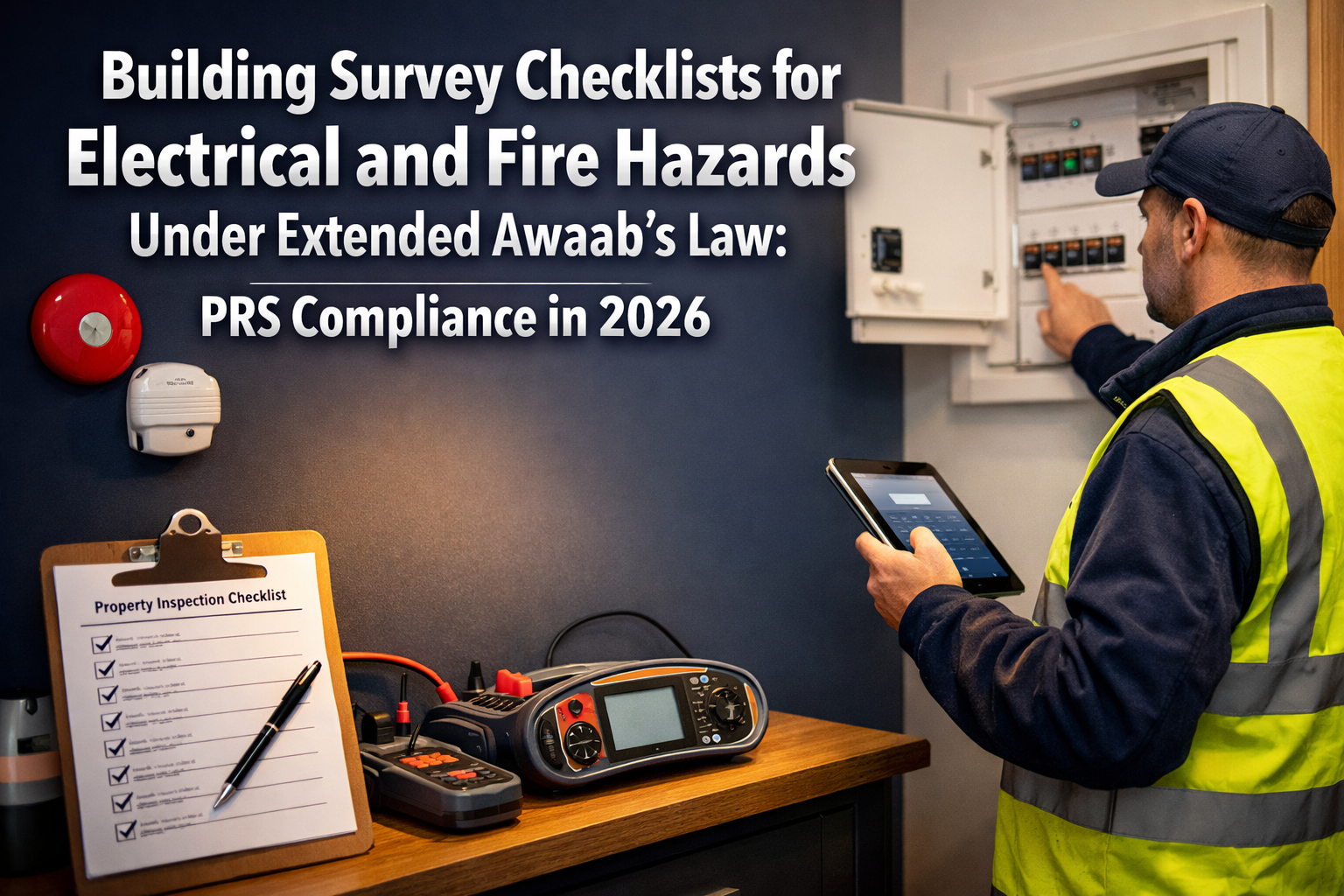
Building Survey Checklists for Electrical and Fire Hazards Under Extended Awaab's Law: PRS Compliance in 2026 Rental Portfolios requires landlords and surveyors to adopt enhanced protocols that go far beyond traditional property inspections. With tenant demand recovering across the UK rental market, investors cannot afford compliance failures that trigger penalties, reputational damage, or mandatory accommodation costs.
Key Takeaways
- ⚡ Phase 2 Implementation (2026): Electrical and fire hazards now fall under Awaab's Law, requiring 24-hour emergency response and 10-day investigation timelines[2][3]
- 📋 Enhanced Checklist Requirements: Surveyors must document specific electrical hazards (exposed wiring, scorch marks, sparking) and fire safety defects (blocked escape routes, defective fire doors)[5][8]
- 👥 Person-Centred Assessments: Hazard severity must consider individual tenant vulnerabilities—elderly or asthmatic tenants elevate Category 2 hazards to "significant" status[3]
- 🏢 Portfolio-Wide Impact: Stock condition surveys are accelerating as landlords proactively identify hazards before escalation across entire rental portfolios[2]
- 📅 Phased Expansion: Phase 3 (2027) will cover all remaining HHSRS hazards except overcrowding, including asbestos and carbon monoxide detection[3][9]
Understanding Awaab's Law Phase 2: Electrical and Fire Hazard Expansion
The 2026 expansion of Awaab's Law represents a fundamental shift in rental property compliance. Named after two-year-old Awaab Ishak, who died from prolonged exposure to mould in social housing, the legislation initially focused on damp, mould, and emergency hazards in Phase 1. Phase 2 now brings electrical and fire hazards into scope, creating urgent compliance obligations for landlords managing PRS portfolios.[2]
Critical Timeline Requirements
The law establishes three distinct response timelines that surveyors must understand when documenting hazards:
| Hazard Classification | Investigation Deadline | Works Commencement | Completion Requirement |
|---|---|---|---|
| Emergency Hazard | Immediate assessment | Within 24 hours | Complete within 24 hours OR provide alternative accommodation[3][9] |
| Significant Hazard | 10 working days | 5 working days after investigation | Begin safety works within 5 days; complex works within 12 weeks[2][3] |
| Written Summary | N/A | 3 working days after investigation completion | Tenant notification required[3] |
These timelines apply specifically to hazards that meet defined criteria: they must exist in buildings or land the landlord controls, result from defects or disrepair, fall within the landlord's responsibility to fix, not be caused by tenant breach, and present significant or emergency risk.[9]
What Qualifies as an Emergency Electrical or Fire Hazard?
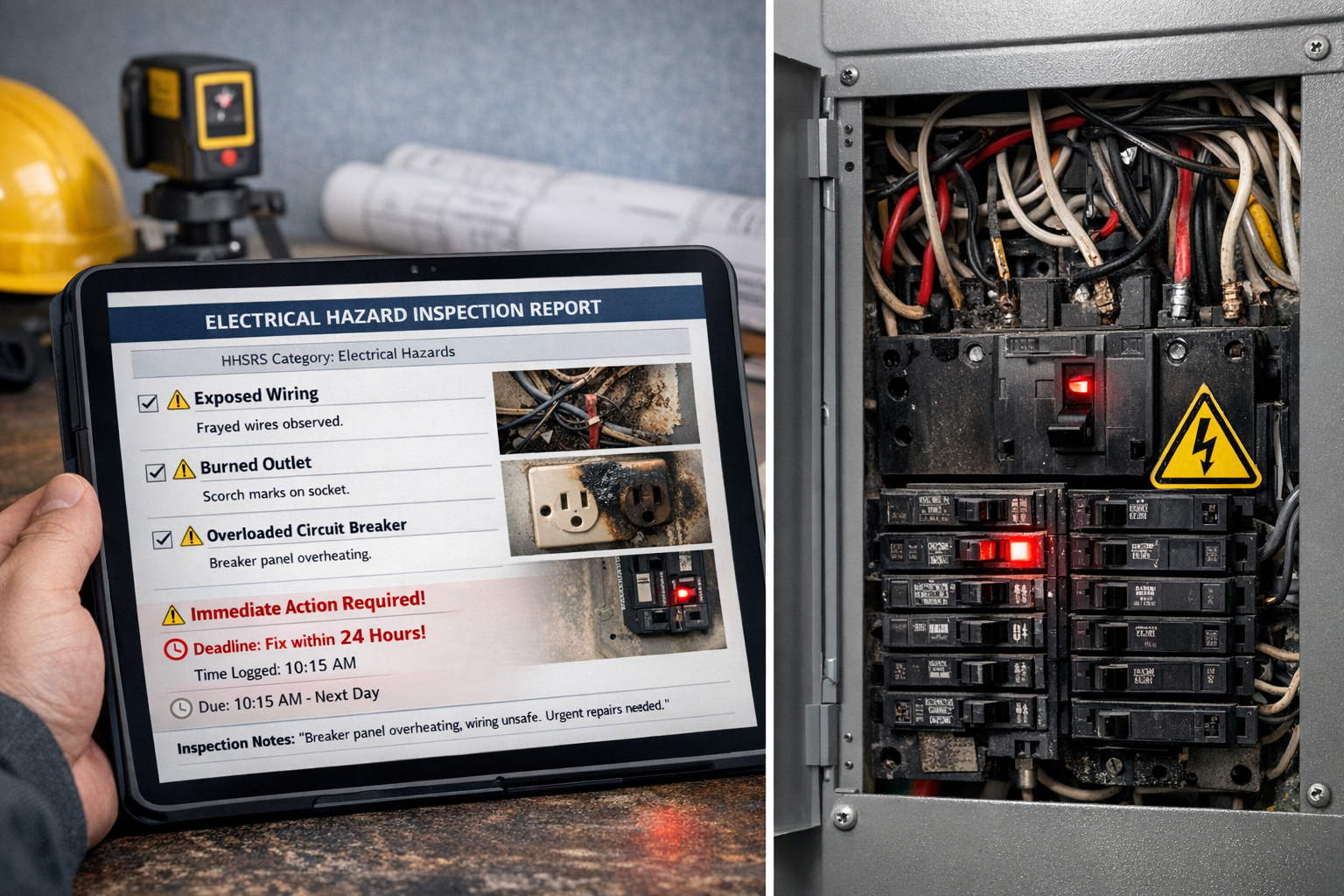
Emergency electrical hazards requiring 24-hour response include:[8]
- ⚡ Exposed live wiring accessible to tenants
- 🔥 Burning smells emanating from electrical outlets
- 🖤 Scorch marks around switches or sockets
- ⚡ Sparking from electrical fixtures or appliances
Emergency fire hazards demanding immediate action encompass:[5]
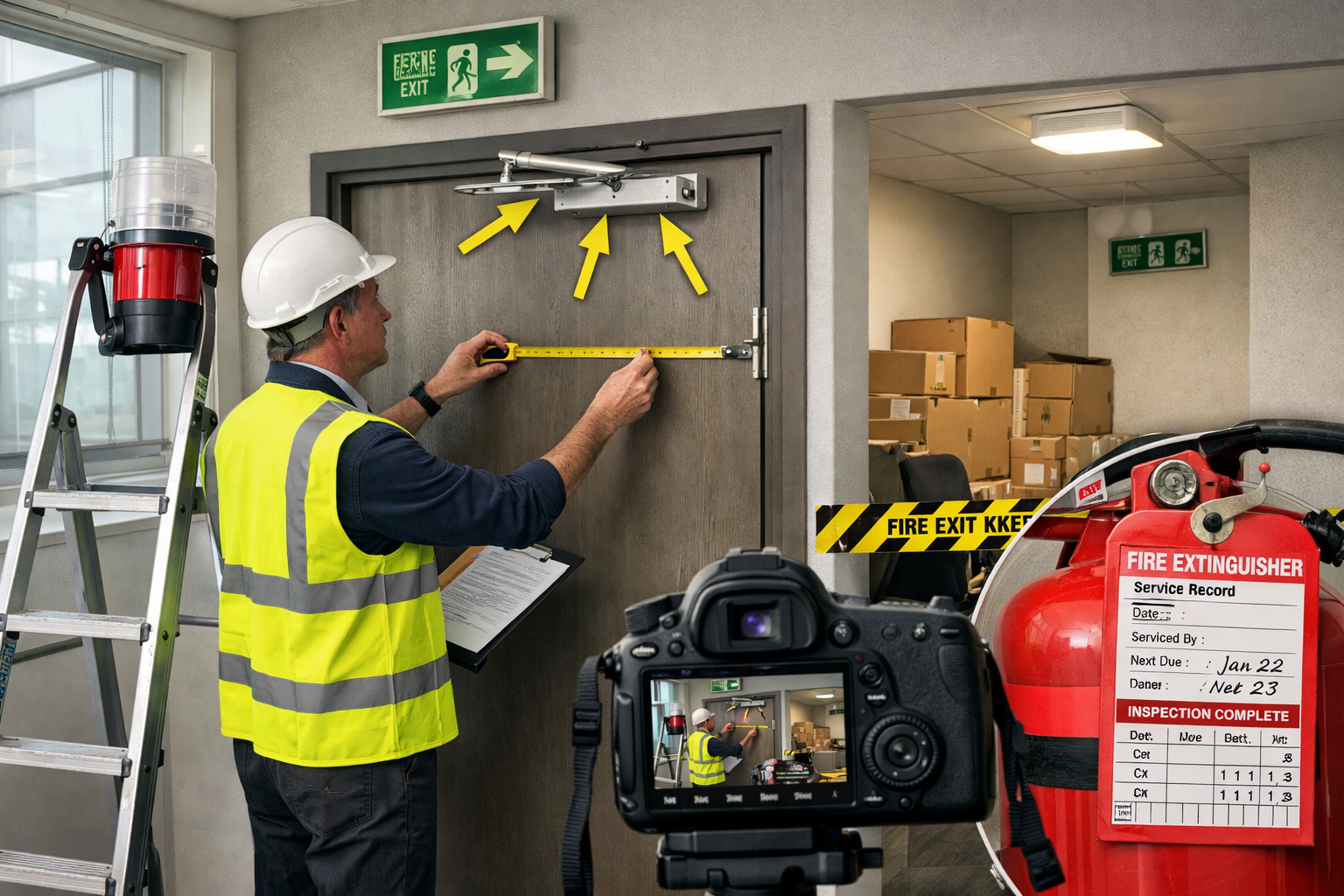
- 🚪 Completely defective fire doors that won't close or latch
- 🚫 Blocked primary escape routes preventing evacuation
- 🔕 Non-functional smoke detection systems in properties requiring them
- 🧯 Missing or expired fire extinguishers in HMOs (Houses in Multiple Occupation)
For comprehensive guidance on what surveyors examine during property assessments, review what a surveyor checks during inspections.
Building Survey Checklists for Electrical and Fire Hazards Under Extended Awaab's Law: Essential Documentation Protocols
Creating effective Building Survey Checklists for Electrical and Fire Hazards Under Extended Awaab's Law: PRS Compliance in 2026 Rental Portfolios requires systematic documentation that captures both physical defects and contextual risk factors. Enhanced Level 3 surveyor protocols are now essential for electrical, fire, and excess heat risks in rental properties.[1]
Electrical Hazard Checklist Components
A compliant electrical hazard checklist must include:
Visual Inspection Elements:
- ✅ Condition of consumer unit (fuse box/circuit breaker panel)
- ✅ Evidence of DIY electrical work or non-compliant installations
- ✅ Presence and condition of RCD (Residual Current Device) protection
- ✅ Socket and switch plate integrity (cracks, looseness, discoloration)
- ✅ Visible wiring condition in accessible areas
- ✅ Outdoor electrical installations and weatherproofing
- ✅ Light fixture security and appropriate bulb wattage
Testing and Certification Requirements:
- 📄 Current EICR (Electrical Installation Condition Report) status
- 📄 Date of last electrical safety inspection (required every 5 years for PRS)
- 📄 Outstanding remedial works from previous inspections
- 📄 PAT testing records for landlord-supplied appliances
Person-Centred Risk Factors:
- 👶 Presence of young children (socket height and protection concerns)
- 👴 Elderly tenants with mobility limitations (emergency response capability)
- ♿ Disabled tenants requiring powered medical equipment
- 🏠 Home-working tenants with increased electrical load
Understanding the difference between inspection levels is crucial—learn more about Level 2 vs Level 3 survey distinctions to determine appropriate assessment depth.
Fire Safety Checklist Components
Fire Detection and Alarm Systems:
- 🔔 Smoke alarm presence in each storey and habitable room
- 🔔 Carbon monoxide detector presence (required near combustion appliances)
- 🔔 Alarm functionality testing and battery condition
- 🔔 Interconnected alarm systems in HMOs
- 🔔 Heat detector installation in kitchens
Escape Routes and Fire Doors:
- 🚪 Fire door condition (gaps, intumescent strips, self-closing mechanisms)
- 🚪 Escape route clearance (hallways, stairwells, external exits)
- 🚪 Emergency lighting functionality in communal areas
- 🚪 Window escape viability from upper floors
- 🚪 External fire escape accessibility and maintenance
Fire Prevention Measures:
- 🧯 Fire blanket presence and accessibility in kitchens
- 🧯 Fire extinguisher provision (HMO requirements)
- 🧯 Combustible material storage near heat sources
- 🧯 Electrical appliance safety (overloaded sockets, extension leads)
- 🧯 Gas safety certificate currency and appliance condition
For properties requiring extensive assessment, consider reviewing our comprehensive Level 3 building survey guide for detailed inspection methodologies.
Person-Centred Hazard Assessment Requirements
One of the most significant changes under Awaab's Law is the mandatory consideration of individual tenant circumstances when classifying hazard severity. A defect that might be Category 2 (non-urgent) under the Housing Health and Safety Rating System (HHSRS) could become "significant" requiring 10-day investigation if:[3]
- The tenant has respiratory conditions (asthma, COPD, bronchitis)
- Young children or infants reside in the property
- Elderly tenants have reduced mobility or cognitive impairment
- Pregnant women occupy the dwelling
- Immunocompromised individuals live in the household
This person-centred approach means surveyors must document tenant demographics and health vulnerabilities alongside physical defects—a practice that requires sensitive data handling and clear privacy protocols.
Implementing Compliant Survey Protocols Across PRS Portfolios
For landlords managing multiple properties, Building Survey Checklists for Electrical and Fire Hazards Under Extended Awaab's Law: PRS Compliance in 2026 Rental Portfolios must be systematically deployed across entire holdings. Stock condition surveys are accelerating as social and private landlords conduct comprehensive or 100 percent property assessments to proactively identify hazards before tenant reports trigger strict deadlines.[2]
Portfolio-Wide Compliance Strategies
Proactive Stock Condition Assessments:
Waiting for tenant reports is no longer viable under Awaab's Law's strict timelines. Leading landlords are implementing:
- 📊 Rolling inspection programs: Systematic surveys of 20-25% of portfolio annually
- 📊 Risk-based prioritization: Older properties and those with previous defect history surveyed first
- 📊 Digital documentation systems: Cloud-based platforms enabling real-time hazard tracking
- 📊 Tenant vulnerability registers: Confidential databases identifying high-risk occupants requiring priority attention
For commercial property portfolios, explore our commercial building survey services designed for multi-unit compliance.
Digital Tools and Technology Integration
Modern compliance demands digital solutions that enable:
✅ Mobile survey applications allowing on-site hazard documentation with photographs
✅ Automated deadline tracking triggering alerts for investigation and works commencement timelines
✅ Tenant communication portals providing written summaries within 3-day requirements
✅ Compliance dashboards giving portfolio managers real-time visibility of hazard status
✅ Historical defect databases tracking recurring issues and remediation effectiveness[10]
Surveyor Competency and Training Requirements
The expanded scope of Awaab's Law necessitates enhanced surveyor competency in electrical and fire safety assessment. While full EICR testing requires qualified electricians, building surveyors must:
- 🎓 Understand HHSRS methodology for electrical and fire hazard scoring
- 🎓 Recognize visual indicators of electrical defects requiring specialist referral
- 🎓 Assess fire door compliance with current Building Regulations
- 🎓 Evaluate escape route adequacy and emergency lighting requirements
- 🎓 Document person-centred risk factors sensitively and comprehensively
Many surveying firms are investing in cross-disciplinary training programs that bring electrical safety specialists and fire risk assessors together with building surveyors to ensure comprehensive hazard identification.[1]
Cost Implications and Budgeting for Compliance
The financial impact of Phase 2 compliance extends beyond survey costs:
Direct Compliance Costs:
- Building survey fees: £400-£1,200 per property depending on size and complexity
- EICR testing: £150-£300 per property
- Fire risk assessment: £200-£500 for standard rental properties
- Remedial works: Variable from £50 (smoke alarm installation) to £5,000+ (electrical rewiring)
Indirect Compliance Costs:
- Alternative accommodation provision during emergency remediation: £80-£150 per night
- Penalty fines for missed deadlines: Potentially unlimited under Housing Act enforcement
- Reputational damage affecting tenant retention and property values
- Insurance premium increases for non-compliant portfolios
Understanding survey costs is essential—review our comprehensive guide to building survey expenses for budget planning.
Preparing for Phase 3: Remaining HHSRS Hazards Coming in 2027
While 2026 focuses on electrical and fire hazards, Phase 3 implementation in 2027 will expand Awaab's Law to cover all remaining HHSRS hazards except overcrowding.[3][9] Forward-thinking landlords are already incorporating these future requirements into current survey protocols:
Phase 3 Hazards to Anticipate:
- 🏗️ Structural hazards: Collapse, falling elements, structural instability
- 🧪 Environmental hazards: Asbestos, lead paint, biocides, radiation
- 🌡️ Thermal hazards: Excess cold, excess heat (already partially covered)
- 💨 Air quality hazards: Carbon monoxide, volatile organic compounds
- 💧 Water quality hazards: Lead in water systems, legionella risks
- 🦠 Biological hazards: Pests, animal infestations (beyond current scope)
By expanding current checklists to capture these additional hazards during 2026 surveys, landlords can avoid duplicate inspection costs and demonstrate proactive compliance culture to regulators.
Integration with Broader Building Safety Regulations
Awaab's Law doesn't exist in isolation—it intersects with multiple regulatory frameworks:
- 🏢 Building Safety Act 2022: Higher-risk buildings (18m+ or 7+ storeys) face additional requirements
- 🔥 Fire Safety Act 2021: External wall systems and flat entrance doors now in scope
- ⚡ Electrical Safety Standards (Private Rented Sector) Regulations 2020: 5-year EICR requirement
- 🏠 Homes (Fitness for Human Habitation) Act 2018: Overlapping hazard coverage with different enforcement mechanisms
Effective Building Survey Checklists for Electrical and Fire Hazards Under Extended Awaab's Law: PRS Compliance in 2026 Rental Portfolios must cross-reference these intersecting requirements to ensure comprehensive compliance and avoid regulatory gaps.
For properties with specific structural concerns, our subsidence survey services provide specialized assessment capabilities.
Best Practices for Landlord-Surveyor Collaboration
Successful Awaab's Law compliance depends on effective partnership between property owners and surveying professionals:
Clear Scope Definition
Before commissioning surveys, landlords should:
✅ Specify Awaab's Law compliance as a primary survey objective
✅ Provide tenant vulnerability information (with appropriate consent and privacy safeguards)
✅ Share previous survey reports and remediation records
✅ Clarify emergency response protocols for immediate hazards discovered during inspection
✅ Establish communication channels for urgent findings requiring 24-hour response
Post-Survey Action Planning
When survey reports identify hazards:
1️⃣ Immediate triage: Classify hazards as emergency, significant, or routine
2️⃣ Deadline calculation: Establish investigation and works commencement dates
3️⃣ Contractor mobilization: Pre-qualified emergency contractors for 24-hour response
4️⃣ Tenant communication: Written summaries within 3 working days of investigation completion
5️⃣ Documentation retention: Comprehensive records demonstrating compliance timeline adherence
For properties undergoing renovation or conversion, consider snagging survey services to identify defects before tenant occupation.
Continuous Improvement and Lessons Learned
Leading landlords are establishing compliance review cycles that analyze:
- 📈 Hazard recurrence patterns across portfolio
- 📈 Effectiveness of remediation approaches
- 📈 Surveyor performance and hazard detection rates
- 📈 Tenant satisfaction with response timelines
- 📈 Cost-effectiveness of proactive versus reactive maintenance
This data-driven approach enables predictive maintenance strategies that identify properties at elevated risk before hazards develop, reducing emergency response costs and improving tenant safety outcomes.
Conclusion: Building a Compliant Future for Rental Portfolios
Building Survey Checklists for Electrical and Fire Hazards Under Extended Awaab's Law: PRS Compliance in 2026 Rental Portfolios represents more than regulatory box-ticking—it's a fundamental commitment to tenant safety and property quality that will define successful landlords in the evolving rental market. The 24-hour emergency response requirement and 10-day investigation timeline leave no room for complacency or outdated survey practices.[2][3]
The path forward requires:
🎯 Immediate action: Conduct comprehensive electrical and fire hazard assessments across all rental properties before tenant reports trigger strict deadlines
🎯 Systematic documentation: Implement digital survey tools that capture physical defects, person-centred risk factors, and compliance timeline tracking
🎯 Professional partnerships: Engage qualified surveyors with enhanced electrical and fire safety competencies appropriate for Awaab's Law requirements
🎯 Proactive planning: Prepare for Phase 3 expansion in 2027 by incorporating broader HHSRS hazards into current survey protocols
🎯 Continuous improvement: Establish review cycles that analyze hazard patterns and optimize remediation effectiveness across portfolios
The landlords who thrive under Awaab's Law will be those who view compliance not as burden but as competitive advantage—properties with documented safety excellence, rapid response capabilities, and tenant-centred risk management will command premium rents and superior retention rates in an increasingly quality-conscious rental market.
For landlords managing PRS portfolios in 2026, the question isn't whether to upgrade survey protocols—it's whether you'll lead or lag in the new compliance landscape. The 24-hour emergency deadline is already ticking.
Next Steps
Ready to ensure your rental portfolio meets Awaab's Law requirements? Consider these immediate actions:
- Schedule comprehensive surveys: Commission Level 3 building surveys for properties without recent electrical and fire hazard assessments
- Review existing documentation: Audit current EICR certificates, fire risk assessments, and previous survey reports for coverage gaps
- Establish emergency protocols: Pre-qualify contractors capable of 24-hour electrical and fire safety remediation
- Implement tracking systems: Deploy digital tools for deadline monitoring and tenant communication
- Invest in surveyor relationships: Partner with professionals experienced in Awaab's Law compliance requirements
The safety of your tenants and the success of your portfolio depend on the decisions you make today.
References
[1] Awaabs Law 2026 Hazard Expansions Surveyor Protocols For Electrical Fire And Excess Heat Risks In Rentals – https://nottinghillsurveyors.com/blog/awaabs-law-2026-hazard-expansions-surveyor-protocols-for-electrical-fire-and-excess-heat-risks-in-rentals
[2] Awaabs Law Explained – https://firntec.com/blog/awaabs-law-explained
[3] Awaabs Law Is Here The Surveyors Guide For Compliance – https://www.surventrix.com/blog/awaabs-law-is-here-the-surveyors-guide-for-compliance
[5] Building Survey Defect Documentation Under Awaabs Law 2026 Fire Electrical And Structural Hazard Protocols For Prs Properties – https://nottinghillsurveyors.com/blog/building-survey-defect-documentation-under-awaabs-law-2026-fire-electrical-and-structural-hazard-protocols-for-prs-properties
[8] Building Survey Checklists For Awaabs Law Compliance 2026 Rental Health And Safety Mandates For Landlords – https://nottinghillsurveyors.com/blog/building-survey-checklists-for-awaabs-law-compliance-2026-rental-health-and-safety-mandates-for-landlords
[9] Awaabs Law Guidance For Social Landlords Timeframes For Repairs In The Social Rented Sector – https://www.gov.uk/government/publications/awaabs-law-guidance-for-social-landlords/awaabs-law-guidance-for-social-landlords-timeframes-for-repairs-in-the-social-rented-sector
[10] How Digital Tools Help Social Landlords Meet Awaabs Law – https://www.trimble.com/blog/construction/en-US/article/how-digital-tools-help-social-landlords-meet-awaabs-law
