
The tragic death of two-year-old Awaab Ishak from prolonged exposure to mould in his family's social housing flat sparked a regulatory revolution in the UK rental sector. In 2026, Building Survey Checklists for Awaab's Law Compliance: 2026 Rental Health and Safety Mandates for Landlords have become essential tools as stricter damp and mould regulations demand detailed building surveys, helping landlords mitigate risks in tightening lettings markets. Social housing providers now face legally binding timeframes for investigating and remedying hazards that pose serious health risks to tenants.
The legislation, which came into force in phases starting in 2023, represents the most significant shift in rental property health and safety obligations in decades. Landlords who fail to meet these mandates face regulatory sanctions, reputational damage, and potential legal liability. Understanding how to create comprehensive survey checklists that address every aspect of Awaab's Law compliance is no longer optional—it's a fundamental requirement for operating in the social housing sector.
Key Takeaways
✅ Emergency hazards require 24-hour investigation response with photo evidence and immediate action plans for life-threatening conditions
✅ Damp and mould investigations must be completed within 10 working days, with landlords confirming hazard status and remediation plans
✅ Comprehensive checklists must cover expanding hazard categories including excess cold, electrical risks, structural issues, and hygiene concerns by 2026
✅ Digital tracking systems are essential for managing timeframes, documentation requirements, and the mandatory 6-year record retention period
✅ Proactive building surveys identify high-risk properties before hazards escalate, protecting vulnerable residents and reducing emergency response costs
Understanding Awaab's Law: The 2026 Regulatory Landscape
Awaab's Law fundamentally transforms how social housing providers approach property health and safety. The legislation establishes strict investigation and repair timeframes for hazards identified under the Housing Health and Safety Rating System (HHSRS), with particularly stringent requirements for damp and mould conditions.[1]
Who Does Awaab's Law Apply To?
The law applies to all registered providers of social housing in England, including:
- Local authority landlords
- Housing associations
- Registered social landlords with secure or assured tenancies
Important exclusions include homeowners, shared ownership arrangements, and houses in multiple occupation (HMO) held under licence rather than tenancy agreements.[1] Private landlords should note that while currently exempt, regulatory trends suggest similar obligations may extend to the private rented sector in future legislative updates.
The Phased Implementation Timeline
Understanding the phased rollout is critical for compliance planning:
| Phase | Implementation Date | Hazards Covered |
|---|---|---|
| Phase 1 | March 2023 | Damp and mould |
| Phase 2 | 2026 | Excess cold/heat, electrical hazards, falls, structural collapse, explosions, hygiene/food safety |
| Phase 3 | 2027 | All remaining HHSRS hazards (except overcrowding) |
By 2026, the scope expands significantly to include excess cold and heat, fires and electrical hazards, falls, structural collapse, explosions, and hygiene/food safety hazards where they present significant risk of harm to residents.[6] Phase 2 also encompasses domestic hygiene, sanitation, drainage, biocides, volatile organic compounds, carbon monoxide, lead, radiation, structural security, lighting, and noise control issues.[2]
Critical Timeframes Landlords Must Meet
The law establishes non-negotiable response and repair timeframes:
🚨 Emergency Investigations: Must be completed within 24 hours of report, with photo evidence and detailed inspection notes required for all serious emergency health risks posing immediate danger.[1]
⏱️ Significant Hazard Investigations: Damp and mould cases require response within 10 working days, with landlords confirming whether a hazard exists within this timeframe.[1]
📋 Resident Notification: Tenants must be notified within 3 working days of inspection completion with written summary of investigation findings and next steps.[1]
🔧 Urgent Repairs: Emergency hazards must be remedied within 7 days of identification, while preventive works must begin within 5 working days and start within 12 weeks.[2]
📁 Record Retention: All reports, investigations, and repair records must be retained for a minimum of 6 years for regulatory scrutiny and audit purposes.[2]
Professional building surveys provide the foundation for identifying these hazards before they become compliance issues, making them invaluable tools for proactive landlords.
Building Survey Checklists for Awaab's Law Compliance: Essential Components
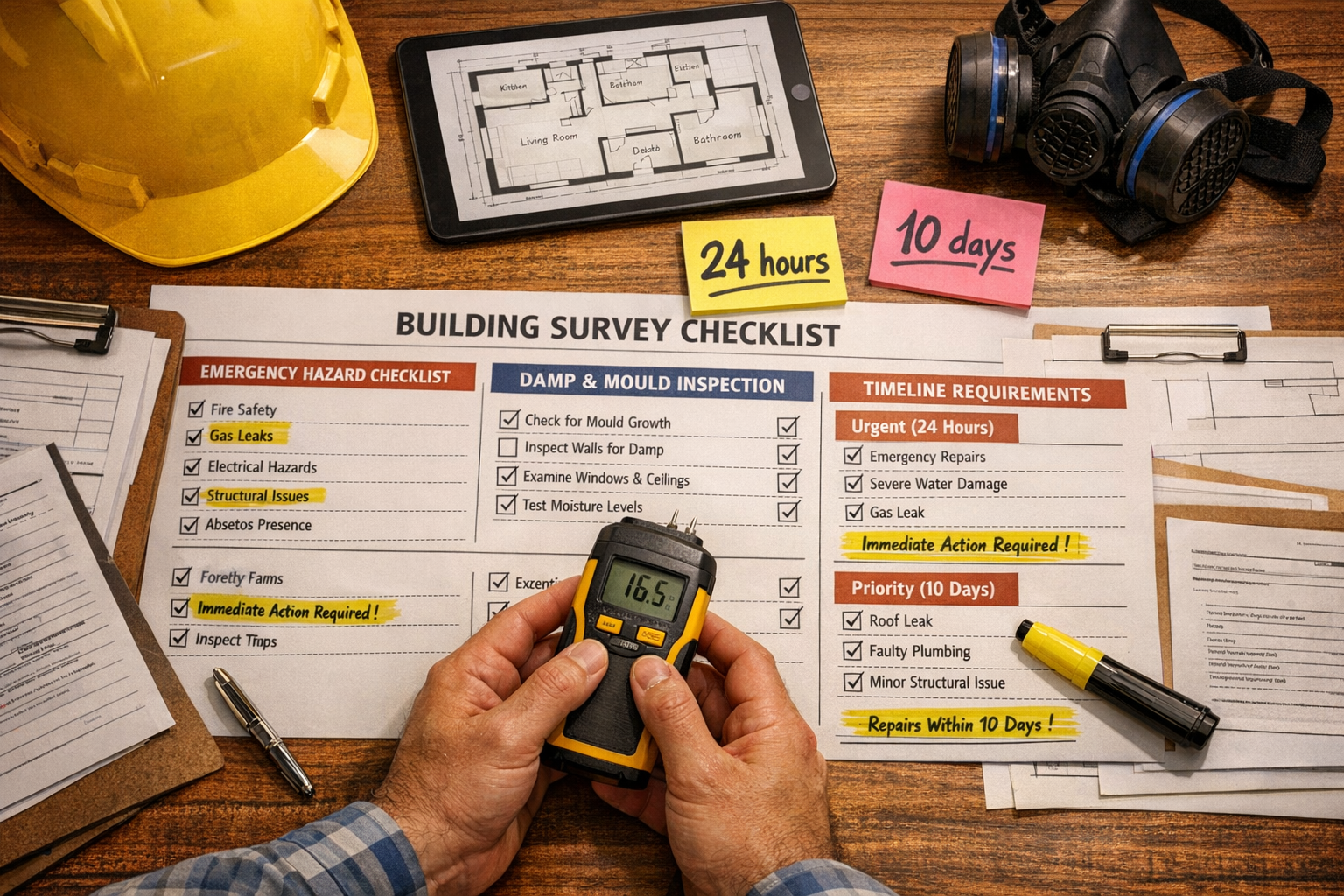
Creating effective survey checklists requires understanding what surveyors check during property inspections and how these findings relate to Awaab's Law obligations. A comprehensive checklist must address current hazards while anticipating the expanded scope coming in 2026 and 2027.
Emergency Hazard Identification Checklist
Emergency hazards demand immediate 24-hour response. Survey checklists must include:
Structural Emergency Indicators:
- Visible structural cracks wider than 3mm
- Sagging ceilings or floors
- Bulging or leaning walls
- Exposed or damaged load-bearing elements
- Signs of structural movement or subsidence
Electrical Emergency Hazards:
- Exposed live wiring
- Burning smells from electrical outlets
- Scorch marks around switches or sockets
- Sparking electrical equipment
- Water ingress affecting electrical systems
Fire Safety Critical Issues:
- Blocked or non-functional fire exits
- Missing or expired fire extinguishers
- Non-operational smoke detectors
- Combustible materials stored near heat sources
- Damaged fire doors or missing fire-stopping
Severe Damp and Mould:
- Black mould covering more than 1 square meter
- Mould in bedrooms or living areas occupied by vulnerable residents
- Standing water or active leaks
- Severe condensation affecting multiple rooms
- Musty odours indicating hidden mould growth
Professional surveyors trained in what surveyors look for in property inspections can identify these emergency conditions during routine assessments.
Damp and Mould Investigation Checklist (10-Day Response)
The cornerstone of Awaab's Law compliance focuses on comprehensive damp and mould assessment:
Visual Inspection Points:
- All external walls for penetrating damp
- Window frames and seals for condensation patterns
- Bathroom and kitchen areas for inadequate ventilation
- Behind furniture and in cupboards for hidden mould
- Ceiling corners and wall junctions for condensation mould
- Basement or ground floor areas for rising damp
Moisture Detection Requirements:
- Use calibrated moisture meters on all suspect areas
- Record moisture readings as percentage values
- Photograph all moisture meter readings with date stamps
- Map moisture distribution across affected rooms
- Identify moisture sources (leaks, condensation, rising damp)
Ventilation Assessment:
- Check all mechanical ventilation systems are operational
- Test extractor fans for adequate airflow
- Inspect air bricks and passive vents for blockages
- Assess natural ventilation capacity (openable windows)
- Evaluate resident ventilation habits and heating patterns
Documentation Requirements:
- Photographic evidence of all mould growth
- Moisture meter readings with location mapping
- Ventilation system test results
- Resident interview notes about condensation issues
- Previous repair history for affected areas
Understanding dilapidations surveys can provide additional context for assessing property condition deterioration over tenancy periods.
Expanded 2026 Hazard Categories Checklist
As the law expands, checklists must incorporate additional hazard categories:
Excess Cold and Heat Assessment:
- Heating system functionality and capacity
- Insulation levels in walls, roof, and floors
- Window efficiency and draught-proofing
- Thermal imaging for heat loss identification
- Energy Performance Certificate (EPC) rating verification
- Overheating risk in summer months (especially top floors)
Falls and Structural Safety:
- Staircase condition and handrail security
- Floor level changes and trip hazards
- Balcony and window fall protection
- Loose or damaged flooring
- Adequate lighting on stairs and corridors
- Structural integrity of balconies and external walkways
Electrical Safety Verification:
- Current Electrical Installation Condition Report (EICR)
- Visual inspection of consumer unit
- Check for overloaded circuits or extension leads
- Verify RCD protection on all circuits
- Test smoke and carbon monoxide detectors
- Assess adequacy of electrical outlets per room
Hygiene and Sanitation Standards:
- Functional drainage systems without blockages
- Adequate hot water supply
- Proper waste disposal facilities
- Kitchen hygiene standards and pest prevention
- Bathroom facilities in working order
- Adequate facilities for number of occupants
For landlords managing multiple properties, engaging chartered building surveyors in London can ensure consistent, professional assessment across portfolios.
Implementing Compliance Systems: From Checklists to Action
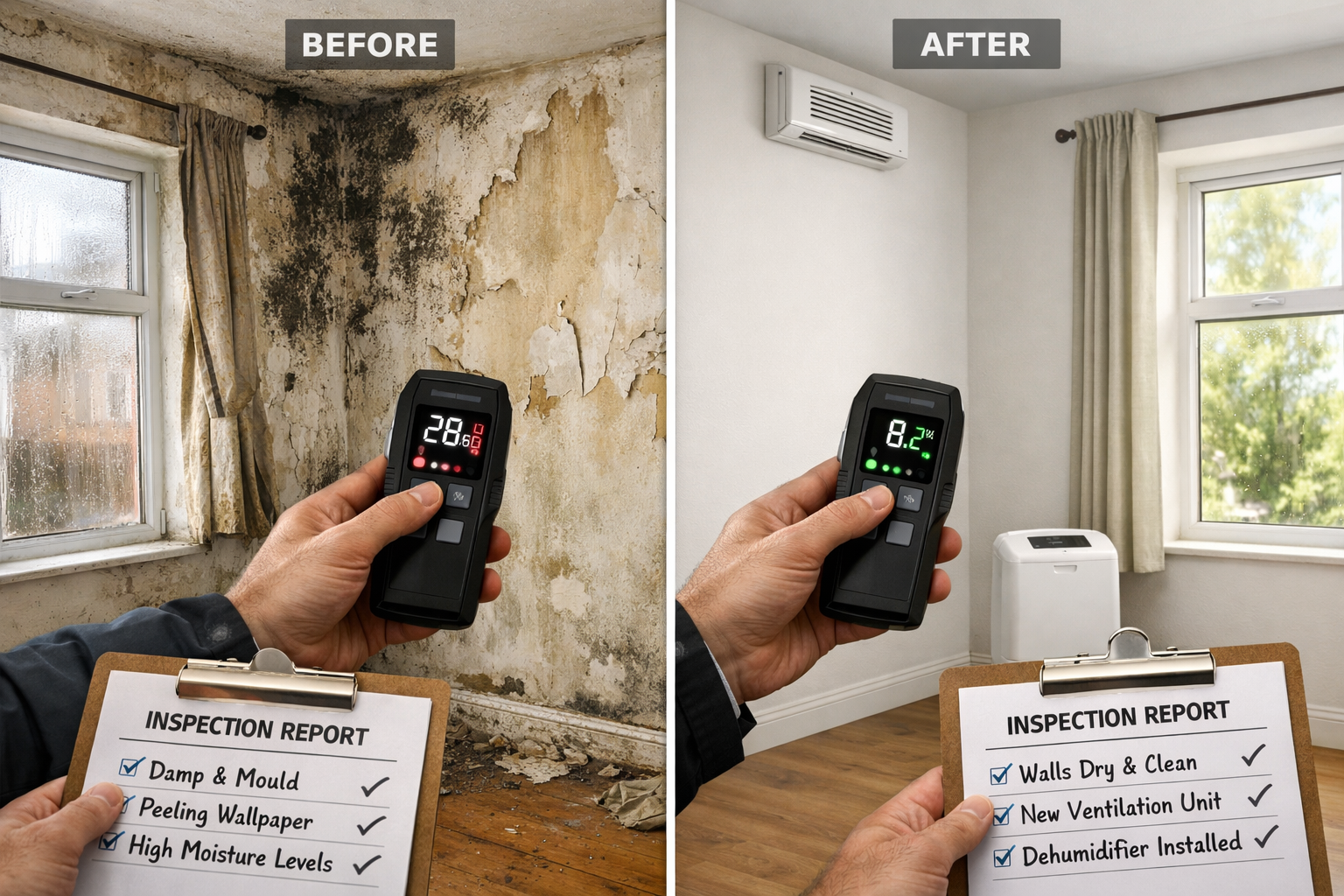
Having comprehensive checklists means nothing without robust systems to act on findings. Landlords must establish processes that ensure every identified hazard receives appropriate response within legal timeframes.
Digital Tracking and Case Management Systems
Manual tracking of compliance deadlines is no longer viable given the strict timeframes. Landlords must establish centralized hazard reporting systems using digital platforms or housing management systems to automatically log, track, and prioritize damp and mould cases with clear categorization of emergency versus significant hazards.[1]
Essential System Features:
📱 Tenant Reporting Portal:
- Mobile-friendly interface for hazard reporting
- Photo upload capability for visual evidence
- Automatic acknowledgment of reports
- Real-time status updates for tenants
⏰ Automated Deadline Management:
- Automatic calculation of response deadlines
- Escalation alerts for approaching timeframes
- Priority flagging for emergency hazards
- Overdue case notifications to management
📊 Compliance Dashboard:
- Visual overview of all active cases
- Response time performance metrics
- Hazard category breakdown
- Contractor assignment and completion tracking
🗂️ Document Management:
- Centralized storage of inspection reports
- Photo evidence organization by property
- Repair completion certificates
- 6-year retention automatic archiving
Staff Training and Competency Requirements
Staff training is critical: housing officers, maintenance staff, and contractors must understand legal duties and how to categorize hazard severity, with property teams requiring training on documentation requirements and escalation procedures for complex cases.[2]
Training Program Components:
- Hazard Recognition Training – Teaching staff to identify and categorize HHSRS hazards correctly
- Legal Obligations Awareness – Understanding timeframes and consequences of non-compliance
- Investigation Procedures – Proper use of moisture meters, photography, and documentation
- Communication Skills – Effective resident interaction during investigations
- Digital System Proficiency – Using case management platforms effectively
Consider partnering with RICS-qualified surveyors who can provide training workshops for internal teams.
Proactive Compliance Strategies
Reactive compliance—waiting for tenant reports—is both risky and expensive. Proactive strategies include identifying high-risk properties, prioritizing those with vulnerable residents (elderly, children, those with disabilities), and scheduling preventative repairs before issues escalate to emergency status.[2]
Risk-Based Property Assessment:
🏘️ High-Risk Property Indicators:
- Properties with previous damp and mould issues
- Older buildings with poor insulation
- Properties with vulnerable occupants
- Buildings with known ventilation deficiencies
- Ground floor and basement units prone to rising damp
Preventative Maintenance Schedule:
| Frequency | Inspection Activity | Purpose |
|---|---|---|
| Annually | Full HHSRS assessment | Identify emerging hazards before tenant reports |
| Bi-annually | Damp and mould checks in high-risk properties | Early intervention in vulnerable units |
| Quarterly | Ventilation system servicing | Prevent condensation-related mould |
| Monthly | Tenant welfare checks for vulnerable residents | Early hazard detection through engagement |
| After severe weather | Leak and water ingress inspections | Prevent water damage escalation |
Vulnerable Resident Prioritization:
Properties housing vulnerable residents require enhanced monitoring:
- Elderly occupants with mobility or health issues
- Families with young children (especially under 5)
- Residents with respiratory conditions or disabilities
- Properties with recent reports of health issues
- Units occupied by residents with language barriers who may underreport issues
Documentation and Record-Keeping Best Practices
The 6-year retention requirement demands meticulous record-keeping systems.[2] Every investigation, repair, and communication must be documented and easily retrievable for regulatory audits.
Essential Documentation Elements:
📝 Investigation Reports Must Include:
- Date and time of initial report
- Date and time of investigation completion
- Surveyor or inspector name and qualifications
- Detailed findings with photographic evidence
- Moisture readings and environmental measurements
- Hazard classification (emergency or significant)
- Recommended remedial actions with timescales
- Resident notification confirmation
🔧 Repair Records Must Include:
- Work order creation date
- Contractor assignment details
- Scheduled completion date
- Actual completion date
- Before and after photographs
- Materials and methods used
- Quality assurance inspection results
- Resident satisfaction confirmation
💬 Communication Logs Must Include:
- All tenant correspondence with timestamps
- Phone call summaries
- Email trails
- Text message records
- In-person meeting notes
- Translation services used (if applicable)
For complex cases requiring expert assessment, structural engineer reports provide additional professional documentation supporting compliance efforts.
Timeline Management and Compliance Workflows
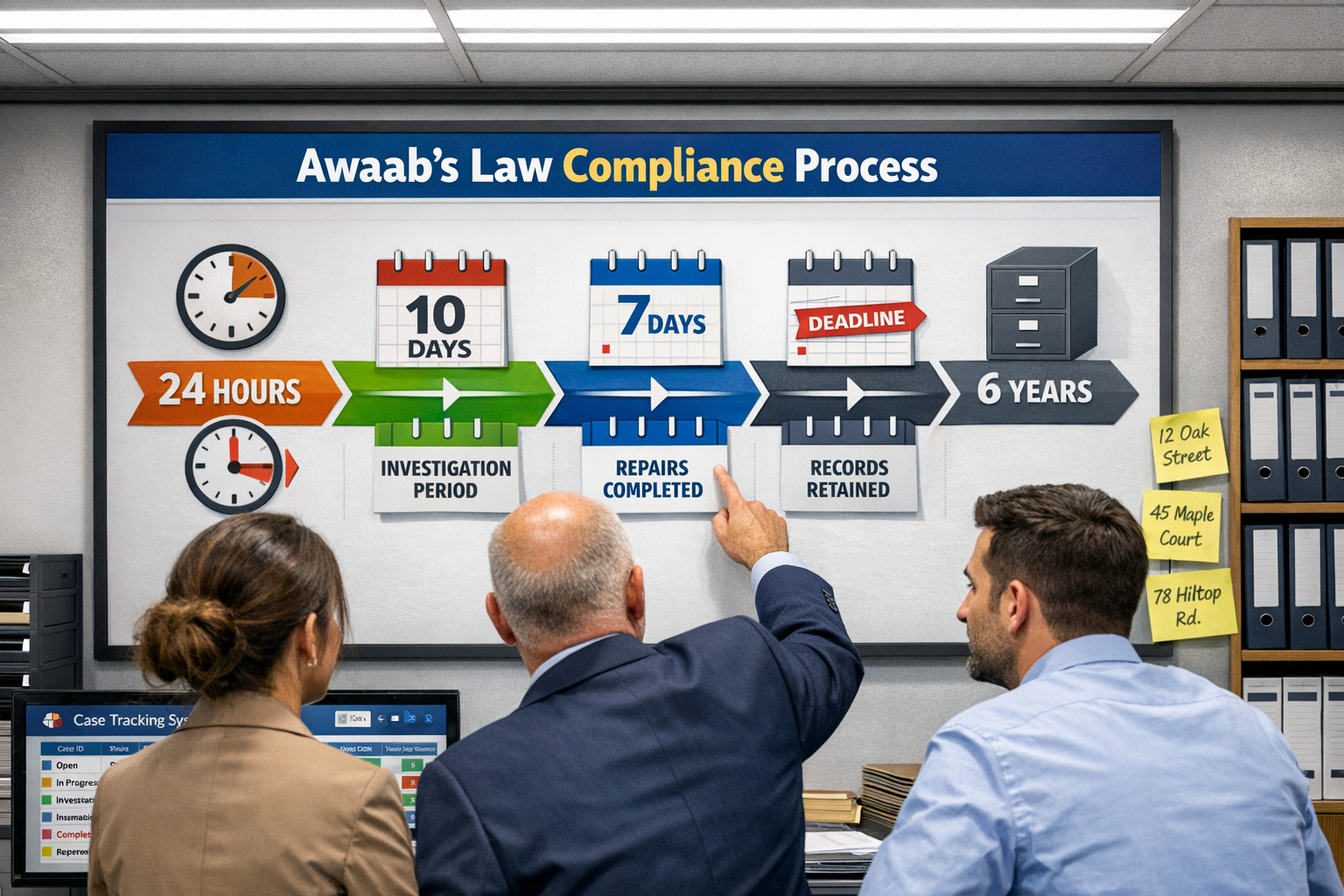
Meeting Awaab's Law timeframes requires well-designed workflows that move cases efficiently from report to resolution while maintaining quality standards and resident communication.
The 24-Hour Emergency Response Workflow
When an emergency hazard is reported, every minute counts:
Hour 0-2: Initial Response
- Receive and log emergency report in case management system
- Automatically notify on-call surveyor or property manager
- Contact tenant to confirm hazard details and arrange immediate access
- Dispatch emergency contractor if immediate danger exists (e.g., electrical hazard)
Hour 2-12: Investigation Phase
5. Conduct on-site investigation with appropriate safety equipment
6. Take comprehensive photographs with timestamp evidence
7. Complete emergency hazard assessment checklist
8. Identify immediate temporary measures to reduce risk
9. Develop remediation plan with contractor quotes
Hour 12-24: Documentation and Planning
10. Complete formal investigation report
11. Obtain contractor availability for 7-day repair deadline
12. Notify resident of findings and repair schedule (within 3 working days)
13. Upload all documentation to case management system
14. Schedule follow-up inspection post-repair
The 10-Day Significant Hazard Investigation Workflow
Damp and mould cases follow a more structured but still time-sensitive process:
Days 1-3: Assessment Planning
- Log report and categorize as significant hazard
- Review property history for previous damp issues
- Schedule investigation appointment with resident
- Prepare investigation equipment (moisture meters, cameras, ventilation testers)
Days 4-7: Detailed Investigation
- Conduct comprehensive damp and mould survey using professional survey techniques
- Interview resident about heating, ventilation, and lifestyle factors
- Test all ventilation systems for functionality
- Take moisture readings in all affected and adjacent areas
- Photograph all evidence with location mapping
Days 8-10: Analysis and Reporting
- Analyze findings to determine hazard classification
- Identify root causes (structural, ventilation, resident behavior, or combination)
- Develop comprehensive remediation plan
- Prepare formal investigation report
- Notify resident of findings and next steps (within 3 working days of completion)
Post-Investigation: Repair Phase
- Begin preventive works within 5 working days
- Start major remediation within 12 weeks
- Maintain regular resident communication throughout
- Conduct post-repair inspection and mould clearance testing
Managing Multiple Concurrent Cases
Social housing providers typically manage dozens or hundreds of simultaneous cases. Effective prioritization is essential:
Priority Matrix:
| Priority Level | Hazard Type | Response Time | Escalation |
|---|---|---|---|
| Critical | Emergency hazards | 24 hours | Immediate senior management notification |
| High | Significant hazards with vulnerable residents | 7 days investigation | Daily progress monitoring |
| Medium | Significant hazards, standard properties | 10 days investigation | Weekly progress review |
| Low | Minor maintenance, preventative works | Standard schedule | Monthly review |
Resource Allocation Strategies:
- Maintain on-call surveyor rota for emergency responses
- Establish preferred contractor panels with guaranteed availability
- Create emergency repair budgets separate from planned maintenance
- Develop mutual aid agreements with neighboring housing providers for capacity surge
Technology Solutions for Awaab's Law Compliance
Modern technology provides powerful tools for managing compliance obligations efficiently and demonstrably.
Mobile Survey Applications
Field surveyors need mobile-first solutions that work on-site:
Key Features:
- Offline functionality for properties with poor connectivity
- Pre-loaded checklists customized to property type
- Integrated camera with automatic geotagging and timestamping
- Voice-to-text for inspection notes
- Instant moisture meter data capture via Bluetooth
- Real-time sync to central database when connectivity restored
Tenant Communication Platforms
Effective resident engagement reduces complaint escalation and improves early hazard detection:
Communication Tools:
- SMS notifications for appointment confirmations and updates
- Email updates with repair progress tracking
- Resident portal for viewing case status and documentation
- Multi-language support for diverse tenant populations
- Satisfaction surveys post-repair completion
- Educational resources on condensation prevention and ventilation
Predictive Analytics and Risk Modeling
Advanced providers are using data analytics to predict hazard development:
Predictive Capabilities:
- Machine learning models identifying properties at highest damp risk
- Weather data integration to trigger proactive inspections after severe conditions
- Tenant vulnerability scoring to prioritize welfare checks
- Seasonal pattern analysis for condensation-prone properties
- Maintenance history analysis to identify systemic building issues
Common Compliance Challenges and Solutions
Even well-prepared landlords face obstacles in meeting Awaab's Law requirements.
Challenge 1: Contractor Capacity and Availability
Problem: Finding qualified contractors who can meet 7-day emergency repair deadlines, especially during winter months when damp and mould cases peak.
Solutions:
- Establish framework agreements with multiple contractors guaranteeing capacity
- Develop in-house emergency repair teams for common issues
- Create regional contractor networks for mutual support
- Offer premium rates for emergency response commitments
- Maintain pre-approved specifications for common repairs to speed procurement
Challenge 2: Access to Properties
Problem: Tenants not providing access for investigations or repairs, causing deadline breaches.
Solutions:
- Implement flexible appointment scheduling including evenings and weekends
- Provide clear communication about legal obligations and health risks
- Offer multiple appointment options to accommodate tenant schedules
- Use text and email reminders to reduce missed appointments
- Document all access attempts to demonstrate reasonable efforts
- Establish legal procedures for forced access in emergency situations
Challenge 3: Complex Causation Cases
Problem: Damp and mould cases where causation involves both structural issues and resident behavior (e.g., inadequate heating or ventilation).
Solutions:
- Conduct comprehensive investigations addressing all potential factors
- Provide resident education on condensation management alongside repairs
- Install environmental monitoring to objectively assess conditions
- Offer support services for residents struggling with heating costs
- Document all factors in investigation reports, not just structural issues
- Implement follow-up inspections to verify effectiveness of combined interventions
Challenge 4: Budget Constraints
Problem: Unexpected compliance costs straining maintenance budgets, especially with expanding hazard categories in 2026.
Solutions:
- Conduct proactive stock condition surveys to forecast compliance costs
- Establish dedicated compliance reserves separate from planned maintenance
- Prioritize preventative spending to reduce emergency response costs
- Seek grant funding for energy efficiency improvements reducing cold hazards
- Implement lifecycle costing for repairs addressing root causes, not symptoms
- Consider insurance products covering compliance-related costs
Preparing for 2026 and Beyond: Expanding Compliance Scope
The 2026 expansion to additional hazard categories requires preparation now, not when regulations take effect.
Conducting Gap Analysis Surveys
Landlords should commission comprehensive HHSRS assessments of their entire stock to identify:
- Properties with excess cold risks (poor insulation, inefficient heating)
- Electrical safety concerns requiring remediation
- Fall hazards in communal areas and individual units
- Fire safety deficiencies beyond current regulations
- Structural integrity concerns requiring engineer assessment
RICS building surveys provide the professional assessment needed for this gap analysis.
Investment Planning for Compliance
Multi-year investment programs should prioritize:
- Energy efficiency upgrades – Insulation, heating system replacement, window upgrades
- Electrical rewiring – Properties with outdated electrical installations
- Structural repairs – Addressing deferred maintenance before it becomes emergency hazards
- Ventilation improvements – Mechanical ventilation with heat recovery (MVHR) systems
- Fire safety enhancements – Beyond existing fire safety regulations
Policy and Procedure Updates
Governance documents require updating to reflect expanded scope:
- Revise repair policies to include all 2026 hazard categories
- Update contractor specifications for new hazard types
- Expand staff training programs to cover additional hazards
- Modify tenant handbooks with information on new hazard reporting
- Review insurance coverage for expanded compliance risks
Conclusion: Building a Culture of Proactive Compliance
Building Survey Checklists for Awaab's Law Compliance: 2026 Rental Health and Safety Mandates for Landlords represent more than regulatory box-ticking—they embody a fundamental shift toward resident-centered property management. The tragic circumstances that led to this legislation remind us that behind every checklist item and compliance deadline are real people whose health and safety depend on landlord diligence.
Successful compliance requires three pillars:
-
Comprehensive Assessment – Detailed survey checklists covering all hazard categories, conducted by qualified professionals using appropriate equipment and methodologies
-
Robust Systems – Digital case management, automated deadline tracking, clear workflows, and meticulous documentation ensuring no case falls through gaps
-
Proactive Culture – Moving beyond reactive repairs to preventative maintenance, risk-based property assessment, and genuine resident engagement
The expanding scope of Awaab's Law through 2026 and 2027 means landlords cannot afford complacency. Those who invest now in professional surveys, staff training, and compliance systems will find themselves well-positioned to meet evolving obligations while protecting their most important stakeholders: the residents who call their properties home.
Actionable Next Steps
✅ Immediate Actions (This Month):
- Audit current hazard reporting and tracking systems
- Review all properties for damp and mould risks
- Establish emergency response contractor agreements
- Train staff on current Awaab's Law obligations
✅ Short-Term Actions (Next Quarter):
- Commission professional building surveys for high-risk properties
- Implement digital case management system
- Develop comprehensive inspection checklists
- Create resident communication protocols
✅ Medium-Term Actions (Next 12 Months):
- Conduct stock-wide HHSRS assessment for 2026 hazards
- Develop multi-year investment plan for compliance
- Establish preventative maintenance schedules
- Build contractor capacity for expanded hazard types
✅ Long-Term Actions (2026 and Beyond):
- Maintain continuous compliance monitoring
- Regularly update policies and procedures
- Invest in predictive analytics and risk modeling
- Foster culture of continuous improvement
The landlords who will thrive under Awaab's Law are those who view compliance not as burden but as opportunity—to improve housing quality, strengthen resident relationships, and build sustainable, healthy communities. The time to act is now.
References
[1] Awaabs Law – https://www.ecosafegroup.co.uk/post/awaabs-law
[2] Awaabs Law – https://www.procurementhub.co.uk/news/awaabs-law/
[3] Landlord Compliance Checklist Renters Rights Act – https://rentersactready.co.uk/blog/landlord-compliance-checklist-renters-rights-act/
[4] Birketts Awaabs Law Guide – https://www.birketts.co.uk/app/uploads/2025/10/Birketts-Awaabs-Law-Guide.pdf
[5] Are You Ready For Awaabs Law A Checklist For Facility Managers – https://www.sfg20.co.uk/e-guide/are-you-ready-for-awaabs-law-a-checklist-for-facility-managers
[6] Awaabs Law Guidance For Social Landlords Timeframes For Repairs In The Social Rented Sector – https://www.gov.uk/government/publications/awaabs-law-guidance-for-social-landlords/awaabs-law-guidance-for-social-landlords-timeframes-for-repairs-in-the-social-rented-sector
[7] Awaabs Law Compliance Checklist Landlords – https://awaabs-law.com/awaabs-law-compliance-checklist-landlords
[8] Preparing For Awaabs Law A Practical Guide To Uk Social Housing Compliance – https://www.netcall.com/blog/preparing-for-awaabs-law-a-practical-guide-to-uk-social-housing-compliance/
[9] 250703 Preparing For Awaabs Law %e2%80%93 A Checklist – https://hqnetwork.co.uk/wp-content/uploads/2025/07/250703-Preparing-for-Awaabs-Law-%E2%80%93-a-checklist.pdf
