
{"cover":"Professional landscape format (1536×1024) hero image featuring bold text overlay 'Transaction Speed Demands in 2026: Building Surveys Under 6-Week Pressure' in extra large 72pt white sans-serif font with dark shadow and semi-transparent navy overlay box, positioned in upper third center. Background shows split composition: left side displays modern surveyor with tablet inspecting property interior with exposed brick and structural beams, right side shows digital calendar interface with countdown timer and completion milestones highlighted in orange. Foreground includes stopwatch graphic and property transaction flowchart with compressed timeline arrows. Color scheme: navy blue, white, orange accents, professional grey tones. High contrast, magazine cover quality, editorial business style with sense of urgency and professionalism","content":["Detailed landscape format (1536×1024) editorial image showing comparative timeline infographic with two parallel horizontal bars: top bar labeled 'Consumer Expectation 6.78 weeks' in green with calendar icons and checkmarks, bottom bar labeled 'Industry Average 123 days' in red with extended timeline and delay symbols. Center features professional RICS surveyor in business attire reviewing building plans on illuminated desk with laptop displaying survey scheduling software. Background includes modern property facade, clock face showing time pressure, and digital dashboard with completion metrics. Visual elements include progress bars, percentage indicators showing 45% time reduction target, and quality assurance badges. Color palette: professional blue, green success indicators, red warning tones, clean white background with subtle grid pattern","Detailed landscape format (1536×1024) professional photograph showing surveyor conducting rapid property inspection with advanced technology tools. Main subject: qualified building surveyor using thermal imaging camera and digital moisture meter on interior wall, with tablet displaying real-time data capture software and cloud upload indicators. Mid-ground shows cross-section architectural diagram overlay illustrating structural elements being assessed including foundations, roof structure, and damp-proof course. Background features checklist interface with automated report generation system, time stamps showing efficient workflow stages, and RICS accreditation badges. Visual includes split-screen effect showing traditional clipboard survey method versus modern digital workflow, emphasizing speed without quality compromise. Color scheme: professional grey, technology blue, safety orange highlights, clinical white lighting","Detailed landscape format (1536×1024) editorial business image depicting property valuation process under accelerated timelines. Central focus: professional valuer at modern desk with dual monitors displaying comparable property data, automated valuation models (AVM) interface, and market analysis graphs showing 2-5% growth trends. Foreground shows property photographs arranged in grid with valuation figures, RICS red book standards documentation, and digital signature pad for rapid report approval. Background features London property skyline through office window, wall-mounted timeline showing compressed valuation stages from instruction to completion within 5-10 working days, and quality control checklist with green verification marks. Visual elements include data visualization charts, property value comparison tables, and professional certification symbols. Color palette: corporate blue, financial green, premium grey tones, gold accent highlights for quality assurance"]"}
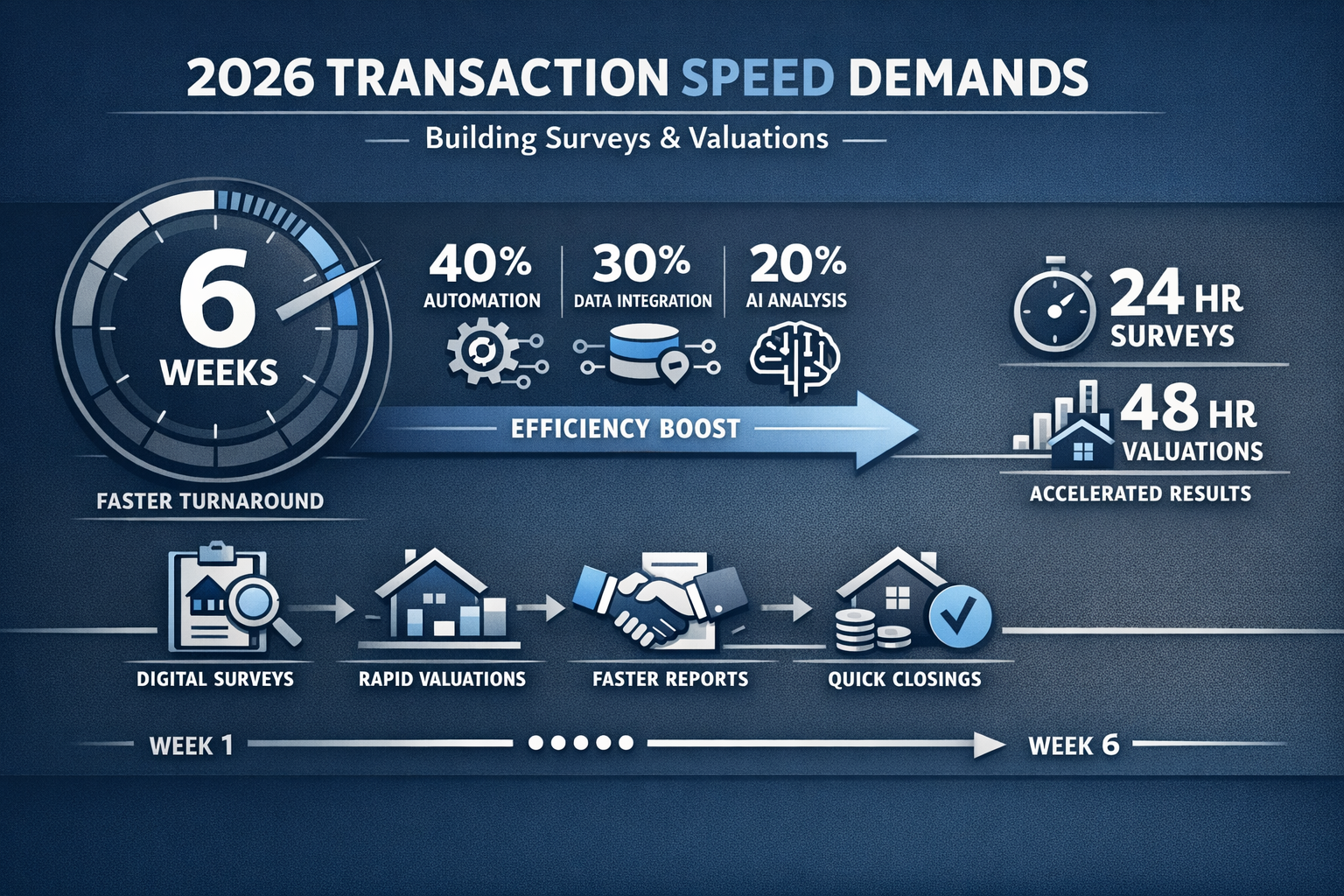
The property market in 2026 faces an unprecedented challenge: buyers want their transactions completed in just 6.78 weeks, while the industry average still hovers around 123 days. This dramatic gap between consumer expectations and reality has created intense pressure on building surveyors and valuers to accelerate their processes without compromising quality or increasing liability exposure. As Transaction Speed Demands in 2026: Building Surveys and Valuations Under 6-Week Completion Pressure reshape the industry, professionals must adapt their protocols, sequencing, and communication strategies to meet these accelerated timelines.
The introduction of mandatory upfront condition assessments in 2026 has fundamentally altered the survey landscape. Sellers must now commission condition assessments before listing properties, shifting the burden from buyers and potentially streamlining the overall transaction process[1]. However, this reform also introduces new complexities for surveyors who must deliver comprehensive reports faster than ever while maintaining the rigorous standards expected by lenders, buyers, and regulatory bodies.

Key Takeaways
- Consumer expectations vs reality: Buyers want 6.78-week completions, but the industry average remains 123 days—creating a 45% time reduction challenge for surveyors
- New 2026 reforms: Sellers must commission condition assessments before listing, fundamentally changing survey sequencing and timeline management[1]
- Critical timeframes: Building surveys take up to 8 working days, while valuations require 5-10 working days, leaving minimal buffer in 6-week completion schedules[4][5]
- Quality cannot be compromised: Accelerated timelines must not increase liability exposure or reduce inspection thoroughness
- Technology and process optimization: Digital tools, automated reporting, and streamlined communication are essential for meeting speed demands
Understanding the 6-Week Completion Challenge in 2026 🏃
The Consumer Expectation Gap
The property market in 2026 operates under a stark reality: consumers expect transactions to complete in approximately 6.78 weeks, yet the industry average completion time stretches to 123 days (approximately 17.5 weeks). This represents a massive disconnect that places enormous pressure on every professional involved in the transaction chain, particularly building surveyors and valuers who conduct critical due diligence work.
This expectation gap didn't emerge overnight. Several factors have contributed to buyer demands for faster completions:
- Digital transformation in other industries has conditioned consumers to expect rapid service delivery
- Market competition drives buyers to move quickly on desirable properties
- Financial pressures including bridging loan costs and dual housing expenses
- Chain complexity where delays cascade through multiple linked transactions
- Rental market pressures forcing buyers to secure properties before lease expiries
The 2026 Homebuying Reform Impact
The most significant change affecting Transaction Speed Demands in 2026: Building Surveys and Valuations Under 6-Week Completion Pressure is the mandatory upfront condition assessment requirement. Under the new framework, sellers must commission condition assessments before listing their properties, with surveys completed before marketing begins[1].
This reform fundamentally restructures the traditional survey timeline:
| Traditional Model (Pre-2026) | New Model (2026 Onwards) |
|---|---|
| Buyer commissions survey after offer accepted | Seller commissions survey before listing |
| Survey delays occur mid-transaction | Survey completed upfront |
| Buyer bears survey cost and timeline risk | Seller bears upfront cost but reduces transaction time |
| Multiple buyers may commission separate surveys | Single survey available to all potential buyers |
| Survey timing unpredictable | Survey available at point of offer |
This shift is designed to achieve faster completion times by eliminating survey-related delays that traditionally occur after offers are accepted[6]. However, it also creates new pressures for surveyors who must deliver reports quickly to allow sellers to market properties without delay.
For more context on how these reforms affect building survey practices, see our guide on building surveys under new homebuying rules.
Adapting Survey Protocols to Meet Transaction Speed Demands in 2026 ⚡
Building Survey Completion Timeframes
Understanding realistic timeframes is essential for managing Transaction Speed Demands in 2026: Building Surveys and Valuations Under 6-Week Completion Pressure. Current industry standards show:
- Building Survey (Level 3): Up to 8 working days for report completion[4]
- HomeBuyer Survey (Level 2): Average 3-5 working days[4]
- RICS Valuation: Standard 5-10 working day turnaround including booking, inspection, research, and report delivery[5]
These timeframes include several distinct phases:
- Booking and scheduling (1-2 days)
- Property inspection (2-4 hours for residential properties)
- Research and analysis (2-3 days)
- Report writing and quality control (3-4 days)
- Delivery to client or lender (same day to 1 day)
Within a 6-week (42-day) completion target, an 8-day building survey consumes nearly 20% of the available timeline. When combined with mortgage processing, legal work, and searches, the margin for error becomes extremely tight.
To understand the full scope of what a comprehensive building survey entails, review our complete guide to Level 3 building surveys.
Streamlining Survey Processes Without Compromising Quality
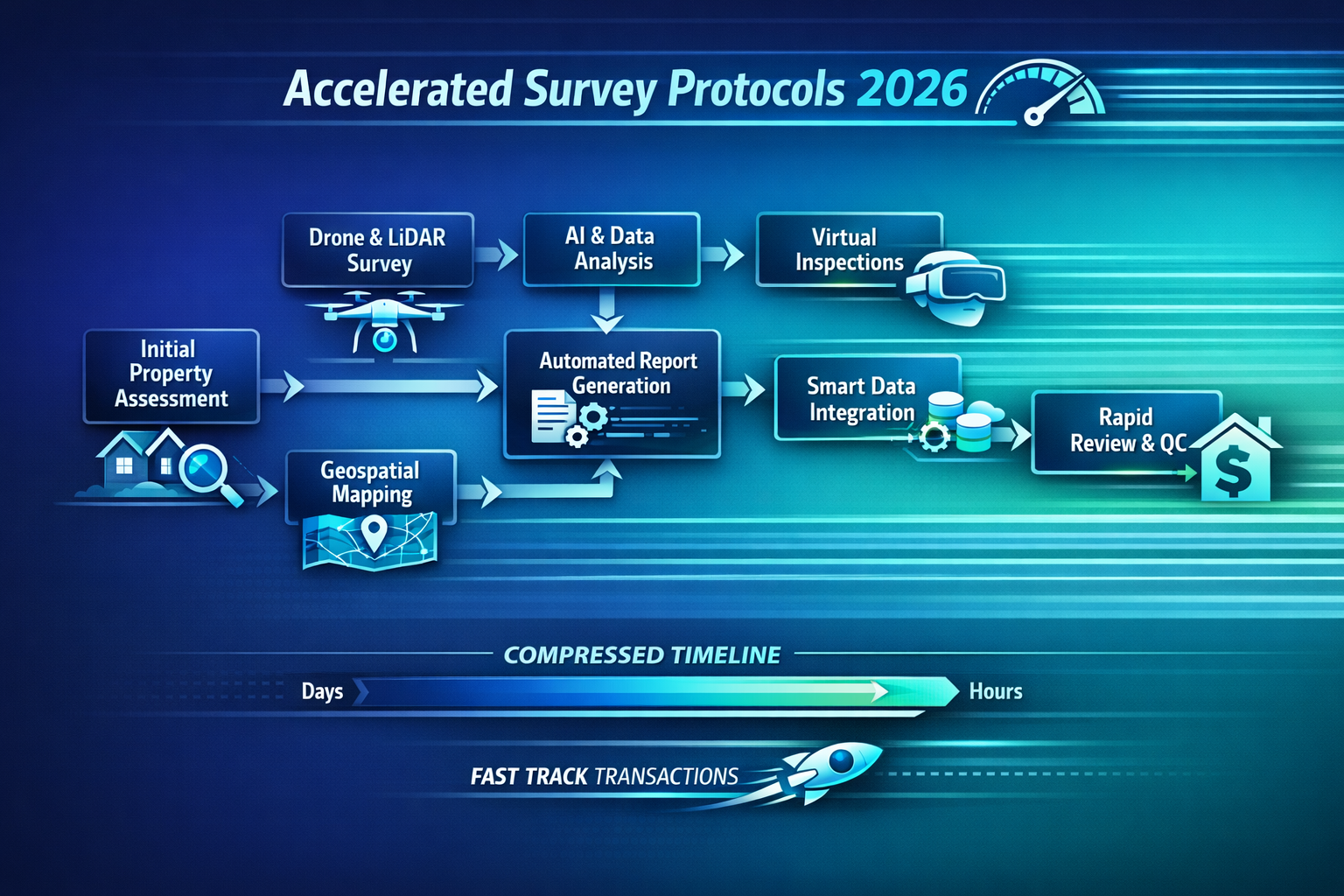
Meeting accelerated timelines requires systematic process optimization while maintaining professional standards. Key strategies include:
Digital Data Capture and Reporting
- Tablet-based inspection tools with real-time data entry
- Cloud-based report generation systems
- Automated template population for standard sections
- Digital photography with instant upload and categorization
- Voice-to-text dictation for on-site observations
Pre-Inspection Preparation
- Advanced desktop research using Land Registry data
- Review of planning history and building control records
- Flood risk and environmental screening before site visit
- Client questionnaire completion prior to inspection
- Pre-populated report templates with property-specific data
Inspection Efficiency Protocols
- Structured inspection checklists ensuring comprehensive coverage
- Prioritized assessment of high-risk areas (roof, structure, damp)
- Photographic documentation standards for consistent evidence
- On-site preliminary findings discussion with clients when appropriate
- Immediate flagging of urgent issues requiring specialist investigation
Quality Control Without Delay
- Peer review systems with rapid turnaround commitments
- Automated compliance checking against RICS standards
- Template libraries for common defect descriptions
- Senior surveyor oversight on complex or high-value properties
- Clear escalation procedures for unusual findings
For properties requiring the most detailed inspection, our RICS Level 3 building surveys follow these optimized protocols while maintaining comprehensive coverage.
Managing Survey Validity and Timeline Coordination
An often-overlooked aspect of Transaction Speed Demands in 2026: Building Surveys and Valuations Under 6-Week Completion Pressure is survey validity. House surveys have no official expiry date, but they are practically considered valid for 6-12 months depending on property condition and lender requirements[2].
Most lenders accept surveys that are less than 6 months old[2]. This creates both opportunities and challenges under the new upfront assessment model:
Opportunities:
- Sellers can commission surveys well in advance of marketing
- Properties can be re-marketed with existing valid surveys if initial sales fall through
- Seasonal timing can be optimized (avoiding winter weather delays)
Challenges:
- Market conditions may change during survey validity period
- Property condition may deteriorate between survey and completion
- Lenders may require updated valuations if significant time has passed
- Buyers may question survey independence when seller-commissioned
Best Practice Recommendations:
✅ Commission surveys no more than 3 months before intended marketing date
✅ Include condition monitoring clauses for extended marketing periods
✅ Establish clear protocols for survey updates if material changes occur
✅ Maintain surveyor independence through RICS-compliant engagement terms
✅ Provide buyers with surveyor contact information for direct queries
To better understand survey timing considerations, see our detailed guide on how long homebuyer surveys take.

Valuation Protocols Under Accelerated Transaction Speed Demands in 2026 💰
RICS Valuation Turnaround Times
Property valuations face similar time pressures as building surveys. Standard RICS valuations in London and surrounding areas operate on a 5-10 working day turnaround that includes all stages from instruction to lender delivery[5].
The valuation process typically follows this sequence:
Day 1-2: Instruction and Booking
- Lender or client instructs valuation
- Surveyor accepts instruction and confirms terms
- Property access arranged with seller or agent
- Desktop research initiated
Day 3-4: Inspection and Initial Assessment
- Site visit conducted (typically 30-60 minutes for residential)
- Property measured and photographed
- Comparable properties identified
- Local market conditions assessed
Day 5-7: Analysis and Report Preparation
- Comparable sales analysis completed
- Valuation figure determined using appropriate methodology
- Market commentary and risk factors documented
- Report drafted and internally reviewed
Day 8-10: Quality Control and Delivery
- Senior valuer review and sign-off
- Report delivered to lender or client
- Client queries addressed
- Additional documentation provided if required
Cost Considerations and Value Optimization
RICS Help to Buy valuation costs in 2026 range from £200-£400 depending on property value, with properties up to £250,000 typically costing £200-£275[5]. These fees reflect the professional expertise, insurance coverage, and regulatory compliance required for RICS-accredited valuations.
For properties requiring specialized valuation services, costs vary based on complexity:
| Valuation Type | Typical Cost Range | Turnaround Time |
|---|---|---|
| Standard Residential | £200-£400 | 5-10 working days |
| Lease Extension | £400-£800 | 10-15 working days |
| Commercial Property | £500-£2,000+ | 10-20 working days |
| Matrimonial | £500-£1,500 | 10-15 working days |
| Insurance Reinstatement | £300-£600 | 7-10 working days |
Understanding these costs and timeframes is crucial for transaction planning. For detailed pricing information, consult our cost of valuation guide.
Specialized Valuation Scenarios
Certain property types and transaction scenarios require specialized valuation approaches that may impact timelines:
Lease Extension Valuations
Properties with short leases require detailed calculations of marriage value and relativity. These lease extension valuations typically add 5-10 working days to standard timelines due to complex calculations and negotiation considerations.
Shared Ownership Valuations
RICS shared ownership valuations require assessment of both the owned share and the rental element, adding complexity to the valuation process.
Properties with Fire Safety Concerns
Post-Grenfell regulations require EWS1 forms for buildings over 11 metres. If remedial work is needed, this can cause 3-6 month delays[5], completely derailing 6-week completion targets. Valuers must identify these issues immediately and communicate clearly about timeline implications.
Properties with Structural Issues
Properties flagged with subsidence, structural movement, or significant defects may require specialist investigation before valuation can be finalized. Our subsidence surveys provide detailed analysis but add time to the overall process.
Automated Valuation Models (AVMs) and Hybrid Approaches
To meet Transaction Speed Demands in 2026: Building Surveys and Valuations Under 6-Week Completion Pressure, some lenders are increasingly using Automated Valuation Models (AVMs) for lower-risk properties. These computer-generated valuations can be delivered within hours rather than days.
AVM Advantages:
- Instant or same-day delivery
- Lower cost (typically £50-£150)
- Consistent methodology
- No access requirements
AVM Limitations:
- Less accurate for unique or non-standard properties
- Cannot identify physical defects or condition issues
- Limited market insight and context
- Not accepted by all lenders for all loan-to-value ratios
Hybrid valuation approaches combine AVM technology with professional oversight, offering a middle ground that balances speed with accuracy. A qualified valuer reviews the AVM output, validates assumptions, and may conduct a desktop review or brief inspection to confirm the automated valuation.
For comprehensive valuation services that balance speed with thoroughness, explore our Notting Hill valuation reports.
Communication and Coordination Strategies for Accelerated Timelines 📞
Stakeholder Management in Compressed Timeframes
Meeting Transaction Speed Demands in 2026: Building Surveys and Valuations Under 6-Week Completion Pressure requires exceptional coordination among multiple parties:
- Sellers and their agents who need surveys completed before marketing
- Buyers and their solicitors who require reports for due diligence and mortgage applications
- Lenders who need valuations to process mortgage offers
- Estate agents coordinating access and managing buyer expectations
- Conveyancers who rely on survey findings to inform legal enquiries
- Specialist contractors who may need to provide quotes for identified defects
Best Practice Communication Protocols:
✅ Set clear expectations upfront regarding realistic timeframes
✅ Provide regular progress updates at key milestones
✅ Flag potential delays immediately rather than waiting until deadline
✅ Offer preliminary verbal findings for urgent decision-making
✅ Maintain accessible contact channels including phone, email, and client portals
✅ Document all communications to maintain clear audit trails
Technology Enablement for Speed and Transparency
Modern surveying practice increasingly relies on digital platforms that facilitate rapid communication and information sharing:
Client Portal Systems
- Real-time booking and scheduling
- Automated appointment confirmations
- Progress tracking dashboards
- Instant report delivery upon completion
- Secure document storage and retrieval
Mobile Communication Tools
- WhatsApp or SMS updates for time-sensitive communications
- Video calls for preliminary findings discussions
- Photograph sharing for immediate issue flagging
- Digital signature capture for instruction confirmations
Integrated Transaction Platforms
- Shared timelines visible to all parties
- Automated milestone notifications
- Document exchange hubs
- Status tracking across conveyancing, survey, and mortgage processes
Managing Expectations Around Survey Limitations
Even with optimized processes, surveyors must clearly communicate what can and cannot be achieved within compressed timeframes. Professional integrity requires honest disclosure of inspection limitations, particularly when speed pressures might tempt shortcuts.
Key Messages for Clients:
⚠️ Non-invasive inspection limitations: Surveys cannot identify hidden defects behind walls, under floors, or within inaccessible spaces
⚠️ Weather and seasonal factors: Winter inspections may miss issues visible in other seasons; external inspections may be limited by weather conditions
⚠️ Specialist investigation requirements: Some issues require specialist contractors (structural engineers, damp specialists, electrical engineers) whose involvement extends timelines
⚠️ Occupied property constraints: Furniture, storage, and occupant presence may limit inspection scope
For a comprehensive understanding of what surveyors check during inspections, see our guide on what a surveyor checks.
Market Context: 2026 Property Market Dynamics 📈
Growth Forecasts and Transaction Volume
The UK property market in 2026 is forecast to show 2-5% price growth across most regions[3], creating a moderately active market that sustains transaction volumes. This growth environment contributes to buyer urgency and reinforces the need for rapid survey and valuation services.
Regional variation in market activity affects survey demand:
- London and South East: Continued high demand with premium pricing for rapid-turnaround services
- Regional cities: Growing markets with increasing sophistication in buyer expectations
- Rural areas: More traditional timelines but gradual adoption of accelerated processes
New Build Property Considerations
New build properties present unique challenges for Transaction Speed Demands in 2026: Building Surveys and Valuations Under 6-Week Completion Pressure. While some buyers assume new builds don't require surveys, professional inspection remains essential for identifying construction defects before completion[3].
Our building survey protocols for new build properties address the specific considerations for newly constructed homes, including snagging inspections and pre-completion assessments.
Commercial Property Transaction Speeds
Commercial building surveys face even greater complexity than residential properties, with longer inspection times, more detailed technical analysis, and specialized valuation methodologies. Commercial transactions rarely achieve 6-week completions, typically requiring 8-12 weeks minimum for straightforward deals.
Risk Management and Professional Standards ⚖️
Maintaining RICS Standards Under Time Pressure
The Royal Institution of Chartered Surveyors (RICS) sets rigorous professional standards that cannot be compromised to meet speed demands. RICS-accredited surveyors must balance client expectations with regulatory obligations and professional liability considerations.
Core RICS Requirements:
- Competence and due skill in all professional work
- Independence and objectivity in valuations and surveys
- Comprehensive inspection appropriate to the property type
- Clear communication of limitations and assumptions
- Professional indemnity insurance coverage
- Continuing professional development
Our RICS building surveys maintain these standards while optimizing processes for efficiency.
Liability Considerations in Accelerated Surveys
Professional indemnity insurance remains the critical safety net for surveyors, but insurers increasingly scrutinize claims arising from rushed inspections. Surveyors must document:
- Time spent on inspection relative to property size and complexity
- Weather conditions and access limitations
- Areas not inspected and reasons for exclusion
- Recommendations for specialist investigations
- Clear scope of service provided
Red flags that may indicate excessive time pressure:
- Inspection time significantly below industry norms
- Inadequate photographic documentation
- Generic report content without property-specific detail
- Failure to recommend specialist investigation for obvious concerns
- Compressed turnaround times without quality control review
When to Decline or Delay Instructions
Professional surveyors must sometimes decline instructions or negotiate extended timeframes when client demands would compromise quality or increase liability exposure:
Situations requiring pushback:
- Inspection time insufficient for property size or complexity
- Access restrictions preventing adequate inspection
- Weather conditions creating safety risks or limiting visibility
- Concurrent instruction volume exceeding capacity
- Client pressure to omit recommended specialist investigations
Practical Recommendations for Surveyors and Valuers 🎯
Operational Efficiency Improvements
To successfully meet Transaction Speed Demands in 2026: Building Surveys and Valuations Under 6-Week Completion Pressure, surveying practices should implement:
Capacity Planning
- Maintain surveyor availability for rapid instruction acceptance
- Build buffer capacity for urgent instructions
- Cross-train staff to handle multiple survey types
- Establish relationships with specialist contractors for rapid referrals
Process Standardization
- Develop comprehensive template libraries
- Create standardized inspection checklists
- Implement quality control checklists
- Document standard operating procedures for all service types
Technology Investment
- Cloud-based practice management systems
- Mobile inspection applications with offline capability
- Automated report generation platforms
- Client portal systems for transparent communication
Training and Development
- Regular training on efficient inspection techniques
- Report writing workshops focused on clarity and speed
- Technology platform training for all staff
- Client communication skills development
Pricing Strategies for Expedited Services
Surveyors may consider tiered pricing models that reflect service speed:
Standard Service (8-10 working days): Base pricing
Expedited Service (5-7 working days): Base + 20-30% premium
Rush Service (2-4 working days): Base + 50-75% premium
Premium pricing for expedited services reflects:
- Scheduling disruption and opportunity cost
- Overtime or weekend working requirements
- Reduced batch efficiency in report production
- Increased administrative coordination
Building Strategic Partnerships
Successful navigation of compressed timelines requires collaborative relationships with:
- Estate agents who can facilitate rapid access and provide property information
- Conveyancers who understand realistic survey timeframes and communicate accordingly
- Mortgage brokers who manage lender expectations and coordinate valuations
- Specialist contractors who can provide rapid quotes for identified defects
- Other surveyors for mutual support during peak demand periods
Conclusion: Adapting to the New Normal of Accelerated Property Transactions
Transaction Speed Demands in 2026: Building Surveys and Valuations Under 6-Week Completion Pressure represent a fundamental shift in how the property industry operates. The gap between consumer expectations (6.78 weeks) and industry reality (123 days) creates both challenges and opportunities for surveying professionals who can adapt their practices to meet accelerated timelines without compromising quality or increasing liability exposure.
The introduction of mandatory upfront condition assessments in 2026 has restructured the survey timeline, moving inspections earlier in the transaction process and creating new pressures for rapid report delivery[1]. Surveyors must embrace digital tools, streamline processes, and optimize communication to deliver comprehensive reports within timeframes that support 6-week completions.
Key success factors include:
✅ Process optimization through digital data capture, automated reporting, and efficient inspection protocols
✅ Clear communication with all stakeholders about realistic timeframes and service limitations
✅ Technology investment in platforms that enhance speed without sacrificing thoroughness
✅ Professional standards maintenance ensuring RICS compliance and appropriate quality control
✅ Strategic pricing that reflects the value of expedited services while remaining competitive
Actionable Next Steps
For Surveying Practices:
- Audit current processes to identify efficiency improvement opportunities
- Invest in digital inspection and reporting tools
- Develop standardized templates and checklists
- Establish clear service level agreements with defined turnaround times
- Build capacity through recruitment or partnership arrangements
For Property Professionals:
- Set realistic expectations with clients about achievable timelines
- Commission surveys early in the transaction process
- Maintain open communication channels with surveyors
- Understand the difference between speed and quality compromise
- Plan transactions with appropriate buffer time for unexpected issues
For Property Buyers and Sellers:
- Recognize that quality surveys require adequate time
- Choose surveyors based on competence, not just speed
- Provide comprehensive property information to facilitate rapid surveys
- Ensure property access is readily available
- Budget for expedited services when rapid completion is essential
The property market will continue to evolve, and transaction speed expectations will likely intensify further. Surveying professionals who adapt proactively, invest in efficiency improvements, and maintain unwavering commitment to professional standards will thrive in this new environment. Those who resist change or compromise quality in pursuit of speed will face increasing liability exposure and market irrelevance.
For comprehensive surveying services that balance speed with thoroughness, explore our full range of building surveys and valuation services designed to meet 2026's demanding transaction timelines while maintaining the highest professional standards.
References
[1] Homebuying Reform Impacts On Building Surveys Preparing For Mandatory Upfront Condition Assessments In 2026 – https://nottinghillsurveyors.com/blog/homebuying-reform-impacts-on-building-surveys-preparing-for-mandatory-upfront-condition-assessments-in-2026
[2] How Long Is A House Survey Valid For – https://surveymatch.co.uk/how-long-is-a-house-survey-valid-for/
[3] Building Survey Protocols For New Build Properties In 2026 Spotting Defects Amid 2 5 Price Growth Forecasts – https://nottinghillsurveyors.com/blog/building-survey-protocols-for-new-build-properties-in-2026-spotting-defects-amid-2-5-price-growth-forecasts
[4] How Long Does A Survey Take – https://www.reallymoving.com/surveyors/guides/how-long-does-a-survey-take
[5] Rics Help To Buy Valuation London Cost Process Timescales 2026 Guide – https://winfieldssurveyors.london/rics-help-to-buy-valuation-london-cost-process-timescales-2026-guide/
[6] Building Surveys Under New Homebuying Rules Earlier Inspections And Risk Mitigation In 2026 – https://nottinghillsurveyors.com/blog/building-surveys-under-new-homebuying-rules-earlier-inspections-and-risk-mitigation-in-2026
