
Manchester is experiencing an unprecedented construction boom in 2026, with billions of pounds flowing into urban renewal projects across Northern England. As developers, property owners, and local authorities navigate this transformation, one critical legal requirement stands at the forefront: Party Wall Surveys for Manchester Renewal Projects: Managing Agreements in Northern England's 2026 Growth Surge. Understanding how to manage these agreements effectively has become essential for anyone involved in the region's ambitious redevelopment initiatives.
The city's regeneration zones—from the Northern Quarter to Ancoats and beyond—are witnessing large-scale structural works that inevitably affect shared walls, boundaries, and neighbouring properties. With Manchester's property market heating up and renewal projects accelerating, the proper management of party wall agreements isn't just a legal formality; it's the foundation for successful project delivery and community harmony.
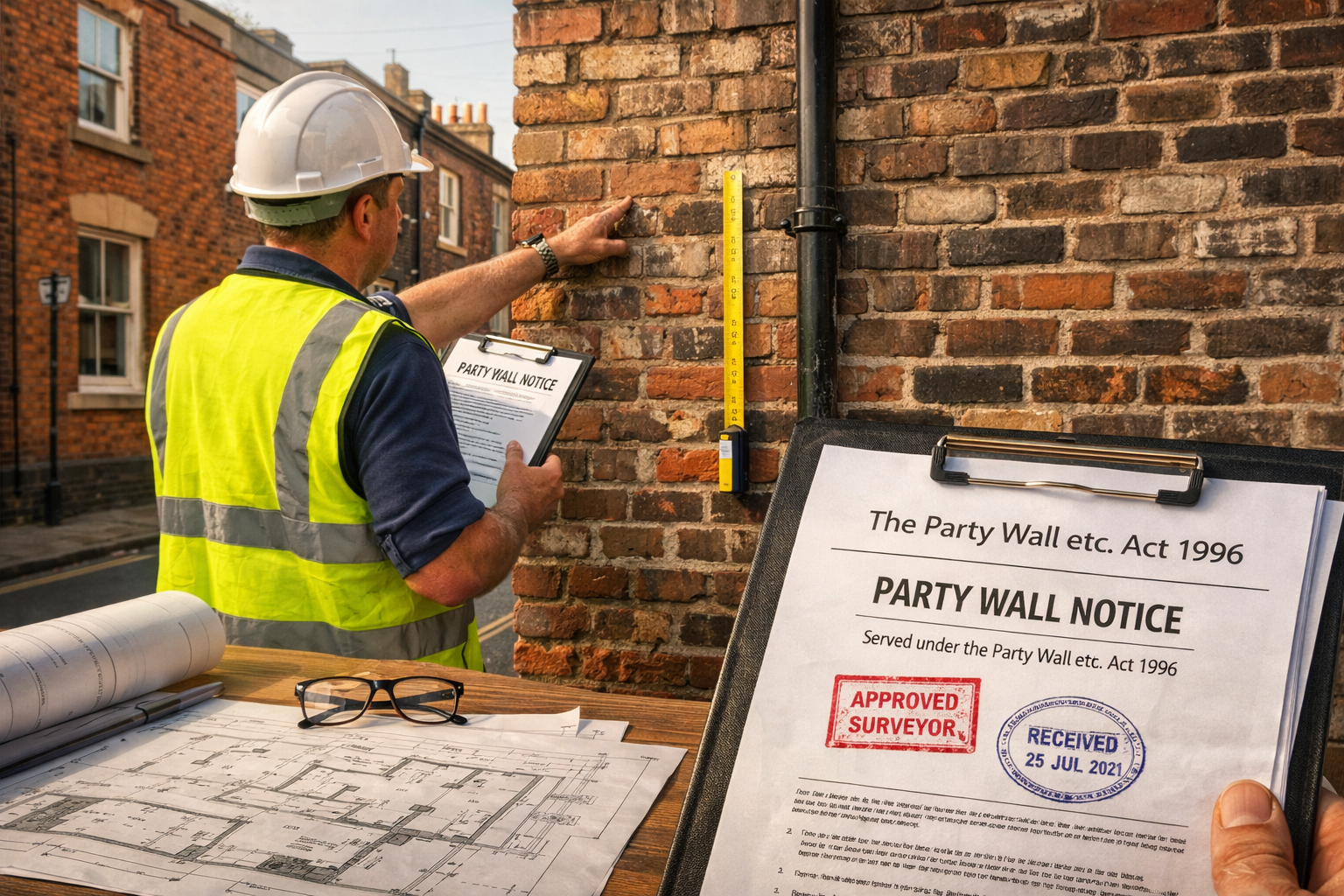
Key Takeaways
- 🏗️ Manchester's 2026 growth surge requires strict adherence to the Party Wall etc. Act 1996 for all structural works affecting shared walls and boundaries
- ⏱️ Timeline planning is critical: Party wall notices must be served 2+ months before work begins, with the full process taking 4-8 weeks on average
- 📋 Professional surveyor involvement ensures RICS-compliant documentation and minimizes disputes in large-scale urban renewal projects
- 🤝 Neighbour consultation forms the cornerstone of successful party wall agreements, preventing costly delays and legal challenges
- 💼 Chartered surveyors provide essential expertise in navigating complex multi-property developments across Northern England's renewal zones
Understanding Party Wall Surveys for Manchester Renewal Projects: Managing Agreements in Northern England's 2026 Growth Surge
The Legal Framework Governing Manchester's Construction Boom
The Party Wall etc. Act 1996 provides the statutory framework for all construction work affecting shared structures throughout England and Wales, including Manchester's extensive renewal zones. This legislation applies to structural work in areas like Stockport (SK1–SK8) and Warrington (WA1–WA5), establishing clear procedures that property owners and developers must follow[1].
The Act covers three main categories of work:
- Building on or at the boundary line between properties
- Work to existing party walls or party structures
- Excavation within 3-6 meters of neighbouring buildings
For Manchester's 2026 renewal projects, understanding these categories is fundamental. Whether you're converting a Victorian warehouse in Ancoats or developing a new residential complex in Salford, the Act's requirements remain consistent and non-negotiable.
Why Party Wall Agreements Matter More Than Ever in 2026
Northern England's construction landscape has transformed dramatically. Manchester alone has seen investment exceeding £1.5 billion in urban renewal projects during the first quarter of 2026, with hundreds of developments simultaneously underway. This unprecedented activity means:
- More shared walls are affected than ever before
- Neighbouring properties face increased risk of structural impact
- Dispute resolution mechanisms are under greater pressure
- Professional surveyor services are in high demand
The consequences of neglecting party wall procedures can be severe. Projects without proper agreements face potential injunctions, costly legal battles, and significant delays. For developers working on tight margins and strict timelines, these risks are simply unacceptable.
"In Manchester's current renewal environment, party wall compliance isn't optional—it's the difference between project success and catastrophic failure." — RICS Guidance, 2026
The Step-by-Step Process for Party Wall Surveys in Manchester's Renewal Zones
Stage 1: Initial Assessment and Planning (Weeks 1-2)
Before any construction work begins, property owners and developers must conduct a thorough assessment to determine whether their project falls under the Party Wall Act. This involves:
Identifying Affected Properties 🏘️
- Mapping all properties sharing walls or boundaries
- Assessing excavation zones within 3-6 meters
- Documenting existing structural conditions
- Photographing current property states
Engaging Professional Surveyors
Manchester-based Chartered Surveyors offer specialized party wall survey services and agreement drafting[2]. These professionals provide:
- Pre-construction property surveys
- Structural condition assessments
- Photographic documentation
- Technical drawings and specifications
For comprehensive guidance on when party wall agreements become necessary, property owners should consult detailed resources on party wall requirements.
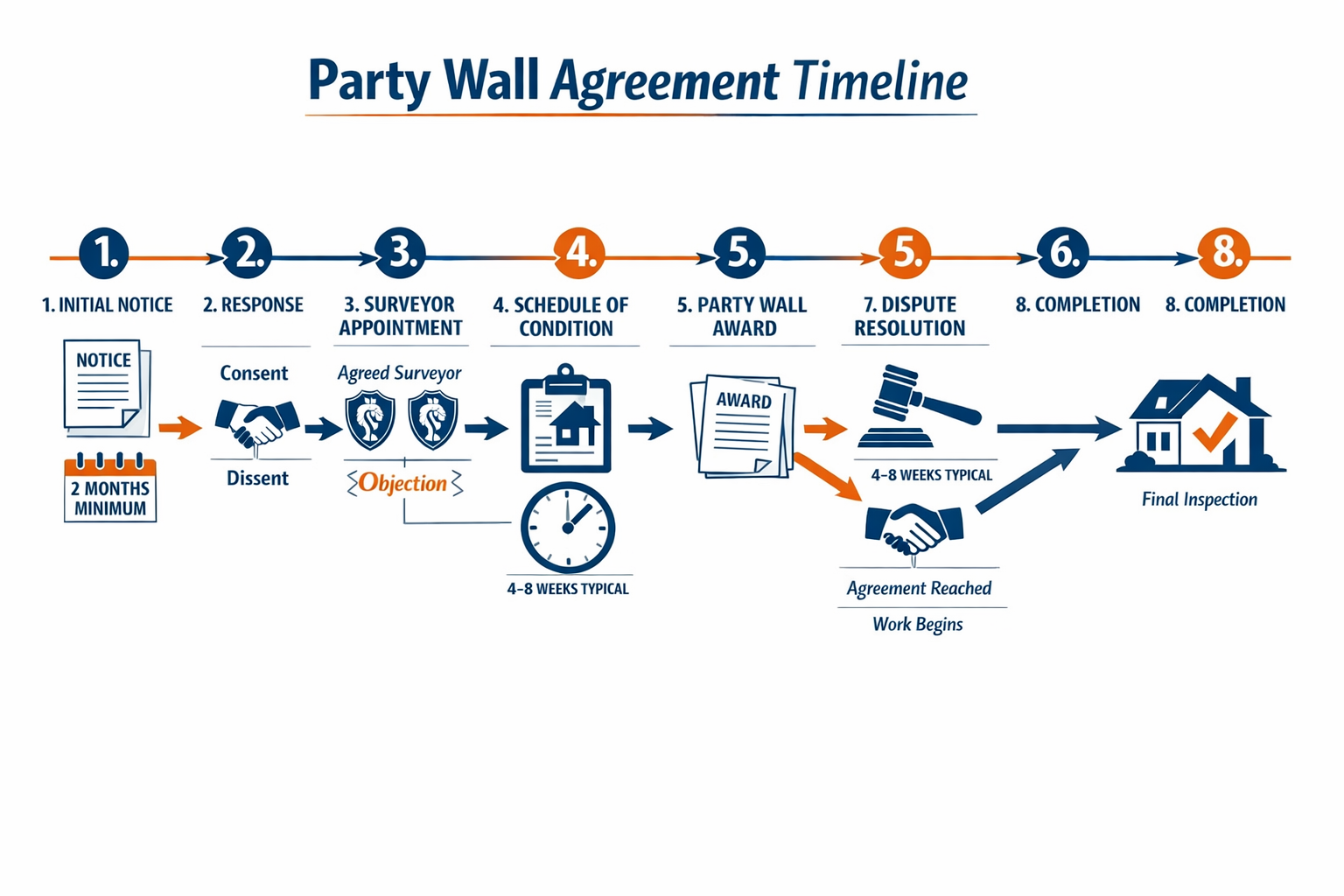
Stage 2: Serving Party Wall Notices (Months 1-2 Before Work)
The Act requires written notice to neighbouring property owners, typically 2+ months before work commences[1]. This timeline is crucial for Manchester's fast-paced renewal projects where delays can cascade through entire development schedules.
Types of Party Wall Notices:
| Notice Type | When Required | Notice Period |
|---|---|---|
| Party Structure Notice | Work directly to party wall | 2 months minimum |
| Line of Junction Notice | Building on boundary line | 1 month minimum |
| Adjacent Excavation Notice | Digging within 3-6m of neighbour | 1 month minimum |
The notice must include:
- ✅ Detailed description of proposed works
- ✅ Start date for construction
- ✅ Technical drawings and specifications
- ✅ Contact information for building owner and surveyor
Understanding what happens when no party wall agreement exists highlights the importance of proper notice procedures.
Stage 3: Neighbour Response and Surveyor Appointment (Weeks 3-4)
After receiving notice, adjoining owners have 14 days to respond. They can either:
- Consent to the works (no further action required)
- Dissent or fail to respond (triggers surveyor appointment process)
If disputes arise, the Party Wall Act provides a structured resolution mechanism. Property owners must appoint surveyors—either:
- Agreed Surveyor: One impartial professional representing both parties
- Two Surveyors: Each party appoints their own, who then select a third surveyor
For Manchester's renewal projects involving multiple properties, the surveyor appointment process becomes more complex. Professional guidance from experienced party wall surveyors proves invaluable.
Stage 4: Party Wall Award Preparation (Weeks 5-7)
The appointed surveyor(s) prepare a Party Wall Award—a legally binding document that sets out:
- Scope of permitted works with technical specifications
- Timing and access arrangements for construction
- Condition surveys documenting pre-work property states
- Protection measures to prevent damage
- Dispute resolution procedures if issues arise
- Cost allocation for surveyor fees and related expenses
The typical process timeline runs 4-8 weeks from initial notice to final award[1], though complex multi-property developments may require longer.
For detailed information about party wall awards, property owners can review comprehensive guidance on party wall award procedures.
Stage 5: Implementation and Monitoring (During Construction)
Once the Party Wall Award is in place, construction can proceed—but the surveyor's role continues:
Ongoing Responsibilities:
- 📸 Regular site inspections
- 📊 Monitoring structural integrity
- 🔍 Documenting any emerging issues
- 🤝 Mediating between parties if concerns arise
- 📝 Preparing supplementary reports
For projects involving excavation work, additional monitoring becomes essential to ensure neighbouring foundations remain stable.
Managing Complex Party Wall Agreements in Large-Scale Manchester Developments
Multi-Property Renewal Projects: Special Considerations
Manchester's 2026 renewal surge includes numerous large-scale developments affecting dozens of properties simultaneously. These projects present unique challenges:
Coordinating Multiple Agreements 🏗️
When a single development affects 10, 20, or even 50 neighbouring properties, the administrative burden multiplies exponentially. Developers must:
- Serve notices to all affected parties within required timeframes
- Manage potentially dozens of separate surveyor appointments
- Coordinate multiple party wall awards with varying conditions
- Track different consent statuses and response deadlines
Heritage Considerations in Manchester's Historic Districts
Many renewal projects involve Victorian and Edwardian terraced properties with shared chimneys, walls, and foundations. Understanding party wall implications for shared chimneys becomes critical in these contexts.
RICS Best Practices for Northern England's Growth Zones
The Royal Institution of Chartered Surveyors (RICS) provides professional standards that elevate party wall practice beyond minimum legal requirements:
Professional Standards Include:
- Comprehensive pre-construction condition surveys
- Detailed photographic and video documentation
- Structural engineering assessments where appropriate
- Clear communication protocols with all stakeholders
- Transparent fee structures and cost allocation
- Impartial dispute resolution approaches
Documentation Excellence
Proper documentation protects all parties and prevents disputes. Best practice includes:
- Detailed condition schedules with room-by-room assessments
- High-resolution photography of all potentially affected areas
- Structural crack mapping with measurements and annotations
- Technical drawings showing proposed works and impact zones
- Regular progress reports during construction phases
For property owners concerned about potential issues, understanding common party wall obstructions helps anticipate challenges.
Cost Management for Party Wall Procedures
Party wall procedures involve several cost components that developers and property owners must budget for:
Typical Cost Breakdown:
| Cost Component | Typical Range | Who Pays |
|---|---|---|
| Building Owner's Surveyor | £800-£2,500 | Building owner |
| Adjoining Owner's Surveyor | £800-£2,500 | Building owner |
| Third Surveyor (if required) | £1,000-£3,000 | Building owner |
| Condition Survey | £500-£1,500 | Building owner |
| Award Preparation | Included in surveyor fees | Building owner |
Under the Party Wall Act, the building owner (party undertaking works) typically bears all reasonable costs. For detailed cost analysis, property owners can review comprehensive party wall cost guidance.
Preventing Disputes and Managing Conflicts in Manchester's Renewal Projects
Proactive Communication Strategies
The most successful party wall agreements stem from excellent communication before, during, and after construction. Manchester's renewal projects benefit from:
Pre-Notice Consultation 💬
Before serving formal notices, savvy developers:
- Meet neighbours face-to-face to explain proposed works
- Provide preliminary drawings and timelines
- Address concerns and answer questions
- Build goodwill that facilitates smoother formal processes
Ongoing Stakeholder Engagement
Throughout construction:
- Regular updates on progress and upcoming noisy work
- Advance notice of particularly disruptive activities
- Accessible contact points for concerns
- Prompt responses to neighbour queries
Common Disputes and Resolution Approaches
Despite best efforts, disputes occasionally arise. Understanding common issues helps prevent them:
Frequent Dispute Triggers:
- Inadequate notice periods causing rushed decision-making
- Insufficient technical detail in initial notices
- Unexpected damage during construction
- Access disagreements for surveys or works
- Cost allocation disputes for surveyor fees
When disputes occur, the Party Wall Act's surveyor-led resolution mechanism provides structured pathways. If parties cannot agree, surveyors issue binding awards that both sides must follow.
For situations where no party wall notice was served, retrospective procedures can sometimes resolve issues, though this approach carries additional risks and costs.
Damage Claims and Insurance Considerations
Construction work inevitably carries some risk of damage to neighbouring properties. Proper party wall procedures provide protection through:
Pre-Construction Documentation
Detailed condition surveys establish baseline property states, making it clear whether damage occurred during works. This documentation proves invaluable for damage claims related to party wall work.
Insurance Requirements
Building owners should ensure adequate coverage:
- ✅ Public liability insurance (minimum £5-10 million)
- ✅ Professional indemnity for surveyors
- ✅ Contract works insurance
- ✅ Specific party wall damage coverage

Party Wall Surveys for Manchester Renewal Projects: Sector-Specific Applications
Residential Conversions and Extensions
Manchester's housing market drives significant renovation activity. Common scenarios requiring party wall agreements include:
Loft Conversions 🏠
Converting attic spaces often affects party walls, especially in terraced properties. Proper procedures for party wall requirements in loft conversions ensure structural safety and legal compliance.
Basement Excavations
Creating additional living space below ground triggers adjacent excavation notice requirements, particularly critical in areas with Victorian foundations.
Rear Extensions
Single and double-story extensions frequently involve building on boundary lines or affecting party walls, requiring careful notice procedures.
Commercial and Mixed-Use Developments
Northern England's 2026 growth surge includes substantial commercial renewal:
Office Conversions to Residential
Transforming outdated office blocks into apartments often involves:
- Structural alterations to party walls
- New service penetrations
- Foundation work affecting neighbours
- Facade modifications
Retail and Hospitality Renovations
Manchester's thriving hospitality sector drives constant renovation, with party wall implications for:
- Kitchen and ventilation installations
- Structural openings for access
- Basement bar and storage conversions
- Roof terrace developments
Infrastructure and Sustainability Projects
The 2026 focus on sustainability introduces new party wall considerations:
EV Charging Infrastructure
Installing electric vehicle charging points may require electrical penetrations through party walls, creating new compliance requirements as explored in party wall surveys for EV infrastructure retrofits[3].
Energy Efficiency Upgrades
Insulation improvements, particularly party wall insulation projects, require careful management to avoid disputes while achieving environmental goals.
Technology and Innovation in Party Wall Management
Digital Documentation and Survey Tools
Manchester's surveyors increasingly adopt technology to enhance party wall procedures:
Advanced Survey Technologies:
- 📱 Digital photography with GPS tagging and timestamps
- 🚁 Drone surveys for roof and high-level assessments
- 📐 3D laser scanning for precise structural documentation
- 💻 Cloud-based document management for stakeholder access
Drone survey technology provides unprecedented detail for complex party wall scenarios, particularly in large-scale renewal projects.
Software Solutions for Agreement Management
Purpose-built software helps developers manage multiple party wall agreements simultaneously:
Key Features:
- Automated notice generation and tracking
- Deadline management and reminders
- Document repository with version control
- Stakeholder communication portals
- Cost tracking and allocation
- Compliance reporting
Regional Variations: Party Wall Surveys Across Northern England
Manchester City Centre vs. Suburban Areas
Party wall considerations vary across Manchester's diverse neighbourhoods:
City Centre Characteristics:
- Higher density with more shared structures
- Complex ownership arrangements (leasehold, freehold, commercial)
- Heritage building considerations
- Multiple simultaneous projects creating cumulative impacts
Suburban Renewal Zones:
- Predominantly residential terraced housing
- Simpler ownership structures
- More straightforward surveyor appointments
- Lower overall project costs
Extending Beyond Manchester: Stockport, Warrington, and Beyond
The Party Wall Act applies consistently across Northern England, including Stockport (SK1–SK8) and Warrington (WA1–WA5)[1]. However, local market conditions influence:
- Surveyor availability and rates
- Typical response times from neighbours
- Local authority planning interactions
- Heritage and conservation considerations
Future Trends: Party Wall Surveys for Manchester Renewal Projects Through 2026 and Beyond
Anticipated Regulatory Developments
Industry experts anticipate potential reforms to party wall legislation:
Possible Changes Include:
- Enhanced digital notice procedures
- Standardized electronic documentation
- Streamlined processes for minor works
- Strengthened enforcement mechanisms
- Updated guidance for modern construction methods
The Growing Importance of Professional Expertise
As Manchester's renewal projects increase in scale and complexity, the role of qualified professionals becomes even more critical. Property owners and developers should prioritize:
✅ RICS-qualified chartered surveyors with local experience
✅ Proven track records in large-scale developments
✅ Strong communication skills for stakeholder management
✅ Technical expertise in modern construction methods
✅ Professional indemnity insurance for risk protection
For those seeking professional assistance, comprehensive resources on understanding party wall surveys provide valuable starting points.
Conclusion
Party Wall Surveys for Manchester Renewal Projects: Managing Agreements in Northern England's 2026 Growth Surge represents both a legal obligation and a practical necessity for successful construction projects. As Manchester continues its transformation into one of Britain's most dynamic urban centers, proper management of party wall procedures separates successful developments from costly failures.
The key principles remain constant:
🔑 Plan early – Begin party wall procedures at least 2-3 months before construction
🔑 Communicate proactively – Engage neighbours before formal notices
🔑 Engage professionals – RICS-qualified surveyors provide essential expertise
🔑 Document thoroughly – Comprehensive records protect all parties
🔑 Follow procedures precisely – The Party Wall Act provides clear requirements
Actionable Next Steps
For property owners and developers embarking on Manchester renewal projects in 2026:
- Assess your project against Party Wall Act requirements immediately
- Identify all affected properties and document current conditions
- Engage a qualified chartered surveyor with Manchester experience
- Initiate neighbour consultations before formal notice periods
- Budget appropriately for surveyor fees and potential delays
- Maintain detailed documentation throughout the process
- Monitor construction carefully to prevent damage and disputes
Northern England's 2026 growth surge presents extraordinary opportunities for property development and urban renewal. By mastering party wall procedures and prioritizing professional, compliant approaches, developers and property owners can contribute to Manchester's transformation while protecting the rights and interests of all stakeholders.
The future of Manchester's built environment depends on balancing ambitious renewal goals with careful attention to the legal frameworks that protect property owners and maintain community harmony. Party wall surveys and agreements form an essential component of this balance—not as bureaucratic obstacles, but as foundations for sustainable, successful urban development.
References
[1] Party Wall Agreement For Wall Removal Chimney Breast Removal In Stockport Warrington 2026 Complete Guide – https://guardianstructuralltd.co.uk/party-wall-agreement-for-wall-removal-chimney-breast-removal-in-stockport-warrington-2026-complete-guide/
[2] Partywall Surveys – https://manchesterplanners.co.uk/partywall-surveys/
[3] Party Wall Surveys For Ev Infrastructure Retrofits Compliance Amid 2026 Net Zero Mandates And Neighbour Disputes – https://nottinghillsurveyors.com/blog/party-wall-surveys-for-ev-infrastructure-retrofits-compliance-amid-2026-net-zero-mandates-and-neighbour-disputes
