
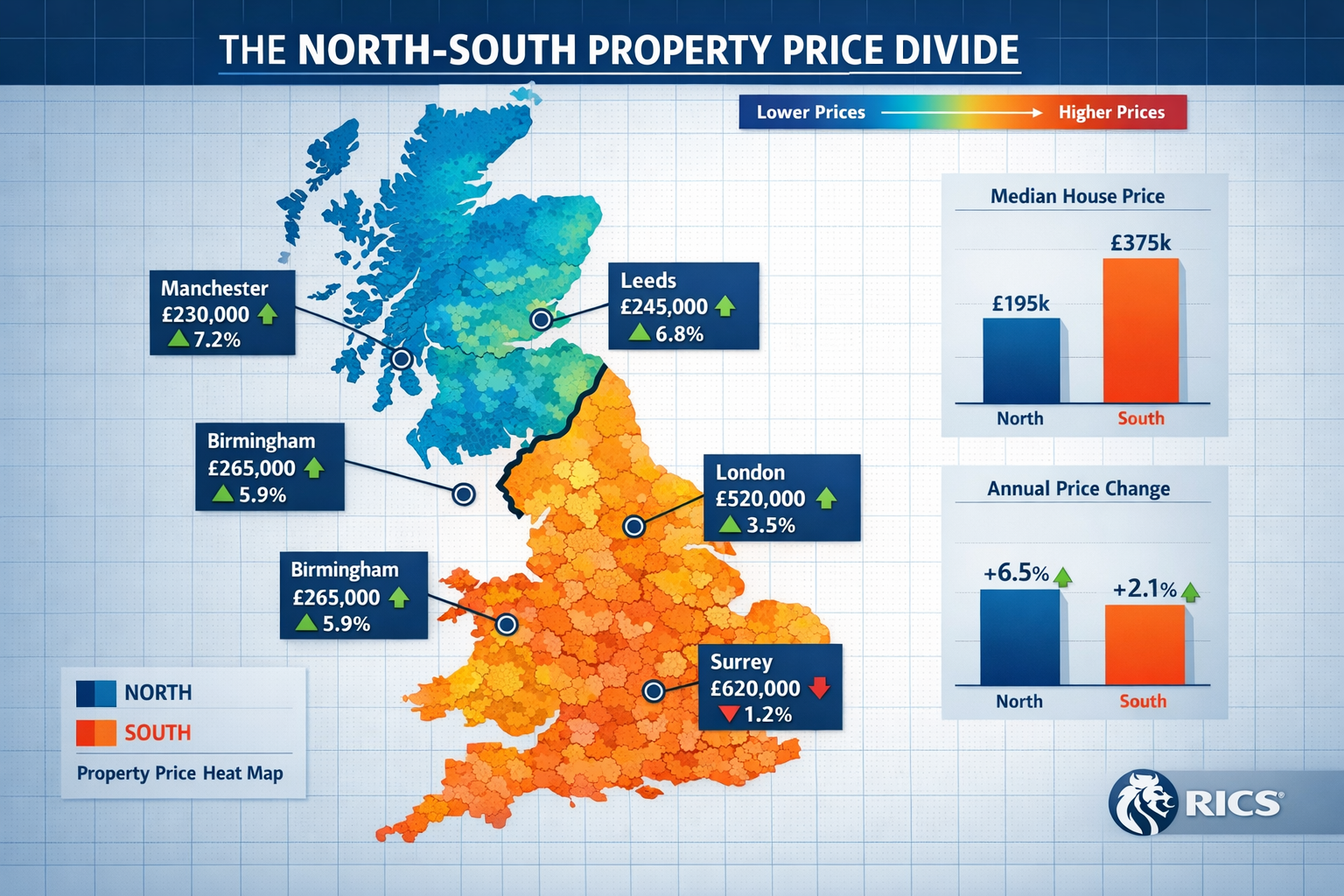
The UK property market has never been more geographically divided. In 2026, the North-South divide isn't just a political talking point—it's a fundamental challenge that professional surveyors face daily when valuing properties across diverging regional markets. With average house prices in London exceeding £550,000 while Northern cities hover around £200,000, understanding how to accurately value properties in these contrasting markets has become essential for surveyors, buyers, and investors alike.
Valuing North vs South UK Properties in 2026: Surveyor Techniques for Diverging Regional Markets requires more than just applying standard RICS methodology. It demands regional expertise, market-specific adjustment techniques, and an understanding of the unique factors driving each market's performance.
Key Takeaways
- Regional price gaps have widened significantly in 2026, with Southern properties commanding premiums of 150-200% over comparable Northern stock
- Surveyor valuation techniques must adapt to regional market dynamics, employing different comparable selection criteria and adjustment factors
- Technology and data analytics are transforming how surveyors assess regional markets, with AI-powered tools providing more accurate comparable sales analysis [1]
- Market recovery patterns differ dramatically between regions, requiring surveyors to apply distinct red flags and risk assessments
- Professional surveyors must maintain regional expertise through continuous market monitoring and local knowledge networks
Understanding the North-South Property Divide in 2026
The Current State of Regional Price Disparities
The North-South divide in UK property values has reached unprecedented levels in 2026. According to recent market analysis, the average property in the South East commands prices that are 2.5 times higher than equivalent properties in the North East. This disparity isn't simply about location—it reflects fundamental differences in economic activity, employment opportunities, infrastructure investment, and housing stock characteristics.
Key Regional Price Benchmarks (2026):
| Region | Average House Price | Year-on-Year Change | Price per Square Foot |
|---|---|---|---|
| London | £552,000 | +3.2% | £685 |
| South East | £425,000 | +4.1% | £425 |
| South West | £368,000 | +3.8% | £380 |
| North West | £215,000 | +2.1% | £195 |
| North East | £165,000 | +1.8% | £165 |
| Yorkshire | £198,000 | +2.4% | £180 |
These figures demonstrate that chartered surveyors in London face entirely different valuation challenges compared to their counterparts working in Northern markets.
Economic Drivers Behind Regional Divergence
Several macroeconomic factors continue to drive the regional divide in 2026:
🏢 Employment Concentration: London and the South East maintain their dominance in high-paying sectors including finance, technology, and professional services, supporting higher property values.
🚄 Infrastructure Investment: The completion of HS2 Phase 1 has paradoxically widened the gap, making London more accessible while increasing Southern property demand.
📈 Foreign Investment: International buyers continue to favor Southern markets, particularly London and Surrey, driving prices beyond domestic affordability levels.
💼 Remote Work Evolution: While initially predicted to narrow the gap, hybrid working has actually reinforced Southern dominance as professionals seek proximity to major employment hubs for 2-3 days per week.
"The regional property market divergence we're witnessing in 2026 isn't temporary—it's structural. Surveyors must fundamentally rethink their valuation approaches based on regional economic realities rather than applying one-size-fits-all methodologies." — RICS Regional Markets Report
Surveyor Techniques for Valuing North vs South UK Properties in 2026
Comparable Sales Analysis: Regional Adaptations
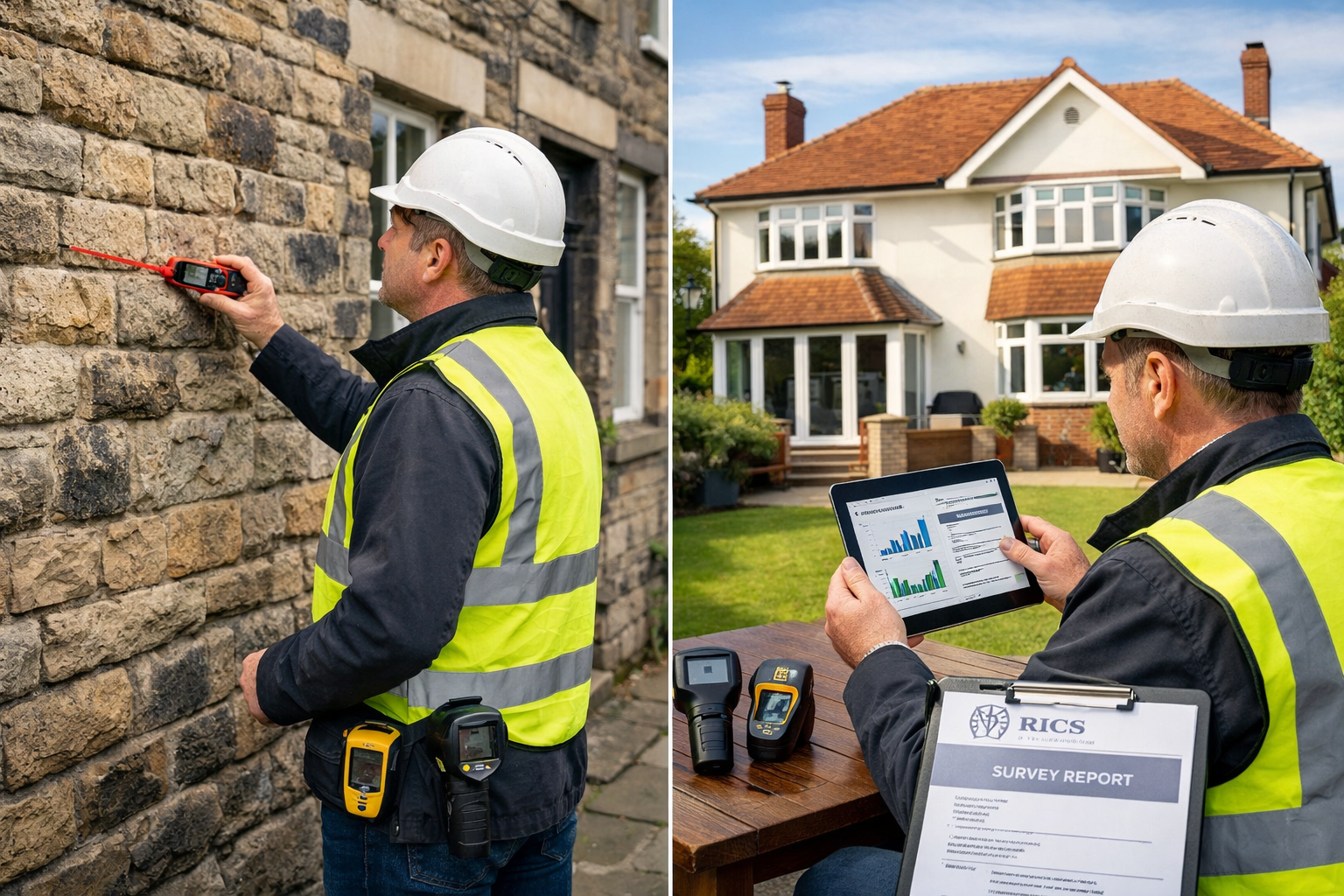
Comparable sales analysis remains the cornerstone of property valuation, but its application varies significantly between Northern and Southern markets. Surveyors must adjust their approach based on regional market characteristics.
Southern Market Comparable Selection
When valuing properties in Southern regions, surveyors face unique challenges:
Tight Geographic Parameters: In high-value areas like North West London, comparables must typically be within 0.5 miles of the subject property. Postcode variations can represent £100,000+ value differences.
Recent Transaction Requirement: Southern markets move rapidly. Comparables older than 3 months may require significant adjustment factors, particularly in areas experiencing rapid gentrification.
Micro-Market Analysis: Southern valuations demand understanding of street-level variations. A property on a tree-lined avenue may command a 15-20% premium over an identical property on a through-road just 200 meters away.
Property Condition Premium: Southern buyers place higher emphasis on modernization. A fully renovated property may achieve 25-35% premiums over comparable unrenovated stock, versus 10-15% in Northern markets.
Northern Market Comparable Selection
Northern property valuations require different considerations:
Broader Geographic Search: Comparable properties may need to be sourced from a 2-3 mile radius due to lower transaction volumes in specific neighborhoods.
Extended Time Horizons: With slower market turnover, surveyors may need to consider comparables from the past 6-12 months, applying appropriate time adjustments.
Housing Stock Homogeneity: Many Northern cities feature extensive terraced housing stock with similar characteristics, making comparable selection more straightforward but requiring careful attention to subtle differentiators.
Value-Add Potential: Northern markets show greater sensitivity to development potential. Properties with conversion or extension possibilities may command significant premiums relative to their current condition.
Valuation Adjustment Methodologies
Professional surveyors employ sophisticated adjustment techniques when comparing properties across regional markets. Understanding these methodologies is essential for accurate valuations.
Time Adjustments
Market velocity differs dramatically between regions:
- Southern markets: Apply 0.3-0.5% monthly adjustment for comparables older than 3 months
- Northern markets: Apply 0.15-0.25% monthly adjustment for comparables older than 6 months
- High-value properties over £2 million: Require specialized adjustment techniques [3]
Location Adjustments
Geographic premiums vary by region:
Southern Location Factors:
- Proximity to Underground stations: +5-15%
- School catchment areas (Outstanding rated): +10-25%
- Conservation areas: +8-12%
- River/park views: +15-30%
Northern Location Factors:
- City center proximity: +5-10%
- School catchment areas (Outstanding rated): +5-12%
- Conservation areas: +3-8%
- Green space access: +5-15%
Condition and Specification Adjustments
The approach to Level 3 building surveys reveals different regional priorities:
Southern Market Priorities:
- Kitchen and bathroom quality (high-end finishes command significant premiums)
- Energy efficiency ratings (EPC Band C+ increasingly expected)
- Smart home technology integration
- Outdoor space quality and landscaping
Northern Market Priorities:
- Structural soundness and maintenance condition
- Heating system efficiency
- Double glazing and insulation
- Off-street parking availability
Technology-Enhanced Valuation Techniques
Surveying in 2026 has been transformed by technological advances that improve valuation accuracy across all regions [1].
AI-Powered Comparable Analysis: Machine learning algorithms now analyze thousands of transactions to identify truly comparable properties, accounting for subtle factors human surveyors might miss.
Automated Valuation Models (AVMs): While not replacing professional judgment, AVMs provide valuable baseline valuations and help identify outliers requiring additional investigation [2].
Drone Survey Technology: Particularly valuable in Northern markets with extensive terraced housing, drones enable rapid roof condition assessments across multiple properties.
Thermal Imaging Integration: Advanced thermal imaging helps surveyors identify insulation deficiencies and damp issues, critical factors in older Northern housing stock.
Digital Comparable Databases: Real-time access to transaction data enables surveyors to identify market trends and adjust valuations accordingly.
Red Flags and Risk Assessment in Diverging Regional Markets

Southern Market Red Flags
When conducting valuations in Southern markets, experienced surveyors watch for specific warning signs:
Overvaluation Indicators
Comparable Outliers: Properties selling for 15%+ above recent comparables without clear justification warrant scrutiny. This often indicates buyer desperation or uninformed purchasing rather than genuine market value.
Rapid Price Escalation: Year-on-year increases exceeding 10% in established areas may signal market overheating rather than sustainable growth.
Developer-Driven Pricing: New developments pricing significantly above surrounding resale values often struggle to maintain valuations in market corrections.
Leasehold Ground Rent Issues: Properties with escalating ground rents or short leases (under 80 years) require substantial valuation adjustments that buyers often underestimate.
Structural and Legal Concerns
Southern properties, particularly in areas like Bexley and Sussex, present specific challenges:
- Victorian and Edwardian stock: Subsidence risks, aging drainage systems, and original single-glazed windows
- Converted flats: Quality of conversion work, soundproofing adequacy, and building insurance complications
- Conservation area restrictions: Limitations on modifications affecting future value and marketability
- Japanese knotweed prevalence: Particularly problematic in suburban Southern areas
Northern Market Red Flags
Northern property valuations require attention to different risk factors:
Market Recovery Indicators
Understanding recovery patterns is crucial for Northern valuations:
Gentrification Trajectory: Areas showing early gentrification signs (new coffee shops, young professional influx, property renovations) may justify premium valuations, but surveyors must distinguish genuine transformation from temporary trends.
Employment Sector Dependency: Cities heavily reliant on single industries face valuation volatility. Surveyors should apply risk discounts of 5-10% in such markets.
Transaction Volume Analysis: Neighborhoods with declining sales volumes may indicate weakening demand, warranting conservative valuations regardless of asking prices.
Rental Yield Compression: Falling rental yields often precede capital value corrections, particularly in buy-to-let dominated areas.
Property-Specific Concerns
Northern housing stock presents distinct challenges requiring specialist surveyor attention:
🏚️ Non-Traditional Construction: Concrete panel systems, steel-framed properties, and other non-traditional builds require specialist valuation approaches and often face mortgage lending restrictions.
💧 Damp and Condensation: Older Northern terraced housing frequently suffers from penetrating damp, rising damp, and condensation issues requiring significant remediation costs.
🔥 Heating System Adequacy: Solid-wall properties without cavity insulation face high heating costs, affecting desirability and value.
⚠️ Mining and Subsidence: Former industrial areas may have historical mining activity affecting foundations and requiring specialist subsidence surveys.
Mortgage Valuation Considerations
The impact of mortgage rate fluctuations on property valuations varies by region [4]. In 2026, surveyors must consider:
Southern Market Sensitivity: High-value properties show greater sensitivity to interest rate changes. A 1% rate increase can reduce borrowing capacity by £50,000-£100,000, directly impacting achievable prices.
Northern Market Resilience: Lower price points mean Northern properties show greater resilience to rate changes, with first-time buyer demand remaining relatively stable.
Lending Criteria Regional Variations: Lenders apply stricter criteria to properties in former industrial areas, affecting valuations even when physical condition is satisfactory.
Advanced Surveyor Strategies for Regional Market Expertise
Building Regional Knowledge Networks
Successful surveyors in 2026 maintain extensive regional networks providing market intelligence that data alone cannot capture:
Local Estate Agent Relationships: Regular contact with active agents provides insights into buyer behavior, negotiation patterns, and emerging market trends.
Solicitor and Conveyancer Networks: Legal professionals often identify issues affecting valuations before they become widely known (planning disputes, contamination issues, infrastructure projects).
Local Authority Engagement: Understanding upcoming planning decisions, regeneration schemes, and infrastructure investments enables forward-looking valuations.
Professional Surveyor Peer Groups: Regional RICS chapters facilitate knowledge sharing about market-specific challenges and valuation approaches.
Continuous Professional Development
The diverging regional markets demand ongoing education:
📚 Regional Market Reports: Regular review of RICS regional market surveys, Land Registry data, and local authority housing strategies.
🎓 Specialist Training: Advanced courses in commercial building surveys, heritage property valuation, and non-traditional construction assessment.
💻 Technology Proficiency: Mastery of valuation software, GIS mapping tools, and data analytics platforms.
🏛️ Regulatory Updates: Staying current with building regulations, EPC requirements, and lending criteria changes affecting regional markets.
Valuation Report Best Practices
Professional chartered surveyors in 2026 produce comprehensive reports that address regional market nuances:
Regional Market Context Section: Every valuation should include analysis of local market conditions, recent transaction trends, and regional economic factors.
Comparable Sales Justification: Detailed explanation of why specific comparables were selected and how adjustments were calculated, with particular attention to regional factors.
Risk Assessment: Clear identification of market-specific risks affecting the valuation, from structural concerns to market volatility.
Future Market Commentary: Professional opinion on likely market trajectory based on regional economic indicators and development pipelines.
Photographic Evidence: Comprehensive property photography supporting valuation conclusions, particularly for Level 2 vs Level 3 surveys.
Specialized Valuation Services
Regional market divergence has created demand for specialized surveyor services:
Portfolio Valuations: Investors with multi-regional portfolios require consistent valuation approaches adapted to local markets.
Development Appraisals: Regional variations in construction costs, planning requirements, and achievable sales values demand location-specific analysis.
Matrimonial Valuations: Matrimonial valuations require particular sensitivity to regional market conditions affecting asset division.
Tax-Related Valuations: Capital gains tax valuations and ATED valuations must reflect accurate regional market values for compliance purposes.
Practical Applications: Case Studies
Case Study 1: Victorian Terrace Valuation Comparison
Northern Property (Leeds):
- 3-bed mid-terrace, 1,200 sq ft
- Original features, needs modernization
- Comparable sales: £185,000-£205,000
- Final valuation: £195,000
- Key factors: Structural soundness, location near city center, development potential
Southern Property (Putney):
- 3-bed mid-terrace, 1,200 sq ft
- Fully modernized, original features retained
- Comparable sales: £725,000-£795,000
- Final valuation: £765,000
- Key factors: Proximity to Underground, school catchment, specification quality
Surveyor Insights: The 3.9x price differential reflects not just location but fundamentally different buyer priorities. Northern buyers focus on value and potential; Southern buyers pay premiums for completed modernization and location convenience.
Case Study 2: New Build Apartment Valuation
Northern Property (Manchester):
- 2-bed apartment, 850 sq ft
- City center development
- Developer asking price: £245,000
- Surveyor valuation: £225,000
- Adjustment rationale: Developer premium above resale comparables, market oversupply concerns
Southern Property (Battersea):
- 2-bed apartment, 850 sq ft
- Riverside development
- Developer asking price: £625,000
- Surveyor valuation: £615,000
- Adjustment rationale: Strong resale market supports pricing, limited supply in area
Surveyor Insights: Both valuations came below asking prices, but for different reasons. The Northern property faced oversupply concerns, while the Southern property's minor adjustment reflected negotiation room rather than fundamental overpricing.
Future Trends in Regional Property Valuation
Emerging Market Dynamics
Several trends will shape Valuing North vs South UK Properties in 2026: Surveyor Techniques for Diverging Regional Markets beyond 2026:
Levelling-Up Impact: Government infrastructure investment in Northern regions may begin narrowing the gap, though effects typically lag investment by 5-10 years.
Climate Change Considerations: Flood risk and coastal erosion increasingly affect valuations, with regional variations in exposure and mitigation measures.
Energy Efficiency Requirements: Tightening EPC regulations will disproportionately impact older Northern housing stock, requiring significant investment to maintain marketability.
Demographic Shifts: Aging populations in coastal Southern areas versus younger populations in Northern cities will drive different housing demand patterns.
Technology Evolution
Surveying technology continues advancing:
Blockchain Verification: Property transaction histories becoming immutably recorded, improving comparable data reliability.
Virtual Reality Inspections: Remote surveying capabilities expanding, though not replacing physical inspections for complex valuations.
Predictive Analytics: AI models increasingly accurate at forecasting regional market movements, supporting forward-looking valuations.
Integrated Data Platforms: Seamless access to Land Registry, planning, and environmental data improving surveyor efficiency.
Conclusion
Valuing North vs South UK Properties in 2026: Surveyor Techniques for Diverging Regional Markets represents one of the most complex challenges facing property professionals today. The widening regional price gaps, driven by structural economic differences rather than temporary market conditions, demand sophisticated surveyor approaches tailored to each market's unique characteristics.
Professional surveyors must:
✅ Develop deep regional expertise through continuous market monitoring, local networking, and specialized training
✅ Adapt comparable sales methodologies to reflect regional market dynamics, transaction volumes, and buyer priorities
✅ Employ technology strategically while maintaining the professional judgment that distinguishes expert valuations from automated estimates
✅ Identify region-specific red flags from Southern market overheating indicators to Northern structural concerns
✅ Communicate clearly with clients about regional market contexts affecting valuations
The divergence between Northern and Southern property markets isn't diminishing—it's evolving. Surveyors who invest in understanding these regional nuances, maintain current market knowledge, and apply appropriate valuation techniques will provide the most accurate and valuable service to their clients.
Next Steps
For Property Buyers: Engage RICS registered valuers with demonstrated regional expertise before making purchase decisions. Request detailed comparable analysis and regional market commentary.
For Property Professionals: Invest in continuous professional development focused on regional market specialization. Build local knowledge networks and maintain current awareness of market trends.
For Investors: Recognize that regional markets require different investment strategies and risk assessments. Seek professional valuations that account for regional economic fundamentals, not just current pricing.
For Surveyors: Embrace technology while maintaining the professional judgment that clients value. Develop regional specializations and communicate your expertise through comprehensive, context-rich valuation reports.
The UK property market's regional divergence creates both challenges and opportunities. With proper expertise, appropriate techniques, and ongoing market engagement, surveyors can navigate these diverging markets successfully, providing the accurate valuations that underpin sound property decisions across all UK regions.
References
[1] 2026 Forecasts Technology And Surveying – https://mortgagesoup.co.uk/2026-forecasts-technology-and-surveying/
[2] Property Valuation Guide 2026 – https://morrisarmitage.co.uk/property-valuation-guide-2026/
[3] Post Budget 2026 Valuation Challenges Surveyor Strategies For High Value Properties Over 2 Million – https://nottinghillsurveyors.com/blog/post-budget-2026-valuation-challenges-surveyor-strategies-for-high-value-properties-over-2-million
[4] Impact Of Mortgage Rate Cuts On 2026 Property Valuations Surveyor Adjustment Techniques – https://nottinghillsurveyors.com/blog/impact-of-mortgage-rate-cuts-on-2026-property-valuations-surveyor-adjustment-techniques
