
From 1 May 2026, an estimated 4.5 million pet-owning households in England gained the legal right to request permission to keep animals in rented accommodation under the Renters' Rights Act. For landlords and buy-to-let (BTL) investors, this single legislative shift has fundamentally altered the risk landscape — and it has forced surveyors to rethink how they approach valuation risk assessments for pet-friendly rentals post-Renters' Rights Act May 2026: surveyor adjustments for wear and tear. Understanding how these adjustments work, what documentation surveyors now expect, and how valuations are recalibrated is no longer optional for property professionals.
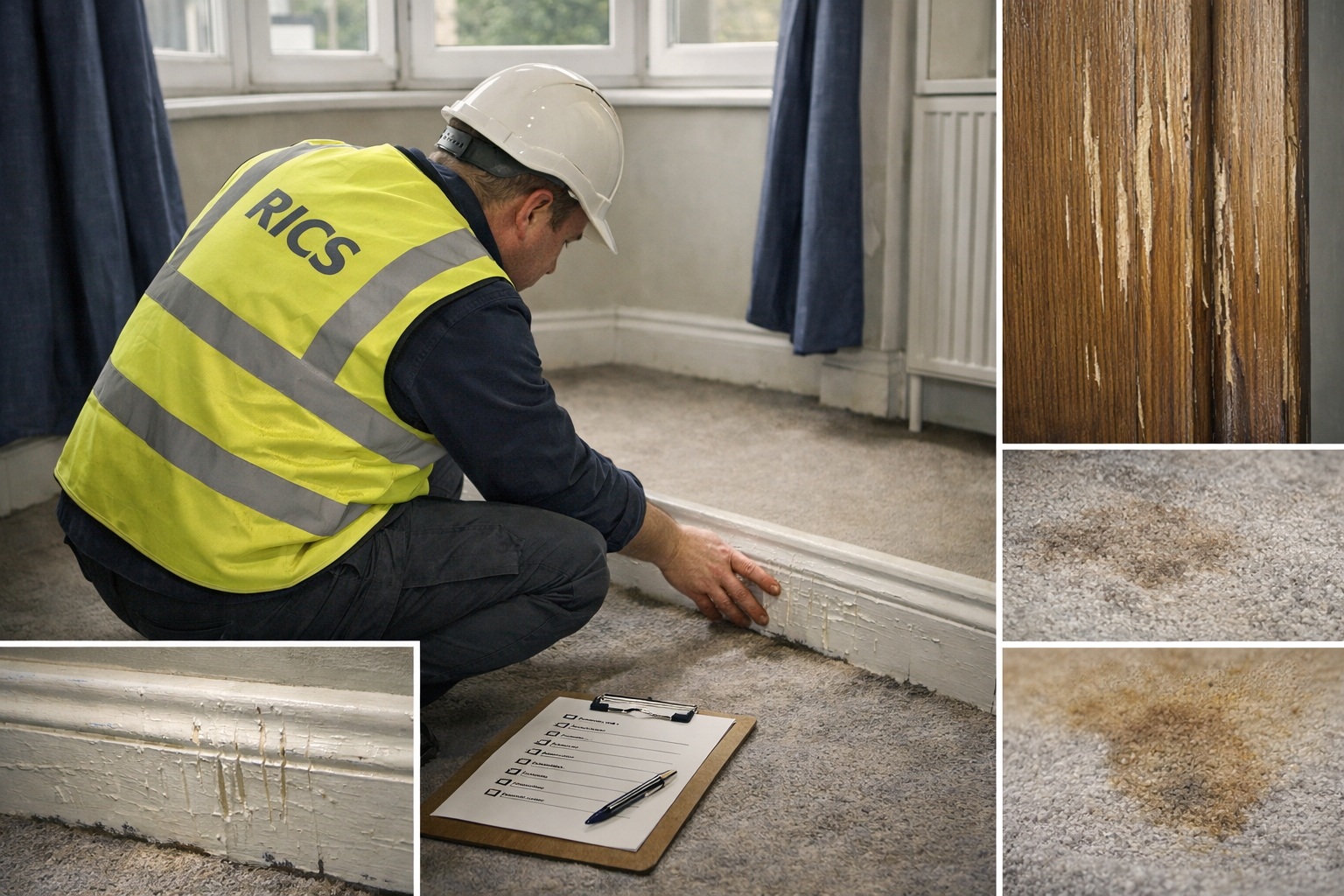
Key Takeaways 📋
- The Renters' Rights Act (May 2026) gives tenants the right to request pets, and landlords must have reasonable grounds to refuse.
- Surveyors now apply specific risk adjustments to BTL valuations where pet occupancy is confirmed or likely, affecting yield calculations and insurance premiums.
- Separate pet deposits are banned — only the standard tenancy deposit (capped at five weeks' rent) can be used to cover damage beyond fair wear and tear.
- Schedules of condition have become a critical tool for landlords seeking to protect their position in dilapidations disputes.
- Thorough documentation — inventories, check-in/check-out reports, and photographic evidence — is now essential for any landlord accepting pets.
What the Renters' Rights Act 2026 Actually Changed for Pet Permissions
Before May 2026, landlords could include blanket "no pets" clauses in tenancy agreements with little legal challenge. The Renters' Rights Act removed that default position. Tenants can now formally request to keep a pet, and landlords must respond within 42 days. Refusal is only permissible on reasonable grounds — such as evidence of potential excessive wear or the property's unsuitability for animals [1].
Crucially, the Act also prohibits landlords from charging separate pet deposits or additional pet fees on top of the standard tenancy deposit [1][2]. This creates a direct tension: landlords face greater exposure to pet-related dilapidations but have fewer financial tools to offset that risk upfront.
💬 "The prohibition on pet deposits doesn't eliminate risk — it transfers it. Surveyors must now price that transferred risk into valuations from the outset."
The standard deposit remains capped at five weeks' rent and can still be used to cover damage that exceeds fair wear and tear [2]. But defining that threshold — especially where pets are involved — is where the surveyor's role becomes pivotal.
What Counts as "Fair Wear and Tear" in a Pet-Occupied Property?
Fair wear and tear refers to the reasonable deterioration of a property through normal, everyday use. In a pet-free tenancy, this might include minor scuffs on walls or light carpet flattening. In a pet-occupied property, the baseline shifts — but it does not shift indefinitely.
Surveyors and arbitrators now distinguish between:
| Type of Damage | Classification |
|---|---|
| Slight carpet flattening from pet movement | Fair wear and tear |
| Deep claw scratches on hardwood floors | Damage beyond fair wear and tear |
| Minor odour absorbed into soft furnishings | Fair wear and tear (short tenancy) |
| Persistent urine staining requiring subfloor replacement | Damage beyond fair wear and tear |
| Light scuffs on skirting boards from pet contact | Fair wear and tear |
| Chewed door frames or structural woodwork | Damage beyond fair wear and tear |
This distinction is not merely academic. It directly informs how surveyors prepare schedules of condition and how dilapidations are calculated at the end of a tenancy.
How Surveyors Conduct Valuation Risk Assessments for Pet-Friendly Rentals Post-Renters' Rights Act May 2026: Surveyor Adjustments for Wear and Tear
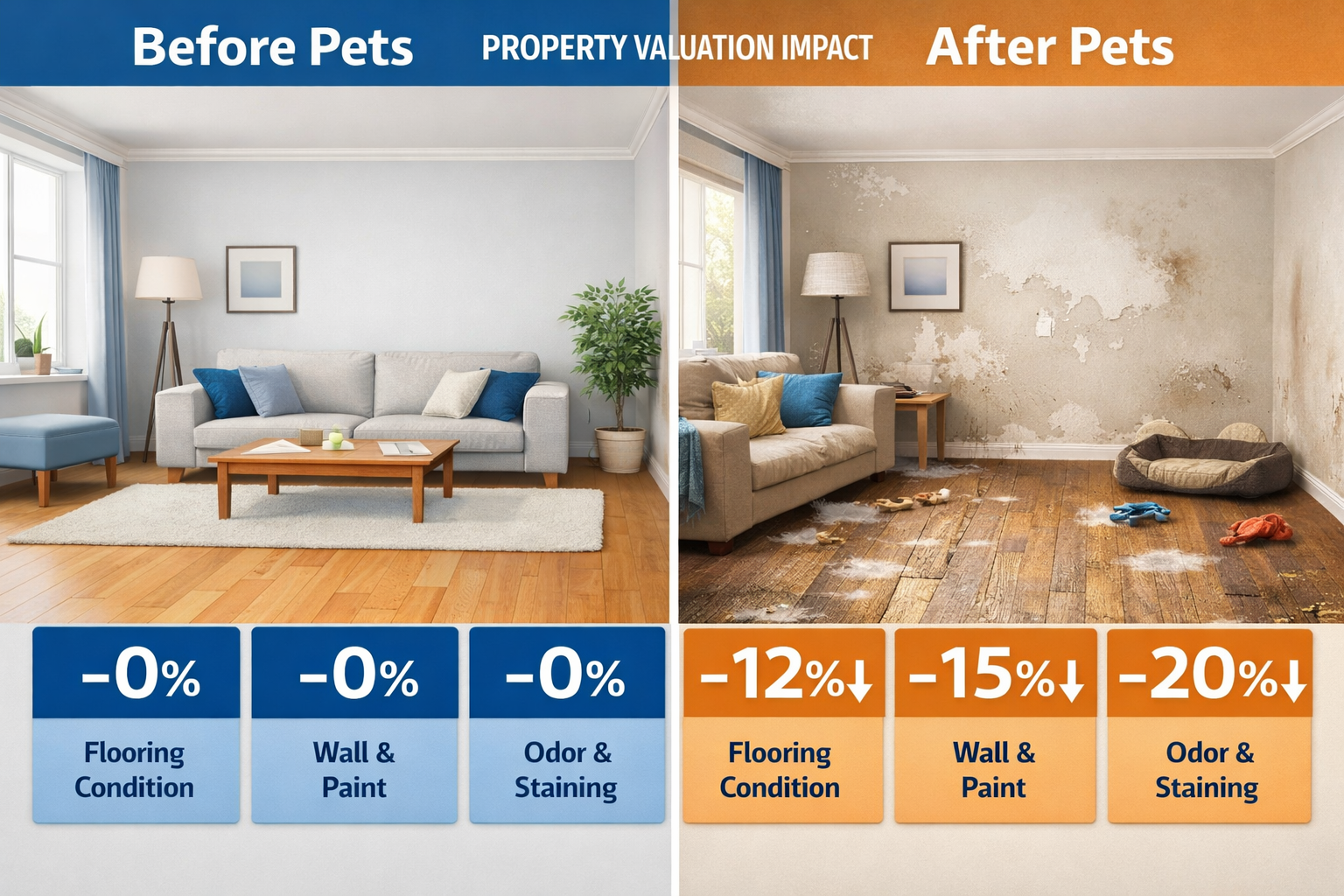
The methodology surveyors use to assess BTL properties has evolved considerably since May 2026. A property that is — or is likely to become — pet-friendly now triggers a distinct set of risk considerations within the valuation process.
1. Baseline Condition Assessment
Before any adjustment is applied, a surveyor establishes the property's current physical condition. This involves a thorough inspection of:
- Flooring types and condition (hardwood, laminate, and carpet are rated differently for pet risk)
- Wall finishes (painted plaster vs. wallpaper; the latter is significantly more vulnerable)
- Joinery and fixtures (skirting boards, door frames, window sills)
- HVAC and ventilation systems (pet hair and dander can affect air quality and filter longevity)
- Garden or outdoor areas (soil compaction, lawn damage, fence integrity)
For landlords seeking a formal benchmark, a schedule of condition report produced before a pet-owning tenant moves in is now considered best practice — and in some cases, a professional necessity.
2. Risk-Adjusted Yield Calculations
Surveyors conducting RICS valuations for BTL properties now incorporate a pet-occupancy risk factor into yield calculations. This adjustment accounts for:
- Accelerated depreciation of interior finishes
- Increased void periods between tenancies (time required for remediation)
- Higher maintenance and redecoration costs over the investment horizon
- Potential impact on future sale value if damage is extensive
In practical terms, a surveyor may apply a downward adjustment to the estimated rental value (ERV) or increase the capitalisation rate used to derive the property's investment value — effectively reducing the assessed capital value.
🔑 Key point: The size of the adjustment varies by property type. A purpose-built flat with laminate flooring and neutral décor carries a lower pet-risk premium than a period property with original floorboards, ornate cornicing, and fitted carpets throughout.
3. Insurance Reinstatement Implications
Pet occupancy also affects the insurance reinstatement valuation of a property. Surveyors must consider whether the declared reinstatement cost adequately reflects the potential for accelerated wear or structural damage caused by animals. In some cases, insurers are now requesting updated reinstatement cost valuations where a property transitions from a no-pets to a pets-permitted tenancy.
Landlord insurance policies vary significantly in how they treat pet damage. Some policies exclude pet-related damage entirely; others cover it subject to evidence of proper documentation. Surveyors advising landlords should flag this distinction clearly in their reports.
4. Dilapidations Schedules and End-of-Tenancy Assessments
The schedule of dilapidations has become one of the most contested documents in the post-Act landscape. When a pet-owning tenant vacates, the surveyor's task is to:
- Compare the property's condition against the original schedule of condition
- Identify damage that exceeds fair wear and tear
- Attribute costs to specific items of damage
- Distinguish between damage caused by the pet and damage caused by the tenant directly
This last point is legally significant. The Act does not create a separate liability regime for pets — the tenant remains responsible for all damage beyond fair wear and tear, regardless of its source [3].
Documentation Standards: The Surveyor's New Minimum Requirements
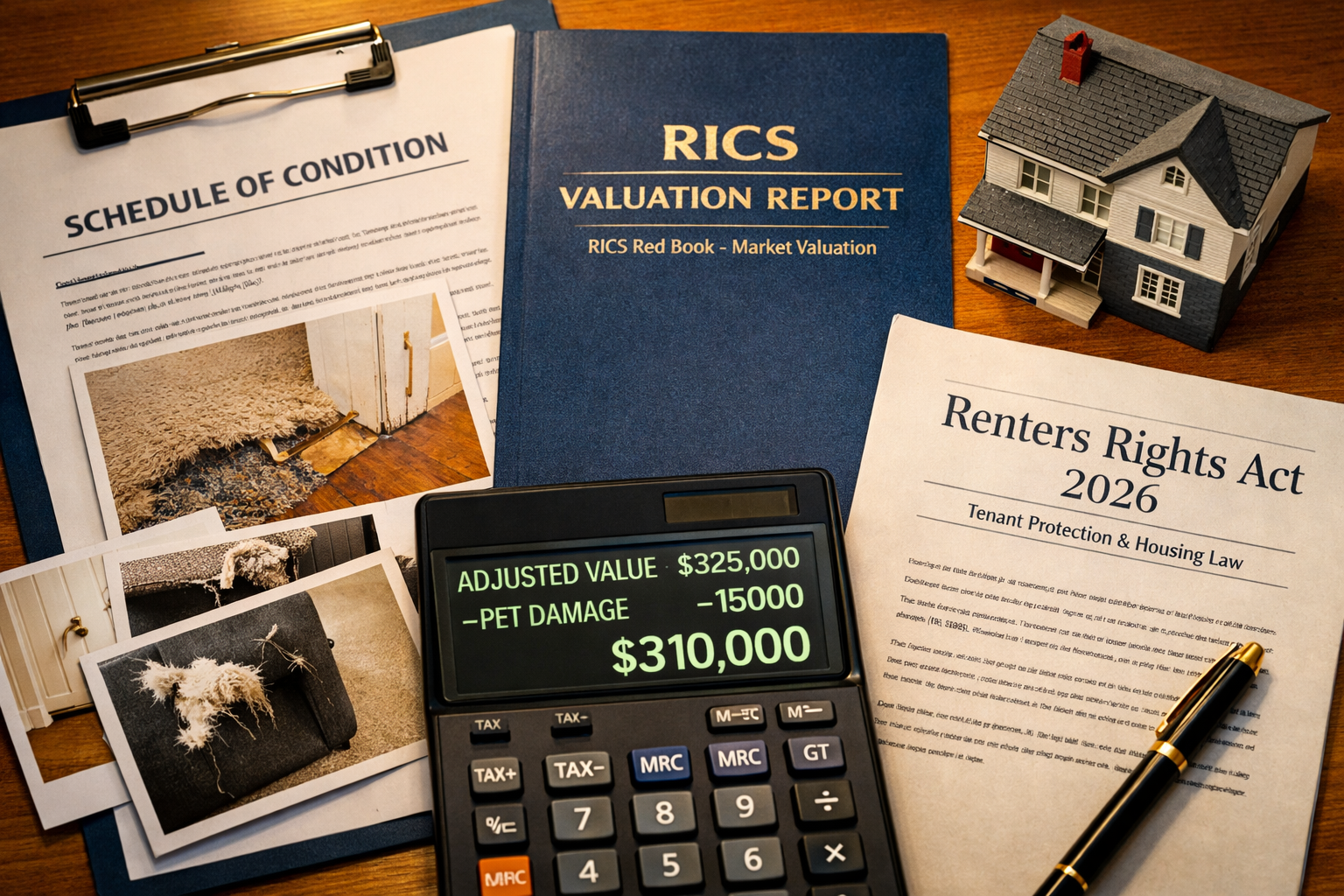
The shift in legislation has raised the bar for documentation across the entire tenancy lifecycle. Surveyors advising landlords now recommend a three-stage evidence framework:
Stage 1: Pre-Tenancy Documentation 📁
- Detailed written inventory covering every room, fixture, and fitting
- Photographic record with timestamps and consistent angles for comparison
- Schedule of condition prepared by a qualified surveyor
- Written confirmation of the pet permission request and the landlord's response
Stage 2: Mid-Tenancy Inspections 🔍
- Periodic inspections (typically quarterly) with written reports
- Photographic updates where deterioration is noted
- Written communication to the tenant where concerns arise
Stage 3: Check-Out Assessment 📊
- Formal check-out report comparing current condition to the original inventory
- Photographic evidence of any damage claimed
- Surveyor-prepared dilapidations schedule where damage is significant
- Itemised cost estimates from qualified contractors
Landlords who fail to maintain this documentation trail face a significantly weakened position in any dispute [1][2]. The Tenancy Deposit Scheme (TDS) and similar adjudication services consistently award in favour of tenants where landlords cannot produce clear, contemporaneous evidence.
💬 "A landlord without a pre-tenancy schedule of condition is essentially arguing in the dark. The burden of proof sits with the landlord — and documentation is the only torch."
Reasonable Refusal: When Can Landlords Say No?
While the Act creates a presumption in favour of pet permission, landlords retain the right to refuse where there is genuine evidence of risk. Surveyors can play a key role here by providing professional assessments that support a landlord's refusal on the grounds of potential excessive wear [1].
Valid grounds for refusal may include:
- ✅ Property contains original or irreplaceable period features
- ✅ Lease terms (in leasehold properties) prohibit animals
- ✅ The property has inadequate outdoor space for the animal in question
- ✅ The building's structure or finish is particularly vulnerable to damage
Surveyors providing expert opinions in support of refusal should ensure their assessments are proportionate, evidence-based, and clearly linked to the specific property characteristics — not generic assumptions about pet ownership.
Practical Implications for Buy-to-Let Investors and Landlords
For landlords navigating this new environment, the financial calculus has changed. Understanding the cost of valuation services — including schedules of condition and dilapidations reports — is now part of the operational cost of running a BTL portfolio.
Here is a summary of the key financial considerations:
| Cost Item | Estimated Range (2026) | Frequency |
|---|---|---|
| Schedule of condition (surveyor-prepared) | £200 – £500 | Per tenancy |
| Dilapidations report | £300 – £800 | End of tenancy (if disputed) |
| Reinstatement cost valuation update | £250 – £600 | On policy renewal/change |
| Landlord insurance premium uplift (pets) | 10–25% increase | Annual |
| Void period for pet-related remediation | 2–6 weeks | Per incident |
These figures are indicative and will vary by property size, location, and the extent of any damage. Landlords in higher-value markets — such as those working with chartered surveyors in West London or chartered surveyors in Hertfordshire — may face higher professional fees but also greater potential exposure in dilapidations disputes.
Should Landlords Accept Pets? A Risk-Benefit Framework
Rather than viewing the Act as purely restrictive, some property professionals argue it presents a commercial opportunity. Pet-friendly properties command a rental premium in many markets — often 5–10% above comparable non-pet properties — reflecting the scarcity of accommodation available to pet owners [4].
The decision framework for landlords should include:
- Property type and finish quality — Is the property resilient to pet-related wear?
- Tenant profile — What type of animal is being requested? A goldfish carries different risk to a large dog.
- Lease length — Longer tenancies may justify the risk if the tenant is otherwise high-quality.
- Insurance coverage — Does the current policy cover pet damage?
- Documentation readiness — Is the landlord prepared to maintain the required evidence trail?
For landlords who want a clear picture of how their property's value may be affected, a Red Book valuation conducted by a RICS-registered surveyor provides the most defensible assessment — particularly useful where disputes or refinancing are anticipated.
Conclusion: Actionable Next Steps for Landlords and Surveyors
The Renters' Rights Act May 2026 has not made pet-friendly rentals unworkable — but it has made them more complex. Valuation risk assessments for pet-friendly rentals post-Renters' Rights Act May 2026: surveyor adjustments for wear and tear are now a standard component of responsible BTL property management, not an optional extra.
Here are the most important actions to take right now:
For landlords:
- Commission a schedule of condition report before any pet-owning tenant moves in — this is the single most important protective step available.
- Review landlord insurance policies to confirm coverage for pet-related damage.
- Establish a clear, documented process for responding to pet permission requests within the 42-day window.
- Work with a RICS-qualified surveyor to understand how pet occupancy may affect the investment value of the property.
For surveyors:
- Update valuation methodologies to incorporate pet-occupancy risk factors explicitly.
- Ensure dilapidations schedules clearly distinguish between fair wear and tear and damage beyond that threshold.
- Advise landlords on reinstatement cost implications where pet permissions are granted.
- Maintain clear, evidence-based language in any reports used to support reasonable refusal decisions.
The legislative landscape has shifted. The professionals who adapt their processes, documentation standards, and valuation frameworks quickly will be best placed to protect their clients — and their own professional reputations — in the years ahead.
References
[1] Renting To Pet Owners What Changes In 2026 Under The Renters Rights Act – https://www.parkersproperties.co.uk/guides/landlord/renting-to-pet-owners-what-changes-in-2026-under-the-renters-rights-act/
[2] Renting With Pets In 2026 What Bristol Landlords Should Expect Under The New Rules – https://www.cjhole.co.uk/guides/landlord/renting-with-pets-in-2026-what-bristol-landlords-should-expect-under-the-new-rules/
[3] Guide To The Renters Rights Act – https://www.gov.uk/government/publications/guide-to-the-renters-rights-act/guide-to-the-renters-rights-act
[4] Renters Rights Bill 2026 What It Means For UK Pet Owners – https://petpals.com/news/renters-rights-bill-2026-what-it-means-for-uk-pet-owners/
