
First-time buyer mortgage approvals climbed to their highest level in nearly three years during Q1 2026 — and the ripple effect is landing squarely on the desks of building surveyors across the UK. RICS data from February 2026 confirms that first-time buyer activity is now leading the broader market recovery, not following it. For surveying firms, this is both a significant commercial opportunity and an operational stress test.
The Building Survey Demand Surge Among First-Time Buyers in Spring 2026: Operational Scaling Strategies for Surveyors in Recovering Markets is not a distant forecast — it is already reshaping appointment books, stretching turnaround times, and exposing capacity gaps in firms that haven't prepared. Spring 2026 is proving to be the inflection point that many in the profession have been anticipating since the rate-driven slowdown of 2023–2024. The question is no longer whether demand will arrive; it is whether surveying practices are structurally ready to absorb it without sacrificing quality or client experience.
This article breaks down the market conditions driving the surge, profiles the first-time buyer as a distinct survey client, and delivers concrete operational scaling strategies that surveying firms can implement right now.
Key Takeaways 📋
- First-time buyers are leading the 2026 spring market recovery, creating a concentrated surge in Level 2 and Level 3 building survey demand.
- Operational bottlenecks — not lack of demand — are the primary risk for surveying firms this season.
- Scheduling optimisation, report templating, and quality control protocols are the three highest-leverage areas for scaling capacity.
- Digital tools and associate networks can extend a firm's effective capacity by 30–50% without proportional overhead increases.
- Firms that invest in client communication systems now will build the referral pipeline that sustains revenue beyond the spring peak.
Why Spring 2026 Is Different: The First-Time Buyer Recovery

The Market Conditions Converging This Season
Several forces are colliding to make spring 2026 unusually active for property transactions — and for building surveys specifically.
Mortgage rates, while still elevated compared to pre-2022 norms, have stabilised enough for buyers who had been sitting on the sidelines to re-enter the market [3]. Sellers, meanwhile, are increasingly optimistic: a Realtor.com survey from early 2026 found that the majority of prospective sellers believe spring 2026 represents their best window to list, citing improved buyer confidence and reduced competition from distressed sellers [5]. This seller confidence is translating into more listings, which in turn gives first-time buyers more to choose from.
Showing activity data from February 2026 confirms the momentum. Buyer foot traffic at viewings was running significantly ahead of the same period in 2025, with first-time buyer segments showing the sharpest year-on-year increase [2]. Analysts at First American Economics have noted that the structural conditions — pent-up demand, demographic tailwinds from millennials entering peak homebuying age, and easing credit availability — make a sustained spring surge more likely in 2026 than in recent years [1].
The housing construction pipeline also provides context. New build starts are projected to increase modestly in 2026, but the bulk of first-time buyer transactions will continue to involve existing stock [6]. This matters enormously for surveyors: existing properties, particularly older terraced and semi-detached housing typical of first-time buyer budgets, are precisely the stock most likely to require a thorough Level 3 Building Survey rather than a lighter-touch assessment.
💬 "The spring 2026 market isn't just busier — it's structurally different. First-time buyers are driving volume, and they're buying older stock that demands rigorous inspection."
Who Is the First-Time Buyer Survey Client in 2026?
Understanding this demographic is essential for operational planning. First-time buyers in 2026 are predominantly millennials aged 28–38, often purchasing with a partner, typically buying properties priced between £250,000 and £450,000 outside London and £400,000–£700,000 within Greater London.
Key characteristics of this client segment:
| Characteristic | Implication for Surveyors |
|---|---|
| High digital literacy | Expect online booking, digital reports, fast email responses |
| First property purchase | Need more explanation and reassurance throughout the process |
| Budget-conscious | Price sensitivity, but value clear ROI on survey investment |
| Buying older stock | Higher likelihood of defects, damp, structural issues |
| Emotionally invested | Require tactful, clear communication of findings |
This buyer profile means surveyors are not just delivering a technical report — they are often guiding a client through one of the most stressful financial decisions of their life. The homebuyer survey and full building survey both serve this market, but understanding which survey fits which property is a conversation surveyors should be equipped to have quickly and confidently.
For buyers uncertain about which level of assessment they need, resources like the Level 2 vs Level 3 survey comparison guide can help set expectations before the instruction is even placed.
Operational Scaling Strategies for Surveyors in Recovering Markets
Strategy 1: Scheduling Optimisation — The Hidden Capacity Reserve
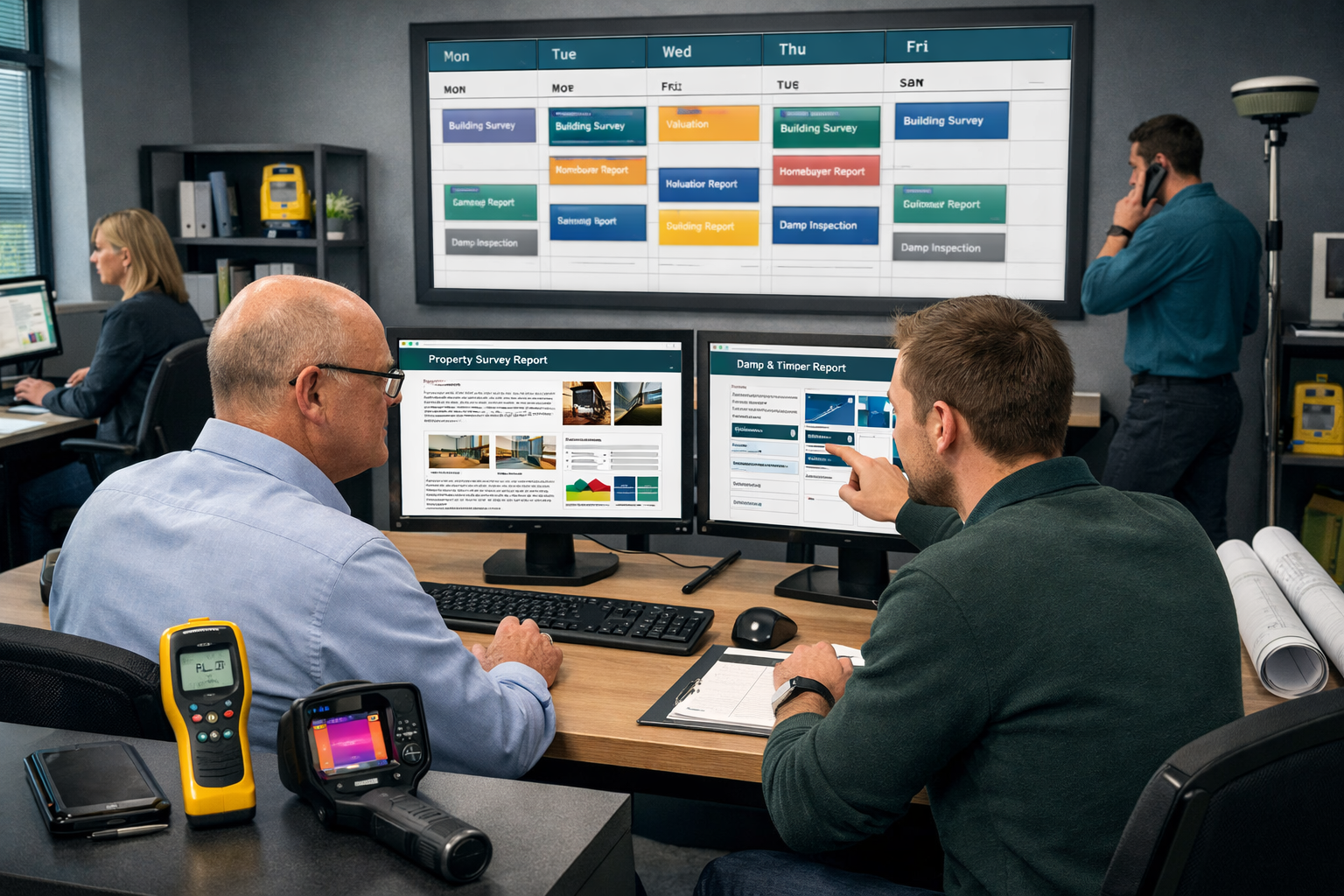
Most surveying firms lose 15–25% of their effective daily capacity to inefficient scheduling. During a demand surge, this inefficiency compounds rapidly. The Building Survey Demand Surge Among First-Time Buyers in Spring 2026 is exposing firms where scheduling is still managed through phone calls, shared spreadsheets, or legacy diary systems.
Practical scheduling improvements to implement immediately:
- 🗓️ Geographic batching: Group survey appointments by postcode cluster rather than booking order. A surveyor travelling between North London and South East London on the same day loses 60–90 minutes in transit that could be a billable appointment.
- ⏱️ Appointment duration standardisation: Assign realistic time blocks by property type and age. A Victorian terrace requires a different time allocation than a 1990s new build. Underestimating duration creates a cascade of delays that damages client trust.
- 📱 Online booking portals: Automated booking systems with real-time availability reduce administrative back-and-forth by 40–60% and allow clients to self-serve outside office hours — critical for employed first-time buyers who can't call during the day.
- 🔄 Buffer slots: Build 30-minute buffers between appointments to absorb overruns without disrupting the entire day's schedule.
The spring surge also makes the case for expanding geographic coverage deliberately. Firms already operating across multiple areas — from Ealing to Hertfordshire — can distribute demand across their surveyor network rather than concentrating it in a single area where capacity is already stretched.
Strategy 2: Report Templating and Standardisation
Report production is typically the single largest time cost in a surveyor's workflow after the inspection itself. During a volume surge, slow report turnaround creates a bottleneck that frustrates clients and delays transactions — sometimes causing them to collapse entirely.
A structured templating approach can reduce report production time by 30–50%:
-
Master templates by property type: Create distinct base templates for Victorian terraced, Edwardian semi-detached, 1960s–1980s residential, and modern new build. Each template pre-populates the sections most likely to be relevant, with standardised condition ratings and common defect language.
-
Defect library: Build a library of pre-written, professionally worded defect descriptions for the 40–50 most commonly encountered issues (rising damp, roof tile slippage, chimney repointing, timber decay, etc.). Surveyors select and adapt rather than writing from scratch.
-
Photo integration workflows: Use mobile apps that allow photos to be tagged to specific report sections during the inspection, eliminating the post-inspection matching process.
-
Quality review checklists: A standardised 15-point review checklist applied before every report is sent reduces errors and callbacks — which are far more costly in time than the review itself.
For firms handling specialist instructions alongside residential volume — such as RICS Specific Defect Surveys or structural engineer reports — maintaining separate template streams ensures that specialist work doesn't get squeezed into a residential framework that doesn't fit.
Strategy 3: Quality Control Protocols Under Pressure
The greatest operational risk during a demand surge is not missing appointments — it is a decline in report quality as surveyors rush to meet volume. A single professional indemnity claim or a RICS complaint arising from a rushed report can cost more than an entire season's additional revenue.
Quality control must be systematised, not left to individual surveyor diligence:
- Peer review rotation: Implement a system where a second surveyor reviews 10–15% of reports on a rotating basis. This maintains a quality baseline and catches issues before they reach clients.
- Client feedback loops: A brief post-report satisfaction survey (3–5 questions, automated) provides real-time quality data and catches dissatisfaction before it becomes a formal complaint.
- Escalation protocols: Define clear criteria for when a survey finding requires a specialist referral (e.g., suspected asbestos requiring an asbestos survey, or drainage concerns requiring a drainage survey). Having this protocol documented prevents both under-referral and over-referral.
- RICS Standards compliance audits: Schedule a quarterly internal audit against RICS Home Survey Standard requirements. During a busy period, compliance shortcuts are a natural risk — audits make the invisible visible.
💬 "Quality control is not a brake on scaling — it is the foundation that makes scaling sustainable. Firms that cut corners during the spring rush will spend the autumn managing the consequences."
Building a Scalable Associate and Partnership Network
Expanding Capacity Without Expanding Fixed Costs
The Building Survey Demand Surge Among First-Time Buyers in Spring 2026: Operational Scaling Strategies for Surveyors in Recovering Markets ultimately requires firms to think beyond their existing headcount. Hiring permanent staff takes months and carries long-term cost commitments. Associate surveyor networks offer a more agile solution.
Key elements of an effective associate model:
- Pre-vetted associate pool: Maintain relationships with 3–5 RICS-qualified associates who understand your firm's reporting standards and can be activated within 48–72 hours of a capacity spike.
- Standardised onboarding pack: Associates should receive your template library, quality control checklist, client communication scripts, and brand guidelines before their first instruction. This protects quality and client experience regardless of who conducts the survey.
- Clear fee structures: Agree associate rates in advance for different survey types. Ambiguity on fees creates friction at exactly the moment when speed matters most.
Firms covering wider geographic areas — such as those serving Buckinghamshire, Hampshire, and Oxfordshire — are particularly well-positioned to use associates to cover outlying areas while core staff focus on higher-density urban zones.
Client Communication as a Scaling Tool 📣
Counter-intuitively, investing in client communication reduces operational pressure during a surge. When clients know what to expect and when, inbound enquiries about status updates drop dramatically — freeing up administrative time for productive work.
Communication touchpoints to automate:
| Touchpoint | Timing | Channel |
|---|---|---|
| Booking confirmation | Immediate | Email + SMS |
| Pre-survey property checklist | 48 hours before | |
| Survey completion notification | Same day | SMS |
| Report dispatch confirmation | On sending | |
| Post-report follow-up | 5 days after |
This five-touchpoint sequence can be fully automated at minimal cost and transforms the client experience from anxious waiting to confident expectation. For first-time buyers — who are navigating an unfamiliar process — this level of communication is not a luxury; it is a differentiator that drives referrals.
Turning the Spring Surge Into a Long-Term Growth Platform
From Transactional Volume to Referral Engine
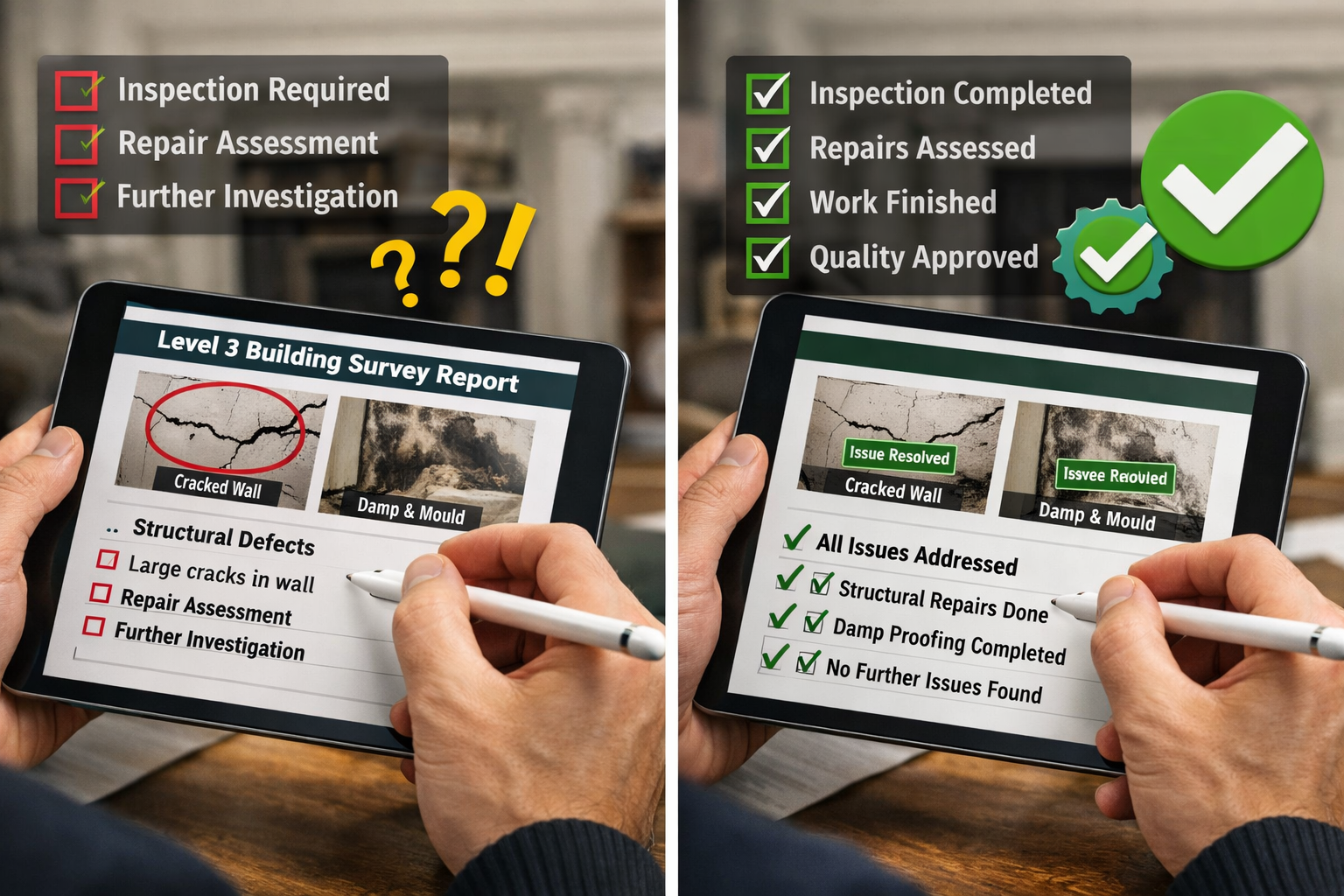
The spring 2026 surge is a one-time window to build a referral network that generates business long after the seasonal peak subsides. Every satisfied first-time buyer is a potential referral source for:
- Friends and family purchasing in the next 12–24 months
- Estate agents who witnessed a smooth, professional survey process
- Mortgage brokers who value surveyors who don't derail transactions with poorly communicated findings
The spring housing market is expected to remain active through Q2 2026, with transaction volumes running above 2025 levels [7]. NAR economists watching the 2026 market are particularly focused on whether first-time buyer momentum can sustain beyond the traditional spring window [8]. Firms that deliver excellent service now are positioning themselves for that sustained demand.
Diversifying the Service Mix
While residential building surveys are the volume driver this spring, the recovering market also creates adjacent opportunities that scalable firms should not overlook:
- Stock condition surveys for housing associations managing aging portfolios
- RICS commercial building surveys as commercial property transactions also recover
- Schedule of condition reports for landlords and tenants navigating lease renewals in an active market
Diversification smooths revenue across the cycle and reduces the risk of over-dependence on the residential first-time buyer segment, which — while strong in spring 2026 — will inevitably moderate.
Technology Investment Priorities for 2026
Surveying firms that haven't yet invested in practice management software should treat the spring surge as the business case they needed. The ROI on scheduling, reporting, and client communication tools is measured in hours per week — and during a surge, hours are the scarcest resource.
Priority technology investments ranked by impact:
- 🥇 Practice management / scheduling software — highest immediate impact on capacity
- 🥈 Mobile inspection apps with photo tagging — reduces report production time significantly
- 🥉 Automated client communication platform — reduces inbound enquiry volume
- Cloud-based report storage — enables remote review and associate collaboration
- CRM system — builds the referral database for post-surge marketing
Conclusion: Capture the Surge, Build for What Comes Next
The Building Survey Demand Surge Among First-Time Buyers in Spring 2026: Operational Scaling Strategies for Surveyors in Recovering Markets represents one of the clearest commercial opportunities the surveying profession has seen in several years. First-time buyers are re-entering the market in volume, buying properties that need proper inspection, and — critically — many are first-time survey clients who will form lasting impressions of the profession based on this experience.
Firms that treat this moment purely as a volume event will be stretched, stressed, and potentially exposed to quality failures. Firms that treat it as an operational transformation catalyst — investing in scheduling systems, report templates, quality protocols, and associate networks — will emerge from spring 2026 with greater capacity, stronger client relationships, and a referral pipeline that sustains revenue through the rest of the year.
Actionable Next Steps for Surveying Firms ✅
- This week: Audit your current scheduling system and identify the top three inefficiencies. Calculate how many additional appointments geographic batching alone could add per week.
- Within 30 days: Build or update your property-type report templates and defect description library. Set a target of reducing average report production time by 25%.
- Within 60 days: Establish your associate network with at least three pre-vetted RICS surveyors and a standardised onboarding pack.
- Ongoing: Implement the five-touchpoint client communication sequence and track your Net Promoter Score monthly throughout the spring season.
- Post-surge review: In July 2026, conduct a full operational review to capture lessons learned and embed improvements before the autumn market activity begins.
The market has done its part. The first-time buyers are arriving. The only question left is whether your firm is ready to meet them.
References
[1] Why The Spring Home Buying Season Slump May Break In 2026 – https://blog.firstam.com/economics/why-the-spring-home-buying-season-slump-may-break-in-2026
[2] February Showing Activity Spring Buyer Demand 2026 – https://www.thejamilbrothers.com/blog/february-showing-activity-spring-buyer-demand-2026
[3] Buying A Home This Spring 2026 – https://mortgagecenter.com/buying-a-home-this-spring-2026/
[4] Best Time To Sell Asking Price Survey April 2026 – https://www.realtor.com/news/trends/best-time-to-sell-asking-price-survey-april-2026/
[5] Realtor.com Survey Finds Sellers Are Optimistic Heading Into The 2026 Spring Market – https://www.prnewswire.com/news-releases/realtorcom-survey-finds-sellers-are-optimistic-heading-into-the-2026-spring-market-302740919.html
[6] 2026 Housing Market Outlook Sales Starts Trends – https://www.bldr.com/resources/blog/2026-housing-market-outlook-sales-starts-trends
[7] Spring Housing Market Accelerates Despite Mortgage Rate Spike – https://nationalmortgageprofessional.com/news/spring-housing-market-accelerates-despite-mortgage-rate-spike
[8] 2026 Real Estate Outlook What Leading Housing Economists Are Watching – https://www.nar.realtor/magazine/real-estate-news/2026-real-estate-outlook-what-leading-housing-economists-are-watching
Meta Title: Building Survey Demand Surge Spring 2026: Scaling Strategies
Meta Description: First-time buyers are driving a building survey demand surge in spring 2026. Discover operational scaling strategies for surveyors to grow capacity without sacrificing quality.
