
As of April 2026, Environmental, Social, and Governance (ESG) factors have become mandatory valuation metrics for all real estate assessments under RICS standards [1]. This regulatory shift represents more than a procedural update—it fundamentally transforms how building surveyors evaluate properties, moving beyond traditional structural assessments to comprehensive long-term viability analysis. With lenders now demanding detailed energy performance data, carbon footprint projections, and climate adaptability assessments before approving mortgages, understanding Valuation Resilience and Future-Proofing: How Building Surveyors Assess Energy Standards and Long-Term Property Viability in 2026 has become essential for property owners, buyers, and investors navigating today's market.
The convergence of stricter building regulations, mandatory sustainability reporting, and evolving lender expectations means that properties once considered valuable may now face significant valuation discounts without clear decarbonization pathways. Building surveyors have emerged as critical gatekeepers in this new landscape, equipped with advanced assessment tools and frameworks that determine whether properties meet the resilience standards required for long-term investment security.
Key Takeaways
- ESG integration is now mandatory: Since April 2026, all RICS property valuations must include Environmental, Social, and Governance factors as hard metrics, fundamentally changing assessment criteria [1]
- Energy performance directly impacts property value: Properties without clear energy efficiency pathways and decarbonization plans face significant valuation discounts and reduced marketability
- Surveyors assess 10-year financial resilience: Modern building surveys include CO₂ tax forecasting, maintenance cost projections, and climate adaptability assessments to determine long-term viability [1]
- Lenders require comprehensive energy data: Mortgage approvals increasingly depend on detailed energy performance certificates, retrofit potential assessments, and whole life carbon calculations
- Future Homes Standards reshape market expectations: UK Government regulations now mandate low-carbon, energy-efficient building standards, creating new baseline requirements for property transactions [2]
Understanding Valuation Resilience in the 2026 Property Market
Valuation resilience refers to a property's ability to maintain or increase its market value over time despite evolving regulatory requirements, environmental challenges, and changing buyer expectations. In 2026, this concept has expanded far beyond traditional factors like location and structural integrity to encompass energy efficiency, carbon footprint, and climate adaptability.
The Shift from Static to Dynamic Valuation Models
Traditional property valuations focused primarily on:
- Current market comparables
- Physical condition and structural soundness
- Location and amenities
- Historical price trends
Modern resilience-focused valuations now incorporate:
- Energy performance trajectories showing current ratings and improvement potential
- Carbon tax liability projections extending 10 years into the future [1]
- Climate risk assessments including flood, heat stress, and extreme weather vulnerability
- Retrofit feasibility analysis with cost estimates and funding opportunities
- Regulatory compliance timelines mapping required upgrades to meet future standards
This transformation reflects what commercial building surveys now routinely examine—not just what a property is today, but what it can become and what it must become to remain viable.
Why Lenders Demand Energy Resilience Data
Financial institutions have recognized that properties with poor energy performance represent higher risk investments for several compelling reasons:
🏦 Mortgage default risk increases when properties face unexpected retrofit costs or become difficult to sell due to poor EPC ratings
📉 Asset devaluation accelerates as regulatory requirements tighten and buyer preferences shift toward sustainable properties
💰 Operational costs burden occupants with high energy bills, affecting affordability and tenant retention in rental properties
🌍 Climate transition risks expose properties to both physical climate impacts and policy-driven compliance costs
Consequently, lenders now require building surveyors to provide comprehensive energy assessments as part of standard property survey processes, ensuring that financed properties can maintain value throughout the mortgage term.
How Building Surveyors Assess Energy Standards and Long-Term Property Viability in 2026
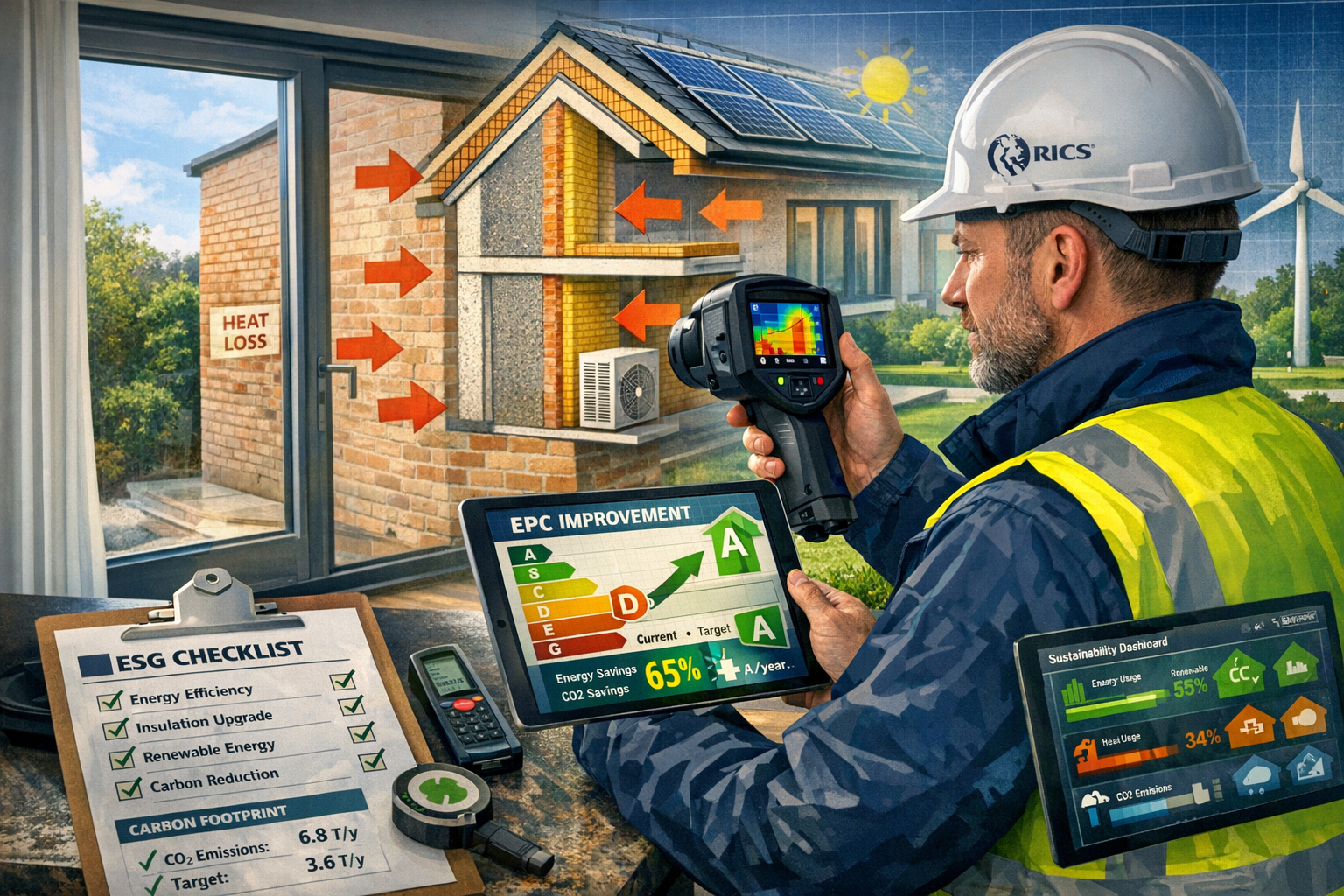
The professional toolkit available to building surveyors has expanded dramatically to address the comprehensive requirements of Valuation Resilience and Future-Proofing: How Building Surveyors Assess Energy Standards and Long-Term Property Viability in 2026. Modern assessments employ multiple specialized frameworks and reporting mechanisms.
Energy Light Reports: Rapid Initial Assessment
Energy Light Reports provide streamlined property evaluations ideal for quick decision-making on individual properties or small portfolios [1]. These reports deliver:
- ✅ Precise current energy status assessment using thermal imaging and performance testing
- ✅ Appropriate refurbishment measure identification tailored to property type and condition
- ✅ Energy efficiency class outcome forecasting showing achievable EPC ratings post-improvement
- ✅ Refurbishment cost estimates with available funding and subsidy opportunities
Originally focused on residential and commercial properties, Energy Light Reports now extend to industrial buildings [1], reflecting the comprehensive scope of modern energy assessments. For buyers requiring detailed home surveys, these reports provide essential baseline data for investment decisions.
ESG Detail Reports: Comprehensive Sustainability Evaluation
For properties requiring deeper analysis, ESG Detail Reports integrate qualified energy consulting per DIN V 18599 standards [1], combining on-site expert assessments with technical department analysis. These comprehensive evaluations include:
| Assessment Component | Details Provided |
|---|---|
| Qualified Energy Consulting | Full DIN V 18599 compliance analysis with expert on-site evaluation |
| Individual Refurbishment Schedules (iSFP) | Personalized upgrade pathways for eligible residential buildings with cost breakdowns [1] |
| 10-Year CO₂ Tax Forecasting | Projected carbon tax liabilities with owner/tenant cost allocation [1] |
| Decarbonization Pathway Mapping | Complete transition routes from current state to full sustainability compliance [1] |
| Whole Life Carbon Assessment | Comprehensive carbon footprint analysis following RICS PAS 2080 2nd edition standards [4] |
These detailed reports form the foundation for RICS registered valuations and Red Book valuations that meet mandatory ESG integration requirements.
Whole Life Carbon Assessment Integration
The integration of whole life carbon assessment into building surveys represents a fundamental shift in how surveyors evaluate property sustainability [4]. This framework examines:
- Embodied carbon: Emissions from materials, construction, and future renovations
- Operational carbon: Energy consumption and associated emissions during building use
- End-of-life carbon: Demolition, waste, and material recycling impacts
By mapping complete carbon lifecycles, surveyors can identify properties with genuine sustainability credentials versus those requiring extensive intervention to meet future standards. This analysis directly influences valuation resilience determinations, as properties with lower whole life carbon footprints command premium valuations and easier financing.
Future Homes and Buildings Standards Compliance
The UK Government's publication of Future Homes and Buildings Standards has established new regulatory baselines that building surveyors must assess against [2]. These standards mandate:
- 🏠 Low-carbon heating systems in new builds and major renovations
- 🔋 Enhanced energy efficiency requirements exceeding previous building regulations
- ♻️ Renewable energy integration where technically feasible
- 📊 Transparent performance reporting with verified EPC ratings
RICS has responded by supporting new retrofit and sustainability expertise pathways [2], ensuring chartered surveyors possess the specialized knowledge required to evaluate compliance and identify improvement opportunities. When conducting Level 2 homebuyer surveys or Level 3 building surveys, surveyors now routinely assess properties against these evolving standards.
Practical Implementation: What Surveyors Examine During Property Assessments
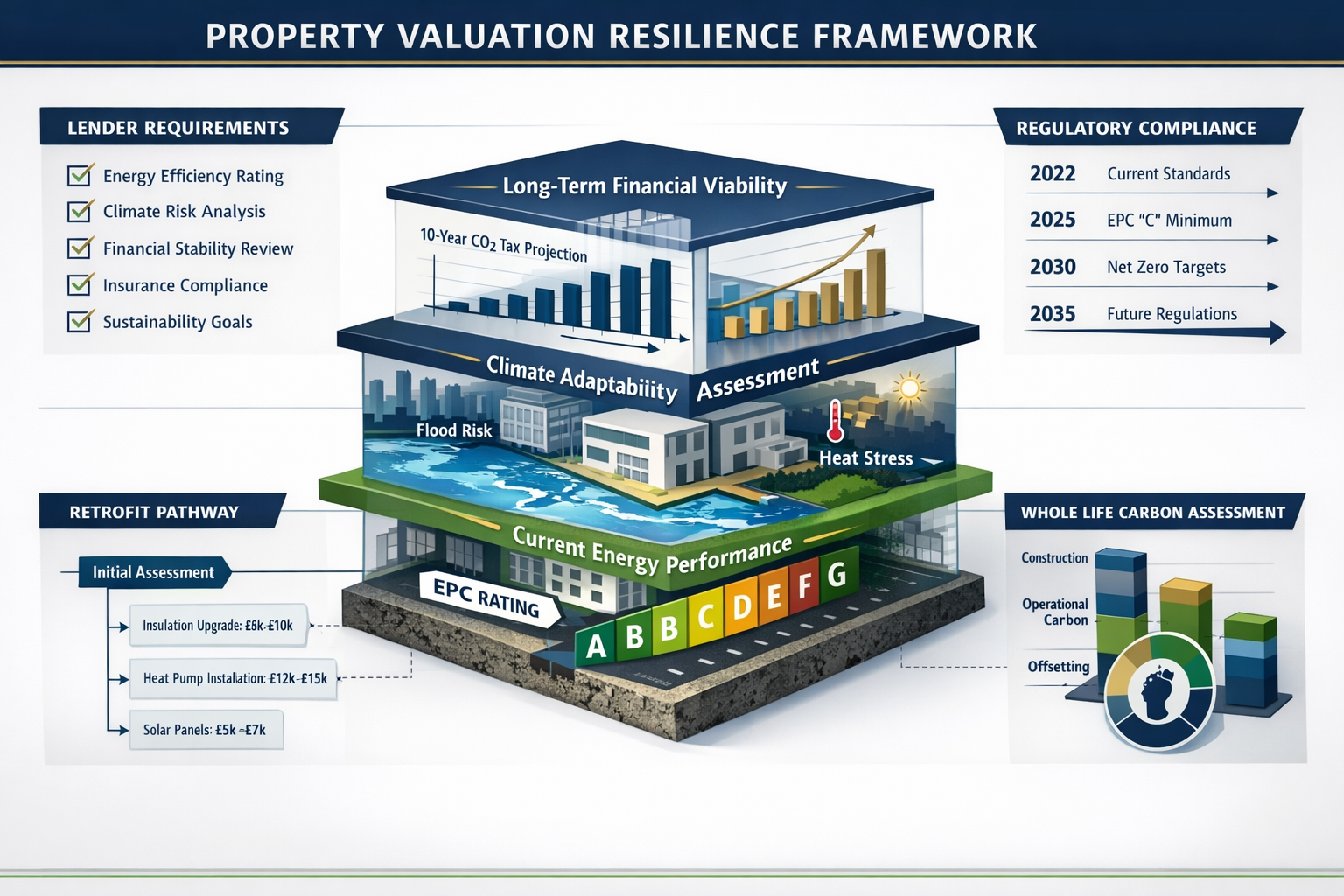
Understanding the practical application of Valuation Resilience and Future-Proofing: How Building Surveyors Assess Energy Standards and Long-Term Property Viability in 2026 requires examining the specific elements surveyors evaluate during property inspections.
Energy Performance Certificate (EPC) Analysis and Improvement Potential
Every modern building survey begins with comprehensive EPC analysis that extends beyond the current rating to assess:
Current Performance Baseline
- Existing EPC rating (A-G scale) with detailed breakdown of contributing factors
- Specific deficiencies reducing energy efficiency (insulation gaps, inefficient heating, poor glazing)
- Comparative performance against similar properties in the local market
Improvement Trajectory Mapping
- Achievable EPC ratings following recommended interventions
- Cost-benefit analysis of various upgrade pathways
- Prioritized improvement schedule balancing cost, impact, and disruption
Regulatory Compliance Timeline
- Current compliance status with minimum energy efficiency standards
- Future regulatory requirements and compliance deadlines
- Potential penalties or restrictions for non-compliant properties
This analysis forms a critical component of commercial valuations and residential assessments alike, as properties falling below minimum standards face restricted marketability and reduced values.
Thermal Performance and Building Fabric Assessment
Modern surveyors employ advanced thermal imaging technology to identify:
- Heat loss through walls, roofs, and floors
- Air leakage points compromising energy efficiency
- Thermal bridging creating cold spots and condensation risks
- Insulation deficiencies requiring remediation
These technical assessments inform specific recommendations in structural engineer reports and specific defect reports, providing actionable guidance for property improvement.
Climate Adaptability and Physical Resilience
Climate adaptability assessment examines how properties will perform under changing environmental conditions:
🌡️ Temperature resilience: Ability to maintain comfortable conditions during extreme heat without excessive cooling costs
💧 Flood risk management: Drainage adequacy, foundation protection, and water ingress prevention
🌪️ Extreme weather durability: Roof integrity, wind resistance, and storm damage vulnerability
🌳 Green infrastructure potential: Opportunities for sustainable drainage, solar installation, and biodiversity enhancement
These factors increasingly influence property values, particularly in regions experiencing significant climate impacts. Surveyors conducting subsidence surveys and drainage surveys now integrate climate change projections into their risk assessments.
Maintenance Cost Projection and Lifecycle Planning
Long-term viability assessment requires detailed maintenance cost forecasting that considers:
| Maintenance Category | Assessment Focus | Timeline |
|---|---|---|
| Immediate Repairs | Critical defects requiring urgent attention | 0-12 months |
| Short-Term Maintenance | Routine upkeep and minor improvements | 1-5 years |
| Medium-Term Upgrades | Component replacement and system modernization | 5-10 years |
| Long-Term Investment | Major renovations and energy efficiency overhauls | 10-25 years |
This comprehensive lifecycle planning enables buyers and lenders to understand the total cost of ownership beyond the purchase price, preventing unexpected financial burdens that could affect property viability.
Retrofit Feasibility and Funding Opportunities
A distinguishing feature of modern building surveys is detailed retrofit feasibility analysis [1], which examines:
- Technical viability of various energy efficiency improvements
- Structural constraints limiting retrofit options
- Cost estimates for different intervention scenarios
- Available government grants, subsidies, and financing programs
- Expected return on investment through energy savings and value appreciation
For properties requiring significant upgrades, surveyors provide Individual Refurbishment Schedules (iSFP) [1] that map complete improvement pathways with associated costs and funding opportunities. This information proves essential for buyers evaluating whether a property represents a sound investment despite current energy deficiencies.
Regional Variations and Market Dynamics in 2026
The application of Valuation Resilience and Future-Proofing: How Building Surveyors Assess Energy Standards and Long-Term Property Viability in 2026 varies significantly across different UK regions, reflecting local market conditions, regulatory priorities, and climate risks.
Regional Price Divergence and Energy Standards
The early 2026 market presents unprecedented challenges including regional price divergence and buyer uncertainty [5]. Properties in areas with:
- Strong renewable energy infrastructure command premium valuations due to lower retrofit costs
- High flood or climate risk face valuation discounts requiring additional resilience investments
- Stringent local planning requirements may experience delayed improvement projects affecting marketability
- Robust public transport networks benefit from reduced carbon footprint considerations
Chartered surveyors across London and surrounding areas like Islington, Richmond, and Surrey apply these frameworks while accounting for local market dynamics and regulatory variations.
Buyer Uncertainty and the Role of Comprehensive Surveys
Market uncertainty in 2026 has elevated the importance of thorough building surveys [5]. Buyers increasingly recognize that properties without clear energy performance documentation and improvement pathways represent significant financial risks. Consequently:
- Demand for Level 3 building surveys has increased as buyers seek comprehensive assessments
- Properties with existing ESG Detail Reports and clear retrofit schedules sell faster and at premium prices
- Lenders require increasingly detailed energy assessments before approving mortgages
- Investment properties must demonstrate long-term tenant appeal through superior energy performance
This shift has transformed building surveyors from optional advisors to essential transaction facilitators, whose assessments directly determine property marketability and financing availability.
Professional Standards and Surveyor Qualifications
Ensuring that building surveyors possess the expertise required for comprehensive energy and resilience assessments has become a critical concern for property stakeholders.
RICS Membership and Specialized Training
The Royal Institution of Chartered Surveyors (RICS) has strengthened professional requirements through:
- New membership pathways focused on retrofit and sustainability expertise [2]
- Mandatory continuing professional development in energy assessment and ESG integration
- Enhanced survey standards reflecting consumer insights and technological changes [2]
- Specialized certifications for whole life carbon assessment and climate risk evaluation
When selecting a surveyor, property buyers should verify credentials and qualifications to ensure they possess current expertise in energy standards and valuation resilience frameworks.
Technology Integration and Assessment Tools
Modern building surveyors employ sophisticated technology including:
- 🔬 Thermal imaging cameras for detailed heat loss identification
- 📱 Digital assessment platforms integrating multiple data sources and regulatory databases
- 🛰️ Drone surveys for roof condition and solar installation feasibility assessment
- 📊 Energy modeling software projecting performance under various improvement scenarios
These tools enable the precise, data-driven assessments that lenders and buyers now demand. Surveyors offering drone surveys and roof surveys can provide comprehensive property evaluations that traditional methods cannot match.
Financial Implications and Investment Considerations
Understanding the financial dimensions of Valuation Resilience and Future-Proofing: How Building Surveyors Assess Energy Standards and Long-Term Property Viability in 2026 helps property stakeholders make informed decisions.
CO₂ Tax Projections and Operating Cost Analysis
Modern property valuations include 10-year CO₂ tax forecasting [1] that projects:
- Total carbon tax liability based on current property performance
- Cost allocation between property owners and tenants
- Potential tax savings from energy efficiency improvements
- Regulatory risk from future carbon pricing increases
These projections directly affect property affordability and investment returns, particularly for rental properties where operating costs influence tenant demand and achievable rents.
Valuation Premiums for Energy-Efficient Properties
Market data from 2026 demonstrates clear valuation premiums for properties with superior energy performance:
- Properties with EPC ratings A-B command 10-15% price premiums over comparable C-D rated properties
- Buildings with documented decarbonization pathways experience faster sales and reduced negotiation discounts
- Properties requiring significant energy upgrades face 15-25% valuation reductions reflecting retrofit costs
- Mortgage interest rates increasingly vary based on property energy performance, with lower rates for efficient buildings
These market dynamics reinforce the importance of comprehensive building surveys that accurately assess energy standards and improvement potential.
Retrofit Investment Returns
For properties requiring energy improvements, understanding retrofit investment returns proves essential:
Short-Term Returns (1-3 years)
- Reduced energy bills and operating costs
- Improved EPC rating enabling regulatory compliance
- Enhanced marketability and tenant appeal
Medium-Term Returns (3-7 years)
- Avoided CO₂ tax liabilities
- Reduced maintenance costs from modern systems
- Increased property value reflecting improved performance
Long-Term Returns (7-25 years)
- Future-proofing against stricter regulations
- Climate resilience reducing damage and repair costs
- Sustained market competitiveness and value retention
Building surveyors provide detailed cost-benefit analyses helping property owners prioritize improvements with optimal financial returns.
Conclusion: Navigating the Future of Property Valuation
The transformation of property valuation through mandatory ESG integration and comprehensive energy assessment represents the most significant shift in building survey practice in decades. Valuation Resilience and Future-Proofing: How Building Surveyors Assess Energy Standards and Long-Term Property Viability in 2026 is no longer a specialized niche—it has become the fundamental framework through which all properties are evaluated.
For property buyers, investors, and owners, this evolution demands a proactive approach:
Actionable Next Steps
For Property Buyers:
- Commission comprehensive building surveys that include ESG Detail Reports and energy assessments
- Request specific information on retrofit costs, funding opportunities, and achievable EPC ratings
- Evaluate properties based on long-term viability, not just current condition and price
- Work with qualified chartered surveyors possessing current energy assessment expertise
For Property Owners:
- Obtain current energy assessments identifying improvement opportunities and costs
- Develop prioritized retrofit schedules balancing investment requirements with value returns
- Document energy improvements and sustainability credentials to maximize property marketability
- Stay informed about evolving regulatory requirements and compliance deadlines
For Property Investors:
- Integrate energy performance and climate resilience into investment criteria and due diligence
- Budget for retrofit costs and energy improvements as standard acquisition expenses
- Focus on properties with clear decarbonization pathways and strong long-term viability
- Consider portfolio-wide energy assessments to identify systemic risks and opportunities
For Lenders and Financial Institutions:
- Require comprehensive energy assessments as standard components of property valuations
- Develop financing products that incentivize energy efficiency improvements
- Integrate climate risk and energy performance into lending criteria and risk models
- Support borrowers with clear guidance on energy standards and improvement pathways
The building surveyors who have embraced these expanded responsibilities serve as essential guides through an increasingly complex property landscape. Their expertise in assessing not just what properties are today, but what they must become to remain viable, protects stakeholders from significant financial risks while identifying opportunities for value creation through strategic energy improvements.
As regulatory requirements continue evolving and climate impacts intensify, the principles of valuation resilience and future-proofing will only grow more critical. Properties that meet these standards will thrive; those that don't will face mounting challenges. The comprehensive assessment frameworks now standard in building surveys provide the roadmap for navigating this transformation successfully.
References
[1] Rics Verschaerft Immobilienbewertung Esg Wird Ab 2026 Wertrelevant – https://www.purpose-green.com/en/article/rics-verschaerft-immobilienbewertung-esg-wird-ab-2026-wertrelevant
[2] Rics Ceo Comments On The Publication Of The Future Homes And Building Standards – https://www.rics.org/news-insights/rics-ceo-comments-on-the-publication-of-the-future-homes-and-building-standards
[4] Whole Life Carbon Assessment In Building Surveys Rics Pas 2080 2nd Edition And Valuation Resilience In 2026 – https://nottinghillsurveyors.com/blog/whole-life-carbon-assessment-in-building-surveys-rics-pas-2080-2nd-edition-and-valuation-resilience-in-2026
[5] Building Survey Market Sentiment In Early 2026 Navigating Regional Price Divergence And Buyer Uncertainty – https://nottinghillsurveyors.com/blog/building-survey-market-sentiment-in-early-2026-navigating-regional-price-divergence-and-buyer-uncertainty
