
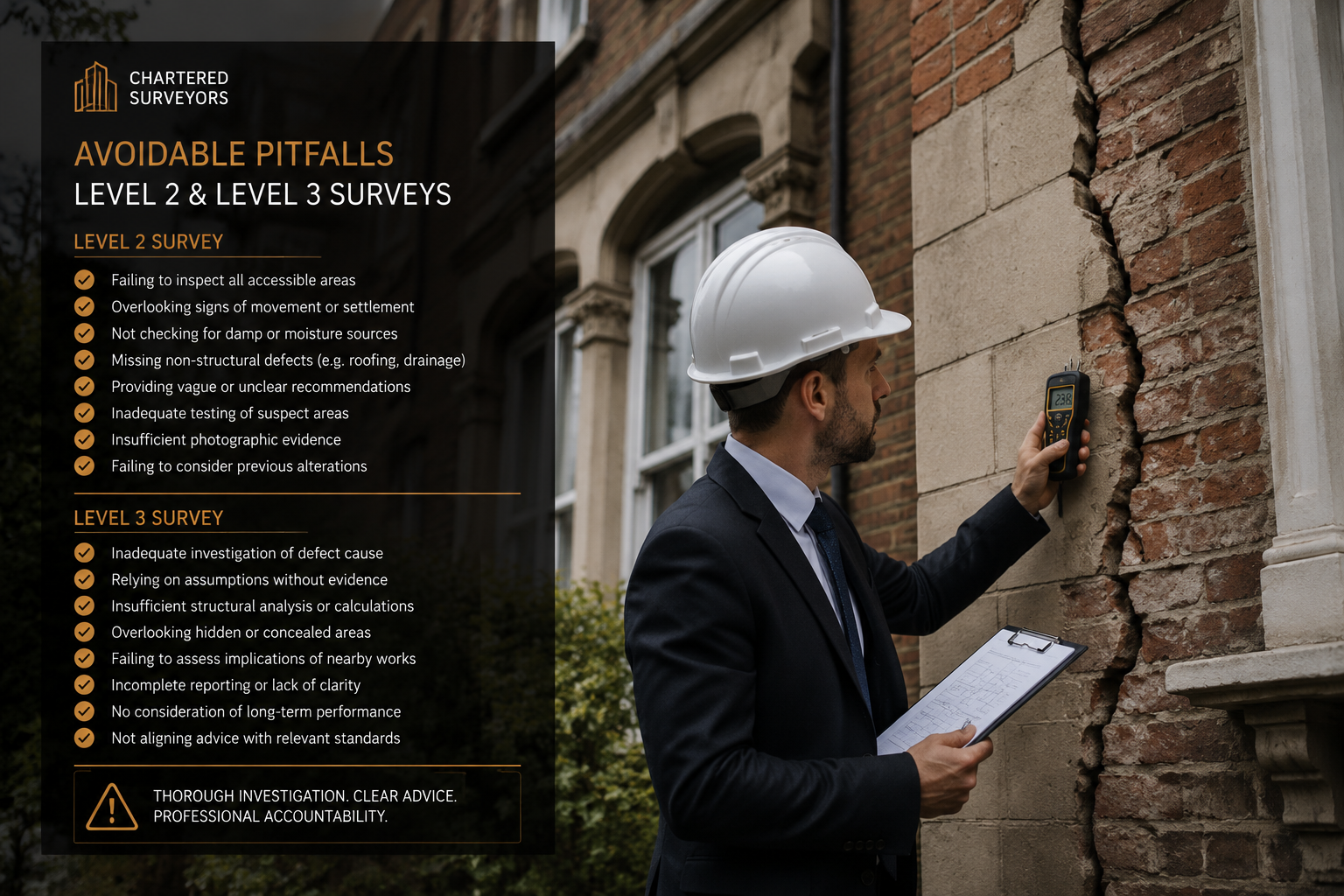
Professional negligence claims against building surveyors have surged by 23% since 2024, driven by tighter building safety regulations and heightened public scrutiny following high-profile structural failures [1]. For any chartered surveyor working in residential or commercial practice, understanding the legal landscape around Professional Negligence Claims in Building Surveys: Expert Witness Roles and Defence Strategies for Surveyors is no longer optional — it is a core professional competency. Whether the dispute involves a missed structural defect, a damp problem overlooked in a Level 2 report, or a boundary error in a commercial survey, the consequences can be financially and reputationally devastating.
Key Takeaways
- Professional negligence claims against surveyors have risen sharply in 2026, making robust documentation and RICS-compliant methodology essential.
- Courts now routinely require expert witness testimony to establish breach of duty and causation in building survey disputes.
- Over 60% of construction disputes in England and Wales involve chartered surveyor expert witnesses, yet fewer than 20% hold formal accreditation for this role.
- Effective defence strategies combine thorough inspection records, clear scope-of-service agreements, and professional indemnity insurance.
- The RICS updated its Accredited Expert Witness Service register in March 2026, setting new voluntary standards that are rapidly becoming the benchmark in litigation.
What Constitutes Professional Negligence in Building Surveys
A surveyor is negligent when their conduct falls below the standard expected of a reasonably competent professional in the same field. In practical terms, this means the court will ask: what would a competent chartered surveyor have done in the same circumstances?
The most common scenarios giving rise to claims include:
- Failing to identify structural defects — cracked lintels, subsidence indicators, or compromised roof structures
- Overlooking damp and timber decay — particularly in older properties where concealed moisture is a known risk
- Boundary and title errors — especially relevant in boundary surveys where precision is critical
- Valuation errors — overstating or understating property value in ways that cause measurable financial loss
- Non-compliance with building regulations — failing to flag unlawful extensions or structural alterations
- Inadequate reporting — using vague or ambiguous language that leaves clients unable to make informed decisions [1]
The level of survey commissioned matters enormously. A Level 3 building survey carries a higher duty of care than a Level 2 homebuyer report, because the client is paying for a more thorough investigation. Surveyors must be acutely aware of the scope limitations they agree to — and must communicate those limitations clearly in writing.
The Legal Test: Bolam and Beyond
English courts apply the Bolam test (Bolam v Friern Hospital Management Committee [1957]) to assess whether a professional has met the required standard. Under this test, a surveyor is not negligent if they acted in accordance with a practice accepted as proper by a responsible body of professional opinion. However, the subsequent Bolitho refinement requires that the professional opinion relied upon must also be logically defensible.
In 2026, courts are applying these tests more rigorously, particularly in cases involving structural assessments and energy performance matters. Surveyors cannot simply rely on the fact that other surveyors might have done the same thing — their reasoning must be sound and documented.
Expert Witness Roles in Professional Negligence Claims in Building Surveys
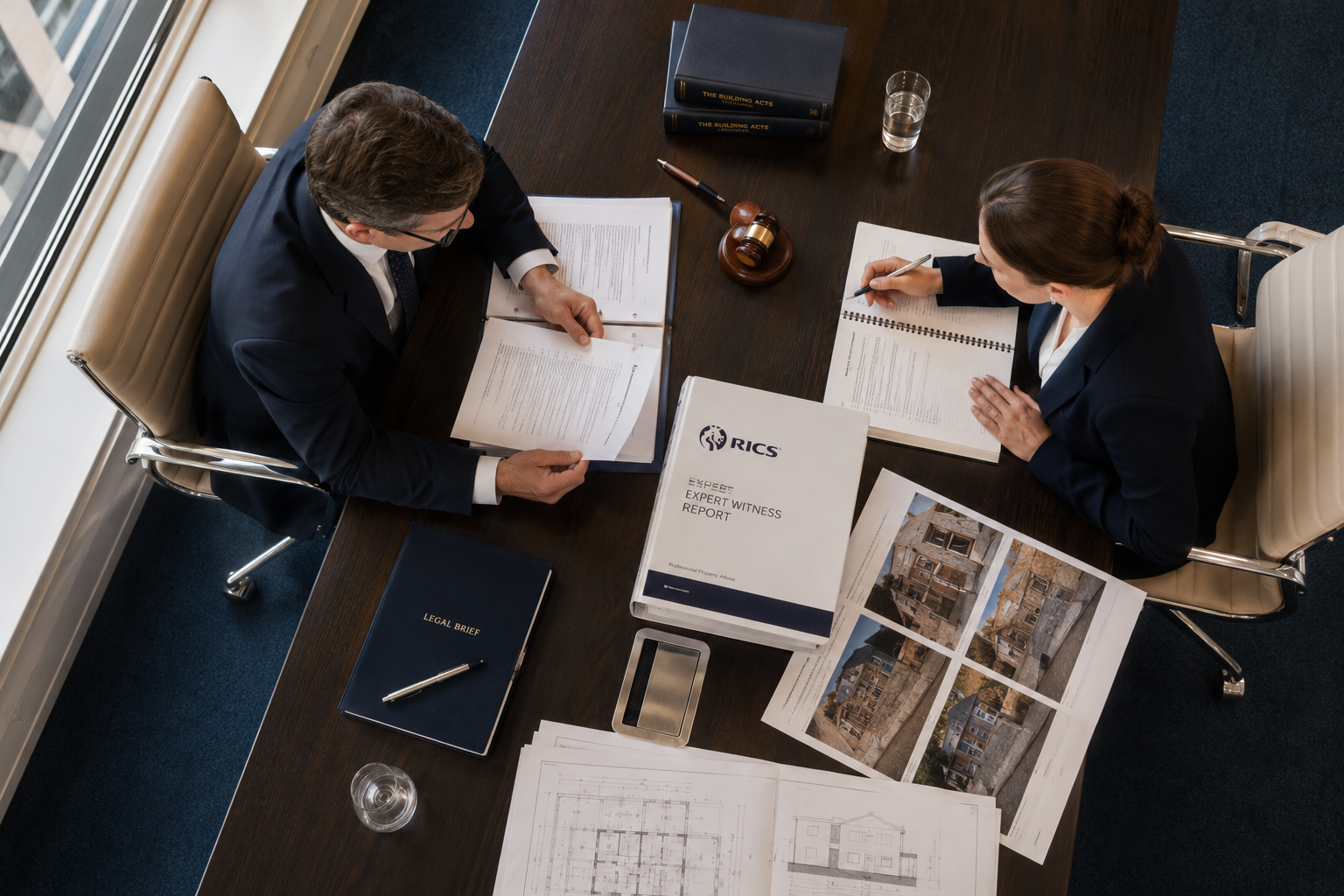
Courts now require expert witness testimony in most professional negligence cases involving technical matters beyond the knowledge of ordinary persons [1]. The expert witness in a building survey dispute performs a fundamentally different function from a surveyor acting as an advocate or consultant. Their duty is to the court, not to the instructing party.
What an Expert Witness Actually Does
A chartered surveyor acting as an expert witness will typically:
- Review the original survey report and supporting inspection notes
- Assess whether the surveyor's methodology met RICS standards at the time
- Identify what a competent surveyor should have found given the property's age, type, and condition
- Quantify the loss — the difference between what the claimant paid and what the property was actually worth, or the cost of remediation
- Prepare a written expert report compliant with Civil Procedure Rules (CPR) Part 35
- Attend court or arbitration to give oral evidence and withstand cross-examination [4]
The expert's report must be objective, balanced, and clearly distinguish between established facts and professional opinion. Critically, it must include a declaration that the expert understands their overriding duty to the court.
The Accreditation Gap — A Serious Problem in 2026
Over 60% of construction disputes in England and Wales involve expert witness testimony from chartered building surveyors, yet fewer than 20% of those surveyors hold formal accreditation for the expert witness role [2]. This gap matters because unaccredited experts are more vulnerable to challenges during cross-examination and may inadvertently stray into advocacy.
In March 2026, the Royal Institution of Chartered Surveyors updated its Accredited Expert Witness Service (EWAS) register, establishing formal voluntary standards for chartered surveyors providing expert evidence in civil proceedings [2]. While voluntary, these standards are rapidly becoming the de facto benchmark that courts and instructing solicitors expect to see.
Key qualities courts look for in RICS expert witnesses:
| Quality | Why It Matters |
|---|---|
| Impartiality and independence | Prevents bias that could undermine credibility |
| Formal accreditation (EWAS) | Signals compliance with recognised standards |
| Depth of technical knowledge | Enables robust cross-examination performance |
| Clear, jargon-free reporting | Ensures the court can follow complex arguments |
| Adequate professional indemnity cover | Protects all parties if the expert report is challenged [3] |
AI-Generated Evidence: A New Frontier
New RICS compliance standards introduced in 2026 specifically address AI-generated evidence in valuation and building disputes [2]. Expert witnesses must now be prepared to explain and defend any AI-assisted analysis they use. Courts expect transparency about the tools and data sources underpinning expert opinions, and any AI-generated content must be independently verified before inclusion in a CPR Part 35 report.
Fees and Commercial Reality
As of April 2026, median expert witness rates have reached £391 per hour for case review, with courtroom testimony commanding fees approximately 45% higher than that [1]. These costs are recoverable by the successful party in most civil proceedings, which means claimants are increasingly willing to invest in high-quality expert evidence. Surveyors facing claims should factor this into their risk assessment and ensure their own legal team instructs an equally credible expert.
Defence Strategies for Surveyors Facing Professional Negligence Claims
Understanding the defence strategies for surveyors in professional negligence claims in building surveys is as important as understanding how claims arise. A well-prepared surveyor can significantly reduce both the likelihood of a claim succeeding and the quantum of any award.
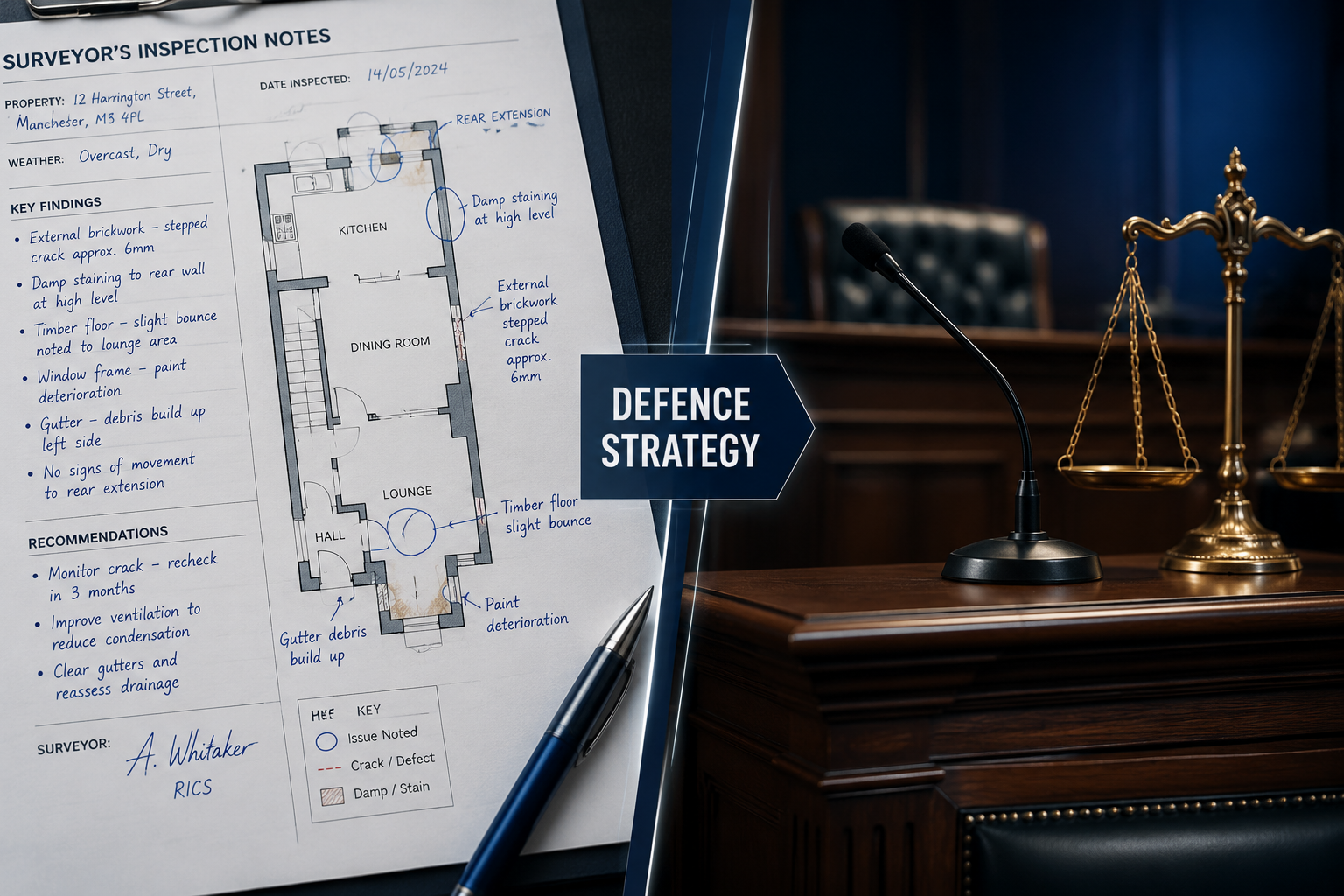
Strategy 1: Documentation Quality as a Primary Defence
The quality of documentation directly affects case outcomes [1]. Courts assess what a surveyor did — and why — based primarily on the paper trail. Surveyors should maintain:
- Contemporaneous inspection notes with timestamps and photographs
- Clear records of areas not inspected and the reasons (e.g., access denied, fitted carpets, furniture obstruction)
- Written confirmation of the agreed scope of service before the inspection begins
- A record of verbal advice given to clients, followed up in writing
For Level 3 building surveys, this documentation burden is particularly high given the comprehensive nature of the inspection. Surveyors should treat every file as if it will one day be reviewed by a court.
Strategy 2: Scope Limitation and Clear Terms of Engagement
Many claims arise from a mismatch between client expectations and what the surveyor actually agreed to deliver. A Level 2 homebuyer survey is not a structural investigation — but clients often do not appreciate this distinction until something goes wrong.
Surveyors should:
- Use RICS-approved terms of engagement as a baseline
- Explicitly state what the survey does not cover
- Confirm scope in writing before any inspection takes place
- Recommend specialist investigations (e.g., structural engineer, drainage survey) where concerns are noted but fall outside scope
For guidance on what different survey levels cover, the comparison of different types of survey is a useful reference for both surveyors and clients.
Strategy 3: RICS Compliance as a Shield
Adherence to current RICS standards provides a powerful defence. Courts will examine whether the surveyor followed RICS guidance at the time of the inspection. Key RICS documents relevant to negligence defence include:
- RICS Home Survey Standard (2019, as updated)
- RICS Guidance Note: Surveys of Residential Property
- RICS Professional Statement: Conflicts of Interest
A surveyor who can demonstrate strict compliance with these standards is in a far stronger position than one who cannot. Conversely, deviation from RICS standards — even if well-intentioned — can be used against the surveyor in court.
Strategy 4: Professional Indemnity Insurance
Professional indemnity (PI) insurance is the financial backbone of any defence. Surveyors must ensure:
- Their PI policy covers the specific type of work in dispute (e.g., residential, commercial, specialist surveys)
- The policy limit is adequate given the value of properties surveyed
- They notify their insurer promptly when a claim or potential claim arises — late notification can void cover
- They understand policy exclusions, particularly around deliberate acts or known defects [3]
Leading expert witnesses also carry PI insurance specific to their expert witness activities, recognising that the two roles carry distinct liability profiles [3].
Strategy 5: Early Engagement with Legal Counsel
Surveyors should resist the temptation to respond directly to claimants or their solicitors without legal advice. Early engagement with a solicitor experienced in professional negligence defence allows the surveyor to:
- Assess the strength of the claim objectively
- Preserve relevant evidence before it is lost
- Avoid making admissions that could be used against them
- Consider mediation or early settlement where appropriate
"The most effective defence is built before a claim is ever made — through rigorous methodology, clear communication, and meticulous record-keeping."
RICS-Backed Checklist: Reducing Negligence Risk in 2026
The following checklist reflects current RICS guidance and best practice for surveyors seeking to minimise litigation exposure:
Before the Inspection
- Confirm scope of service in writing and obtain client acknowledgement
- Check for conflicts of interest and declare them if present
- Verify PI insurance covers the property type and survey level
- Research the property's age, construction type, and planning history
During the Inspection
- Follow a systematic inspection methodology
- Photograph all defects, access limitations, and areas of concern
- Note all areas not inspected and the reason
- Use specialist equipment (damp meter, binoculars, torch) appropriate to the survey level
When Preparing the Report
- Use clear, unambiguous language — avoid vague terms like "monitor" without specifying what action to take
- Distinguish clearly between observations, opinions, and recommendations
- Flag all items requiring specialist investigation
- Cross-reference findings against RICS standards
After Delivery
- Retain the full file (notes, photographs, correspondence) for at least six years
- Follow up in writing if the client raises concerns after delivery
- Notify PI insurers immediately if a formal complaint or legal threat is received
How Expert Witnesses Assess Liability and Quantum
When a claim proceeds, the expert witness must address two distinct questions: liability (did the surveyor fall below the required standard?) and quantum (what loss did that failure cause?).
Assessing Liability
The expert will compare the defendant surveyor's report and inspection methodology against what a reasonably competent surveyor should have done. This involves examining:
- The survey level commissioned and the corresponding duty of care
- Whether the defect in question was visible or reasonably discoverable at the time
- Whether the surveyor's report language adequately communicated the risk
- Whether RICS standards in force at the time were followed [1]
Some firms now offer combined building surveying and valuation expertise within a single expert report, providing a cohesive approach that can be particularly effective in cases where liability and quantum are intertwined [4]. For complex commercial matters, this integrated approach is increasingly favoured by courts.
Assessing Quantum
Quantum in building survey negligence claims typically involves one of two measures:
- Diminution in value — the difference between the price paid and the true market value of the property at the date of purchase
- Cost of remediation — the reasonable cost of repairing defects that should have been identified
Expert witnesses must be careful to avoid double-counting and must account for betterment (where repairs improve the property beyond its pre-defect condition). The January 2026 Supreme Court ruling in Berk v. Choy reshaped procedural requirements for how expert evidence on quantum is introduced in construction claims, requiring greater specificity in the methodology underpinning quantum calculations [2].
Conclusion
Professional negligence claims in building surveys represent one of the most significant legal risks facing chartered surveyors in 2026. The combination of rising claim volumes, stricter regulatory standards, and increasingly sophisticated expert witness evidence means that complacency is not an option.
Actionable next steps for surveyors:
- Audit your documentation practices — review your current file management against the checklist above and address any gaps immediately.
- Review your terms of engagement — ensure they clearly define scope, limitations, and client responsibilities.
- Check your PI insurance — confirm coverage levels, exclusions, and notification obligations with your broker.
- Consider RICS EWAS accreditation — if you provide or plan to provide expert witness services, formal accreditation is rapidly becoming an expectation rather than a differentiator.
- Stay current with RICS guidance — the March 2026 EWAS update and evolving AI evidence standards mean that what was compliant last year may not be sufficient today.
- Engage legal counsel early — if a complaint or claim arises, do not attempt to manage it alone.
Understanding what surveyors look for in a house survey and ensuring that methodology is both thorough and well-documented remains the single most effective protection against negligence claims. For surveyors operating across residential and commercial building surveys, the principles are the same: rigour, transparency, and clear communication are the foundations of a defensible practice.
References
[1] Expert Witness Reports For Professional Negligence Claims Building Surveyor Duties In 2026 Litigation – https://kingstonsurveyors.com/expert-witness-reports-for-professional-negligence-claims-building-surveyor-duties-in-2026-litigation/?utm_source=openai
[2] Building Surveyors As Expert Witnesses Evidence Standards For Construction Claims And Dilapidations In 2026 – https://wimbledonsurveyors.com/building-surveyors-as-expert-witnesses-evidence-standards-for-construction-claims-and-dilapidations-in-2026/?utm_source=openai
[3] Qualities Of Top Rics Expert Witnesses In Building Surveying Disputes 2026 Standards – https://www.canterburysurveyors.com/blog/qualities-of-top-rics-expert-witnesses-in-building-surveying-disputes-2026-standards/?utm_source=openai
[4] The Role Of A Property Expert Witness Surveyor – https://www.res-prop.com/the-role-of-a-property-expert-witness-surveyor/?utm_source=openai
