
Party Wall Agreed Surveyor: Your Complete Guide to Shared Appointments in 2025
When neighbors undertake building work affecting a shared wall, choosing a party wall agreed surveyor can save time, money, and prevent disputes from escalating. This collaborative approach to managing party wall matters represents one of the most efficient ways to navigate the Party Wall etc. Act 1996, yet many property owners remain unaware of how it works or when it's appropriate.
Understanding the role and benefits of a party wall agreed surveyor is essential for anyone planning construction work near a boundary or shared structure. This comprehensive guide explores everything you need to know about agreed surveyors, from their appointment process to their responsibilities, costs, and the situations where this arrangement works best.
Key Takeaways
- 📋 A party wall agreed surveyor acts impartially for both the building owner and adjoining owner, eliminating the need for separate surveyors and reducing overall costs
- 💰 Appointing an agreed surveyor typically costs 30-50% less than having two separate surveyors, with fees ranging from £700-£1,200 for straightforward cases
- ⚖️ The agreed surveyor must maintain complete impartiality and can be replaced if either party believes their independence is compromised
- ✅ This arrangement works best for straightforward projects with cooperative neighbors who trust the same professional to represent both interests
- 📝 The agreed surveyor produces a single Party Wall Award that legally binds both parties and protects everyone's interests throughout the construction process
What Is a Party Wall Agreed Surveyor?
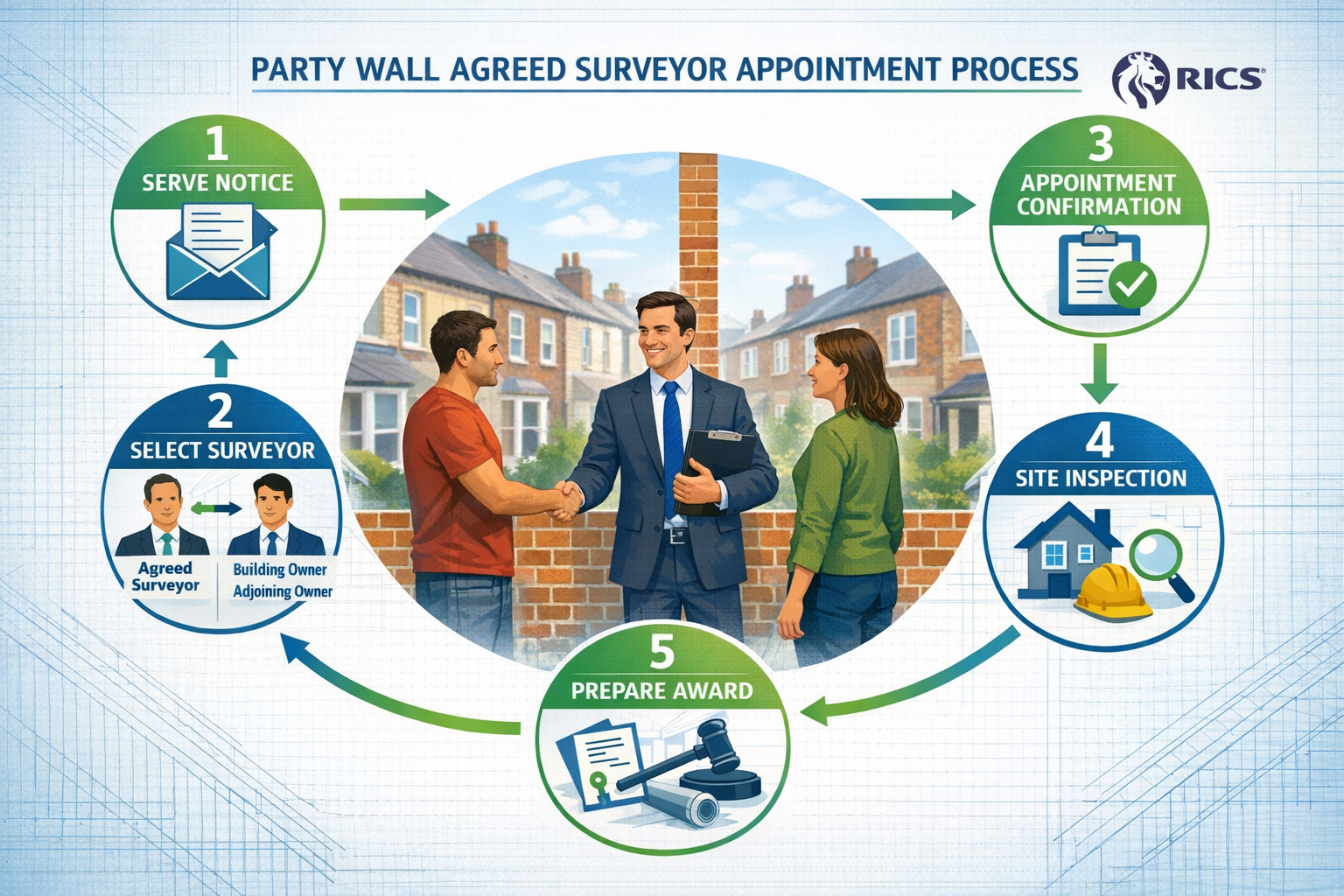
A party wall agreed surveyor is a qualified professional appointed by mutual consent to act for both the building owner (the person undertaking the work) and the adjoining owner (the neighbor). Unlike the typical scenario where each party appoints their own surveyor, an agreed surveyor represents both parties' interests simultaneously while maintaining strict impartiality.
This arrangement is specifically provided for under Section 10 of the Party Wall etc. Act 1996. The legislation recognizes that not all party wall matters require adversarial representation, and in many cases, a single competent professional can adequately protect both parties' interests while streamlining the process.
The Legal Framework
The Party Wall etc. Act 1996 establishes three possible surveyor arrangements:
- Agreed Surveyor: One surveyor acts for both parties
- Two Surveyors: Each party appoints their own surveyor
- Three Surveyors: Each party appoints a surveyor, and those two appoint a third surveyor to act as arbitrator
The agreed surveyor route is the first option mentioned in the Act, reflecting its status as a preferred approach for straightforward cases. When you're navigating party wall matters, understanding these options helps you make informed decisions about your project.
Key Characteristics of an Agreed Surveyor
Independence and Impartiality 🎯
The agreed surveyor must act with complete impartiality, giving equal consideration to both parties' interests. They cannot favor the building owner simply because that party typically pays the fees, nor can they show bias toward the adjoining owner.
Professional Qualifications
While the Act doesn't mandate specific qualifications, best practice dictates appointing a surveyor who is:
- A member of the Royal Institution of Chartered Surveyors (RICS)
- Experienced in party wall matters
- Knowledgeable about construction and structural issues
- Familiar with local building practices and regulations
Dual Responsibility
The agreed surveyor owes a duty of care to both parties equally. This means they must:
- Inspect the adjoining owner's property thoroughly
- Assess potential risks to both properties
- Prepare fair and balanced awards
- Ensure the building owner's plans comply with the Act
- Protect the adjoining owner from unnecessary damage or inconvenience
When Should You Appoint a Party Wall Agreed Surveyor?
Choosing an agreed surveyor isn't appropriate for every situation. Understanding when this arrangement works best helps ensure a smooth party wall process.
Ideal Scenarios for Agreed Surveyors
Straightforward Building Projects 🏗️
Projects with clear scope and minimal complexity are perfect for agreed surveyor appointments:
- Single-story rear extensions
- Loft conversions affecting party walls
- New walls built on boundary lines
- Minor excavations near neighboring foundations
- Routine maintenance work on shared structures
Cooperative Neighbor Relationships
When both parties maintain a positive relationship and trust each other's intentions, an agreed surveyor arrangement typically succeeds. This approach works particularly well when:
- Neighbors have discussed the proposed work openly
- Both parties understand the project scope
- There's mutual willingness to share costs fairly
- No previous disputes exist between the parties
Cost-Conscious Situations
For property owners seeking to minimize expenses while ensuring legal compliance, the agreed surveyor route offers significant savings. Understanding party wall surveyor costs helps you budget appropriately for your project.
When to Avoid Agreed Surveyors
Complex or Controversial Projects
Some situations demand separate representation:
- Major structural alterations affecting multiple properties
- Basement excavations close to neighboring foundations
- Projects involving significant underpinning
- Work on properties with existing structural issues
- Demolition and rebuilding of party walls
Strained Relationships ⚠️
If neighbors already have disputes or mistrust exists, separate surveyors provide better protection for both parties. Warning signs include:
- Previous disagreements about property matters
- Concerns about the building owner's intentions
- Suspicion about the project's impact
- Communication breakdowns between neighbors
Significant Property Value Differences
When one property is substantially more valuable than the other, the adjoining owner may prefer independent representation to ensure their higher-value asset receives appropriate protection.
The Appointment Process for a Party Wall Agreed Surveyor
Appointing an agreed surveyor follows a specific procedure established by the Party Wall etc. Act 1996. Understanding this process ensures compliance and prevents delays.
Step 1: Serving the Party Wall Notice
Before any surveyor appointment occurs, the building owner must serve appropriate notice to the adjoining owner. This notice must include:
- Details of the proposed work
- The anticipated start date
- Drawings or plans showing the work's extent
- An invitation to consent or dissent
The notice period varies depending on the work type:
| Work Type | Notice Period |
|---|---|
| Party wall works | 2 months |
| Excavation within 3 meters | 1 month |
| Excavation within 6 meters (deeper than foundations) | 1 month |
Learning how to write a party wall letter ensures your notice meets legal requirements.
Step 2: Proposing an Agreed Surveyor
Either party can suggest appointing an agreed surveyor. Typically, the building owner includes this proposal in the initial party wall notice or in follow-up correspondence after serving notice.
The proposal should include:
- The surveyor's name and qualifications
- Their contact details
- Confirmation of their RICS membership (if applicable)
- Their experience with party wall matters
- An estimate of their fees
Step 3: Obtaining Mutual Consent
Both parties must agree in writing to the appointment. This consent should be explicit and documented, typically through:
- A signed letter of appointment
- An exchange of emails confirming agreement
- A formal appointment document prepared by the surveyor
Critical Point: Silence or lack of response from the adjoining owner does not constitute consent to an agreed surveyor. Explicit agreement is required.
Step 4: Formal Appointment Confirmation ✅
Once both parties consent, the agreed surveyor should:
- Confirm acceptance of the appointment in writing
- Provide terms of engagement to both parties
- Outline their fee structure
- Establish a timeline for the award preparation
- Request any necessary documentation or access
Step 5: Replacing an Agreed Surveyor
Either party can request the agreed surveyor's replacement if they believe impartiality has been compromised. This safeguard ensures both parties remain protected throughout the process.
Grounds for replacement might include:
- Evidence of bias toward one party
- Failure to communicate with both parties equally
- Conflicts of interest that emerge during the process
- Professional incompetence or negligence
Responsibilities and Duties of a Party Wall Agreed Surveyor
A party wall agreed surveyor carries significant responsibilities to both parties. Understanding these duties helps property owners know what to expect from their appointed professional.
Primary Responsibilities
1. Property Inspections 🔍
The agreed surveyor must conduct thorough inspections of both properties, documenting:
- The condition of party walls and structures
- Any existing defects or damage
- Proximity of proposed work to neighboring property
- Potential risks to the adjoining property
- Photographic evidence of pre-work conditions
These inspections form the baseline for assessing any damage claims after work completion.
2. Award Preparation
The surveyor's central duty involves preparing a Party Wall Award – a legally binding document that:
- Details the work to be undertaken
- Specifies how and when work will proceed
- Establishes protective measures to prevent damage
- Sets out access requirements
- Defines dispute resolution procedures
- Allocates costs between parties
The award must be fair to both parties while enabling the building owner to exercise their legal rights under the Act.
3. Impartial Advice
The agreed surveyor must provide balanced advice to both parties, explaining:
- Their rights and obligations under the Act
- The implications of proposed work
- Protective measures and their necessity
- The award's terms and conditions
- Procedures for raising concerns during construction
4. Dispute Resolution
If disagreements arise during the process, the agreed surveyor must:
- Listen to both parties' concerns
- Investigate issues objectively
- Make fair determinations
- Document decisions and reasoning
- Ensure compliance with the award's terms
Ongoing Duties During Construction
The agreed surveyor's role doesn't end with the award's issuance. They remain responsible for:
Monitoring Compliance 📊
- Ensuring work proceeds according to the award
- Verifying protective measures are implemented
- Addressing deviations from approved plans
- Responding to concerns from either party
Damage Assessment
If damage occurs to the adjoining property:
- Investigating the cause and extent
- Determining whether it relates to the notified work
- Recommending appropriate remediation
- Overseeing repair work if necessary
Final Inspections
After work completion, the surveyor should:
- Conduct final inspections of both properties
- Compare conditions to pre-work documentation
- Identify any damage requiring remedy
- Confirm compliance with award terms
- Issue completion certificates if appropriate
Costs and Fee Structures for Party Wall Agreed Surveyors
Understanding the costs associated with appointing a party wall agreed surveyor helps property owners budget appropriately and appreciate the financial benefits of this arrangement.
Typical Fee Ranges in 2025
Agreed Surveyor Fees
| Service | Cost Range |
|---|---|
| Straightforward single party wall | £700 – £1,200 |
| Multiple party walls | £1,200 – £2,000 |
| Complex projects with excavation | £1,500 – £3,000 |
| Award preparation | Included in above |
| Site inspections (initial) | Included in above |
| Additional inspections | £100 – £200 each |
Comparison: Two Separate Surveyors
When each party appoints their own surveyor, costs typically include:
- Building owner's surveyor: £800 – £1,500
- Adjoining owner's surveyor: £800 – £1,500
- Total potential cost: £1,600 – £3,000
The building owner usually pays both surveyors' fees, making the agreed surveyor option significantly more economical.
Who Pays the Agreed Surveyor? 💷
Under the Party Wall etc. Act 1996, the building owner typically bears the agreed surveyor's fees. This principle reflects that the building owner initiates the work necessitating the party wall process.
However, the agreed surveyor may determine that costs should be apportioned differently if:
- Both parties benefit from the work
- The adjoining owner requests additional services
- Unreasonable demands are made by either party
Factors Affecting Costs
Several variables influence the final fee:
Project Complexity
- Simple extensions cost less than basement excavations
- Multiple party walls increase fees
- Structural complications add to surveyor time
Property Location
- London and Southeast England typically command higher fees
- Regional variations reflect local market rates
- Travel costs for distant properties
Surveyor Experience
- Senior RICS surveyors charge premium rates
- Specialist party wall practitioners may cost more
- Experience often correlates with efficiency
Additional Services
- Multiple site visits during construction
- Dispute resolution beyond standard scope
- Damage assessment and remediation oversight
- Expert witness services if litigation occurs
For detailed information about costs, consult our guide on party wall agreement costs.
Payment Terms and Transparency
Reputable agreed surveyors should provide:
- Written fee estimates before appointment
- Transparent billing with itemized invoices
- Regular updates on costs if work extends beyond initial scope
- Clear payment terms (typically 30 days from invoice)
Advantages and Disadvantages of Using a Party Wall Agreed Surveyor
Like any approach, appointing an agreed surveyor has both benefits and potential drawbacks. Weighing these factors helps property owners make informed decisions.
Advantages ✅
1. Cost Savings
The most obvious benefit is financial. A single surveyor costs significantly less than two separate professionals, with savings typically ranging from 30-50% of total surveyor fees.
2. Faster Process
With one surveyor handling all aspects:
- Communication is streamlined
- Scheduling inspections is simpler
- Award preparation proceeds more quickly
- Fewer coordination delays occur
3. Simplified Communication
Property owners deal with one professional rather than managing separate surveyor relationships. This simplification reduces:
- Confusion about process status
- Contradictory advice
- Administrative burden
- Email and phone call volume
4. Reduced Formality
The agreed surveyor arrangement often creates a more collaborative atmosphere, potentially:
- Improving neighbor relations
- Encouraging practical solutions
- Minimizing adversarial positioning
- Fostering long-term goodwill
5. Consistent Approach
A single surveyor ensures:
- Uniform interpretation of the Act
- Consistent application of standards
- Coherent award terms
- Streamlined documentation
Disadvantages ⚠️
1. Potential for Perceived Bias
Even with the best intentions, one party may feel the agreed surveyor favors the other, particularly if:
- The building owner suggested the surveyor
- The surveyor has worked for the building owner previously
- Decisions appear to favor one party's interests
2. Limited Checks and Balances
With separate surveyors:
- Each professional reviews the other's work
- The third surveyor arbitrates disagreements
- Multiple perspectives inform decisions
An agreed surveyor lacks these built-in safeguards.
3. Complexity Challenges
For complicated projects, a single surveyor may struggle to:
- Address all technical concerns adequately
- Balance competing interests effectively
- Provide specialized expertise in multiple areas
4. Relationship Risk
If the agreed surveyor arrangement fails or either party becomes dissatisfied:
- Replacing the surveyor delays the project
- Costs increase as new surveyors review previous work
- Neighbor relationships may deteriorate
- Trust in the process diminishes
5. Unequal Knowledge
If one party is more knowledgeable about construction or party wall matters, they might:
- Influence the surveyor more effectively
- Better articulate their concerns
- Navigate the process more advantageously
How to Find and Select the Right Party Wall Agreed Surveyor
Choosing the appropriate professional is crucial to a successful agreed surveyor arrangement. Follow these steps to identify and select the best candidate.
Essential Qualifications to Look For 🎓
Professional Memberships
- RICS membership (Royal Institution of Chartered Surveyors)
- Faculty of Party Wall Surveyors membership
- Pyramus & Thisbe Club membership (specialist party wall organization)
Experience Requirements
- Minimum 5 years party wall experience
- Demonstrated knowledge of the Party Wall etc. Act 1996
- Familiarity with local construction practices
- Track record of completed awards
Specialization
- Focus on residential party wall matters
- Experience with your project type
- Knowledge of similar properties in your area
Where to Find Qualified Surveyors
Professional Directories
- RICS Find a Surveyor tool
- Faculty of Party Wall Surveyors member directory
- Local professional associations
Personal Recommendations
- Architects working on your project
- Builders with party wall experience
- Neighbors who've completed similar work
- Local property professionals
Online Resources
- Specialist party wall surveying firms
- Professional surveying practices with party wall expertise
- Local building surveyor websites
Key Questions to Ask Potential Surveyors 📋
Before appointing an agreed surveyor, interview candidates with these questions:
Experience and Qualifications
- How many party wall awards have you prepared?
- What percentage of your work involves party wall matters?
- Have you handled projects similar to ours?
- Are you a RICS member in good standing?
Approach and Philosophy
5. How do you maintain impartiality as an agreed surveyor?
6. What's your communication style with both parties?
7. How do you handle disagreements between parties?
8. What safeguards ensure fair treatment of both parties?
Practical Matters
9. What are your fees for this type of project?
10. What's your typical timeline for award preparation?
11. How many site visits do you anticipate?
12. What happens if either party becomes dissatisfied?
References and Track Record
13. Can you provide references from recent agreed surveyor appointments?
14. Have you ever been removed from an appointment?
15. How do you handle complaints or concerns?
Red Flags to Avoid 🚩
Be cautious of surveyors who:
- Cannot provide proof of professional qualifications
- Lack professional indemnity insurance
- Refuse to provide written fee estimates
- Show reluctance to communicate with both parties equally
- Have limited party wall experience
- Cannot provide references
- Pressure you to appoint them quickly
- Dismiss either party's concerns
Making the Final Selection
After interviewing candidates, consider:
Professional Competence
- Qualifications and experience level
- Knowledge of relevant legislation
- Understanding of your project type
Communication Skills
- Clarity in explaining the process
- Responsiveness to inquiries
- Ability to communicate with non-experts
Impartiality Indicators
- Balanced approach to both parties' concerns
- No existing relationships with either party
- Transparent about potential conflicts
Practical Factors
- Reasonable fee structure
- Realistic timeline estimates
- Availability for site visits
- Geographic proximity
The Party Wall Award: What to Expect from Your Agreed Surveyor
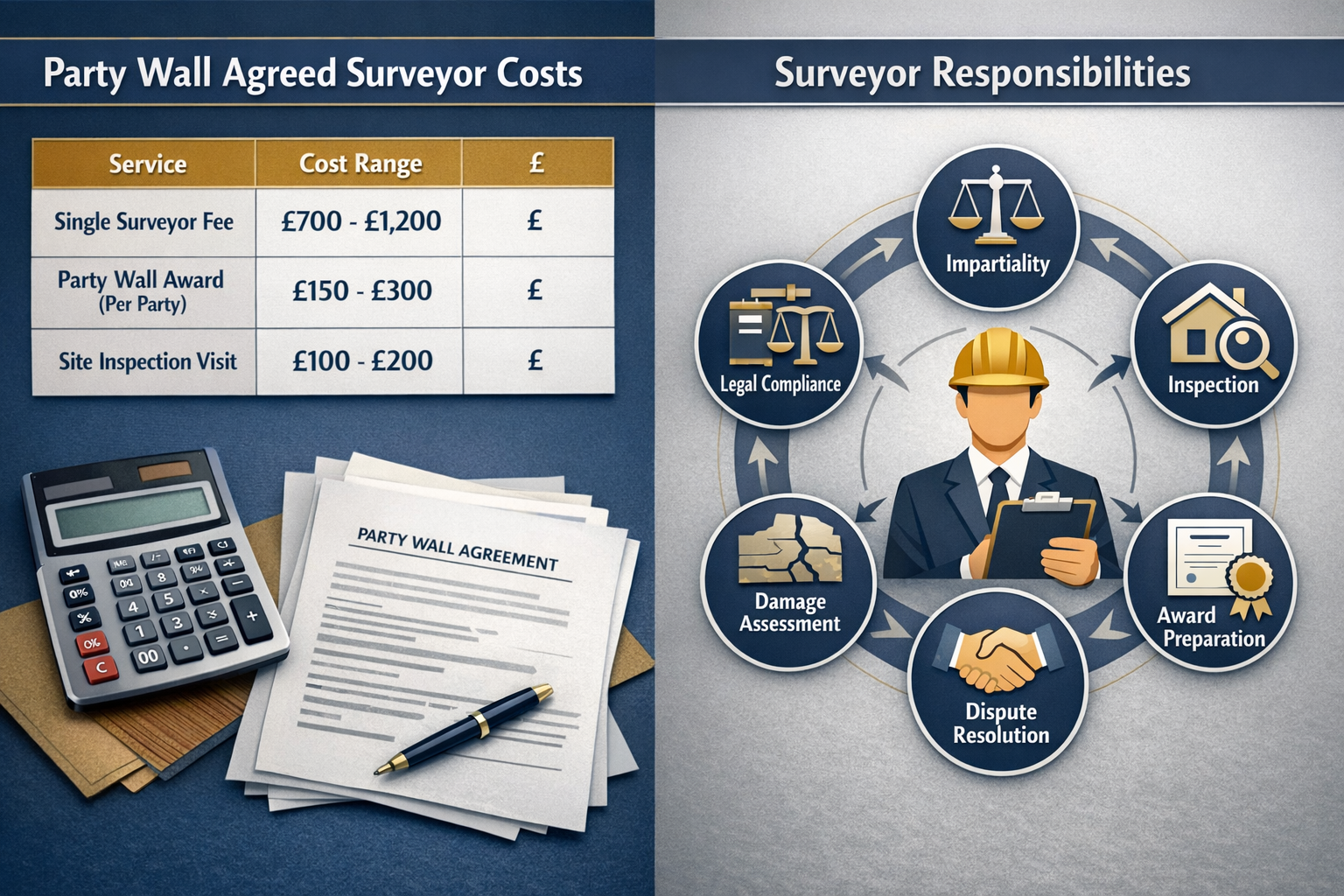
The Party Wall Award represents the agreed surveyor's primary deliverable – a legally binding document that governs how party wall work proceeds. Understanding what this document contains helps property owners know what to expect.
Essential Components of a Party Wall Award
1. Parties and Properties 🏠
The award identifies:
- Building owner's name and property address
- Adjoining owner's name and property address
- Legal description of properties
- Details of party walls or structures affected
2. Description of Works
A comprehensive outline of proposed work, including:
- Detailed scope of construction activities
- Reference to architectural drawings
- Structural alterations to party walls
- Excavation details and depths
- Timeline for work completion
3. Condition Schedule
Documentation of pre-work property conditions:
- Photographic evidence
- Written descriptions of existing defects
- Measurements and technical details
- Baseline for assessing future damage claims
4. Rights and Responsibilities
The award specifies:
- Building owner's right to undertake work
- Access requirements to adjoining property
- Working hours and restrictions
- Noise and disruption limitations
- Security and safety measures
5. Protective Measures 🛡️
Requirements to prevent damage:
- Temporary supports or shoring
- Protective barriers or coverings
- Vibration monitoring equipment
- Dust suppression measures
- Structural monitoring systems
6. Dispute Resolution Procedures
Mechanisms for addressing concerns:
- Process for raising issues
- Surveyor's role in resolving disputes
- Timeline for surveyor responses
- Escalation procedures if needed
7. Cost Allocations
Determination of who pays for:
- Surveyor fees
- Award preparation costs
- Protective measure expenses
- Monitoring equipment
- Potential repair costs
Timeline for Award Preparation
Typical timeline from appointment to award issuance:
| Stage | Timeframe |
|---|---|
| Initial inspections | 1-2 weeks after appointment |
| Award drafting | 2-3 weeks after inspections |
| Review period | 1 week for party comments |
| Final award issuance | 4-6 weeks total from appointment |
Complex projects may require longer timelines, particularly if technical issues arise or additional consultations are needed.
Legal Status and Enforcement
The Party Wall Award is a legally binding document under the Party Wall etc. Act 1996. This means:
- Both parties must comply with its terms
- Breach of the award can result in legal action
- Courts will enforce award provisions
- Awards can be appealed within 14 days of service
Understanding party wall awards ensures you know your rights and obligations under this important document.
Reviewing and Questioning the Award
Both parties should carefully review the award before acceptance. Key review points include:
Technical Accuracy ✓
- Does the work description match actual plans?
- Are protective measures appropriate for the project?
- Do timelines seem realistic?
Fairness and Balance
- Are both parties' interests protected?
- Do cost allocations seem reasonable?
- Are access requirements practical?
Clarity and Completeness
- Are all terms clearly explained?
- Have all relevant issues been addressed?
- Are procedures for disputes clear?
If concerns arise, parties should:
- Raise them with the agreed surveyor promptly
- Request clarifications or amendments
- Document all communications
- Consider the 14-day appeal period if necessary
Common Challenges and How Agreed Surveyors Address Them
Even with an experienced agreed surveyor, party wall processes can encounter challenges. Understanding common issues and their solutions helps property owners navigate difficulties effectively.
Challenge 1: Communication Breakdowns Between Neighbors 📞
The Issue
Neighbors may stop communicating directly, creating tension and misunderstandings about the project.
How Agreed Surveyors Help
- Act as neutral intermediary for all communications
- Translate technical information for both parties
- Facilitate discussions without emotional escalation
- Document all decisions and agreements formally
- Ensure both parties receive identical information simultaneously
Best Practices for Property Owners
- Direct all party wall questions through the surveyor
- Maintain respectful communication when direct contact occurs
- Avoid making assumptions about the other party's intentions
- Trust the surveyor's impartiality
Challenge 2: Scope Creep and Design Changes
The Issue
Building owners may modify plans after the award is issued, creating uncertainty about what's covered.
How Agreed Surveyors Help
- Review proposed changes against the original award
- Determine if amendments require new notices
- Prepare supplementary awards when necessary
- Advise on implications of design modifications
- Protect adjoining owner from unapproved work
Best Practices for Property Owners
- Inform the surveyor of any design changes immediately
- Understand that significant changes may require new awards
- Budget for potential additional surveyor fees
- Avoid commencing changed work without surveyor approval
Challenge 3: Contractor Non-Compliance ⚠️
The Issue
Builders may not follow the award's protective measures or working restrictions.
How Agreed Surveyors Help
- Conduct site visits to verify compliance
- Issue formal notices to contractors about breaches
- Recommend work stoppages if necessary
- Document non-compliance for potential claims
- Liaise with building owners to ensure contractor cooperation
Best Practices for Property Owners
- Ensure contractors receive copies of the award
- Include award compliance in contractor agreements
- Respond promptly to surveyor concerns about compliance
- Hold contractors accountable for award breaches
Challenge 4: Damage Claims and Disputes
The Issue
Disagreements arise about whether damage is related to the notified work or pre-existed.
How Agreed Surveyors Help
- Reference pre-work condition schedules
- Conduct technical investigations of damage
- Determine causation objectively
- Recommend appropriate remediation
- Mediate between parties on repair scope and timing
Best Practices for Property Owners
- Report potential damage immediately
- Allow surveyor access for inspections
- Avoid making accusations without evidence
- Trust the surveyor's technical assessment
Challenge 5: Perceived Bias Concerns 🤔
The Issue
One party believes the agreed surveyor favors the other party's interests.
How Agreed Surveyors Help
- Maintain transparent communication with both parties
- Document reasoning for all decisions
- Explain how conclusions protect both parties
- Remind parties of their right to request replacement
- Seek third-party technical opinions when appropriate
Best Practices for Property Owners
- Raise concerns directly with the surveyor
- Request explanations for decisions you don't understand
- Document specific instances of perceived bias
- Exercise your right to request replacement if bias is genuine
For guidance on handling difficult situations, review our article on resolving party wall disputes.
Alternatives to Party Wall Agreed Surveyors
While agreed surveyors offer many benefits, they're not the only option. Understanding alternatives helps property owners choose the most appropriate approach for their situation.
Option 1: Separate Surveyors (Two Surveyor Approach)
How It Works
- Building owner appoints their surveyor
- Adjoining owner appoints a different surveyor
- Both surveyors work together to prepare the award
- If they disagree, they appoint a third surveyor
When This Works Best
- Complex or controversial projects
- Strained neighbor relationships
- High-value properties requiring extra protection
- Technical disagreements about work scope
- Previous disputes between parties
Advantages
- Each party has dedicated representation
- Built-in checks and balances
- Independent technical review
- Greater confidence in impartiality
- Specialist expertise for each party
Disadvantages
- Higher costs (typically double agreed surveyor fees)
- Longer timeline for award preparation
- More formal and potentially adversarial
- Coordination challenges between surveyors
- Risk of disagreement requiring third surveyor
Option 2: Proceeding Without Surveyors
How It Works
Both parties agree to the work without formal surveyor involvement, though this carries significant risks.
When This Might Work ⚠️
- Extremely minor work with minimal impact
- Exceptionally strong neighbor relationships
- Both parties fully understand party wall legislation
- Work clearly falls outside Act requirements
Critical Warning
This approach is rarely advisable because:
- Misunderstandings about the Act are common
- Lack of condition schedules creates dispute risks
- No formal protection if damage occurs
- Potential legal complications
- Insurance claim difficulties
Better Alternative
Even for minor work, consider a simplified agreed surveyor approach with reduced fees for straightforward cases.
Option 3: Party Wall Agreement Without Full Award
How It Works
Parties draft a simplified agreement covering basic protections without full surveyor involvement.
Limitations
- Not legally equivalent to a Party Wall Award
- May not satisfy Act requirements
- Limited protection in disputes
- Potentially unenforceable
- Insurance companies may not recognize it
Recommendation
For work requiring party wall notices, proper surveyor involvement remains the safest approach. Learn more about party wall agreements to understand your obligations.
Frequently Asked Questions About Party Wall Agreed Surveyors
Can I suggest my own surveyor as the agreed surveyor?
Yes, building owners commonly propose their preferred surveyor as the agreed surveyor. However, the adjoining owner must explicitly consent to this appointment. If the adjoining owner has concerns about the suggested surveyor's impartiality or qualifications, they can refuse and either propose an alternative agreed surveyor or insist on appointing their own separate surveyor.
What happens if the agreed surveyor makes a decision I disagree with?
You have several options:
- Discuss concerns directly with the agreed surveyor and request clarification
- Request reconsideration with additional information or evidence
- Appeal the award within 14 days of service to the county court
- Request replacement of the agreed surveyor if you believe impartiality is compromised
How long does an agreed surveyor take to prepare an award?
Typical timelines range from 4-6 weeks for straightforward projects, though complex cases may take longer. Factors affecting timeline include:
- Property inspection scheduling
- Technical complexity of proposed work
- Responsiveness of both parties to information requests
- Need for specialist consultations
- Volume of work the surveyor is handling
Can the agreed surveyor charge extra fees beyond the initial estimate?
Reputable surveyors provide fee estimates that cover anticipated work. However, additional fees may apply if:
- The project scope changes significantly
- Multiple additional site visits become necessary
- Disputes require extensive investigation
- Work extends beyond the original timeline
- Either party requests services beyond the standard scope
Any additional fees should be communicated in advance with clear justification.
What qualifications should I look for in an agreed surveyor?
Priority qualifications include:
- RICS membership (Member or Fellow status)
- Specialist party wall experience (minimum 5 years)
- Professional indemnity insurance (minimum £1 million coverage)
- Local knowledge of construction practices in your area
- Strong communication skills for explaining technical matters
- Track record of completed awards and satisfied clients
Can I change from an agreed surveyor to separate surveyors?
Yes, either party can request this change, though it's more efficient to choose the appropriate arrangement from the start. If you decide to move from an agreed surveyor to separate surveyors:
- Inform the agreed surveyor in writing
- Appoint your own surveyor
- Expect some duplication of work already completed
- Anticipate higher overall costs
- Accept potential project delays
Does the agreed surveyor need to visit my property?
Yes, thorough property inspections are essential. The agreed surveyor should:
- Inspect both the building owner's and adjoining owner's properties
- Document existing conditions with photographs
- Assess structural implications of proposed work
- Identify necessary protective measures
- Create baseline records for damage assessment
Refusing access may delay the award preparation and could be considered unreasonable under the Act.
Best Practices for Working with Your Party Wall Agreed Surveyor
Maximizing the benefits of your agreed surveyor arrangement requires cooperation and understanding from both parties. Follow these best practices for optimal results.
For Building Owners 🏗️
1. Early Engagement
- Appoint the agreed surveyor before serving party wall notices when possible
- Discuss your project thoroughly with the surveyor
- Provide complete and accurate plans
- Be transparent about project timeline and constraints
2. Complete Documentation
- Supply all architectural drawings and specifications
- Provide structural engineer reports if available
- Share contractor information and schedules
- Update the surveyor about any design changes
3. Contractor Coordination
- Ensure contractors understand award requirements
- Include award compliance in contractor agreements
- Facilitate surveyor access for inspections
- Address compliance issues immediately
4. Respectful Communication
- Respond promptly to surveyor requests
- Maintain professional communication with the adjoining owner
- Avoid pressuring the surveyor for favorable decisions
- Trust the surveyor's impartial judgment
5. Financial Transparency
- Pay surveyor fees promptly
- Budget for potential additional costs
- Understand that you typically pay the agreed surveyor's fees
- Don't use fee payment as leverage
For Adjoining Owners 🏡
1. Active Participation
- Respond to communications promptly
- Attend property inspections
- Raise concerns early in the process
- Review the draft award carefully
2. Reasonable Cooperation
- Provide access for inspections when requested
- Consider reasonable access requests for work
- Don't withhold cooperation to obstruct legitimate work
- Focus on genuine concerns rather than general opposition
3. Documentation
- Keep copies of all correspondence
- Photograph areas of concern in your property
- Note any changes during construction
- Report potential damage immediately
4. Informed Engagement
- Ask questions when you don't understand
- Request clarification of technical terms
- Understand your rights under the Act
- Recognize the surveyor's duty to both parties
5. Balanced Perspective
- Remember the surveyor represents both parties equally
- Don't expect the surveyor to oppose all aspects of the work
- Understand that the Act gives building owners certain rights
- Focus on protecting your property, not preventing the work
For Both Parties 🤝
1. Trust the Process
- Allow the agreed surveyor to fulfill their role
- Understand that impartiality doesn't mean identical outcomes
- Respect the surveyor's professional judgment
- Use formal dispute procedures if serious concerns arise
2. Maintain Communication
- Keep the surveyor informed of relevant developments
- Respond to requests for information promptly
- Raise concerns early rather than letting them escalate
- Document important communications in writing
3. Focus on Long-Term Relationships
- Remember you'll remain neighbors after work completes
- Avoid unnecessary adversarial positioning
- Seek practical solutions to problems
- Maintain perspective about the temporary nature of construction
4. Understand Limitations
- The surveyor cannot prevent work allowed under the Act
- Awards cannot address planning permission issues
- Surveyors don't design or supervise construction
- The surveyor's role is specific to party wall matters
The Future of Party Wall Agreed Surveyors in 2025 and Beyond
The party wall surveying profession continues to evolve, with several trends shaping how agreed surveyors operate in 2025.
Technology Integration 💻
Digital Condition Surveys
Modern agreed surveyors increasingly use:
- 3D scanning technology for precise condition records
- Drone photography for roof and elevation documentation
- Digital annotation tools for detailed reports
- Cloud-based document sharing for instant access
Remote Consultations
Virtual meetings and digital communication enable:
- Initial consultations without site visits
- Quick responses to questions
- Cost-effective communication
- Reduced scheduling challenges
Monitoring Systems
Advanced technology helps surveyors:
- Install vibration monitors to detect excessive movement
- Use crack monitoring systems for real-time alerts
- Implement digital inspection checklists
- Create automated compliance reports
Professional Standards Evolution
Enhanced Training Requirements
The industry moves toward:
- Mandatory continuing professional development
- Specialized party wall qualifications
- Regular competency assessments
- Standardized best practice protocols
Greater Regulation
Increasing oversight includes:
- Stricter professional conduct standards
- Enhanced complaint procedures
- Quality assurance programs
- Public registers of qualified surveyors
Market Trends
Increasing Demand
Several factors drive growth in party wall work:
- Urban densification creating more shared boundaries
- Rising property values encouraging extensions
- Greater awareness of party wall requirements
- More complex construction in constrained spaces
Cost Pressures
Economic factors influence the profession:
- Property owners seek cost-effective solutions
- Agreed surveyor arrangements become more popular
- Pressure for faster, more efficient processes
- Demand for transparent, fixed-fee arrangements
Sustainability Focus 🌱
Environmental considerations affect party wall work:
- Green construction methods requiring new approaches
- Sustainable material specifications in awards
- Energy efficiency improvements to party walls
- Environmental impact assessments
Conclusion: Making the Right Choice for Your Party Wall Matters
Choosing a party wall agreed surveyor represents a practical, cost-effective approach to managing party wall matters when circumstances are appropriate. This arrangement offers significant benefits – reduced costs, faster timelines, simplified communication, and less formal proceedings – while maintaining the legal protections both parties need.
However, success depends on selecting the right surveyor, maintaining realistic expectations, and ensuring both parties genuinely consent to the arrangement. The agreed surveyor must possess the qualifications, experience, and integrity to serve both parties impartially, and both property owners must trust this professional to protect their interests fairly.
Key Considerations for Your Decision
Choose an agreed surveyor when:
- Your project is relatively straightforward
- You maintain a good relationship with your neighbor
- Both parties genuinely consent to the arrangement
- Cost efficiency is important
- You want to minimize formality and complexity
Consider separate surveyors when:
- The project is complex or controversial
- Significant value differences exist between properties
- Previous disputes have occurred
- Either party has concerns about impartiality
- Technical disagreements seem likely
Your Next Steps 📋
1. Assess Your Situation
- Evaluate your project's complexity
- Consider your neighbor relationship
- Determine your priorities (cost vs. independent representation)
- Review the work scope and potential impacts
2. Research Qualified Surveyors
- Use professional directories to identify candidates
- Verify RICS membership and qualifications
- Check experience levels and specializations
- Request references from previous clients
3. Interview Potential Surveyors
- Ask about their approach to impartiality
- Discuss fee structures and timelines
- Assess communication style and professionalism
- Evaluate their understanding of your project
4. Discuss with Your Neighbor
- Share information about the agreed surveyor option
- Propose specific surveyor candidates
- Address any concerns about impartiality
- Reach mutual agreement in writing
5. Formalize the Appointment
- Ensure both parties consent explicitly
- Review and sign terms of engagement
- Clarify fee arrangements and payment terms
- Establish communication protocols
Professional Support Available
Navigating party wall matters requires expertise and experience. Whether you choose an agreed surveyor or separate representation, working with qualified professionals protects your interests and ensures compliance with the Party Wall etc. Act 1996.
Notting Hill Surveyors offers comprehensive party wall services, including agreed surveyor appointments, with experienced RICS-qualified professionals who understand the complexities of party wall matters. Our team provides impartial, professional service that protects both parties while facilitating smooth project progression.
For more information about party wall processes, explore our detailed guides on party wall surveyors and related topics in our blog.
Final Thoughts
The party wall process exists to balance property owners' rights to develop their properties with neighbors' rights to protection from damage and disruption. A skilled party wall agreed surveyor facilitates this balance efficiently and fairly, turning what could be an adversarial process into a collaborative one.
By understanding how agreed surveyors work, when they're appropriate, and how to select the right professional, you position yourself for a successful party wall experience. Whether you're planning a loft conversion, basement excavation, or boundary wall construction, the right surveyor makes all the difference in protecting your interests while maintaining positive neighbor relationships.
Take the time to make an informed decision, choose qualified professionals, and approach the process with realistic expectations. With proper planning and expert guidance, your party wall matters can proceed smoothly, allowing your building project to progress on schedule while protecting everyone's interests appropriately.
SEO Meta Information
Meta Title: Party Wall Agreed Surveyor: Complete 2025 Guide & Costs
Meta Description: Expert guide to party wall agreed surveyors in 2025. Learn about costs, appointment process, responsibilities, and when to choose this cost-effective option.
{“@context”:”https://schema.org”,”@type”:”Article”,”headline”:”party wall agreed surveyor”,”description”:”Expert guide to party wall agreed surveyors in 2025. Learn about costs, appointment process, responsibilities, and when to choose this cost-effective option.”,”image”:”https://zsxkvszxbhpwnvzxdydv.supabase.co/storage/v1/object/public/generated-images/kie/6e802543-b270-45b1-876f-05039cb5e1f5/slot-0-1767736342546.png”,”datePublished”:”2026-01-06T21:47:20.569379+00:00″,”dateModified”:”2026-01-06T21:53:26.783Z”,”author”:{“@type”:”Organization”,”name”:”Notting Hill Surveyors”},”publisher”:{“@type”:”Organization”,”name”:”Notting Hill Surveyors”}}
