
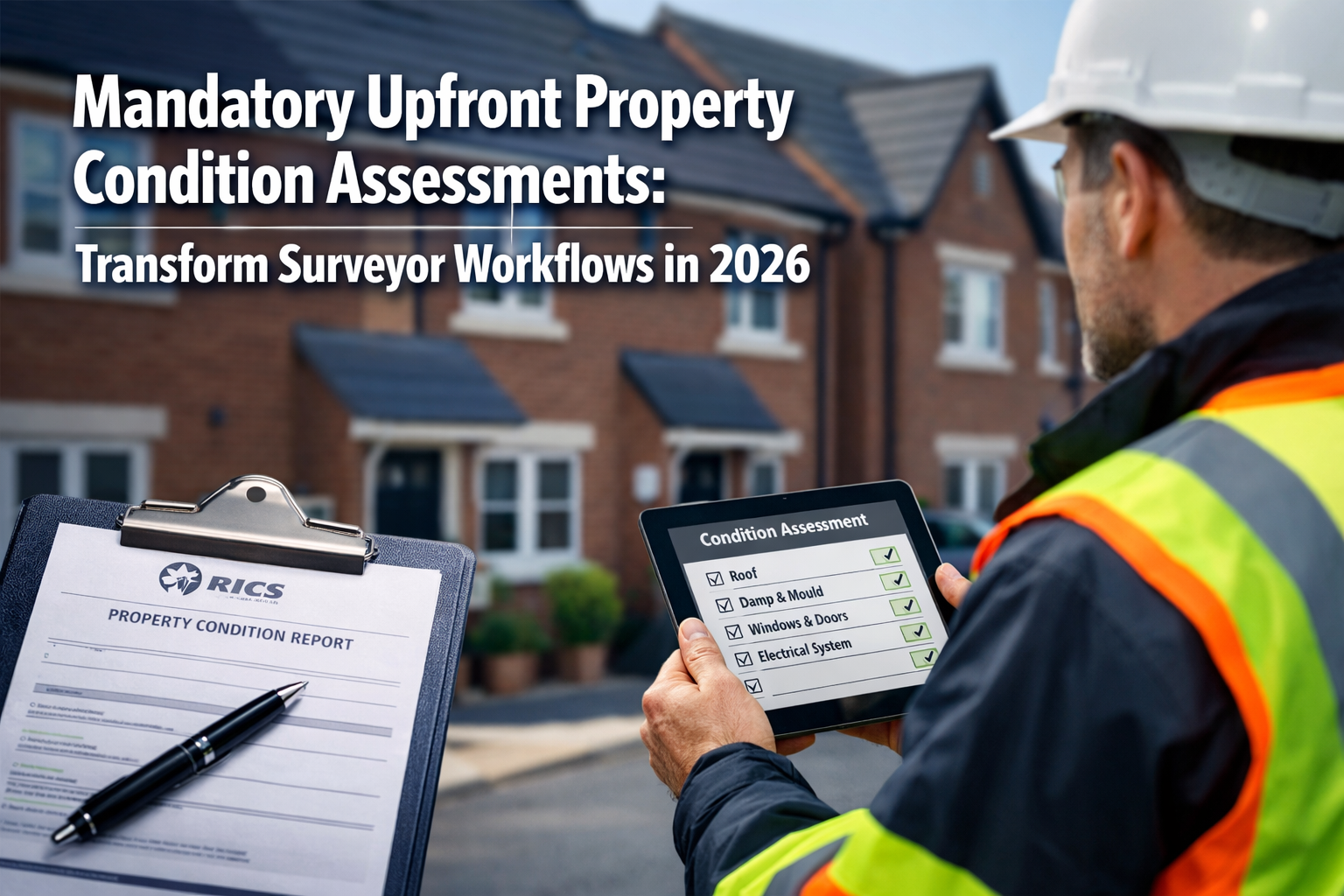
The UK property market stands at a pivotal crossroads in 2026. For decades, homebuyers have navigated a fragmented system where property condition assessments occurred late in the transaction process—often after emotional and financial commitments were already made. Now, proposed government reforms and RICS consultation initiatives are poised to fundamentally reshape this landscape, making Mandatory Upfront Property Condition Assessments: How RICS Consultation Changes Will Transform Surveyor Workflows in 2026 not just a regulatory talking point, but a practical reality that will redefine how chartered surveyors operate across the nation.
The Royal Institution of Chartered Surveyors (RICS) has launched comprehensive consultations addressing both residential stock condition surveys and broader homebuying reforms that could mandate upfront property assessments.[4] These changes promise to shift surveys from optional, post-offer activities to mandatory, pre-marketing requirements—a transformation with profound implications for surveyor capacity, workflow management, and professional development.
Key Takeaways
✅ Government reforms propose making property condition assessments mandatory upfront requirements, fundamentally changing when surveys occur in the transaction timeline and potentially increasing surveyor demand significantly.[5]
✅ RICS has launched a new Residential Stock Condition Survey Code of Practice affecting over 4 million affordable and social housing households, standardizing assessment protocols across housing associations and local authorities.[4]
✅ Surveyor workflows will require substantial digital transformation, with enhanced CPD platforms, new graduate pathways, and technology integration becoming essential for handling increased assessment volumes.[5]
✅ The reforms align with net zero objectives, positioning surveyors as central figures in the government's sustainability transition through specialized retrofit and energy efficiency expertise.[2]
✅ Professional capacity challenges must be addressed through retraining existing surveyors and attracting next-generation talent to meet anticipated demand increases.[5]
Understanding the RICS Consultation Framework for Property Condition Assessments
The Residential Stock Condition Survey Code of Practice
RICS launched a groundbreaking consultation in late 2025 for a new Residential Stock Condition Survey Code of Practice, with the consultation period originally closing on January 26, 2026.[4] This initiative represents the first comprehensive standardization effort for stock condition surveys across the UK's affordable and social housing sectors.
The code addresses a massive segment of the housing market—over 4 million households living in affordable and social rented housing.[4] Unlike previous guidance, this code of practice is designed not exclusively for RICS members, but for all social housing providers, including:
- Housing associations
- Local authorities
- Arms-length management organisations (ALMOs)
- Registered social landlords
"The new code will provide a consistent framework for conducting stock condition surveys, ensuring that housing providers can make informed decisions about maintenance, investment, and compliance," according to sector stakeholders responding to the consultation.[3]
This standardization effort comes at a critical time when housing quality, energy efficiency, and tenant safety have become paramount concerns. The code establishes clear methodologies for assessing property conditions, documenting defects, and prioritizing remedial works—skills that property surveyors must now master at scale.
Government Homebuying Reform Proposals
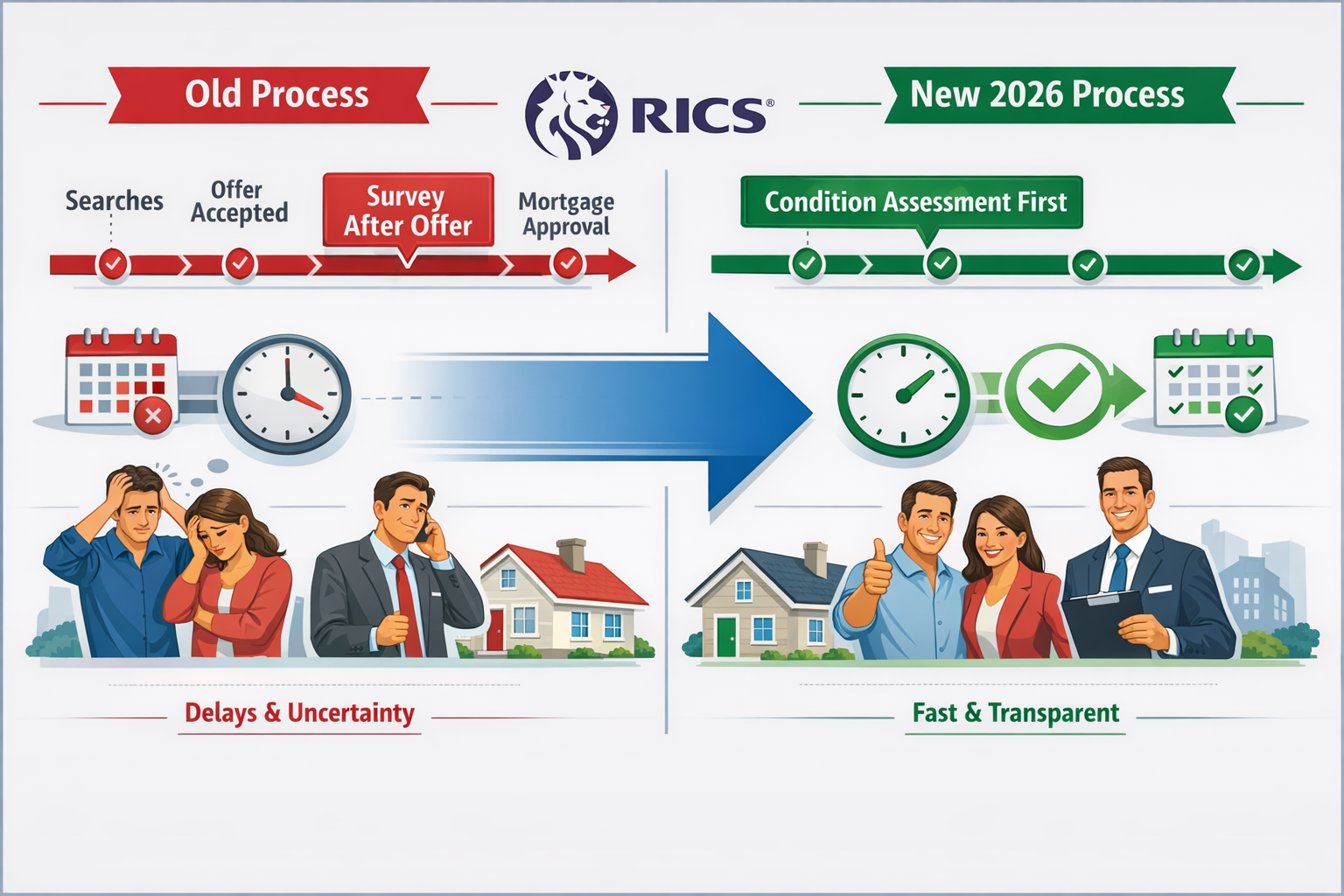
Parallel to RICS's stock condition survey initiative, the UK Government has proposed broader homebuying reforms that could make property condition assessments a standard upfront requirement for all residential transactions.[5] This represents a fundamental departure from the current system where buyers typically commission surveys only after their offers are accepted.
The proposed reforms aim to:
- Reduce transaction fall-through rates by identifying property issues before offers are made
- Increase transparency in the property market
- Accelerate transaction timelines by front-loading due diligence
- Protect buyers from unexpected costs after commitment
For surveyors, this shift means conducting assessments much earlier in the property lifecycle—potentially before properties are even formally marketed. This timing change has profound implications for workflow management, capacity planning, and client relationship dynamics.
How Mandatory Upfront Property Condition Assessments Will Transform Surveyor Workflows in 2026
Operational Changes: From Reactive to Proactive Assessment Models
The transition to mandatory upfront assessments fundamentally alters the surveyor's role in property transactions. Traditionally, surveyors operated in a reactive capacity—responding to buyer instructions after offers were accepted. The new model requires a proactive approach where assessments occur before marketing or in the early stages of buyer interest.
Key operational transformations include:
| Traditional Model | 2026 Reformed Model |
|---|---|
| Survey commissioned by buyer post-offer | Survey commissioned by seller pre-marketing |
| Timeline: 7-14 days after offer acceptance | Timeline: Before property listing |
| Buyer-surveyor relationship | Seller/agent-surveyor relationship |
| Single survey per interested buyer | One survey shared with multiple potential buyers |
| Reactive scheduling based on offer timing | Proactive scheduling integrated with listing preparation |
This shift requires surveyors to develop new working relationships with estate agents, sellers, and conveyancers. The comprehensive condition survey reports that surveyors produce will become marketing tools rather than due diligence documents, changing how findings are communicated and presented.
Capacity and Demand Implications
The surveying sector anticipated positive growth through 2026, with many lenders forecasting increased volumes following implementation of proposed homebuying reforms.[5] However, this growth presents significant capacity challenges.
Demand drivers include:
📊 Increased survey frequency: If every property requires an upfront assessment before marketing, the total number of surveys conducted annually could increase substantially—potentially doubling or tripling current volumes.
📊 Social housing standardization: The new RICS code affecting 4 million affordable housing units will generate consistent, recurring assessment work for housing associations and local authorities.[4]
📊 Buy-to-let sector growth: Professional and institutional landlords in the buy-to-let sector remain bullish on investment, demonstrating sustained demand for proper surveys among sophisticated property investors.[5]
The challenge lies in building sufficient professional capacity to meet this demand. The surveying sector faces the dual challenge of retraining existing surveyors and attracting the next generation of talent to handle anticipated increases in survey volumes.[5]
Technology Integration and Digital Transformation
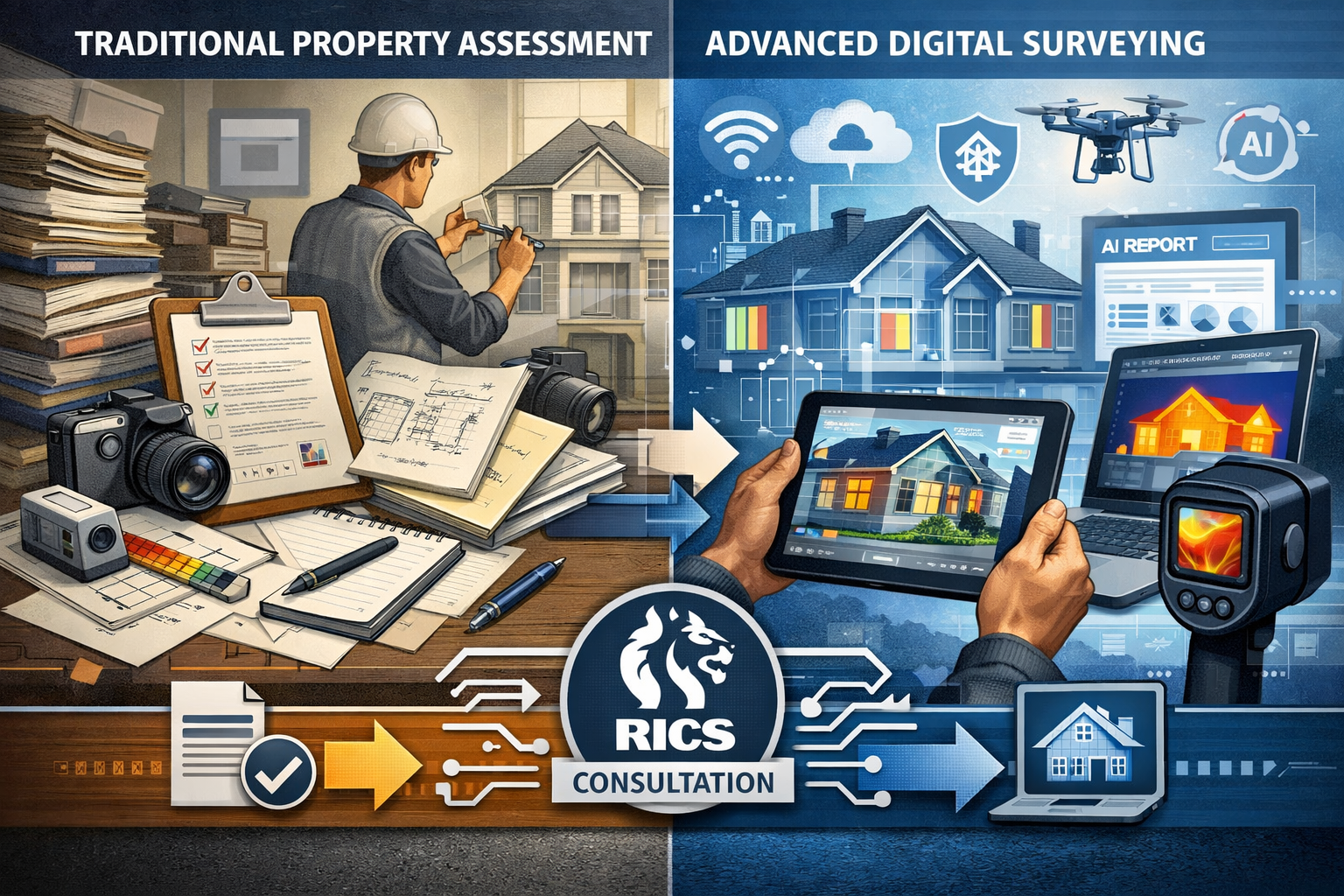
Meeting increased demand while maintaining quality standards requires significant digital transformation. Surveyors must adopt advanced technologies and streamlined workflows to conduct more assessments efficiently.
Essential technology integrations include:
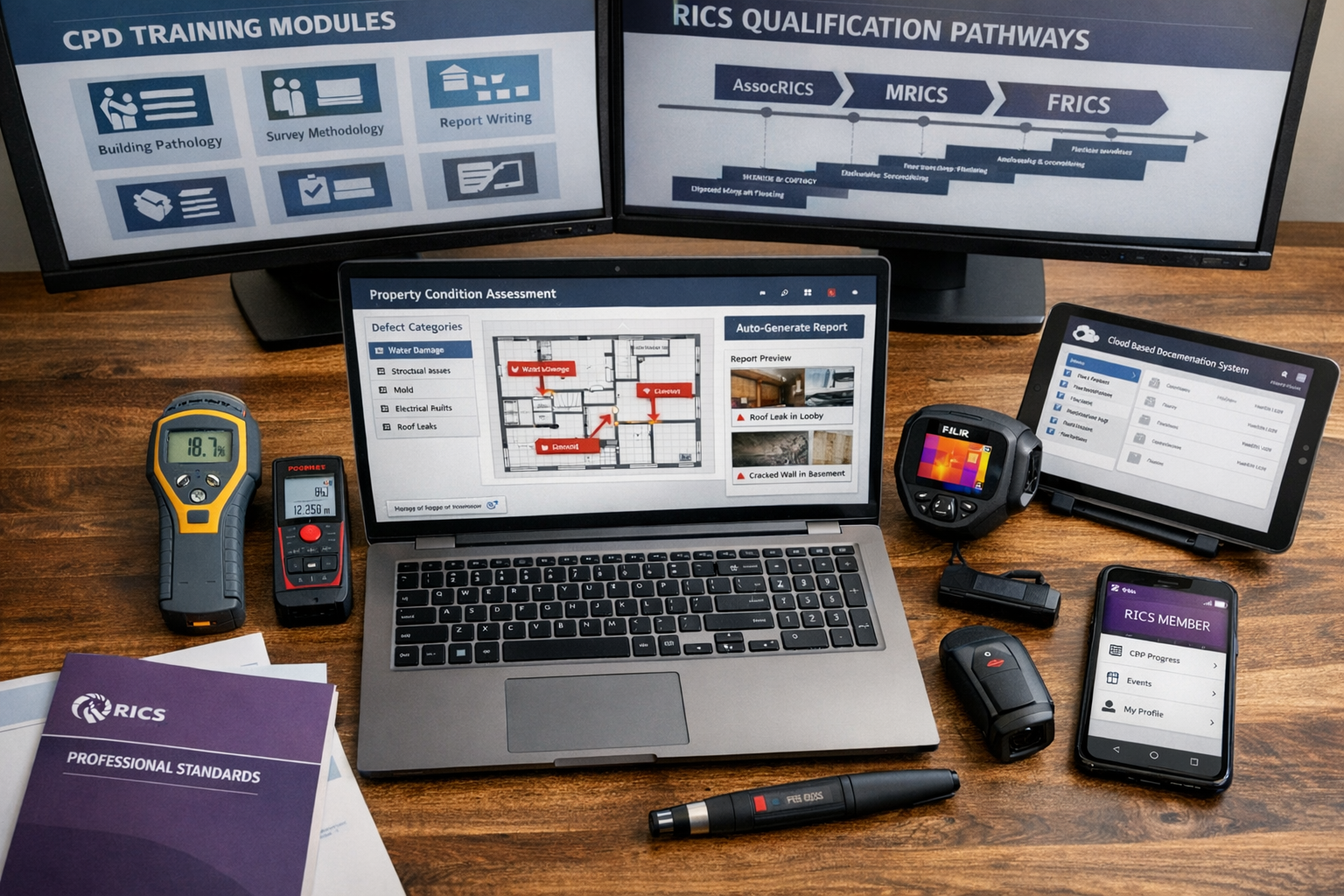
🔧 Digital inspection tools: Tablet-based assessment applications that enable real-time data capture, photo documentation, and defect categorization during site visits.
🔧 Cloud-based reporting platforms: Systems that automate report generation, reduce administrative time, and enable faster turnaround for clients.
🔧 Thermal imaging and diagnostic equipment: Advanced tools for identifying hidden defects, moisture issues, and energy efficiency problems—particularly important for net zero compliance.
🔧 Client portals and communication platforms: Digital interfaces that allow sellers, agents, and buyers to access survey findings securely and transparently.
RICS is supporting this transformation by developing clearer graduate qualification pathways and enhancing CPD platforms with improved digital tools and a new RICS member app to build the talent pipeline needed for expanded survey activity.[5] These resources help surveyors stay current with both technological advances and evolving regulatory requirements.
Professional Development and Compliance Requirements for Surveyors
Enhanced CPD and Qualification Pathways
The complexity of mandatory upfront assessments demands enhanced professional competencies. Surveyors must understand not only structural and building defects but also energy performance, sustainability considerations, and the legal implications of their findings being used as pre-marketing materials.
RICS is developing clearer graduate qualification pathways that address these expanded competency requirements.[5] Key focus areas include:
- Energy efficiency assessment: Understanding EPC ratings, retrofit opportunities, and net zero pathways
- Stock condition survey methodologies: Standardized approaches aligned with the new code of practice
- Digital tool proficiency: Competency with modern inspection and reporting technologies
- Legal and liability considerations: Understanding how upfront assessments affect surveyor liability and professional indemnity requirements
For existing professionals, enhanced CPD platforms provide ongoing education to ensure surveyors remain competent across these expanding domains. The new RICS member app offers convenient access to training modules, technical guidance, and peer networking opportunities.[5]
Net Zero and Sustainability Expertise
The government published the Future Homes and Buildings Standards in 2025, strengthening building regulations to deliver low-carbon, energy-efficient homes aligned with net zero objectives.[2] RICS CEO Justin Young noted this publication comes at a critical time for UK energy security.
RICS professionals are central to the government's net zero transition, with the institution supporting industry through new sustainability and retrofit expertise pathways.[2] Surveyors conducting mandatory upfront assessments must now evaluate properties not just for structural integrity but also for:
- Energy performance and improvement potential
- Retrofit opportunities and costs
- Compliance with evolving building standards
- Long-term sustainability and carbon reduction pathways
This expanded scope requires surveyors to develop specialized knowledge in building physics, energy systems, and sustainable construction practices. Those who develop this expertise will be well-positioned to capture growing demand from environmentally conscious buyers and compliance-driven social housing providers.
Liability and Professional Standards Considerations
Shifting surveys from buyer-commissioned due diligence to seller-provided marketing materials creates new liability considerations. When a survey is shared with multiple potential buyers rather than conducted for a single client, questions arise about:
- Who is the surveyor's client? The seller who commissioned the work or the buyers who rely on it?
- What duty of care exists to parties who weren't direct clients but relied on the assessment?
- How should limitations and disclaimers be structured when surveys serve dual purposes?
These questions require careful consideration of professional indemnity insurance coverage, terms of engagement, and report disclaimers. RICS guidance and the new code of practice will likely address these issues, but surveyors must proactively ensure their practices protect both clients and their professional standing.
Understanding what surveyors do in this evolving regulatory landscape requires continuous professional development and engagement with emerging standards.
Sector-Specific Impacts: Social Housing and Private Residential Markets
Social Housing Stock Condition Assessments
The RICS Residential Stock Condition Survey Code of Practice specifically targets the affordable and social housing sectors, where systematic condition assessment has historically been inconsistent.[4] Housing associations and local authorities manage vast portfolios requiring regular inspection, maintenance planning, and investment prioritization.
The standardized code provides several benefits:
✅ Consistent methodologies: All housing providers follow the same assessment protocols, enabling benchmarking and best practice sharing.
✅ Improved investment planning: Standardized data supports evidence-based decisions about capital expenditure and maintenance priorities.
✅ Enhanced compliance: Systematic assessments help providers meet regulatory requirements for property standards and tenant safety.
✅ Better tenant outcomes: Regular, thorough assessments identify issues early, preventing minor problems from becoming major hazards.
The Chartered Institute of Housing (CIH) responded positively to the consultation, recognizing the code's potential to improve housing quality across the sector.[3] For surveyors, this represents a substantial, recurring revenue stream—4 million housing units require regular assessment, creating predictable demand for specialized stock condition survey expertise.
Surveyors working in this sector must understand the specific needs of social housing providers, including compliance with the Decent Homes Standard, health and safety regulations, and energy efficiency targets. Developing expertise in Level 3 building surveys adapted for stock condition assessment will be valuable for professionals targeting this market.
Private Residential Market Transformation
In the private residential market, mandatory upfront assessments could revolutionize the homebuying experience. Currently, buyers often discover significant defects only after offers are accepted, leading to renegotiations, reduced offers, or transaction collapses—causing stress, wasted costs, and market inefficiency.
Upfront assessments address these problems by:
🏡 Providing transparency before commitment: Buyers see condition reports before making offers, enabling informed decisions.
🏡 Reducing fall-through rates: Issues are identified upfront rather than discovered during the buyer's survey, reducing surprises that cause transactions to fail.
🏡 Accelerating transactions: With condition assessment already completed, the post-offer period focuses on legal and financial matters rather than property investigations.
🏡 Creating fairer negotiations: Sellers can address issues proactively or price properties appropriately based on known conditions.
For surveyors, this market transformation creates opportunities but also challenges. The relationship shifts from buyer-agent to seller-agent, requiring different communication approaches. Reports must be comprehensive enough to satisfy potential buyers' due diligence needs while being presented in formats suitable for marketing purposes.
Surveyors must also consider how upfront assessments interact with other survey types. Buyers may still commission their own homebuyer surveys for additional assurance, creating potential for complementary rather than replacement services.
Implementation Challenges and Industry Preparedness
Workforce Development and Talent Pipeline
The surveying profession faces a significant workforce challenge in 2026. Meeting increased demand requires not only training new surveyors but also ensuring existing professionals adapt to new workflows, technologies, and regulatory requirements.
Key workforce development priorities include:
👷 Graduate recruitment and training: Attracting talented individuals to surveying careers through clearer qualification pathways and compelling career prospects.[5]
👷 Existing surveyor retraining: Providing CPD opportunities that enable experienced professionals to develop new competencies in energy assessment, digital tools, and standardized methodologies.
👷 Capacity planning: Surveying firms must forecast demand increases and scale their operations accordingly—hiring staff, investing in technology, and expanding geographic coverage.
👷 Quality maintenance: Ensuring that increased volume doesn't compromise assessment quality or professional standards.
RICS's enhanced digital tools and member app support these objectives by making professional development more accessible and convenient.[5] However, individual firms and practitioners must proactively invest in their capabilities to remain competitive in the transformed market.
Technology Adoption and Investment Requirements
Digital transformation requires significant investment in hardware, software, and training. Surveying practices must evaluate and implement:
- Inspection technology: Tablets, thermal cameras, moisture meters, and other diagnostic equipment
- Software platforms: Cloud-based reporting systems, client portals, and practice management tools
- Data security infrastructure: Systems that protect sensitive property and client information
- Training programs: Ensuring all staff can effectively use new technologies
These investments represent substantial costs, particularly for smaller practices. However, they're essential for handling increased assessment volumes efficiently while maintaining quality standards. Firms that delay technology adoption risk being unable to compete for the expanded work opportunities that mandatory upfront assessments create.
Regulatory Coordination and Market Transition
Successfully implementing mandatory upfront assessments requires coordination among multiple stakeholders—government, RICS, surveying firms, estate agents, conveyancers, lenders, and consumers. Key coordination challenges include:
📋 Timing and phasing: Determining whether reforms are implemented immediately or phased in gradually to allow market adjustment.
📋 Standards alignment: Ensuring the RICS code of practice aligns with government reform requirements and other regulatory frameworks.
📋 Consumer education: Helping sellers and buyers understand the new system, its benefits, and their responsibilities.
📋 Professional indemnity considerations: Ensuring insurance products evolve to cover the new liability landscape.
The consultation process provides opportunities for stakeholders to identify potential implementation challenges and develop solutions before reforms take effect. Surveyors should actively engage with these consultations to ensure their practical concerns are addressed in final policy design.
Commercial Opportunities and Business Model Evolution
New Revenue Streams for Surveying Practices
Mandatory upfront assessments create substantial new revenue opportunities for surveying practices. The shift from optional, buyer-commissioned surveys to mandatory, seller-commissioned assessments expands the total addressable market significantly.
Commercial opportunities include:
💰 Seller-paid assessment services: Establishing relationships with estate agents and sellers to provide pre-marketing condition assessments.
💰 Social housing contracts: Securing recurring contracts with housing associations and local authorities for standardized stock condition surveys affecting 4 million properties.[4]
💰 Energy efficiency and retrofit consulting: Leveraging net zero requirements to provide specialized sustainability assessments and improvement recommendations.[2]
💰 Digital report platforms: Developing or licensing technology that enables efficient report production and client access.
💰 Training and CPD services: Offering training to other surveyors on new methodologies, technologies, and compliance requirements.
Practices that position themselves early in these emerging markets can establish competitive advantages and capture market share as reforms take effect.
Competitive Differentiation Strategies
As the surveying market expands and evolves, differentiation becomes increasingly important. Practices can distinguish themselves through:
🏆 Specialization: Focusing on specific property types (period properties, new builds, social housing) or assessment types (energy efficiency, structural engineering, historic buildings).
🏆 Technology leadership: Adopting advanced inspection and reporting technologies that enable faster turnaround and superior client experiences.
🏆 Geographic coverage: Establishing presence in high-demand areas where surveyor capacity is limited—such as Central London, North London, or emerging markets in Berkshire and Sussex.
🏆 Service integration: Offering complementary services such as RICS valuations, party wall services, or dilapidation surveys that provide comprehensive solutions for clients.
🏆 Brand reputation: Building strong reputations for quality, reliability, and professional integrity that generate referrals and repeat business.
Understanding how to verify surveyor credentials becomes increasingly important for consumers navigating the expanded market, creating opportunities for practices that demonstrate clear professional qualifications and standards.
Pricing Models and Market Dynamics
The shift to seller-paid upfront assessments may affect pricing dynamics. When buyers commission surveys, they directly bear the cost and make value judgments about different service levels. When sellers commission assessments, they may prioritize cost efficiency over comprehensive detail, potentially creating downward price pressure.
However, several factors may counterbalance this pressure:
- Liability considerations: Sellers and their agents may prefer comprehensive assessments to minimize risk of buyer claims about undisclosed defects.
- Marketing value: High-quality condition reports can be marketing assets that justify premium pricing or accelerate sales.
- Regulatory requirements: Standardized methodologies may establish minimum scope requirements that prevent excessive cost-cutting.
- Buyer expectations: Sophisticated buyers may demand detailed assessments, creating market pressure for quality over price.
Surveying practices must carefully consider their pricing strategies in this evolving market, balancing competitive positioning with the need to maintain quality standards and adequate profit margins.
Preparing Your Surveying Practice for 2026 Changes
Strategic Planning and Capacity Building
Surveying practices should begin strategic planning now to prepare for mandatory upfront assessment requirements. Key planning considerations include:
✅ Demand forecasting: Estimating how reforms will affect survey volumes in your geographic area and property type focus.
✅ Capacity assessment: Evaluating whether your current staffing, technology, and processes can handle anticipated demand increases.
✅ Investment planning: Determining what technology, training, and staff investments are needed and developing implementation timelines.
✅ Partnership development: Building relationships with estate agents, housing associations, and other stakeholders who will commission upfront assessments.
✅ Service design: Developing assessment products specifically tailored to upfront, seller-commissioned requirements.
Practices that proactively prepare will be better positioned to capture opportunities when reforms take effect, while those that wait may struggle to compete in the transformed market.
Technology and Process Optimization
Operational efficiency becomes critical when handling increased assessment volumes. Practices should focus on:
🔧 Workflow standardization: Developing consistent processes for scheduling, conducting assessments, report production, and client communication.
🔧 Template and automation development: Creating report templates and automated systems that reduce administrative time while maintaining quality.
🔧 Quality control systems: Implementing review processes that ensure consistency and accuracy across increased volumes.
🔧 Client communication platforms: Establishing digital systems for client interaction, report delivery, and follow-up questions.
🔧 Performance metrics: Tracking key performance indicators such as turnaround time, client satisfaction, and quality scores to identify improvement opportunities.
Investing in these operational improvements enables practices to scale efficiently without proportionally increasing costs or compromising quality.
Professional Development and Team Training
Ensuring your team has the competencies needed for the transformed market requires systematic professional development:
📚 RICS code of practice training: Ensuring all surveyors understand the new Residential Stock Condition Survey Code of Practice and its application.[4]
📚 Energy efficiency and net zero education: Developing expertise in sustainability assessment, retrofit opportunities, and Future Homes Standards compliance.[2]
📚 Technology proficiency: Training staff on new inspection tools, software platforms, and digital reporting systems.
📚 Legal and liability awareness: Educating surveyors about the liability implications of upfront, seller-commissioned assessments.
📚 Communication skills: Developing capabilities for effectively communicating findings to sellers, agents, and multiple potential buyers.
Practices should develop structured training programs that ensure all team members maintain current competencies as standards and requirements evolve.
Conclusion: Embracing Transformation in the Surveying Profession
The convergence of RICS consultation initiatives and government homebuying reforms represents the most significant transformation of the UK surveying profession in decades. Mandatory Upfront Property Condition Assessments: How RICS Consultation Changes Will Transform Surveyor Workflows in 2026 is not merely a regulatory adjustment—it's a fundamental reimagining of when, how, and why property assessments occur.
For surveyors, these changes present both challenges and extraordinary opportunities. The challenges include building sufficient professional capacity, investing in technology and training, adapting to new client relationships, and navigating evolving liability considerations. However, the opportunities are equally substantial: expanded market demand, new revenue streams in social housing and private residential sectors, professional recognition as essential facilitators of property transactions, and central roles in the nation's net zero transition.
Success in this transformed landscape requires proactive preparation. Surveying practices must:
- Engage with RICS consultations to shape final standards and ensure practical concerns are addressed
- Invest in technology and training that enable efficient, high-quality assessments at scale
- Develop strategic partnerships with estate agents, housing associations, and other stakeholders
- Build specialized expertise in areas like energy efficiency, stock condition assessment, and digital reporting
- Maintain unwavering commitment to professional standards and quality even as volumes increase
The surveying profession has always played a vital role in protecting property buyers and maintaining building standards. The 2026 reforms elevate this role, positioning surveyors as gatekeepers of property quality and transparency in the UK housing market. Those who embrace this transformation—investing in capabilities, adapting workflows, and maintaining professional excellence—will not only survive but thrive in the evolved market.
The future of property surveying is being written now, in 2026. The question is not whether mandatory upfront assessments will transform the profession, but whether individual practices and professionals will position themselves to lead that transformation or struggle to keep pace. The choice, and the opportunity, belongs to the surveying community.
References
[1] Homebuying Reform Impacts On Building Surveys Preparing For Mandatory Upfront Condition Assessments In 2026 – https://nottinghillsurveyors.com/blog/homebuying-reform-impacts-on-building-surveys-preparing-for-mandatory-upfront-condition-assessments-in-2026
[2] Rics Ceo Comments On The Publication Of The Future Homes And Building Standards – https://www.rics.org/news-insights/rics-ceo-comments-on-the-publication-of-the-future-homes-and-building-standards
[3] Cih Responds To Rics Residential Stock Condition Survey Code Of Practice – https://www.cih.org/news/cih-responds-to-rics-residential-stock-condition-survey-code-of-practice/
[4] Consultation Launched Housing Stock Condition Survey Code Practice – https://www.rics.org/news-insights/consultation-launched-housing-stock-condition-survey-code-practice
[5] Surveying In 2026 Reform Recovery And Renewed Demand – https://www.lrg.co.uk/news-and-insights/surveying-in-2026-reform-recovery-and-renewed-demand/
