
Do You Need a Survey on a New Build? A Complete Guide for 2026

Picture this: you’ve just signed a contract for a brand-new home, fresh from the builder with pristine walls and untouched floors. The property looks perfect, so why would anyone suggest you need a survey? The truth might surprise you. Even in 2026, with stricter building regulations and enhanced construction standards, the question “do you need a survey on a new build” remains one of the most frequently asked—and often misunderstood—questions in property transactions.
Many buyers assume that new construction comes with automatic guarantees and that surveys are only necessary for older properties. However, understanding when and why you might need a survey on a new build can save you thousands of pounds and prevent legal headaches down the road. This comprehensive guide explores everything you need to know about surveys for new construction properties in 2026.
Key Takeaways
✅ New builds often require surveys for mortgage approval, title insurance, and legal boundary verification, despite being newly constructed
✅ The 2026 ALTA/NSPS standards have introduced enhanced requirements for survey documentation, transparency, and handling of easements and utilities[1][3]
✅ Lender requirements vary significantly—some mortgage providers mandate specific survey types for new construction, while others may waive this requirement
✅ Different survey types serve different purposes—from basic snagging surveys to comprehensive ALTA/NSPS land title surveys for commercial properties
✅ Legal protection is paramount—surveys identify boundary disputes, encroachments, and easements that could affect your property rights regardless of age
Understanding New Build Surveys: What They Are and Why They Matter
What Exactly Is a New Build Survey?
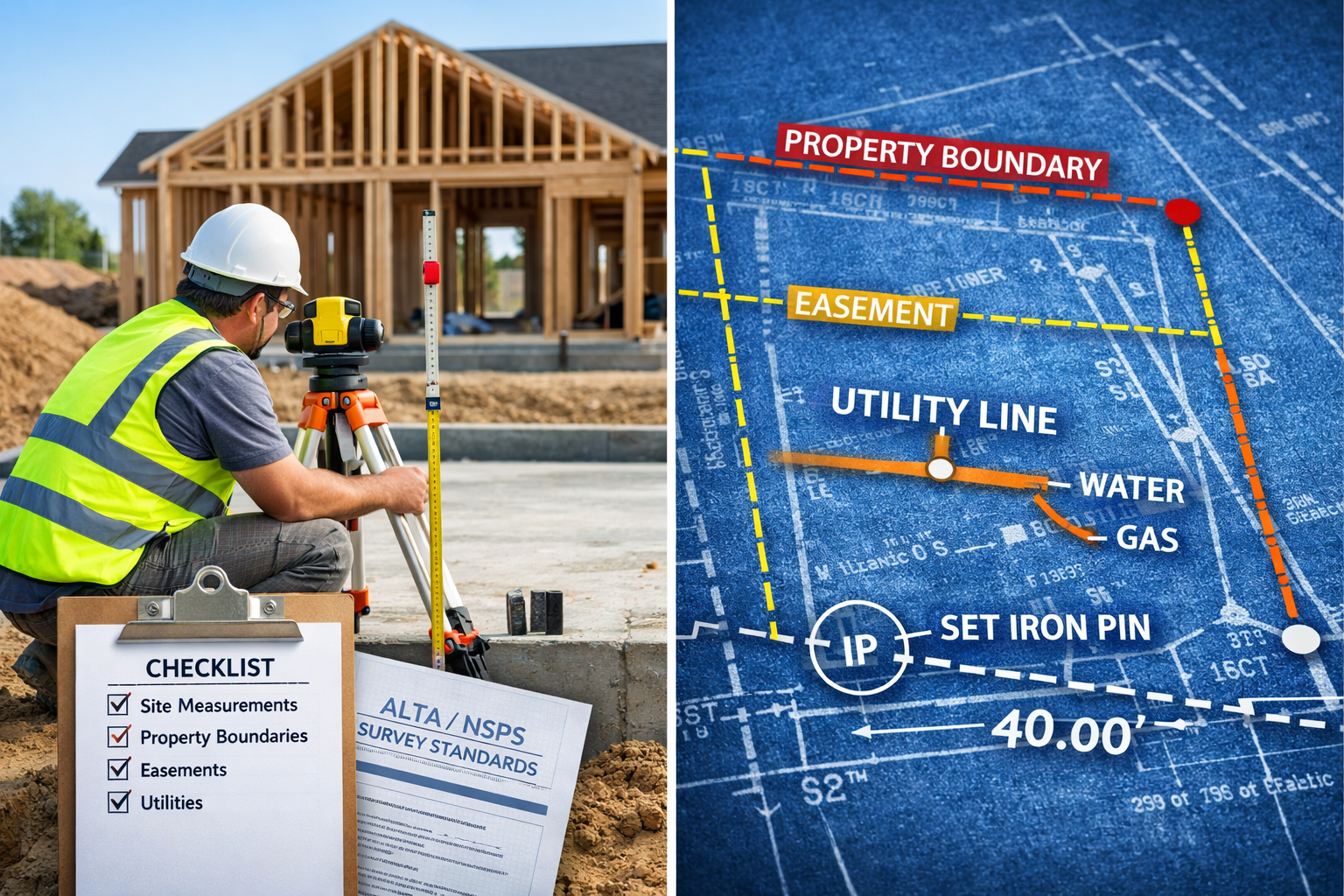
A new build survey is a professional assessment conducted on recently constructed or currently under-construction properties. Unlike traditional building surveys that focus primarily on structural condition and defects in existing properties, surveys for new builds serve multiple purposes depending on the type ordered.
The main types of surveys for new construction include:
- 🏗️ Snagging surveys – Identify minor defects and finishing issues
- 📐 Land/boundary surveys – Establish legal property boundaries and easements
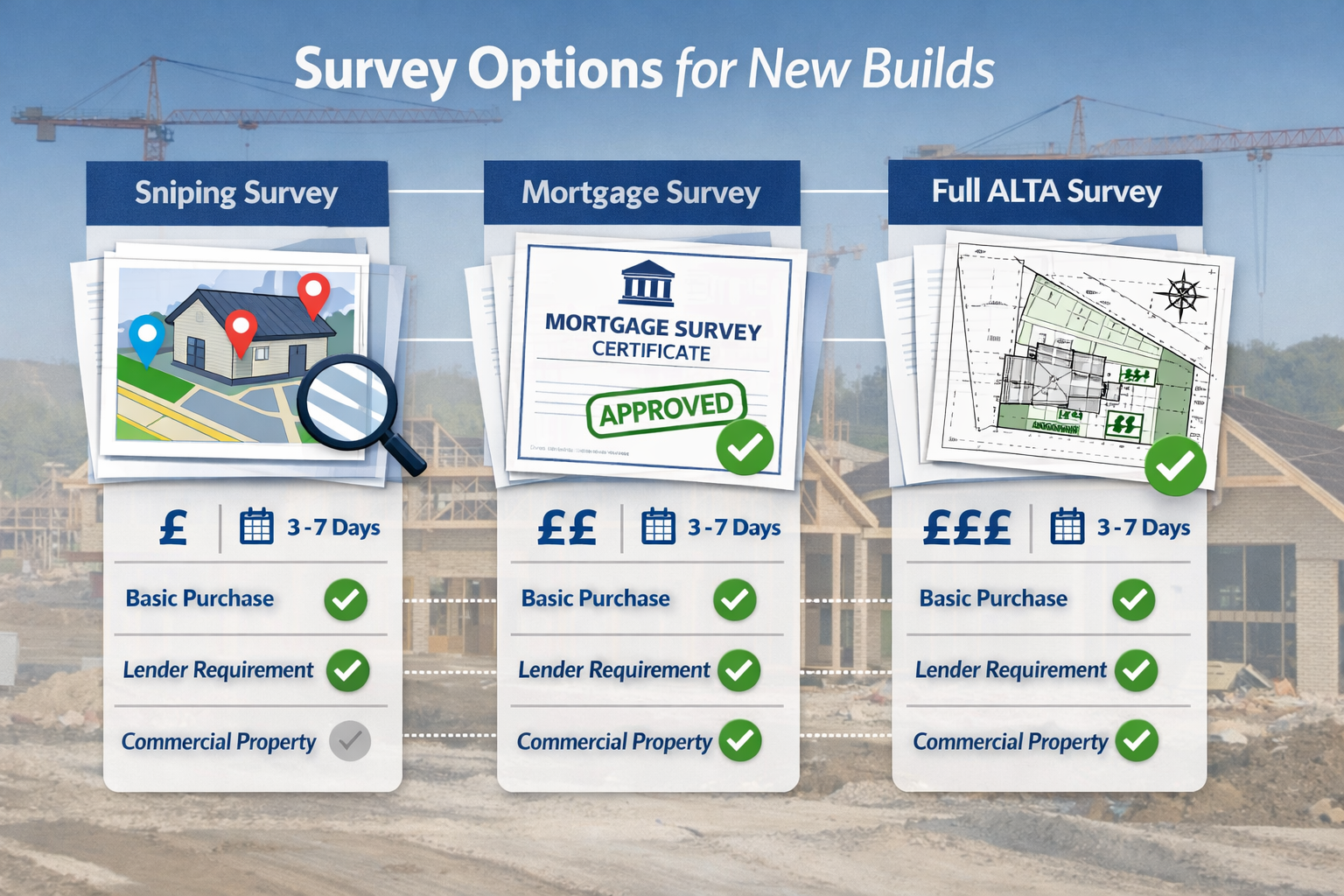
- 🏦 Mortgage surveys – Required by lenders to verify property details
- 📋 ALTA/NSPS surveys – Comprehensive title surveys meeting industry standards
- 🔍 Specific defect surveys – Target particular concerns or building elements
Why New Builds Aren’t Automatically Problem-Free
The assumption that new construction equals perfection is a dangerous misconception. Here’s why surveys remain crucial:
Construction Quality Concerns:
Even with modern building codes, construction defects happen. Poor workmanship, rushed timelines, and cost-cutting measures can result in issues that aren’t immediately visible. A professional survey can identify these problems before you complete your purchase.
Legal Boundary Issues:
New developments often involve complex land divisions, shared access rights, and utility easements. The 2026 ALTA/NSPS standards have strengthened requirements for documenting easements, utilities, access, and encroachments[1], making professional surveys more important than ever for establishing clear property rights.
Lender Requirements:
Many mortgage providers require surveys regardless of property age. This protects their investment and ensures the property boundaries and improvements match the legal description. Understanding what survey you need can help you navigate lender requirements effectively.
Do You Need a Survey on a New Build? Key Scenarios Explained
When a Survey Is Legally Required
Certain situations make surveys mandatory rather than optional for new construction:
Lender Mandates:
Most mortgage lenders require a survey to verify that improvements are within property boundaries and that no encroachments exist. This requirement applies to new builds just as it does to existing properties. The survey confirms that the property description matches the physical reality.
Title Insurance Requirements:
Title insurance companies often require an ALTA/NSPS survey for new construction, especially for commercial properties or high-value residential developments. The enhanced 2026 standards have improved communication protocols between surveyors and lenders[1], streamlining this process.
Local Regulations:
Some jurisdictions mandate surveys for new construction as part of the permitting and certificate of occupancy process. These requirements vary by location, so checking with local authorities is essential.
| Scenario | Survey Required? | Typical Survey Type |
|---|---|---|
| Cash purchase, no lender | Usually no (but recommended) | Boundary survey |
| Mortgage purchase | Often yes | Mortgage/Title survey |
| Commercial new build | Almost always | ALTA/NSPS survey |
| Custom home construction | Yes | Full boundary survey |
| Development plot purchase | Yes | Land survey with topography |
When a Survey Is Highly Recommended (But Not Required)
Even when not legally mandated, surveys provide valuable protection:
Boundary Disputes Prevention:
New developments sometimes have incorrectly placed fences, walls, or structures. A survey establishes the exact legal boundaries, preventing future disputes with neighbors. This is particularly important in dense developments where properties are close together.
Easement and Right-of-Way Identification:
The 2026 ALTA/NSPS standards place stronger emphasis on easements, utilities, access, and encroachments[1]. Understanding these rights and restrictions is crucial for new build owners who may face limitations on how they can use or modify their property.
Future Resale Value:
Having a current survey makes future sales smoother and can increase buyer confidence. It’s a valuable document that demonstrates due diligence and provides clear property information.
Peace of Mind:
For many buyers, the relatively small cost of a survey (typically £400-£1,500 depending on type and property size[4]) is worthwhile for the assurance it provides. If you’re experiencing house survey anxiety, understanding what to expect can help ease concerns.
Types of Surveys for New Build Properties
Snagging Surveys for New Builds
What They Cover:
Snagging surveys focus on cosmetic and minor defects in newly built homes. These inspections identify issues like:
- Uneven paintwork or plastering
- Poorly fitted doors and windows
- Incomplete finishing work
- Minor plumbing or electrical issues
- Cosmetic damage to fixtures and fittings
Who Needs Them:
Buyers purchasing from developers or builders benefit most from snagging surveys. These surveys should ideally be conducted before final completion, allowing buyers to request corrections before taking possession.
Limitations:
Snagging surveys don’t replace structural surveys or boundary surveys. They focus on quality control rather than legal property boundaries or major structural concerns.
Land and Boundary Surveys
Purpose and Scope:
These surveys establish the precise legal boundaries of your property and identify any encroachments, easements, or right-of-way issues. For new builds, this is particularly important because:
- Property lines may not match fence lines
- Shared driveways or access roads need clear documentation
- Utility easements may restrict future building plans
- Neighboring properties may have encroached during construction
The 2026 ALTA/NSPS Standards:
Recent updates have revised the definition of Relative Positional Precision (RPP)[2], improving the accuracy requirements for boundary surveys. These enhanced standards ensure greater reliability in property boundary determinations.
ALTA/NSPS Land Title Surveys
Comprehensive Coverage:
ALTA/NSPS surveys represent the gold standard for title surveys, particularly for commercial new builds. The 2026 standards include[3][5]:
- Enhanced transparency requirements for surveyor documentation
- Improved handling of easements and access rights
- Stronger communication protocols with lenders and title companies
- More detailed requirements for identifying improvements and encroachments
When They’re Required:
Commercial properties, high-value residential developments, and properties requiring title insurance typically need ALTA/NSPS surveys. These comprehensive surveys provide the most detailed information about property boundaries, improvements, and potential issues.
Cost Considerations:
ALTA/NSPS surveys are more expensive than basic boundary surveys, typically ranging from £1,500 to £5,000+ depending on property size and complexity[4]. However, they provide unmatched detail and legal protection.
Mortgage Surveys vs. Full Building Surveys
Understanding the Difference:
Many buyers confuse mortgage surveys (valuation surveys) with comprehensive building surveys. Here’s the distinction:
Mortgage/Valuation Surveys:
- Required by lenders
- Confirm property value for lending purposes
- Basic condition assessment
- Don’t provide detailed defect analysis
- Protect the lender, not necessarily the buyer
Full Building Surveys:
- Optional but recommended
- Detailed structural analysis
- Comprehensive defect identification
- Provide buyer protection
- More expensive but more thorough
For guidance on choosing the right option, our article on whether you need a survey when buying a house provides detailed comparisons.
The 2026 Survey Standards: What’s Changed for New Builds
Enhanced Transparency and Documentation
The 2026 ALTA/NSPS standards have introduced significant improvements affecting new build surveys[1][7]:
Clearer Surveyor Documentation:
Surveyors must now provide more detailed explanations of their methodologies, data sources, and limitations. This transparency helps buyers and lenders better understand what the survey covers and any potential gaps.
Improved Precision Standards:
The revised definition of Relative Positional Precision (RPP)[2] ensures more accurate boundary determinations, particularly important for new developments where precise lot divisions are crucial.
Better Communication Protocols:
Enhanced requirements for communication between surveyors, lenders, and title companies[1] have streamlined the survey process, reducing delays and misunderstandings in new build transactions.
Stronger Focus on Easements and Utilities
The 2026 standards place increased emphasis on identifying and documenting[3][5]:
- 🔌 Utility easements – Electric, gas, water, sewer, and telecommunications
- 🚗 Access rights – Shared driveways, private roads, and right-of-way agreements
- 🏘️ Encroachments – Structures or improvements crossing property lines
- 📜 Restrictive covenants – Limitations on property use or modifications
For new builds, this enhanced focus is particularly valuable because these issues are often created during the development process and may not be immediately obvious to buyers.
Impact on New Build Buyers
What This Means for You:
The 2026 standards provide better protection for new build purchasers through:
- More accurate surveys with improved precision requirements
- Clearer documentation that’s easier to understand
- Better identification of potential issues before they become problems
- Stronger legal foundation for property rights and boundaries
These improvements make professional surveys even more valuable for new construction purchases in 2026 and beyond.
Cost-Benefit Analysis: Is a New Build Survey Worth It?
Understanding Survey Costs in 2026
Survey costs vary significantly based on type, property size, location, and complexity[4]:
| Survey Type | Typical Cost Range | Best For |
|---|---|---|
| Snagging Survey | £300-£600 | Quality control on new builds |
| Basic Boundary Survey | £400-£800 | Residential property boundaries |
| Mortgage Survey | £250-£500 | Lender requirements |
| Full Building Survey | £600-£1,500 | Comprehensive property assessment |
| ALTA/NSPS Survey | £1,500-£5,000+ | Commercial properties, complex sites |
Factors Affecting Cost:
- Property size and acreage
- Site complexity and terrain
- Urban vs. rural location
- Survey type and detail level
- Urgency and timeline requirements
Potential Savings and Risk Mitigation
What You Gain:
💷 Financial Protection:
Identifying a £10,000 boundary dispute before purchase is far better than discovering it afterward. Surveys can reveal issues that significantly impact property value or require expensive corrections.
⚖️ Legal Security:
Clear documentation of boundaries, easements, and encroachments protects your legal rights. This documentation becomes invaluable if disputes arise with neighbors or local authorities.
🏠 Negotiating Power:
Survey findings can provide leverage for price negotiations or require the builder to address issues before completion. Many buyers have saved thousands by using survey results to negotiate better terms.
🔮 Future Planning:
Understanding easements and restrictions helps you plan future improvements without costly surprises. Knowing you can’t build an extension due to an easement is better discovered before purchase than after.
When to Skip a Survey (Rare Scenarios)
Limited Circumstances:
Very few situations justify skipping a survey entirely:
- Developer guarantees that specifically cover boundary and legal issues (rare)
- Cash purchases where you’re willing to accept all risks
- Properties with recent surveys (less than 1-2 years old) that can be transferred
Even in these scenarios, most property professionals recommend obtaining at least a basic boundary survey for legal protection.
How to Arrange a Survey on Your New Build
Choosing the Right Surveyor
Essential Qualifications:
Look for surveyors with:
- ✓ RICS (Royal Institution of Chartered Surveyors) accreditation
- ✓ Experience with new build properties
- ✓ Knowledge of current 2026 standards
- ✓ Professional indemnity insurance
- ✓ Local area expertise
Our guide to building surveyors in London provides detailed advice on selecting qualified professionals.
The Survey Process: What to Expect
Timeline and Steps:
- Initial consultation – Discuss your needs and property details (1-2 days)
- Quote and agreement – Receive formal proposal and terms (1-3 days)
- Site visit – Surveyor conducts fieldwork (1 day)
- Analysis and documentation – Surveyor prepares report (3-7 days)
- Report delivery – Receive detailed findings and recommendations (1 day)
Total timeline typically ranges from 1-2 weeks for standard surveys, though complex properties or ALTA/NSPS surveys may take longer.
What the Surveyor Will Do:
- Physically measure and mark property boundaries
- Identify existing structures and improvements
- Document easements, utilities, and access rights
- Check for encroachments or boundary issues
- Verify legal descriptions against physical reality
- Prepare detailed drawings and written reports
Questions to Ask Your Surveyor
Before hiring, ensure you understand:
- 📋 What specific survey type they recommend for your situation
- 💰 Total cost including any additional fees
- ⏱️ Expected timeline from start to completion
- 📄 What the final report will include
- 🔄 Their revision policy if issues are found
- 📞 How they handle questions during the process
Common Issues Found in New Build Surveys
Boundary and Encroachment Problems
Typical Findings:
Fence Line Discrepancies:
Fences or walls placed by builders that don’t match legal property boundaries are surprisingly common. These errors can reduce your usable land or create future disputes with neighbors.
Shared Access Confusion:
New developments often have shared driveways or access roads with unclear ownership or maintenance responsibilities. Surveys identify these arrangements and document your rights and obligations.
Utility Easements:
Underground utilities may cross your property, limiting where you can build or plant trees. The 2026 standards’ enhanced focus on utilities[1] ensures these are properly documented.
Construction Quality Issues
Structural Concerns:
Even new builds can have:
- Foundation settling or movement
- Improper drainage causing water accumulation
- Roof installation defects
- Window and door alignment problems
For detailed information on what surveyors examine, see our guide on what surveyors look for in a house survey.
Documentation Discrepancies
Legal Description Errors:
Sometimes the legal property description in deeds doesn’t match the actual constructed improvements. Surveys identify these discrepancies before they cause title insurance or resale problems.
Planning Permission Issues:
Occasionally, builders construct features that deviate from approved plans. Surveys can identify these variations, which may require retroactive approval or modifications.
New Build Warranties vs. Surveys: Understanding the Difference
What Builder Warranties Cover
Typical Coverage:
Most new builds come with warranties such as:
- NHBC (National House Building Council) – 10-year warranty
- Premier Guarantee – Similar 10-year coverage
- LABC Warranty – Local authority building control warranty
What They Include:
- Years 1-2: Builder fixes defects
- Years 3-10: Structural defect coverage
- Insurance-backed protection if builder fails
What Warranties Don’t Cover
Critical Gaps:
❌ Boundary disputes – Warranties don’t protect against property line issues
❌ Easement problems – Legal rights and restrictions aren’t covered
❌ Title defects – Legal ownership issues fall outside warranty scope
❌ Pre-existing conditions – Issues present at purchase but not immediately obvious
Why Surveys Remain Essential:
Warranties and surveys serve different purposes. Warranties protect against construction defects, while surveys protect against legal and boundary issues. Both provide valuable but distinct protections.
Special Considerations for Different Property Types
Detached New Builds
Unique Concerns:
- Larger plots with more complex boundary issues
- Greater likelihood of easements for utilities
- Potential for future subdivision or development
- Higher survey costs due to property size
New Build Apartments and Flats
Different Requirements:
- Common areas and shared facilities
- Leasehold considerations
- Service charge and maintenance obligations
- Less emphasis on boundary surveys, more on lease terms
Commercial New Construction
Enhanced Requirements:
Commercial properties almost always require comprehensive ALTA/NSPS surveys[5]. The 2026 standards have strengthened requirements for commercial building surveys, making professional surveys even more critical.
Additional Considerations:
- Zoning compliance verification
- ADA accessibility requirements
- Environmental assessments
- Parking and loading area documentation
Regional Variations: Survey Requirements Across the UK
England and Wales
Standard Practices:
Most lenders require surveys for mortgage approval, though requirements vary by institution. Local planning authorities may have additional requirements for new developments.
Scotland
Different System:
Scotland’s property law differs significantly, with the Home Report system requiring surveys before marketing. New builds may have modified requirements, but surveys remain important.
Northern Ireland
Local Considerations:
Survey requirements align more closely with England and Wales, though local conveyancing practices may differ. Always consult with local property professionals.
Making Your Decision: A Practical Framework
Decision Tree for New Build Surveys
Ask yourself:
- Does your lender require a survey?
- Yes → Arrange required survey type
- No → Continue to question 2
- Is this a cash purchase?
- Yes → Continue to question 3
- No → Survey highly recommended
- Are you comfortable accepting all boundary and legal risks?
- Yes → Consider basic boundary survey minimum
- No → Arrange comprehensive survey
- What’s your risk tolerance?
- Low → Full survey recommended
- Medium → Boundary survey minimum
- High → Proceed with caution, consider basic survey
Professional Recommendations
Most property professionals advise:
✅ Always get at least a boundary survey – The relatively low cost provides significant legal protection
✅ Consider a full building survey if you’re risk-averse or the property is complex
✅ Don’t rely solely on warranties – They don’t cover boundary or legal issues
✅ Budget for surveys in your purchase costs – They’re a worthwhile investment
For personalized guidance, consult with RICS building survey professionals who can assess your specific situation.
Conclusion: Protecting Your New Build Investment
So, do you need a survey on a new build? The answer for most buyers is a clear yes. While the specific type of survey depends on your lender requirements, property type, and risk tolerance, some form of professional survey provides invaluable protection for what is likely your largest financial investment.
The 2026 ALTA/NSPS standards have strengthened survey requirements and improved transparency, making professional surveys more reliable and comprehensive than ever before[1][3]. These enhanced standards particularly benefit new build purchasers by ensuring better documentation of easements, utilities, and boundary issues that commonly affect new developments.
Key Recommendations:
- Determine your lender’s requirements early in the purchase process
- Budget £400-£1,500 for a professional survey depending on property type
- Choose a RICS-accredited surveyor with new build experience
- Don’t confuse warranties with surveys – they serve different purposes
- Use survey findings to negotiate or address issues before completion
Next Steps
Ready to arrange a survey for your new build? Here’s what to do:
📞 Contact a qualified surveyor – Discuss your specific property and requirements
📋 Review your mortgage offer – Confirm any lender survey requirements
💰 Get multiple quotes – Compare prices and services from different surveyors
📅 Schedule early – Book your survey well before your completion date
🔍 Review the report carefully – Ask questions about any concerns or unclear findings
Whether you’re purchasing a new apartment in London, a detached house in the countryside, or a commercial property, investing in a professional survey provides peace of mind and legal protection that far outweighs the cost. Don’t let the “new build” label create a false sense of security—protect your investment with a comprehensive survey that establishes clear boundaries, identifies potential issues, and provides the documentation you need for a secure property purchase.
For more information about surveys and property assessments, explore our resources on building surveys and what survey you need for your specific situation.
References
[1] Understanding The 2026 Alta Nsps Land Survey Standards Whats New And Why It Matters – https://millmanland.com/company-news/understanding-the-2026-alta-nsps-land-survey-standards-whats-new-and-why-it-matters/
[2] New 2026 Minimum Standard Detail 3684174 – https://www.jdsupra.com/legalnews/new-2026-minimum-standard-detail-3684174/
[3] 20251125 Key Updates To The 2026 Altansps Land Title Survey Standards – https://www.alta.org/news-and-publications/news/20251125-Key-Updates-to-the-2026-ALTANSPS-Land-Title-Survey-Standards
[4] Blog Land Survey Costs 2026 – https://www.thelandgeek.com/blog-land-survey-costs-2026/
[5] 2026 Alta Nsps Land Title Survey Standards – https://www.partneresi.com/resources/references/standards-regulations/2026-alta-nsps-land-title-survey-standards/
[7] Alta Standards Updated – https://cretelligent.com/alta-standards-updated/
