
When a commercial lease comes to an end, thousands of pounds can hang in the balance. The difference between a fair settlement and a costly dispute often comes down to one critical document: the dilapidations survey. This comprehensive assessment determines who pays for what repairs, alterations, and reinstatements—making it one of the most financially significant aspects of commercial property management.
A dilapidations survey is a detailed inspection and report that identifies breaches of lease covenants related to repair, decoration, and reinstatement obligations. Whether you're a landlord seeking to protect your property investment or a tenant facing potential end-of-lease liabilities, understanding the dilapidations process can save substantial costs and prevent legal disputes.
Key Takeaways
- 📋 A dilapidations survey documents all lease covenant breaches related to repairs, decorations, and alterations, forming the basis for financial claims between landlords and tenants
- 💰 Early engagement with dilapidations can reduce costs significantly, with surveys conducted at lease commencement (Schedule of Condition) protecting tenants from pre-existing defects
- ⚖️ Three main types exist: Interim dilapidations surveys, terminal dilapidations surveys, and Schedules of Condition, each serving distinct purposes in the lease lifecycle
- 🤝 Professional surveyors are essential for accurate assessments, fair negotiations, and compliance with legal frameworks including the Dilapidations Protocol
- 🌱 Sustainability and technology are reshaping dilapidations in 2026, with ESG considerations, circular economy principles, and digital tools transforming traditional practices
What Is a Dilapidations Survey?
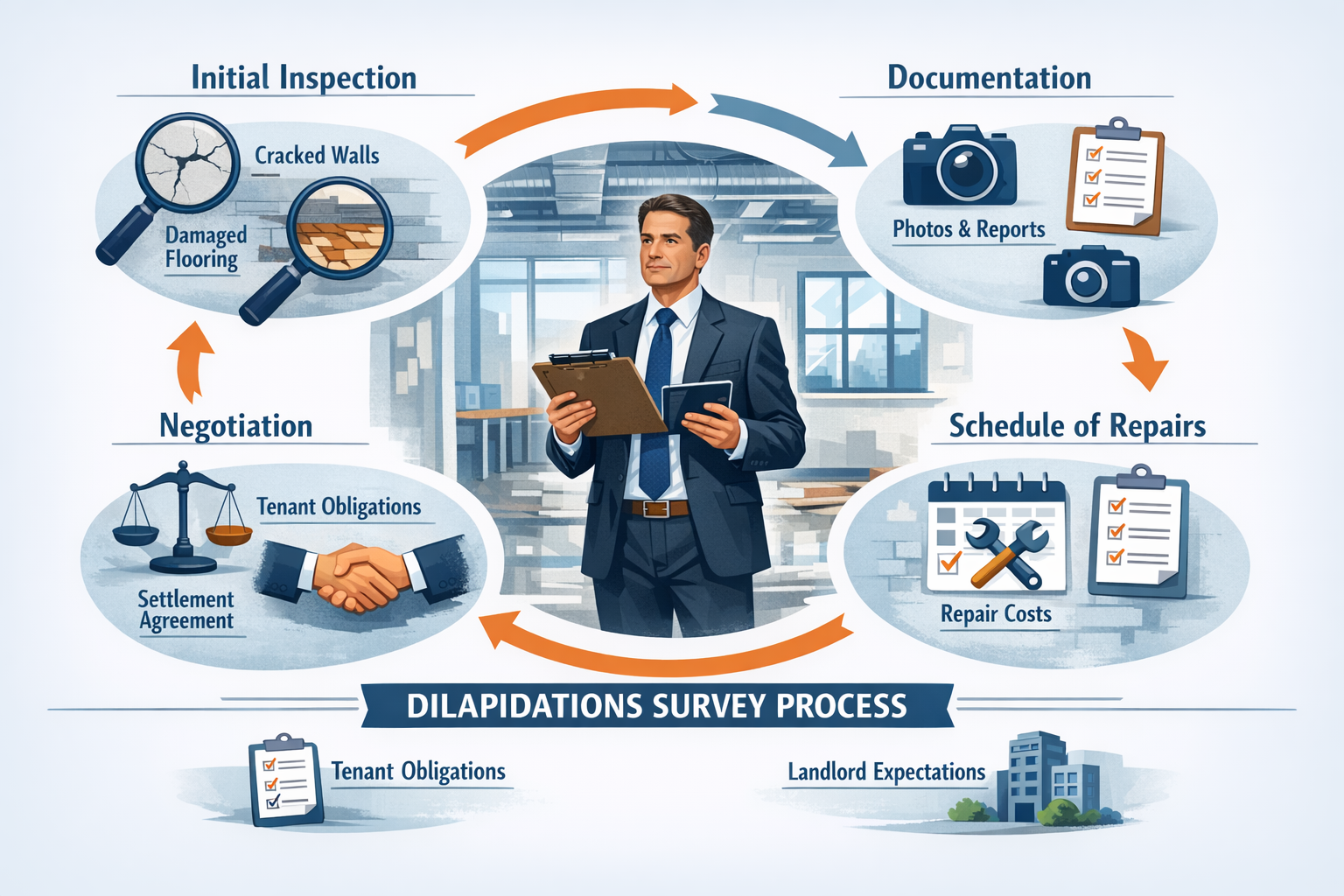
A dilapidations survey is a professional property inspection that assesses the condition of a leased commercial property against the tenant's obligations under the lease agreement. This specialized survey identifies any breaches of covenant—instances where the tenant has failed to maintain, repair, or reinstate the property according to lease terms.
The survey produces a detailed report documenting defects, unauthorized alterations, and areas requiring attention. This report becomes the foundation for dilapidations claims, where landlords seek compensation for the cost of remedying breaches or tenants negotiate fair settlements[2].
The Legal Framework
Dilapidations are governed by a combination of lease agreements, common law, and statutory provisions. The Dilapidations Protocol provides a pre-action framework designed to encourage early resolution and avoid costly litigation. Understanding this legal context is crucial for both parties[6].
Key legal principles include:
- Repairing obligations under the lease covenant
- Statutory limitations on claims (Section 18 of the Landlord and Tenant Act 1927)
- Reasonableness in claimed costs and scope of works
- Diminution in value considerations
Types of Dilapidations Surveys
Not all dilapidations surveys serve the same purpose. Understanding the different types helps property stakeholders engage the right assessment at the appropriate time.
Schedule of Condition
A Schedule of Condition is prepared at the start of a lease to record the property's existing state. This baseline document protects tenants from liability for pre-existing defects and provides clear evidence of the property's condition at lease commencement[2].
This survey typically includes:
- Comprehensive photographic evidence
- Detailed written descriptions of every area
- Documentation of existing defects and wear
- Reference to building elements and finishes
For tenants, obtaining a professional dilapidations survey at lease commencement is one of the most cost-effective protective measures available.
Interim Dilapidations Survey
An interim dilapidations survey occurs during the lease term and allows landlords to identify breaches before they become more serious or costly. This proactive approach enables:
- Early identification of repair issues
- Prevention of deterioration
- Tenant notification of obligations
- Opportunity for remediation before lease end
Landlords benefit from maintaining property value, while tenants can address issues incrementally rather than facing a substantial bill at lease expiry[3].
Terminal Dilapidations Survey
The terminal dilapidations survey is conducted at or near lease end and forms the basis for the landlord's dilapidations claim. This comprehensive assessment:
- Documents all breaches of repairing covenants
- Identifies unauthorized alterations requiring removal
- Assesses decoration standards
- Quantifies the cost of remedial works
This survey produces the Schedule of Dilapidations—a detailed list of breaches and associated costs that the landlord serves on the tenant[7].
The Dilapidations Survey Process
Understanding how a dilapidations survey unfolds helps both landlords and tenants prepare effectively and engage constructively with the process.
1. Initial Instruction and Lease Review
The process begins when a chartered surveyor is instructed to conduct the assessment. The surveyor's first task is thoroughly reviewing the lease agreement to understand:
- Specific repairing obligations
- Decoration requirements
- Reinstatement clauses
- Yielding-up conditions
This lease analysis ensures the survey focuses on actual covenant breaches rather than general property condition[4].
2. Property Inspection
The surveyor conducts a comprehensive site inspection, examining:
- Structural elements: walls, floors, ceilings, roof
- Building services: heating, electrical, plumbing
- Finishes: decoration, flooring, fixtures
- External areas: façades, windows, car parks
- Alterations: any tenant modifications
Modern surveyors increasingly use digital tools including tablets, specialized software, and photographic documentation systems to enhance accuracy and efficiency[1].
3. Documentation and Evidence Gathering
Thorough documentation is critical. Surveyors collect:
- Detailed photographs of all defects
- Measurements and specifications
- Notes on materials and finishes
- Records of alterations and installations
Quality concerns have been noted across the industry regarding inconsistency in Schedules of Condition preparation, highlighting the importance of engaging experienced professionals[1].
4. Report Preparation
The surveyor prepares a comprehensive report detailing:
- Each identified breach
- Location and description
- Photographic evidence
- Specification of required works
- Cost estimates for remediation
For terminal surveys, this becomes the formal Schedule of Dilapidations served on the tenant.
5. Quantified Demand and Negotiation
Following the Schedule of Dilapidations, the landlord typically serves a Quantified Demand—a statement of the actual financial claim. This triggers a negotiation period where:
- Tenants can dispute items
- Surveyors can negotiate on behalf of clients
- Alternative solutions may be explored
- Settlement agreements are reached
Professional representation during this phase can significantly reduce final settlement costs[6].
Why Dilapidations Surveys Are Important
The value of dilapidations surveys extends beyond simple documentation—they serve critical functions for all parties involved in commercial property transactions.
Financial Protection
Dilapidations claims can reach tens or hundreds of thousands of pounds depending on property size and condition. A properly conducted survey:
- Provides evidence for legitimate claims
- Prevents inflated or unreasonable demands
- Establishes fair market costs for works
- Supports negotiated settlements
For tenants, early engagement with dilapidations surveys can identify issues while they're still manageable and less costly to address[3].
Legal Compliance
Dilapidations surveys ensure compliance with:
- Lease covenant obligations
- The Dilapidations Protocol procedures
- Statutory requirements and limitations
- Professional standards (RICS guidance)
This compliance reduces litigation risk and supports defensible positions if disputes escalate[6].
Property Value Preservation
For landlords, regular dilapidations assessments help:
- Maintain property condition throughout tenancies
- Prevent deterioration that reduces asset value
- Ensure properties remain lettable
- Support reinvestment and refurbishment planning
The survey provides objective evidence of condition that supports property valuation and investment decisions[3].
Dispute Prevention
Perhaps most importantly, professional dilapidations surveys prevent or resolve disputes by:
- Establishing objective, evidence-based assessments
- Providing common ground for negotiations
- Identifying reasonable versus unreasonable claims
- Facilitating early settlement discussions
The alternative—litigation—is invariably more expensive, time-consuming, and uncertain for all parties[7].
Relationship Management
Well-managed dilapidations processes preserve business relationships between landlords and tenants, which can be valuable for:
- Future lease renewals
- Positive references
- Ongoing property management
- Professional reputation
Who Needs a Dilapidations Survey?
Several parties benefit from engaging dilapidations survey services at various stages of the lease lifecycle.
Commercial Landlords
Landlords should consider dilapidations surveys:
- At lease commencement: To document baseline condition
- During the lease term: For interim assessments (typically 2-3 years before expiry)
- At lease end: To prepare terminal schedules and claims
- Before property sale: To quantify potential dilapidations income
Commercial Tenants
Tenants benefit from surveys:
- Before lease signing: To negotiate Schedule of Condition inclusion
- Upon receiving a Schedule of Dilapidations: To assess validity and negotiate
- During lease term: To understand emerging obligations
- Before lease assignment: To quantify potential liabilities
Property Managers and Agents
Property professionals use dilapidations surveys to:
- Advise clients on lease obligations
- Manage property portfolios effectively
- Coordinate maintenance and repairs
- Support lease negotiations and renewals
Understanding what surveyors check during these assessments helps property managers prepare properties and advise clients appropriately.
Legal and Financial Advisors
Solicitors and accountants engage with dilapidations surveys when:
- Advising on lease agreements
- Negotiating settlements
- Assessing financial liabilities
- Supporting dispute resolution
Choosing the Right Dilapidations Surveyor
The quality of your dilapidations survey depends entirely on the expertise of the professional conducting it. Selecting the right surveyor is a critical decision.
Professional Qualifications
Look for surveyors who are:
- RICS qualified (Royal Institution of Chartered Surveyors)
- Experienced in dilapidations specifically (not just general building surveys)
- Knowledgeable about commercial property and lease law
- Familiar with the Dilapidations Protocol and relevant legislation
The difference between various types of surveyors matters significantly—ensure your surveyor specializes in dilapidations work.
Experience and Track Record
Consider:
- Years of dilapidations experience
- Types of properties surveyed
- Success in negotiations and settlements
- Professional reputation and references
Technology Adoption
In 2026, technology plays an increasingly important role in dilapidations practice. Over half of industry professionals plan to invest in technology within their practices[1]. Look for surveyors who utilize:
- Digital documentation systems
- Photographic and measurement tools
- Collaborative platforms for report sharing
- Cost estimation software
Industry experts agree that while AI and digital tools won't replace professionals, those failing to adapt risk becoming irrelevant[1].
Communication and Approach
Effective dilapidations surveyors should:
- Explain processes clearly
- Provide transparent fee structures
- Respond promptly to queries
- Demonstrate negotiation skills
- Show understanding of both landlord and tenant perspectives
Dilapidations Survey Costs
Understanding the investment required for dilapidations surveys helps stakeholders budget appropriately and recognize the value provided.
Factors Affecting Cost
Dilapidations survey fees vary based on:
| Factor | Impact on Cost |
|---|---|
| Property size | Larger properties require more inspection time |
| Property complexity | Multi-floor, specialized uses increase assessment difficulty |
| Survey type | Terminal surveys typically cost more than Schedules of Condition |
| Report detail | Comprehensive schedules with costs require more work |
| Urgency | Expedited surveys may incur premium fees |
| Location | Geographic location affects surveyor rates |
Typical Fee Structures
Surveyors may charge:
- Fixed fees: Agreed upfront for defined scope
- Hourly rates: For ongoing advisory work
- Percentage of claim: Sometimes used for landlord representation
- Tiered pricing: Based on property value or size brackets
Return on Investment
While survey fees represent an upfront cost, the return on investment is typically substantial:
- For tenants: A £2,000-£5,000 survey investment can reduce dilapidations settlements by £20,000-£100,000 or more
- For landlords: Professional surveys support legitimate claims and expedite settlements, reducing void periods and legal costs
Similar to how understanding commercial building survey costs helps buyers make informed decisions, knowing dilapidations survey pricing enables better planning.
Common Dilapidations Issues and How Surveys Address Them
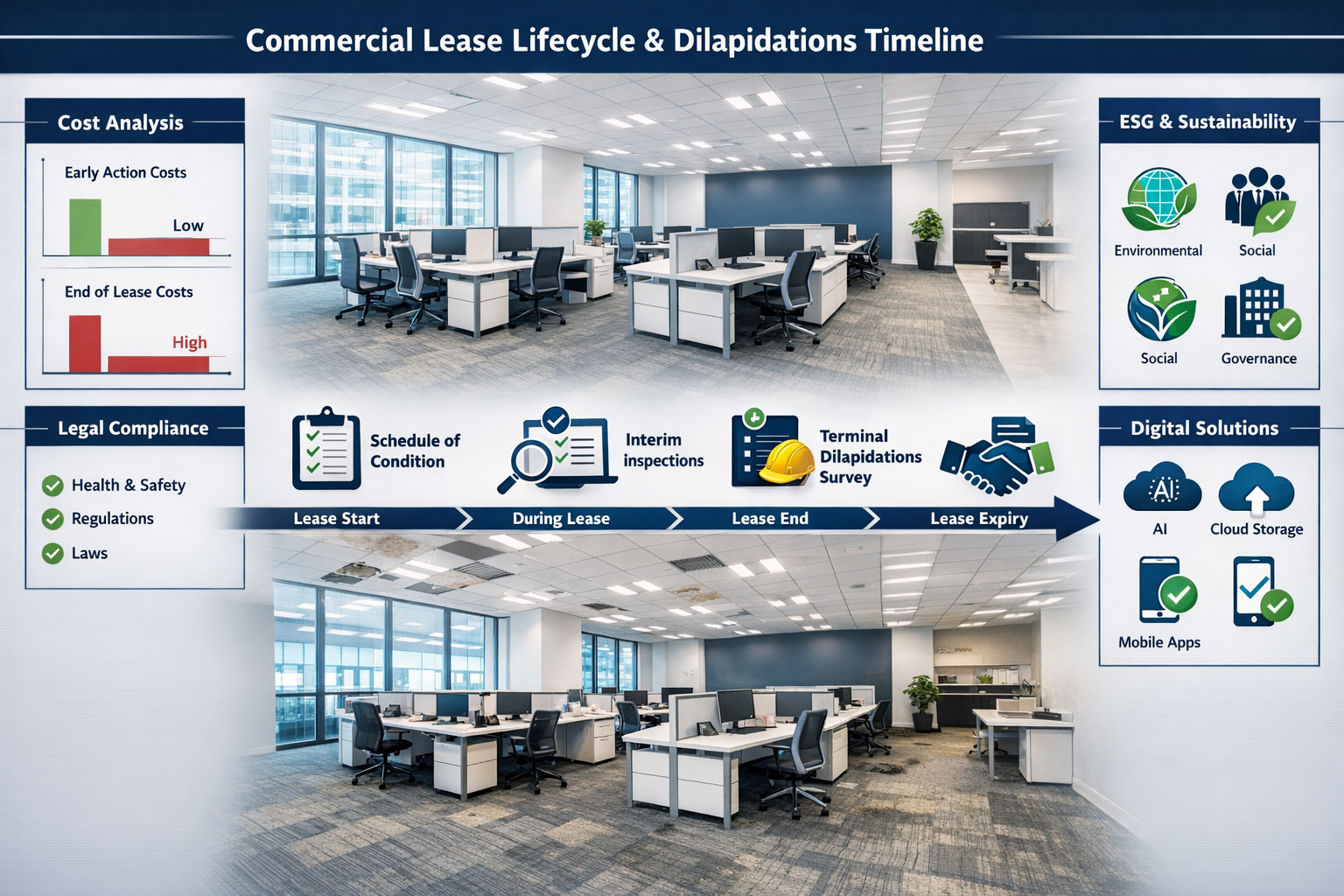
Dilapidations surveys identify and document recurring issues that frequently arise in commercial lease relationships.
Repair vs. Renewal Confusion
Issue: Disputes often arise over whether works constitute repairs (tenant's obligation) or renewals/improvements (landlord's responsibility).
How surveys help: Professional surveyors distinguish between repair and renewal based on legal precedent, clearly documenting which category applies to each item[7].
Supersession Claims
Issue: When landlords plan to demolish, substantially refurbish, or re-let with different specifications, tenants may argue their repair obligations are superseded.
How surveys help: Surveys document actual condition and intended use, providing evidence for supersession arguments or demonstrating why claims remain valid under Section 18 limitations[6].
Betterment Arguments
Issue: Tenants may claim that required works would leave the property in better condition than the lease requires.
How surveys help: Schedules of Condition and detailed terminal surveys establish baseline and required standards, preventing betterment claims or supporting legitimate ones.
Decoration Standards
Issue: "Good decorative order" and similar lease terms are subjective and frequently disputed.
How surveys help: Experienced surveyors apply industry standards and case law to assess decoration objectively, with photographic evidence supporting conclusions.
Unauthorized Alterations
Issue: Tenant improvements and alterations without landlord consent may require removal and reinstatement.
How surveys help: Surveys identify all alterations, reference lease provisions, and specify reinstatement requirements with associated costs[2].
The Future of Dilapidations Surveys: Trends Shaping 2026 and Beyond
The dilapidations sector is evolving rapidly, with several significant trends reshaping practice in 2026.
Sustainability and ESG Integration
Environmental, Social, and Governance (ESG) considerations are increasingly influencing dilapidations assessments. The RICS Dilapidations Conference 2026 features expanded programming on:
- Circular economy principles in fit-out and reinstatement
- Sustainable material reuse rather than disposal
- Energy efficiency considerations in repair specifications
- Carbon impact of dilapidations works
These sustainability factors affect both what constitutes appropriate repair and how works should be specified[5].
Technology Transformation
Digital innovation is revolutionizing dilapidations practice:
- AI-assisted defect identification and categorization
- Digital twin technology for property condition modeling
- Collaborative cloud platforms for real-time report sharing
- Automated cost estimation tools
- Mobile inspection apps with integrated photography and notation
Nearly 400 industry experts attended the 2025 RICS Dilapidations Conference, with technology adoption emerging as a central theme[1]. The consensus is clear: embrace digital tools or risk obsolescence.
Quality Standardization
Industry concerns about inconsistency in Schedules of Condition quality have prompted initiatives to standardize practice[1]. The 2026 conference includes an introductory session on core dilapidations concepts to establish common foundations[5].
Expect increased emphasis on:
- Standardized reporting templates
- Quality assurance protocols
- Peer review processes
- Continuing professional development
Cross-Disciplinary Collaboration
The 2026 conference programming emphasizes cross-disciplinary collaboration, recognizing that effective dilapidations management requires input from:
- Surveyors and valuers
- Legal professionals
- Sustainability consultants
- Technology specialists
- Property managers
This collaborative approach produces more comprehensive, defensible assessments[5].
Market Pressures and Adaptation
The dilapidations sector faces turbulent market conditions, tightening budgets, and evolving compliance requirements[1]. These pressures drive:
- More efficient survey processes
- Technology-enabled cost reduction
- Value-focused service delivery
- Flexible engagement models
Dilapidations Survey vs. Other Property Surveys
Understanding how dilapidations surveys differ from other property assessments helps stakeholders engage the right service.
Dilapidations Survey vs. Building Survey
While both involve property inspection, they serve different purposes:
Building surveys (like Level 2 or Level 3 surveys) assess overall property condition for purchase decisions, focusing on defects that affect value and safety.
Dilapidations surveys assess compliance with specific lease covenants, focusing only on tenant obligations and breaches.
Dilapidations Survey vs. Schedule of Condition
These are related but distinct:
Schedule of Condition: Created at lease start to document baseline condition
Dilapidations survey: Conducted during or at lease end to identify breaches against lease obligations (potentially referencing the Schedule of Condition)
Dilapidations Survey vs. Commercial Property Survey
Commercial building surveys provide comprehensive property assessments for various purposes (purchase, insurance, planning).
Dilapidations surveys focus specifically on lease covenant compliance and have a legal/contractual purpose rather than a general advisory one.
Practical Tips for Managing Dilapidations
Whether you're a landlord or tenant, these practical strategies can help you manage dilapidations effectively.
For Tenants
✅ Obtain a Schedule of Condition at lease commencement—this single document can save thousands
✅ Understand your lease obligations fully before signing—seek professional advice on repairing covenants
✅ Maintain the property throughout the lease—regular maintenance is cheaper than end-of-lease remediation
✅ Document all works you undertake, including landlord consents for alterations
✅ Engage a surveyor early when you receive a Schedule of Dilapidations—don't wait until the deadline
✅ Consider interim inspections 1-2 years before lease end to identify and address issues proactively
✅ Negotiate rather than accepting claims at face value—many items are legitimately disputable
For Landlords
✅ Conduct interim dilapidations surveys 2-3 years before lease end to identify issues early
✅ Serve Schedules of Dilapidations promptly to maximize negotiation time and minimize void periods
✅ Ensure claims are reasonable and compliant with Section 18 limitations—inflated claims waste time and money
✅ Consider your actual intentions for the property—claims for works you won't undertake may not succeed
✅ Engage qualified professionals—poor quality schedules undermine legitimate claims
✅ Follow the Dilapidations Protocol to demonstrate reasonableness and avoid cost sanctions
✅ Maintain good records of property condition, correspondence, and consents throughout tenancies
For Both Parties
🤝 Communicate openly and professionally—most dilapidations disputes settle through negotiation
🤝 Consider alternative dispute resolution before litigation—mediation is faster and cheaper
🤝 Focus on commercial outcomes rather than winning arguments—pragmatic settlements benefit everyone
🤝 Engage specialists rather than general practitioners—dilapidations expertise makes a significant difference
Conclusion: Taking Action on Dilapidations
A dilapidations survey is far more than a routine property inspection—it's a critical tool for protecting financial interests, ensuring legal compliance, and maintaining productive landlord-tenant relationships in commercial property. Whether you're facing an upcoming lease expiry, managing a property portfolio, or negotiating lease terms, understanding the dilapidations process empowers you to make informed decisions and avoid costly mistakes.
The landscape of dilapidations is evolving rapidly in 2026, with sustainability considerations, technological innovation, and quality standardization reshaping professional practice. Engaging with these developments through qualified, forward-thinking surveyors positions you to navigate this complex area effectively.
Your Next Steps
If you're a tenant approaching lease end:
- Review your lease repairing obligations immediately
- Engage a qualified dilapidations surveyor for advice
- Consider whether proactive repairs might reduce overall costs
- Prepare for negotiation rather than accepting claims automatically
If you're a landlord with an expiring lease:
- Instruct an interim dilapidations survey 2-3 years before expiry
- Ensure you have qualified professional representation
- Consider your actual intentions for the property post-lease
- Prepare realistic, defensible schedules that comply with legal requirements
If you're entering a new commercial lease:
- Negotiate for a Schedule of Condition to be attached to your lease
- Understand exactly what "full repairing and insuring" or similar terms mean
- Seek professional advice before signing
- Document the property's condition thoroughly at handover
For expert guidance on dilapidations surveys and comprehensive support throughout the lease lifecycle, consider engaging qualified chartered surveyors who understand both the technical and commercial aspects of dilapidations management. The investment in professional advice typically returns multiples of its cost through reduced liabilities, faster settlements, and preserved business relationships.
Don't wait until a dilapidations dispute arises—proactive engagement with the process from lease commencement through to expiry is the most effective strategy for protecting your interests and achieving fair outcomes.
References
[1] Dilapidations In 2025 – goreport.com
[2] Surveys – dilapsolutions.com
[3] 5 Reasons Why Dilapidation Surveys Are Important – giromax.co.uk
[4] Dilapidation Assessment Reports – horde.group
[5] Dilapidations Conference – rics.org
[6] Dilapidations Explained A Strategic Guide For Landlords Tenants And Property Managers – hfwjsurveyors.com
[7] Dilapidation Surveyors A Complete Guide To Dilapidations – simonlevy.net
Related services: Learn more about our dilapidation surveys in London and schedule of condition reports, or request your free quote from our RICS chartered surveyors.