
Dilapidation Survey: The Essential Guide to Protecting Your Property in 2026
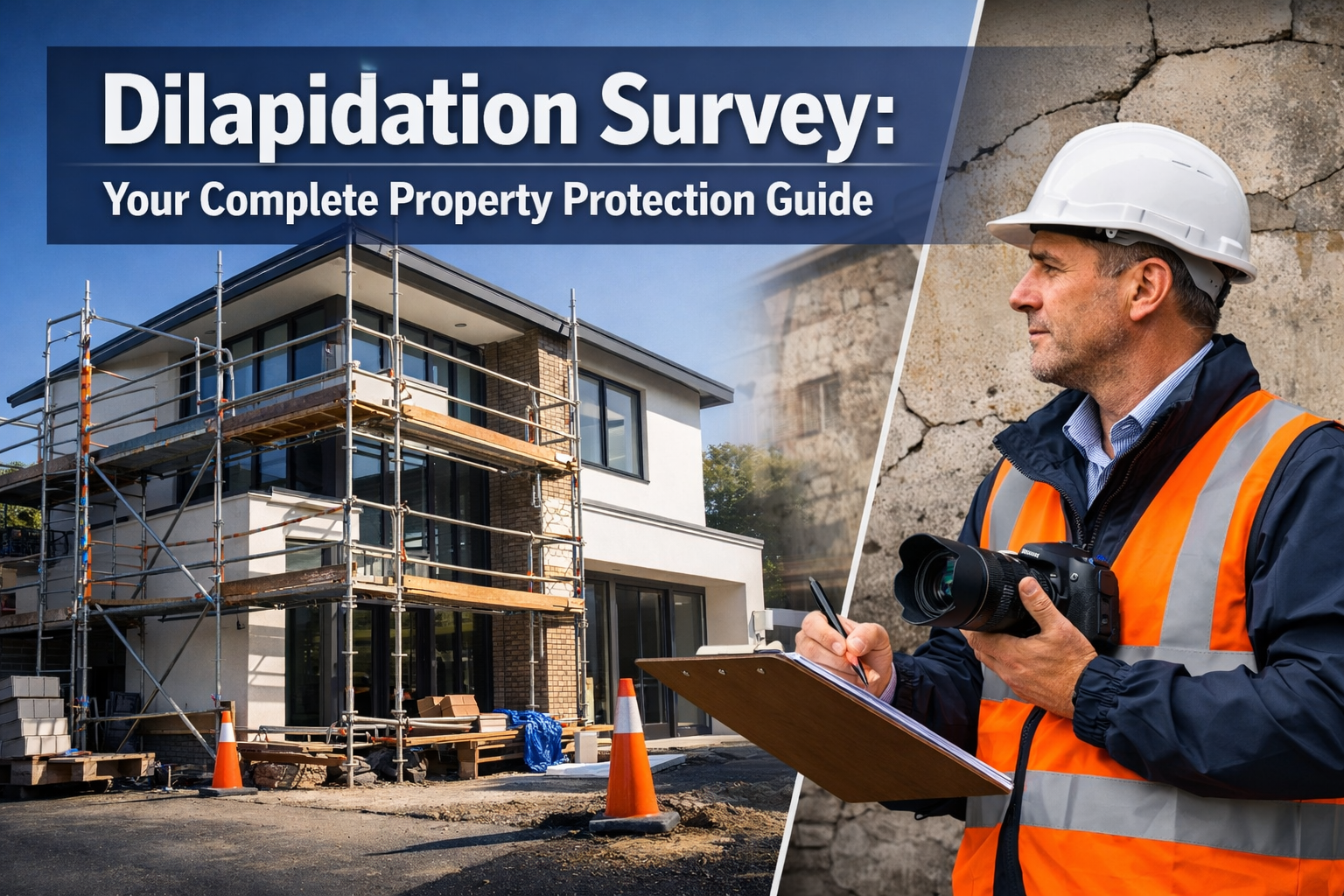
Imagine discovering cracks in your property’s foundation after construction work next door—only to face a heated dispute about whether the damage existed before the work began. This nightmare scenario plays out daily across the UK, costing property owners thousands in legal fees and repairs. A dilapidation survey can prevent this exact situation, serving as your property’s insurance policy against construction-related disputes.
A dilapidation survey is a comprehensive assessment that documents the existing condition of a property before nearby construction, excavation, or development work begins. This detailed record becomes invaluable evidence if disputes arise about whether damage was pre-existing or newly caused by construction activities. In 2026, with urban development accelerating and property values climbing, understanding dilapidation surveys has never been more critical for property owners, landlords, tenants, and developers alike.
Key Takeaways
- 📋 A dilapidation survey creates a detailed baseline record of a property’s condition before construction work, including photographs, measurements, and written descriptions
- ⚖️ Legal protection is the primary benefit, providing neutral third-party documentation that prevents costly disputes between property owners and contractors
- 🏗️ Timing is crucial—surveys must be conducted before any construction, excavation, demolition, or development work that could affect neighboring properties
- 💼 Multiple applications exist, from protecting commercial lease interests to safeguarding residential properties during nearby infrastructure projects
- 🔍 Professional documentation standards include comprehensive visual records, risk assessments, and detailed condition reports that hold up in legal proceedings
What Is a Dilapidation Survey?
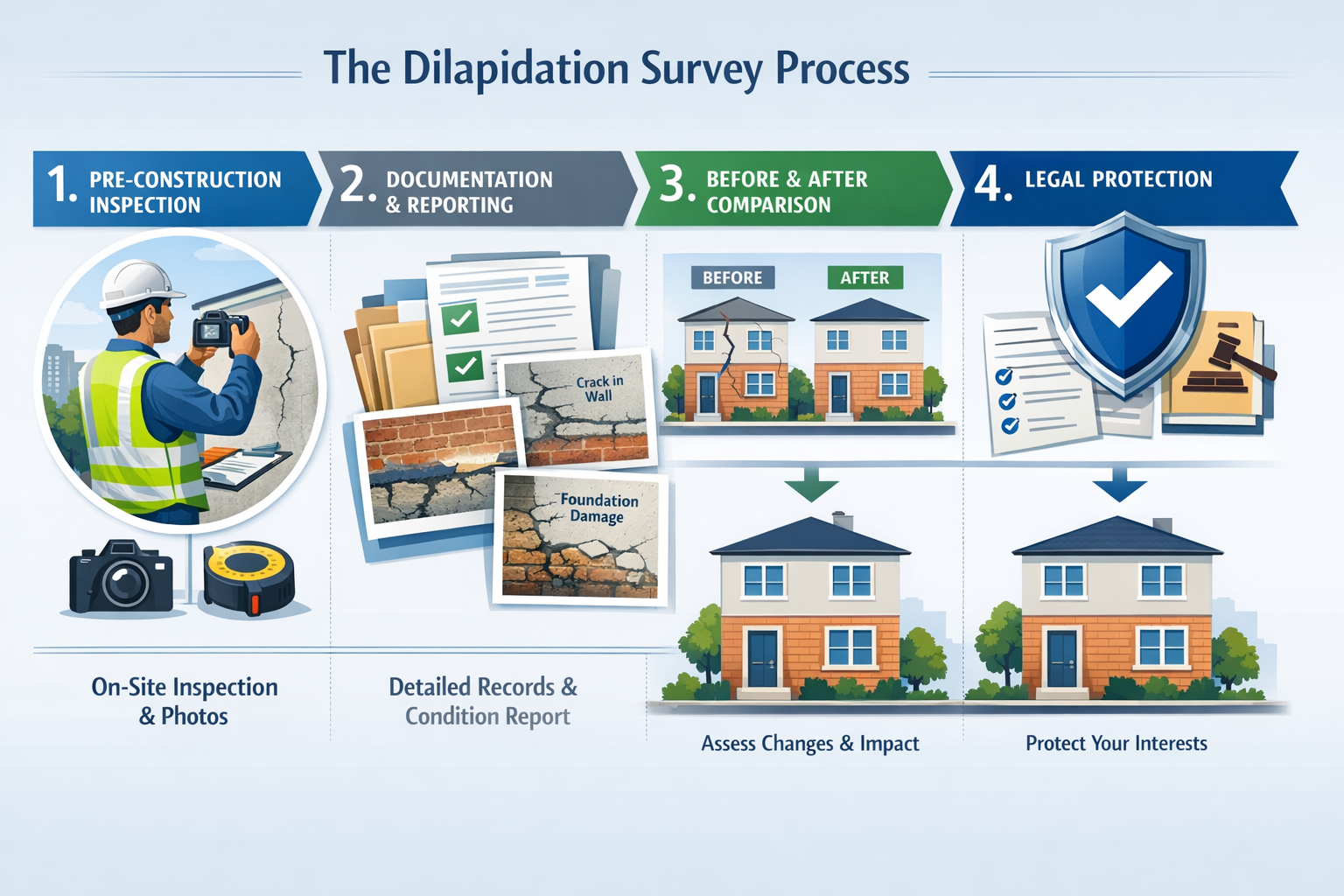
A dilapidation survey is a detailed inspection and documentation process that records the current physical condition of a property or structure at a specific point in time. Unlike other building surveys that focus on purchase decisions or structural integrity, a dilapidation survey specifically creates a baseline record for comparison purposes[2].
The survey captures every relevant aspect of a property’s condition through multiple documentation methods:
- Photographic evidence showing walls, ceilings, floors, foundations, and external features
- Written descriptions detailing existing defects, cracks, stains, or damage
- Measurements and dimensions of any existing issues
- Annotated diagrams marking problem areas
- Video walkthroughs for comprehensive visual records
- Risk assessments identifying potential vulnerabilities
The Core Purpose
The fundamental purpose of a dilapidation survey is to establish an irrefutable record of a property’s condition before potentially damaging activities occur nearby[3]. This documentation serves as a neutral, objective reference point that can definitively answer the question: “Was this damage present before the construction work began?”
This baseline becomes particularly valuable when:
- Construction vibrations might affect neighboring structures
- Excavation work could impact foundations or drainage
- Demolition activities create dust, debris, or structural risks
- Heavy machinery operates near residential or commercial properties
- Infrastructure projects affect multiple properties simultaneously
When Do You Need a Dilapidation Survey?
Understanding when to commission a dilapidation survey can save property owners significant stress and financial loss. Several scenarios make these surveys not just beneficial but essential.
Pre-Construction Protection
Before any construction activity that might affect your property, obtaining a dilapidation survey provides crucial protection[2]. This includes:
- Residential construction projects on adjacent properties
- Commercial development in neighboring lots
- Infrastructure improvements like road widening or utility installations
- Demolition work that could cause vibrations or debris damage
- Excavation activities that might affect ground stability
Commercial Lease Applications
In commercial property contexts, dilapidation surveys serve a different but equally important purpose. Landlords often arrange surveys before issuing leases to establish what remedial work will be expected when the lease term ends[4]. This practice:
- Sets clear expectations for both parties
- Prevents end-of-lease disputes about property condition
- Establishes fair baselines for wear and tear assessments
- Protects landlords’ asset values
- Gives tenants clarity about their obligations
For tenants, understanding dilapidations surveys as part of lease agreements is crucial before signing any commercial property contract.
Regulatory Requirements
In many jurisdictions, dilapidation surveys aren’t just recommended—they’re legally required. Councils and planning authorities often mandate these surveys for:
- Large-scale construction projects
- Excavation work beyond certain depths
- Demolition of significant structures
- Infrastructure development projects
- Work in heritage or conservation areas
Property owners should check local planning requirements, as obtaining professional dilapidation surveys may be a prerequisite for permit approval.
Proactive Risk Management
Even when not legally required, commissioning a dilapidation survey demonstrates professional due diligence. Contractors and developers who voluntarily arrange surveys for neighboring properties show:
- Respect for community relationships
- Professional standards and reputation
- Commitment to accountability
- Understanding of potential liabilities
- Good faith in business dealings
This proactive approach often prevents conflicts before they start, maintaining positive relationships with neighbors and the broader community[3].
What Does a Dilapidation Survey Include?
A comprehensive dilapidation survey goes far beyond a simple visual inspection. Professional surveyors conduct thorough examinations that capture every detail necessary for future reference.
Interior Documentation
Inside the property, surveyors meticulously document:
| Area | Documentation Focus |
|---|---|
| Walls | Cracks, stains, paint condition, plaster integrity |
| Ceilings | Water damage, cracks, sagging, finish quality |
| Floors | Levelness, surface damage, tile cracks, wood condition |
| Windows | Frame condition, glass integrity, operation, seals |
| Doors | Alignment, damage, hardware function, frame condition |
| Fixtures | Condition of built-in elements, fittings, appliances |
Exterior Assessment
External surveys capture the property’s outer condition, including:
- Foundation walls and visible structural elements
- External cladding, brickwork, or rendering
- Roof condition, tiles, and flashing
- Gutters, downpipes, and drainage systems
- Driveways, pathways, and boundary structures
- Fencing, gates, and external features
- Gardens, trees, and landscaping elements
Advanced Documentation Technologies
Modern dilapidation surveys in 2026 leverage cutting-edge technology for comprehensive coverage[3]:
- 🚁 Drone surveys for roof and high-elevation documentation
- 📹 360-degree cameras creating immersive property records
- 📊 Digital measurement tools ensuring accuracy
- 🗺️ GPS mapping for large sites and multiple properties
- 💻 Cloud-based reporting for secure, accessible documentation
These technologies enable surveyors to document expansive sites, underground infrastructure, and hard-to-reach areas that traditional methods might miss. For complex projects, commercial building surveys may incorporate multiple technological approaches.
The Final Report
A professional dilapidation survey report typically includes:
- Executive summary of findings
- Detailed written descriptions of all areas inspected
- Comprehensive photographic evidence with date stamps
- Annotated floor plans showing damage locations
- Risk assessment identifying vulnerable areas
- Recommendations for monitoring or protective measures
- Surveyor credentials and professional certifications
This documentation creates an unambiguous record that stands up to legal scrutiny if disputes arise.
The Legal and Financial Benefits of Dilapidation Surveys
The value of a dilapidation survey extends far beyond simple documentation—it provides concrete legal and financial protections that can save thousands of pounds in disputes.
Dispute Prevention and Resolution
The most significant benefit is dispute prevention. When both parties have access to a neutral, professional assessment of pre-existing conditions, disagreements about responsibility become far less likely[2]. The survey serves as:
- Objective evidence that removes “he said, she said” conflicts
- Neutral third-party documentation with professional credibility
- Time-stamped proof of conditions at specific dates
- Comprehensive records that memory cannot match
When disputes do arise, dilapidation surveys provide powerful evidence in legal proceedings. Courts and arbitrators give significant weight to professional survey documentation, often making these reports decisive in determining liability.
Financial Protection
The financial implications of dilapidation surveys are substantial:
For Property Owners:
- Prevents paying for damage you didn’t cause
- Establishes clear liability for construction-related damage
- Reduces legal costs by providing clear evidence
- Protects property values from disputed damage claims
- Enables accurate insurance claims when necessary
For Contractors and Developers:
- Protects against false damage claims
- Demonstrates professional standards to clients
- Reduces insurance premiums through risk management
- Prevents project delays from disputes
- Maintains business reputation in the community
Insurance and Claims Support
When property damage occurs, insurance companies require clear evidence of when damage happened. A dilapidation survey provides:
- Definitive proof of pre-existing conditions
- Documentation supporting legitimate claims
- Evidence refuting fraudulent or mistaken claims
- Professional assessment that insurers respect
- Faster claims processing with clear documentation
Many insurance policies actually require dilapidation surveys for properties near major construction projects, making them not just advisable but mandatory for coverage.
Dilapidation Surveys vs. Other Property Assessments
Understanding how dilapidation surveys differ from other property inspections helps property owners choose the right service for their needs.
Dilapidation Survey vs. Building Survey
While both involve property inspection, these surveys serve different purposes:
Dilapidation Survey:
- ✅ Documents current condition for future comparison
- ✅ Focuses on creating baseline records
- ✅ Timed before construction or lease events
- ✅ Emphasizes photographic and visual evidence
- ✅ Designed for dispute prevention
- ✅ Assesses structural integrity and defects
- ✅ Informs purchase decisions
- ✅ Provides repair cost estimates
- ✅ Identifies urgent maintenance needs
- ✅ Designed for buyer protection
Dilapidation Survey vs. Schedule of Dilapidations
These terms sound similar but represent distinct documents:
A dilapidation survey records current property condition at a point in time. A schedule of dilapidations is a formal document listing required repairs and remedial work, typically prepared at the end of a commercial lease[7].
The schedule itemizes:
- Specific repairs required under lease terms
- Breaches of lease covenants
- Estimated costs for remedial work
- Timeframes for completion
Often, an initial dilapidation survey informs the final schedule of dilapidations by providing the baseline against which end-of-lease condition is measured.
Dilapidation Survey vs. Structural Survey
A structural survey goes deeper into a property’s structural integrity, examining:
- Foundation stability and subsidence risks
- Load-bearing wall condition
- Roof structure and timber condition
- Damp and moisture issues
- Structural movement and settlement
While a dilapidation survey may note visible structural issues, it doesn’t provide the engineering analysis that a dedicated structural survey offers. For properties with serious structural concerns, both assessments may be appropriate.
How to Arrange a Professional Dilapidation Survey
Obtaining a high-quality dilapidation survey requires careful planning and selection of the right professional.
Choosing the Right Surveyor
Qualifications matter when selecting a surveyor. Look for:
- 🎓 RICS accreditation (Royal Institution of Chartered Surveyors)
- 📋 Professional indemnity insurance protecting against errors
- 🏆 Relevant experience with similar properties and projects
- 📍 Local knowledge of your area and property types
- 💬 Clear communication and professional reporting standards
For London-based properties, consider chartered surveyors in London who understand local construction patterns and property characteristics.
The Survey Process
Understanding what to expect helps ensure a smooth process:
- Initial consultation to discuss scope and requirements
- Site access arrangement coordinating with property occupants
- Comprehensive inspection typically lasting 2-4 hours for residential properties
- Documentation gathering including photographs and measurements
- Report preparation usually delivered within 5-10 business days
- Review meeting to discuss findings and recommendations
Timing Considerations
Schedule your survey strategically:
- ⏰ Minimum 2-3 weeks before construction begins
- ⏰ After receiving construction notice from neighbors or developers
- ⏰ Before lease commencement for commercial properties
- ⏰ During planning application stages for major projects
Early scheduling ensures the survey is completed before any potentially damaging activities commence.
Cost Factors
Dilapidation survey costs vary based on:
| Factor | Impact on Cost |
|---|---|
| Property size | Larger properties require more time |
| Property type | Commercial properties typically cost more |
| Access complexity | Difficult access increases time and cost |
| Technology requirements | Drone or specialized equipment adds cost |
| Report detail level | More comprehensive reports cost more |
| Urgency | Rush services command premium pricing |
Typical residential dilapidation surveys range from £300-£800, while commercial properties may cost £1,000-£3,000 or more depending on complexity. For specific pricing in your area, contact professional dilapidation survey providers.
Questions to Ask Your Surveyor
Before commissioning a survey, ask:
- What specific areas will the survey cover?
- What documentation format will I receive?
- How long will the inspection take?
- When will I receive the final report?
- What is your experience with similar properties?
- Are you RICS accredited?
- What happens if damage occurs during construction?
- Can you provide expert witness services if needed?
Clear answers to these questions ensure you understand exactly what you’re purchasing.
Common Scenarios Requiring Dilapidation Surveys
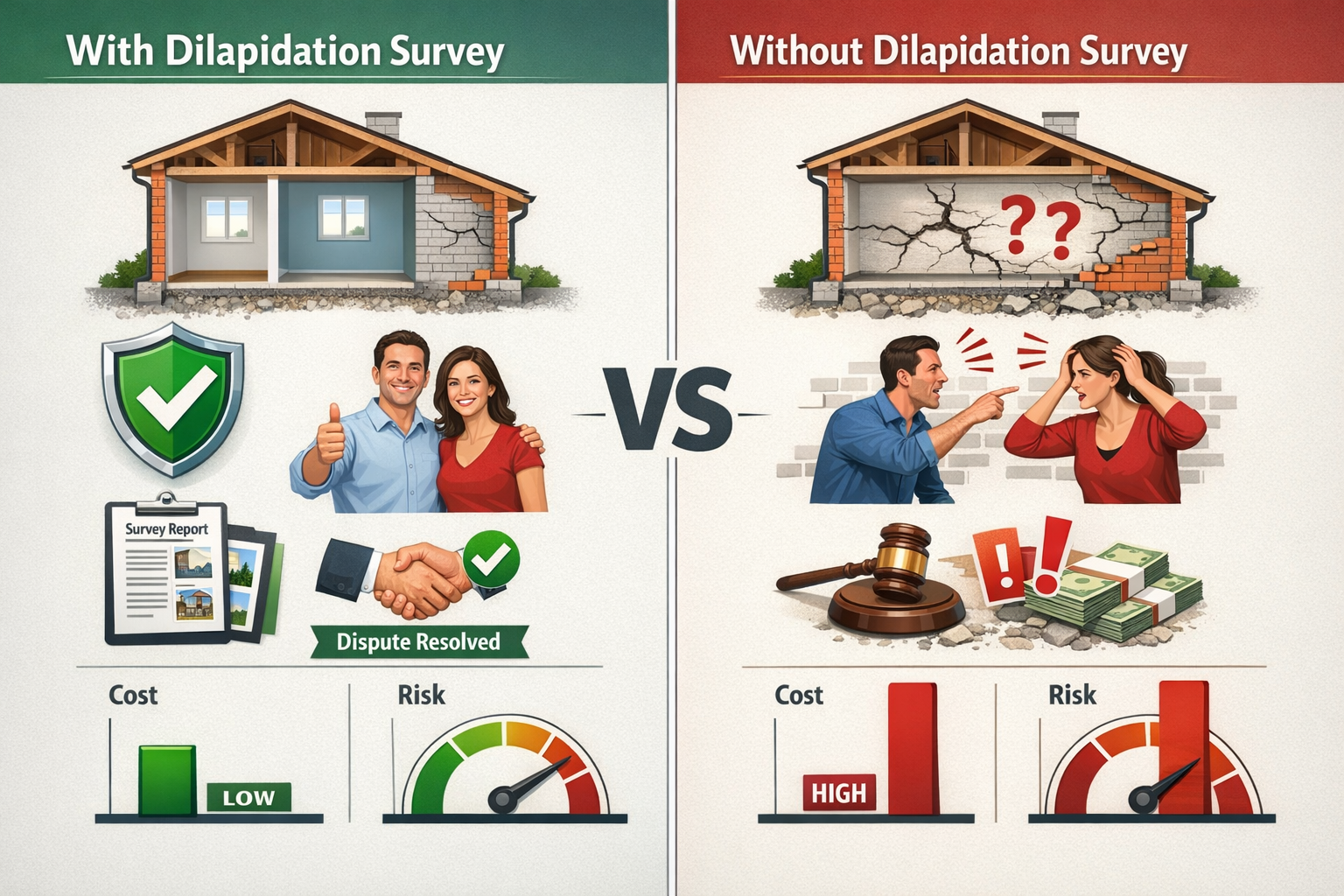
Real-world situations demonstrate when dilapidation surveys provide essential protection.
Scenario 1: Neighboring Extension Project
Situation: Your neighbor plans a two-story extension requiring excavation within 3 meters of your property boundary.
Why you need a survey: Excavation work can affect foundations, cause settlement, and create vibrations that crack walls and ceilings. A dilapidation survey documents your property’s current condition, protecting you if damage occurs.
Outcome: If cracks appear during construction, the survey proves whether they’re new or pre-existing, establishing clear liability.
Scenario 2: Commercial Lease Termination
Situation: A retail tenant’s 10-year lease is ending, and the landlord claims £15,000 in dilapidations for property damage.
Why you need a survey: Without a baseline survey from lease commencement, disputes about normal wear versus tenant damage are inevitable.
Outcome: A properly conducted initial dilapidation survey would have prevented this dispute by clearly documenting the property’s condition at lease start, enabling fair assessment of tenant responsibilities.
Scenario 3: Major Infrastructure Project
Situation: Local council announces road widening that requires excavation and heavy machinery operation near your property.
Why you need a survey: Large-scale infrastructure projects create significant vibration, dust, and ground movement risks affecting multiple properties over extended periods.
Outcome: The survey provides baseline documentation for potential claims against the council or contractors if damage occurs, and may be required by planning authorities before work begins.
Scenario 4: Demolition Next Door
Situation: A neighboring property will be demolished and rebuilt, involving heavy machinery and potential structural impacts.
Why you need a survey: Demolition creates substantial vibration, dust, and debris risks. Party walls may be affected, and structural damage is possible.
Outcome: The survey protects your interests by documenting pre-existing conditions, complementing party wall surveyor protections under the Party Wall Act.
Best Practices for Property Owners
Maximizing the value of your dilapidation survey requires following professional best practices.
Before the Survey
Prepare your property:
- ✅ Ensure surveyors have access to all areas
- ✅ Remove obstacles blocking walls, floors, or ceilings
- ✅ Inform occupants about the inspection schedule
- ✅ Gather any existing property documentation
- ✅ Note any specific concerns or vulnerable areas
Communicate clearly:
- Share information about upcoming construction work
- Explain the purpose and scope you require
- Discuss timeline and urgency factors
- Clarify report format and delivery expectations
During the Survey
Facilitate thorough inspection:
- Accompany the surveyor to answer questions
- Point out areas of particular concern
- Provide historical context about previous repairs
- Allow adequate time for comprehensive documentation
- Ask questions about the process and findings
After the Survey
Use the documentation effectively:
- 📁 Store the report securely with multiple backups
- 📧 Share copies with relevant parties (contractors, insurers)
- 📅 Schedule follow-up surveys if construction is prolonged
- 🔍 Review the report carefully and ask for clarifications
- 📋 Keep the report accessible for future reference
Monitor during construction:
- Conduct regular visual inspections of your property
- Document any changes with dated photographs
- Report concerns to contractors promptly
- Maintain communication with the surveyor
- Consider interim surveys for long-duration projects
Post-Construction Verification
After construction completes, consider a post-construction survey to:
- Document any new damage that occurred
- Compare current condition against the baseline
- Establish evidence for claims if necessary
- Verify that no damage occurred (providing peace of mind)
- Create updated baseline for future reference
The Future of Dilapidation Surveys in 2026
The dilapidation survey industry continues evolving with technological advances and changing regulatory landscapes.
Technological Innovations
Emerging technologies transforming dilapidation surveys include:
- 🤖 AI-powered damage detection identifying subtle changes
- 📱 Mobile app reporting providing real-time updates
- ☁️ Cloud-based platforms enabling instant access to documentation
- 🎯 3D scanning and modeling creating precise digital twins
- 📊 Automated comparison tools highlighting changes between surveys
These innovations make surveys more comprehensive, accurate, and accessible than ever before.
Regulatory Developments
Increasing regulatory attention to property protection means:
- More jurisdictions requiring mandatory surveys for major projects
- Stricter documentation standards for planning approvals
- Greater emphasis on professional accreditation
- Enhanced consumer protections in survey standards
- Integration with digital planning systems
Sustainability Considerations
The 2026 focus on sustainable development affects dilapidation surveys through:
- Documentation of heritage features requiring protection
- Assessment of environmental impacts during construction
- Monitoring of sustainable building practices
- Protection of existing structures to reduce demolition waste
- Integration with green building certifications
Conclusion
A dilapidation survey represents one of the most cost-effective protections available to property owners, landlords, tenants, and developers. By creating a comprehensive, professional record of property condition before construction or lease events, these surveys prevent disputes, establish clear liability, and provide invaluable legal protection.
In 2026’s rapidly developing urban landscape, the question isn’t whether you can afford a dilapidation survey—it’s whether you can afford to proceed without one. The modest investment in professional documentation can prevent thousands of pounds in dispute costs, legal fees, and unwarranted repair expenses.
Your Next Steps
If you’re a property owner near construction:
- Contact a professional dilapidation surveyor immediately
- Schedule the survey before any construction activity begins
- Review the report thoroughly and store it securely
- Monitor your property regularly during construction
- Arrange a post-construction survey to document any changes
If you’re a landlord or tenant:
- Include dilapidation survey requirements in lease agreements
- Commission surveys at lease commencement and termination
- Use surveys to establish fair expectations for both parties
- Maintain documentation throughout the lease term
- Consult with professional surveyors about your specific obligations
If you’re a developer or contractor:
- Arrange dilapidation surveys for neighboring properties proactively
- Use surveys to demonstrate professional standards
- Protect your business reputation and relationships
- Reduce liability risks and insurance costs
- Maintain surveys as part of project documentation
The protection, peace of mind, and professional credibility that dilapidation surveys provide make them an essential tool in modern property management and development. Don’t wait until disputes arise—invest in professional documentation today to safeguard your property interests tomorrow.
References
[2] Guide To Dilapidation Reporting Importance And Process – https://jimsbuildinginspections.com.au/blog/guide-to-dilapidation-reporting-importance-and-process/
[3] Watch – https://www.youtube.com/watch?v=1vxAWNvp5JM
[4] Surveys – https://www.dilapsolutions.com/services/surveys/
[7] Commercial Tenants What Is A Dilapidations Survey When Is One Required – https://fourthwallbc.com/blog/commercial-tenants-what-is-a-dilapidations-survey-when-is-one-required/
