
The rental property landscape in 2026 has transformed dramatically. With the end of Section 21 "no-fault" evictions and sweeping new compliance requirements, landlords face unprecedented regulatory pressure that's squeezing profit margins and triggering a surge in property disputes[1][2]. As rental regulations tighten, expert witness preparation for 2026 rental regulation disputes has become essential for surveyors navigating this complex environment. When landlords challenge rent tribunal decisions, contest property condition assessments, or dispute compliance costs, chartered surveyors must provide credible, defensible evidence that withstands rigorous legal scrutiny.
The stakes have never been higher. New tenancy forms, Making Tax Digital requirements from April 2026, and fundamental changes to how rent increases are managed have created a minefield of compliance risks[1][4]. Surveyors who understand both the technical property aspects and the evolving legal framework can provide invaluable expert testimony that protects their clients' interests while maintaining professional integrity.
Key Takeaways
- 🏛️ Regulatory transformation: The end of Section 21 evictions and conversion to periodic tenancies has fundamentally changed landlord-tenant dynamics, increasing dispute frequency
- 📊 Evidence standards matter: RICS-compliant expert witness reports must meet strict procedural requirements for First-tier Tribunal Property Chamber proceedings
- 💼 Financial impact documentation: Surveyors must quantify valuation impacts from compliance costs, rent restrictions, and property condition disputes with defensible methodologies
- ⚖️ Professional duty primacy: Expert witnesses owe their primary duty to the tribunal, not the instructing party, requiring objective, balanced evidence presentation
- 🔍 Comprehensive preparation: Successful expert witness work demands thorough property inspection, regulatory knowledge, and clear communication of technical findings to non-specialist audiences
Understanding the 2026 Rental Regulation Landscape
The rental sector has undergone seismic shifts as new legislation fundamentally reshapes landlord-tenant relationships. Understanding these changes is critical for expert witness preparation for 2026 rental regulation disputes because surveyors must contextualize their evidence within this evolving regulatory framework.
The End of Section 21 and Its Implications
The abolition of Section 21 "no-fault" evictions represents the most significant change to rental law in decades[1][2][6]. Landlords can no longer terminate assured shorthold tenancies without providing a specific legal ground for possession. This shift has created several dispute scenarios where surveyor evidence becomes crucial:
Property condition disputes: When landlords seek possession under grounds related to property condition or required renovations, surveyors must provide objective assessments of the property's state and whether proposed works are genuinely necessary.
Valuation impact assessments: The inability to easily regain possession affects property valuations and investment returns. Expert witnesses must quantify these impacts with robust methodologies that tribunals will accept.
Compliance cost disputes: Landlords increasingly challenge whether required improvements represent reasonable compliance costs or excessive burdens that justify rent increases or possession proceedings.
Conversion to Periodic Tenancies
All new tenancies now begin as periodic rolling tenancies rather than fixed-term agreements[1][2][5][8]. This fundamental change affects:
- Rent review mechanisms: How and when rent increases can be implemented
- Possession proceedings: The grounds and notice periods required for ending tenancies
- Property investment analysis: Long-term financial modeling and risk assessment
Surveyors providing expert witness reports must understand how these structural changes affect property valuations and landlord decision-making.
Rent Increase Restrictions and Dispute Processes
New regulations limit how landlords can increase rents, with tenants gaining enhanced rights to challenge increases they consider excessive[2]. This has created a new category of disputes requiring surveyor expertise:
Market rent assessments: Determining fair market rent for comparable properties in the local area, accounting for property condition, amenities, and location factors.
Improvement value quantification: Calculating the rental value attributable to landlord improvements versus general market movements.
Affordability versus market value: Balancing market-based valuation approaches with affordability considerations that tribunals may weigh.
Making Tax Digital and Documentation Requirements
From April 6, 2026, new Making Tax Digital requirements impose additional administrative burdens on landlords[1][4]. Coupled with new mandatory tenancy forms and documentation standards[4], these requirements create compliance risks that surveyors must assess when evaluating:
- Property management costs and their impact on net yields
- Documentation quality in possession proceedings
- Whether landlords have met their regulatory obligations
Understanding what chartered surveyors do in this regulatory context helps clarify the breadth of expertise required for effective expert witness work.
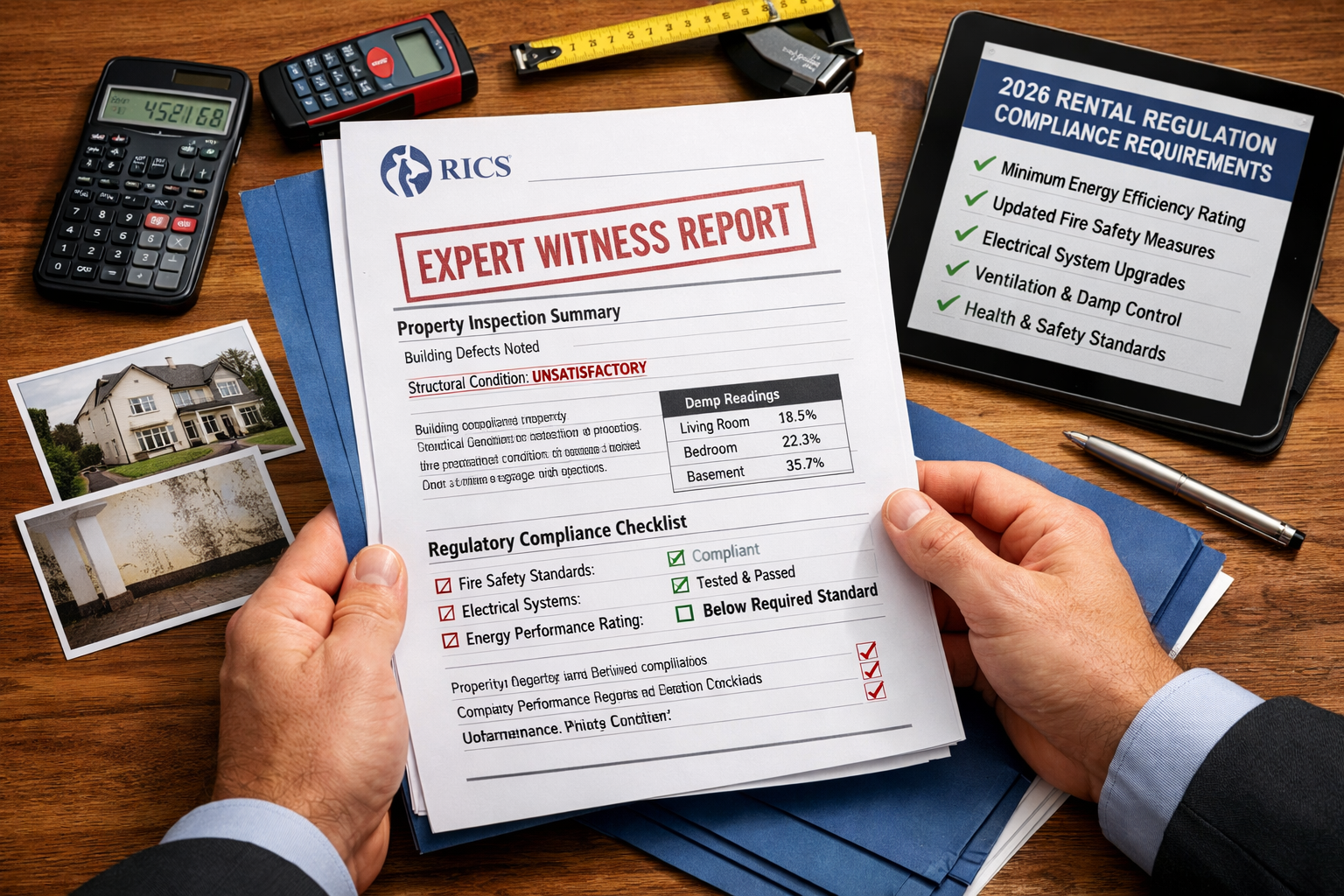
Expert Witness Preparation for 2026 Rental Regulation Disputes: RICS Standards and Procedures
Providing expert witness evidence requires adherence to professional standards that go far beyond routine surveying work. The Royal Institution of Chartered Surveyors (RICS) provides clear guidance on expert witness duties, and expert witness preparation for 2026 rental regulation disputes must follow these protocols rigorously.
Primary Duty to the Tribunal
The fundamental principle governing expert witness work is that the surveyor's primary duty is to the tribunal, not to the instructing party. This means:
✅ Objectivity above advocacy: Expert evidence must present balanced, impartial analysis even when findings don't support the client's position
✅ Transparency about limitations: Clearly stating the boundaries of expertise and acknowledging areas of uncertainty
✅ Independence from outcome: Fees should never be contingent on case outcomes or specific findings
This duty can create tension when clients expect advocacy rather than objective assessment. Professional surveyors must manage these expectations from the outset of instruction.
RICS Expert Witness Standards
RICS guidance establishes specific requirements for expert witness work:
| Requirement | Description | Application to Rental Disputes |
|---|---|---|
| Competence | Expert must have appropriate qualifications and experience | Demonstrated knowledge of rental valuations, property law, and local market conditions |
| Declaration of Truth | Statement confirming understanding of expert duties | Required in all tribunal reports and witness statements |
| Evidence Base | All opinions must be supported by verifiable facts | Market comparables, inspection findings, regulatory requirements must be documented |
| Methodology Transparency | Valuation and assessment methods must be clearly explained | Rental valuation approach, comparable selection criteria, adjustment factors |
| Conflicts Disclosure | Any potential conflicts of interest must be declared | Previous work for parties, local property interests, professional relationships |
Instruction and Scope Definition
Effective expert witness preparation for 2026 rental regulation disputes begins with clear instruction. The surveyor should:
- Obtain written instructions specifying the issues to be addressed
- Clarify the legal framework applicable to the dispute
- Define inspection scope and access arrangements
- Agree reporting format and deadlines
- Confirm fee arrangements that maintain independence
Many disputes involve party wall matters or dilapidations where surveyor evidence is crucial to resolving conflicts between landlords and tenants.
Property Inspection and Evidence Gathering
Thorough inspection forms the foundation of credible expert evidence. For rental regulation disputes, this typically includes:
Comprehensive property assessment: Documenting condition, layout, amenities, and defects through photographs, measurements, and detailed notes.
Regulatory compliance review: Checking electrical safety certificates, gas safety records, Energy Performance Certificates, and licensing requirements.
Comparable property research: Identifying and inspecting similar properties to establish market rent levels or property values.
Documentation review: Examining tenancy agreements, correspondence, repair records, and compliance documentation.
The inspection approach should mirror best practices from Level 3 building surveys, adapted to focus on dispute-relevant issues.
Report Structure and Content
Expert witness reports for rental disputes should follow a clear structure:
1. Introduction and Instructions
- Identity and qualifications of expert
- Summary of instructions received
- Scope of work undertaken
- Declaration of expert duties
2. Property Description
- Location and context
- Construction and accommodation
- Condition assessment
- Regulatory compliance status
3. Market Analysis
- Local rental market conditions
- Comparable evidence with adjustments
- Market trends affecting valuation
4. Opinion and Conclusions
- Clear statement of expert opinion
- Reasoning and supporting evidence
- Response to specific questions posed
- Limitations and qualifications
5. Appendices
- Photographs and plans
- Comparable evidence schedules
- Supporting documentation
- Professional qualifications and experience
Preparing for Cross-Examination
Expert witnesses must be prepared to defend their evidence under questioning. Effective preparation includes:
🎯 Anticipating challenges: Identifying weaknesses in evidence or methodology that opposing parties might exploit
🎯 Knowing the file thoroughly: Being able to reference specific documents, photographs, or comparable evidence instantly
🎯 Maintaining composure: Responding calmly and professionally to aggressive questioning
🎯 Admitting limitations: Acknowledging when questions fall outside expertise or when evidence is inconclusive
🎯 Avoiding advocacy: Resisting pressure to overstate conclusions or become argumentative
Many surveyors find that experience with party wall disputes provides valuable preparation for the adversarial aspects of tribunal proceedings.
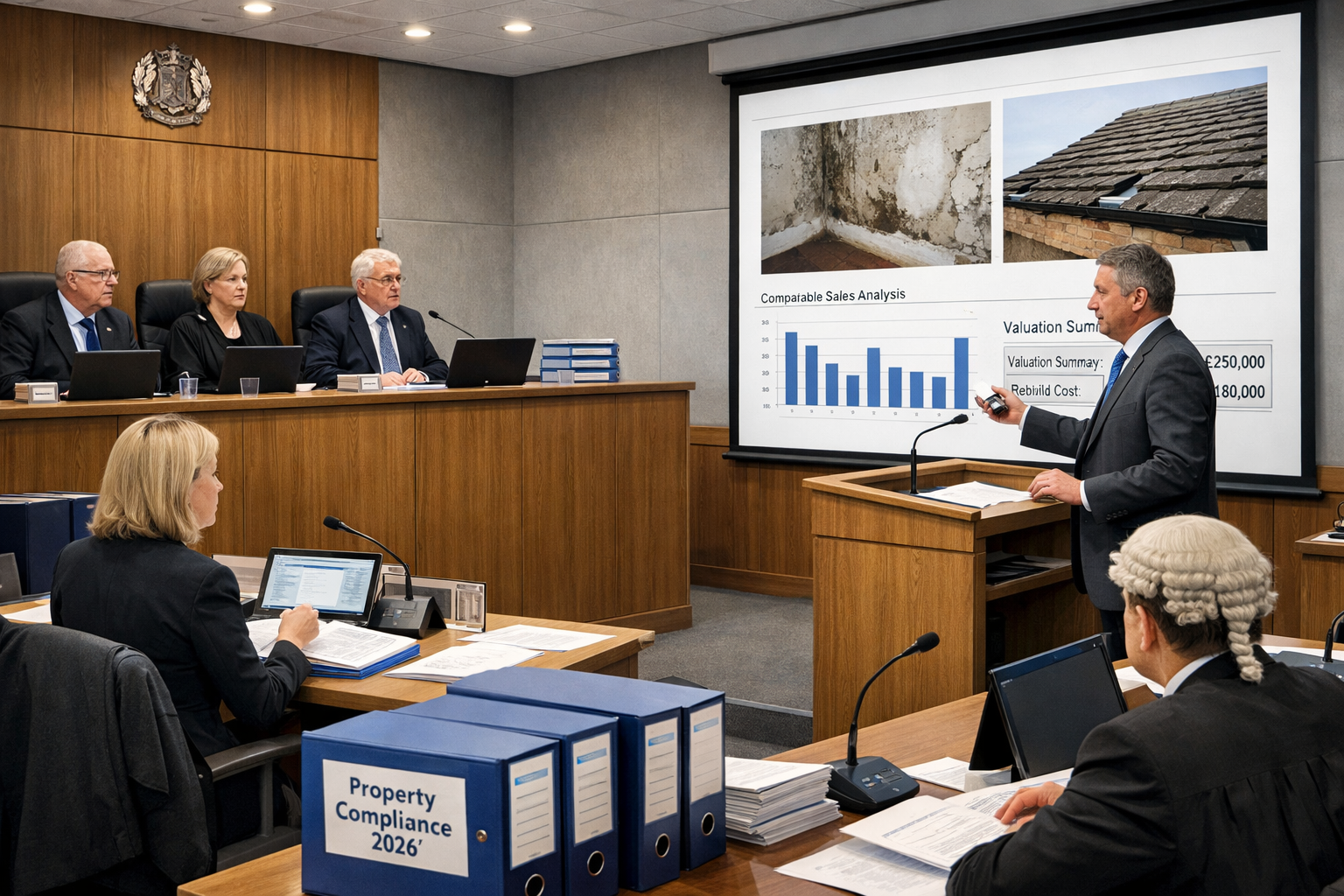
Surveyor Evidence in Common 2026 Rental Dispute Scenarios
Expert witness preparation for 2026 rental regulation disputes requires understanding the specific types of cases where surveyor evidence proves decisive. The regulatory changes in 2026 have created several recurring dispute scenarios.
Rent Increase Challenges
Tenants now have strengthened rights to challenge rent increases they consider excessive[2]. Surveyors must provide evidence on:
Fair market rent determination: Using comparable rental evidence from similar properties in the locality, adjusted for:
- Property size and layout differences
- Condition and specification variations
- Location factors (transport links, amenities, neighborhood desirability)
- Timing of comparable lettings
Improvement value attribution: When landlords have made improvements, quantifying the rental value these add requires:
- Assessment of the improvements' quality and appropriateness
- Market evidence of rental premiums for similar improvements
- Analysis of whether improvements represent genuine enhancements or basic maintenance
Market trend analysis: Distinguishing between rent increases justified by general market movements versus those that exceed market norms.
Property Condition Disputes
Disagreements about property condition frequently arise when:
Landlords seek possession for renovation or redevelopment, requiring evidence that:
- Work is genuinely necessary (not merely desirable)
- Property condition justifies the proposed intervention
- Alternative approaches are impractical or uneconomic
Tenants claim disrepair, necessitating assessment of:
- Whether defects constitute actionable disrepair
- Landlord responsibility versus tenant-caused damage
- Appropriate remedial works and costs
Deposit disputes involve determining:
- Property condition at tenancy start versus end
- Normal wear and tear versus tenant damage
- Reasonable costs for remediation
These scenarios often require the detailed inspection approach used in Level 2 or Level 3 surveys, adapted to focus on disputed issues.
Compliance Cost Disputes
The 2026 regulatory framework imposes numerous compliance requirements that landlords may seek to pass through to tenants via rent increases. Surveyors must assess:
Reasonable compliance costs: Determining whether expenditure on safety certificates, licensing fees, and property improvements represents:
- Necessary compliance versus gold-plating
- Market-standard approaches versus excessive solutions
- Capital improvements versus routine maintenance
Impact on property value: Quantifying how compliance requirements affect:
- Rental yields and investment returns
- Property marketability and saleability
- Comparative value versus non-compliant properties
Proportionality assessments: Evaluating whether compliance costs justify claimed rent increases or possession proceedings.
Valuation Impact of Regulatory Changes
The abolition of Section 21 and conversion to periodic tenancies affects property values[1][6]. Expert witnesses may need to opine on:
Investment value changes: How regulatory changes affect:
- Investor appetite and pricing
- Required yields and return expectations
- Risk premiums for rental property investment
Comparable evidence interpretation: Adjusting pre-2026 comparable transactions to reflect the new regulatory environment.
Loss quantification: When landlords claim financial loss from regulatory changes, providing objective assessment of:
- Actual versus claimed impact
- Mitigation opportunities
- Market-wide versus property-specific effects
Possession Proceedings Evidence
With Section 21 abolished, landlords must rely on specific grounds for possession[2][6]. Surveyor evidence supports grounds related to:
Property redevelopment: Demonstrating genuine intention and necessity for works requiring vacant possession.
Landlord occupation: Assessing whether the property is suitable for claimed landlord or family member occupation.
Mortgage possession: Evaluating property value and equity positions in possession proceedings by lenders.
Understanding what property surveyors do in these various contexts helps clarify the breadth of expertise required.
Best Practices for Expert Witness Preparation
Successful expert witness preparation for 2026 rental regulation disputes requires systematic approaches that ensure credibility, defensibility, and compliance with professional standards.
Early Case Assessment
Before accepting instructions, conduct preliminary assessment:
✔️ Conflict checks: Ensure no previous work creates actual or perceived conflicts
✔️ Competence verification: Confirm expertise in the specific property type, location, and dispute issues
✔️ Resource availability: Ensure sufficient time for thorough investigation and report preparation
✔️ Access confirmation: Verify that property access and necessary documentation will be available
Comprehensive Documentation
Maintain meticulous records throughout:
📋 Inspection notes: Detailed contemporaneous notes with timestamps and weather conditions
📋 Photograph logs: Systematically catalogued images with descriptions and locations
📋 Correspondence files: All communications with instructing parties and other experts
📋 Research records: Comparable evidence sources, market data, and regulatory references
📋 Draft versions: Retain drafts showing evolution of analysis (but clearly mark as draft/superseded)
This documentation approach mirrors the thoroughness required for commercial building surveys where detailed records are essential.
Peer Review and Quality Assurance
Before finalizing reports:
🔍 Internal review: Have colleagues review methodology and conclusions for robustness
🔍 Calculation verification: Double-check all numerical calculations and adjustments
🔍 Reference accuracy: Verify all cited sources, comparable evidence, and regulatory references
🔍 Clarity assessment: Ensure technical concepts are explained accessibly for non-specialist tribunal members
Maintaining Professional Independence
Preserve objectivity throughout:
⚖️ Resist pressure: Politely but firmly decline requests to modify opinions to suit client preferences
⚖️ Document independence: Keep records of any attempts to influence findings
⚖️ Fee structures: Avoid contingent fees or bonus arrangements linked to outcomes
⚖️ Transparent limitations: Clearly state when evidence is inconclusive or outside expertise
Continuing Professional Development
Stay current with:
📚 Regulatory changes: Monitor evolving rental legislation and tribunal guidance
📚 Case law: Follow tribunal and court decisions affecting expert evidence standards
📚 Market conditions: Maintain knowledge of local rental markets and valuation trends
📚 RICS updates: Engage with professional body guidance on expert witness practice
Technology and Tools
Leverage appropriate technology:
💻 Comparable databases: Use property databases and rental listings for market evidence
💻 Valuation software: Employ industry-standard tools for consistency and defensibility
💻 Documentation systems: Implement systematic filing and version control
💻 Presentation tools: Create clear visual aids for tribunal hearings when appropriate
Conclusion
The rental property sector in 2026 faces unprecedented regulatory complexity, with the end of Section 21 evictions, conversion to periodic tenancies, and enhanced tenant protections fundamentally reshaping landlord-tenant dynamics[1][2][6]. This transformation has created a surge in property disputes requiring expert surveyor evidence to resolve conflicts over rent levels, property conditions, compliance costs, and possession proceedings.
Expert witness preparation for 2026 rental regulation disputes demands more than technical surveying competence. Surveyors must understand the evolving legal framework, adhere to rigorous RICS professional standards, and provide objective, defensible evidence that withstands tribunal scrutiny. The primary duty to the tribunal—rather than the instructing party—requires independence and integrity that sometimes conflicts with client expectations.
Successful expert witness work combines thorough property inspection, comprehensive market research, transparent methodology, and clear communication of technical findings to non-specialist audiences. Whether addressing rent increase challenges, property condition disputes, or valuation impacts from regulatory changes, chartered surveyors provide the objective evidence base that enables fair dispute resolution.
Actionable Next Steps
For surveyors seeking to develop or enhance expert witness capabilities:
- Obtain specialist training: Pursue RICS expert witness courses and accreditation programs
- Build regulatory knowledge: Study the Renters' Rights Act and First-tier Tribunal procedural rules in depth
- Develop local market expertise: Maintain detailed knowledge of rental markets in your practice areas
- Establish quality systems: Implement documentation and peer review processes for expert work
- Network with legal professionals: Build relationships with solicitors and barristers in property litigation
- Consider professional indemnity coverage: Ensure insurance adequately covers expert witness work
For landlords and property professionals navigating the 2026 regulatory landscape:
- Engage experts early: Involve chartered surveyors before disputes escalate to tribunal proceedings
- Maintain comprehensive records: Document property conditions, compliance activities, and market research systematically
- Understand new obligations: Invest in professional advice on compliance requirements and risk management
- Budget for disputes: Recognize that expert evidence represents a necessary cost of professional dispute resolution
- Seek objective advice: Value surveyors who provide honest assessments over those who simply support your position
The rental regulation changes of 2026 have created challenges for landlords, but they've also elevated the importance of professional surveyor expertise in resolving disputes fairly and efficiently. By adhering to rigorous standards and maintaining objectivity, chartered surveyors serve the essential function of bringing technical clarity to complex property conflicts, ultimately supporting a more balanced and functional rental market.
For professional assistance with expert witness preparation or rental property disputes, consider consulting experienced chartered surveyors who understand both the technical and regulatory complexities of the 2026 rental landscape.
References
[1] Landlords 2026 – https://theindependentlandlord.com/landlords-2026/
[2] New Renting Regulations Bring Major Reforms Across The Uk And Ireland – https://www.landlordzone.co.uk/news/new-renting-regulations-bring-major-reforms-across-the-uk-and-ireland
[3] Rent Standard 2026 – https://www.gov.uk/government/publications/rent-standard-2026
[4] Landlords Are You Ready For The New Rental Rules Coming Into Force On 1st May – https://custominsurancemortgagesolutions.co.uk/2026/03/25/landlords-are-you-ready-for-the-new-rental-rules-coming-into-force-on-1st-may/
[5] Renters Rights – https://www.nrla.org.uk/resources/renters-rights
[6] Explainer Everything You Need To Know About The New Renters Rights Act – https://mhclgmedia.blog.gov.uk/2025/11/19/explainer-everything-you-need-to-know-about-the-new-renters-rights-act/
[8] Renting Is Changing – https://housinghub.campaign.gov.uk/renting-is-changing/
