
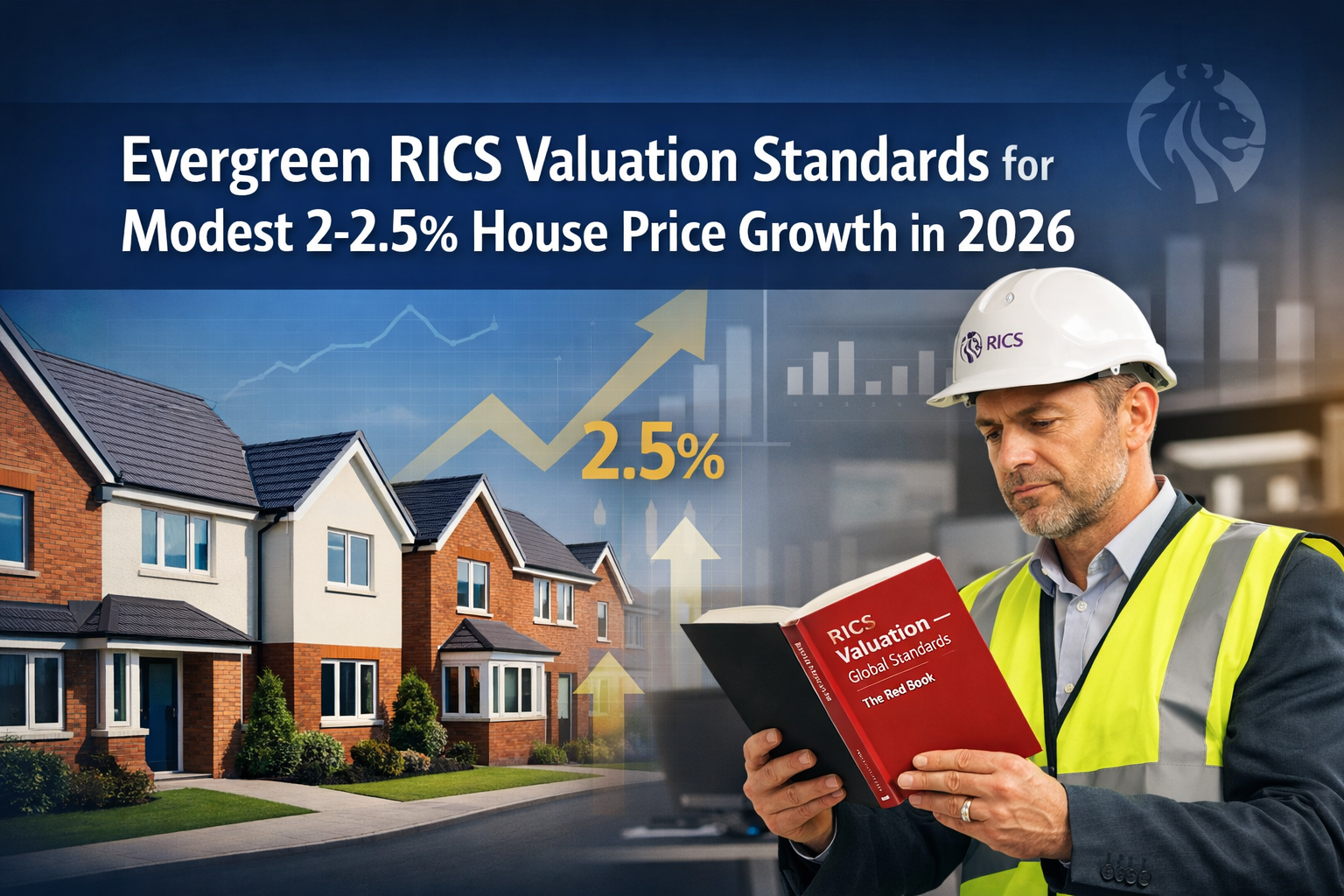
The UK property market in 2026 presents a unique challenge for valuers: maintaining accuracy in an environment of subdued growth. With major forecasters like Rightmove and Hamptons predicting modest house price increases between 2-2.5%, understanding how to apply Evergreen RICS Valuation Standards for Modest 2-2.5% House Price Growth in 2026 has never been more critical for professionals and property stakeholders alike. These timeless valuation principles, rooted in the RICS Red Book framework, provide the foundation for accurate property assessments regardless of market conditions.
As the property landscape stabilizes after years of volatility, surveyors and valuers must adapt their methodologies to reflect this new reality. The Evergreen RICS Valuation Standards for Modest 2-2.5% House Price Growth in 2026 offer a robust framework that combines established valuation principles with contemporary market insights, ensuring consistency and reliability across all property types and regions.
Key Takeaways
- 🏠 RICS Red Book standards remain the cornerstone for accurate property valuations during periods of modest 2-2.5% growth
- 📊 Regional variations require tailored valuation approaches, with some areas experiencing growth above or below national averages
- ✅ Updated ESG standards (effective April 30, 2026) integrate sustainability considerations into commercial property valuations
- 🎯 Comparable evidence becomes more critical when market movements are subtle, requiring enhanced analytical skills
- 💼 Professional judgment must balance historical data with forward-looking market indicators in stabilizing conditions
Understanding the RICS Valuation Framework in 2026
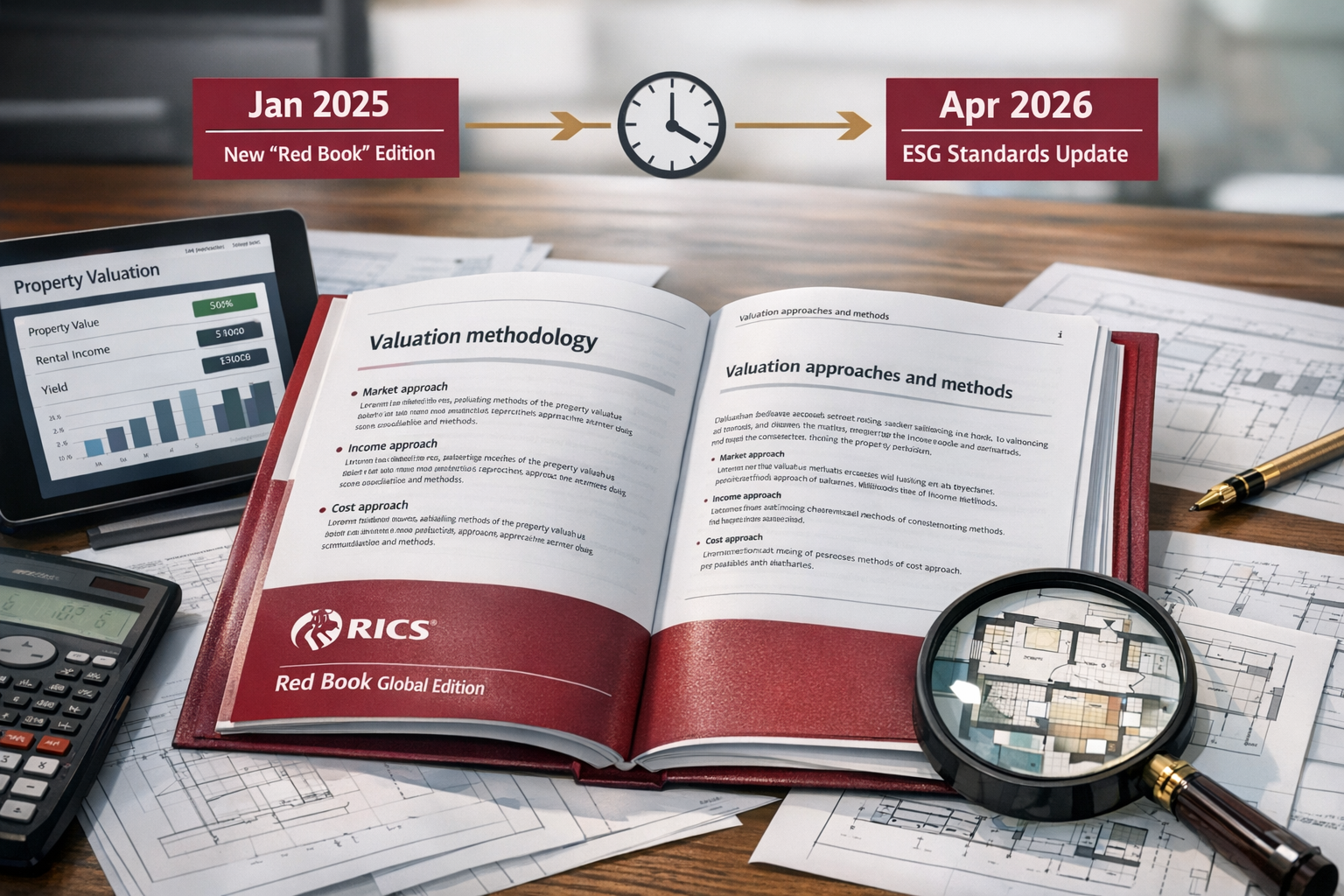
The Royal Institution of Chartered Surveyors (RICS) maintains comprehensive valuation standards that serve as the global benchmark for property assessment. The RICS Valuation Global Standards, commonly known as the Red Book, underwent its latest major update with an edition effective January 31, 2025[8]. These standards provide the foundational framework that makes the Evergreen RICS Valuation Standards for Modest 2-2.5% House Price Growth in 2026 both reliable and adaptable.
The Red Book Foundation
The Red Book establishes mandatory rules, best practice guidance, and related commentary for RICS members undertaking asset valuations[3]. This comprehensive framework covers:
- Valuation approaches for residential, commercial, and specialized properties
- Ethical standards ensuring independence and objectivity
- Reporting requirements that maintain transparency and consistency
- Professional competence standards for qualified valuers
For property owners seeking professional valuations, working with RICS registered valuers ensures compliance with these rigorous standards.
Evergreen Principles in Practice
The term "evergreen" in valuation standards refers to principles that remain valid regardless of market conditions. These include:
- Market value definition – The estimated amount for which an asset should exchange on the valuation date
- Comparable evidence analysis – Systematic review of similar property transactions
- Professional skepticism – Critical assessment of all available information
- Transparency – Clear documentation of assumptions and limitations
When applying these principles to a market experiencing 2-2.5% growth, valuers must exercise heightened attention to detail, as smaller price movements can be easily obscured by property-specific factors.
Applying Evergreen RICS Valuation Standards for Modest 2-2.5% House Price Growth in 2026
The projected modest growth rate for 2026 creates a unique valuation environment. Unlike periods of rapid appreciation or decline, subdued growth requires valuers to demonstrate exceptional precision and analytical capability[9].
Adjusting for Subdued Market Conditions
Comparable selection becomes paramount when market movements are subtle. Valuers must:
- Source transactions from tighter timeframes (ideally within 3-6 months)
- Apply more granular location adjustments
- Account for property-specific features with greater precision
- Consider micro-market variations within broader regions
The Red Book valuation process requires careful documentation of all adjustments made to comparable evidence, particularly in stable markets where differences between properties become more significant relative to overall price movements.
Regional Variation Considerations
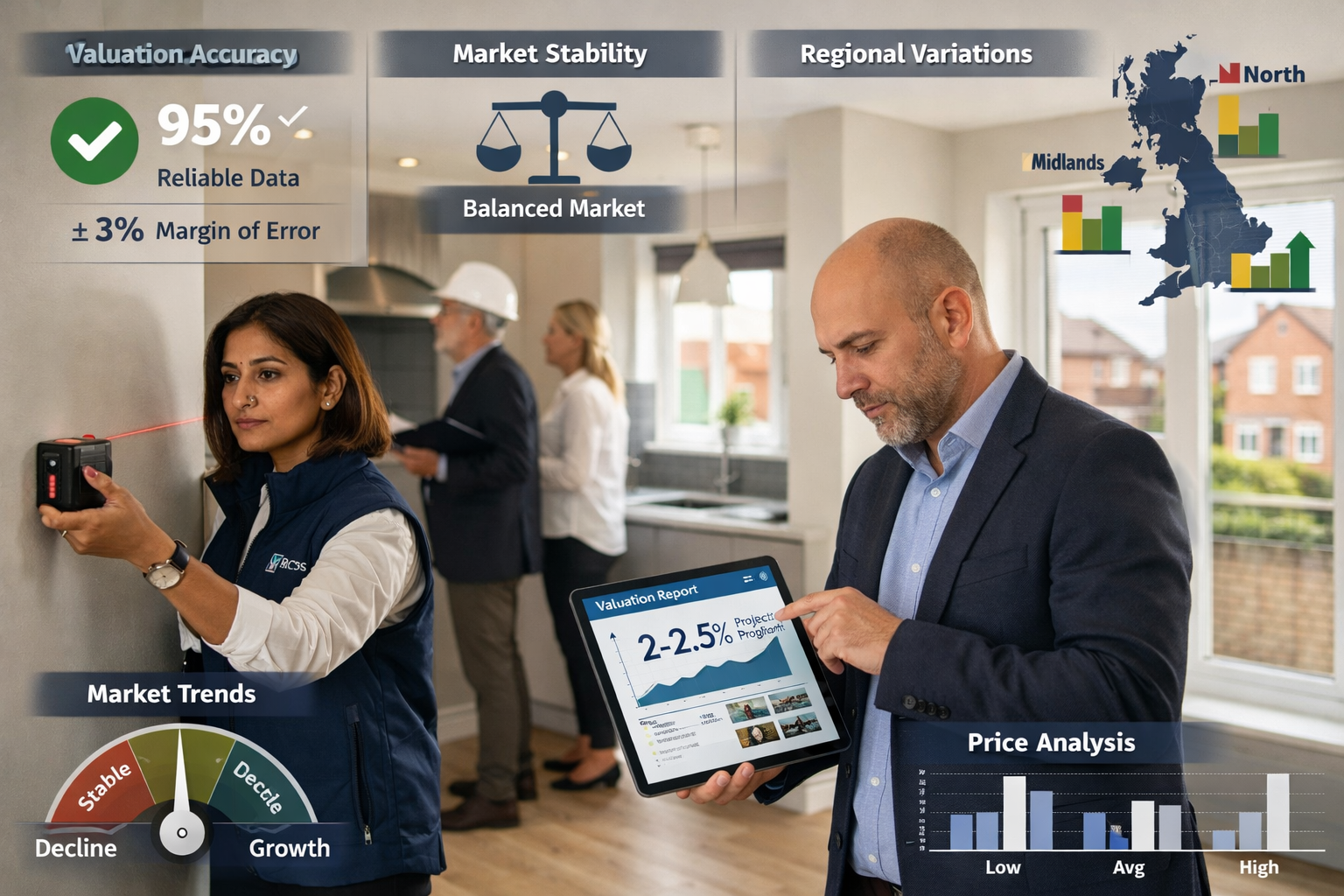
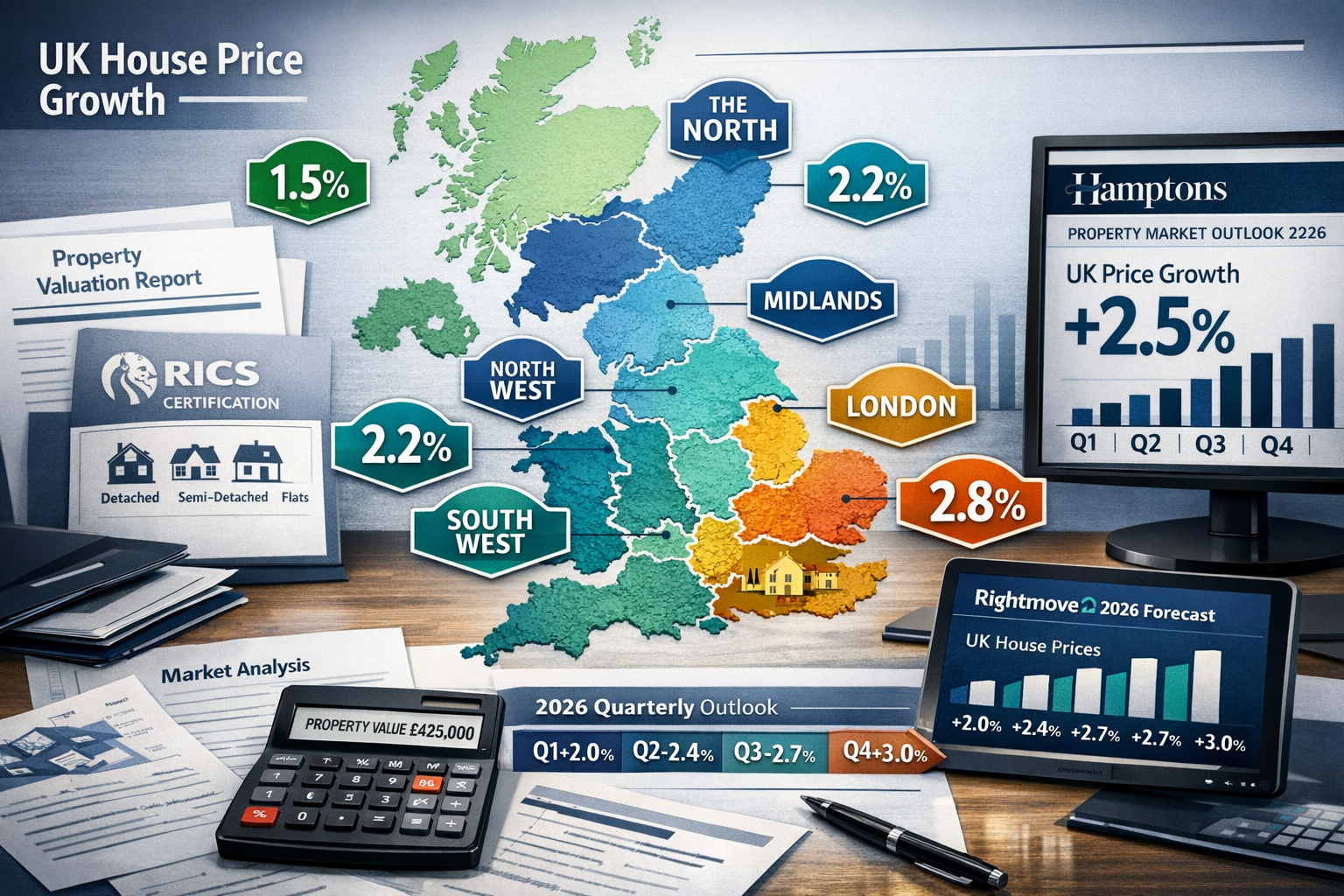
While national forecasts suggest 2-2.5% growth, regional markets show considerable variation:
| Region | Projected Growth | Key Factors |
|---|---|---|
| London | 1.5-2.0% | Higher base prices, affordability constraints |
| Southeast | 2.0-2.5% | Commuter demand, employment stability |
| Northwest | 2.5-3.0% | Relative affordability, economic growth |
| Scotland | 2.0-2.5% | Balanced supply-demand dynamics |
| Wales | 2.5-3.5% | Continued migration trends |
Valuers must adjust their approach based on local market dynamics, incorporating regional economic indicators, employment trends, and housing supply factors into their analysis.
Enhanced Due Diligence Requirements
In markets with modest growth, the margin for error narrows. Professional valuers should:
✅ Conduct thorough property surveys to identify condition issues affecting value
✅ Analyze longer-term market trends to contextualize current conditions
✅ Review planning policy changes that may impact future values
✅ Consider mortgage lending criteria affecting buyer demand
✅ Assess local infrastructure developments and their timing
For residential properties, combining valuation with a comprehensive Level 2 house survey provides both accurate market value and condition assessment.
New ESG and Sustainability Standards Impact
A significant development affecting the Evergreen RICS Valuation Standards for Modest 2-2.5% House Price Growth in 2026 is the fourth edition of RICS's global ESG and sustainability standard for commercial property valuation, which becomes effective April 30, 2026[1][2].
Commercial Property Considerations
This updated standard requires valuers to:
- Assess energy performance and its impact on value
- Consider climate risk factors including flood risk and extreme weather exposure
- Evaluate sustainability certifications (BREEAM, LEED, etc.)
- Account for retrofit costs to meet net-zero targets
While primarily focused on commercial properties, these sustainability considerations increasingly influence residential valuations, particularly for:
- New-build developments with enhanced energy efficiency
- Period properties requiring significant retrofit investment
- Properties in flood-risk or climate-vulnerable locations
Integration with Traditional Valuation Methods
The sustainability standards don't replace traditional valuation approaches but enhance them. Valuers must now:
- Identify material ESG factors affecting the property
- Quantify the value impact where possible
- Disclose ESG considerations in valuation reports
- Apply professional judgment when market evidence is limited
For properties requiring RICS reinstatement cost valuation, sustainability features must be factored into rebuild cost calculations.
Practical Application: National and Regional Examples
Understanding how to apply Evergreen RICS Valuation Standards for Modest 2-2.5% House Price Growth in 2026 requires examining practical scenarios across different property types and locations.
Example 1: London Semi-Detached Property
Property: Three-bedroom semi-detached house in Ealing
Market context: London growth forecast 1.5-2.0%
Valuation approach:
- Identify 5-8 comparable sales within 0.5-mile radius from past 4 months
- Apply time adjustments of 0.3-0.4% per month for older comparables
- Account for property-specific features (extension, parking, condition)
- Consider local transport improvements (Crossrail impact stabilizing)
- Final valuation: £625,000 (2.0% increase from 6 months prior)
This measured approach reflects the subdued growth environment while maintaining accuracy through careful comparable selection.
Example 2: Northwest First-Time Buyer Property
Property: Two-bedroom terrace in Manchester suburb
Market context: Northwest growth forecast 2.5-3.0%
Valuation approach:
- Source comparables from expanding search radius due to active market
- Apply higher time adjustments (0.5% per month) reflecting stronger growth
- Consider Help to Buy scheme availability and impact
- Factor in local employment growth and infrastructure investment
- Final valuation: £185,000 (2.8% increase from 6 months prior)
For buyers utilizing government schemes, obtaining a specialized Help to Buy valuation ensures compliance with program requirements.
Example 3: Rural Property with Unique Features
Property: Four-bedroom detached cottage in Hertfordshire
Market context: Southeast growth forecast 2.0-2.5%
Valuation approach:
- Wider comparable search due to property uniqueness
- Greater reliance on price per square foot analysis
- Significant adjustments for land area, outbuildings, condition
- Consider rural market dynamics and buyer profile
- Final valuation: £875,000 (2.3% increase from 6 months prior)
Properties with unique characteristics benefit from comprehensive building surveys alongside valuation to fully understand value drivers.
Key Valuation Techniques for Stabilizing Markets
When applying the Evergreen RICS Valuation Standards for Modest 2-2.5% House Price Growth in 2026, specific techniques become particularly valuable in stabilizing market conditions.
Comparative Method Refinement
The comparative method remains the primary approach for residential valuations, but requires enhanced sophistication:
Time adjustments: With modest growth, monthly adjustments become critical. A 2.5% annual growth rate translates to approximately 0.2% per month, making recent comparables essential.
Location adjustments: Micro-location factors (specific street, proximity to amenities) carry greater relative weight when overall market movements are subdued.
Condition adjustments: Property condition differences become more significant relative to market growth, requiring detailed assessment of what surveyors look for in a house survey.
Investment Method Application
For income-producing properties, the investment method requires careful yield analysis:
- Rental growth projections aligned with modest capital growth
- Yield compression or expansion trends in local markets
- Tenant covenant strength and lease terms
- Operating cost inflation considerations
Residual Method for Development Sites
Development valuations must account for:
- Slower sales absorption rates in subdued markets
- Extended development timelines affecting finance costs
- More conservative profit margin assumptions
- Planning risk assessment
Cost Method Considerations
For specialized properties, the cost method requires:
- Current construction cost data
- Appropriate depreciation for age and obsolescence
- Land value assessment based on current market conditions
- Professional judgment on depreciated replacement cost
Professional Standards and Quality Assurance
Maintaining the integrity of Evergreen RICS Valuation Standards for Modest 2-2.5% House Price Growth in 2026 requires robust quality assurance processes[6].
Competence and Continuing Professional Development
RICS members must:
- Maintain up-to-date knowledge of market conditions
- Understand the latest Red Book requirements
- Complete mandatory CPD requirements
- Demonstrate competence in relevant property sectors
Independence and Objectivity
Professional independence is paramount, particularly when:
- Valuing properties for mortgage lending purposes
- Providing valuations for legal proceedings or disputes
- Assessing properties with potential conflicts of interest
- Working under pressure from clients seeking specific outcomes
Documentation and Audit Trail
Comprehensive documentation should include:
📋 Inspection records – Detailed notes and photographs from site visits
📋 Comparable evidence – Full details of transactions used, including adjustments
📋 Assumptions and limitations – Clear statement of any constraints on the valuation
📋 Market analysis – Supporting data for growth rates and trends applied
📋 Calculation methodology – Transparent demonstration of how the final figure was derived
For complex properties, maintaining a thorough house survey checklist ensures nothing is overlooked during inspection.
Technology and Data in Modern Valuations
The application of Evergreen RICS Valuation Standards for Modest 2-2.5% House Price Growth in 2026 is increasingly supported by technological tools and data analytics.
Automated Valuation Models (AVMs)
AVMs provide valuable supporting data but cannot replace professional judgment:
Strengths:
- Rapid processing of large comparable datasets
- Consistent application of statistical methods
- Useful for portfolio valuations and initial estimates
Limitations:
- Difficulty accounting for property-specific features
- Reduced accuracy in markets with limited transaction volumes
- Cannot assess condition or non-standard characteristics
Geographic Information Systems (GIS)
GIS technology enhances valuation accuracy by:
- Mapping comparable properties with precise location data
- Analyzing proximity to amenities, transport, and services
- Identifying micro-market boundaries and characteristics
- Visualizing market trends and price gradients
Market Data Platforms
Professional valuers access multiple data sources:
- Land Registry price paid data
- Rightmove and Zoopla asking price trends
- Mortgage lender transaction databases
- Local authority planning and development information
Quality Control and Validation
Technology supports quality assurance through:
- Automated reasonableness checks against market benchmarks
- Peer review systems comparing valuations across similar properties
- Trend analysis identifying outliers requiring additional scrutiny
- Audit trail documentation for regulatory compliance
Challenges and Risk Mitigation
Applying valuation standards in a modest growth environment presents specific challenges that professionals must navigate.
Limited Comparable Evidence
Challenge: Fewer transactions in some market segments
Mitigation strategies:
- Expand geographic search radius appropriately
- Use older comparables with careful time adjustments
- Consider alternative property types with adjustment factors
- Apply professional judgment based on market knowledge
Market Uncertainty
Challenge: Economic factors creating unpredictable conditions
Mitigation strategies:
- Include appropriate caveats in valuation reports
- Consider sensitivity analysis showing value ranges
- Monitor market indicators for emerging trends
- Update valuations more frequently in volatile periods
Client Pressure
Challenge: Stakeholders seeking specific valuation outcomes
Mitigation strategies:
- Maintain professional independence at all times
- Document methodology and evidence thoroughly
- Communicate limitations and assumptions clearly
- Refuse instructions that compromise objectivity
Regulatory Compliance
Challenge: Keeping pace with evolving standards and requirements
Mitigation strategies:
- Subscribe to RICS updates and guidance notes
- Participate in professional development activities
- Implement robust quality management systems
- Seek specialist advice for complex valuations
Future-Proofing Valuation Practice
The Evergreen RICS Valuation Standards for Modest 2-2.5% House Price Growth in 2026 must evolve to address emerging challenges and opportunities.
Climate Change Adaptation
Valuers increasingly must consider:
- Flood risk – Current and projected future risk affecting insurability
- Energy efficiency – EPC ratings and retrofit requirements
- Extreme weather – Resilience to heat, storms, and other climate impacts
- Transition risk – Policy changes affecting property values
Digital Transformation
The profession continues adapting to:
- Remote inspection technologies and virtual tours
- Blockchain-based property records and transaction systems
- Artificial intelligence supporting comparable analysis
- Enhanced data visualization in valuation reports
Demographic Shifts
Changing population dynamics influence valuations:
- Aging population affecting property type demand
- Remote working patterns changing location preferences
- Multigenerational living arrangements
- Student and young professional housing needs
Regulatory Evolution
Anticipated changes include:
- Enhanced consumer protection measures
- Stricter sustainability disclosure requirements
- Digital property transaction frameworks
- Professional indemnity insurance requirements
Case Studies: Successful Application
Examining real-world applications of Evergreen RICS Valuation Standards for Modest 2-2.5% House Price Growth in 2026 demonstrates their practical value.
Case Study 1: Mortgage Lending Valuation
Scenario: High-street bank requires valuation for £400,000 mortgage on suburban family home
Approach:
- Comprehensive RICS Homebuyer Survey Level 2 combined with valuation
- Five comparables identified within 0.3 miles, sold within 3 months
- Time adjustments of 0.2% per month applied
- Condition adjustment of -£8,000 for deferred maintenance identified
- Final valuation: £395,000 (supporting mortgage advance)
Outcome: Lender confident in security, buyer aware of condition issues, transaction proceeded smoothly.
Case Study 2: Portfolio Valuation for Investment Fund
Scenario: Property fund requires annual valuation of 50-property residential portfolio
Approach:
- Tiered methodology: desktop review, drive-by inspections, full inspections
- Market analysis by sub-region accounting for local growth variations
- Rental income verification and yield analysis
- Quality assurance through independent review of 20% sample
- Portfolio value: £18.5 million (2.3% increase year-on-year)
Outcome: Fund managers able to report accurate NAV to investors, regulatory compliance maintained.
Case Study 3: Dispute Resolution Valuation
Scenario: Divorce proceedings requiring independent property valuation
Approach:
- Appointment as single joint expert by both parties
- Detailed inspection and condition assessment
- Comprehensive comparable analysis with transparent adjustments
- Consideration of marketing period and achievable price
- Final valuation: £565,000 with detailed supporting report
Outcome: Both parties accepted valuation, avoiding costly litigation, settlement facilitated.
The Cost of Professional Valuations
Understanding the cost of valuation services helps stakeholders budget appropriately while recognizing the value delivered.
Residential Valuation Fees
Typical fee ranges for 2026:
- Basic mortgage valuation: £250-£400
- RICS Homebuyer Report (Level 2): £400-£800
- Building Survey (Level 3): £600-£1,500
- Specialist valuation (unique property): £800-£2,000+
Fees vary based on property value, location, complexity, and turnaround requirements.
Commercial Valuation Fees
Commercial valuations typically charge:
- Percentage of property value (0.1-0.5%)
- Fixed fees for smaller properties
- Retainer arrangements for portfolio clients
- Additional fees for enhanced ESG analysis
Value Delivered
Professional RICS valuations provide:
✅ Accuracy and reliability – Evidence-based market value assessment
✅ Risk mitigation – Identification of issues affecting value
✅ Regulatory compliance – Meeting lender and legal requirements
✅ Professional indemnity – Insurance protection for relying parties
✅ Expert opinion – Professional judgment in complex situations
The investment in professional valuation services typically represents a fraction of the transaction value while providing essential protection and confidence.
Conclusion
The Evergreen RICS Valuation Standards for Modest 2-2.5% House Price Growth in 2026 provide a robust, time-tested framework for accurate property assessment in today's stabilizing market conditions. As forecasters predict subdued growth across most UK regions, the principles embedded in the RICS Red Book—now enhanced by updated ESG standards effective April 30, 2026—offer valuers the tools and methodology needed to deliver reliable, defensible valuations.
The modest growth environment of 2026 demands heightened precision, careful comparable selection, and enhanced professional judgment. Whether valuing residential properties in London's mature markets or assessing commercial assets with complex sustainability considerations, adherence to these evergreen standards ensures consistency, transparency, and accuracy.
Actionable Next Steps
For property owners and buyers:
- Engage chartered surveyors with current RICS qualifications
- Request detailed valuation reports showing methodology and comparables
- Consider combining valuations with comprehensive property surveys
- Understand regional variations affecting your specific market
For property professionals:
- Review the latest Red Book standards and ESG guidance
- Enhance comparable analysis techniques for modest growth conditions
- Invest in continuing professional development and market knowledge
- Implement robust quality assurance processes
For lenders and institutions:
- Ensure valuation panels meet current RICS standards
- Review valuation instructions for clarity and compliance
- Consider portfolio-level market analysis alongside individual valuations
- Monitor regional variations and adjust lending criteria accordingly
The Evergreen RICS Valuation Standards for Modest 2-2.5% House Price Growth in 2026 represent more than technical guidelines—they embody professional excellence, ethical practice, and commitment to accuracy that protects all stakeholders in property transactions. By understanding and applying these principles, the property industry can navigate the current market environment with confidence, delivering reliable valuations that support informed decision-making across all sectors.
As market conditions continue to evolve, these timeless standards will adapt while maintaining their core principles, ensuring that property valuations remain accurate, defensible, and valuable tools for all participants in the UK property market.
References
[1] Rics Publishes New Guidance – https://propertyindustryeye.com/rics-publishes-new-guidance/
[2] Rics Publishes Updated Global Standard Esg Sustainability Commercial Property Valuation – https://www.rics.org/news-insights/rics-publishes-updated-global-standard-esg-sustainability-commercial-property-valuation
[3] Valuation Standards – https://www.rics.org/profession-standards/rics-standards-and-guidance/sector-standards/valuation-standards
[6] Building Survey Standards Evolution How Rics Quality Strengthening Initiatives Impact Surveyor Practice In 2026 – https://nottinghillsurveyors.com/blog/building-survey-standards-evolution-how-rics-quality-strengthening-initiatives-impact-surveyor-practice-in-2026
[8] Red Book Global – https://www.rics.org/profession-standards/rics-standards-and-guidance/sector-standards/valuation-standards/red-book/red-book-global
[9] Valuation Techniques For Stabilising National House Prices Rics January 2026 Survey Insights For Surveyors – https://nottinghillsurveyors.com/blog/valuation-techniques-for-stabilising-national-house-prices-rics-january-2026-survey-insights-for-surveyors
