
When property valuation disputes reach the courtroom in 2026, the stakes have never been higher. With the RICS January 2026 survey revealing widening regional price gaps across the UK—while national prices stabilise—expert witnesses face unprecedented challenges in presenting credible, data-backed testimonies. Understanding Expert Witness Testimonies in 2026 Valuation Disputes: RICS Strategies Amid Stabilising House Prices and Regional Divides has become essential for property professionals navigating this complex landscape.
The property market in 2026 presents a paradox: overall stability masks dramatic regional variations. Northern regions experience robust growth while London and the Southeast show cooling trends. For expert witnesses, this creates a minefield of potential pitfalls—and opportunities for those who master the nuances of regional data interpretation and RICS compliance standards.
Key Takeaways
- ✅ RICS accreditation through the Expert Witness Accreditation Service (EWAS) is increasingly crucial for credibility in 2026 valuation disputes [1]
- 📊 Regional price divergences require expert witnesses to present location-specific data rather than relying on national trends alone [3]
- 📋 Red Book compliance remains mandatory for all expert witness testimonies in property valuation cases [2]
- 🎯 Preparation checklists and systematic approaches help avoid common pitfalls that undermine expert credibility
- 💼 Northern housing boom dynamics demand specialized strategies distinct from traditional London-centric approaches [4]
Understanding the 2026 Valuation Dispute Landscape
The property valuation dispute environment in 2026 differs markedly from previous years. Market stabilisation at the national level conceals significant regional variations that complicate expert witness testimonies. Understanding these dynamics is fundamental to building robust cases.
The Regional Divide Challenge
Regional price gaps have widened considerably in 2026, creating what industry professionals call the "two-speed property market." Northern regions—particularly Greater Manchester, Leeds, and Liverpool—have experienced price growth of 6-8% annually, while London and Southeast markets have cooled to 1-2% growth or even slight declines in some postcodes [3].
This divergence creates specific challenges for expert witnesses:
- Comparable selection becomes critical: Using London-based comparables for Manchester properties (or vice versa) can invalidate entire valuation arguments
- Market timing sensitivity increases: A three-month difference in valuation dates can show dramatically different results in volatile regional markets
- Local knowledge requirements expand: Understanding micro-market dynamics within regions becomes essential rather than optional
For those conducting RICS shared ownership valuations, these regional variations add layers of complexity to already intricate calculations.
Stabilising National Prices: The Bigger Picture
While regional variations dominate headlines, national price stabilisation provides important context for expert witness testimonies. After the volatility of 2022-2024, the 2026 market shows characteristics of maturity:
| Market Indicator | 2024 | 2025 | 2026 |
|---|---|---|---|
| National Average Growth | 2.1% | 3.4% | 2.8% |
| Transaction Volume Change | -15% | -8% | +4% |
| Regional Variance (Standard Deviation) | 2.3% | 3.1% | 4.2% |
| Dispute Case Volume | High | Very High | Moderate |
This stabilisation allows expert witnesses to present more reliable long-term trend analysis, though the increasing regional variance demands careful qualification of any national-level conclusions [3].
RICS Expert Witness Accreditation Service: 2026 Standards and Requirements
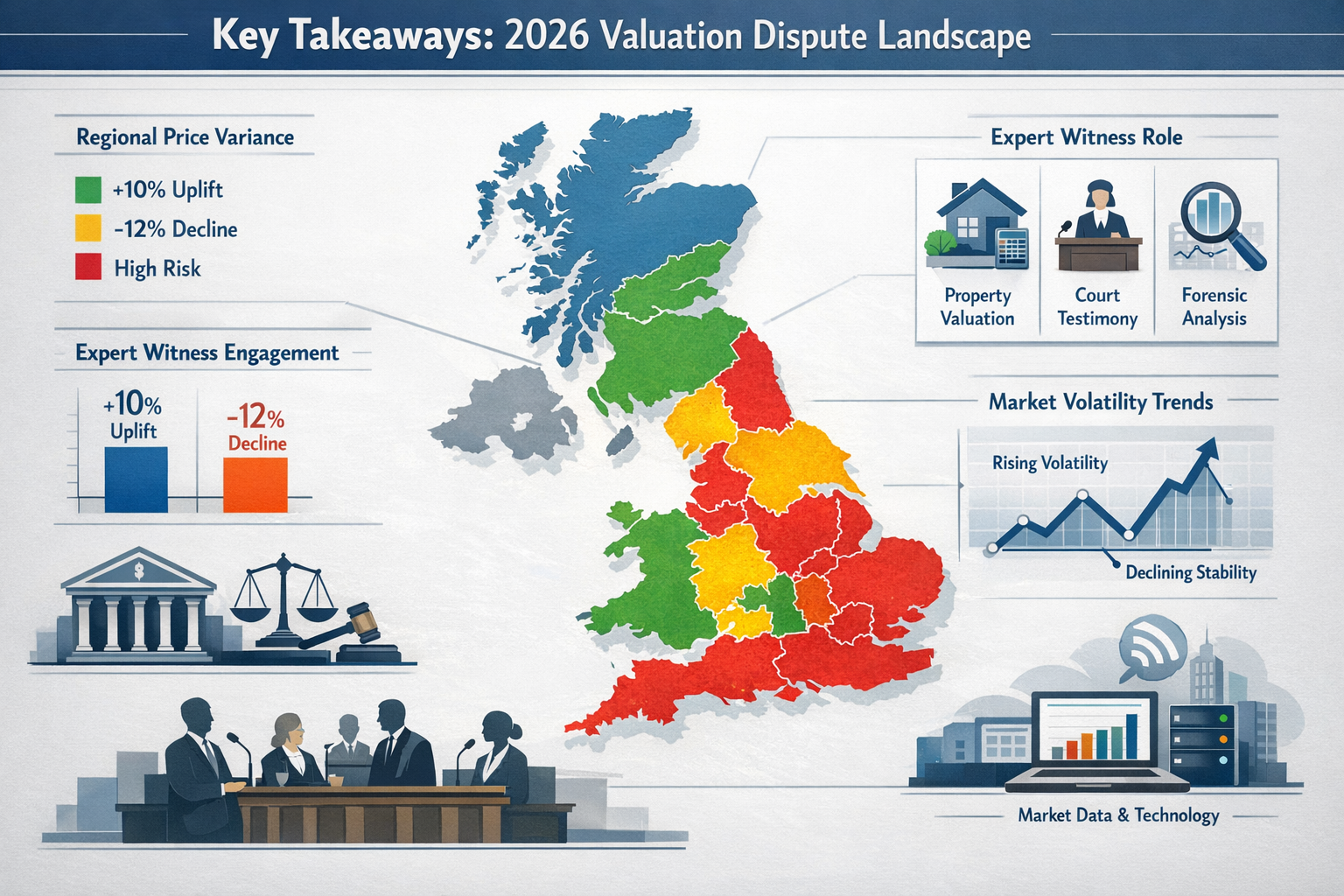
The Royal Institution of Chartered Surveyors (RICS) has strengthened its Expert Witness Accreditation Service (EWAS) in 2026, responding to increased scrutiny of expert testimony quality in property disputes. Understanding these requirements is essential for anyone providing Expert Witness Testimonies in 2026 Valuation Disputes: RICS Strategies Amid Stabilising House Prices and Regional Divides.
The Four-Module Training Framework
RICS accreditation now requires completion of four comprehensive training modules, each addressing critical aspects of expert witness work [1]:
Module 1: Legal Framework and Court Procedures
- Understanding Civil Procedure Rules (CPR) Part 35
- Expert duties to the court versus duties to instructing parties
- Disclosure requirements and privilege considerations
- Cross-examination preparation techniques
Module 2: Valuation Methodology and Red Book Compliance
- International Valuation Standards (IVS) application
- RICS Red Book (VPS) mandatory requirements [2]
- Basis of value selection for different dispute types
- Documentation standards for court-ready reports
Module 3: Regional Market Analysis
- Data sourcing and verification protocols
- Regional adjustment methodologies
- Comparable evidence selection criteria
- Market condition qualification techniques
Module 4: Ethics and Professional Conduct
- Conflicts of interest identification and management
- Independence maintenance strategies
- Fee arrangement compliance
- Professional indemnity insurance requirements
Each module concludes with an assessment, and candidates must achieve 80% or higher to progress [1]. For those already registered as expert witnesses before 2026, a reassessment interview evaluates continued competence under the updated standards.
Ethics Test and Ongoing Compliance
Beyond the four modules, RICS requires passing a comprehensive ethics examination that tests understanding of:
- Objectivity maintenance when presenting evidence that may disadvantage the instructing party
- Transparency requirements regarding methodology limitations and data gaps
- Conflict management in situations involving previous client relationships
- Fee structure appropriateness to avoid appearance of outcome-based compensation
The ethics test includes scenario-based questions reflecting real-world dilemmas expert witnesses face in 2026 valuation disputes [1]. Pass rates hover around 75%, indicating RICS maintains rigorous standards.
The RICS Dispute Resolution Service Registry
RICS maintains an active registry of accredited expert witnesses through its Dispute Resolution Service (DRS). This registry provides solicitors, barristers, and parties to disputes with access to qualified professionals across multiple valuation disciplines [1]:
- Real estate valuation (residential and commercial)
- Business valuation
- Intellectual property valuation
- Personal property and chattels
- Machinery and equipment
- Business income and loss calculations
The registry is accessible through the DRS nomination service at 020 7334 3806 or drs@rics.org [1]. Being listed on this registry significantly enhances an expert witness's credibility and marketability in 2026.
For professionals handling complex cases, understanding commercial valuation principles alongside residential expertise broadens opportunities for expert witness work.
Building Robust Cases: Expert Witness Strategies for Regional Market Variations
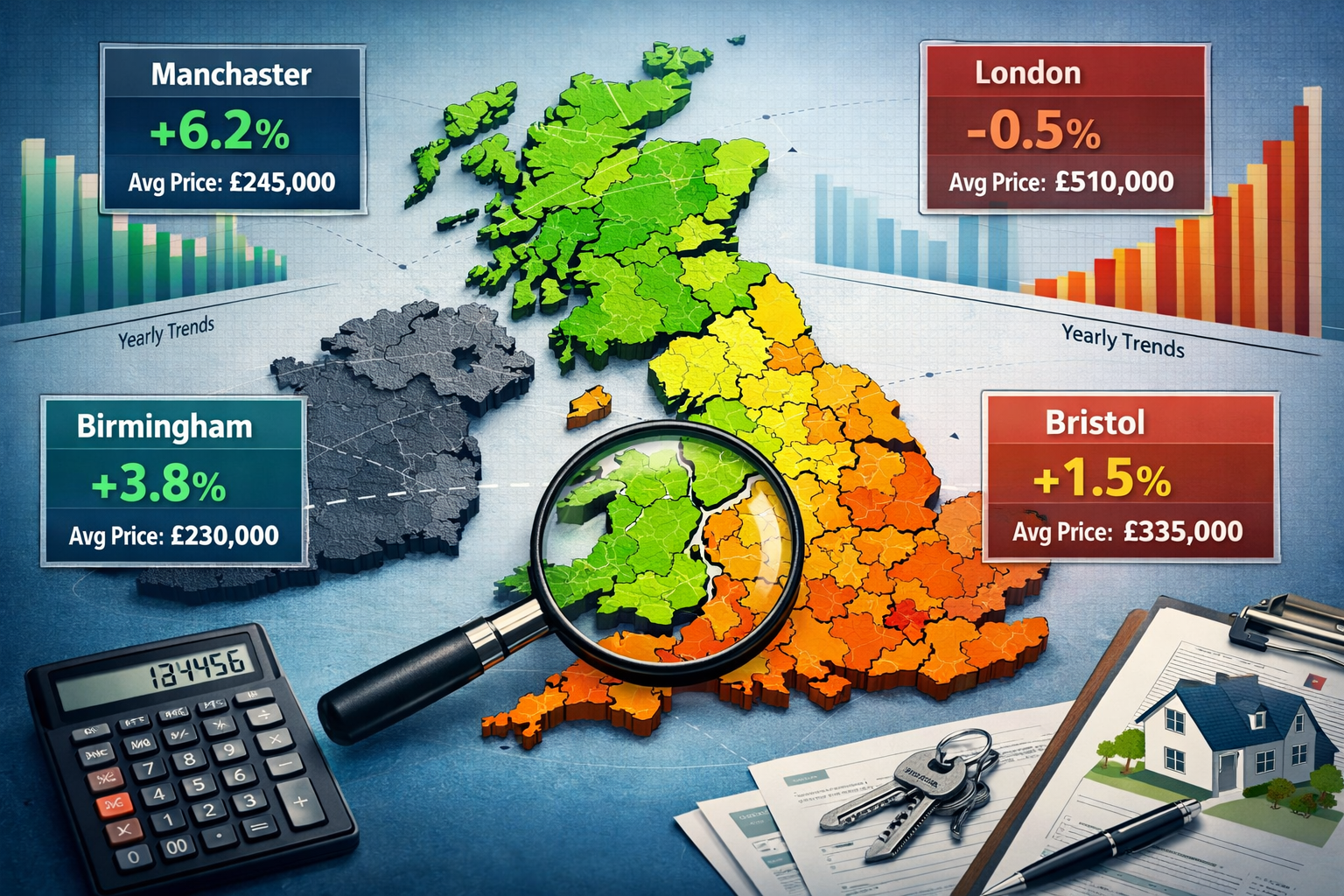
Successfully navigating Expert Witness Testimonies in 2026 Valuation Disputes: RICS Strategies Amid Stabilising House Prices and Regional Divides requires sophisticated approaches that account for market complexity. Expert witnesses who master these strategies consistently deliver more persuasive testimonies.
The Regional Data Framework
Developing a systematic approach to regional data analysis prevents common errors that undermine expert credibility. The framework includes:
1. Micro-Market Identification
Rather than treating entire regions as homogeneous, successful expert witnesses in 2026 identify micro-markets with distinct characteristics. For example, within Greater Manchester:
- City centre luxury apartments: 8.2% annual growth, driven by professional migration
- Suburban family homes: 5.1% growth, reflecting affordability pressures
- Commuter belt properties: 6.8% growth, benefiting from hybrid working patterns
- Industrial conversion units: 3.4% growth, showing market saturation
This granular approach provides defensible comparable selection and adjustment rationale [4].
2. Temporal Alignment Protocols
Market timing significantly impacts valuation conclusions in 2026's dynamic environment. Expert witnesses must:
- Establish precise valuation dates with supporting documentation
- Apply time adjustments using verified regional indices rather than national averages
- Qualify conclusions when valuation dates fall during periods of rapid change
- Maintain consistent temporal reference points throughout testimony
3. Comparable Evidence Hierarchy
Not all comparable evidence carries equal weight. The 2026 best practice hierarchy prioritizes:
| Evidence Type | Reliability Rating | Typical Weight |
|---|---|---|
| Direct market transactions (verified) | Highest | 40-50% |
| Asking prices (adjusted for market conditions) | High | 20-30% |
| Professional valuations (third-party) | Medium-High | 15-25% |
| Automated valuation models (AVMs) | Medium | 10-15% |
| Historical trend extrapolations | Lower | 5-10% |
Understanding valuation factors that influence property values helps expert witnesses select and weight comparables appropriately.
Northern Housing Boom: Specialized Testimony Approaches
The northern housing boom of 2026 requires specialized strategies distinct from traditional approaches developed for stable or declining markets [4]. Expert witnesses must address:
Supply-Demand Imbalance Evidence
- Construction pipeline analysis showing development lag behind demand
- Migration pattern data demonstrating population inflows
- Employment growth statistics supporting wage increases
- Infrastructure investment timelines affecting future accessibility
Sustainability of Growth Rates
Courts increasingly question whether current northern growth rates represent sustainable trends or temporary bubbles. Expert witnesses must:
- Present historical cyclical analysis showing precedents (or lack thereof)
- Identify fundamental economic drivers versus speculative factors
- Qualify predictions with scenario analysis (base case, optimistic, pessimistic)
- Address potential policy interventions that could affect trajectories
Regional Adjustment Methodologies
When disputes involve properties across multiple regions, expert witnesses need defensible adjustment methodologies:
Adjusted Value = Base Comparable Value × (1 + Regional Factor) × (1 + Time Factor) × (1 + Condition Factor)

Where Regional Factor = (Target Area Index / Comparable Area Index) - 1
This systematic approach provides transparency and reproducibility—key factors in judicial acceptance of expert testimony [4].
For those dealing with complex structural issues alongside valuation disputes, structural surveys provide essential condition information that affects value conclusions.
Preparation Checklists: Avoiding Common Pitfalls in 2026 Valuation Testimonies

Even experienced professionals can stumble when providing Expert Witness Testimonies in 2026 Valuation Disputes: RICS Strategies Amid Stabilising House Prices and Regional Divides. Systematic preparation using comprehensive checklists prevents costly errors.
Pre-Instruction Due Diligence Checklist
Before accepting an expert witness appointment, prudent professionals complete these checks:
- ✅ Conflict verification: Search internal records for previous involvement with parties, properties, or related matters
- ✅ Competence assessment: Confirm expertise in specific property type, region, and valuation basis required
- ✅ Resource availability: Ensure sufficient time for thorough analysis given case complexity and court timelines
- ✅ Insurance confirmation: Verify professional indemnity coverage extends to expert witness work with adequate limits
- ✅ Fee agreement clarity: Establish hourly rates, estimated total fees, and payment terms in writing
- ✅ Independence protection: Ensure terms of engagement preserve objectivity and court-primary duty
This upfront diligence prevents situations where expert witnesses must withdraw mid-case—a scenario that damages professional reputation and potentially exposes the expert to liability.
Report Preparation Checklist
The expert witness report forms the foundation of testimony credibility. The 2026 best practice checklist includes:
Executive Summary Section
- ☑️ Clear statement of instructions received
- ☑️ Valuation date(s) explicitly stated
- ☑️ Property description with unique identifiers
- ☑️ Valuation conclusion(s) prominently displayed
- ☑️ Key assumptions and limitations highlighted
Methodology Section
- ☑️ Basis of value defined and justified [2]
- ☑️ Red Book compliance statement included
- ☑️ Inspection details documented (date, duration, access limitations)
- ☑️ Data sources identified with verification methods
- ☑️ Regional market context established [3]
- ☑️ Comparable selection criteria explained
- ☑️ Adjustment methodologies detailed with calculations
Analysis Section
- ☑️ Market evidence presented systematically
- ☑️ Regional variations explicitly addressed
- ☑️ Alternative approaches considered and evaluated
- ☑️ Sensitivity analysis for key assumptions
- ☑️ Reconciliation of different valuation methods
Compliance Section
- ☑️ CPR Part 35 compliance statement
- ☑️ Expert declaration of independence
- ☑️ Qualifications and experience summary
- ☑️ Statement of truth signed and dated
Those conducting probate valuation work will find similar systematic approaches essential for defensible conclusions.
Cross-Examination Preparation Checklist
The courtroom environment tests even well-prepared expert witnesses. This preparation checklist minimizes vulnerability:
Document Mastery
- 📋 Re-read own report multiple times, anticipating challenges to each conclusion
- 📋 Review opposing expert's report with critical eye, identifying weaknesses and strengths
- 📋 Compile supporting documentation in organized, readily accessible format
- 📋 Prepare supplementary calculations and analyses for potential follow-up questions
Methodology Defense
- 📋 Develop clear explanations of technical concepts for non-specialist audiences
- 📋 Prepare responses to common challenges (comparable selection, adjustment factors, market timing)
- 📋 Identify potential weaknesses in own analysis and develop honest, professional responses
- 📋 Practice explaining regional variations without appearing to cherry-pick favorable data [3]
Professional Demeanor
- 📋 Prepare mentally for adversarial questioning without becoming defensive
- 📋 Practice pause-before-answering technique to ensure thoughtful responses
- 📋 Develop strategies for handling hypothetical questions that attempt to undermine conclusions
- 📋 Plan responses to questions about fees and relationship with instructing party
Regional Expertise Demonstration
- 📋 Compile recent transaction data for relevant micro-markets
- 📋 Prepare charts and graphs illustrating regional trends [4]
- 📋 Develop clear explanations for divergence between local and national trends
- 📋 Anticipate questions about sustainability of regional price movements
For complex cases involving party wall disputes, expert witnesses may need to address both valuation and structural issues simultaneously.
Common Pitfalls and How to Avoid Them
Analysis of 2026 valuation dispute cases reveals recurring pitfalls that undermine expert witness credibility:
Pitfall 1: Over-Reliance on National Trends
The Problem: Presenting national price indices as primary evidence in regional markets showing divergent trends [3].
The Solution: Always establish regional context first, then position national trends as supplementary information. Use phrases like "While national prices have stabilised at 2.8% growth, the Greater Manchester market shows 6.8% growth due to [specific local factors]."
Pitfall 2: Inadequate Comparable Adjustment Documentation
The Problem: Applying adjustment factors without transparent calculation methodology or supporting rationale.
The Solution: Create detailed adjustment worksheets showing:
- Specific feature differences between subject and comparable
- Quantified value impact of each difference
- Data sources supporting adjustment quantum
- Cumulative adjustment reconciliation
Pitfall 3: Advocacy Rather Than Objectivity
The Problem: Presenting conclusions that consistently favor the instructing party, suggesting bias rather than independence.
The Solution: Proactively acknowledge evidence that doesn't support preferred conclusions. Phrases like "While this comparable suggests a lower value, the weight of evidence indicates…" demonstrate balanced analysis.
Pitfall 4: Regional Expertise Gaps
The Problem: Accepting instructions for regions where the expert lacks current market knowledge [4].
The Solution: Either decline instructions outside areas of genuine expertise or partner with local specialists. Courts increasingly scrutinize geographic competence claims.
Pitfall 5: Red Book Non-Compliance
The Problem: Failing to follow RICS Valuation – Global Standards (Red Book) mandatory requirements [2].
The Solution: Use Red Book compliance checklists for every report, ensuring:
- Appropriate basis of value selected and defined
- Assumptions and special assumptions clearly stated
- Departures from standards (if any) explicitly noted and justified
- Terms of engagement documented properly
Understanding what a level 2 house survey entails helps expert witnesses distinguish between survey findings and valuation conclusions—a common area of confusion in disputes.
Winning Arguments: Case Study Insights from Recent 2026 Disputes
Examining successful expert witness strategies from recent 2026 cases provides practical insights for professionals handling Expert Witness Testimonies in 2026 Valuation Disputes: RICS Strategies Amid Stabilising House Prices and Regional Divides.
Case Study 1: Manchester Residential Development Dispute
Background: Dispute over valuation date selection in rapidly appreciating Manchester suburb—six-month difference between proposed dates resulted in 12% value variance.
Winning Strategy: Expert witness presented:
- Monthly transaction data showing consistent 2% monthly growth
- Planning approval timeline demonstrating infrastructure catalyst
- Comparable sales adjusted for precise temporal differences
- Sensitivity analysis showing value conclusions under different date scenarios
Key Takeaway: Granular temporal data overcomes challenges to valuation date selection in volatile markets [4].
Case Study 2: London vs. Regional Portfolio Valuation
Background: Investment portfolio spanning London, Birmingham, and Leeds required valuation during period of regional divergence.
Winning Strategy: Expert witness employed:
- Separate regional market analyses rather than blended approach
- Location-specific yield assumptions reflecting local rental markets
- Transparent weighting methodology for portfolio-level conclusions
- Risk-adjusted discount rates reflecting regional market maturity differences
Key Takeaway: Resisting the temptation to average across regions preserves analytical credibility [3].
Case Study 3: Shared Ownership Valuation Challenge
Background: Dispute over shared ownership property valuation methodology in cooling London market versus growing regional market context.
Winning Strategy: Expert witness demonstrated:
- Clear distinction between market value and shared ownership value
- Regional market evidence supporting staircasing assumptions
- Transparent treatment of restrictions on resale
- Sensitivity analysis for alternative market scenarios
Key Takeaway: Specialized property types require methodology transparency and regional context RICS shared ownership valuations.
Technology and Data Sources: Enhancing Expert Witness Credibility in 2026
Modern expert witnesses leverage technology and data sources that weren't available in previous years, enhancing the quality and defensibility of testimonies.
Essential Data Sources for 2026
Land Registry Data
- Price Paid dataset providing verified transaction evidence
- Title register information confirming ownership and restrictions
- Flood risk data affecting property values
Regional Market Intelligence Platforms
- Rightmove and Zoopla for asking price trends and market timing
- CoStar for commercial property market data
- EG Radius for professional valuation benchmarking
Economic and Demographic Data
- Office for National Statistics (ONS) regional employment and wage data
- Migration statistics supporting demand analysis
- Infrastructure investment announcements affecting future values
Specialized Valuation Tools
- RICS comparable evidence database
- Automated valuation models (AVMs) for cross-checking
- Geographic information systems (GIS) for location analysis
Technology Best Practices
Expert witnesses must balance technological sophistication with transparency:
- Document all data sources with access dates and version numbers
- Explain algorithmic outputs rather than presenting them as "black box" conclusions
- Maintain human judgment primacy while using technology as supporting tool
- Prepare to defend technology choices under cross-examination
Those working on reinstatement cost valuations particularly benefit from specialized construction cost databases and building information modeling (BIM) tools.
The Future of Expert Witness Work: Trends Beyond 2026
While this article focuses on 2026 strategies, emerging trends will shape expert witness work in coming years:
Increased Scrutiny of Regional Expertise
Courts increasingly challenge experts claiming nationwide competence, particularly as regional variations persist. Specialists focusing on specific geographic areas may gain credibility advantages over generalists [3][4].
Enhanced Technology Integration
Artificial intelligence and machine learning tools will become more sophisticated, requiring expert witnesses to understand and explain algorithmic valuation approaches while maintaining independent professional judgment.
Sustainability and ESG Considerations
Environmental, social, and governance (ESG) factors increasingly affect property values. Expert witnesses will need demonstrable competence in quantifying sustainability premiums and climate risk discounts.
Regulatory Evolution
RICS standards continue evolving, with potential for more prescriptive requirements around regional market analysis and comparable evidence documentation [1][2].
Conclusion
Expert Witness Testimonies in 2026 Valuation Disputes: RICS Strategies Amid Stabilising House Prices and Regional Divides represents both challenge and opportunity for property professionals. The widening gap between regional markets—with northern regions booming while London stabilises—demands sophisticated analytical approaches and transparent methodology.
Success in this environment requires:
🎯 RICS accreditation through the Expert Witness Accreditation Service, demonstrating commitment to professional standards [1]
📊 Regional market mastery, with granular understanding of micro-market dynamics rather than reliance on national trends [3][4]
📋 Systematic preparation using comprehensive checklists that address methodology, documentation, and cross-examination readiness
⚖️ Unwavering objectivity, maintaining independence even when evidence doesn't favor the instructing party
🔍 Red Book compliance in all aspects of valuation work, ensuring defensibility under scrutiny [2]
Actionable Next Steps
For property professionals seeking to enhance their expert witness capabilities:
- Pursue RICS EWAS accreditation if not already obtained—contact DRS at 020 7334 3806 or drs@rics.org [1]
- Develop regional expertise through systematic market monitoring and local professional networks
- Create personal checklists adapted from this article's frameworks to ensure consistent quality
- Invest in continuing professional development focused on regional market analysis and courtroom skills
- Build relationships with solicitors and barristers handling property disputes in target regions
- Review and update professional indemnity insurance to ensure adequate expert witness coverage
For those requiring professional valuation services or expert witness support, Notting Hill Surveyors offers comprehensive expertise across residential and commercial property sectors, with particular strength in navigating the complex regional dynamics of the 2026 market.
The property valuation dispute landscape will continue evolving, but professionals who master the strategies outlined in this article—combining technical excellence, regional expertise, and unwavering professional standards—will remain in high demand as trusted expert witnesses.
References
[1] RICS Register of Accredited Expert Witnesses March 2026 – https://www.rics.org/content/dam/ricsglobal/documents/surveying/RICS-Register-of-Accredited-Expert-Witnesses_March-2026.pdf
[2] RICS Valuation Expert Witness Services – https://edsltd.com/rics-valuation-expert-witness-services/
[3] Expert Witness Valuations in Recovering 2026 Markets: Building Robust Cases with Regional Data and Stabilising Prices – https://nottinghillsurveyors.com/blog/expert-witness-valuations-in-recovering-2026-markets-building-robust-cases-with-regional-data-and-stabilising-prices
[4] Expert Witness Strategies for Northern Housing Boom Disputes: Leveraging 2026 RICS Data in Courtroom Valuations – https://nottinghillsurveyors.com/blog/expert-witness-strategies-for-northern-housing-boom-disputes-leveraging-2026-rics-data-in-courtroom-valuations
