
The UK property market is experiencing a remarkable transformation in 2026, but not all regions are recovering at the same pace. While London and the South East continue to struggle with affordability challenges and sluggish demand, a different story is unfolding across Scotland, Northern Ireland, and Northern England. Recent data from the Royal Institution of Chartered Surveyors (RICS) reveals a striking regional divergence, with northern territories outpacing their southern counterparts by significant margins[1][3]. For property professionals conducting Valuation Surveys in the 2026 Market Recovery: Regional Strategies for Scotland, Northern Ireland, and Northern England Growth, understanding these regional dynamics has never been more critical.
This shift represents more than just temporary market fluctuation—it signals a fundamental rebalancing of the UK property landscape. As house prices' net balance improved to -10% in the three months to January 2026, up from -19% in October 2025, the national market shows clear signs of stabilization[1][3]. However, the real opportunity lies in recognizing that Scotland and Northern Ireland are leading price growth nationally, while the North West and North of England demonstrate sustained upward momentum[1][3].
Key Takeaways
- 📊 Regional divergence is accelerating: Scotland and Northern Ireland show the strongest price growth nationally, with Northern Ireland experiencing 5.8% growth (£9,302 per property) between October 2024 and October 2025[4]
- 🏠 Northern affordability drives demand: Lower house prices and mortgage costs in Scotland, Northern Ireland, and Northern England are stimulating buyer activity and outperforming southern markets[4]
- 📈 Market sentiment turning positive: The 12-month outlook reached +35%, the strongest reading since December 2024, with 43% of surveyors anticipating higher prices ahead[1]
- 🔍 Supply conditions improving: Estate agents began 2026 with an average of 32 homes for sale, the highest early-January figure in eight years, creating balanced market dynamics[2]
- ⚡ Demand surging post-holiday: Buyer demand jumped 57% in the two weeks after Christmas 2025, with newly listed homes rising 81%, marking the busiest start-of-year for listings since 2014[2]
Understanding the 2026 Market Recovery Landscape
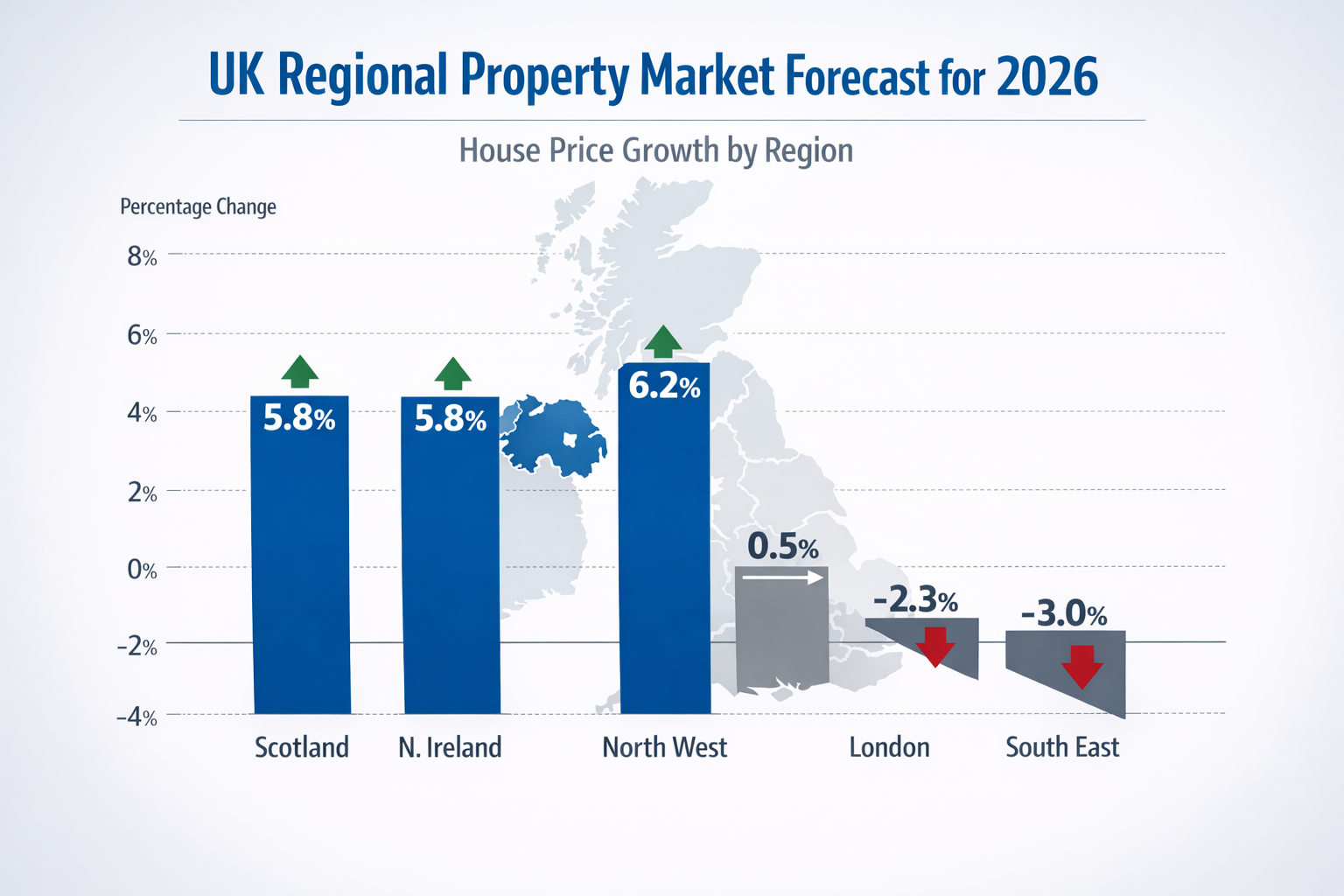
The UK housing market entered 2026 with renewed optimism following a challenging 2025. The recovery, however, is anything but uniform. Valuation Surveys in the 2026 Market Recovery: Regional Strategies for Scotland, Northern Ireland, and Northern England Growth must account for the stark differences between regions experiencing robust growth and those still struggling with fundamental affordability constraints.
National Market Indicators Signal Stabilization
The latest RICS Residential Market Survey for January 2026 reveals several encouraging trends that suggest the worst of the downturn may be behind us. The net balance for house prices improved significantly to -10% in the three months to January 2026, representing a substantial recovery from the -19% recorded in October 2025[1][3]. This improvement indicates that downward pressure on prices is easing across the country.
Even more promising is the trajectory of buyer demand. New buyer enquiries showed a net balance of -15% in January 2026, up from -21% in December and -29% in November[1]. This consistent improvement over consecutive months demonstrates genuine momentum building in the market rather than temporary fluctuation.
The transaction pipeline also shows health returning to the market. Agreed sales reached a net balance of -9% in January 2026, representing the least negative reading since June 2025[1]. This metric is particularly important for surveyors, as it directly correlates with the volume of valuation work available and indicates that properties are moving from listing to contract stage more efficiently.
Supply Dynamics Creating Balanced Conditions
One of the most significant developments shaping the 2026 recovery is the improvement in housing stock availability. Estate agents began the year with an average of 32 homes for sale, the highest early-January figure in eight years[2]. This increased supply addresses one of the chronic constraints that has plagued the UK market for years.
The post-holiday surge in activity has been remarkable. According to Rightmove data, buyer demand jumped 57% in the two weeks after Christmas 2025 compared to the preceding fortnight, while newly listed homes rose 81%[2]. This represents the busiest start-of-year for listings since 2014, suggesting both buyers and sellers are increasingly confident about engaging with the market.
For professionals conducting property valuations, this improved supply-demand balance creates more reliable comparable evidence and reduces the extreme price volatility that can complicate accurate assessments.
Forward-Looking Sentiment Reaches Multi-Year Highs
Perhaps the most striking indicator of recovery is the dramatic improvement in professional sentiment. The 12-month outlook surged to +35%, representing the strongest reading since December 2024[1]. This isn't mere optimism—it reflects chartered surveyors' assessment of market fundamentals, transaction pipelines, and economic conditions.
Price expectations are even more bullish, with +43% of respondents anticipating higher prices over the year ahead, the most positive outlook since February 2025[1]. This confidence is grounded in observable market dynamics rather than speculation, as surveyors have direct visibility into buyer behavior, mortgage approvals, and transaction completion rates.
Interestingly, while medium-term optimism is strong, near-term sales expectations remain more modest at +4%[1]. This suggests that while professionals expect sustained recovery, they recognize that short-term economic uncertainty and seasonal factors may moderate the pace of improvement in the immediate months ahead.
Valuation Surveys in the 2026 Market Recovery: Regional Performance Analysis
The headline national figures tell only part of the story. The true narrative of the 2026 recovery lies in the dramatic regional divergence that has emerged, with northern territories substantially outperforming their southern counterparts. Understanding these regional dynamics is essential for surveyors developing Valuation Surveys in the 2026 Market Recovery: Regional Strategies for Scotland, Northern Ireland, and Northern England Growth.
Scotland: Leading the National Recovery
Scotland has emerged as one of the strongest performers in the UK property market, consistently showing robust price growth that exceeds the national average[1][3]. The Scottish market benefits from several structural advantages that position it favorably for sustained growth throughout 2026 and beyond.
Affordability remains the key driver of Scotland's outperformance. With average house prices significantly below those in London and the South East, Scottish properties remain accessible to a broader range of buyers, including first-time purchasers and those relocating from more expensive regions. This affordability advantage translates directly into stronger demand fundamentals.
The Scottish market also benefits from relatively stable employment conditions and a diversified economy spanning finance, technology, energy, and tourism sectors. Cities like Edinburgh, Glasgow, and Aberdeen each offer distinct property market characteristics that require specialized valuation approaches.
For surveyors conducting valuations in Scotland, several factors warrant particular attention:
- Regional micro-markets: Edinburgh's historic city center commands premium valuations compared to suburban developments, requiring nuanced comparable analysis
- Property types: Traditional Scottish tenement flats require different valuation methodologies than modern new-build apartments
- Regulatory environment: Scotland's distinct property law, including the Home Report system, affects transaction timelines and valuation requirements
- Economic drivers: Understanding local employment sectors and their stability is crucial for accurate long-term value assessments
When preparing survey reports for homeowners, Scottish properties require consideration of factors like shared maintenance responsibilities in tenement buildings and the impact of conservation area restrictions on renovation potential.
Northern Ireland: Exceptional Growth Momentum
Northern Ireland has demonstrated some of the most impressive growth figures in the UK market. Between October 2024 and October 2025, the region experienced 5.8% price growth, equivalent to an increase of £9,302 per property according to Lloyds Bank data[4]. This performance significantly outpaces the national average and positions Northern Ireland as a market of exceptional opportunity.
Several factors contribute to Northern Ireland's strong performance:
🏘️ Affordability advantage: Northern Ireland maintains some of the most affordable property prices in the UK, making homeownership accessible to a wider demographic
📈 Economic recovery: The Northern Irish economy has shown resilience, with improving employment figures and business confidence supporting housing demand
🌍 Cross-border dynamics: Unique considerations related to the Irish border and economic relationships with both the UK and Republic of Ireland create specific market dynamics
🏗️ Development activity: Targeted new-build development in Belfast and surrounding areas is meeting demand without oversupplying the market
For valuation professionals, Northern Ireland presents both opportunities and challenges. The relatively smaller market size means comparable evidence may be less abundant than in larger English cities, requiring surveyors to exercise greater judgment in selecting appropriate comparables. Understanding local market nuances, such as the prevalence of certain property types and neighborhood development trajectories, becomes even more critical.
When conducting Level 2 surveys in Northern Ireland, particular attention should be paid to construction quality, as the region has a mix of traditional builds and modern developments with varying standards.
Northern England: Sustained Upward Momentum
The North West and North of England regions are reporting positive price trends and continued resilience, consistently outperforming the national average[1][3]. This represents a significant shift from historical patterns where southern markets dominated growth cycles.
The North West, encompassing major cities like Manchester and Liverpool, has benefited from substantial infrastructure investment, urban regeneration projects, and the "Northern Powerhouse" initiative. Manchester, in particular, has emerged as a major economic hub with a thriving technology sector, world-class universities, and cultural attractions that drive housing demand.
Yorkshire and the North East have also shown remarkable resilience. Cities like Leeds, Sheffield, and Newcastle offer compelling value propositions for both owner-occupiers and investors, with property prices that remain a fraction of London equivalents while offering comparable amenities and employment opportunities.
Key characteristics of the Northern England market include:
| Factor | Impact on Valuations |
|---|---|
| Affordability | Prices 40-60% below London averages create strong demand from first-time buyers and relocators |
| Rental yields | Higher yields (5-7%) compared to southern markets (2-4%) attract buy-to-let investors |
| Infrastructure investment | HS2, Northern Powerhouse Rail, and local transport improvements enhance location desirability |
| Employment growth | Expanding technology, professional services, and creative sectors support wage growth |
| Quality of life | Lower cost of living combined with cultural amenities attracts young professionals |
Surveyors working in Northern England must recognize that the market is not monolithic. Manchester city center apartments require different valuation approaches than Victorian terraces in Leeds or coastal properties in Northumberland. Each sub-market has distinct characteristics, buyer profiles, and value drivers.
Understanding how long surveys take is particularly important in these faster-moving northern markets, where properties can receive multiple offers quickly, requiring efficient survey turnaround to avoid losing transactions.
Southern Regions: Ongoing Challenges
In stark contrast to the northern success story, London, the South East, South West, and East Anglia continue to underperform the national average[1][3]. These regions face persistent affordability challenges that constrain buyer demand and limit price growth potential.
The affordability crisis in southern markets manifests in several ways:
- High price-to-earnings ratios: London properties cost 10-15 times average earnings, compared to 5-7 times in northern regions
- Deposit barriers: The capital required for a deposit in London or the South East can exceed the total purchase price of properties in northern markets
- Mortgage stress: Higher borrowing requirements mean southern buyers are more vulnerable to interest rate fluctuations
- Lifestyle trade-offs: Buyers increasingly question whether southern property premiums justify the quality of life compared to northern alternatives
While these southern markets have shown modest improvements in recent months[1][3], the structural affordability constraints suggest that any recovery will be more gradual and muted compared to northern territories.
For surveyors, this regional divergence creates both challenges and opportunities. Those with expertise in northern markets are likely to see increased workload, while southern specialists may need to adjust business models to account for lower transaction volumes. Developing capabilities across multiple regions becomes a strategic advantage in this environment.
Regional Strategies for Scotland, Northern Ireland, and Northern England Growth
Successfully conducting Valuation Surveys in the 2026 Market Recovery: Regional Strategies for Scotland, Northern Ireland, and Northern England Growth requires tailored approaches that recognize the unique characteristics of each territory. Generic valuation methodologies developed for London-centric markets often prove inadequate when applied to northern properties.
Scotland-Specific Valuation Strategies
🏴 Understanding the Home Report System
Scotland's distinctive Home Report requirement fundamentally shapes the valuation landscape. Unlike England and Wales, where buyers typically commission surveys, Scottish sellers must provide a Home Report before marketing a property. This includes a Single Survey, Energy Report, and Property Questionnaire.
For surveyors, this creates several strategic considerations:
- Accuracy is paramount: Since the Home Report valuation influences listing prices and buyer expectations, precision is critical
- Market knowledge essential: Understanding local market conditions and recent comparable sales is even more important than in other regions
- Liability considerations: The surveyor owes duties to both seller and potential buyers, requiring careful professional indemnity insurance coverage
- Turnaround expectations: Sellers expect rapid report delivery to avoid marketing delays
🔍 Tenement Valuation Expertise
Scottish tenements—traditional multi-story apartment buildings with shared common areas—require specialized valuation knowledge. Key considerations include:
- Common repairs obligations: Understanding the financial implications of shared maintenance responsibilities
- Factoring arrangements: Assessing the quality and cost of property management services
- Title conditions: Reviewing burden and servitude rights that may affect value
- Modernization status: Evaluating whether common areas have been updated (wiring, plumbing, roof)
📊 Regional Market Segmentation
Scotland's property markets vary dramatically between regions:
- Edinburgh: Premium pricing for New Town Georgian properties, strong student rental market, conservation area restrictions
- Glasgow: More affordable entry points, regeneration areas offering value growth, diverse property stock
- Aberdeen: Energy sector dependency creates volatility, requiring careful economic analysis
- Rural Scotland: Unique considerations including septic systems, oil heating, and limited comparable evidence
Surveyors should develop deep expertise in specific Scottish sub-markets rather than attempting to cover the entire country superficially. Specialization enables more accurate valuations and builds professional reputation.
Northern Ireland Valuation Approaches
🎯 Navigating Limited Comparable Evidence
Northern Ireland's smaller market size means comparable evidence may be scarcer than in larger English cities. Effective strategies include:
- Expanding geographic search radius: Being willing to consider comparables from a wider area while adjusting for location differences
- Using older comparables judiciously: In slower-moving markets, sales from 6-12 months ago may still provide relevant evidence with appropriate adjustments
- Leveraging asking price data: While less reliable than completed sales, current listings provide market sentiment indicators
- Building comprehensive databases: Maintaining detailed records of all local transactions to build robust comparable libraries over time
🏗️ New Build vs. Existing Stock Considerations
Northern Ireland has seen significant new-build activity, particularly around Belfast. Valuing new developments requires different approaches:
- Developer incentives: Accounting for Help to Buy schemes, deposit contributions, and other incentives that affect true market value
- Build quality assessment: Evaluating construction standards, warranties, and developer reputation
- Estate maturity: Recognizing that values on newly completed estates may be less stable until the development matures
- Comparable selection: Determining whether to use new-build or existing property comparables, or a blend of both
For those wondering whether surveys are needed on new builds, the answer in Northern Ireland is often yes, given varying construction quality and the importance of identifying defects during warranty periods.
💡 Economic Sensitivity Analysis
Northern Ireland's economy has unique characteristics that affect property values:
- Public sector employment: High proportion of public sector workers creates stability but also sensitivity to government spending
- Cross-border trade: Brexit implications and Irish border considerations affect business confidence and employment
- Tourism sector: Coastal and rural properties may have tourism-related value components
- Agricultural economy: Rural properties often have agricultural ties affecting valuation
Incorporating economic scenario analysis into valuations—considering both optimistic and pessimistic economic outcomes—provides clients with more robust value assessments.
Northern England Regional Tactics
🌆 City-Specific Market Intelligence
Each major Northern England city has distinct market characteristics requiring specialized knowledge:
Manchester:
- City center apartments: High-density developments with varying build quality and service charge implications
- Commuter belt: Villages within 30-40 minutes of city center command premiums
- Student market: Areas near universities have distinct valuation dynamics driven by rental yields
- Regeneration zones: Salford, Ancoats, and other areas undergoing transformation require forward-looking analysis
Leeds:
- Victorian and Edwardian stock: Traditional terraces and semis dominate many neighborhoods
- Professional demographic: Strong demand from financial and legal sector employees
- Transport connectivity: Proximity to rail stations significantly affects values
- Suburban villages: Sought-after locations like Roundhay and Horsforth command premiums
Newcastle:
- Quayside regeneration: Waterfront developments have transformed the city center
- Student concentration: Multiple universities create rental demand in specific areas
- Coastal proximity: Tynemouth and Whitley Bay offer lifestyle appeal affecting values
- Commuter patterns: Metro accessibility influences neighborhood desirability
📈 Investment Yield Analysis
Northern England's attractive rental yields make buy-to-let investment a significant market component. Valuations should incorporate:
- Gross yield calculations: Annual rental income as percentage of purchase price (typically 5-7% in northern cities)
- Net yield adjustments: Accounting for management fees, maintenance, void periods, and taxation
- Tenant demand assessment: Evaluating local rental market strength and tenant quality
- Regulatory compliance: Ensuring properties meet current and anticipated rental standards
Understanding whether homebuyer surveys are worth it becomes particularly important for investors purchasing multiple properties, where survey costs must be balanced against risk mitigation.
🔧 Property Condition Premiums
Northern England's older housing stock means property condition significantly affects value. Effective valuation requires:
- Modernization assessment: Quantifying the value impact of updated kitchens, bathrooms, and systems
- Energy efficiency evaluation: EPC ratings increasingly affect marketability and value
- Structural integrity: Identifying subsidence risks, damp issues, and structural concerns that affect value
- Renovation potential: Recognizing when properties offer value-add opportunities through improvement
Recommending appropriate survey levels—whether Level 2 or more comprehensive structural surveys—helps clients make informed decisions about property condition risks.
🚀 Infrastructure Impact Assessment
Major infrastructure projects significantly affect property values in Northern England:
- HS2 connectivity: Properties within commuting distance of planned HS2 stations may see value uplift
- Northern Powerhouse Rail: Proposed improvements to east-west connectivity affect multiple cities
- Local transport schemes: Tram extensions, bus rapid transit, and cycling infrastructure enhance accessibility
- Digital infrastructure: Availability of high-speed broadband increasingly affects property desirability
Incorporating infrastructure development timelines and likelihood into valuations requires balancing optimism about future improvements against the risk of project delays or cancellations.
Advanced Valuation Methodologies for Regional Markets

Moving beyond basic comparable analysis, sophisticated surveyors employ advanced methodologies tailored to the unique characteristics of Valuation Surveys in the 2026 Market Recovery: Regional Strategies for Scotland, Northern Ireland, and Northern England Growth.
Comparative Market Analysis Refinement
📊 Weighting Comparable Evidence
Not all comparable sales deserve equal weight in valuation analysis. Effective weighting considers:
- Recency: More recent sales receive higher weighting, with adjustments for market movement
- Similarity: Properties closely matching the subject in size, condition, and features receive greater weight
- Transaction circumstances: Arm's length sales between unconnected parties are more reliable than family transactions or forced sales
- Market conditions: Sales completed during stable market periods may be more representative than those during volatile periods
🎯 Location Adjustment Factors
Within any regional market, micro-location dramatically affects value. Quantifying location premiums requires:
- Street-level analysis: Properties on main roads may trade at discounts to those on quieter streets
- School catchment areas: Proximity to high-performing schools can add 5-15% to values
- Amenity access: Walking distance to shops, parks, and transport affects desirability
- Neighborhood trajectory: Areas undergoing improvement warrant different treatment than declining neighborhoods
🏠 Property-Specific Adjustments
Even similar properties require adjustments for specific features:
- Size differences: Per-square-foot or per-room adjustments accounting for the fact that larger properties don't always command proportionally higher prices
- Condition variations: Quantifying the value impact of modernization, maintenance, and presentation
- Parking provision: In urban areas, parking can add £10,000-£30,000 to value
- Outdoor space: Gardens, terraces, and balconies command premiums varying by location
Economic Fundamentals Integration
💼 Employment Market Analysis
Property values correlate strongly with local employment conditions. Robust valuations incorporate:
- Employment growth trends: Regions with expanding job markets support housing demand
- Wage trajectory: Income growth enables buyers to afford higher prices and larger mortgages
- Sector diversification: Economies dependent on single industries face greater volatility
- Major employer stability: Significant job losses from large employers can depress local markets
For Scotland, Northern Ireland, and Northern England, understanding regional economic development strategies and major investment projects provides context for medium-term value projections.
📉 Affordability Metrics
The fundamental driver of northern outperformance is superior affordability. Quantifying this advantage requires:
- Price-to-earnings ratios: Comparing local property prices to average household incomes
- Mortgage affordability calculations: Assessing what proportion of income typical mortgages consume at current interest rates
- Deposit requirements: Evaluating accessibility for first-time buyers with limited savings
- Comparative analysis: Benchmarking local affordability against national averages and competing regions
🏦 Mortgage Market Dynamics
Lending conditions significantly affect achievable prices. Monitoring factors include:
- Interest rate environment: Current rates and anticipated Bank of England policy direction
- Lending criteria: Loan-to-value ratios, income multiples, and stress testing requirements
- Product availability: Range of mortgage products available for different property types and buyer profiles
- Regional lending patterns: Some lenders have preferences or restrictions for specific regions
Technology-Enhanced Valuation Tools
🚁 Drone Survey Integration
Modern valuation increasingly incorporates technology-enhanced inspection methods. Drone surveys offer particular advantages for:
- Roof condition assessment: Detailed inspection of roof coverings, chimneys, and flashings without scaffolding
- Large property surveys: Efficient inspection of extensive buildings or estates
- Inaccessible areas: Examining elevations that would otherwise require expensive access equipment
- Documentation quality: High-resolution imagery provides superior record of property condition
For rural properties common in Scotland and Northern England, drone technology enables comprehensive site surveys that would otherwise be time-prohibitive.
📱 Digital Comparable Databases
Sophisticated surveyors leverage technology for comparable research:
- Automated alerts: Receiving notifications when relevant comparables transact
- Geographic mapping: Visualizing comparable locations and identifying geographic patterns
- Historical tracking: Monitoring how specific properties or areas have performed over time
- Market analytics: Identifying trends in days-on-market, price reductions, and sale-to-asking price ratios
🤖 Automated Valuation Models (AVMs)
While not replacing professional judgment, AVMs provide useful benchmarking:
- Sanity checking: Verifying that manual valuations align reasonably with algorithmic estimates
- Market trend identification: Recognizing broader market movements that may affect specific valuations
- Portfolio valuation: Efficiently valuing large property portfolios where individual inspections aren't feasible
- Limitations recognition: Understanding that AVMs struggle with unique properties, thin markets, and rapidly changing conditions
Risk Assessment and Market Outlook Considerations
Comprehensive Valuation Surveys in the 2026 Market Recovery: Regional Strategies for Scotland, Northern Ireland, and Northern England Growth must address both opportunities and risks facing these regional markets.
Upside Potential Factors
✅ Continued Affordability Advantage
The fundamental driver of northern outperformance—superior affordability—remains intact and likely to persist. With southern property prices constrained by already-stretched affordability, northern regions have greater headroom for growth as incomes rise and mortgage conditions improve.
✅ Infrastructure Investment Pipeline
Committed infrastructure projects will enhance connectivity and economic performance:
- Transport improvements: Rail electrification, road upgrades, and public transport expansion
- Digital infrastructure: Rollout of full-fiber broadband and 5G coverage
- Urban regeneration: City center redevelopment projects creating new residential and commercial space
- Green energy: Renewable energy projects creating employment and investment, particularly in Scotland
✅ Demographic Shifts
Remote work normalization enables lifestyle-driven relocation:
- London exodus: Professionals leaving expensive southern markets for better quality of life
- International migration: Scotland and Northern Ireland attracting international talent
- Retiree relocation: Downsizers seeking better value and amenities in northern locations
- Student retention: Graduates choosing to remain in cities where they studied rather than relocating to London
✅ Investment Yield Appeal
Superior rental yields continue attracting buy-to-let and institutional investment:
- Professional landlords: Experienced investors recognizing value opportunities
- Build-to-rent developers: Institutional capital funding purpose-built rental developments
- Corporate relocation: Companies establishing or expanding northern operations require housing for employees
- International investors: Overseas buyers seeking UK property exposure at accessible price points
Downside Risk Factors
⚠️ Economic Uncertainty
Despite recovery signs, economic risks persist:
- Interest rate trajectory: Further rate increases could dampen affordability and demand
- Recession risk: Economic downturn could increase unemployment and reduce buyer confidence
- Inflation persistence: Continued high inflation erodes real incomes and purchasing power
- Global economic shocks: International instability affecting UK economic performance
⚠️ Regional Economic Dependency
Some northern markets have concentration risks:
- Scotland's energy sector: Aberdeen particularly vulnerable to oil and gas industry fluctuations
- Northern Ireland's public sector: High government employment creates vulnerability to spending cuts
- Manufacturing exposure: Some Northern England areas dependent on manufacturing facing structural challenges
- Tourism volatility: Coastal and rural areas with tourism-dependent economies face seasonal and economic sensitivity
⚠️ Supply Response Risk
Strong price growth may stimulate excessive development:
- New-build oversupply: Developers responding to demand signals could create local oversupply
- Quality concerns: Rapid construction may compromise build quality
- Infrastructure strain: Development outpacing infrastructure capacity affects livability
- Market saturation: Specific property types (e.g., city center apartments) reaching demand limits
⚠️ Policy and Regulatory Changes
Government policy shifts could affect regional markets:
- Taxation changes: Modifications to stamp duty, capital gains tax, or rental taxation
- Planning reforms: Changes to development rules affecting supply
- Energy efficiency mandates: Requirements for rental properties to meet minimum EPC standards
- Leasehold reform: Changes to leasehold law affecting apartment values
Scenario Planning for Valuations
Professional valuations should acknowledge uncertainty through scenario analysis:
🌟 Optimistic Scenario (30% probability):
- Economic growth accelerates, interest rates decline
- Infrastructure projects deliver on schedule
- Demand significantly exceeds supply
- Northern regions see 8-12% annual growth
- Valuation approach: Use upper end of comparable range, apply positive location adjustments
📊 Base Case Scenario (50% probability):
- Moderate economic growth continues
- Interest rates stabilize at current levels
- Supply and demand remain balanced
- Northern regions see 4-6% annual growth
- Valuation approach: Use mid-range comparables, standard adjustments
⚠️ Pessimistic Scenario (20% probability):
- Economic recession occurs
- Interest rates remain elevated or increase further
- Unemployment rises, demand weakens
- Northern regions see 0-2% growth or modest declines
- Valuation approach: Use conservative comparables, apply caution to growth assumptions
Presenting scenario analysis to clients demonstrates professional sophistication and helps them make informed decisions accounting for uncertainty.
Professional Development and Market Positioning
Surveyors seeking to capitalize on Valuation Surveys in the 2026 Market Recovery: Regional Strategies for Scotland, Northern Ireland, and Northern England Growth should invest in professional development and strategic market positioning.
Building Regional Expertise
📚 Continuous Market Education
Staying current requires ongoing learning:
- Local market reports: Regularly reviewing RICS, estate agent, and mortgage lender market analyses
- Economic data: Monitoring regional employment, wage, and business confidence statistics
- Planning applications: Tracking major development proposals affecting supply
- Infrastructure updates: Following progress on transport and regeneration projects
- Networking: Attending regional property events and building relationships with local agents, developers, and professionals
🎓 Formal Qualifications
Professional credentials enhance credibility:
- RICS membership: Maintaining chartered status and meeting CPD requirements
- Specialist designations: Pursuing additional qualifications in valuation, residential survey, or specific property types
- Regional certifications: Obtaining Scotland-specific qualifications where relevant
- Technology training: Developing competence in drone operation, digital tools, and data analysis
Understanding what chartered surveyors do and communicating this value to clients builds trust and justifies professional fees.
Marketing Regional Capabilities
🎯 Targeted Service Positioning
Differentiate by emphasizing regional expertise:
- Geographic specialization: Clearly defining service areas and depth of local knowledge
- Property type focus: Highlighting experience with regional property types (tenements, terraces, rural properties)
- Client testimonials: Showcasing successful valuations and satisfied clients in target regions
- Case studies: Publishing detailed examples demonstrating regional market understanding
💻 Digital Presence Optimization
Online visibility drives client acquisition:
- Local SEO: Optimizing website content for regional search terms
- Content marketing: Publishing market analysis and insights demonstrating expertise
- Social media: Sharing regional market updates and professional commentary
- Professional directories: Maintaining current listings on RICS and other industry platforms
🤝 Strategic Partnerships
Collaboration expands reach:
- Estate agent relationships: Building referral partnerships with active local agents
- Mortgage broker connections: Becoming preferred surveyor for regional brokers
- Legal firm alliances: Partnering with conveyancing solicitors handling regional transactions
- Developer relationships: Establishing credentials with developers active in target markets
Service Innovation for Regional Markets
📦 Bundled Service Packages
Creating value through comprehensive offerings:
- Purchase packages: Combining valuation, building survey, and specialist inspections (damp surveys, electrical checks)
- Investment analysis: Providing valuation plus rental yield assessment and market outlook for buy-to-let buyers
- New-build packages: Offering pre-purchase inspection, snagging surveys, and post-completion reviews
- Portfolio services: Discounted rates for investors purchasing multiple properties
⚡ Rapid Turnaround Options
In competitive markets, speed matters:
- Express services: Premium-priced rapid turnaround for time-sensitive transactions
- Preliminary valuations: Quick desktop assessments pending full inspection
- Weekend availability: Accommodating clients' schedules for inspections
- Digital delivery: Providing reports electronically for immediate access
🎨 Enhanced Reporting
Superior presentation differentiates services:
- Visual documentation: Extensive photography and drone imagery
- Interactive elements: Digital reports with clickable navigation
- Comparative analysis: Including detailed market context and comparable evidence
- Forward-looking insights: Providing market outlook and value trajectory analysis
Understanding how to verify surveyor qualifications helps clients select qualified professionals, so making credentials prominently visible builds confidence.
Practical Implementation: Case Study Examples
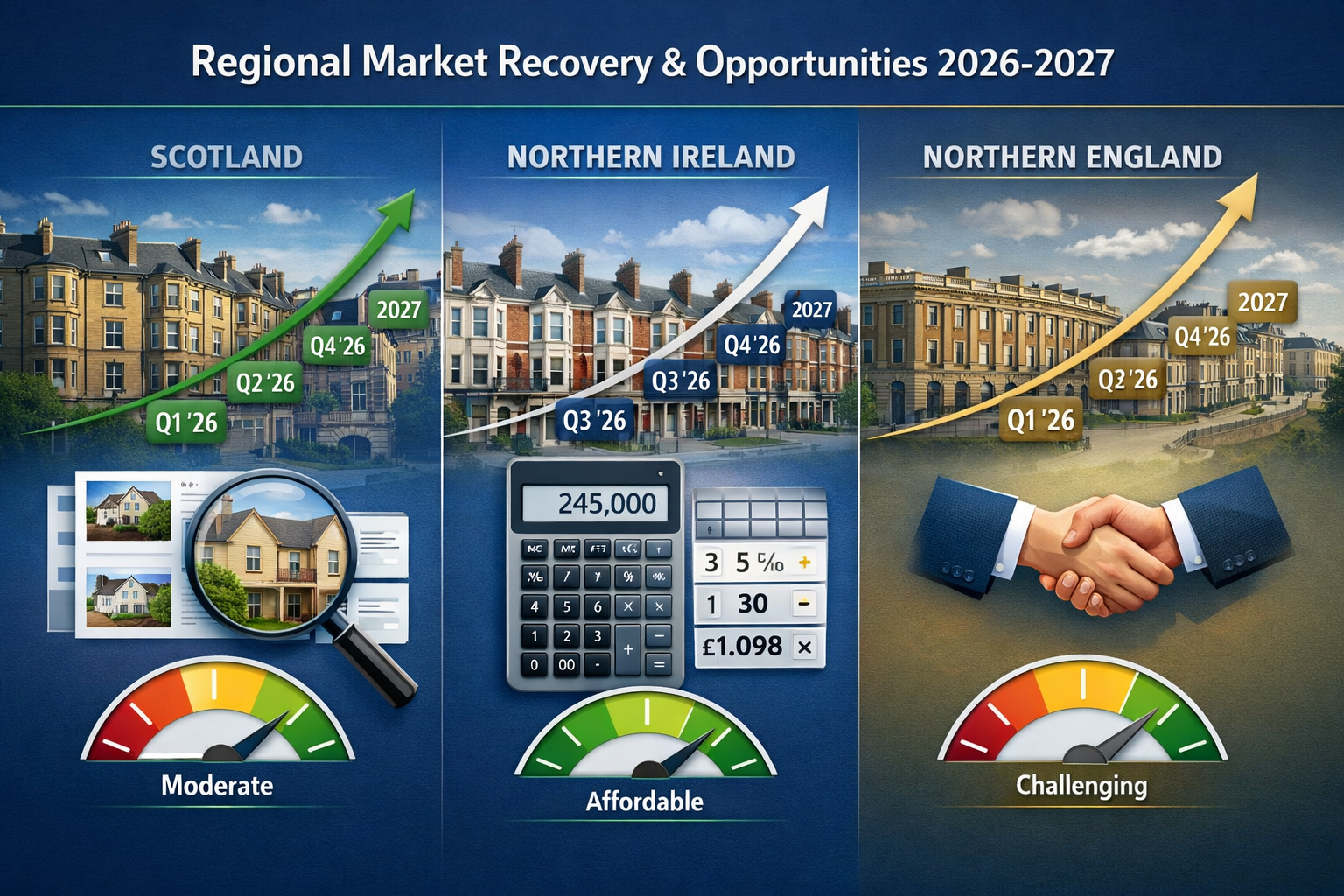
Examining specific scenarios illustrates how regional strategies apply in practice for Valuation Surveys in the 2026 Market Recovery: Regional Strategies for Scotland, Northern Ireland, and Northern England Growth.
Case Study 1: Edinburgh Tenement Valuation
Property: Two-bedroom, first-floor tenement flat in Edinburgh's Marchmont area
Client requirement: Valuation for purchase at £285,000
Regional strategy applied:
- Researched recent Marchmont sales, identifying four comparables ranging from £270,000-£295,000
- Assessed common repairs status, confirming recent roof replacement reducing near-term maintenance liability
- Evaluated factoring arrangements, noting well-managed building with reasonable annual charges
- Considered proximity to University of Edinburgh, recognizing strong rental demand supporting value
- Reviewed Home Report provided by seller, verifying accuracy of stated condition
- Applied Edinburgh city center premium compared to suburban locations
Valuation conclusion: £282,000, slightly below asking price due to minor condition issues requiring attention
Value-add: Identified that installing gas central heating (currently electric storage heaters) would likely add £8,000-£10,000 to value while improving energy efficiency
Case Study 2: Belfast New-Build Development
Property: Three-bedroom semi-detached house in new development, East Belfast
Client requirement: Investment purchase valuation at £195,000
Regional strategy applied:
- Analyzed both new-build and existing property comparables to establish appropriate value range
- Assessed developer reputation and build quality through site inspection and warranty review
- Evaluated estate maturity, noting development 60% complete with good sales velocity
- Calculated rental yield potential at £950/month, representing 5.8% gross yield
- Considered Help to Buy scheme impact on achievable price
- Assessed local employment market, noting proximity to major employers and transport links
Valuation conclusion: £192,000, reflecting slight new-build premium offset by early-stage estate discount
Value-add: Advised client that value likely to increase 3-5% once estate fully completes and matures, with strong rental demand from young professionals
Case Study 3: Manchester Buy-to-Let Portfolio
Property: Five Victorian terraced houses in Fallowfield, Manchester
Client requirement: Portfolio valuation for refinancing
Regional strategy applied:
- Conducted individual valuations recognizing each property's unique condition and features
- Assessed rental income verification, confirming current tenancies and market rent levels
- Evaluated area demographics, noting strong student demand from nearby University of Manchester
- Considered portfolio effect, applying modest discount for bulk sale scenario
- Analyzed local rental market trends and void period expectations
- Reviewed compliance with rental property regulations and required improvements
Valuation conclusion: Individual valuations totaling £1,125,000; portfolio valuation £1,090,000 (3% discount)
Value-add: Identified that improving energy efficiency to EPC rating C would support £50-75/month rent increases per property, enhancing investment returns
Conclusion: Positioning for Regional Growth Opportunities
The 2026 market recovery presents exceptional opportunities for surveyors who recognize and capitalize on the regional dynamics reshaping the UK property landscape. Valuation Surveys in the 2026 Market Recovery: Regional Strategies for Scotland, Northern Ireland, and Northern England Growth require sophisticated understanding of local markets, economic fundamentals, and the structural factors driving northern outperformance.
The data is unambiguous: Scotland, Northern Ireland, and Northern England are leading the national recovery, supported by superior affordability, improving economic conditions, and infrastructure investment. With Northern Ireland experiencing 5.8% price growth and national sentiment reaching its most optimistic levels since December 2024, the trajectory is clearly positive[1][4].
However, success requires more than simply recognizing these trends. Professional surveyors must develop deep regional expertise, understand micro-market dynamics, employ advanced valuation methodologies, and communicate value effectively to clients. The surveyors who thrive in this environment will be those who invest in continuous learning, build strong local networks, and position themselves as regional specialists rather than generalists.
Actionable Next Steps
For Surveyors:
-
🎯 Define your geographic focus: Select specific regions or cities where you'll develop deep expertise rather than attempting to cover all northern markets superficially
-
📊 Build comprehensive comparable databases: Systematically track all transactions in your target areas, creating proprietary market intelligence that enhances valuation accuracy
-
🤝 Develop strategic partnerships: Establish relationships with estate agents, mortgage brokers, and solicitors active in your target regions to create referral pipelines
-
📚 Invest in ongoing education: Commit to regular market research, attend regional property events, and pursue relevant professional development
-
💻 Enhance digital presence: Optimize your website and online profiles for regional search terms, publish market insights, and demonstrate local expertise
-
🔧 Adopt technology tools: Integrate drone surveys, digital reporting, and data analytics to deliver superior service quality
-
📈 Monitor leading indicators: Track buyer enquiries, agreed sales, and sentiment indicators to anticipate market shifts before they fully materialize
For Property Professionals:
-
🏠 Recognize regional divergence: Understand that national market statistics mask significant regional variation requiring localized analysis
-
💡 Leverage affordability advantages: Position northern properties to buyers and investors seeking better value and stronger yields than southern markets offer
-
🚀 Anticipate infrastructure impacts: Monitor major projects and incorporate connectivity improvements into property marketing and valuation
-
📱 Communicate market context: Help clients understand the broader recovery trends supporting regional markets
-
🎓 Engage qualified surveyors: Work with chartered surveyors who demonstrate genuine regional expertise and market knowledge
The 2026 market recovery is not a uniform national phenomenon—it's a story of regional rebalancing that rewards those who understand and adapt to new geographic dynamics. Scotland, Northern Ireland, and Northern England are writing the success story of this recovery, and surveyors who position themselves strategically in these markets will find abundant opportunities for professional and business growth.
By combining rigorous methodology, local expertise, technological capability, and client-focused service delivery, surveyors can establish themselves as essential partners in navigating these dynamic regional markets. The foundation is strong, the trajectory is positive, and the opportunity is substantial for those prepared to seize it.
References
[1] Uk Resi Survey Jan 2026 Report Shows Early Signs Market Recovery Despite Caution – https://www.rics.org/news-insights/uk-resi-survey-jan-2026-report-shows-early-signs-market-recovery-despite-caution
[2] Uk Housing Market 2026 Renewed Momentum Strengthening Demand And Signs Of Lasting Stability – https://bhwconveyancing.com/advice/uk-housing-market-2026-renewed-momentum-strengthening-demand-and-signs-of-lasting-stability/
[3] Green Shoots Emerge As Rics Signals Tentative Housing Market Recovery – https://bebeez.eu/2026/02/12/green-shoots-emerge-as-rics-signals-tentative-housing-market-recovery/
[4] House Prices – https://moneyweek.com/investments/house-prices/house-prices
[5] Valuing Northern England Properties In 2026 Surveyor Tactics For Outpacing Southern Affordability Pressures – https://nottinghillsurveyors.com/blog/valuing-northern-england-properties-in-2026-surveyor-tactics-for-outpacing-southern-affordability-pressures
