
The UK housing market stands on the brink of its most significant transformation in decades. As Housing Secretary Steve Reed declared, the government has announced "the biggest shake-up to the home buying system in this country's history" [1]. At the heart of these sweeping changes lies a fundamental shift that will reshape the surveying profession: mandatory upfront property condition assessments. The RICS Homebuying Reforms 2026: Transforming Building Survey Timing and Protocols for Surveyors represents a pivotal moment for chartered surveyors, demanding new skills, digital capabilities, and strategic repositioning as the industry prepares for an unprecedented surge in demand.
Key Takeaways
- 🏠 Upfront surveys become mandatory – Property condition assessments must be completed before listings go online, shifting surveys to the earliest stage of transactions
- ⏱️ Four-week faster transactions – Reforms aim to accelerate the homebuying process by approximately one month while reducing failed sales
- 💷 £1.5 billion economic impact – Failed sales currently cost the UK economy £1.5 billion annually; reforms target halving this figure [1]
- 📱 Digital transformation required – Surveyors must adopt new technology platforms and standardized reporting formats to meet upfront information pack requirements
- 🎓 24-month implementation period – RICS has called for sufficient time to develop standards, build capacity, and train professionals before full rollout [2]
Understanding the RICS Homebuying Reforms 2026: Core Changes for Surveyors
The proposed reforms fundamentally reimagine when and how building surveys occur in the property transaction timeline. Under the current system, buyers typically commission surveys after making an offer, creating a costly and stressful period where discoveries of defects can lead to renegotiation or transaction collapse.
The Upfront Information Pack Mandate
Central to the RICS Homebuying Reforms 2026: Transforming Building Survey Timing and Protocols for Surveyors is the mandatory upfront information pack. Before a property can be listed online, sellers must provide:
- Title information and ownership documentation
- Leasehold costs and service charge details (where applicable)
- Property condition assessment conducted by qualified professionals
- Chain status transparency
- Flood risk and environmental assessments
This represents a seismic shift from reactive to proactive surveying. Rather than waiting for buyer-initiated instructions, surveyors will increasingly work with sellers and estate agents at the pre-marketing stage.
Economic Drivers Behind the Reforms
The government's motivation is clear: the current homebuying process is "chaotic" and acts as a barrier to home ownership [1]. Failed sales drain resources, damage consumer confidence, and create unnecessary economic friction. By requiring comprehensive property information upfront, the reforms aim to:
| Current System | Reformed System (2026) |
|---|---|
| Surveys commissioned post-offer | Surveys completed pre-listing |
| Average transaction: 20+ weeks | Target reduction: 4 weeks faster |
| Failed sales cost: £1.5bn annually | Projected savings: £750m+ annually |
| Limited transparency | Full disclosure before viewings |
RICS CEO Justin Young welcomed the proposals, acknowledging that the home buying process is "too often stressful, costly, and brings uncertainty to buyers and sellers" [1]. The organization emphasizes that embedding transparency and professionalism throughout the transaction is essential for market confidence.
For surveyors, understanding what a chartered surveyor does becomes even more critical as professional standards evolve to meet these new requirements.
How Building Survey Timing Changes Under RICS Homebuying Reforms 2026
The temporal shift in survey commissioning represents perhaps the most profound operational change for practicing surveyors. This section explores the practical implications of moving property condition assessments to the pre-marketing phase.
From Buyer-Driven to Seller-Initiated Surveys
Traditionally, building surveys have been buyer-commissioned services, typically ordered after an offer has been accepted. This created a natural market dynamic where surveyors marketed primarily to prospective purchasers.
The RICS Homebuying Reforms 2026: Transforming Building Survey Timing and Protocols for Surveyors inverts this model:
Traditional Timeline:
- Property listed → 2. Viewings → 3. Offer made → 4. Survey commissioned → 5. Report received → 6. Negotiations/withdrawal
Reformed Timeline:
- Survey commissioned by seller → 2. Property condition pack prepared → 3. Property listed with full disclosure → 4. Informed viewings → 5. Offer based on known condition → 6. Faster completion
This fundamental reordering creates several immediate implications:
📊 Demand Surge and Capacity Planning
Every property entering the market will require a condition assessment before listing. For context, approximately 1.2 million residential property transactions occur annually in the UK. The upfront survey mandate will create sustained, predictable demand rather than the current reactive, offer-dependent model.
RICS has specifically called for a minimum 24-month implementation period to allow the profession to build sufficient capacity, develop standardized protocols, and ensure quality doesn't suffer amid surging volume [2].
🤝 New Client Relationships
Surveyors will increasingly engage with:
- Estate agents as referral partners for pre-listing assessments
- Sellers as primary clients (rather than buyers)
- Conveyancers requiring standardized data formats for information packs
- Digital platforms aggregating and distributing survey reports
Understanding what surveyors check during inspections becomes standardized across the industry to ensure consistency in upfront information packs.
Survey Level Considerations Under New Protocols
The reforms raise important questions about which survey level becomes the standard for upfront assessments. Currently, buyers choose between:
- Level 1 (Condition Report) – Basic overview for newer, conventional properties
- Level 2 (HomeBuyer Report) – Standard survey for properties in reasonable condition
- Level 3 (Building Survey) – Comprehensive assessment for older, altered, or complex properties
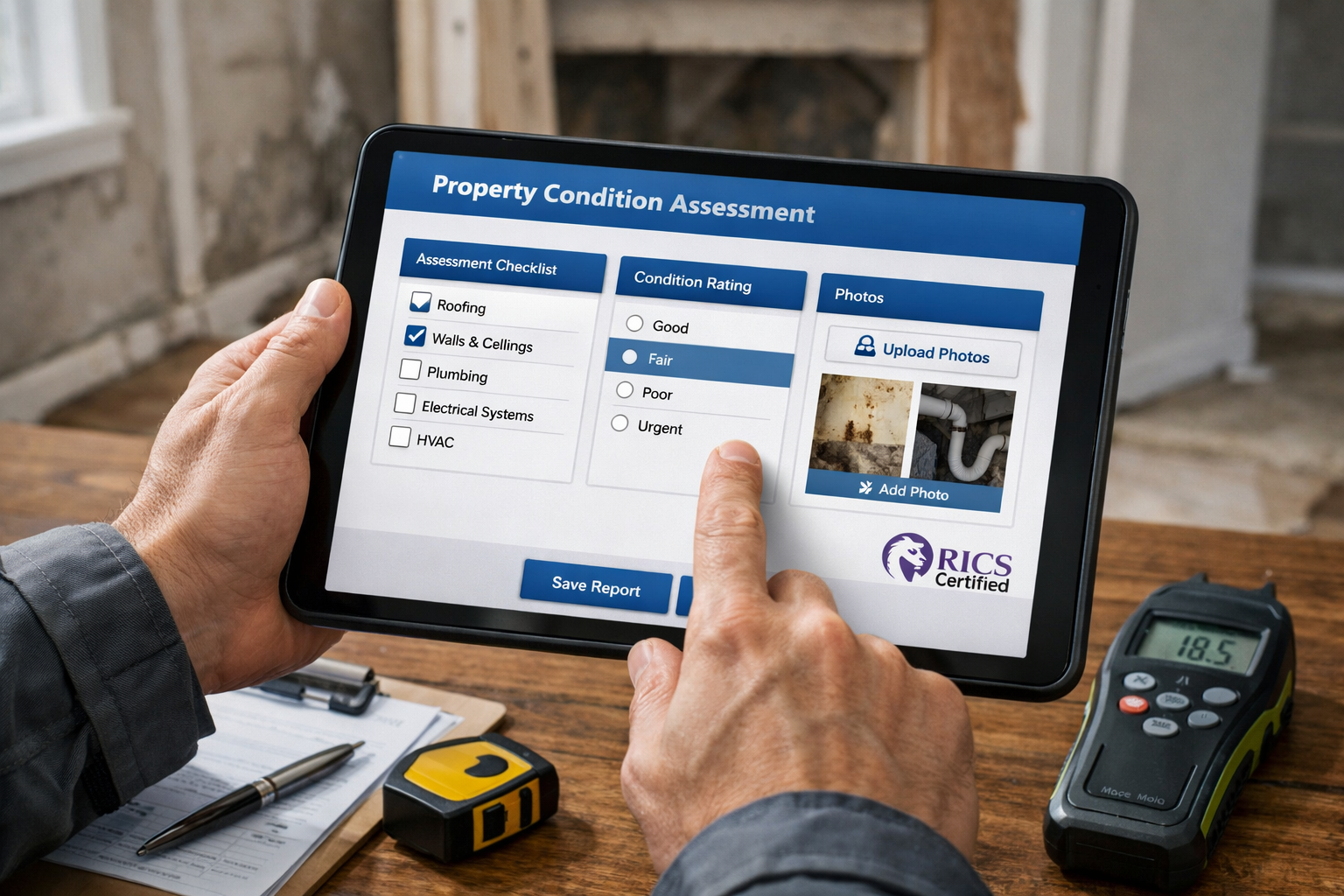
The upfront information pack requirement suggests a baseline Level 2 assessment as the likely standard, with Level 3 surveys reserved for properties with known complexities. This standardization aligns with RICS's consultation on updating the Home Survey standard, launched in August 2025, which aims to ensure "consistency and clarity in home surveys across the UK" while adapting to "market developments and technological changes" [4].
For buyers of older or non-standard properties, the question "is a Level 3 survey worth it" may shift from an optional consideration to a mandatory requirement for certain property types.
RICS Pathways for Surveyor Readiness: Training and Digital Transformation
Preparing the surveying profession for the RICS Homebuying Reforms 2026: Transforming Building Survey Timing and Protocols for Surveyors requires coordinated action across professional development, technological adoption, and standardization.
Professional Development and Continuing Education
RICS has emphasized the critical importance of qualified professionals in delivering the reforms effectively [3]. The organization's response to government consultation highlighted that proportionate reform must "deliver genuine consumer benefit without adding cost or complexity."
Essential Training Areas for Surveyors
Technical Competencies:
- ✅ Updated inspection protocols aligned with upfront information pack requirements
- ✅ Standardized reporting formats for digital platform integration
- ✅ Risk assessment frameworks for pre-marketing disclosures
- ✅ Legal implications of seller-commissioned surveys and liability considerations
Business Development Skills:
- ✅ Marketing to estate agents and property vendors
- ✅ Volume workflow management and quality assurance
- ✅ Pricing strategies for pre-listing assessment services
- ✅ Client communication for seller-side engagements
RICS professional development programs will need to rapidly scale to prepare thousands of surveyors for these new working methods. The comprehensive guide to building surveyors in London illustrates the current service landscape that will undergo transformation.
Digital Tools and Technology Adoption
The upfront information pack model depends on seamless digital integration across multiple platforms and stakeholders. Surveyors must adopt technology that enables:
📱 Mobile Inspection Applications
Modern survey software allowing:
- Real-time data capture during site visits
- Photographic evidence with automatic geolocation
- Standardized condition rating systems
- Immediate report generation capabilities
☁️ Cloud-Based Reporting Platforms
Systems that facilitate:
- Instant report delivery to information pack aggregators
- Version control and update management
- Secure access for authorized parties (sellers, agents, buyers, conveyancers)
- Integration with property listing portals
🔄 Standardized Data Formats
The reforms necessitate industry-wide agreement on:
- Common terminology and condition descriptors
- Consistent risk categorization (Category 1, 2, 3 defects)
- Machine-readable data structures for platform compatibility
- Interoperability with conveyancing case management systems
RICS's consultation on the updated Home Survey standard specifically addresses these technological considerations, ensuring that standards "adapt to market developments and technological changes" [4].
The Public Register and Performance Transparency
A transformative element of the reforms is the creation of a public register of conveyancers and estate agents displaying professional specialisms, performance benchmarks, and supported processes [1]. While initially focused on conveyancers and agents, surveyors should anticipate similar transparency requirements.
This register will enable consumers to:
- Compare professional qualifications and specializations
- Review performance metrics and completion rates
- Ensure fair pricing through market comparison
- Select professionals based on verified credentials
For surveyors, this means:
- 🎯 Specialization becomes valuable – Expertise in specific property types or survey levels creates competitive differentiation
- 📊 Performance tracking matters – Report turnaround times, client satisfaction, and accuracy metrics may become public
- 💼 Professional credentials highlighted – RICS membership and continuing professional development become visible quality markers
Understanding the differences between Level 2 and Level 3 surveys and clearly communicating these distinctions to clients becomes increasingly important in a transparent marketplace.
Implementation Timeline and RICS Guidance
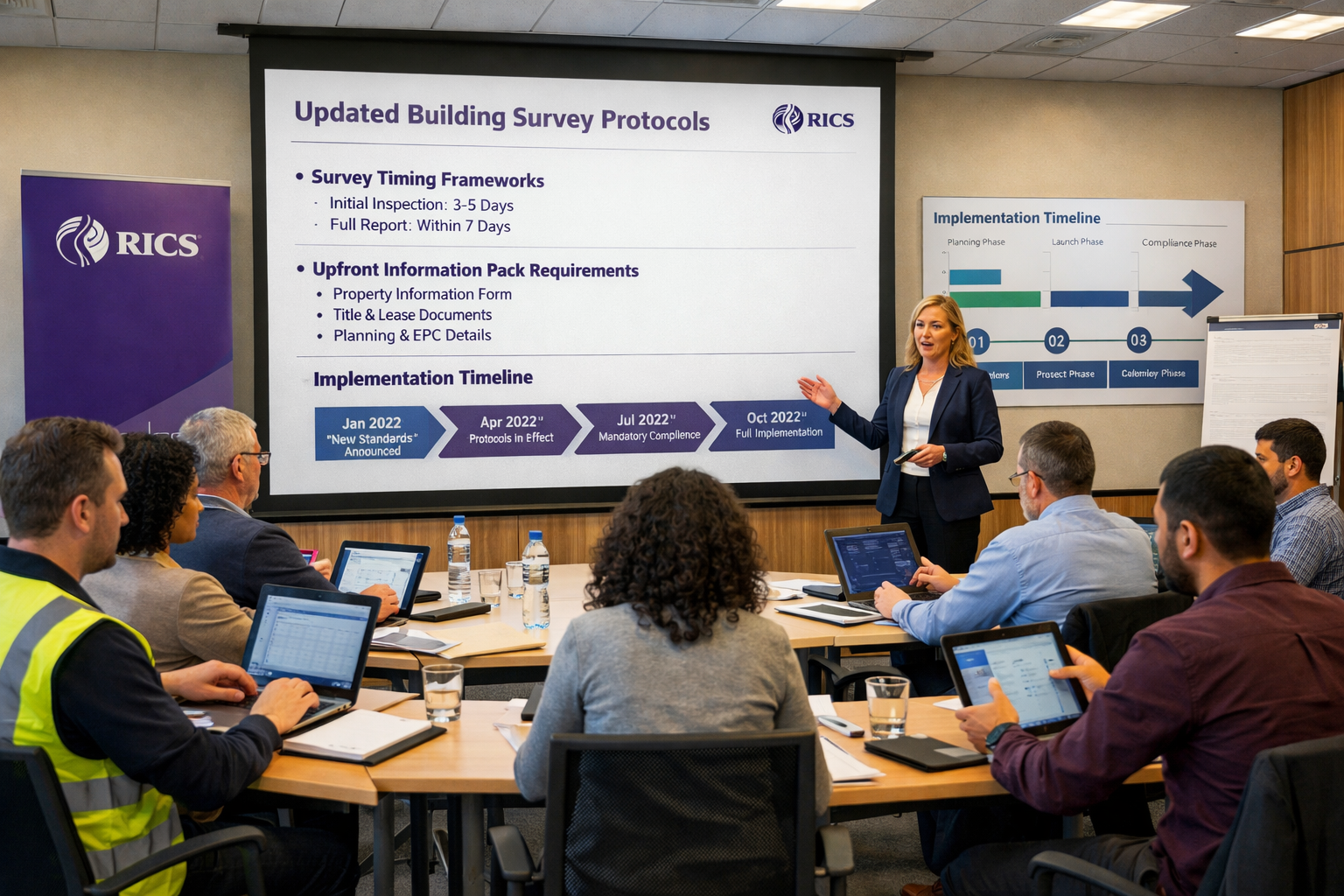
RICS has been explicit about the need for adequate preparation time. The organization called for a minimum 24-month implementation period to ensure:
Year 1 (2026-2027):
- Development of detailed standards and protocols
- Technology platform testing and integration
- Pilot programs in selected regions
- Professional training curriculum rollout
Year 2 (2027-2028):
- Scaled professional development programs
- Industry-wide technology adoption
- Capacity building across the profession
- Phased regulatory implementation
This measured approach reflects RICS's warning against "piecemeal change" that could undermine confidence in the housing market, particularly given current pressures on affordability and access [3].
Market Implications and Strategic Positioning for Survey Practices
The RICS Homebuying Reforms 2026: Transforming Building Survey Timing and Protocols for Surveyors creates both challenges and opportunities for surveying businesses of all sizes.
Demand Forecasting and Business Planning
The shift to mandatory upfront surveys fundamentally changes demand patterns:
Predictable Volume:
Unlike the current buyer-initiated model where survey demand fluctuates with offer acceptance rates, upfront requirements create steady demand aligned with property listing activity.
Reduced Failed-Sale Impact:
Currently, approximately 30% of agreed property sales fall through, often after surveys reveal unexpected issues. While this creates repeat business, it's economically inefficient. The reforms aim to halve this rate [1], meaning:
- More transactions complete successfully
- Fewer re-surveys of the same property
- Greater market stability and consumer confidence
Seasonal Considerations:
Property listing patterns will drive survey demand more directly, with traditional spring and autumn peaks potentially intensifying.
Pricing Models and Fee Structures
The client shift from buyer to seller creates pricing dynamics requiring careful consideration:
Seller Sensitivity:
Sellers facing upfront costs for surveys, legal packs, and other pre-marketing expenses may be more price-sensitive than buyers who have already committed emotionally to a purchase.
Volume Discounts:
Estate agencies managing multiple listings may negotiate bulk pricing arrangements, creating opportunities for consistent workflow but potentially compressing margins.
Value-Added Services:
Surveyors can differentiate through:
- Expedited turnaround for urgent listings
- Enhanced digital presentation for marketing purposes
- Pre-inspection consultations to identify likely issues
- Post-survey remediation guidance
Understanding how long a Level 2 survey takes becomes critical for managing client expectations in the faster-paced reformed system.
Specialization Opportunities
The transparent professional register and standardized protocols create advantages for specialized expertise:
Property Type Specialists:
- Period properties and heritage buildings
- New build properties requiring snagging assessments
- Non-standard construction and materials
- Leasehold flats and complex tenure arrangements
Geographic Expertise:
Surveyors with deep knowledge of local building characteristics, common defects, and regional construction methods gain competitive advantage in their areas.
Complementary Services:
Practices offering integrated services benefit from cross-referral opportunities:
- RICS home surveys combined with valuation services
- Environmental assessments and flood risk analysis
- Energy performance certification
- Remediation project management
Challenges and Considerations for the Surveying Profession
While the reforms present significant opportunities, surveyors must navigate several challenges during the transition period.
Professional Liability and Insurance
Seller-commissioned surveys create different liability considerations than buyer-commissioned work:
Duty of Care Questions:
- Who is the primary client: the seller who commissions, or the buyer who relies on the report?
- How does liability extend when reports are shared through information packs to multiple prospective buyers?
- What are the implications for professional indemnity insurance coverage and premiums?
Report Longevity:
Unlike current practice where surveys are typically conducted shortly before purchase, upfront reports may remain valid for several months if properties don't sell quickly. Surveyors must consider:
- Time-limited validity periods for condition assessments
- Clauses addressing changes in property condition since inspection
- Update inspection protocols for properties remaining unsold beyond specific timeframes
Quality Assurance Under Volume Pressure
The surge in mandatory surveys creates tension between volume throughput and inspection quality. RICS's emphasis on maintaining professional standards while building capacity reflects this concern [2].
Mitigation Strategies:
- ✔️ Structured quality review processes for all reports
- ✔️ Technology-assisted consistency checks
- ✔️ Peer review systems for complex properties
- ✔️ Clear scope-of-service definitions preventing over-commitment
Competitive Landscape Changes
The transparent register and standardized protocols may intensify price competition while simultaneously rewarding quality and specialization.
Potential Market Dynamics:
- Large surveying firms may pursue volume strategies with competitive pricing
- Independent practitioners can differentiate through specialized expertise and personalized service
- Technology platforms may emerge offering automated basic assessments, pushing professionals toward complex property work
- Estate agency in-house surveying teams may expand, creating vertical integration
Understanding the various types of surveyors and clearly positioning within the professional landscape becomes increasingly important.
Conclusion: Preparing for Transformation in 2026 and Beyond
The RICS Homebuying Reforms 2026: Transforming Building Survey Timing and Protocols for Surveyors represents the most significant change to residential surveying practice in generations. By shifting property condition assessments from the post-offer reactive phase to the pre-listing proactive stage, the reforms will fundamentally reshape surveyor-client relationships, demand patterns, and professional protocols.
The path forward requires:
🎯 Immediate Actions for Surveyors:
- Engage with RICS consultation processes and professional development offerings
- Assess current technology capabilities and identify digital transformation needs
- Develop relationships with estate agents and property vendors as future client sources
- Review professional indemnity insurance coverage for seller-commissioned work
- Begin training on standardized reporting formats and upfront information pack requirements
📈 Strategic Positioning:
- Identify specialization opportunities aligned with local market characteristics
- Invest in technology platforms enabling efficient volume workflow management
- Develop marketing materials targeting sellers and estate agencies
- Build quality assurance processes that maintain standards amid increased demand
- Consider complementary service offerings that add value to upfront information packs
⏱️ Timeline Awareness:
With RICS calling for a 24-month implementation period [2], surveyors have a defined window to prepare. However, early adopters who develop capabilities ahead of mandatory rollout will gain competitive advantage as pilot programs commence.
The government's stated goal of making homebuying "a dream, not a nightmare" [1] depends substantially on the surveying profession's readiness to deliver consistent, high-quality property condition assessments at unprecedented scale. For qualified professionals who embrace the transformation, invest in necessary capabilities, and maintain unwavering commitment to professional standards, the RICS Homebuying Reforms 2026 represent not just a challenge, but a generational opportunity to elevate the profession's role in the UK housing market.
The reforms acknowledge what RICS has long advocated: that transparency, professionalism, and upfront information create better outcomes for all market participants. As the implementation period unfolds, surveyors who align with these principles while building the technical and business capabilities the new system demands will be best positioned to thrive in the transformed homebuying landscape of 2026 and beyond.
References
[1] Government Announces Biggest Shake Home Buying Process Countrys History – https://todaysconveyancer.co.uk/government-announces-biggest-shake-home-buying-process-countrys-history/
[2] Home Buying And Selling Reform Hub – https://www.rics.org/news-insights/current-topics-campaigns/home-buying-and-selling-reform-hub
[3] Uk Influence And Advocacy Update January 2026 – https://www.rics.org/news-insights/uk-influence-and-advocacy-update-january-2026
[4] Rics Launches Consultation Updated Home Survey Standard – https://www.rics.org/news-insights/rics-launches-consultation-updated-home-survey-standard
