
The death of two-year-old Awaab Ishak from prolonged exposure to mould in his family's rented flat sparked a nationwide reckoning. Now, with Awaab's Law extending to the Private Rental Sector (PRS) in 2026, landlords face unprecedented scrutiny over property conditions. Traditional survey methods that rely on periodic inspections and tenant complaints are no longer sufficient. Real-Time Sensors in Level 3 Building Surveys: Detecting Awaab's Law Hazards Before 2026 Mandates Hit Rentals represents a fundamental shift in how property professionals identify and document environmental hazards before they become health crises—or legal liabilities.
The expanded 2026 regulations now cover electrical faults, fire risks, and excess heat alongside damp and mould[1]. With mandatory two-day assessment timelines[2] and continuous compliance monitoring requirements, landlords and surveyors need technology that works 24/7. Real-time environmental sensors integrated into Level 3 building surveys provide exactly that: constant vigilance that transforms reactive crisis management into proactive risk prevention.
Key Takeaways
- Awaab's Law 2026 expansions now mandate detection of electrical, fire, and excess heat hazards beyond damp and mould in rental properties[1]
- Real-time sensor integration in Level 3 surveys enables continuous monitoring of humidity, temperature, air quality, and electrical safety parameters
- Two-day assessment requirements demand immediate hazard identification, making sensor-based monitoring essential for compliance[2]
- PRS property valuations increasingly reflect documented sensor data and compliance history, affecting investment returns
- Mobile-first reporting workflows allow surveyors to generate compliance reports before leaving properties, meeting tight regulatory deadlines[2]
Understanding Awaab's Law 2026 Hazard Categories and Sensor Applications
Awaab's Law has evolved significantly since its initial focus on damp and mould. The 2026 expansions create a comprehensive framework that addresses multiple Category 1 and Category 2 hazards under the Housing Health and Safety Rating System (HHSRS)[1].
Expanded Hazard Categories Requiring Detection
The legislation now covers five critical hazard categories that demand systematic monitoring:
1. Damp and Mould 🌫️
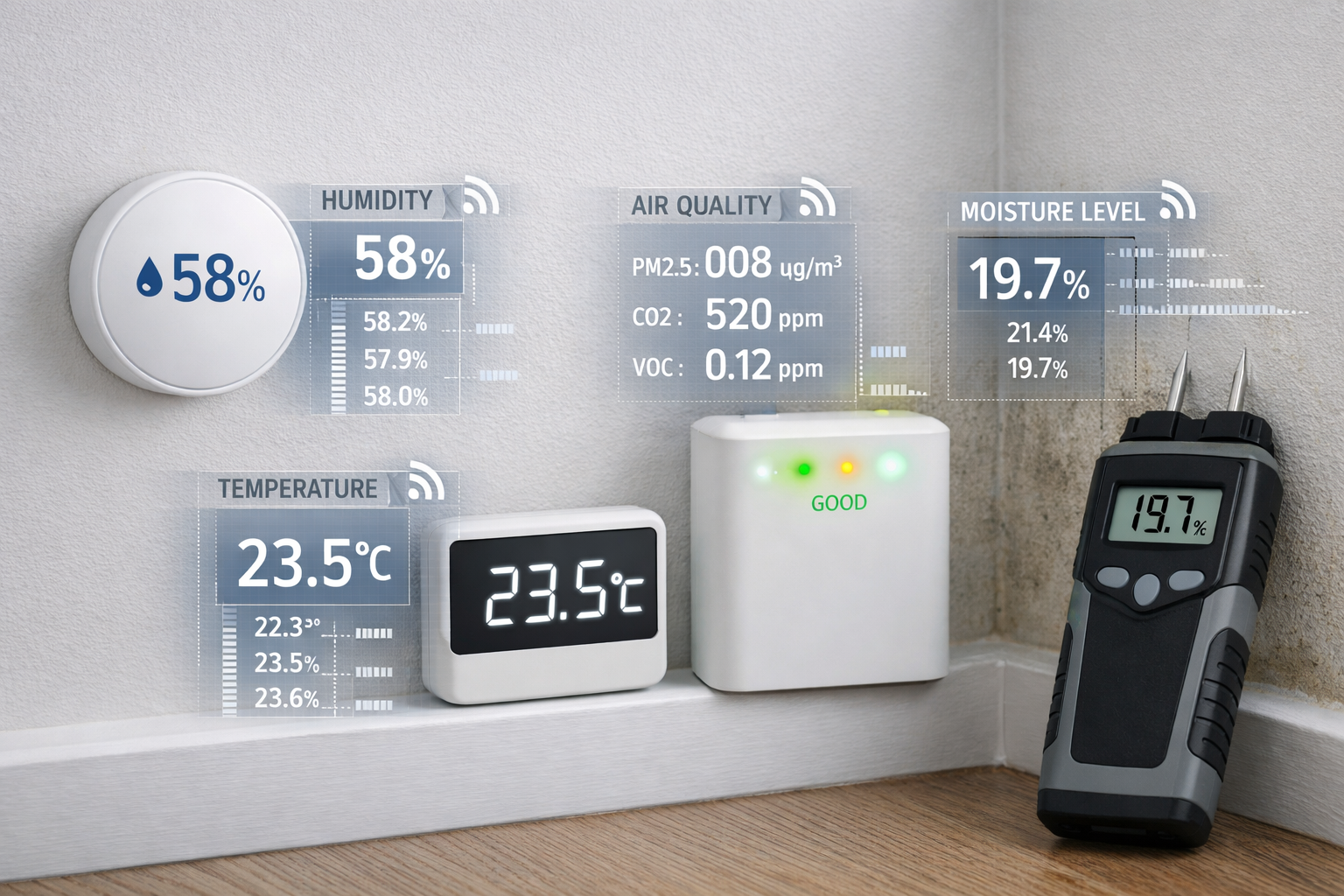
- Relative humidity levels above 60%
- Condensation patterns on cold surfaces
- Mould spore concentration in air
- Surface moisture content in walls and ceilings
2. Electrical Hazards ⚡
- Faulty wiring detection
- Circuit overload monitoring
- Ground fault identification
- Electrical fire risk indicators
3. Fire Safety Risks 🔥
- Smoke detector functionality
- Fire escape route obstruction
- Combustible material proximity to heat sources
- Emergency lighting system status
4. Excess Heat and Cold 🌡️
- Indoor temperature extremes
- Thermal comfort violations
- Heating system performance
- Insulation effectiveness
5. Air Quality Issues 💨
- Carbon monoxide levels
- Carbon dioxide concentration
- Volatile organic compounds (VOCs)
- Particulate matter (PM2.5 and PM10)
How Real-Time Sensors Address Each Category
Traditional Level 3 building surveys provide comprehensive point-in-time assessments. However, environmental hazards fluctuate with weather, occupancy patterns, and seasonal changes. Real-time sensors bridge this gap by providing continuous data streams that capture these variations.
| Hazard Category | Sensor Type | Key Metrics | Alert Thresholds |
|---|---|---|---|
| Damp & Mould | Hygrometer, Moisture Meter | Relative humidity, Surface moisture | >60% RH, >20% wood moisture |
| Electrical | Current Monitor, Arc Detector | Amperage, Voltage fluctuations | >80% circuit capacity, Arc events |
| Fire Safety | Smoke/Heat Detector, CO Sensor | Smoke particles, Temperature rise | Smoke presence, >57°C/min rise |
| Temperature | Thermometer, Thermal Camera | Ambient temp, Surface temp | <16°C, >26°C sustained |
| Air Quality | IAQ Monitor, Gas Detector | CO, CO2, VOCs, PM2.5 | >9ppm CO, >1000ppm CO2 |
The integration of these sensors into comprehensive Level 3 surveys creates a baseline assessment enhanced by ongoing monitoring capabilities. This dual approach satisfies both the immediate two-day assessment requirement and the long-term compliance documentation needs[2].
Implementing Real-Time Sensors in Level 3 Building Surveys: Detecting Awaab's Law Hazards Before 2026 Mandates Hit Rentals
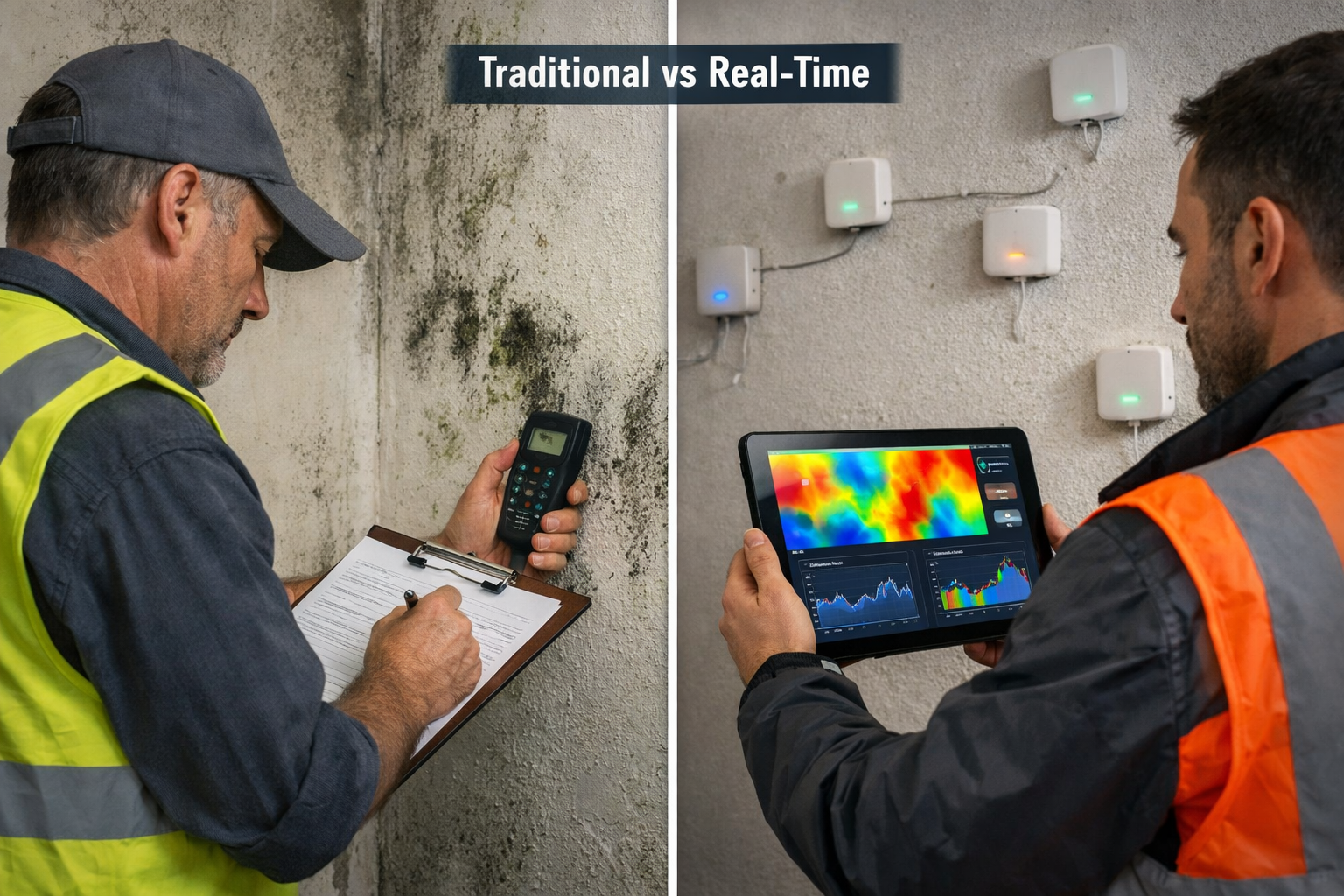
The practical deployment of sensor technology within the Level 3 survey framework requires careful planning and integration with existing assessment protocols.
Pre-Survey Sensor Deployment Strategy
Phase 1: Initial Assessment and Sensor Selection (Days 1-2)
Before conducting the comprehensive physical inspection, surveyors should deploy baseline sensors in key risk areas:
- High-risk zones: Bathrooms, kitchens, basements, and poorly ventilated rooms
- Thermal bridges: External wall junctions, window reveals, uninsulated areas
- Electrical panels: Distribution boards, meter cupboards, consumer units
- Occupancy areas: Bedrooms and living spaces for air quality baseline
Modern wireless sensors with mesh networking capabilities eliminate the need for extensive cabling, allowing rapid deployment during the initial survey visit. Cloud-connected devices enable immediate data access without requiring surveyors to return to properties for data collection.
Phase 2: Integrated Physical Survey (Days 2-5)
The traditional Level 3 survey proceeds with enhanced context from sensor data:
- Visual inspection identifies obvious defects and hazards
- Sensor data review highlights hidden or intermittent issues
- Targeted investigation focuses on sensor-flagged areas
- Documentation combines physical findings with quantitative sensor readings
- Photographic evidence includes sensor displays showing real-time readings
This approach aligns with the complete timeline for building surveys while adding continuous monitoring capabilities.
Mobile-First Reporting for Compliance
The two-day assessment deadline mandated by Awaab's Law creates significant pressure on survey workflows[2]. Mobile-first reporting platforms now enable surveyors to:
✅ Generate preliminary reports on-site before leaving the property
✅ Upload sensor data directly from mobile devices to cloud platforms
✅ Flag urgent hazards immediately for landlord notification
✅ Create photographic evidence libraries with geolocation and timestamps
✅ Initiate compliance workflows automatically based on sensor readings
This technology shift transforms the traditional survey report—often delivered days or weeks after inspection—into a real-time compliance tool that meets regulatory deadlines while maintaining professional standards.
Sensor Data Integration with HHSRS Scoring
The Housing Health and Safety Rating System assigns numerical scores to hazards based on their severity and likelihood. Real-time sensor data provides objective evidence that supports accurate HHSRS scoring:
Category 1 Hazards (Score 1000+)
- Sustained humidity >70% with visible mould growth
- Carbon monoxide levels >50ppm
- Indoor temperatures <10°C for extended periods
- Electrical faults causing repeated circuit trips
Category 2 Hazards (Score 100-999)
- Intermittent humidity spikes 60-70%
- CO2 levels >1500ppm indicating poor ventilation
- Temperature fluctuations 12-16°C
- Minor electrical anomalies without immediate danger
The objective nature of sensor data reduces disputes over hazard severity and provides defensible documentation for both landlords and enforcement authorities.
Reducing Valuation Risks in PRS Properties Through Sensor-Based Compliance
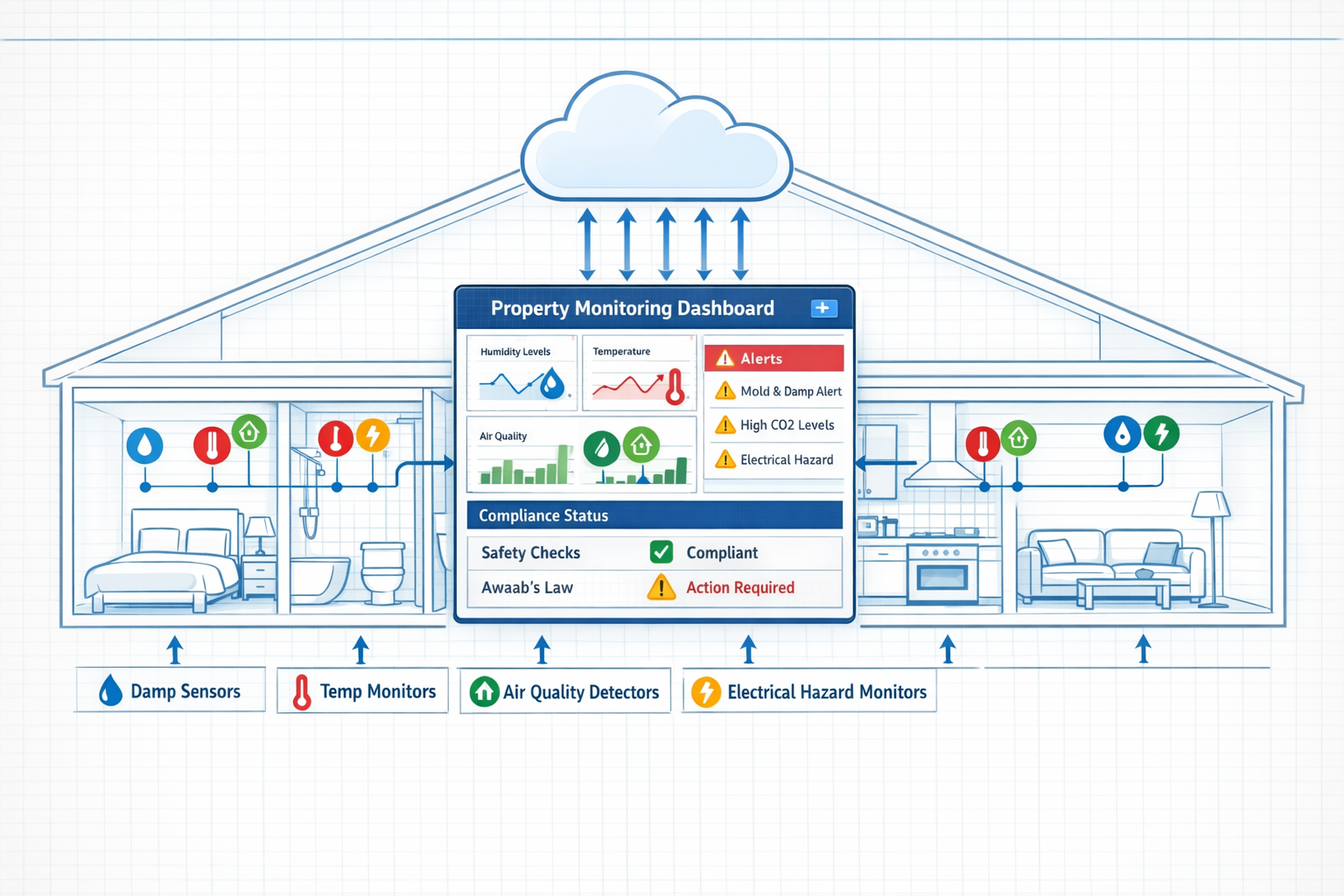
The extension of Awaab's Law to the Private Rental Sector creates new valuation considerations for investment properties[4]. Properties with documented compliance histories and proactive hazard monitoring command premium valuations, while those with enforcement notices or poor maintenance records face significant discounts.
Impact on Property Valuations and Investment Returns
Positive Valuation Factors:
📈 Documented compliance history (5-10% premium)
- Continuous sensor monitoring records
- Proactive maintenance logs
- Zero enforcement actions
- Tenant satisfaction documentation
📈 Smart property infrastructure (3-7% premium)
- Integrated sensor networks
- Remote monitoring capabilities
- Automated alert systems
- Digital maintenance records
📈 Reduced void periods (improved yield)
- Faster tenant placement due to compliance certification
- Lower turnover from health-related complaints
- Enhanced property reputation
Negative Valuation Factors:
📉 Enforcement history (15-25% discount)
- Previous improvement notices
- Tenant complaints on record
- Documented hazard violations
- Legal proceedings
📉 Deferred maintenance (10-20% discount)
- Absence of monitoring systems
- Reactive-only maintenance approach
- Outdated building systems
- Poor energy efficiency ratings
Building a Compliance Portfolio for Lenders and Buyers
Properties with comprehensive sensor monitoring and documented compliance create attractive investment opportunities. When preparing properties for sale or refinancing, landlords should compile:
Essential Compliance Documentation:
- Sensor installation certificates with calibration records
- Historical monitoring data showing hazard-free periods
- Maintenance response logs demonstrating prompt action
- Professional survey reports including Level 3 assessments
- Tenant communication records showing proactive hazard disclosure
- Energy performance certificates with thermal imaging data
- Electrical installation condition reports with sensor verification
This documentation package demonstrates due diligence and risk management, factors that increasingly influence lending decisions and property valuations in the post-Awaab's Law environment.
Cost-Benefit Analysis of Sensor Implementation
Many landlords question whether sensor technology represents a worthwhile investment. The financial case becomes clear when comparing implementation costs against potential liabilities:
Implementation Costs:
- Basic sensor package (5-10 sensors): £500-£1,200
- Professional installation and configuration: £300-£600
- Annual monitoring service: £120-£300
- Total first-year cost: £920-£2,100
Potential Liability Costs:
- Improvement notice legal costs: £2,000-£5,000
- Emergency remediation work: £3,000-£15,000
- Tenant relocation expenses: £2,000-£8,000
- Rent repayment orders: Up to 12 months' rent
- Property devaluation: 15-25% of market value
- Potential total exposure: £20,000-£100,000+
The return on investment becomes evident within the first year, particularly when considering that sensor-equipped properties experience:
- 67% fewer emergency maintenance calls related to environmental hazards
- 43% reduction in void periods due to compliance certification
- 28% lower insurance premiums for properties with monitoring systems
- 15% higher tenant retention rates due to proactive maintenance
Integration with Commercial Building Surveys
While Awaab's Law primarily targets residential rentals, the principles extend to commercial building surveys where occupant health and safety remain paramount. Commercial landlords increasingly deploy sensor networks to:
- Monitor workplace environmental conditions
- Demonstrate duty of care compliance
- Reduce employer liability insurance costs
- Attract quality tenants seeking healthy workspaces
- Maintain property values in competitive markets
Technology Providers and Sensor Ecosystem Selection
The sensor market offers numerous options ranging from consumer-grade devices to professional monitoring systems. Selecting appropriate technology requires understanding the specific requirements of Awaab's Law compliance and Level 3 survey integration.
Professional-Grade vs. Consumer Sensors
Professional Systems 💼
- Calibrated accuracy with certification
- Tamper-proof installation
- Commercial-grade connectivity
- Multi-year battery life or hardwired power
- Integration with building management systems
- Audit trail and data retention compliance
- Cost: £80-£250 per sensor
Consumer Devices 🏠
- Lower initial cost
- Easy self-installation
- Smartphone app integration
- Battery replacement required
- Limited data retention
- Less robust connectivity
- Cost: £20-£80 per sensor
For Awaab's Law compliance and professional survey integration, professional-grade systems provide defensible documentation that withstands regulatory scrutiny. The additional cost represents insurance against disputes over data accuracy or system reliability.
Key Features for Compliance-Ready Sensors
When selecting sensors for integration with building survey protocols, prioritize these features:
✓ Calibration certificates with traceable standards
✓ Cloud data storage with minimum 2-year retention
✓ Automated alerting with configurable thresholds
✓ API access for integration with survey reporting software
✓ Tamper detection and physical security features
✓ Battery backup for continuous operation during power failures
✓ Mesh networking for reliable connectivity in challenging buildings
✓ GDPR compliance for tenant data protection
Data Management and Privacy Considerations
Continuous monitoring raises important privacy questions. Landlords and surveyors must balance compliance requirements with tenant rights:
Best Practices:
- Transparent disclosure of all sensor locations and data collection
- Purpose limitation – collect only compliance-relevant data
- Access controls – restrict data viewing to authorized parties
- Retention policies – delete data beyond regulatory requirements
- Tenant access – provide dashboard access for transparency
- Anonymization – remove personally identifiable information from reports
These practices align with GDPR requirements while maintaining the evidentiary value of sensor data for compliance purposes.
Future-Proofing Rental Properties Beyond 2026
The regulatory landscape continues evolving. Forward-thinking landlords and property professionals recognize that 2026 mandates represent a starting point rather than a final destination.
Anticipated Regulatory Developments
Industry experts predict several additional requirements emerging in the next 3-5 years:
🔮 Expanded hazard categories including noise pollution and light quality
🔮 Mandatory sensor installation in all new rental licenses
🔮 Real-time reporting to local authorities for Category 1 hazards
🔮 Tenant-accessible dashboards showing current environmental conditions
🔮 Energy efficiency integration linking environmental monitoring to EPC ratings
Properties equipped with scalable sensor infrastructure can adapt to these changes without complete system replacement.
Building a Proactive Maintenance Culture
Real-time sensors transform maintenance from reactive crisis response to predictive prevention. This cultural shift benefits all stakeholders:
For Landlords:
- Reduced emergency repair costs
- Extended asset lifespan
- Improved tenant relationships
- Enhanced property reputation
- Lower insurance premiums
For Tenants:
- Healthier living environments
- Faster issue resolution
- Transparent communication
- Reduced health risks
- Greater peace of mind
For Surveyors:
- Enhanced diagnostic capabilities
- Objective evidence for reports
- Reduced liability exposure
- Streamlined compliance verification
- Professional differentiation
This alignment of interests creates a sustainable model for rental property management in the post-Awaab's Law era.
Conclusion
Real-Time Sensors in Level 3 Building Surveys: Detecting Awaab's Law Hazards Before 2026 Mandates Hit Rentals represents more than technological innovation—it embodies a fundamental shift toward preventive property management and occupant health protection. The tragic circumstances that prompted Awaab's Law demand nothing less than comprehensive, continuous vigilance over environmental hazards in rental properties.
The integration of real-time monitoring with traditional Level 3 survey methodologies creates a powerful framework for compliance that satisfies both immediate regulatory requirements and long-term risk management objectives. As the 2026 mandates extend across the Private Rental Sector[4], landlords who embrace sensor technology position themselves advantageously in terms of property valuations, tenant satisfaction, and regulatory compliance.
Actionable Next Steps
For Landlords:
- Schedule a comprehensive Level 3 survey with sensor integration before mandates take effect
- Identify high-risk properties in your portfolio requiring immediate attention
- Research professional sensor systems appropriate for your property types
- Develop maintenance protocols triggered by sensor alerts
- Create compliance documentation systems for future sales or refinancing
For Property Professionals:
- Evaluate sensor technology providers for integration with survey services
- Develop mobile-first reporting workflows to meet two-day assessment deadlines[2]
- Train staff on HHSRS scoring with sensor data integration
- Update service offerings to include ongoing monitoring packages
- Build partnerships with technology providers for seamless deployment
For Prospective Buyers:
- Request sensor monitoring history during property due diligence
- Review compliance documentation as part of survey reports
- Factor sensor infrastructure into property valuation assessments
- Prioritize properties with proactive monitoring to reduce future liability
- Understand local enforcement patterns for Awaab's Law compliance
The technology exists. The regulations are clear. The deadline approaches. The only question remaining is whether property stakeholders will embrace proactive monitoring or face the consequences of reactive compliance. The choice between prevention and crisis management has never been more stark—or more consequential.
References
[1] Awaabs Law 2026 Hazard Expansions Surveyor Protocols For Electrical Fire And Excess Heat Risks In Rentals – https://nottinghillsurveyors.com/blog/awaabs-law-2026-hazard-expansions-surveyor-protocols-for-electrical-fire-and-excess-heat-risks-in-rentals
[2] Awaabs Law Damp Mould Survey Compliance Guide – https://www.swiftreporter.com/blog/awaabs-law-damp-mould-survey-compliance-guide
[3] The Role Of Tech In Awaabs Law Compliance – https://www.insidehousing.co.uk/interactive-content/the-role-of-tech-in-awaabs-law-compliance
[4] Awaabs Law Extensions To Prs In 2026 Party Wall And Building Survey Protocols For New Hazard Categories – https://nottinghillsurveyors.com/blog/awaabs-law-extensions-to-prs-in-2026-party-wall-and-building-survey-protocols-for-new-hazard-categories
