
Only 81% of large-quantity hazardous waste generators received the compliance inspections they were legally required to have between 2020 and 2024 — a gap that a federal watchdog flagged in a damning April 2026 report [6]. For property owners, developers, and surveyors operating in coastal and disaster-prone areas, that statistic is a wake-up call. The regulatory landscape is tightening fast, and the cost of falling behind is rising even faster.
Navigating Stricter Environmental Regulations: Surveying for Compliance in 2026 is no longer a task reserved for large industrial operators. It now touches residential developers, commercial landlords, and individual property buyers — especially those near floodplains, coastlines, and brownfield sites. This guide breaks down the most critical new compliance requirements, explains what they mean on the ground, and outlines practical surveying strategies to stay ahead.
Key Takeaways 📌
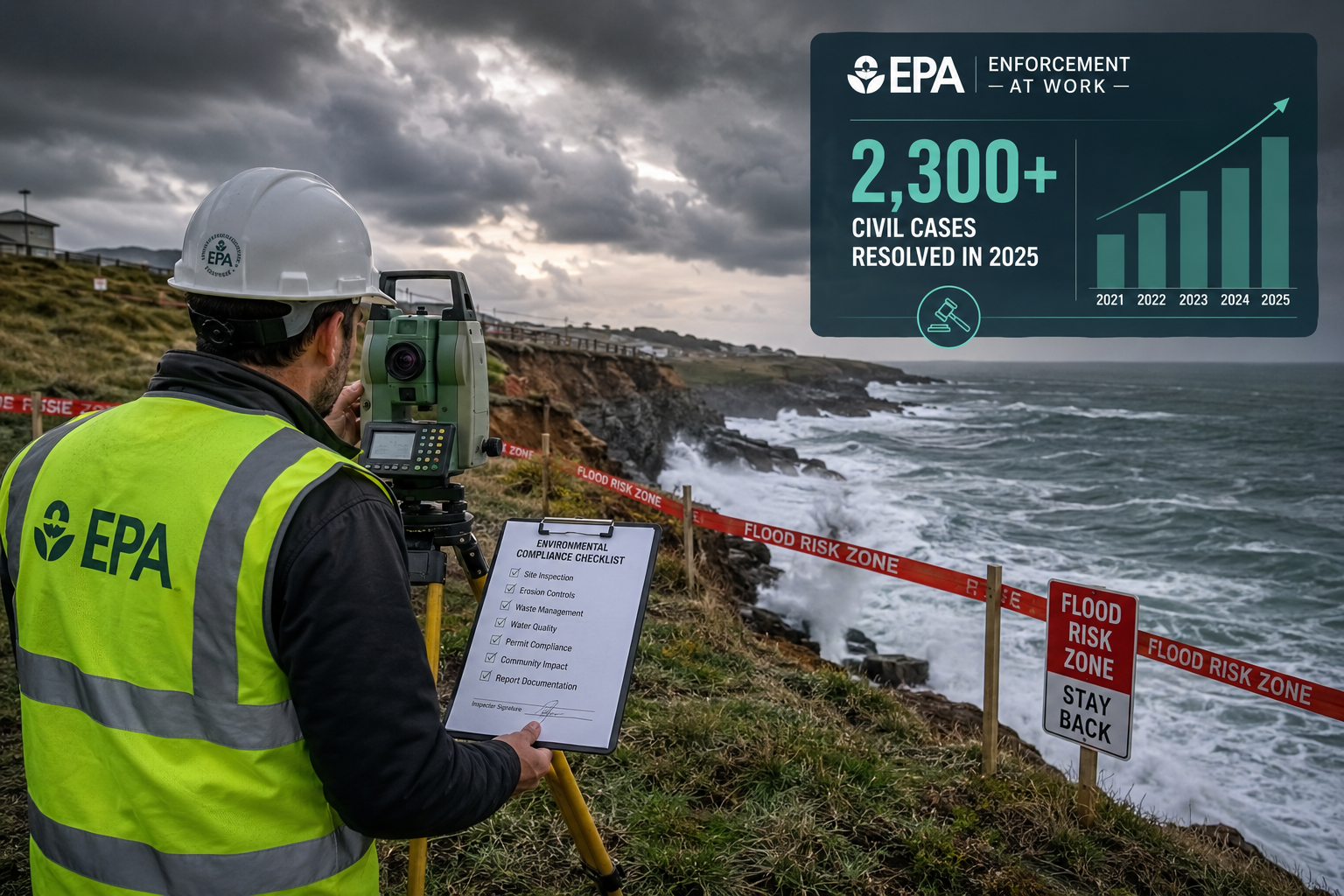
- The EPA concluded over 2,300 civil enforcement cases in FY 2025 — a 400-case increase over the prior year, signalling intensified scrutiny [1].
- New rules on PFAS, coal combustion residuals (CCR), and HFCs are reshaping compliance timelines for properties near industrial and coastal zones.
- Only 81% of hazardous waste facilities received required inspections between 2020–2024, leaving a significant compliance gap [6].
- Biofuel mandates have jumped 60% for 2026–2027, directly affecting land use and environmental assessments near agricultural and industrial sites [7].
- Professional surveying — including drainage, damp, and structural assessments — is now a frontline tool for meeting climate-driven environmental mandates.
The 2026 Regulatory Shift: What Has Changed and Why It Matters
The phrase "regulatory uncertainty" has defined environmental compliance for several years. In 2026, that uncertainty has not disappeared — but the direction of travel is clearer. A patchwork of federal extensions, tightened enforcement, and state-level divergence is creating a complex compliance environment, particularly for properties in vulnerable locations [8].
Key Regulatory Developments in 2026
Here is a snapshot of the most significant regulatory changes affecting property and land use in 2026:
| Regulation | Status in 2026 | Impact on Property/Land |
|---|---|---|
| PFOA/PFOS Drinking Water MCLs | Extension to 2031 proposed [2] | Sites near water systems need updated contamination surveys |
| Coal Combustion Residuals (CCR) | Compliance deadlines extended; amendments proposed [4][5] | Brownfield and industrial-adjacent sites face ongoing monitoring |
| Hydrofluorocarbon (HFC) Phasedown | Regulatory revisions underway [3] | Affects HVAC systems in commercial and multi-unit residential |
| Biofuel Mandates (RFS) | Record-high levels set for 2026–2027 [7] | Land use changes near agricultural zones require reassessment |
| Hazardous Substance Facility Response Plans | Compliance deadline extended to 2030 [9] | Coastal and waterway-adjacent facilities gain planning time |
💬 Pull Quote: "The compliance landscape in 2026 is not simpler — it is more layered. Extensions offer breathing room, but they do not eliminate the obligation to survey, document, and act."
The Enforcement Reality
Despite some deadline extensions, enforcement activity has surged. The EPA concluded over 2,300 civil enforcement cases in fiscal year 2025 — more than 400 cases above the previous administration's final year — and blocked over 1.6 million pounds of illegal pesticides from entering the US, a 70% increase year-on-year [1]. This tells a clear story: extensions are administrative tools, not signals that regulators are stepping back.
For property professionals, the message is direct. Compliance surveys are no longer optional risk management — they are a baseline expectation.
Surveying Strategies for Coastal and Disaster-Prone Areas
Navigating stricter environmental regulations: surveying for compliance in 2026 requires a fundamentally different approach for properties in high-risk zones. Coastal erosion, rising groundwater, flooding, and proximity to legacy industrial sites all create layered compliance obligations that standard surveys may not fully address.
Why Coastal and Flood-Prone Properties Face Greater Scrutiny
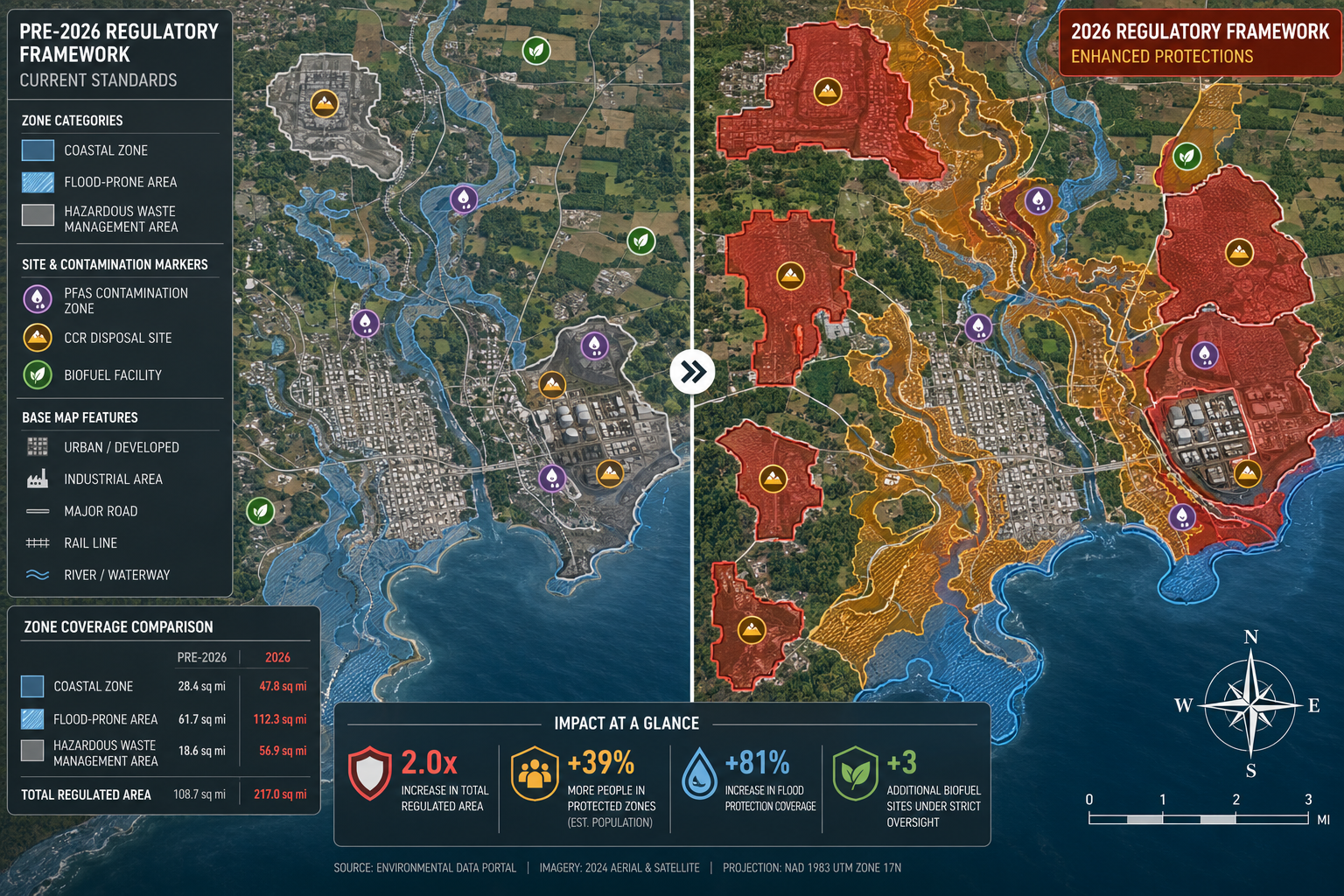
Properties in these areas sit at the intersection of multiple regulatory frameworks simultaneously:
- Clean Water Act obligations — especially relevant given the proposed extension of hazardous substance facility response plan deadlines to 2030 [9]
- PFAS contamination risks — coastal aquifers and flood-affected soils can carry PFAS compounds from upstream industrial activity
- CCR groundwater monitoring — sites near power generation facilities face ongoing monitoring requirements [5]
- State-level divergence — manufacturers and developers increasingly face conflicting state standards on top of federal rules [8]
A property that sits within 500 metres of a former industrial site, a tidal waterway, or a designated flood zone may require multiple specialist surveys before a clean compliance picture can be established.
Essential Survey Types for Environmental Compliance
The following survey types are most relevant for properties navigating climate-driven compliance mandates in 2026:
🔍 Drainage Surveys
Drainage systems in coastal and flood-prone areas are under enormous stress. Blocked, damaged, or undersized drainage can result in regulatory breaches under both planning and environmental law. A professional drainage survey identifies vulnerabilities before they become enforcement issues.
💧 Damp Surveys
Rising groundwater and increased rainfall intensity — both linked to climate patterns — are driving damp-related structural issues in properties near water bodies. A damp survey can identify moisture ingress pathways that may also indicate contamination risks.
🏗️ Structural Surveys
For properties in disaster-prone areas, a full structural survey is the foundation of any compliance strategy. It establishes the baseline condition of a building and identifies vulnerabilities to flood, subsidence, or storm damage — all of which have direct regulatory implications.
🚁 Drone Surveys
Large sites, coastal cliffs, and inaccessible flood-affected areas benefit enormously from aerial assessment. Drone surveys provide high-resolution data on land condition, boundary integrity, and environmental change without requiring physical access to hazardous zones.
📋 Stock Condition Surveys
For landlords and housing associations managing properties in vulnerable areas, a stock condition survey provides the systematic data needed to prioritise remediation and demonstrate proactive compliance.
A Practical Compliance Surveying Checklist ✅
Before purchasing, developing, or managing a property in a coastal or disaster-prone area in 2026, work through the following:
- Has a Phase 1 environmental desktop study been completed?
- Is the site within a PFAS-affected water catchment area?
- Are there legacy CCR or industrial waste sites within 1km?
- Has a drainage survey confirmed system integrity?
- Has a structural survey identified flood or subsidence risk?
- Are boundary surveys up to date, particularly where coastal erosion may have shifted land boundaries?
- Has a damp survey been completed for all below-ground or ground-floor spaces?
- Are HFC-based HVAC systems flagged for phasedown compliance?
Navigating Stricter Environmental Regulations: Surveying for Compliance in 2026 — Practical Steps for Property Professionals
The gap between knowing regulations exist and actually meeting them is where most compliance failures occur. For property professionals — surveyors, developers, landlords, and buyers — the practical challenge is translating a complex regulatory landscape into actionable survey strategies.
Understanding the Patchwork Problem
One of the most significant challenges in 2026 is the divergence between federal and state-level requirements. An analysis from early 2026 highlighted that manufacturers and property operators face conflicting PFAS rules, tighter state standards, and growing pressure on compliance teams [8]. This is not just a manufacturing issue — it affects any property near industrial activity, agricultural land, or water infrastructure.
What this means practically:
- A federal compliance deadline extension does not override a stricter state requirement
- Properties that straddle jurisdictional boundaries may face dual compliance obligations
- Environmental due diligence must now include state-level regulatory screening, not just federal
The Role of RICS-Accredited Surveys in Compliance
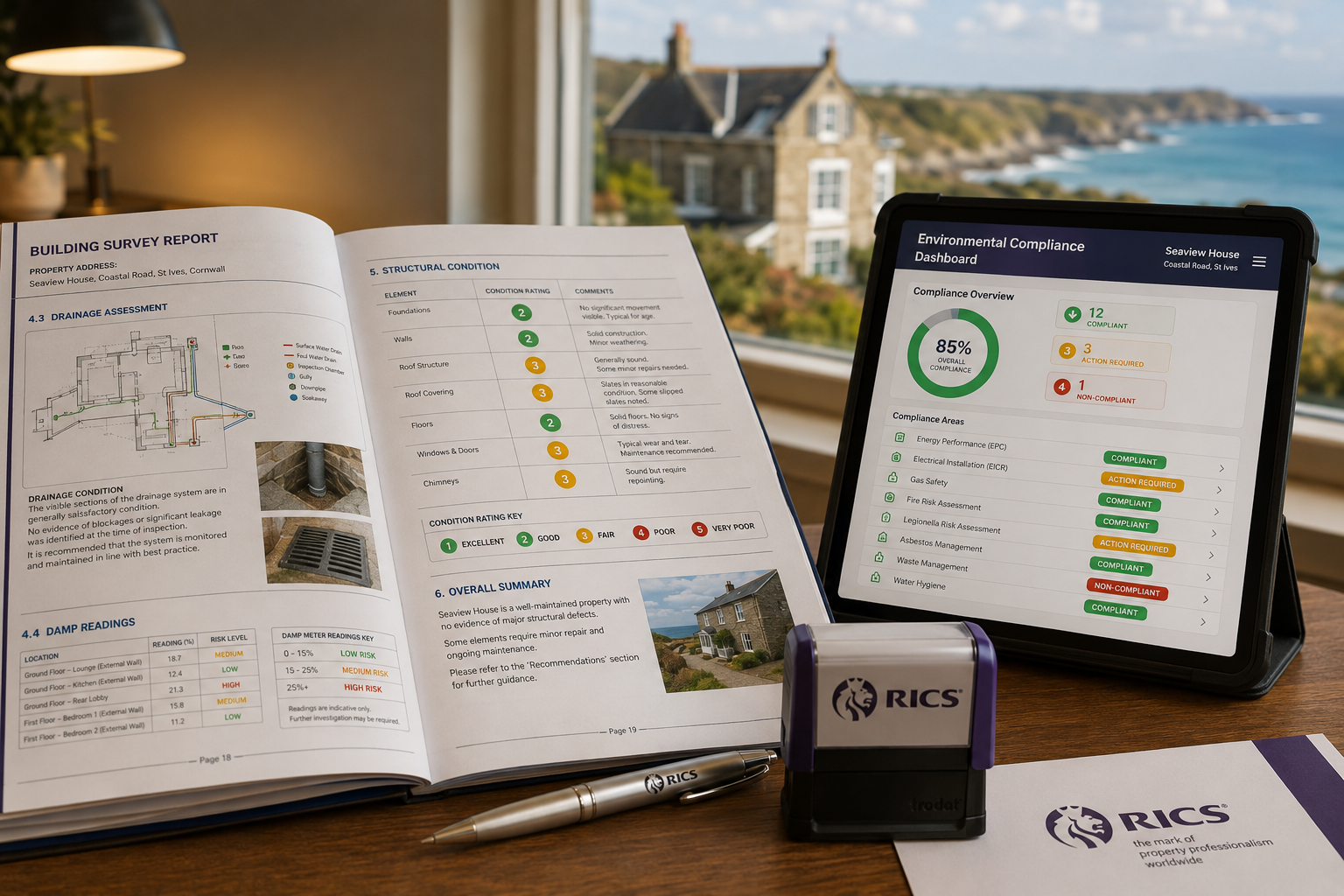
RICS-accredited surveys provide the professional standard of evidence that regulators, lenders, and insurers increasingly require. For properties in high-risk areas, a Level 3 RICS Building Survey offers the most comprehensive assessment — covering structural integrity, environmental risk factors, drainage, damp, and condition ratings across all accessible areas.
For buyers and developers assessing compliance risk before committing to a purchase, understanding what surveyors look for in a house survey can help frame the right questions before instruction.
Biofuel Mandates and Land Use Reassessment
The EPA's March 2026 finalisation of record-high biofuel blending requirements — a 60% increase in biodiesel and renewable diesel production compared to 2025 levels — has direct land use implications [7]. Agricultural land adjacent to residential or commercial developments may now be subject to intensified activity, changed drainage patterns, and new contamination risks from fuel production processes.
Surveyors assessing sites near agricultural zones should factor in:
- Changed surface water drainage patterns from land use intensification
- Potential soil contamination from increased fuel crop chemical use
- Boundary disputes arising from land conversion activity (a boundary survey can resolve these efficiently)
Dilapidations and Environmental Liability
For commercial tenants and landlords, environmental compliance failures can translate directly into dilapidation claims. If a tenant's operations have contributed to contamination — even inadvertently — the dilapidations process at lease end can become significantly more complex and costly. A proactive dilapidations survey at the start and mid-point of a lease establishes a clear baseline, protecting both parties.
Technology and Compliance Documentation
The 2026 introduction of the OmniCompliance-100K dataset — spanning 74 regulations across multiple domains — signals a growing role for AI-assisted compliance screening [10]. While this technology is primarily aimed at large language model safety, its architecture reflects a broader trend: compliance documentation is becoming more data-driven, more auditable, and more expected.
For surveyors, this means:
- Digital survey reports with georeferenced data are increasingly preferred by regulators
- Photo and video evidence from drone surveys provides defensible compliance records
- Structured condition reports aligned to recognised standards (such as RICS) carry greater weight in enforcement proceedings
Conclusion: Actionable Next Steps for 2026 Compliance
The regulatory environment in 2026 rewards preparation and penalises passivity. With EPA enforcement at multi-year highs [1], inspection gaps in hazardous waste management [6], and a patchwork of state and federal rules creating genuine uncertainty [8], the property and surveying sector cannot afford a reactive approach.
Here are the most important actions to take now:
-
Commission a specialist survey — If a property sits near a coastline, floodplain, or legacy industrial site, a standard homebuyer report is not sufficient. A full structural or building survey, supplemented by drainage and damp assessments, is the minimum standard.
-
Map your regulatory exposure — Identify which federal and state environmental rules apply to your specific site. Do not assume a federal deadline extension removes state-level obligations.
-
Use drone surveys for large or inaccessible sites — Aerial data provides defensible compliance documentation and identifies environmental change that ground-level surveys may miss.
-
Establish a baseline now — Whether buying, selling, or managing, a documented condition baseline protects against future liability. Dilapidation surveys and stock condition assessments are practical tools for this.
-
Work with RICS-accredited professionals — In an environment of heightened enforcement, the professional standard of evidence matters. RICS-accredited surveyors provide reports that carry weight with regulators, lenders, and courts.
-
Review lease and ownership structures — Environmental liability can attach to both owners and occupiers. Legal and surveying advice should be sought together, not in isolation.
The complexity of navigating stricter environmental regulations: surveying for compliance in 2026 is real — but it is manageable with the right professional support and a proactive mindset. The surveyors and property professionals who build compliance into their standard practice today will be far better positioned as regulations continue to evolve.
References
[1] Trump Epa Releases Strongest Enforcement And Compliance Results Years – https://www.epa.gov/newsreleases/trump-epa-releases-strongest-enforcement-and-compliance-results-years?utm_source=openai
[2] Proposed Pfoa And Pfos Compliance Extension Rule – https://www.epa.gov/sdwa/proposed-pfoa-and-pfos-compliance-extension-rule?utm_source=openai
[3] 2026 10387 – https://regulations.justia.com/regulations/fedreg/2026/05/26/2026-10387.html?utm_source=openai
[4] Advance Us Energy Dominance Epa Proposes Several Amendments Coal Combustion Residuals – https://www.epa.gov/newsreleases/advance-us-energy-dominance-epa-proposes-several-amendments-coal-combustion-residuals?utm_source=openai
[5] Epa Strengthens Grid Reliability Energy Security Extended Compliance Deadline Several – https://www.epa.gov/newsreleases/epa-strengthens-grid-reliability-energy-security-extended-compliance-deadline-several?utm_source=openai
[6] Federal Watchdog Finds Gaps In Hazardous Waste Inspections – https://eponline.com/articles/2026/04/29/federal-watchdog-finds-gaps-in-hazardous-waste-inspections.aspx?utm_source=openai
[7] Epa Boosts Biofuel Mandates In Final Renewable Fuel Standard Rule – https://www.hklaw.com/en/insights/publications/2026/04/epa-boosts-biofuel-mandates-in-final-renewable-fuel-standard-rule?utm_source=openai
[8] Patchwork Rules Put Manufacturers On Alert In 2026 – https://www.ohiomfg.com/our-communities/patchwork-rules-put-manufacturers-on-alert-in-2026/?utm_source=openai
[9] Rule Extension Proposal Clean Water Act Hazardous – https://www.epa.gov/hazardous-substance-spills-planning-regulations/rule-extension-proposal-clean-water-act-hazardous?utm_source=openai
[10] arxiv – https://arxiv.org/abs/2603.13933?utm_source=openai
