
The UK rental market in 2026 presents a paradox: cooling rent growth alongside persistent supply constraints. For buy-to-let investors navigating these rental pressures, the difference between profitable portfolios and costly mistakes often lies in thorough building surveys. As tenant demand remains robust despite market rebalancing, Navigating 2026 Rental Pressures: Building Survey Insights for Buy-to-Let Investors in Tight Markets requires a strategic approach to property inspection that identifies both compliance risks and value-add opportunities in an increasingly competitive landscape.
With average UK rents reaching £1,301 and properties taking 23 days to let—up from 21 days previously—investors must ensure their acquisitions meet tenant expectations while avoiding expensive defects[2][3]. This comprehensive guide explores how building surveys serve as essential tools for maximizing returns in today's rental environment.
Key Takeaways
- Market conditions are shifting: Rental growth has moderated to 2% in 2026, but supply remains 33% below decade-ago levels, creating ongoing tenant demand[1][2]
- Regional disparities matter: North West shows 3.6% rent growth while North East records just 0.4%, requiring location-specific investment strategies[1]
- Building surveys protect investments: Comprehensive inspections identify structural defects, compliance issues, and value-add opportunities before purchase
- Longer void periods demand quality: Properties now take 23 days to let, making tenant-ready condition essential for minimizing income loss[3]
- Strategic surveys maximize ROI: Identifying repair costs and improvement potential during due diligence enables accurate yield calculations

Understanding the 2026 Rental Market Landscape
Current Market Dynamics and Investor Implications
The rental market in 2026 demonstrates significant evolution from pandemic-era conditions. Average rents across Great Britain stand at £1,301 per month, representing a 2.0% year-on-year increase—substantially cooler than the 4.6% peak recorded in early 2025[2][3]. This moderation reflects improved supply conditions, with rental inventory increasing 14% year-on-year as declining international migration and improved first-time buyer conditions reduce tenant numbers[2].
However, this apparent market softening masks underlying structural tightness. Rental supply remains approximately one-third below levels from a decade ago, ensuring continued upward pressure on rents despite near-term rebalancing[2]. For buy-to-let investors, this creates both opportunity and risk: properties must compete more effectively for tenants while fundamental supply shortages support long-term rental income growth.
Regional Variations Shaping Investment Strategies
Regional disparities in rental performance have widened considerably, requiring investors to adopt location-specific approaches when Navigating 2026 Rental Pressures: Building Survey Insights for Buy-to-Let Investors in Tight Markets:
| Region | Annual Rent Growth | Average Monthly Rent | Market Characteristics |
|---|---|---|---|
| North West | 3.6% | Below £1,000 | Strongest growth, affordability advantage |
| London | ~2.0% | Above £1,000 (100% of authorities) | High absolute rents, moderate growth |
| South East | ~2.0% | Above £1,000 (98% of authorities) | Premium pricing, competitive market |
| North East | 0.4% | Below £1,000 (92% of authorities) | Weakest growth, affordability concerns |
| South West | Negative monthly trend | Variable | Sharpest December decline (-4%)[3] |
These variations directly impact building survey priorities. Properties in high-growth regions like the North West warrant surveys focused on identifying value-add opportunities to capitalize on rising rents, while investments in slower markets require meticulous defect identification to avoid eroding already-thin margins[1][3].
Landlord Activity and Mortgage Market Trends
Buy-to-let mortgage activity provides encouraging signals for 2026. Mortgage completions increased 13% year-on-year through October 2025, while remortgaging activity surged 23%, indicating landlords are choosing to retain existing rental properties rather than exit the market[1]. This retention trend, combined with average 2-year fixed buy-to-let mortgage rates declining to 4.84% (25% deposit) from 5.51% a year earlier, improves financing affordability and supports potential portfolio expansion[1].
For investors conducting due diligence, these favorable financing conditions make comprehensive building surveys even more critical. Lower mortgage costs increase acquisition budgets, but only properties with sound structural condition and minimal remediation requirements will deliver projected yields in a market where tenant enquiries per property have fallen to 10 from pandemic peaks of 14[1].
Building Survey Essentials for Buy-to-Let Investors in Tight Markets

Why Comprehensive Surveys Matter More Than Ever
In 2026's rental environment, building surveys serve as the foundation for profitable buy-to-let investments. With properties taking longer to let (23 days versus 21 days in 2024) and tenant competition easing, rental properties must meet higher quality standards to minimize void periods and command asking rents[3]. A comprehensive Level 3 building survey provides the detailed property condition assessment necessary to make informed acquisition decisions.
Key survey benefits for buy-to-let investors include:
✅ Defect identification: Uncovering structural issues, damp problems, and maintenance backlogs before purchase
✅ Compliance verification: Ensuring properties meet safety regulations, energy efficiency standards, and rental licensing requirements
✅ Repair cost estimation: Quantifying remediation expenses to adjust offer prices and calculate accurate ROI
✅ Value-add opportunity recognition: Identifying improvement potential to justify rent increases and enhance tenant appeal
✅ Negotiation leverage: Using survey findings to renegotiate purchase prices or request vendor repairs
Critical Survey Areas for Rental Properties
When Navigating 2026 Rental Pressures: Building Survey Insights for Buy-to-Let Investors in Tight Markets, investors should prioritize survey inspections that directly impact rental income and tenant satisfaction. Understanding what surveyors check helps investors focus on the most financially significant property elements.
🏠 Structural Integrity and Building Fabric
Foundation and subsidence risks represent the most expensive potential defects. Surveyors examine:
- Foundation condition and settlement patterns
- Wall cracks indicating structural movement
- Floor levelness and integrity
- Roof structure and load-bearing capacity
Properties with subsidence issues can require £10,000-£50,000+ in remediation, devastating rental yields. Early identification through detailed building surveys enables accurate cost forecasting.
💧 Damp, Moisture, and Water Ingress
Damp problems rank among the most common tenant complaints and can render properties unlettable. Comprehensive surveys assess:
- Rising damp in walls and floors
- Penetrating damp from roof or wall defects
- Condensation and ventilation adequacy
- Drainage and guttering effectiveness
Addressing damp issues before tenant occupation prevents negative reviews, void periods, and potential health hazard claims that damage landlord reputations.
⚡ Electrical and Heating Systems
Regulatory compliance for electrical and heating systems is non-negotiable in 2026. Surveys should verify:
- Electrical installation condition and safety certification
- Consumer unit adequacy and circuit protection
- Heating system efficiency and reliability
- Hot water provision capacity
Properties requiring electrical rewiring (£3,000-£8,000) or boiler replacement (£2,000-£4,000) significantly impact acquisition economics. Survey reports provide evidence for price negotiations.
🌡️ Energy Efficiency and EPC Ratings
With tenants increasingly cost-conscious amid affordability pressures, energy efficiency directly affects rental demand and achievable rents. Surveys evaluate:
- Insulation levels (loft, cavity wall, floor)
- Window and door thermal performance
- Heating system efficiency ratings
- Renewable energy installation potential
Properties with poor EPC ratings may require £5,000-£15,000 in improvements to meet minimum rental standards and attract quality tenants in competitive markets.
Survey Types and Selection for Buy-to-Let Investments
Not all surveys provide equal value for rental property investors. Understanding survey levels ensures appropriate due diligence:
Level 2 HomeBuyer Survey: Suitable for modern, well-maintained properties in good condition. Provides condition ratings and alerts to significant defects but lacks detailed structural analysis. Cost: £400-£800.
Level 3 Building Survey: Essential for older properties, period buildings, or any property requiring renovation. Delivers comprehensive structural assessment, detailed defect descriptions, and repair guidance. Cost: £600-£1,500+. Learn more about Level 3 surveys.
Specialist Surveys: Additional inspections for specific concerns:
- Electrical condition reports (required for rental compliance)
- Damp and timber surveys for moisture issues
- Structural engineer assessments for serious defects
- Energy performance assessments for improvement planning
For buy-to-let investors, a Level 3 survey combined with specialist electrical and damp assessments typically provides the most comprehensive risk evaluation, especially in tight markets where property competition may pressure investors to overlook warning signs.
Strategic Survey Insights: Maximizing ROI in Competitive Rental Markets
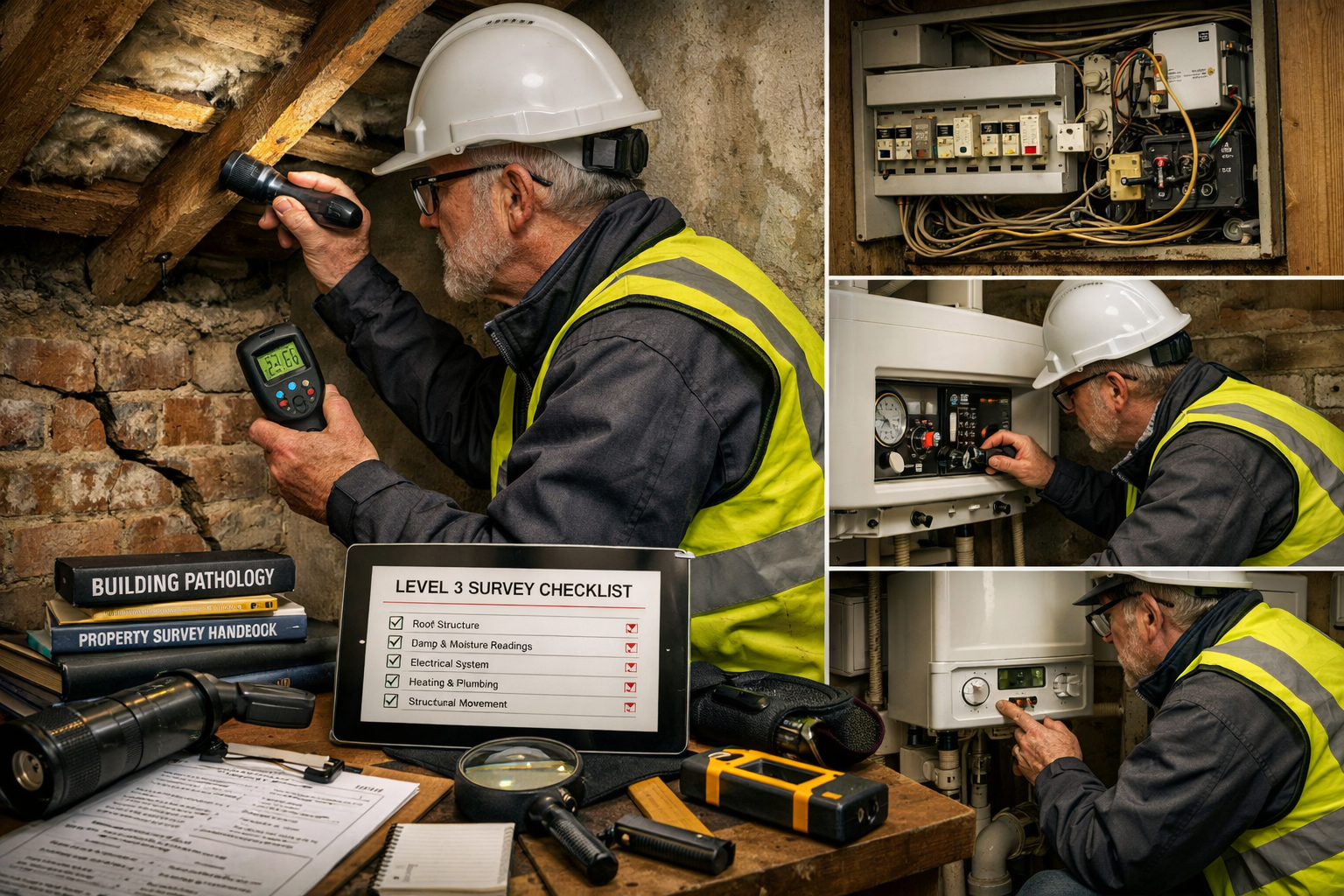
Identifying Value-Add Opportunities Through Surveys
Beyond defect identification, building surveys reveal improvement opportunities that justify rent increases and enhance tenant retention. In markets where tenant enquiries per property have declined to 10 (from pandemic peaks of 14), properties offering superior amenities and condition command premium positioning[1].
High-ROI improvements identified through surveys include:
🔧 Kitchen and bathroom modernization: Surveys highlighting dated fixtures enable investors to budget £8,000-£15,000 for upgrades that can justify 10-15% rent increases
🏡 Space optimization: Structural assessments revealing loft conversion or extension potential unlock additional rental income (£200-£400/month for extra bedroom)
🌿 Outdoor space enhancement: Garden and exterior condition reports guide landscaping investments (£2,000-£5,000) that significantly improve tenant appeal
📶 Smart home integration: Surveys identifying electrical capacity for smart heating, security, and connectivity installations (£1,500-£3,000) attract professional tenants willing to pay premium rents
⚡ Energy efficiency upgrades: Detailed insulation and heating assessments guide £5,000-£10,000 investments that reduce tenant energy bills by £500-£1,000 annually, creating competitive advantage
Calculating True Acquisition Costs and Rental Yields
Accurate yield calculations depend on comprehensive survey-based cost assessment. Investors navigating 2026 rental pressures must factor all remediation and improvement expenses into acquisition economics:
Example Calculation:
- Purchase price: £250,000
- Survey-identified repairs: £15,000
- Value-add improvements: £12,000
- Total investment: £277,000
- Projected monthly rent: £1,300
- Annual rental income: £15,600
- Gross yield: 5.6% (not 6.2% based on purchase price alone)
This realistic yield assessment, informed by thorough building survey insights, prevents overoptimistic projections that lead to cash flow problems when unexpected repairs emerge post-purchase.
Regional Strategy: Tailoring Survey Focus to Market Conditions
Survey priorities should align with regional rental market characteristics when Navigating 2026 Rental Pressures: Building Survey Insights for Buy-to-Let Investors in Tight Markets:
High-Growth Markets (North West, 3.6% annual growth):
- Emphasize value-add opportunity identification
- Focus on improvement potential rather than minor defects
- Assess scope for rent optimization through property enhancement
- Evaluate multi-unit conversion possibilities
Premium Markets (London, South East):
- Prioritize finish quality and modern amenities
- Detailed assessment of compliance with local licensing schemes
- Energy efficiency evaluation (critical for professional tenants)
- Soundproofing and privacy features assessment
Affordability-Constrained Markets (North East, 0.4% growth):
- Meticulous defect identification to minimize post-purchase costs
- Focus on essential repairs only (avoid over-improvement)
- Assess maintenance efficiency and long-term running costs
- Evaluate tenant durability of fixtures and fittings
Negotiation Strategies Using Survey Findings
Survey reports provide objective evidence for price renegotiation. In markets where properties are taking 23 days to let (up from 21 days), vendors face pressure to complete sales, creating negotiation opportunities[3]:
💷 Direct price reduction: Request purchase price decrease equivalent to 100-120% of survey-identified repair costs (accounting for project management time and contingency)
🔨 Vendor remediation: Require sellers to complete essential repairs before completion, particularly for safety-critical issues like electrical defects or structural problems
📅 Completion delay: Negotiate extended completion periods allowing investors to secure contractor quotes and financing for remediation work
🤝 Retention arrangements: Structure deals with retention of funds (held by solicitors) to cover specific repairs, released upon satisfactory completion
Investors who understand survey processes leverage findings strategically, often recovering survey costs several times over through effective negotiation.
Compliance and Regulatory Considerations for 2026
Building surveys must verify compliance with evolving rental property regulations:
✔️ Electrical Safety Standards: Five-year electrical installation condition reports mandatory for all rental properties
✔️ Energy Performance Certificates: Minimum EPC rating requirements (currently E-rated or above)
✔️ Smoke and Carbon Monoxide Alarms: Compliant detection systems in required locations
✔️ Gas Safety Certificates: Annual boiler and gas appliance inspections
✔️ Selective Licensing: Compliance with local authority licensing schemes where applicable
✔️ HMO Standards: Additional requirements for houses in multiple occupation
Survey reports documenting non-compliance enable investors to budget remediation costs accurately and avoid regulatory penalties that can reach £30,000 for serious violations.
Managing Void Periods Through Survey-Informed Preparation
With void periods extending to 23 days in late 2025, survey-guided property preparation minimizes income loss[3]:
Pre-completion survey actions:
- Prioritize tenant-facing improvements: Address cosmetic issues, decoration, and visible defects first
- Ensure move-in readiness: Complete all essential repairs before marketing begins
- Professional presentation: Use survey findings to guide staging and photography preparation
- Transparent marketing: Disclose recent improvements and certifications to build tenant confidence
Properties presented in excellent condition, supported by recent survey-verified maintenance, attract higher-quality tenants willing to pay asking rents without extended negotiation periods.
Selecting the Right Survey Provider for Buy-to-Let Investments
Qualifications and Expertise Requirements
Not all surveyors possess equal expertise in rental property assessment. When Navigating 2026 Rental Pressures: Building Survey Insights for Buy-to-Let Investors in Tight Markets, investors should prioritize:
🎓 RICS Chartered Status: Ensure surveyors hold Royal Institution of Chartered Surveyors accreditation, guaranteeing professional standards and insurance coverage
🏘️ Buy-to-let specialization: Seek surveyors with specific rental property experience who understand landlord priorities and regulatory requirements
📍 Local market knowledge: Choose professionals familiar with regional building characteristics, common defects, and local authority requirements
🔍 Detailed reporting: Review sample reports to ensure comprehensive documentation with photographs, defect descriptions, and cost guidance
Cost Considerations and Value Assessment
Survey costs represent essential investment protection, not optional expenses:
- Level 2 Survey: £400-£800 (suitable for modern, well-maintained properties)
- Level 3 Survey: £600-£1,500+ (essential for older or complex properties)
- Specialist surveys: £200-£500 each (electrical, damp, structural engineering)
Return on survey investment typically exceeds 10:1 through:
- Purchase price reductions negotiated using findings
- Avoided post-purchase surprise repair costs
- Accurate yield calculations preventing unprofitable acquisitions
- Reduced void periods through proper pre-letting preparation
Residential surveyors frequently save investors thousands of pounds through early defect identification and negotiation leverage.
Timeline Planning and Survey Scheduling
Survey timing impacts transaction success in competitive markets:
📅 Optimal scheduling: Arrange surveys within 7-10 days of offer acceptance to maintain transaction momentum while allowing thorough inspection
⏱️ Report delivery: Expect survey completion within 5-10 working days, depending on property complexity and surveyor availability
🔄 Follow-up assessments: Budget additional time for specialist surveys if initial reports reveal concerns requiring detailed investigation
💼 Negotiation periods: Allow 7-14 days post-survey for price renegotiation or vendor remediation discussions before exchange
Properties in high-demand areas may require faster survey turnaround to prevent gazumping, making surveyor responsiveness a critical selection factor.
Conclusion: Building Survey Success in 2026's Rental Market
Navigating 2026 Rental Pressures: Building Survey Insights for Buy-to-Let Investors in Tight Markets requires a strategic approach that balances opportunity recognition with rigorous risk assessment. While rental growth has moderated to 2% and supply conditions have improved by 14% year-on-year, fundamental supply shortages persisting from the past decade ensure continued tenant demand and long-term rental income potential[1][2].
Comprehensive building surveys serve as the essential foundation for profitable buy-to-let investments in this environment. By identifying structural defects, compliance gaps, and value-add opportunities before purchase, investors protect capital, negotiate effectively, and position properties for maximum rental returns. Regional variations—from the North West's 3.6% growth to the North East's 0.4% performance—demand location-specific survey priorities that align inspection focus with market dynamics[1].
Actionable Next Steps for Buy-to-Let Investors
🎯 Engage qualified surveyors early: Contact RICS-accredited professionals before making offers to understand property-specific survey requirements
📊 Conduct regional market analysis: Research local rent growth, supply trends, and tenant demand patterns to inform acquisition targeting
🔍 Prioritize comprehensive inspections: Invest in Level 3 surveys for older properties and combine with specialist electrical and damp assessments
💷 Calculate realistic yields: Factor all survey-identified repair and improvement costs into acquisition economics before committing
🤝 Leverage findings strategically: Use survey reports to negotiate purchase price reductions or vendor remediation of critical defects
📈 Plan value-add improvements: Identify survey-revealed enhancement opportunities that justify rent increases and minimize void periods
⚖️ Verify regulatory compliance: Ensure properties meet all rental safety standards and licensing requirements to avoid penalties
The buy-to-let investors who succeed in navigating 2026's rental pressures will be those who treat building surveys not as administrative formalities, but as strategic intelligence gathering that informs every aspect of property acquisition, improvement, and management. With mortgage rates at 4.84% and landlord retention increasing, market conditions support portfolio growth—but only for investors who conduct thorough due diligence and acquire properties with sound structural condition and genuine rental appeal[1].
In tight rental markets where tenant competition has eased but supply remains constrained, quality trumps quantity. Building surveys provide the insights necessary to identify, acquire, and optimize properties that deliver sustainable rental returns throughout 2026 and beyond.
References
[1] Uk Rents Rightmove Forecast 2026 – https://propertyportfolioinvestor.co.uk/investment-insights/uk-rents-rightmove-forecast-2026/
[2] Uk Rental Market Slows As Properties Take Longer To Let – https://www.propertywire.com/news/uk-rental-market-slows-as-properties-take-longer-to-let/
[3] Market Rent Growth Edges Up 2 As Landlords Brace For 2026 Shift – https://landlordknowledge.co.uk/market-rent-growth-edges-up-2-as-landlords-brace-for-2026-shift/
