
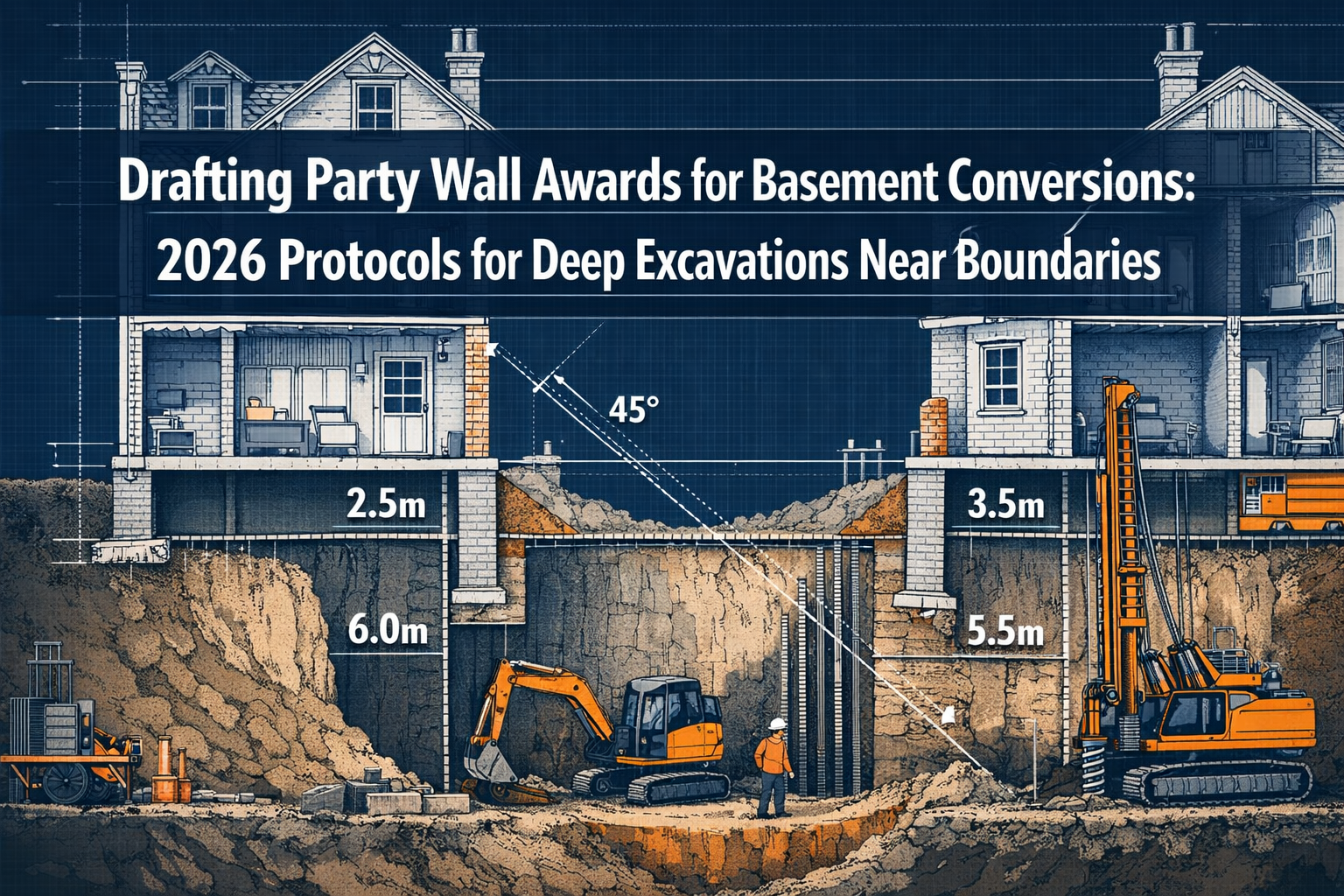
Deep excavations within three metres of a neighbouring property now account for over 60% of all party wall disputes in London, with basement conversions representing the single most complex category of awards to draft. Understanding the precise protocols for Drafting Party Wall Awards for Basement Conversions: 2026 Protocols for Deep Excavations Near Boundaries has become essential for property owners, surveyors, and contractors navigating increasingly stringent compliance requirements.
Basement conversions require meticulous attention to statutory notice procedures, detailed schedules of condition, and comprehensive protective measures that go far beyond standard party wall work. The stakes are extraordinarily high—failure to serve proper Section 6 Notices can result in immediate injunctions, project shutdowns, and complete liability for any structural damage to neighbouring properties.[1]
This comprehensive guide provides step-by-step protocols for drafting robust Party Wall Awards specifically tailored to basement excavation projects, addressing the critical 3-metre and 6-metre excavation rules, special foundation requirements, and protective measures that safeguard both building owners and adjoining owners throughout deep excavation works.
Key Takeaways
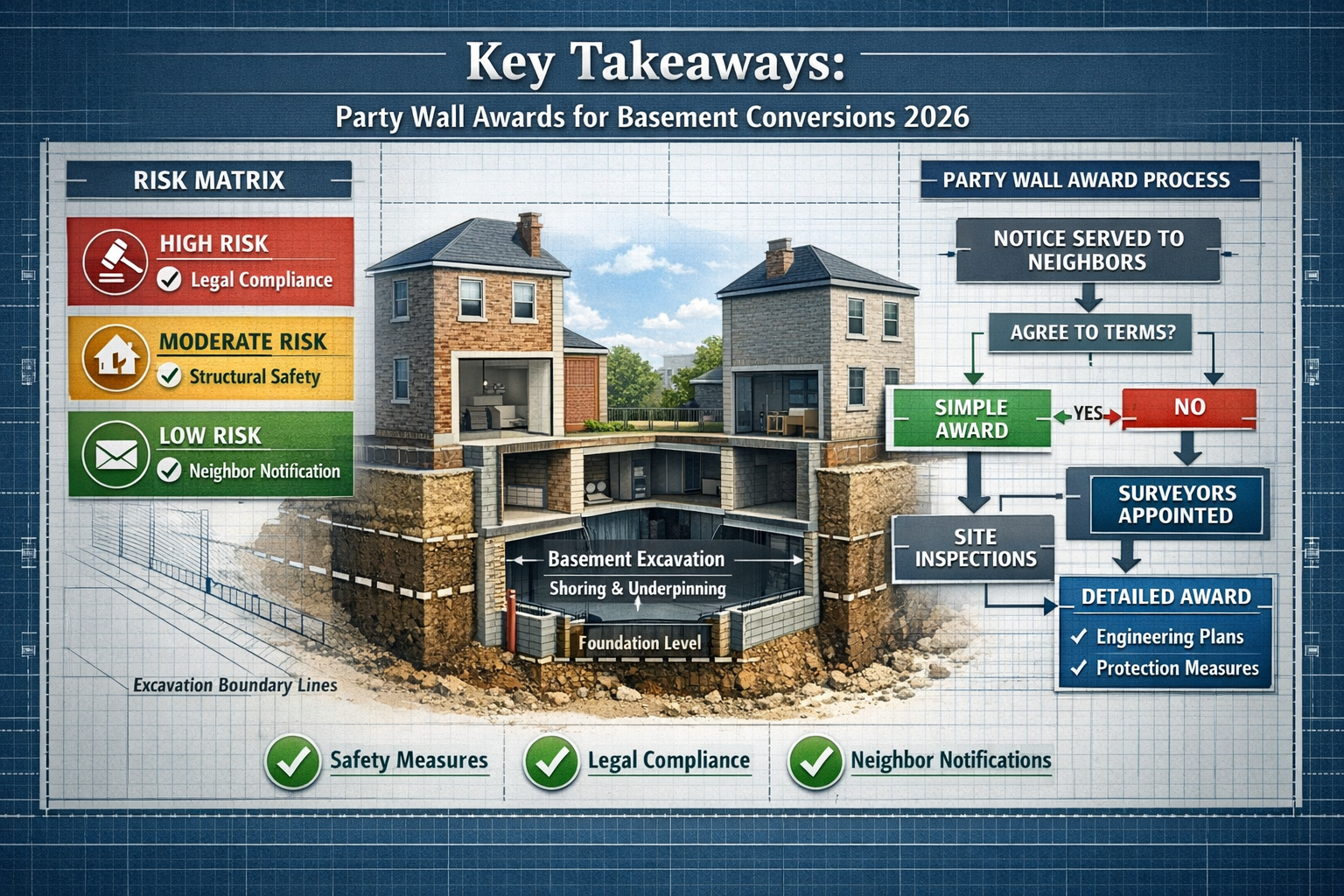
- ✅ The 3-metre rule requires both distance AND depth tests—excavation within 3 metres triggers Section 6 Notice only if the new foundation goes deeper than the neighbour's existing foundation base
- ⚠️ The 45-degree angle rule extends requirements beyond 3 metres—any excavation intersecting a plane drawn at 45 degrees downward from the neighbour's foundation base requires notice, even at 6 metres distance
- 📋 Special Foundations demand written neighbour consent—basement works using reinforced concrete, steel pins, or piles require specific written consent, not just standard statutory notice
- 🛡️ Detailed Awards provide statutory protection—working without a properly drafted Party Wall Award removes all legal protection and creates full liability for any damage claims
- 💰 Security for expenses provisions are standard—Awards for basement conversions typically include financial security arrangements and detailed underpinning sequences to protect neighbouring properties
Understanding Section 6 Notice Requirements for Deep Excavations
The Party Wall etc. Act 1996 establishes specific trigger points for basement excavation work through Section 6, which governs excavations near neighbouring buildings. Many property owners mistakenly believe that any excavation within 3 metres automatically requires notice, but the legislation applies a more nuanced test.[1]
The 3-Metre Distance and Depth Test
Section 6(1) applies when two conditions are met simultaneously:
- The proposed excavation is within 3 metres of a neighbouring building
- The new foundation will extend to a greater depth than the neighbour's existing foundation base
Distance alone is insufficient to trigger the notice requirement. You must conduct a depth comparison between your proposed foundation level and the neighbour's existing foundation bottom. This often requires investigation through trial pits, existing building records, or assumptions based on building age and construction type.[1]
For Victorian and Edwardian terraced properties—common in London and other UK cities—original foundations typically sit at 900mm to 1200mm depth. Basement conversions routinely excavate to 2500mm or deeper, clearly exceeding the neighbour's foundation depth and triggering Section 6(1) requirements.
The 6-Metre Rule and 45-Degree Angle Test
Section 6(2) extends the notice requirement to excavations between 3 and 6 metres from a neighbouring building, but only when the excavation intersects with an imaginary plane drawn at 45 degrees downward from the lowest point of the neighbour's foundation.[1]
This geometric test recognizes that deep excavations create zones of influence in the surrounding soil. Even at greater distances, excavation below this 45-degree plane can affect the load-bearing capacity and stability of neighbouring foundations.
When Special Foundations Require Additional Consent
Basement conversions frequently employ Special Foundations—defined as assemblies using reinforced concrete, steel pins, piles, or other engineered systems that distribute loads differently than traditional strip or pad foundations. Section 7(4) of the Party Wall etc. Act requires specific written consent from adjoining owners before constructing Special Foundations.[1]
This consent requirement sits alongside, not instead of, the Section 6 Notice procedure. Building owners must:
- Serve the appropriate Section 6 Notice for excavation work
- Separately obtain written consent for Special Foundation construction
- Provide technical specifications and engineering calculations demonstrating the foundation design
Failure to obtain this written consent creates significant legal vulnerability, potentially allowing neighbours to demand foundation redesign or seek injunctive relief even after construction begins.
Preparing Comprehensive Schedules of Condition
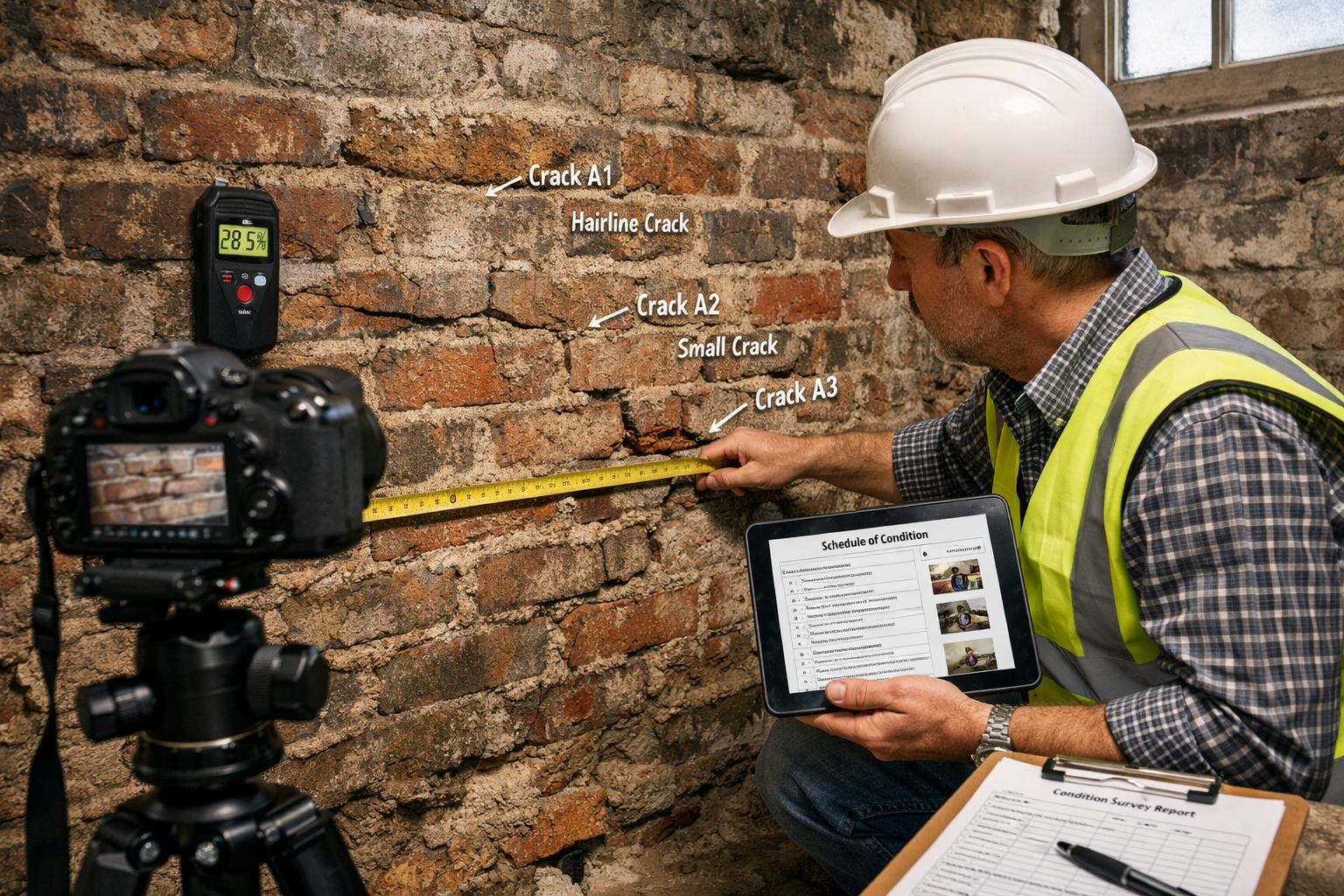
A thorough Schedule of Condition forms the evidentiary foundation for any Party Wall Award involving basement excavation. This detailed photographic and written record documents the pre-construction state of adjoining properties, establishing a baseline against which any future damage claims can be assessed.
Essential Documentation Elements
Professional schedules of condition for basement projects must include:
📸 Comprehensive Photographic Evidence
- External elevations of adjoining properties from multiple angles
- Internal rooms adjacent to the party wall, particularly basements and ground floors
- Existing cracks, settlement, or defects with measurement scales
- Ceiling-to-floor shots showing overall room condition
- Close-up details of all existing damage with reference markers
📝 Written Descriptions and Measurements
- Room-by-room condition narratives
- Crack width measurements using crack width gauges
- Descriptions of finishes, decorations, and fixtures
- Notes on existing dampness, settlement, or structural issues
- Floor level measurements to detect pre-existing movement
📊 Technical Assessments
- Foundation depth investigations (where accessible)
- Structural condition assessments
- Drainage and water ingress evaluations
- Party wall thickness and construction type documentation
The Schedule of Condition serves dual purposes: it protects building owners from spurious damage claims related to pre-existing conditions, and it protects adjoining owners by creating clear evidence if new damage occurs during construction.[2]
Timing and Access Considerations
Schedules of Condition should be completed before any excavation work begins, ideally during the notice period after Section 6 Notices have been served. Under the Party Wall etc. Act, appointed surveyors have the right to enter properties at reasonable times to prepare these schedules, though 14 days' written notice is typically required.
When adjoining owners refuse access for condition surveys, surveyors should document the refusal in writing and proceed with external inspections only. The Party Wall Award should explicitly note the access refusal and its implications for future damage claims. For guidance on what party wall surveyors do in these situations, professional advice is essential.
Drafting the Party Wall Award: Essential Clauses and Protective Measures
The Party Wall Award represents the legally binding agreement that governs basement excavation work. Awards for deep excavations require significantly more detail than standard party wall work due to the elevated risks and potential for structural impact.[2]
Core Award Components
1. Preamble and Parties
- Full names and addresses of building owner and adjoining owner(s)
- Property descriptions with Land Registry title numbers
- Appointment details of the party wall surveyor(s)
- Reference to the Section 6 Notice(s) served
2. Description of Proposed Works
- Detailed excavation specifications including depths and locations
- Foundation design details and construction methodology
- Underpinning requirements and sequencing
- Temporary support systems and shoring arrangements
- Construction timeline and phasing
3. Rights Granted
- Express permission to excavate to specified depths
- Rights to underpin or strengthen neighbouring foundations if necessary
- Access rights for surveyors and contractors
- Rights to install temporary supports or props
4. Protective Measures and Working Methods
This section forms the technical heart of basement conversion Awards:
Underpinning Protocols:
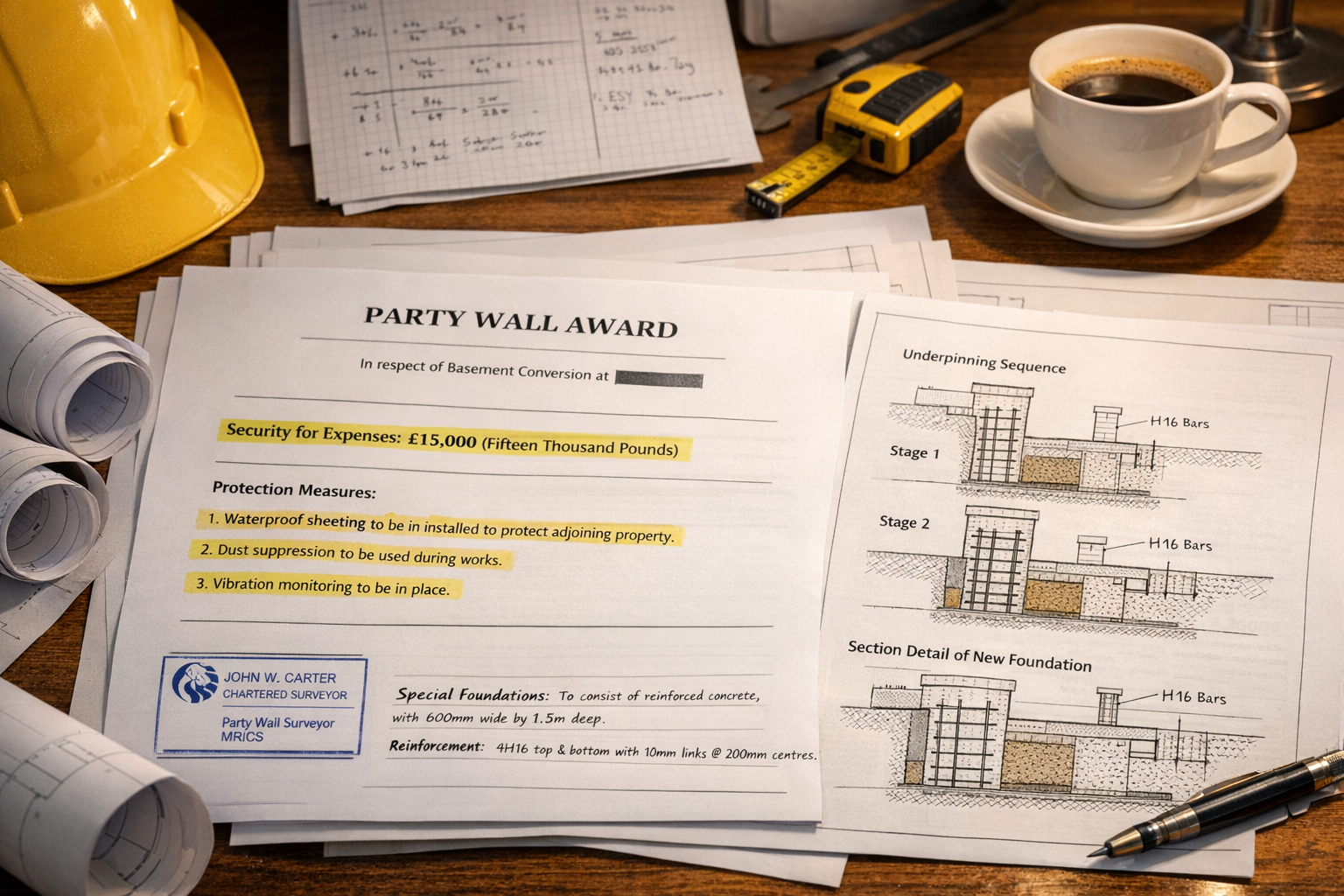
- Sequential underpinning requirements (typically 1-metre bays)
- Minimum concrete curing times before proceeding to adjacent bays
- Depth and width specifications for underpinning
- Reinforcement requirements and engineering specifications
Excavation Controls:
- Maximum excavation depths per phase
- Lateral support requirements for party walls
- Monitoring requirements for movement and settlement
- Restrictions on vibration-inducing equipment
Structural Protection:
- Temporary propping or needling of party walls
- Waterproofing requirements to prevent water migration
- Drainage provisions to prevent water accumulation
- Party wall strengthening specifications if required
Security for Expenses Provisions
Awards for basement conversions typically include security for expenses clauses requiring the building owner to provide financial security before work commences. This protects adjoining owners against the risk of the building owner becoming insolvent or abandoning the project mid-construction.[1]
Common security arrangements include:
- Cash deposits held by the agreed surveyor or in escrow
- Bank guarantees from recognized financial institutions
- Insurance bonds specifically covering party wall work
- Parental company guarantees for corporate building owners
Security amounts typically range from £10,000 to £50,000 depending on project scope, property values, and assessed risk levels. The security remains in place until completion of works and resolution of any damage claims.
Damage Resolution Procedures
The Award must establish clear procedures for addressing damage if it occurs:
📋 Damage Reporting Protocols
- Timeframes for adjoining owners to report concerns
- Inspection procedures when damage is alleged
- Surveyor's role in assessing causation and extent
- Documentation requirements for damage claims
🔧 Remediation Standards
- Obligation to restore damaged property to pre-works condition
- Timeframes for completing remedial work
- Standards of workmanship and materials
- Alternative compensation arrangements if restoration is impractical
💷 Costs and Expenses
- Building owner's liability for proven damage
- Surveyor fee arrangements for damage assessments
- Dispute resolution procedures if causation is contested
Understanding when party wall agreements are legally required helps prevent costly disputes and project delays.
2026 Protocol Updates: Enhanced Monitoring and Documentation Standards
Recent RICS guidance updates for 2026 have introduced enhanced expectations for monitoring and documentation during basement excavation projects, reflecting increased awareness of settlement risks and the need for objective evidence throughout construction.[3]
Continuous Monitoring Requirements
Modern Awards increasingly incorporate continuous monitoring provisions including:
📐 Structural Movement Monitoring
- Installation of crack monitoring gauges on party walls
- Regular leveling surveys to detect settlement
- Vibration monitoring during excavation and concrete works
- Photographic documentation at key construction stages
📊 Reporting Frequencies
- Weekly monitoring reports during active excavation
- Immediate notification protocols if trigger levels are exceeded
- Monthly summary reports to all parties
- Final completion report documenting cumulative movements
Digital Documentation Standards
The 2026 protocols encourage digital documentation methods that create timestamped, tamper-evident records:
- Cloud-based photographic libraries with automatic dating
- Digital crack monitoring with measurement overlays
- 3D laser scanning for precise condition recording
- Electronic signature systems for Award execution
These digital tools enhance transparency and reduce disputes by creating objective, verifiable records throughout the construction process.
Common Pitfalls and How to Avoid Them
Failing to Serve Timely Notices
The most critical error is beginning excavation work before serving Section 6 Notices or before the notice period expires. The statutory notice period is at least two months before work commences, allowing time for:
- Adjoining owners to consider the proposals
- Surveyor appointments if consent is not given
- Schedule of Condition preparation
- Award drafting and agreement
Starting work prematurely exposes building owners to immediate injunction applications, which courts routinely grant. Project delays from injunctions typically exceed the original notice period by months, with substantial additional legal costs.[1]
Inadequate Foundation Depth Investigation
Many disputes arise from incorrect assumptions about neighbouring foundation depths. Without proper investigation, building owners may:
- Fail to serve Section 6 Notices when required
- Serve notices under the wrong subsection
- Underestimate underpinning requirements
- Face unexpected costs when deeper foundations are discovered
Where direct investigation is impossible, surveyors should make conservative assumptions based on building age, construction type, and local building practices, erring toward serving notice rather than risking non-compliance.
Insufficient Protective Measures in Awards
Awards that lack detailed protective measures create ambiguity and disputes during construction. Common deficiencies include:
- Vague underpinning specifications without sequencing details
- Absence of movement monitoring requirements
- No provisions for temporary support of party walls
- Inadequate waterproofing specifications
- Missing vibration control measures
Detailed, prescriptive Award provisions reduce disputes and provide clear guidance for contractors. For complex projects, consider engaging party wall surveyors with London expertise who regularly handle basement conversions.
Neglecting Special Foundations Consent
Building owners frequently overlook the separate written consent requirement for Special Foundations, assuming the Section 6 Notice process covers all aspects. This creates legal vulnerability even when excavation notices have been properly served.
Awards should explicitly address Special Foundations with:
- Detailed foundation design specifications
- Engineering calculations and load assessments
- Express written consent from adjoining owners
- Alternative foundation designs if consent is refused
Cost Implications and Fee Structures
Understanding the financial implications of Drafting Party Wall Awards for Basement Conversions: 2026 Protocols for Deep Excavations Near Boundaries helps property owners budget appropriately and avoid surprises.
Typical Surveyor Fee Ranges
Party wall surveyor fees for basement conversions typically exceed standard party wall work due to increased complexity:
| Service Component | Typical Fee Range |
|---|---|
| Initial consultation and notice preparation | £500 – £1,200 |
| Schedule of Condition (per property) | £800 – £2,500 |
| Award drafting and negotiation | £1,500 – £4,000 |
| Construction monitoring and inspections | £1,200 – £3,500 |
| Damage assessment and resolution | £800 – £2,500+ |
| Total for straightforward case | £4,800 – £13,700 |
Complex projects involving multiple adjoining properties, significant underpinning, or contentious negotiations can substantially exceed these ranges. For detailed pricing information, see our guide on party wall surveyor costs.
Who Pays What?
Under the Party Wall etc. Act, the building owner typically bears all reasonable surveyor fees, including:
- Their own appointed surveyor's fees
- The adjoining owner's surveyor's fees (if appointed)
- The agreed surveyor's fees (if one surveyor acts for both parties)
This fee structure incentivizes building owners to maintain good relationships with neighbours and resolve matters consensually where possible. When adjoining owners consent to works without appointing a surveyor, significant fee savings result.
Resolving Disputes During Basement Conversions
Despite careful planning, disputes sometimes arise during basement excavation projects. The Party Wall etc. Act provides structured dispute resolution mechanisms.
Common Dispute Triggers
🔧 Damage Claims
- Cracks appearing in adjoining properties during excavation
- Settlement causing doors or windows to stick
- Plaster damage from vibration
- Water ingress from disturbed drainage
⚖️ Working Method Disagreements
- Disputes over excavation sequencing
- Concerns about vibration levels
- Disagreements over underpinning necessity
- Access disputes for monitoring or inspections
💰 Cost and Compensation Issues
- Disagreements over damage causation
- Disputes about repair standards
- Fee disputes between surveyors
- Security for expenses disagreements
The Third Surveyor Mechanism
When appointed surveyors cannot reach agreement on Award terms or dispute resolution, either party can request a Third Surveyor determination. This independent surveyor reviews the dispute and issues a binding determination that both parties must accept.[3]
Third Surveyor appointments add time and cost but provide definitive resolution without court proceedings. For guidance on resolving party wall disputes, professional advice ensures the best outcomes.
Court Proceedings as Last Resort
In rare cases where statutory procedures have not been followed or Awards are challenged on jurisdictional grounds, court proceedings may become necessary. Courts have consistently upheld properly drafted Party Wall Awards and enforce compliance with the Act's requirements.
However, litigation should be avoided wherever possible due to:
- Substantial legal costs often exceeding £50,000
- Project delays of 6-18 months
- Relationship damage making future cooperation difficult
- Uncertain outcomes even with strong cases
Practical Checklist for Building Owners
Use this comprehensive checklist when planning basement conversions to ensure full compliance with Drafting Party Wall Awards for Basement Conversions: 2026 Protocols for Deep Excavations Near Boundaries protocols:
Pre-Notice Phase (3-6 months before construction)
- Obtain detailed architectural and structural designs
- Investigate neighbour's foundation depths (if possible)
- Identify all properties within 6 metres of excavation
- Determine whether Special Foundations will be used
- Engage experienced party wall surveyor
- Review complete guide to party wall surveyors
Notice Service Phase (2+ months before construction)
- Prepare and serve Section 6 Notices to all affected neighbours
- Obtain written consent for Special Foundations (if applicable)
- Allow 14-day response period for neighbours
- Appoint surveyors if neighbours dissent or fail to respond
- Review how to write a party wall letter
Award Preparation Phase (1-2 months before construction)
- Arrange access for Schedule of Condition surveys
- Complete comprehensive photographic and written schedules
- Draft detailed Award with protective measures
- Include security for expenses provisions
- Specify monitoring and reporting requirements
- Obtain all party signatures on Award
Construction Phase (duration of works)
- Provide Award copies to contractors
- Implement monitoring protocols
- Submit regular progress reports
- Notify surveyors of any damage or concerns immediately
- Maintain photographic construction records
- Ensure compliance with underpinning sequences
Completion Phase (after construction)
- Conduct final condition inspections
- Address any damage claims promptly
- Complete remedial works to agreed standards
- Release security for expenses (if no outstanding claims)
- Obtain completion certificates from surveyors
Conclusion: Protecting Your Basement Conversion Investment
Drafting Party Wall Awards for Basement Conversions: 2026 Protocols for Deep Excavations Near Boundaries requires meticulous attention to statutory procedures, comprehensive protective measures, and detailed documentation standards that reflect the significant risks inherent in deep excavation work near neighbouring properties.
The consequences of non-compliance extend far beyond administrative penalties—building owners face immediate injunctions, complete liability for structural damage, and project delays that can add tens of thousands of pounds to construction costs. Conversely, properly drafted Awards provide statutory protection, clear working parameters, and dispute resolution mechanisms that safeguard all parties throughout the construction process.[1]
Key Success Factors
✅ Serve timely Section 6 Notices at least two months before excavation begins, ensuring both distance and depth tests are properly assessed
✅ Obtain separate written consent for Special Foundations involving reinforced concrete, steel pins, or piles
✅ Prepare comprehensive Schedules of Condition with detailed photographic and written evidence of pre-construction property conditions
✅ Draft detailed Awards specifying protective measures, underpinning sequences, monitoring requirements, and security for expenses provisions
✅ Implement continuous monitoring throughout construction with regular reporting to all parties
✅ Address damage claims promptly through the Award's dispute resolution procedures
Next Steps for Your Basement Conversion Project
- Engage an experienced party wall surveyor with specific basement conversion expertise—preferably before finalizing architectural designs
- Review your excavation plans against the 3-metre and 6-metre rules to identify all properties requiring notice
- Budget appropriately for party wall costs, typically £5,000-£15,000 for straightforward basement conversions
- Build extra time into your project timeline for the notice period, Award preparation, and potential negotiations
- Maintain open communication with neighbours throughout the process to minimize disputes
For complex basement conversions in London and surrounding areas, professional guidance ensures compliance with current protocols while protecting your investment. Understanding the Party Wall Act comprehensively provides the foundation for successful project delivery.
The 2026 protocols reflect evolving best practices that prioritize transparency, objective monitoring, and comprehensive documentation. By following these enhanced standards, building owners can proceed with confidence, knowing their basement conversion project rests on solid legal and technical foundations. 🏗️
References
[1] Excavation And The Party Wall Act Navigating The 3 And 6 Metre Rules For Foundations – https://www.partywallslimited.com/blog/excavation-and-the-party-wall-act-navigating-the-3–and-6-metre-rules-for-foundations
[2] Building Owner Party Wall Information – https://www.houricanassociates.com/party-wall-news/building-owner-party-wall-information/
[3] Evergreen Party Wall Act Deep Dive 2026 Rics Updates On Awards Notices And Dispute Avoidance – https://nottinghillsurveyors.com/blog/evergreen-party-wall-act-deep-dive-2026-rics-updates-on-awards-notices-and-dispute-avoidance
