
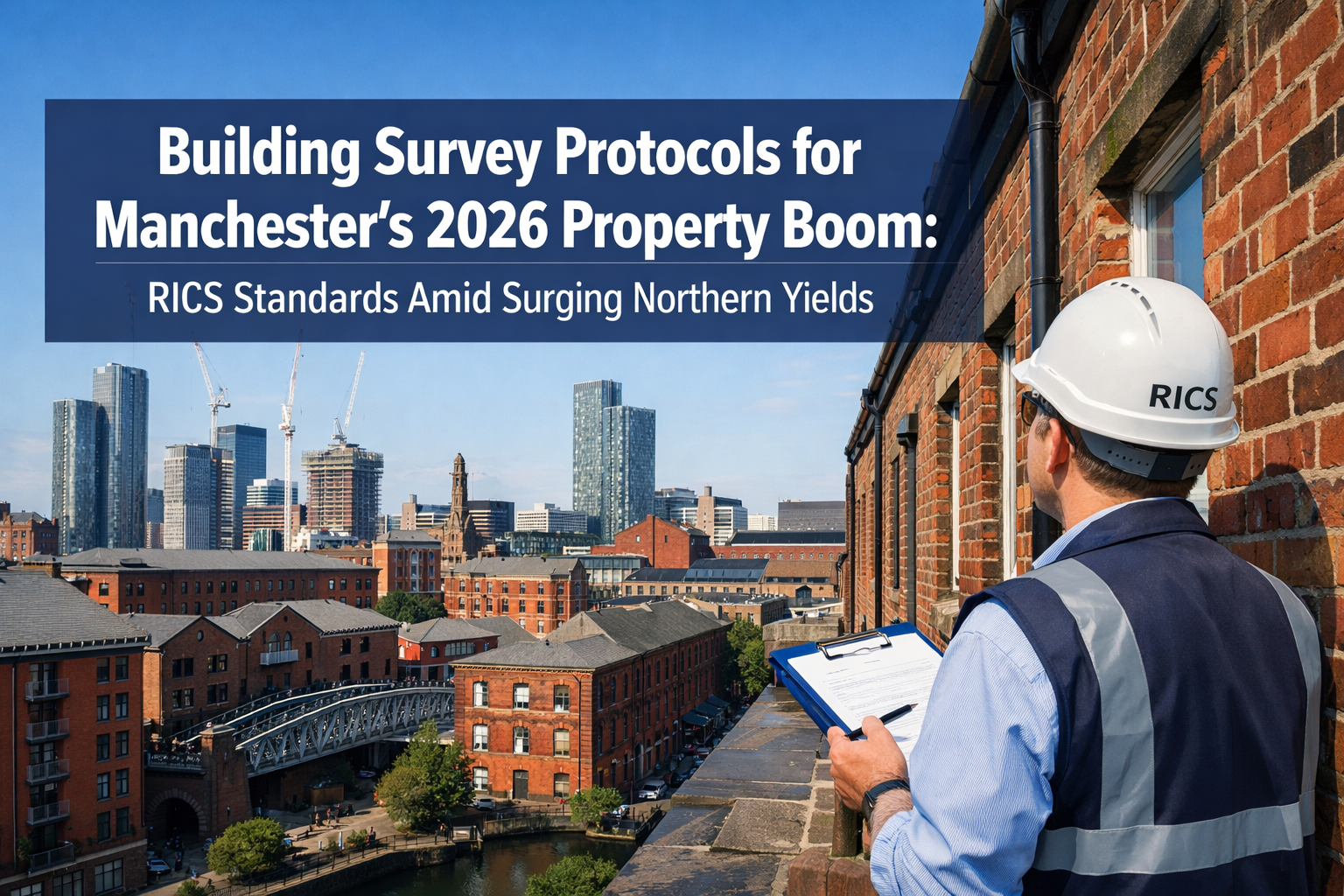
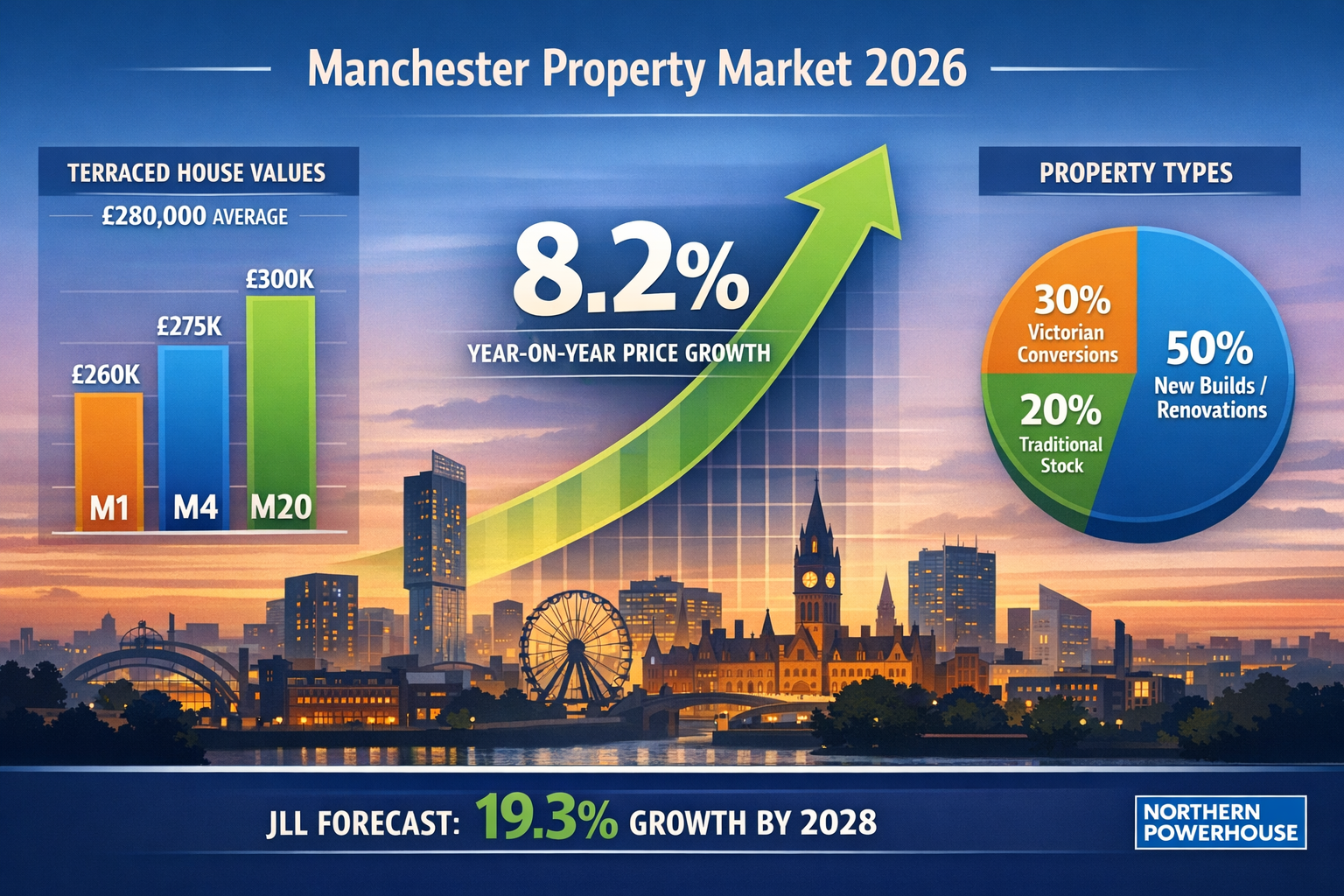
Manchester's property market is experiencing an unprecedented surge in 2026, with prices climbing 8.2% year-on-year and investor interest flooding into high-yield conversion opportunities[1]. As the city's residential landscape transforms through ambitious regeneration projects and a wave of property conversions, the demand for rigorous Building Survey Protocols for Manchester's 2026 Property Boom: RICS Standards Amid Surging Northern Yields has never been more critical. This comprehensive guide explores how RICS-compliant survey methodologies are adapting to Manchester's unique market dynamics, where defect detection in converted properties can mean the difference between profitable investment and costly mistakes.
Key Takeaways
- Manchester property values surged 8.2% year-on-year in early 2026, significantly outpacing London's market performance and creating heightened demand for accurate building surveys[1]
- 50% of Manchester's residential stock has been built or renovated within the last decade, requiring specialized survey approaches for newer construction and conversion properties[6]
- RICS standards now emphasize retrofit and sustainability assessments, aligning with Future Homes and Building Standards published in 2026[3]
- Defect detection in high-yield conversions is driving survey demand, with terraced properties averaging £280,000 and projected to grow 4% annually through 2028[6]
- Long-term sales expectations hit +35% net balance in January 2026, the strongest reading since December 2024, signaling sustained need for professional survey services[2]
Understanding Manchester's 2026 Property Landscape and Survey Demands
The Northern Powerhouse Effect on Property Valuations
Manchester's property market has emerged as a standout performer in 2026, creating distinct challenges and opportunities for building surveyors. While London's prime market experiences slowdown, Manchester's 8.2% year-on-year price increase reflects fundamental shifts in regional investment patterns[1]. This divergence has profound implications for survey protocols, as valuations must account for rapid appreciation while maintaining accuracy in a volatile market.
The city's transformation is driven by massive regeneration initiatives, including the £1.5 billion Northern Gateway development, which JLL projects will contribute to 19.3% sales price growth through 2028[6]. These large-scale projects introduce new construction standards, materials, and building techniques that surveyors must understand thoroughly.
Key market indicators affecting survey requirements:
- Terraced houses averaging £280,000 with 4% annual growth forecasts[6]
- Net balance for new buyer enquiries improving to -15% in January 2026, up from -21%[2]
- Long-term sales expectations at +35% net balance, indicating sustained market confidence[2]
- New property listings recording +2% net balance in February 2026, maintaining stable supply[4]
Property Type Distribution and Survey Implications
Manchester's residential portfolio presents unique survey challenges due to its composition. With 50% of properties built or renovated in the last decade[6], surveyors encounter a higher proportion of modern construction alongside Victorian conversions and traditional terraced housing.
| Property Type | Market Share | Primary Survey Concerns | Typical Survey Level |
|---|---|---|---|
| New Builds/Recent Renovations | 50% | Warranty compliance, snagging issues, modern materials | Level 2 or Level 3 |
| Victorian Conversions | 30% | Structural alterations, damp, original features | Level 3 essential |
| Traditional Terraced | 20% | Subsidence, party walls, aging systems | Level 3 recommended |
This distribution requires surveyors to maintain expertise across multiple construction eras and methodologies. Understanding our Level 3 building survey essential guide becomes particularly valuable when assessing Manchester's diverse property stock.
RICS Standards for Building Survey Protocols in Manchester's 2026 Property Boom
Core RICS Survey Levels and Manchester Applications
The Royal Institution of Chartered Surveyors maintains three distinct survey levels, each serving specific property assessment needs. In Manchester's 2026 boom market, selecting the appropriate survey level has become increasingly critical as property values escalate and investment stakes rise.
Level 1 (Condition Report):
- Basic visual inspection suitable for newer properties
- Limited application in Manchester's conversion-heavy market
- Typically reserved for properties less than 10 years old in excellent condition
Level 2 (HomeBuyer Report):
- Standard inspection for conventional properties in reasonable condition
- Appropriate for Manchester's newer builds within the 50% recently constructed stock[6]
- Covers visible defects without invasive investigation
- Learn more about RICS Homebuyer Surveys Level 2
Level 3 (Building Survey):
- Comprehensive inspection essential for conversions, older properties, and high-value investments
- Strongly recommended for Manchester's Victorian conversions and terraced properties
- Includes detailed structural analysis, defect identification, and repair cost estimates
- Critical for properties undergoing or having undergone significant alterations
- Explore our RICS Building Surveys Level 3 services
Manchester-Specific Survey Protocol Enhancements
Given Manchester's unique market conditions in 2026, RICS surveyors have adapted standard protocols to address regional characteristics:
🏗️ Conversion Property Checklist:
- Verification of building regulation compliance for alterations
- Assessment of structural modifications (removed walls, added floors, loft conversions)
- Evaluation of original Victorian/Edwardian features and their condition
- Inspection of modern systems integration (heating, electrical, plumbing) within historic fabric
- Damp and moisture analysis in properties with mixed-age construction
📊 High-Yield Investment Assessment:
- Rental yield potential evaluation based on current Manchester market rates
- Future maintenance cost projections affecting investment returns
- Identification of defects that could impact tenant satisfaction or safety compliance
- Assessment of energy efficiency and potential upgrade costs under new standards
🌱 Sustainability and Retrofit Considerations:
RICS introduced new membership pathways in 2026 emphasizing retrofit and sustainability expertise, aligned with Future Homes and Building Standards[3]. Manchester surveyors now routinely assess:
- Energy Performance Certificate (EPC) ratings and improvement potential
- Insulation quality and thermal efficiency
- Heating system efficiency and renewable energy integration opportunities
- Ventilation adequacy in converted spaces
- Compliance pathways for upcoming environmental regulations
"Realistic pricing from the outset is absolutely crucial" – RICS Residential Market Survey, February 2026[2]
This statement underscores why accurate building surveys matter more than ever in Manchester's appreciating market. Overvaluation based on incomplete defect information can derail transactions and damage investment returns.
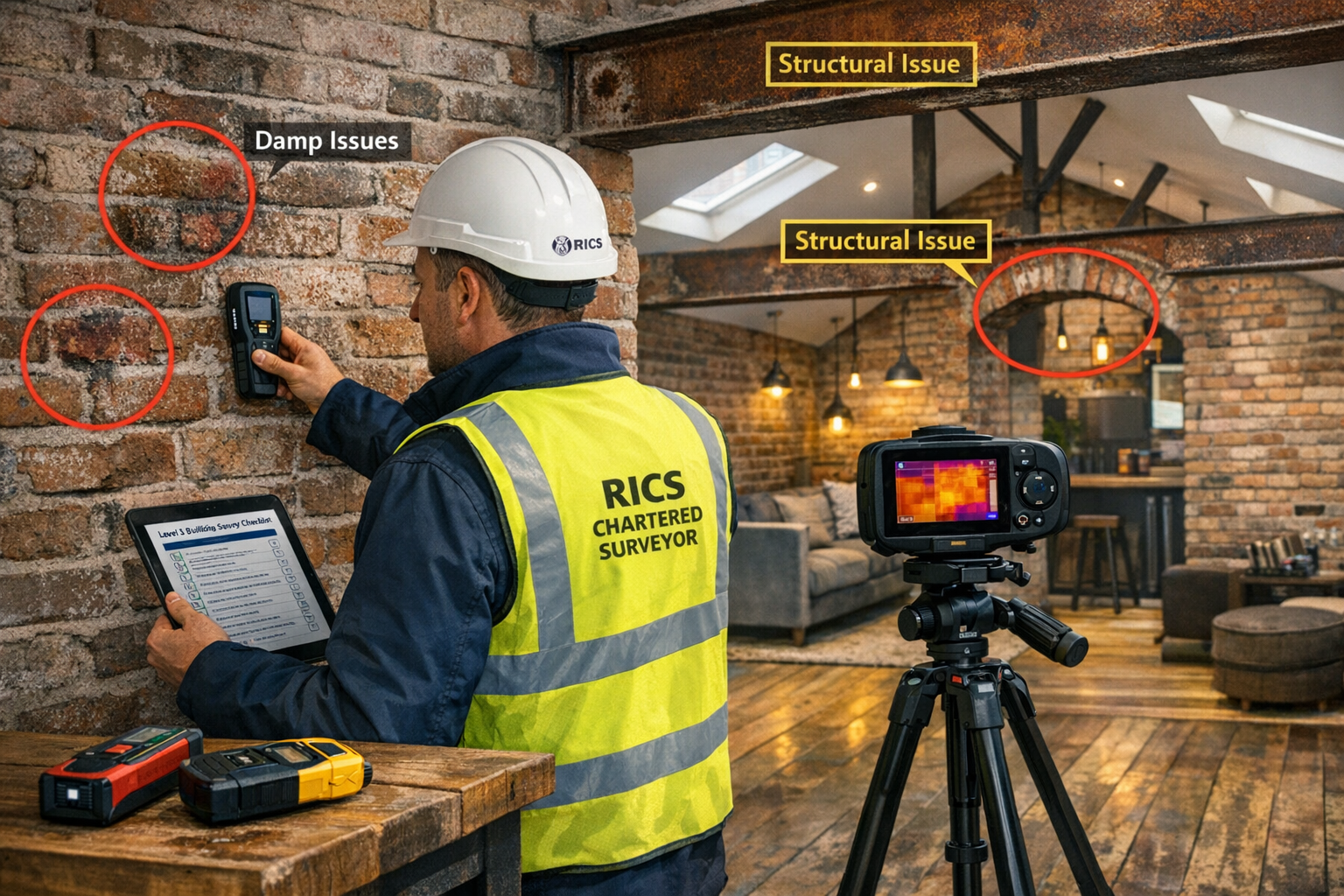
Defect Detection Priorities in Manchester's Conversion Stock
Manchester's high proportion of converted properties requires surveyors to focus on specific defect categories that commonly affect these buildings:
Critical Defect Categories:
-
Structural Integrity Issues
- Unauthorized removal of load-bearing walls
- Inadequate support for new openings
- Floor loading capacity in loft conversions
- Foundation movement in terraced properties
-
Damp and Water Penetration
- Rising damp in ground-floor conversions
- Penetrating damp through poorly maintained Victorian brickwork
- Condensation issues in poorly ventilated converted spaces
- Roof leaks in properties with altered roof structures
-
Building Regulation Non-Compliance
- Fire safety deficiencies in multi-unit conversions
- Inadequate sound insulation between converted units
- Non-compliant electrical installations
- Substandard thermal insulation in extended or converted areas
-
Hidden Defects in Cosmetic Renovations
- Surface finishes concealing underlying problems
- Quick-flip renovations with inadequate structural work
- Poorly executed DIY modifications
- Deferred maintenance masked by cosmetic improvements
Understanding what surveyors look for in a house survey helps property buyers and investors appreciate the thoroughness required for Manchester's complex property stock.
Implementing Effective Building Survey Protocols for Manchester's 2026 Property Boom: RICS Standards Amid Surging Northern Yields
Pre-Survey Preparation and Documentation Review
Effective survey protocols begin before the physical inspection. In Manchester's fast-moving 2026 market, thorough preparation ensures comprehensive assessment within tight transaction timelines.
Essential Pre-Survey Steps:
✅ Property History Research
- Review planning applications and building control approvals
- Investigate previous survey reports if available
- Check for listed building status or conservation area restrictions
- Research flood risk data for the specific Manchester postcode
✅ Documentation Gathering
- Request EPC certificates and historical energy assessments
- Obtain warranties for recent work (NHBC, LABC, etc.)
- Collect building regulation completion certificates
- Review lease terms for converted flats (service charge obligations, repair responsibilities)
✅ Client Briefing
- Clarify survey scope and level appropriate to property type
- Discuss specific concerns (planned renovations, known issues, investment goals)
- Establish realistic timelines given Manchester's +35% positive sales expectations[2]
- Explain cost implications of different survey levels
On-Site Inspection Methodology
Manchester's diverse property stock requires flexible yet systematic inspection approaches. RICS-qualified surveyors follow structured methodologies while adapting to property-specific characteristics.
Systematic Inspection Sequence:
-
External Envelope Assessment (60-90 minutes)
- Roof covering and structure inspection
- Chimney condition and pointing
- Rainwater goods (gutters, downpipes)
- External walls, brickwork, and render
- Windows and doors
- Drainage systems
-
Internal Structural Survey (90-120 minutes)
- Foundation and substructure indicators
- Load-bearing wall integrity
- Floor structure and level assessment
- Ceiling condition and structural alterations
- Staircase safety and construction
- Damp meter readings at multiple locations
-
Building Services Evaluation (45-60 minutes)
- Electrical installation age and safety
- Heating system efficiency and condition
- Plumbing and water pressure
- Ventilation adequacy
- Insulation presence and quality
-
Specialized Assessments (variable)
- Thermal imaging for hidden defects
- Moisture mapping in suspected damp areas
- Structural calculations for significant alterations
- Asbestos identification in pre-2000 properties
For properties requiring the most thorough examination, our complete guide to home surveying provides additional context on comprehensive inspection processes.
Technology Integration in 2026 Survey Protocols
Modern surveying in Manchester's 2026 market increasingly incorporates technology to enhance accuracy and client communication:
🔧 Advanced Survey Technologies:
- Thermal Imaging Cameras: Identify heat loss, moisture penetration, and hidden structural issues
- Moisture Meters: Provide precise readings rather than subjective assessments
- Laser Distance Measurers: Ensure accurate dimensional recording
- Drone Photography: Assess roof conditions and high-level defects safely
- Digital Reporting Platforms: Deliver interactive reports with annotated photographs
- 3D Scanning: Create detailed property models for complex conversions
These technologies complement traditional surveying skills, providing objective data to support professional judgment.
Report Preparation and Risk Communication
The survey report represents the culmination of inspection work and must communicate findings clearly to support informed decision-making in Manchester's competitive market.
RICS-Compliant Report Structure:
📋 Executive Summary
- Overall property condition rating
- Critical defects requiring immediate attention
- Estimated repair costs for major issues
- Valuation impact of identified defects
📋 Detailed Findings by Element
- Systematic coverage of all building components
- Condition ratings (1-3 scale: no issues, needs attention, serious defect)
- Photographic evidence of key defects
- Technical explanations in accessible language (Grade 7 readability)
📋 Recommendations and Next Steps
- Prioritized repair schedule
- Specialist investigations required (structural engineer, damp specialist, etc.)
- Estimated costs for remedial works
- Negotiation advice for purchase price adjustments
📋 Future Maintenance Guidance
- Anticipated maintenance requirements
- Lifecycle replacement schedules for major components
- Energy efficiency improvement opportunities
- Compliance pathways for emerging regulations
Given that February 2026 data showed house prices remaining broadly flat despite regional divergence[4], accurate survey valuations help buyers avoid overpaying in Manchester's strong market while recognizing genuine value.
Manchester-Specific Survey Considerations
Victorian Terraced Properties:
- Party wall condition and shared maintenance responsibilities
- Original slate roof condition (often 100+ years old)
- Solid wall construction requiring specialist damp assessment
- Cellar condition and potential conversion opportunities
- Rear extension quality (common addition in terraced properties)
Modern Conversions and New Builds:
- Warranty coverage verification (10-year NHBC or equivalent)
- Snagging issues in properties less than 2 years old
- Building regulation compliance for conversions
- Sound insulation between units in multi-occupancy conversions
- Fire safety measures in converted buildings
Investment Properties:
- Rental yield impact of required repairs
- Compliance with landlord safety regulations (gas, electrical, EPC)
- Tenant appeal factors affecting rental income
- Future capital expenditure planning
- Portfolio risk assessment for multiple property investors
For investors considering whether a homebuyer's survey is worth it, Manchester's 8.2% price growth makes comprehensive surveys increasingly valuable as absolute cost stakes rise[1].
Navigating Survey Challenges in Manchester's High-Velocity Market
Time Pressures and Survey Thoroughness
Manchester's positive market sentiment, with long-term sales expectations at +35%[2], creates competitive bidding environments where buyers feel pressure to move quickly. This urgency can conflict with thorough survey processes.
Balancing Speed and Quality:
- Standard turnaround: 5-7 working days from inspection to report delivery
- Express services: 2-3 working days available for urgent transactions (premium pricing)
- Preliminary findings: Verbal communication of critical defects within 24 hours
- Phased reporting: Initial condition summary followed by detailed written report
Understanding how long house surveys take helps buyers plan realistic transaction timelines that accommodate proper due diligence.
Cost Considerations in Survey Selection
Survey costs represent a fraction of property value but can feel significant in absolute terms, especially as Manchester terraced properties average £280,000[6].
Typical Manchester Survey Costs (2026):
| Survey Type | Price Range | Best For |
|---|---|---|
| Level 1 Condition Report | £300-£450 | New builds <10 years, excellent condition |
| Level 2 HomeBuyer Report | £450-£750 | Standard properties, reasonable condition |
| Level 3 Building Survey | £750-£1,500+ | Older properties, conversions, high-value investments |
| Specialist Investigations | £200-£800 each | Structural, damp, electrical, drainage issues |
Cost-Benefit Analysis:
For a £280,000 terraced property, a comprehensive Level 3 survey at £1,000 represents 0.36% of purchase price. Identifying defects requiring £15,000 in repairs provides:
- 15:1 return on survey investment through price negotiation
- Risk mitigation preventing post-purchase financial surprises
- Informed maintenance planning over ownership period
Given JLL's projection of 19.3% price growth through 2028[6], protecting initial investment through thorough surveys becomes even more critical as future equity stakes increase.
Coordinating Surveys with Mortgage Valuations
Mortgage lenders conduct basic valuations to protect their lending position, but these differ fundamentally from building surveys serving buyer interests.
Key Differences:
| Aspect | Mortgage Valuation | Building Survey |
|---|---|---|
| Purpose | Protect lender's security | Inform buyer's decision |
| Scope | Basic condition check | Comprehensive defect analysis |
| Detail | Minimal reporting | Extensive documentation |
| Time | 30-45 minutes | 2-4 hours |
| Cost | £200-£400 | £750-£1,500+ |
| Benefit to Buyer | Limited | Substantial |
Coordination Strategy:
- Schedule building survey shortly after offer acceptance
- Use survey findings to request price reduction or repairs
- Ensure mortgage valuation occurs after negotiations conclude
- Share critical defect information with lender if affecting valuation
Addressing Survey Findings in Negotiations
Survey reports frequently identify defects requiring remediation. In Manchester's strong market, negotiation strategies must balance defect severity against competitive pressure.
Negotiation Approaches:
💰 Price Reduction Request
- Calculate repair costs from surveyor estimates
- Request reduction equivalent to remediation costs
- Most effective for significant structural or damp issues
- Supported by detailed survey evidence
🔧 Seller Remediation
- Request seller complete repairs before completion
- Obtain warranties for completed work
- Suitable for safety-critical issues (electrical, gas, structural)
- Requires extended transaction timeline
⚖️ Retention Agreement
- Hold portion of purchase price in escrow
- Release funds upon repair completion post-purchase
- Useful when seller cannot complete work before sale
- Requires solicitor involvement and formal agreement
📋 Informed Acceptance
- Proceed with full knowledge of defects
- Factor repair costs into renovation budget
- Appropriate for properties purchased as renovation projects
- Ensures no post-purchase surprises
In Manchester's market where realistic pricing from the outset is absolutely crucial[2], survey-based negotiations help establish fair value accounting for true property condition.
Future-Proofing Survey Protocols: Emerging Standards and Manchester's Evolving Market
Sustainability and Energy Efficiency Assessments
RICS's 2026 emphasis on retrofit and sustainability expertise reflects growing regulatory focus on building performance[3]. Manchester surveyors increasingly incorporate energy efficiency assessments into standard protocols.
Emerging Survey Components:
🌿 Thermal Performance Evaluation
- Insulation adequacy in walls, roof, and floors
- Thermal bridging identification
- Window efficiency (single, double, or triple glazing)
- Heating system efficiency ratings
- Renewable energy integration potential
🌿 EPC Improvement Pathways
- Current EPC rating analysis
- Cost-effective upgrade recommendations
- Projected rating improvements from interventions
- Compliance timeline for rental properties (minimum EPC C by 2028)
🌿 Future Homes Standard Alignment
- Assessment against emerging construction standards
- Retrofit requirements for older properties
- Carbon reduction potential
- Long-term value protection through proactive upgrades
These considerations particularly affect Manchester's 50% recently built or renovated properties[6], where modern efficiency standards should be met but aren't always achieved in practice.
Technology Evolution in Building Surveys
Survey methodologies continue evolving with technological advancement. Manchester's competitive 2026 market rewards surveyors adopting innovative approaches.
Emerging Technologies:
- AI-Assisted Defect Detection: Machine learning algorithms identifying patterns in building pathology
- Virtual Survey Attendance: Remote client participation via video during inspections
- Blockchain Documentation: Immutable survey records creating property history trails
- IoT Sensor Integration: Continuous monitoring recommendations for high-value properties
- Augmented Reality Reporting: Interactive 3D visualization of defects and repairs
While technology enhances capability, RICS standards maintain that professional judgment remains central to quality surveying. Technology serves as a tool, not a replacement for expertise.
Regulatory Landscape and Compliance
Manchester's property boom occurs within an evolving regulatory environment affecting survey requirements.
Key Regulatory Considerations (2026):
📜 Building Safety Act Implementation
- Enhanced inspection requirements for converted buildings
- Fire safety assessments in multi-occupancy properties
- Building information modeling (BIM) for new developments
- Accountability frameworks for construction quality
📜 Energy Performance Regulations
- Minimum EPC standards for rental properties
- Disclosure requirements for property sales
- Retrofit obligations for older building stock
- Carbon reduction targets affecting property values
📜 Planning and Conservation
- Listed building considerations in survey scope
- Conservation area restrictions on alterations
- Article 4 directions limiting permitted development
- Heritage asset protection requirements
Surveyors must maintain current knowledge of these frameworks to provide comprehensive advice aligned with RICS building survey standards.
Market Outlook and Survey Demand Projections
Manchester's property market trajectory suggests sustained demand for professional survey services through the remainder of the decade.
Market Indicators Supporting Survey Demand:
📈 Positive Price Trajectory
- 8.2% year-on-year growth in early 2026[1]
- JLL's 19.3% growth forecast through 2028[6]
- 4% annual appreciation projected for terraced properties[6]
- Continued regeneration investment driving market confidence
📈 Transaction Volume Recovery
- Net buyer enquiries improving from -21% to -15%[2]
- Long-term sales expectations at +35%, strongest since December 2024[2]
- New property listings stable at +2% net balance[4]
- Tentative market recovery gaining momentum
📈 Investment Activity
- Northern yields attracting investor capital from overheated southern markets
- Buy-to-let activity sustained despite regulatory pressures
- Conversion opportunities in commercial-to-residential projects
- Portfolio expansion by institutional investors
This environment creates sustained demand for Building Survey Protocols for Manchester's 2026 Property Boom: RICS Standards Amid Surging Northern Yields, as investors and owner-occupiers seek professional risk assessment in a competitive market.
Selecting the Right Survey Provider in Manchester's 2026 Market
RICS Qualification and Local Expertise
Not all surveyors possess equal capability to assess Manchester's diverse property stock. Selecting appropriately qualified professionals ensures survey value.
Essential Qualifications:
✓ RICS Membership (MRICS or FRICS)
- Chartered status demonstrating professional competence
- Ongoing professional development requirements
- Professional indemnity insurance coverage
- Adherence to RICS Code of Conduct
- Learn about verifying surveyor credentials
✓ Manchester Market Knowledge
- Familiarity with local construction types and eras
- Understanding of regional defect patterns
- Knowledge of local planning and conservation requirements
- Awareness of Manchester-specific market dynamics
✓ Relevant Specializations
- Period property expertise for Victorian/Edwardian conversions
- New build and warranty assessment capabilities
- Investment property evaluation experience
- Sustainability and retrofit qualifications (increasingly important)
Questions to Ask Prospective Surveyors
Pre-Appointment Inquiries:
-
"What is your experience with [specific property type] in Manchester?"
- Assess familiarity with your property category
- Gauge local market knowledge
-
"What survey level do you recommend for this property, and why?"
- Test professional judgment
- Understand reasoning behind recommendations
-
"What is your typical turnaround time, and can you accommodate our completion deadline?"
- Ensure realistic scheduling
- Identify flexibility for urgent requirements
-
"What technology do you use during inspections?"
- Understand methodological sophistication
- Assess commitment to modern practice standards
-
"Can you provide sample reports or client references?"
- Evaluate report quality and clarity
- Verify client satisfaction
-
"Are you familiar with [specific concern, e.g., Victorian damp issues, loft conversion regulations]?"
- Test specialized knowledge relevant to your property
- Identify expertise gaps
Red Flags in Survey Selection
⚠️ Warning Signs to Avoid:
- Unwillingness to provide RICS membership number
- Significantly lower pricing than market rates (potential quality compromise)
- Lack of professional indemnity insurance
- Inability to explain survey methodology
- Pressure to select lower survey levels than property warrants
- No local Manchester experience or property knowledge
- Poor communication or unresponsiveness during initial contact
Manchester's 8.2% price appreciation[1] makes survey quality increasingly critical, as defect-related costs represent larger absolute amounts on higher-value properties.
Conclusion: Maximizing Value Through Rigorous Survey Protocols
Manchester's 2026 property boom presents exceptional opportunities alongside significant risks. The city's 8.2% year-on-year price growth, 50% recently built or renovated stock, and £1.5 billion regeneration projects create a dynamic market where informed decision-making separates successful investments from costly mistakes[1][6].
Building Survey Protocols for Manchester's 2026 Property Boom: RICS Standards Amid Surging Northern Yields provide the essential framework for navigating this complex landscape. Whether purchasing a Victorian terraced property requiring comprehensive assessment or evaluating a modern conversion for investment potential, RICS-compliant survey methodologies deliver the detailed intelligence necessary for confident property transactions.
The integration of sustainability assessments, advanced technology, and Manchester-specific expertise ensures survey protocols evolve alongside market conditions. As RICS emphasizes retrofit and energy efficiency capabilities, surveyors equipped with these skills provide forward-looking advice protecting long-term property value[3].
Actionable Next Steps for Property Buyers and Investors
Immediate Actions:
-
Determine Appropriate Survey Level
- Assess property age, type, and condition
- Review our Level 3 building survey comprehensive guide
- Select survey scope matching property complexity and investment size
-
Research RICS-Qualified Surveyors
- Verify RICS membership and credentials
- Seek Manchester-specific experience
- Request quotes from multiple qualified providers
- Compare scope, turnaround times, and pricing
-
Schedule Survey Strategically
- Book immediately after offer acceptance
- Allow adequate time for thorough inspection
- Plan for potential follow-up specialist investigations
- Coordinate with transaction timeline
-
Prepare for Survey Day
- Ensure property access arrangements
- Gather available documentation (EPCs, warranties, planning approvals)
- List specific concerns for surveyor attention
- Consider attending inspection to discuss findings directly
-
Act on Survey Findings
- Review report thoroughly with professional guidance
- Calculate remediation costs for identified defects
- Develop negotiation strategy based on severity
- Make informed proceed/withdraw/renegotiate decision
Long-Term Considerations:
- Maintain survey reports as property ownership records
- Use findings to prioritize maintenance and improvements
- Reassess property condition every 5-10 years
- Consider energy efficiency upgrades to protect future value
- Stay informed about evolving building standards and compliance requirements
Manchester's property market offers compelling opportunities for those who approach transactions with appropriate due diligence. As long-term sales expectations reach +35% and the city's regeneration continues, professional building surveys remain the cornerstone of successful property investment in the Northern Powerhouse[2].
By embracing comprehensive Building Survey Protocols for Manchester's 2026 Property Boom: RICS Standards Amid Surging Northern Yields, buyers and investors position themselves to capitalize on Manchester's growth while protecting against the hidden risks that accompany rapid market appreciation.
References
[1] Navigating Widening North South Valuation Divides In 2026 Rics Techniques For Accurate Property Appraisals – https://nottinghillsurveyors.com/blog/navigating-widening-north-south-valuation-divides-in-2026-rics-techniques-for-accurate-property-appraisals
[2] Uk Residential Market Survey January 2026 – https://www.rics.org/content/dam/ricsglobal/documents/market-surveys/uk-residential-market-survey/UK-Residential-Market-Survey_January-2026.pdf
[3] Rics Ceo Comments On The Publication Of The Future Homes And Building Standards – https://www.rics.org/news-insights/rics-ceo-comments-on-the-publication-of-the-future-homes-and-building-standards
[4] Uk Residential Market Survey February 2026 – https://www.rics.org/content/dam/ricsglobal/documents/market-surveys/uk-residential-market-survey/UK-Residential-Market-Survey_February-2026.pdf
[6] Manchester Real Estate Market – https://investropa.com/blogs/news/manchester-real-estate-market
