
}
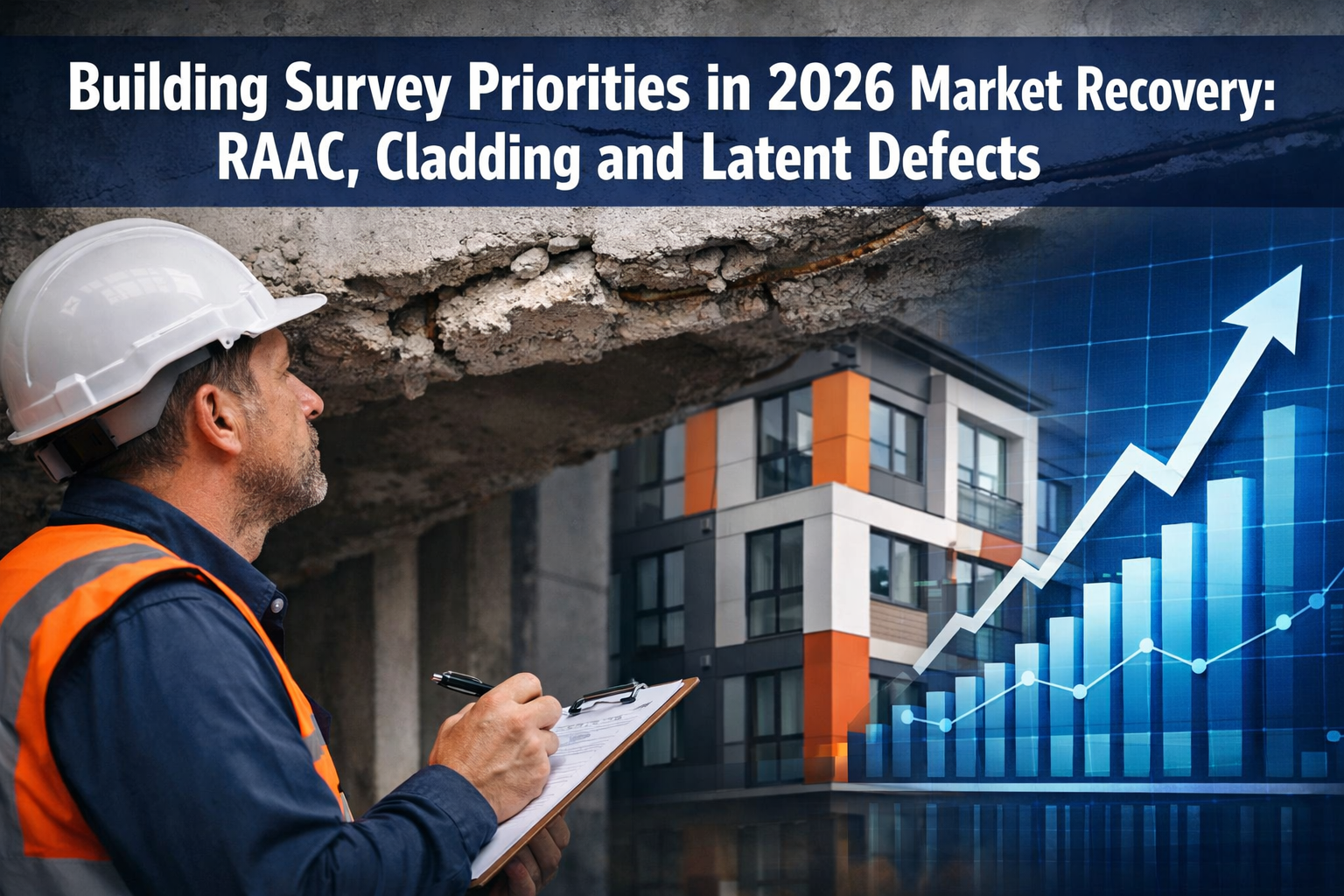
The UK property market is showing unmistakable signs of recovery in 2026, with buyer confidence returning and transaction volumes climbing after a challenging period. However, this renewed optimism brings heightened responsibility for building surveyors. As Building Survey Priorities in 2026 Market Recovery: RAAC, Cladding and Latent Defects for Stabilising Prices become central to maintaining market stability, surveyors must sharpen their focus on high-risk defects that could derail transactions or expose buyers to catastrophic financial risk.
With new buyer enquiries improving to -15% net balance in January 2026—up from -21% in December—and a remarkable +35% net balance for 12-month sales optimism, the market momentum is undeniable.[1] Yet this recovery remains fragile. Price stability depends on accurate risk assessment, particularly for properties affected by reinforced autoclaved aerated concrete (RAAC), dangerous cladding systems, and hidden structural defects that threaten both safety and value.
Key Takeaways
- 🏗️ RAAC identification is critical: Surveyors must prioritise detecting reinforced autoclated aerated concrete in pre-1990s buildings, as its presence can halt transactions and require immediate remediation
- 🔥 Cladding compliance drives value: Properties with non-compliant cladding face significant devaluation and mortgage restrictions, making thorough facade inspection essential in Level 3 surveys
- 📊 Market recovery demands rigour: With +43% of respondents expecting price increases in 2026, comprehensive defect detection protects both buyer confidence and long-term price stabilisation[1]
- 🔍 Latent defects require advanced diagnostics: Hidden structural issues, damp penetration, and concealed timber decay need specialist equipment and expertise to identify before completion
- ✅ Documentation quality matters: Detailed photographic evidence and risk-rated reporting in building surveys provide the transparency needed to maintain transaction momentum in a recovering market
Understanding the 2026 Market Recovery Context
The UK residential property market has entered 2026 with cautious optimism replacing the uncertainty that characterised much of 2024 and 2025. According to the latest RICS UK Residential Market Survey, price expectations have reached their most positive outlook since February 2025, with +43% of respondents anticipating higher prices over the coming year.[1]
This recovery isn't merely speculative. The housebuilding sector demonstrates tangible confidence, with industry leaders planning to increase total investment by approximately 38% over the next 12 months.[2] This investment surge focuses on new equipment, recruitment expansion, and marketing initiatives—all indicators of sustained growth expectations.
Why Survey Quality Matters More Than Ever
In a rising market, the temptation exists to rush surveys or overlook concerning features to maintain transaction velocity. This approach is dangerously shortsighted. Building Survey Priorities in 2026 Market Recovery: RAAC, Cladding and Latent Defects for Stabilising Prices must centre on thorough risk identification because:
- Mortgage lenders are increasingly cautious about properties with known defects, particularly RAAC and cladding issues
- Buyer awareness has increased following high-profile building safety scandals and media coverage
- Remediation costs can exceed property values in severe cases, creating negative equity situations
- Legal liability for surveyors has intensified following landmark negligence cases
The 12-month sales outlook showing the strongest reading since December 2024 (+35% net balance) creates both opportunity and obligation.[1] Surveyors who maintain rigorous standards will support sustainable price growth, while those who compromise quality risk contributing to future market corrections.
The Role of Comprehensive Building Surveys
For properties requiring detailed investigation, a Level 3 building survey provides the most thorough assessment available. These comprehensive inspections are particularly vital for:
- Properties constructed before 1992 (RAAC risk period)
- Buildings with external cladding systems
- Older properties with complex construction histories
- Properties showing visible signs of structural movement or deterioration
Understanding what surveyors look for in a house survey helps buyers appreciate why thorough inspection takes time and expertise—especially when identifying the critical defects that threaten both safety and value.
RAAC Detection: The Critical Priority for Pre-1990s Buildings
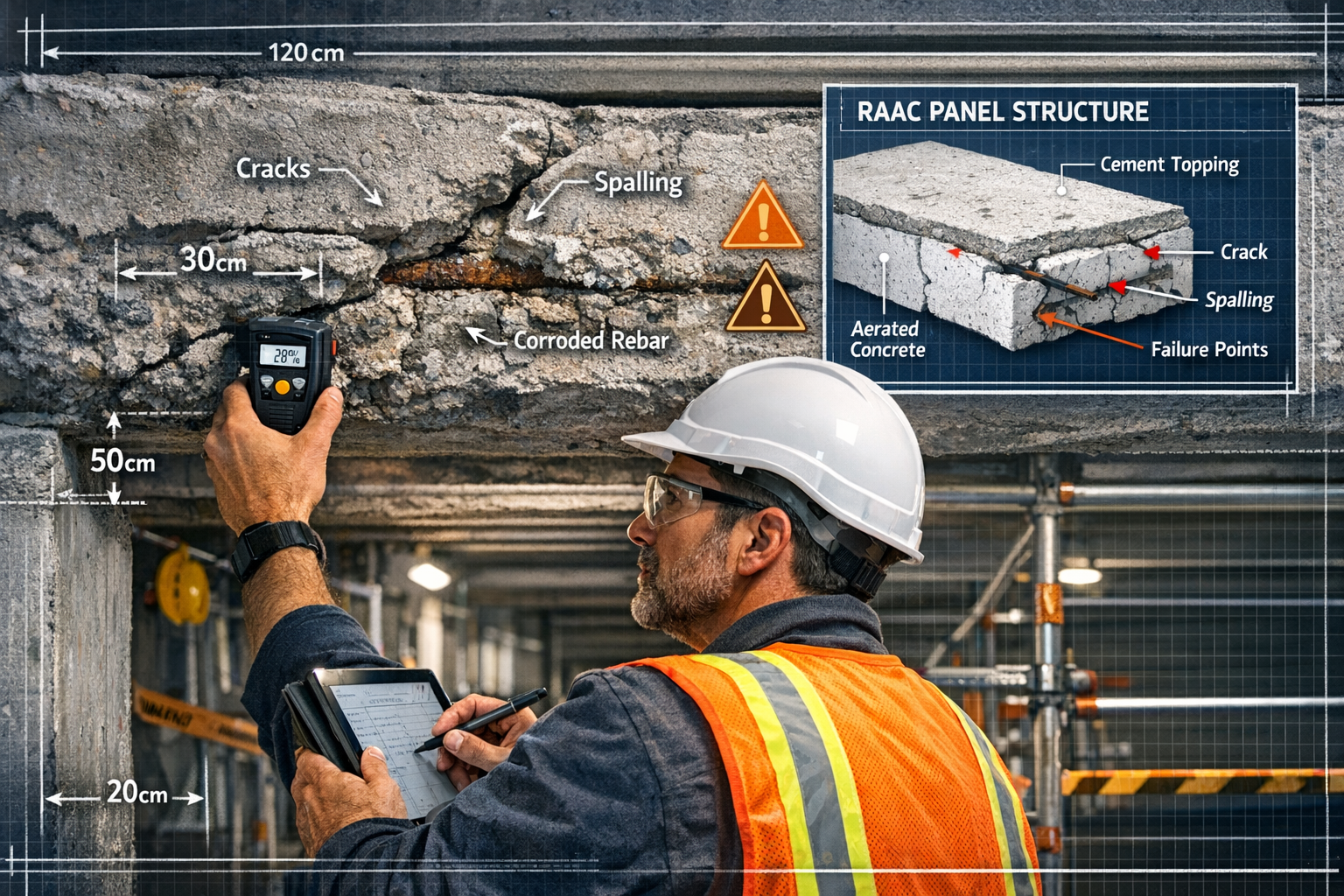
Reinforced autoclaved aerated concrete (RAAC) has emerged as one of the most significant structural concerns in the UK property market. This lightweight concrete material, used extensively between the 1950s and mid-1990s in roofs, floors, and walls, has a finite lifespan and can fail catastrophically with minimal warning.
What Makes RAAC So Dangerous?
RAAC differs fundamentally from traditional reinforced concrete. Its aerated structure—created by introducing air bubbles during manufacturing—makes it significantly lighter but also:
- More porous and susceptible to water ingress, which accelerates deterioration
- Prone to sudden failure rather than gradual degradation with visible warning signs
- Difficult to repair once deterioration begins, often requiring complete replacement
- Challenging to identify without specialist knowledge and access to concealed structural elements
The material was particularly popular in educational buildings, hospitals, and commercial structures, but also appeared in residential construction—especially in flat roofs, floor slabs in apartment buildings, and garage structures.
Identification Techniques for Building Surveyors
Detecting RAAC requires a systematic approach combining documentary research, visual inspection, and specialist testing:
Documentary Investigation
- Review building age and construction records: RAAC usage peaked between 1960-1990
- Examine original architectural drawings if available through local authority building control
- Check for previous survey reports that may reference concrete types
- Research the original developer/contractor known to have used RAAC systems
Visual Inspection Indicators
| Visual Clue | What It Suggests | Action Required |
|---|---|---|
| Exposed concrete with visible air bubbles | Potential RAAC identification | Specialist testing needed |
| Deflection in roof or floor structures | Possible RAAC deterioration | Immediate structural engineer referral |
| Water staining on concrete surfaces | Moisture ingress accelerating RAAC failure | Urgent investigation |
| Cracks following reinforcement lines | Advanced RAAC deterioration | Emergency structural assessment |
| Unusually thin concrete panels (50-200mm) | Common RAAC dimensions | Confirm material composition |
Specialist Testing Methods
When RAAC is suspected, surveyors should recommend:
- Core sampling and laboratory analysis to definitively identify material composition
- Structural engineer assessment to evaluate load-bearing capacity and remaining lifespan
- Non-destructive testing including ground-penetrating radar for concealed elements
- Moisture content analysis to assess deterioration progression
Reporting RAAC Concerns
When RAAC is identified or suspected, survey reports must communicate risk with absolute clarity:
Risk Rating: Assign the highest urgency category (typically "Category 3" or "Urgent" in RICS terminology)
Clear Language: Avoid technical jargon that might obscure severity. State explicitly: "This material presents a significant structural safety risk and requires immediate specialist assessment before purchase proceeds."
Remediation Guidance: Outline potential solutions, including:
- Complete RAAC removal and replacement (often the only viable long-term solution)
- Temporary propping and monitoring (rarely appropriate for residential purchases)
- Alternative structural support systems
Cost Implications: Provide realistic cost ranges for remediation, which can easily exceed £50,000-£150,000 for residential properties depending on the extent of RAAC use.
Mortgage Impact: Explicitly warn that most mortgage lenders will refuse to lend on properties with confirmed RAAC until remediation is complete and certified.
The presence of RAAC can transform a promising transaction into an impossible one. Surveyors conducting structural surveys must prioritise this investigation in any pre-1990s building, particularly those with flat roofs or multi-storey construction.
Cladding Systems: Compliance, Safety and Valuation Impact
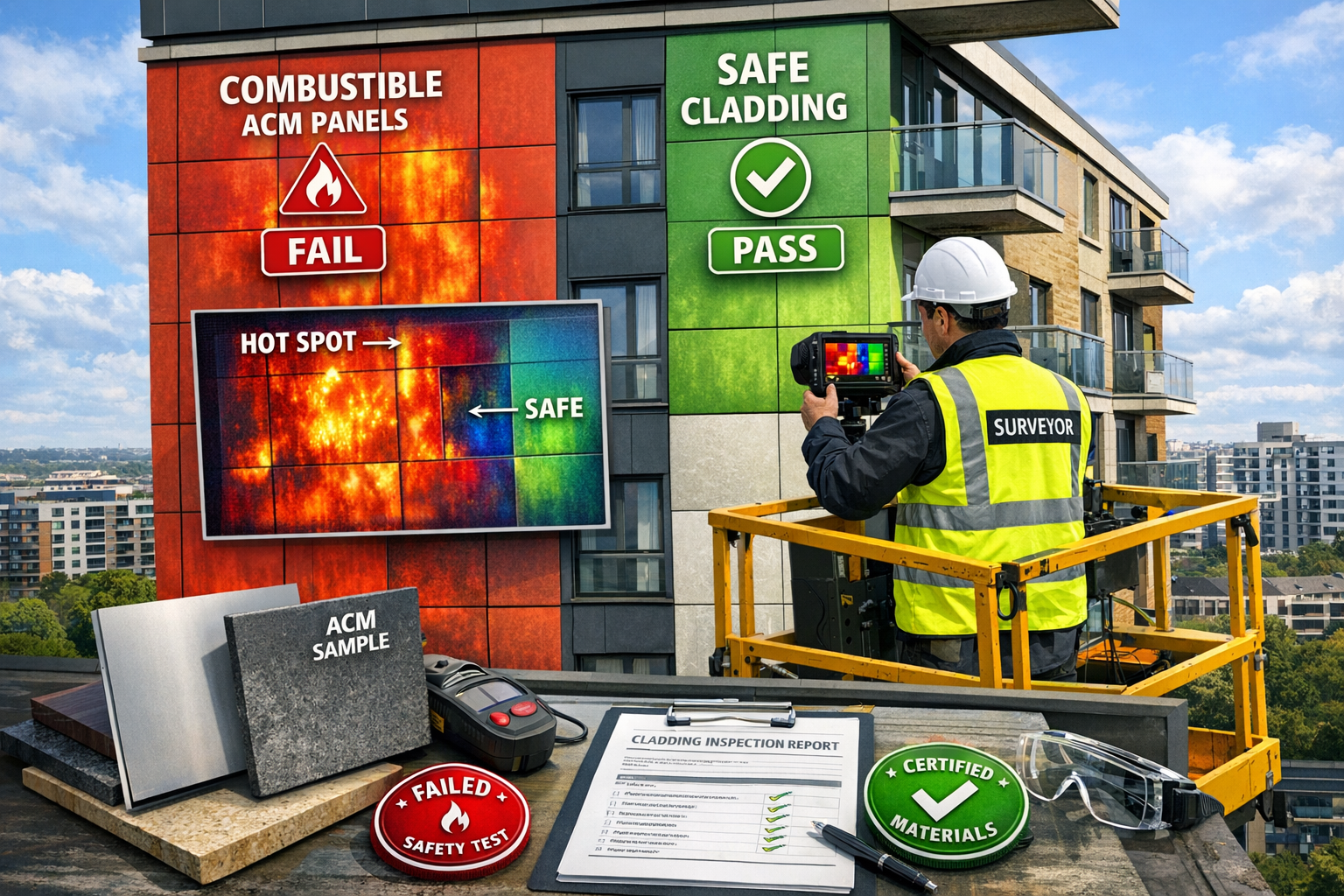
The Grenfell Tower tragedy fundamentally changed how the property industry approaches external wall systems. In 2026, cladding compliance remains a critical survey priority that directly impacts property values, mortgage availability, and transaction success rates.
The Regulatory Landscape in 2026
Building safety legislation continues to evolve, with surveyors needing current knowledge of:
- Building Safety Act 2022 requirements for external wall assessments
- EWS1 form requirements and when they're mandatory for mortgage purposes
- Remediation funding schemes and their eligibility criteria
- Fire safety certificates required for buildings over 11 metres (approximately 4 storeys)
Properties in buildings over 18 metres with combustible cladding face the most severe restrictions, but buildings between 11-18 metres also experience significant valuation and mortgage challenges.
Identifying Problematic Cladding Systems
Surveyors must recognise various cladding types and their associated risks:
High-Risk Materials
Aluminium Composite Material (ACM) with polyethylene core: The most dangerous category, banned for use on buildings over 18 metres since 2018. Properties with this material:
- Face near-total mortgage market closure until remediation
- Experience valuation reductions of 50-100% in some cases
- May be eligible for government remediation funding
High-Pressure Laminate (HPL) panels: Combustible material that accelerates fire spread. Buildings with HPL cladding:
- Require EWS1 certification for mortgage purposes
- Often need complete replacement rather than modification
- Present significant leaseholder liability concerns
Timber cladding without adequate fire breaks: While aesthetically popular, improperly installed timber cladding:
- May fail current fire safety standards
- Requires cavity barrier verification
- Needs assessment of separation from combustible insulation
Assessment Methodology
Comprehensive cladding inspection should include:
- External visual survey using binoculars or drone photography for upper floors
- Material identification through manufacturer markings, building control records, or specialist testing
- Fire safety feature verification including cavity barriers, fire breaks, and compartmentation
- Documentation review of EWS1 forms, fire risk assessments, and remediation plans
- Building height measurement to determine regulatory thresholds
Valuation and Transaction Implications
The impact of cladding issues on property values cannot be overstated:
Properties with confirmed dangerous cladding may be:
- Unmortgageable until remediation is complete
- Subject to waking watch costs (£100-300+ per unit monthly)
- Facing service charge increases for interim safety measures
- Affected by building insurance premium increases of 300-500%
Properties with uncertain cladding status experience:
- Extended transaction times while assessments are completed
- Buyer negotiation leverage for price reductions of 10-25%
- Lender requirements for retention of funds pending certification
Reporting Cladding Concerns Effectively
Survey reports addressing cladding must provide actionable intelligence:
For apartment buildings, recommend buyers obtain:
- Current EWS1 form (if applicable to building height)
- Building safety fund application status
- Freeholder remediation timeline and funding arrangements
- Estimated leaseholder contribution requirements
For houses with cladding, advise:
- Material identification and compliance verification
- Fire safety assessment by competent person
- Remediation cost estimates with multiple contractor quotes
- Impact on future saleability and mortgage availability
Understanding commercial building survey requirements helps when assessing mixed-use buildings where residential and commercial cladding standards may differ.
Latent Defects: Advanced Detection Techniques for Hidden Risks
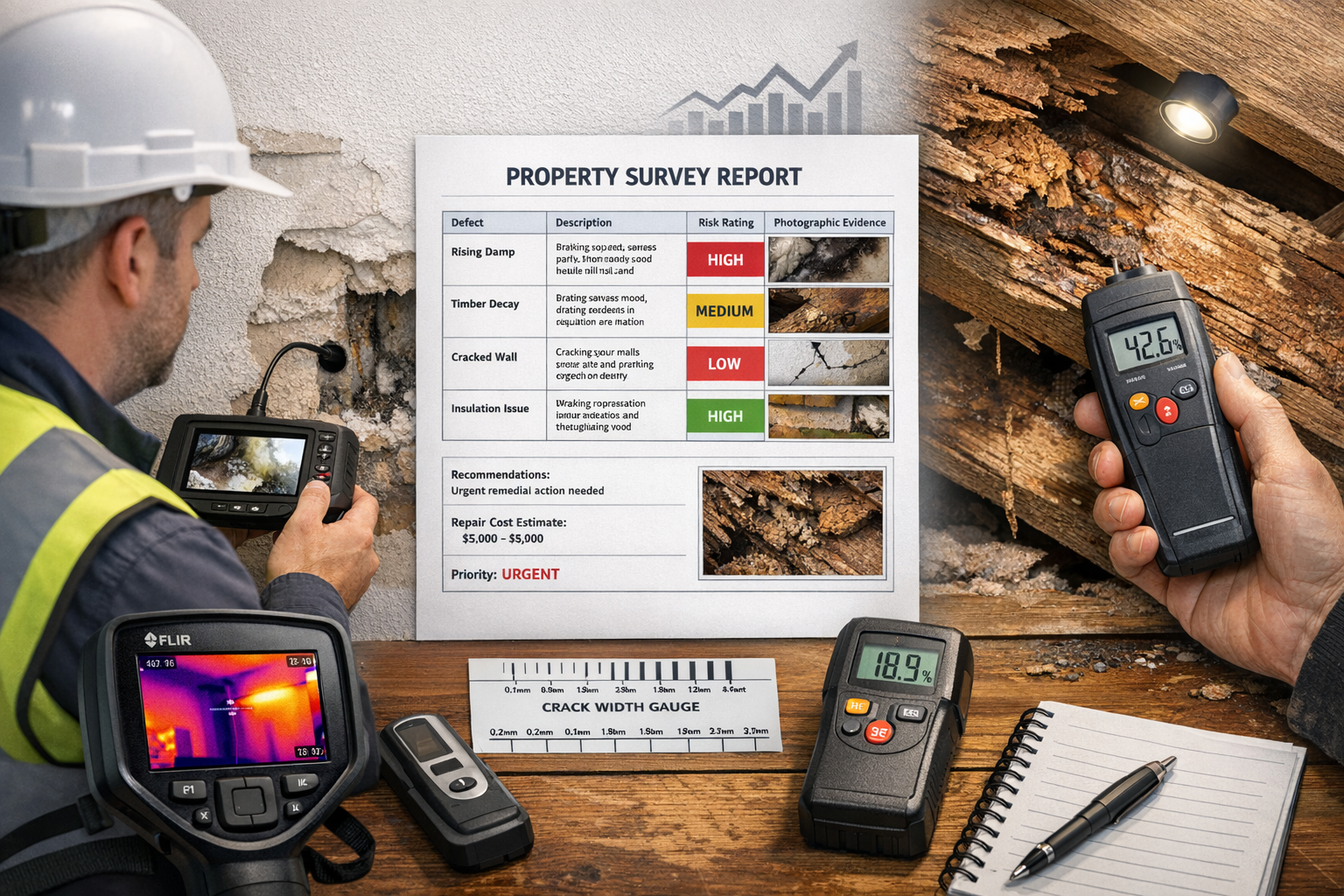
While RAAC and cladding represent high-profile concerns, latent defects—those hidden from casual observation—pose equally significant risks to buyers and market stability. These concealed issues can emerge months or years after purchase, leading to expensive remediation and potential surveyor negligence claims.
Categories of High-Priority Latent Defects
Structural Movement and Settlement
Subsidence, heave, and settlement often begin in concealed foundations and only become visible once significant damage has occurred. Advanced detection involves:
- Crack pattern analysis distinguishing settlement from thermal movement
- Level surveys detecting floor and ceiling plane deviations
- External ground level assessment identifying soil movement indicators
- Drainage investigation to rule out leak-induced subsidence
Tree root activity presents particular challenges in areas with clay soils. Surveyors should:
- Map proximity of high water-demand species (oak, willow, poplar) to foundations
- Assess seasonal ground movement patterns
- Recommend specialist arboricultural and structural assessments when risk factors align
Concealed Damp and Water Ingress
Rising damp, penetrating damp, and condensation each require different remediation approaches, making accurate diagnosis essential:
Diagnostic Equipment:
- Moisture meters (both invasive pin-type and non-invasive radio frequency)
- Thermal imaging cameras revealing cold spots and moisture patterns
- Hygrometers measuring relative humidity and condensation risk
- Carbide testing for definitive moisture content in masonry
Common Concealment Locations:
- Behind fitted furniture and kitchen units
- Under floor coverings (particularly non-breathable vinyl)
- Within wall cavities and behind dry-lining
- In roof spaces with inadequate ventilation
For properties showing damp indicators, recommending specialist damp surveys provides buyers with detailed remediation specifications and accurate cost projections.
Timber Decay and Infestation
Dry rot, wet rot, and wood-boring insect attack can compromise structural integrity while remaining completely hidden:
Detection Strategies:
- Subfloor inspection accessing voids beneath ground floors
- Roof space examination checking roof timbers and sarking boards
- Moisture mapping identifying conditions conducive to fungal attack
- Frass and bore dust identification indicating active insect infestation
Red Flags Requiring Investigation:
- Musty, mushroom-like odours in enclosed spaces
- Distorted or springy timber floors
- Paintwork cracking over timber elements
- Previous treatment evidence without certification
Electrical and Mechanical Systems
Obsolete wiring, defective heating systems, and drainage failures often hide within building fabric:
Electrical Assessment:
- Consumer unit inspection for age and type (modern RCD protection essential)
- Wiring age assessment (pre-1970s rubber/fabric insulation requires replacement)
- Earthing and bonding verification
- Recommendation for NICEIC/NAPIT electrical installation condition report
Heating and Plumbing:
- Boiler age and efficiency rating
- Central heating system condition and pressure testing
- Water supply pipe material (lead pipes requiring replacement)
- Drainage inspection chambers and flow testing
For comprehensive property assessment, roof surveys provide detailed analysis of one of the most critical—and frequently problematic—building elements.
Documentation and Evidence Standards
Building Survey Priorities in 2026 Market Recovery: RAAC, Cladding and Latent Defects for Stabilising Prices demand exceptional documentation quality:
Photographic Evidence:
- High-resolution images with scale references
- Before/after comparisons showing deterioration progression
- Annotated photographs highlighting specific defects
- Thermal imaging and moisture meter screenshots
Risk-Rated Reporting:
- Category 1: No repair currently needed
- Category 2: Defects requiring future attention but not urgent
- Category 3: Defects requiring urgent repair or investigation
Cost Guidance:
- Realistic repair cost ranges based on current market rates
- Identification of specialist contractors required
- Timeline implications for remediation work
- Impact on property value and mortgage security
When to Recommend Specialist Referrals
Competent surveyors recognise the limits of their expertise. Recommend specialist investigation for:
- Structural engineers: Foundation movement, RAAC assessment, structural alterations
- Damp specialists: Complex moisture issues requiring invasive investigation
- Arboricultural consultants: Tree-related subsidence risk assessment
- Electrical contractors: Full electrical installation condition reports
- Drainage specialists: CCTV drainage surveys for suspected defects
Even for new build properties, latent defects can exist due to construction errors, making thorough inspection valuable regardless of property age.
Integrating Survey Priorities into Market Recovery Strategy
As the 2026 market recovery gains momentum, building surveyors occupy a unique position. Their work directly influences whether price stabilisation continues or whether hidden defect discoveries trigger market corrections.
Supporting Sustainable Price Growth
Building Survey Priorities in 2026 Market Recovery: RAAC, Cladding and Latent Defects for Stabilising Prices support sustainable growth by:
Preventing Post-Purchase Surprises: Comprehensive defect identification before completion protects buyers from financial catastrophe and maintains confidence in the purchase process.
Enabling Accurate Pricing: When surveys identify significant defects, price adjustments reflect true property condition, preventing overvaluation that could undermine market stability.
Facilitating Informed Decision-Making: Detailed survey reports empower buyers to proceed, negotiate, or withdraw based on complete information rather than discovering problems after legal commitment.
Protecting Lender Security: Mortgage providers rely on survey information to assess lending risk. Thorough defect identification protects the lending market that underpins property transactions.
Balancing Thoroughness with Transaction Velocity
The improved sales outlook (+35% net balance for 12-month expectations) creates pressure to accelerate surveys.[1] However, speed must never compromise quality:
Efficient Survey Practices:
- Pre-appointment desktop research identifying likely risk factors
- Systematic inspection protocols ensuring comprehensive coverage
- Advanced diagnostic equipment reducing investigation time
- Template-based reporting with customised defect descriptions
Clear Communication:
- Setting realistic timeframes for survey completion (typically 5-10 working days for Level 3 surveys)
- Explaining why thorough investigation requires adequate time
- Providing preliminary verbal feedback on critical issues before formal report delivery
Understanding how long surveys take helps manage client expectations while maintaining quality standards.
Professional Development and Knowledge Currency
The evolving defect landscape requires continuous professional development:
Essential Knowledge Areas:
- Current building regulations and safety legislation
- Emerging construction defects and failure patterns
- New diagnostic technologies and methodologies
- Case law affecting surveyor liability and duty of care
Professional Credentials:
Ensuring surveyor qualifications remain current through RICS continuing professional development requirements demonstrates commitment to quality.
Regional Considerations
Market recovery varies regionally, with different defect priorities in different areas:
London and Southeast: Cladding issues dominate in high-density apartment developments. Surveyors operating in areas like Chelsea, Clapham, and Central London must prioritise external wall assessments.
Home Counties: RAAC concerns increase in 1960s-1980s developments. Surveyors in Hertfordshire, Berkshire, and Surrey should maintain heightened awareness of concrete construction.
Older Housing Stock: Traditional defects (settlement, damp, timber decay) remain priorities in period properties regardless of location.
Conclusion
The 2026 market recovery presents both opportunity and responsibility for building surveyors. With buyer enquiries improving, sales optimism at its strongest since December 2024, and price expectations turning decisively positive, the foundation exists for sustained market growth.[1]
However, this recovery's sustainability depends critically on maintaining transaction quality through rigorous defect identification. Building Survey Priorities in 2026 Market Recovery: RAAC, Cladding and Latent Defects for Stabilising Prices must guide every comprehensive property inspection, ensuring that hidden risks don't undermine buyer confidence or trigger future market corrections.
Key Actions for Surveyors
✅ Prioritise RAAC investigation in all pre-1990s buildings, particularly those with flat roofs or multi-storey construction
✅ Conduct thorough cladding assessments on buildings over 11 metres, obtaining or recommending EWS1 certification where applicable
✅ Deploy advanced diagnostic equipment to identify latent defects before they become post-purchase catastrophes
✅ Maintain exceptional documentation standards with risk-rated reporting and comprehensive photographic evidence
✅ Communicate clearly and promptly with clients about significant defects and their implications
✅ Recommend specialist investigations when findings exceed general practice surveyor expertise
✅ Continue professional development to maintain currency with evolving defect patterns and regulatory requirements
Next Steps for Property Professionals
For buyers navigating the recovering market, commissioning a comprehensive Level 3 building survey provides essential protection against the high-risk defects that threaten both safety and value.
For property professionals seeking expert survey services that prioritise critical defect identification, chartered surveyors with current knowledge of RAAC, cladding, and latent defect investigation deliver the quality needed to support sustainable market recovery.
The path to price stabilisation in 2026 runs directly through survey quality. By maintaining rigorous standards and prioritising the defects that pose the greatest risks, building surveyors protect individual buyers while supporting the broader market recovery that benefits the entire property sector.
References
[1] Uk Resi Survey Jan 2026 Report Shows Early Signs Market Recovery Despite Caution – https://www.rics.org/news-insights/uk-resi-survey-jan-2026-report-shows-early-signs-market-recovery-despite-caution
[2] 3719 2 – https://www.britbuild-magazine.co.uk/3719-2/
