
The UK property market is experiencing an unprecedented surge in buyer activity as 2026 unfolds. Following a post-Christmas demand spike of 57% reported by Rightmove, surveyors face mounting pressure to deliver comprehensive property assessments without compromising quality or thoroughness. Adapting Building Surveys for the 2026 Buyer Demand Surge: Protocols for Faster Transactions and Risk Mitigation has become essential for professionals navigating this challenging landscape, where speed and accuracy must coexist harmoniously.
With 88% of prospective buyers planning to purchase a home in 2026[1], the surveying industry must evolve rapidly. Traditional survey timelines that once stretched across weeks now threaten to derail transactions in a market where buyers are ready to move quickly. This comprehensive guide explores how chartered surveyors can implement streamlined protocols while maintaining the rigorous standards that protect both buyers and the profession's integrity.
Key Takeaways
- Market demand has surged dramatically: 88% of prospective buyers plan to purchase in 2026, creating unprecedented pressure on survey capacity and turnaround times[1]
- Digital transformation is non-negotiable: Cloud-based platforms, mobile reporting tools, and AI-assisted defect detection can reduce survey completion times by 30-40% without sacrificing quality
- RICS standards remain paramount: Streamlined protocols must maintain comprehensive risk assessment and thorough documentation to protect professional liability
- Strategic resource allocation: Implementing triage systems and pre-survey data collection helps prioritize urgent transactions while managing increased workload
- Risk mitigation through technology: Automated quality checks, standardized templates, and digital verification systems reduce human error in accelerated timelines
Understanding the 2026 Market Dynamics Driving Survey Demand
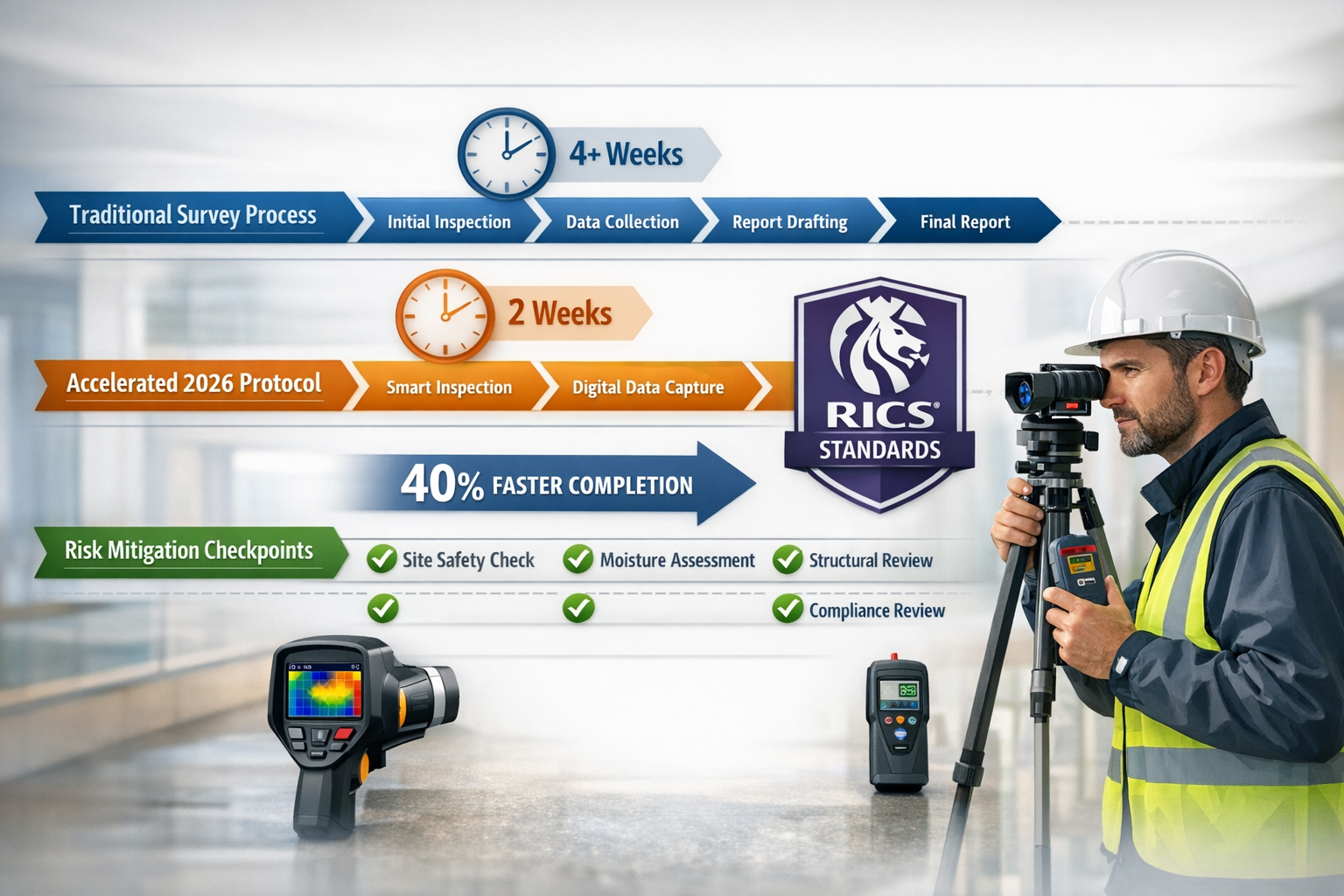
The property market landscape in 2026 differs substantially from previous years, shaped by unique economic pressures and shifting buyer priorities. Understanding these dynamics is crucial for adapting building surveys to meet current demands.
The Buyer Demand Explosion 🏠
Recent market research reveals compelling statistics about buyer intentions. 78% of buyers indicate that more affordable home prices would prompt them to buy within six months or less[1], demonstrating the pent-up demand waiting to flood the market as conditions improve. This creates a compressed timeline where survey capacity becomes a critical bottleneck.
The geographic distribution of this demand also matters. 51% of respondents are looking to buy homes in suburbs, while 32% prefer urban areas[1], requiring surveyors to adapt their expertise across diverse property types and locations. Suburban properties often present different challenges than urban dwellings, from larger grounds requiring boundary assessments to older construction methods in period properties.
Builder Confidence and Inventory Growth
Supply-side indicators reinforce demand projections. About half of builders surveyed expect construction starts will be up in 2026[2], reflecting confidence in sustained buyer interest. More significantly, community counts have risen for 10 consecutive months[2], indicating builders are expanding their inventory footprint to meet anticipated demand.
This expansion creates opportunities for surveyors specializing in new-build snagging reports and construction phase inspections, complementing traditional homebuyer survey work on existing properties.
Affordability Barriers and Transaction Urgency
Despite strong demand, affordability remains the primary gatekeeper to homeownership[1]. When market conditions align favorably—whether through price adjustments, improved mortgage rates, or wage growth—buyers move quickly to secure properties before windows of opportunity close. This urgency translates directly into pressure for faster survey turnaround times.
More than half (58%) of buyers cite proximity to work as an important geographic consideration, while 57% prioritize shopping and public spaces[1]. These location-specific preferences mean buyers often compete for limited inventory in desirable areas, further compressing transaction timelines.
| Market Indicator | 2026 Statistics | Impact on Surveys |
|---|---|---|
| Buyers planning to purchase | 88%[1] | Increased survey demand |
| Buyers ready to move quickly (if affordable) | 78%[1] | Compressed timelines |
| Preference for suburban properties | 51%[1] | Diverse property types |
| Builder confidence in starts | 50% expecting increases[2] | New-build survey opportunities |
| Community count growth | 10 consecutive months[2] | Expanding geographic coverage needs |
Adapting Building Surveys for the 2026 Buyer Demand Surge: Streamlined Protocols Without Compromising Quality
The central challenge facing surveyors in 2026 is delivering thorough, RICS-compliant assessments within accelerated timeframes. This requires systematic protocol adaptations across the entire survey process.
Pre-Survey Efficiency Measures
Digital intake and documentation revolutionizes the initial engagement phase. Implementing online booking systems with automated questionnaires captures essential property information before the surveyor arrives on-site. Clients can upload property documents, previous surveys, planning permissions, and photographs, allowing surveyors to conduct preliminary desktop research.
This preparation enables more focused on-site inspections. Understanding a property's age, construction type, previous alterations, and known issues allows surveyors to bring appropriate equipment and allocate sufficient time for specific concerns. For complex properties requiring a Level 3 building survey, this advance intelligence proves invaluable.
Strategic scheduling optimization ensures maximum productivity. Grouping surveys by geographic proximity reduces travel time, while implementing morning and afternoon appointment slots accommodates more inspections daily. Advanced booking systems with buffer time for complex properties prevent schedule overruns that cascade through the day.
Technology Integration for Faster Data Collection
Mobile survey applications transform on-site efficiency. Cloud-based platforms allow surveyors to input observations, capture photographs, record measurements, and dictate notes directly into structured templates during the inspection. This eliminates double-handling of information and reduces transcription errors that plague traditional clipboard-and-paper methods.
Modern survey apps offer several advantages:
- Voice-to-text functionality enables hands-free note-taking while inspecting difficult-to-access areas
- Photo annotation tools allow instant markup of defects with arrows, measurements, and severity ratings
- Standardized checklists ensure no elements are overlooked during rushed inspections
- Offline capability maintains productivity in properties with poor connectivity
- Instant cloud backup protects data and enables office staff to begin report formatting immediately
Thermal imaging and moisture detection technology accelerates defect identification. Rather than relying solely on visual inspection and invasive testing, thermal cameras reveal hidden damp, insulation deficiencies, and thermal bridging in minutes. This non-invasive approach speeds inspections while providing compelling visual evidence for reports.
Streamlined Reporting Frameworks
Template-based reporting systems dramatically reduce drafting time while maintaining comprehensive coverage. Well-designed templates include:
- Pre-written descriptions of common construction types and materials
- Standard explanations of defect categories and severity ratings
- Automated insertion of property-specific details from intake forms
- Conditional text blocks triggered by inspection findings
- Integrated photograph placement with automatic captioning
These systems don't compromise quality—they eliminate repetitive writing while ensuring consistent, thorough documentation. Surveyors focus their expertise on property-specific observations and recommendations rather than recreating standard explanatory text for each report.
Automated quality assurance checks catch errors before reports reach clients. Software can verify that all required sections contain content, photographs reference correct locations, recommendations align with identified defects, and technical terminology remains consistent throughout the document.
"The key to faster surveys isn't cutting corners—it's eliminating inefficiency. Technology allows us to spend more time on expert analysis and less time on administrative tasks." — Senior RICS Surveyor
Collaborative Review Processes
Peer review systems maintain quality standards despite accelerated production. Implementing tiered review protocols where junior surveyors handle routine inspections with senior oversight, while complex properties receive direct attention from experienced professionals, optimizes resource allocation.
Digital collaboration platforms enable asynchronous review, where senior surveyors can review draft reports remotely during gaps in their schedules rather than requiring dedicated office time. Track-changes functionality and comment threads facilitate efficient communication about necessary amendments.
For those wondering how long a homebuyer survey takes, these streamlined protocols can reduce typical timelines from 7-10 days to 3-5 days for standard properties, with RICS building surveys of complex properties still receiving appropriate time allocation.
Protocols for Faster Transactions and Risk Mitigation in High-Volume Periods

Accelerated survey timelines introduce risks that must be systematically addressed to protect surveyors, clients, and the transaction process itself.
Comprehensive Risk Assessment Frameworks
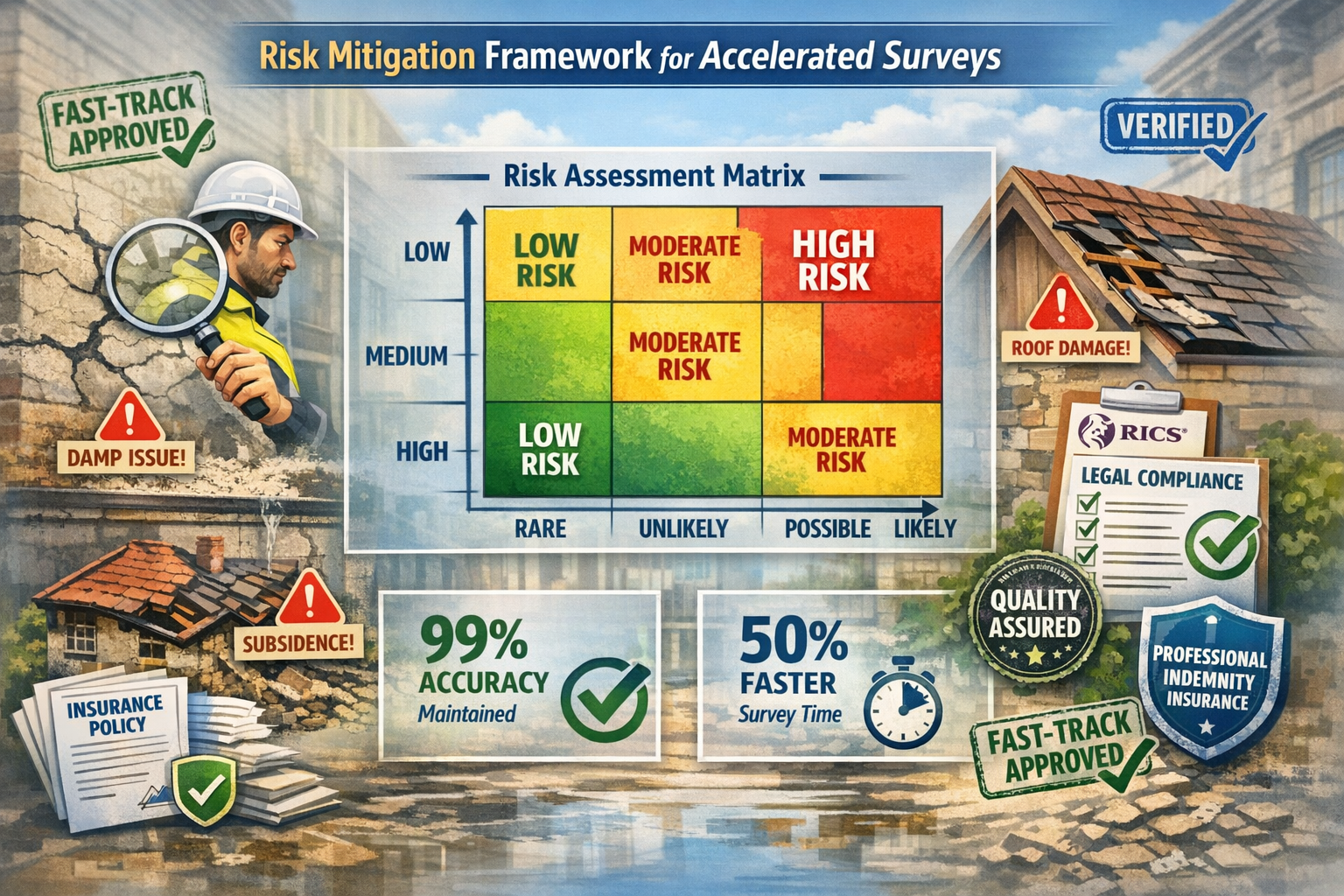
Triage systems categorize properties by complexity and risk level during the booking phase. This classification determines appropriate survey levels, time allocation, and surveyor assignment:
- Standard risk properties: Modern construction (post-1980), good condition, no obvious red flags—suitable for streamlined Level 2 surveys
- Moderate risk properties: Pre-1980 construction, minor visible defects, standard alterations—standard Level 2 or targeted Level 3 surveys
- High risk properties: Pre-1900 construction, visible structural concerns, significant alterations, unusual construction—comprehensive Level 3 surveys with extended timelines
This classification prevents inappropriate rushing of complex properties that require thorough investigation. Clear communication with clients about timeline expectations based on property complexity manages expectations while protecting professional standards.
Enhanced Professional Indemnity Protocols
Documentation standards become even more critical in accelerated workflows. Comprehensive photographic records, detailed notes about access limitations, and clear statements about inspection scope protect surveyors from future liability claims.
Key documentation practices include:
- ✅ Timestamped photographs proving inspection occurred and documenting conditions
- ✅ Detailed access limitation records noting areas not inspected and reasons why
- ✅ Weather condition documentation explaining visibility or access constraints
- ✅ Client communication logs recording discussions about scope, urgency, and limitations
- ✅ Peer review signatures confirming quality assurance processes were followed
Terms of engagement clarity ensures clients understand what accelerated timelines mean. Explicit statements about inspection limitations, the difference between survey levels, and the relationship between turnaround time and property complexity prevent misunderstandings that lead to complaints.
Quality Control Checkpoints
Mandatory review stages embedded in workflow management systems prevent reports from being issued prematurely. Even in urgent situations, minimum standards include:
- Surveyor self-review: Systematic checklist verification before submitting draft
- Administrative check: Verification that all required sections, photographs, and property details are present
- Technical review: Senior surveyor approval of findings, recommendations, and risk assessments
- Final formatting review: Ensuring professional presentation and client-ready quality
These checkpoints can be accelerated through parallel processing and digital workflows, but they cannot be eliminated without unacceptable risk exposure.
Client Education and Expectation Management
Transparent communication about what faster surveys mean helps clients make informed decisions. Some buyers may prioritize speed over comprehensiveness for certain property types, while others need to understand that rushing a survey of a complex period property introduces unacceptable risks.
Providing clear guidance helps clients choose appropriate survey levels. Resources explaining what a Level 2 survey covers versus when a Level 3 survey is worth the investment empowers informed decision-making.
Capacity Management Strategies
Resource scaling addresses demand surges without compromising quality. Options include:
- Associate surveyor networks: Pre-vetted professionals who can handle overflow work to consistent standards
- Flexible scheduling: Extended hours or weekend appointments during peak periods
- Priority service tiers: Premium pricing for genuinely urgent surveys funds additional resource allocation
- Realistic timeline communication: Honest assessment of current capacity prevents over-commitment
Workflow automation frees surveyor time for core professional activities. Automated appointment scheduling, payment processing, document collection, and report formatting allows surveyors to focus on inspections and technical analysis rather than administrative tasks.
Continuous Improvement Systems
Performance metrics identify bottlenecks and improvement opportunities:
| Metric | Target | Purpose |
|---|---|---|
| Average inspection time by property type | Benchmark establishment | Identify inefficiencies |
| Report drafting time | 4-6 hours for standard Level 2 | Monitor productivity |
| Quality assurance rejection rate | <5% | Track accuracy under pressure |
| Client satisfaction scores | >4.5/5.0 | Ensure quality maintenance |
| Turnaround time (booking to delivery) | 3-5 days standard properties | Meet market demands |
Regular protocol reviews ensure adaptations remain effective as market conditions evolve. Monthly team meetings to discuss challenges, share solutions, and refine procedures create a culture of continuous improvement that maintains professional standards while meeting commercial realities.
For surveyors handling commercial building surveys, similar principles apply with appropriate adjustments for complexity and stakeholder requirements.
Conclusion
Adapting Building Surveys for the 2026 Buyer Demand Surge: Protocols for Faster Transactions and Risk Mitigation represents both a challenge and an opportunity for the surveying profession. The unprecedented buyer demand documented in market research—with 88% of prospective buyers planning purchases this year[1]—creates pressure that cannot be ignored, but neither can the professional standards that protect clients and surveyors alike.
The solution lies not in cutting corners but in systematic efficiency improvements. Digital transformation, from mobile survey applications to cloud-based collaboration platforms, eliminates administrative friction that historically consumed valuable professional time. Pre-survey data collection and strategic triage systems ensure appropriate resource allocation, directing comprehensive inspections toward complex properties while streamlining routine assessments.
Technology enables faster surveys without compromising thoroughness. Thermal imaging accelerates defect detection, voice-to-text functionality speeds documentation, and template-based reporting maintains consistency while reducing drafting time. These tools don't replace professional judgment—they amplify it, allowing surveyors to focus expertise where it matters most.
Risk mitigation remains paramount in accelerated workflows. Enhanced documentation standards, mandatory quality checkpoints, and clear client communication protect against the liability risks that rushed work can introduce. Understanding whether a homebuyer survey is worth the investment helps clients appreciate the value of thorough professional assessment, even when timelines are compressed.
Actionable Next Steps
For surveying practices looking to adapt to 2026 market conditions:
- Audit current workflows to identify time-consuming administrative tasks suitable for automation or elimination
- Invest in mobile survey technology that enables real-time data capture and cloud-based collaboration
- Develop property triage systems that match survey scope and timeline to property complexity and risk
- Create standardized report templates that maintain comprehensive coverage while reducing drafting time
- Implement mandatory quality checkpoints that can be accelerated through digital workflows but never bypassed
- Establish transparent client communication about survey levels, timelines, and the relationship between speed and scope
- Build associate networks to manage demand surges without over-committing internal resources
- Monitor performance metrics to identify continuous improvement opportunities
The 2026 buyer demand surge will test the surveying profession's ability to balance commercial pressures with professional standards. Those who embrace systematic efficiency improvements while maintaining unwavering commitment to quality will not only survive this challenging period—they will emerge stronger, with enhanced capabilities and satisfied clients who recognize the value of expert property assessment, even in fast-moving markets.
References
[1] Remax Survey Reveals Strong Demand 88 Of Prospective Buyers Plan To Purchase A Home In 2026 – https://news.remax.com/press-release/remax-survey-reveals-strong-demand-88-of-prospective-buyers-plan-to-purchase-a-home-in-2026
[2] 2026 Housing Market Outlook Sales Starts Trends – https://www.bldr.com/resources/blog/2026-housing-market-outlook-sales-starts-trends
