

Commercial lease expiries in the UK are surging in 2026, driven by a wave of leases signed during the post-2008 recovery period now reaching their natural end. With that surge comes a sharp rise in dilapidations disputes — and the quality of expert witness evidence has never mattered more. Understanding Expert Witness Roles in 2026 Dilapidations Claims: Strengthening Evidence for Commercial Lease Ends is no longer a niche concern for property lawyers; it is a practical necessity for landlords, tenants, and the surveyors instructed to represent them.
In April 2026, the Royal Institution of Chartered Surveyors (RICS) launched a global consultation to update its expert witness standard to a proposed 5th edition, signalling just how rapidly the professional landscape is shifting [1]. From AI-generated evidence to stricter court admissibility tests, the rules governing expert testimony are being rewritten in real time.
Key Takeaways
- Expert witnesses in dilapidations claims must comply with CPR Part 35 and the latest RICS standards, with a proposed 5th edition now under global consultation.
- Courts in 2026 are demanding that experts be actively engaged in their specialty — not just credentialed — to pass admissibility tests.
- Comprehensive evidence gathering, including digital photography, drone surveys, and contemporaneous notes, is essential for defensible reports.
- AI-generated evidence and digital tools are reshaping how valuations and building condition assessments are presented in disputes.
- Early joint inspections and structured timelines reduce costs, narrow disputes, and strengthen the overall quality of expert testimony.
Why Expert Witnesses Are Central to Commercial Lease Dilapidations in 2026
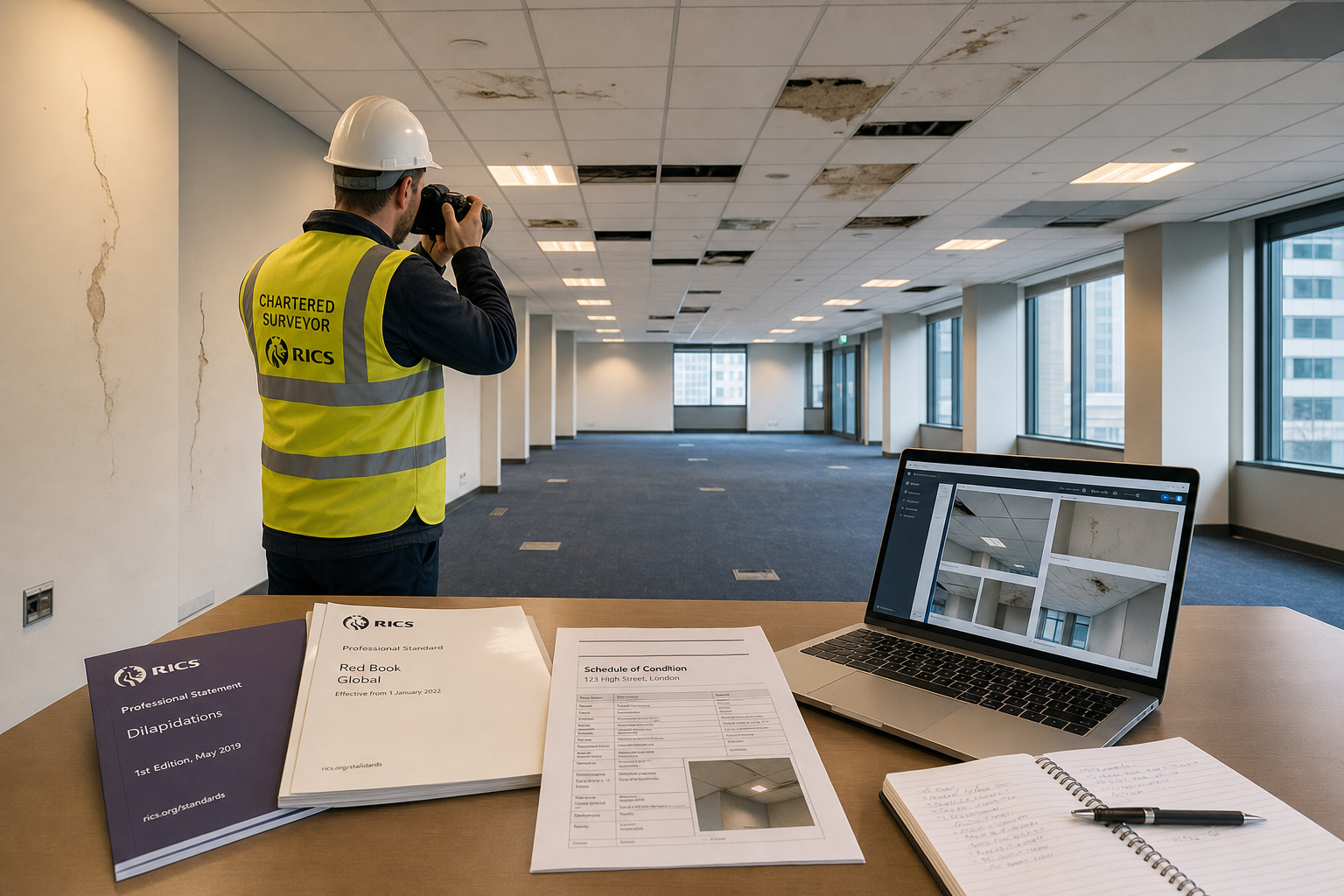
A dilapidations claim arises when a tenant leaves a commercial property in a condition that falls below the standard required by the lease. The landlord seeks compensation; the tenant disputes the scope or cost of remedial works. At the heart of almost every contested claim sits an expert witness — typically a chartered building surveyor — whose report can determine whether a claim succeeds, fails, or settles early.
The role is demanding. An expert witness owes their primary duty to the court, not to the instructing party. This distinction is not merely procedural. It shapes every decision the expert makes, from how defects are described to how repair costs are quantified. Understanding the full scope of Expert Witness Roles in 2026 Dilapidations Claims: Strengthening Evidence for Commercial Lease Ends requires examining both the technical and legal dimensions of the role.
For context on what a chartered surveyor brings to this process, the roles and responsibilities of a chartered surveyor provide a useful foundation. Dilapidations expert witnesses draw on the same core skills — condition assessment, cost estimation, and professional judgment — but apply them within a strict legal framework.
The Duty to the Court vs. Duty to the Client
The tension between serving the instructing party and maintaining independence is one of the most common pitfalls in dilapidations expert work. RICS issued a practice alert in April 2025 specifically highlighting concerns about the quality of expert witness functions in the property sector, noting that poor-quality evidence wastes public funds and allows invalid claims to proceed [6]. The message was clear: professional independence is non-negotiable.
The proposed RICS 5th edition standard reinforces this by requiring explicit disclosure of conflicts of interest and providing clearer guidance on conditional and deferred fee arrangements, which can compromise objectivity [1]. Any expert who accepts instructions on a "no win, no fee" basis in a dilapidations matter risks disqualification and professional sanction.
The Legal Framework: CPR Part 35 and RICS Standards
Expert witnesses in English courts operate under Civil Procedure Rules Part 35, which sets out the formal requirements for expert reports. Compliance is not optional. A report that fails to meet CPR Part 35 requirements can be excluded from evidence, regardless of its technical quality [3].
What CPR Part 35 Requires
Every compliant expert report must include:
- A declaration of the expert's overriding duty to the court
- A statement of truth, confirming the expert believes the facts stated are true
- A clear statement of instructions received from the instructing party
- The expert's qualifications and relevant experience
- A factual background section distinguishing facts from opinion
- Reasoned opinions with supporting evidence
- A statement of any range of opinion where the expert acknowledges differing professional views
Failure to include any of these elements creates grounds for the opposing party to challenge admissibility. Courts in 2026 are applying these tests more rigorously than before, with a growing trend toward excluding testimony from professionals who cannot demonstrate active, current engagement in their specialty [5].
The RICS 5th Edition Consultation: What Is Changing
The April 2026 RICS global consultation on the updated expert witness standard introduces several significant changes relevant to dilapidations practitioners [1]:
| Area of Change | Key Provision |
|---|---|
| Global applicability | Standard designed to apply across jurisdictions with local law carve-outs |
| AI and digital evidence | New guidelines on using AI tools and presenting digital evidence |
| Fee arrangements | Explicit rules on conditional and deferred fees |
| Conflict of interest | Mandatory disclosure requirements strengthened |
| Risk mitigation | Specific guidance for high-volume and complex cases |
These changes reflect the reality that dilapidations disputes increasingly involve digital evidence — drone footage, thermal imaging, AI-assisted cost schedules — and that courts need a consistent framework for evaluating it [4].
Building the Evidence Base: Inspections, Documentation, and Digital Tools
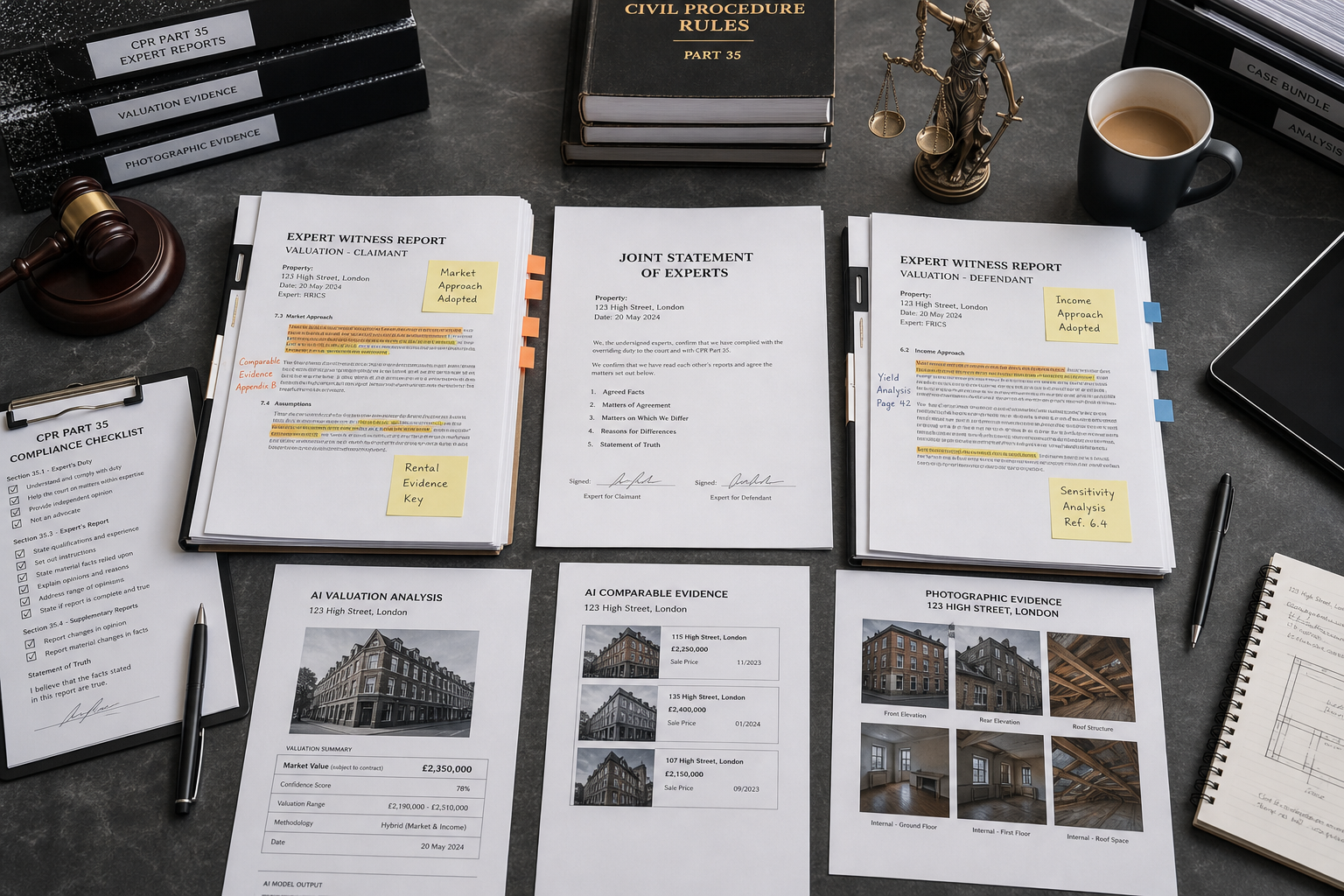
The strength of any dilapidations claim or defence rests on the quality of the evidence gathered during the property inspection. A well-documented inspection is the expert's primary shield against challenge.
What a Thorough Dilapidations Inspection Involves
Effective evidence gathering for a commercial lease end inspection should include [2]:
- Extensive photography — systematic, room-by-room, with scale references where relevant
- Detailed measurements of affected areas to support cost calculations
- Contemporaneous notes made on-site, not reconstructed later
- Defect investigation to establish cause (tenant breach vs. fair wear and tear vs. inherent defect)
- Reference to the original Schedule of Condition, if one was prepared at lease commencement
The value of a professional dilapidations survey prepared at lease start cannot be overstated. A well-drafted Schedule of Condition limits the tenant's liability and provides the expert with a clear baseline against which to measure deterioration.
The Role of Digital and AI-Assisted Evidence in 2026
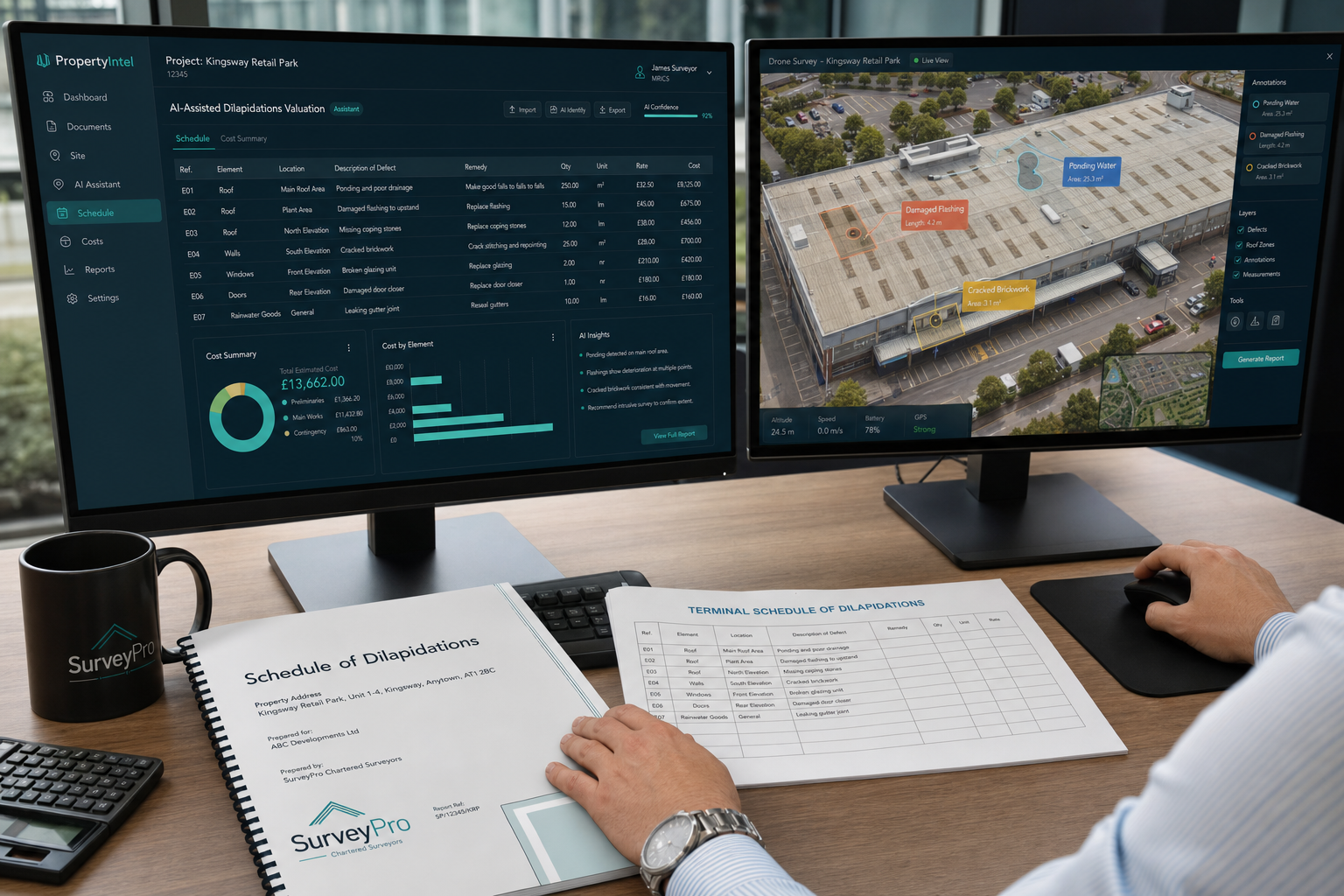
One of the most significant developments shaping Expert Witness Roles in 2026 Dilapidations Claims: Strengthening Evidence for Commercial Lease Ends is the emergence of AI-generated evidence in building and valuation disputes [4]. AI tools are now being used to:
- Generate cost schedules from photographic evidence
- Identify defect patterns across large commercial properties
- Produce comparative market valuations for diminution assessments
However, the use of AI evidence introduces new obligations. Experts must be able to explain and defend AI-generated outputs under cross-examination. The proposed RICS 5th edition standard addresses this directly, requiring experts to disclose when AI tools have been used and to confirm that outputs have been independently verified [1].
Drone surveys represent another area of rapid adoption. For large commercial roofs, facades, and hard-to-access areas, drone surveys provide photographic evidence that is both comprehensive and difficult to dispute. Combined with traditional inspection methods, they significantly strengthen the evidential record.
Valuation Integration: The Diminution Cap
A dilapidations claim is not simply a schedule of repair costs. Section 18(1) of the Landlord and Tenant Act 1927 caps the landlord's recovery at the diminution in the value of the landlord's reversion caused by the breach. Expert reports must therefore address both the physical condition and the financial impact [4].
This requires the expert — or a jointly instructed valuer — to assess:
- The open market value of the property in its actual condition
- The open market value of the property had the tenant complied with covenants
- The difference between the two figures (the "diminution value")
Where the cost of repairs exceeds the diminution in value, the landlord's claim is capped at the lower figure. Failing to address this in the expert report is a critical omission that opposing counsel will exploit.
The Expert Witness Timeline: From Instruction to Testimony
A structured approach to expert witness engagement reduces costs and improves outcomes. The following timeline reflects best practice for dilapidations disputes arising from 2026 lease ends [2]:
Weeks 1-2: Initial Instruction and Conflict Checks
The expert reviews the lease, any Schedule of Condition, and correspondence. A conflict of interest check is completed. The scope of the expert's role is confirmed in writing.
Weeks 3-4: Property Inspection and Evidence Gathering
The expert conducts a thorough inspection, ideally notifying the opposing party to allow a joint inspection. Photographs, measurements, and contemporaneous notes are compiled.
Weeks 5-8: Report Preparation and Peer Review
The expert prepares a CPR Part 35-compliant report. Peer review by a colleague with relevant experience helps identify weaknesses before the report is served.
Weeks 9-12: Expert Discussions and Joint Statements
Experts for each party meet — without lawyers present — to identify areas of agreement and disagreement. A joint statement is produced, which significantly narrows the issues for the court.
As Required: Court Testimony
If the matter does not settle, the expert gives oral evidence. Preparation for cross-examination is essential, particularly on areas where the joint statement records disagreement.
"The joint statement process is where well-prepared experts earn their value. Narrowing the issues early saves both parties significant legal costs and demonstrates professional credibility to the court."
Common Pitfalls That Undermine Expert Evidence
Even experienced surveyors make avoidable errors when acting as expert witnesses. The following pitfalls are consistently identified in dilapidations litigation [3]:
- Advocacy bias: Writing a report that reads as a brief for the instructing party rather than an independent assessment
- Incomplete lease analysis: Failing to identify all relevant repair, decoration, and reinstatement covenants
- Ignoring fair wear and tear: Claiming for deterioration that falls within the tenant's statutory protection
- Unsupported cost estimates: Providing repair costs without reference to current market rates or a supporting contractor's quote
- Failure to address Section 18(1): Omitting the diminution cap analysis entirely
- Inadequate photographic evidence: Relying on a small number of photographs that do not cover all alleged defects
Courts are increasingly willing to make adverse costs orders against parties who instruct experts whose reports are found to be partisan or technically deficient [5]. The reputational and financial consequences for the expert can be severe.
For those seeking to understand the broader professional standards that underpin this work, the RICS commercial building survey process shares many of the same evidential disciplines applied in expert witness work.
Strengthening Evidence: Practical Strategies for 2026
Given the evolving standards and heightened judicial scrutiny, the following strategies represent current best practice for expert witnesses in 2026 dilapidations claims.
Adopt a Structured Reporting Format
Reports should follow a logical structure: background, inspection methodology, lease obligations, condition findings, costed schedule of works, Section 18(1) analysis, and conclusion. Each section should be clearly signposted and cross-referenced to supporting evidence.
Embrace Digital Evidence Standards
Digital photographs should be geo-tagged and time-stamped. Drone footage should be stored in an unedited format alongside edited extracts used in the report. AI-generated outputs must be disclosed and independently verified. The RICS 5th edition standard is expected to formalise these requirements [1].
Prepare Thoroughly for Joint Discussions
The expert discussion is not a negotiation. It is a professional exchange between independent experts aimed at identifying genuine areas of agreement. Experts should enter discussions with a clear understanding of which opinions are firmly held and which are open to revision in light of new information.
Maintain Active Professional Practice
Courts are applying stricter admissibility tests, with a growing tendency to exclude experts who cannot demonstrate current, active engagement in the relevant specialty [5]. For building surveyors acting as dilapidations experts, this means maintaining a live practice that includes regular property inspections, not just litigation support work.
The roles and skills of a property surveyor are directly relevant here — an expert whose day-to-day work keeps them current with construction costs, building pathology, and market conditions will always be more credible than one who has drifted into a purely advisory role.
Verify Credentials and Professional Standing
Instructing parties should verify that their expert holds current RICS membership and has no undisclosed conflicts. The process for verifying a surveyor's credentials in the UK is straightforward and should be completed before instruction is confirmed.
Conclusion
The intersection of rising commercial lease expiries, tightening court standards, and rapid technological change makes 2026 a pivotal year for dilapidations expert witness practice. The core message from the RICS global consultation, the courts, and the profession is consistent: quality, independence, and rigour are the only sustainable foundations for expert evidence.
Actionable next steps for landlords and tenants approaching lease end:
- Instruct a qualified, actively practising chartered surveyor with specific dilapidations experience as early as possible — ideally 12 to 18 months before lease expiry.
- Commission or locate the original Schedule of Condition to establish the baseline for any claim or defence.
- Request a joint inspection with the opposing expert to reduce costs and identify early areas of agreement.
- Ensure the expert's report addresses both the physical schedule of works and the Section 18(1) diminution cap.
- Confirm that any AI or digital tools used in the report are disclosed and that outputs have been independently verified.
- Verify the expert's current RICS membership and check for conflicts of interest before confirming instruction.
Dilapidations disputes are won and lost on evidence. In 2026, the experts who invest in rigorous inspection methodology, CPR-compliant reporting, and genuine professional independence will deliver the most defensible outcomes for their clients — and the most credible testimony to the courts.
References
[1] Rics Launches Global Consultation On Updated Expert Witness Standard – https://www.rics.org/news-insights/rics-launches-global-consultation-on-updated-expert-witness-standard?utm_source=openai
[2] Expert Witness Roles In Dilapidations Disputes For Commercial Leases Expiring In 2026 – https://www.canterburysurveyors.com/blog/expert-witness-roles-in-dilapidations-disputes-for-commercial-leases-expiring-in-2026/?utm_source=openai
[3] The Essentials Toolkit For Dilapidations Expert Witnesses – https://www.ashfords.co.uk/insights/articles/the-essentials-toolkit-for-dilapidations-expert-witnesses?utm_source=openai
[4] Building Surveyors As Expert Witnesses Evidence Standards For Construction Claims And Dilapidations In 2026 – https://wimbledonsurveyors.com/building-surveyors-as-expert-witnesses-evidence-standards-for-construction-claims-and-dilapidations-in-2026/?utm_source=openai
[5] Expert Witness Trends Narrowing Paths To Admissibility – https://www.roundtablegroup.com/the-experienced-expert/expert-witness-trends-narrowing-paths-to-admissibility/?utm_source=openai
[6] 61101 Expert Witness Functions In The Housing Disrepair Sector – https://www.localgovernmentlawyer.co.uk/housing-law/315-housing-features/61101-expert-witness-functions-in-the-housing-disrepair-sector?utm_source=openai
