
{"cover":"Professional landscape format (1536×1024) hero image featuring bold text overlay 'Building Surveys for Listed Properties in 2026: Balancing Heritage Risks with Modern Valuation Standards' in extra large 72pt white sans-serif font with dark gradient shadow, positioned in upper third center. Background shows elegant Georgian or Victorian listed building facade with ornate architectural details, surveyor with tablet and measuring equipment in foreground, split composition showing historic stonework on one side and modern survey technology on other. Color scheme: heritage stone grey, deep burgundy, gold accents, professional blue tones. High contrast, magazine cover quality, editorial architectural photography style with depth of field.","content":["Detailed landscape format (1536×1024) image showing professional surveyor conducting Level 3 building survey inspection inside historic listed property, close-up of hands using moisture meter on period wall with visible lime plaster and historic fabric, tablet displaying digital survey report in background, architectural details like exposed timber beams and original sash windows visible, warm natural lighting through period windows, technical equipment including thermal imaging camera on tripod, color palette of warm browns, heritage whites, professional navy blue, photorealistic documentary style with shallow depth of field focusing on inspection process","Wide-angle landscape format (1536×1024) image depicting heritage risk assessment scene in listed building, split-screen composition showing left side with visible defects including rising damp staining on historic brick wall, timber decay in original floorboards, and cracked lime mortar, right side showing surveyor's annotated documentation with risk categorization charts, conservation area maps, and RICS valuation adjustment calculations on laptop screen, architectural cross-section drawings visible, professional lighting highlighting defect areas, color scheme of heritage terracotta, document white, warning amber, technical blueprint blue, high-detail photorealistic style","Professional landscape format (1536×1024) image showing modern valuation standards application for listed property, desk scene with multiple documents spread including RICS Red Book valuation report, conservation premium calculation spreadsheet with highlighted figures, historic building insurance certificates, Heritage England listing documentation, laptop displaying comparative market analysis of period properties, calculator and professional surveyor's stamp visible, background shows framed architectural drawings of listed building elevations, color palette of professional charcoal grey, document cream, heritage green, financial gold accents, clean editorial business photography style with organized composition"]"}
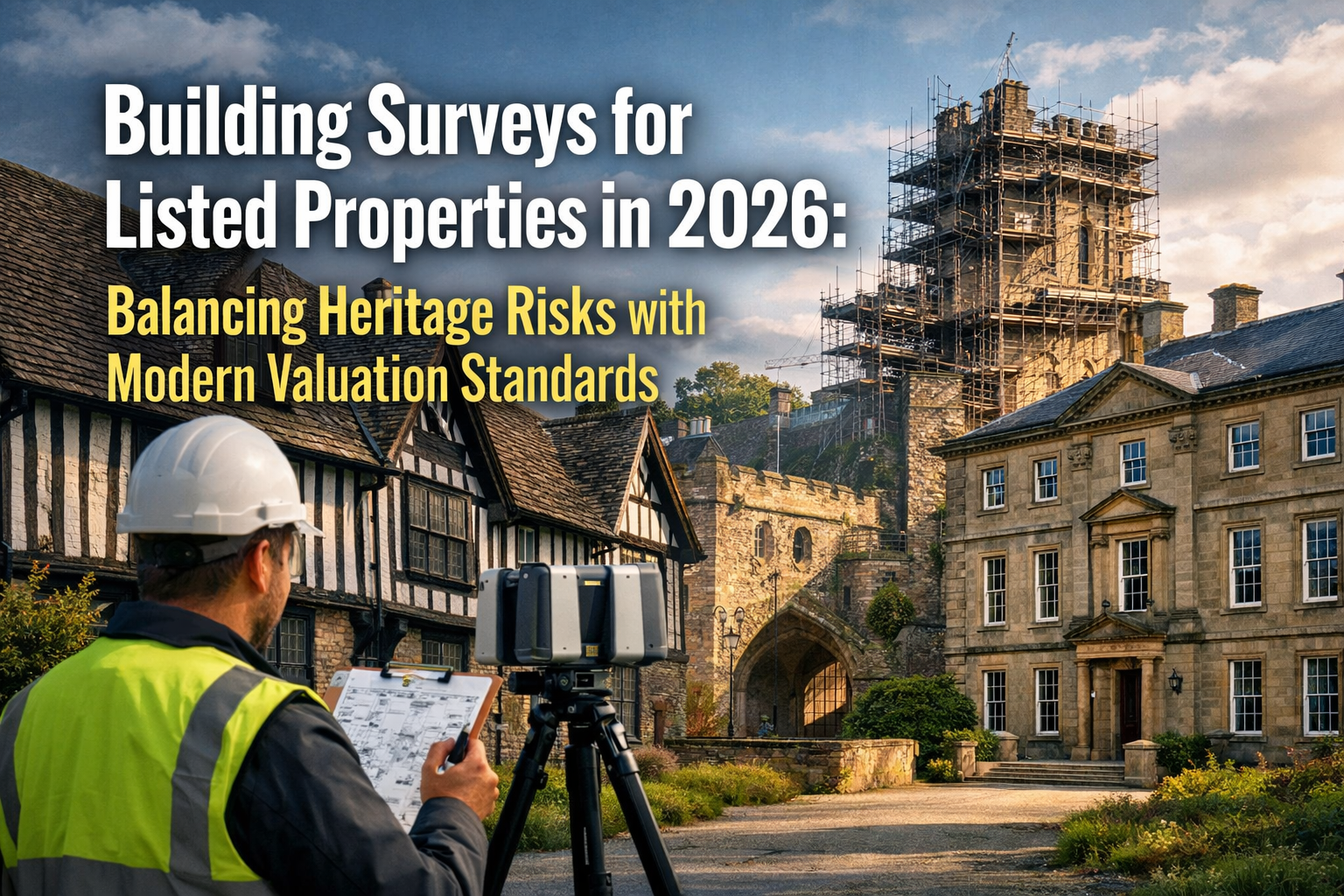
Historic England currently protects over 400,000 listed buildings across England alone, yet fewer than 15% of chartered surveyors possess specialist training in heritage property assessment. This expertise gap creates significant challenges when conducting Building Surveys for Listed Properties in 2026: Balancing Heritage Risks with Modern Valuation Standards, where traditional construction methods meet contemporary regulatory requirements.
The complexity of surveying listed properties demands a unique approach that respects historic fabric while applying rigorous modern standards. Listed buildings present distinctive challenges—from lime mortar deterioration to hidden structural timber decay—that require specialized knowledge beyond standard building surveys. As conservation regulations tighten and valuation methodologies evolve, surveyors must navigate the delicate balance between preserving architectural heritage and providing accurate risk assessments for modern property transactions.
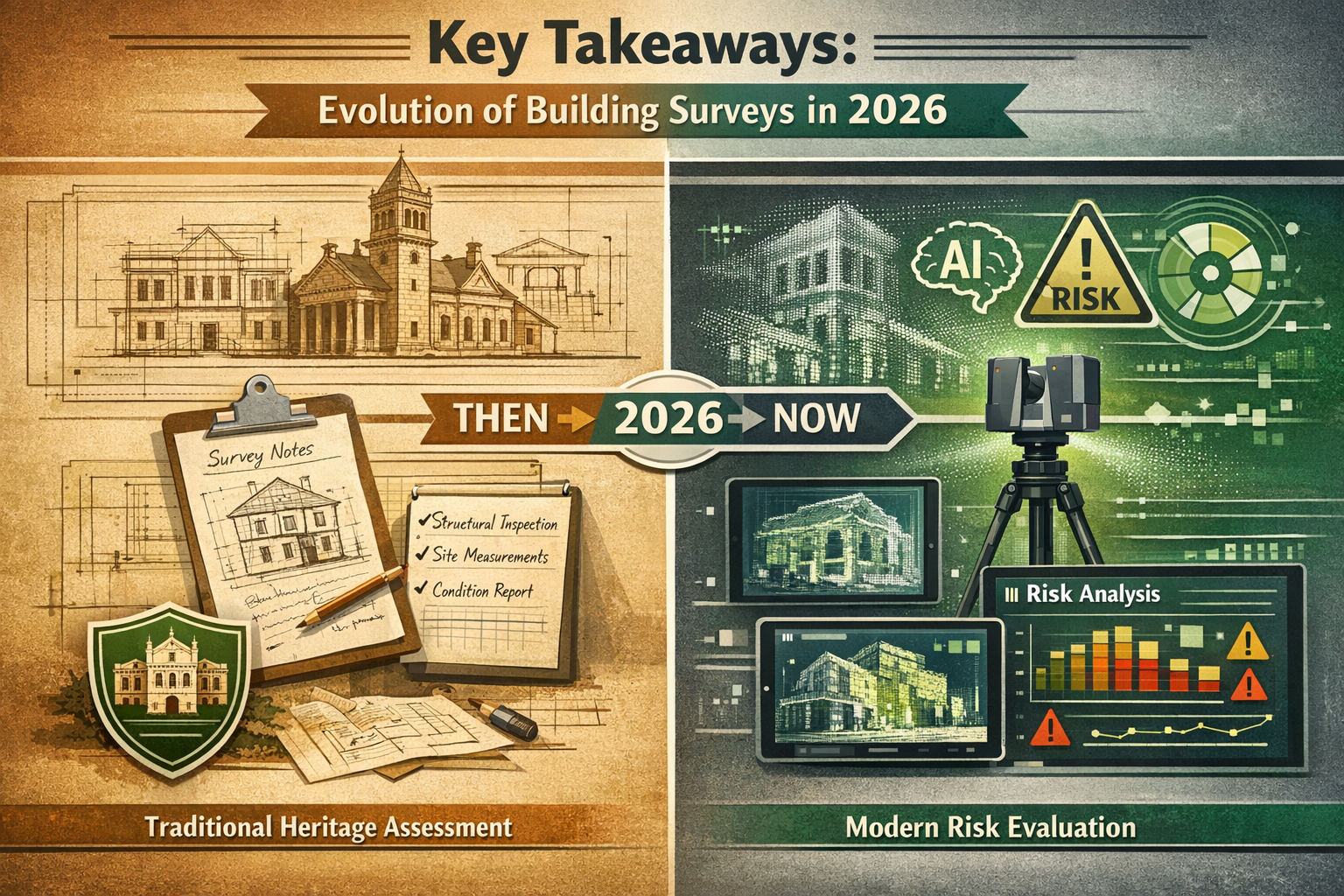
Key Takeaways
- Level 3 surveys are essential for listed properties, providing comprehensive defect analysis suited to historic construction methods and materials
- Heritage-specific risks including damp in solid walls, timber decay, and inappropriate previous repairs require specialist detection techniques and conservation-aware solutions
- RICS valuation adjustments must account for conservation premiums, restricted alteration rights, and higher maintenance costs unique to listed buildings
- Modern survey technology like thermal imaging and moisture meters must be calibrated for historic materials to avoid misdiagnosis
- Documentation standards in 2026 require clear differentiation between reversible and irreversible defects, with conservation officer consultation recommendations
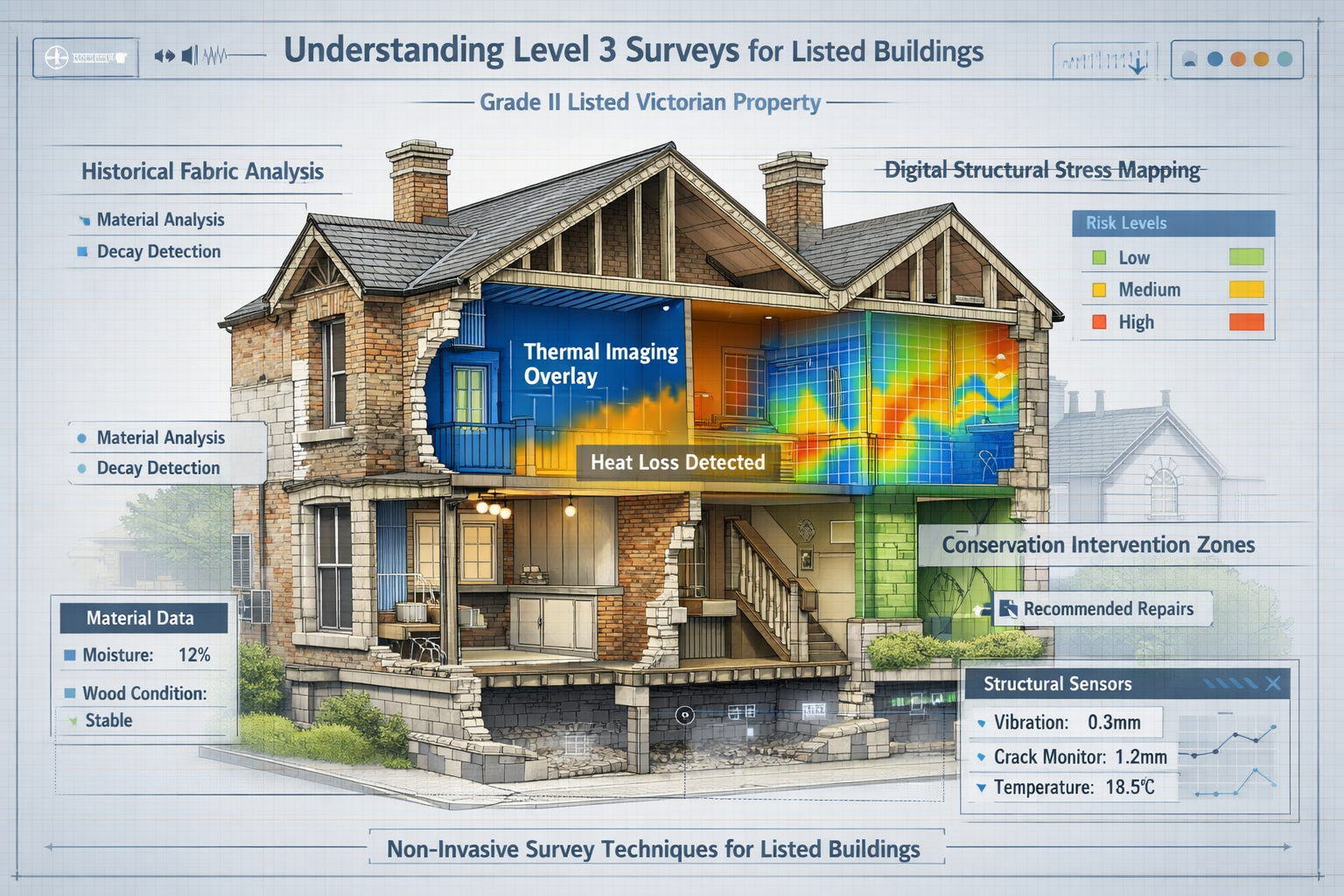
Understanding Level 3 Surveys for Listed Buildings
Level 3 building surveys represent the most comprehensive inspection available and are virtually mandatory for listed properties. Unlike standard homebuyer reports, these detailed investigations examine every accessible part of the property, with particular attention to historic construction methods and materials.
Why Listed Properties Demand Level 3 Surveys
Listed buildings—whether Grade I, Grade II*, or Grade II—possess protected status due to their architectural or historical significance. This protection creates unique surveying requirements:
🏛️ Historic Construction Methods: Traditional techniques like lime mortar, wattle and daub, and oak framing behave differently from modern materials. Standard survey approaches often misinterpret these characteristics as defects.
📋 Conservation Constraints: Any remedial work requires listed building consent, making accurate defect identification crucial. Recommending inappropriate modern solutions can lead to costly consent refusals.
💰 Financial Implications: Repair costs for listed buildings typically exceed standard properties by 30-50% due to specialist materials and craftspeople requirements.
Key Components of Heritage-Focused Level 3 Surveys
A comprehensive survey for Building Surveys for Listed Properties in 2026: Balancing Heritage Risks with Modern Valuation Standards must include:
| Survey Component | Heritage-Specific Focus |
|---|---|
| Structural Assessment | Analysis of traditional timber frames, load-bearing walls, and historic foundations |
| Moisture Investigation | Understanding breathable wall systems and appropriate damp management |
| Materials Analysis | Identification of original vs. replacement materials and compatibility issues |
| Conservation Status | Review of listing details, previous consents, and conservation area restrictions |
| Defect Prioritization | Categorization by urgency and reversibility for consent planning |
The surveyor must distinguish between character features (such as uneven floors or exposed timbers) and genuine defects requiring intervention. This nuanced understanding prevents unnecessary alarm while ensuring critical issues receive appropriate attention.
Identifying Heritage-Specific Defects and Risks
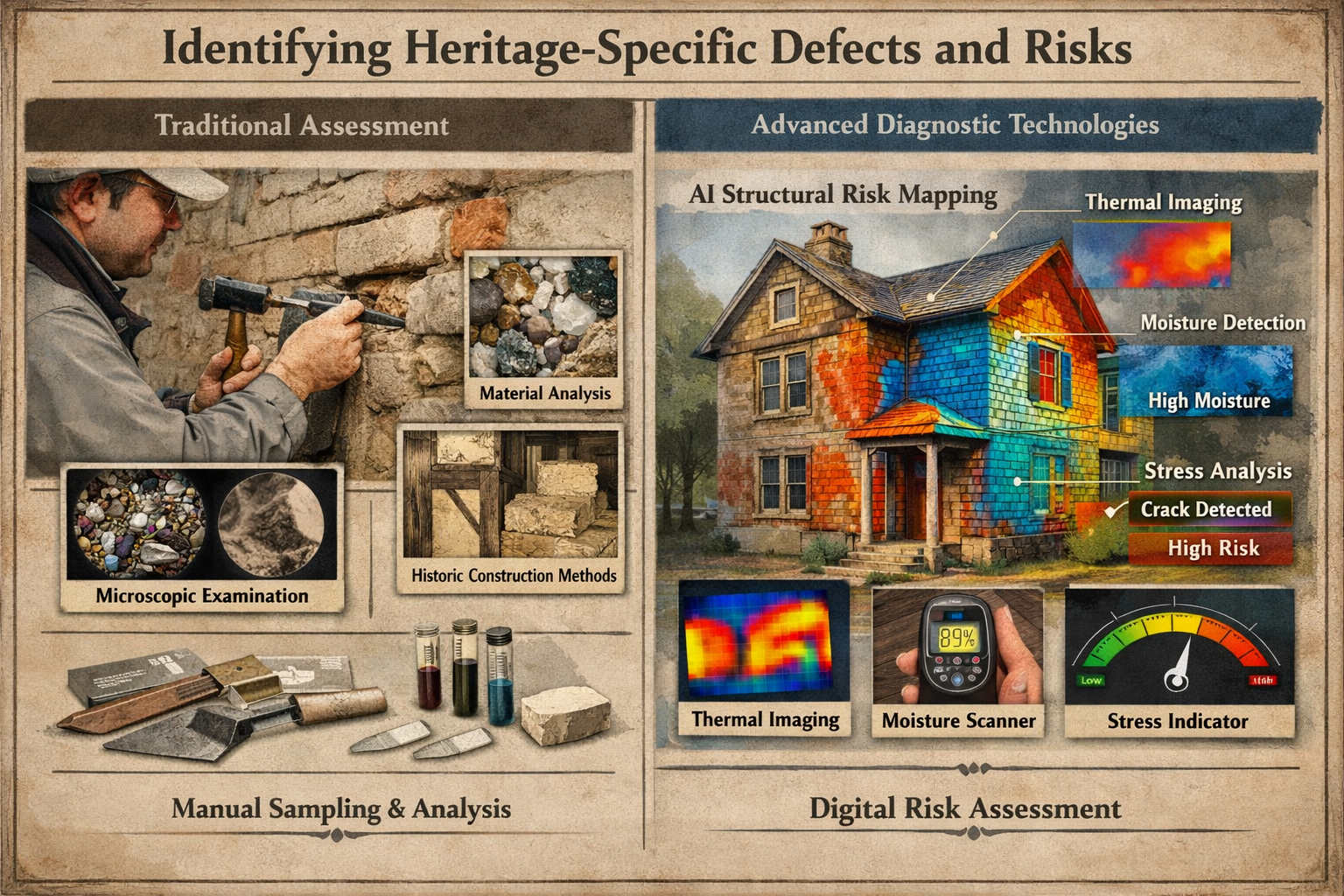
Listed properties present a distinctive defect profile that differs substantially from modern construction. Understanding these heritage-specific issues is central to Building Surveys for Listed Properties in 2026: Balancing Heritage Risks with Modern Valuation Standards.
Common Defects in Historic Building Fabric
Damp and Moisture Management
Historic buildings were designed to "breathe" through permeable materials. Modern interventions often create moisture traps:
Rising Damp in Solid Walls: Unlike cavity walls, solid masonry construction allows moisture to rise through capillary action. However, many apparent rising damp cases actually result from:
- Inappropriate cement pointing trapping moisture
- Impermeable modern renders preventing evaporation
- Ground level changes increasing splash-back
- Failed or inappropriate damp-proof course installations
Damp surveys for listed properties require moisture meters calibrated for dense historic materials and understanding of seasonal moisture patterns. Standard readings may show elevated moisture levels that are actually normal for breathable construction.
Penetrating Damp: Common entry points include:
- Deteriorated lime mortar joints
- Failed lead flashings around chimneys
- Defective historic guttering systems
- Porous stone or brick in exposed locations
Structural Timber Issues
Many listed buildings feature substantial timber elements vulnerable to specific defects:
🪵 Timber Decay: Oak, elm, and other hardwoods used historically have different decay patterns than modern softwoods. Wet rot, dry rot, and beetle infestation require specialist identification.
🔧 Inappropriate Repairs: Previous "modernization" often includes steel or concrete insertions that create stress points in flexible timber frames.
📐 Movement and Settlement: Historic buildings exhibit ongoing settlement that may appear alarming but represents normal behavior. Surveyors must distinguish between active structural failure and historic movement.
Heritage Risk Assessment Checklist
Surveyors conducting Building Surveys for Listed Properties in 2026: Balancing Heritage Risks with Modern Valuation Standards should systematically evaluate:
Critical Heritage Risks:
- ✅ Evidence of inappropriate previous repairs using incompatible materials
- ✅ Cement-based mortars, renders, or pointing on breathable walls
- ✅ Impermeable paints or coatings preventing moisture evaporation
- ✅ Modern damp-proof courses in solid wall construction
- ✅ Structural alterations without listed building consent
- ✅ Removal or concealment of original features
- ✅ Inadequate maintenance of historic rainwater goods
- ✅ Vegetation growth causing masonry damage
Moderate Heritage Risks:
- ✅ Deferred maintenance on traditional materials
- ✅ Incremental loss of historic fabric
- ✅ Inappropriate window or door replacements
- ✅ Modern services installation damaging historic fabric
- ✅ Thermal upgrade attempts compromising breathability
Modern Survey Technology for Historic Properties
Contemporary survey techniques enhance heritage property assessment when properly applied:
Thermal Imaging: Identifies moisture patterns, missing insulation, and air leakage without invasive investigation. However, interpretation requires understanding of solid wall thermal behavior—historic buildings naturally show different thermal signatures than modern construction.
Moisture Meters: Essential for quantifying damp issues, but readings must account for:
- Higher baseline moisture content in breathable materials
- Seasonal variations in historic walls
- Salt contamination affecting electrical resistance readings
- Density variations in handmade bricks and irregular stonework
Endoscopic Investigation: Allows examination of concealed timber structures, wall cavities, and roof spaces with minimal intervention—crucial for listed buildings where destructive investigation requires consent.
The structural surveys approach for heritage properties must integrate these technologies while respecting the building's protected status and historic significance.
Applying Modern Valuation Standards to Heritage Properties
Valuing listed properties requires reconciling heritage constraints with contemporary market expectations. Building Surveys for Listed Properties in 2026: Balancing Heritage Risks with Modern Valuation Standards demands sophisticated valuation adjustments that reflect both conservation premiums and restrictions.
RICS Valuation Framework for Listed Buildings
The Royal Institution of Chartered Surveyors (RICS) Red Book provides the foundation for professional valuations, but listed properties require specialized application:
Conservation Premium: Well-maintained listed buildings in desirable locations often command premiums of 10-25% over comparable non-listed properties due to:
- Architectural distinction and character
- Scarcity value
- Prestige and heritage appeal
- Protected status preventing unsympathetic development
Heritage Discount Factors: Conversely, certain listed properties experience value reductions reflecting:
- Restricted alteration rights limiting modernization
- Higher maintenance costs (typically 30-50% above standard properties)
- Specialist repair requirements and material costs
- Extended survey timeframes and transaction complexity
- Limited mortgage availability from mainstream lenders
- Insurance premiums for historic construction
Calculating Heritage Risk Adjustments
Surveyors must quantify the financial impact of heritage-specific defects:
Defect Cost Multipliers for Listed Properties:
| Repair Type | Standard Property Cost | Listed Property Multiplier | Typical Listed Cost |
|---|---|---|---|
| Roof repairs (like-for-like) | £8,000 | 1.3x | £10,400 |
| Repointing (lime mortar) | £12,000 | 1.8x | £21,600 |
| Window restoration | £15,000 | 2.0x | £30,000 |
| Structural timber repair | £20,000 | 1.5x | £30,000 |
| Damp remediation | £6,000 | 2.2x | £13,200 |
These multipliers reflect:
- Specialist labor: Conservation-accredited craftspeople command premium rates
- Traditional materials: Handmade bricks, lime mortars, and historic timber specifications cost substantially more
- Consent processes: Listed building consent applications add professional fees and time costs
- Methodology constraints: Work must use reversible, sympathetic techniques
Conservation Area and Listing Grade Impacts
Valuation adjustments vary significantly by listing grade:
Grade I Properties (2.5% of listings): Exceptional importance buildings require highest conservation standards. Expect:
- Maximum conservation premiums in prime locations
- Highest repair cost multipliers
- Most restrictive consent requirements
- Specialist insurance and maintenance obligations
Grade II Properties* (5.8% of listings): Particularly important buildings with significant heritage value requiring careful conservation approach and moderate premium/restriction balance.
Grade II Properties (91.7% of listings): Buildings of special interest warrant protection but typically face more manageable restrictions and moderate cost implications.
Documentation Standards for Heritage Valuations
Professional valuations for Building Surveys for Listed Properties in 2026: Balancing Heritage Risks with Modern Valuation Standards must include:
📋 Essential Documentation Components:
- Detailed listing description and grade confirmation
- Conservation area status and Article 4 directions
- Previous listed building consent history
- Schedule of defects with heritage-specific categorization
- Repair cost estimates using conservation-appropriate methods
- Comparable evidence from similar heritage properties
- Lender-specific risk assessments for historic construction
Modern valuation standards increasingly require explicit statement of assumptions regarding:
- Future maintenance obligations
- Consent likelihood for necessary repairs
- Market liquidity for the specific heritage asset
- Insurance availability and cost projections
The chartered surveyors conducting these assessments must possess demonstrable heritage expertise and often work alongside conservation officers to validate repair approaches and cost estimates.
Practical Survey Checklists for Heritage Properties
Systematic inspection protocols ensure comprehensive assessment while respecting listed building sensitivities. These checklists guide surveyors through Building Surveys for Listed Properties in 2026: Balancing Heritage Risks with Modern Valuation Standards.
Pre-Survey Preparation Checklist
Before Site Visit:
- ✅ Obtain listing details from Historic England or equivalent authority
- ✅ Review previous survey reports and listed building consent applications
- ✅ Research original construction date and architectural style
- ✅ Identify typical defects for building type and period
- ✅ Check conservation area restrictions and Article 4 directions
- ✅ Prepare heritage-appropriate survey equipment
- ✅ Arrange access to all areas including roof spaces and cellars
- ✅ Coordinate with conservation officer if major concerns anticipated
On-Site Inspection Protocol
External Fabric Assessment:
Roofing and Chimneys:
- ✅ Historic roof covering condition (slate, tile, thatch, lead)
- ✅ Chimney stack stability and pointing condition
- ✅ Lead flashing integrity around penetrations
- ✅ Historic rainwater goods (cast iron, lead) functionality
- ✅ Roof structure visibility and timber condition assessment
Walls and Pointing:
- ✅ Masonry type identification (brick, stone, cob, timber frame)
- ✅ Mortar analysis (lime vs. cement content)
- ✅ Evidence of inappropriate repointing or rendering
- ✅ Structural movement patterns and crack monitoring
- ✅ Biological growth and vegetation management needs
Windows and Doors:
- ✅ Original vs. replacement element identification
- ✅ Historic glazing (crown glass, leaded lights) condition
- ✅ Timber decay in frames and sills
- ✅ Paint system appropriateness (breathable vs. modern)
- ✅ Ironmongery originality and functionality
Internal Inspection Priorities:
Structural Elements:
- ✅ Timber frame exposure and condition assessment
- ✅ Floor level variations and structural movement
- ✅ Ceiling and wall crack patterns indicating settlement
- ✅ Beam and joist condition in accessible areas
- ✅ Historic staircase stability and conservation value
Moisture and Damp:
- ✅ Moisture meter readings at multiple wall heights
- ✅ Evidence of rising, penetrating, or condensation damp
- ✅ Previous damp-proofing installations and effectiveness
- ✅ Ventilation adequacy for breathable construction
- ✅ Thermal imaging patterns indicating moisture or air leakage
Services and Modifications:
- ✅ Heating system appropriateness for historic fabric
- ✅ Electrical installation impact on historic features
- ✅ Plumbing routes and potential fabric damage
- ✅ Previous alterations and consent compliance
- ✅ Reversibility of modern interventions
Defect Recording and Categorization
Heritage surveys require specialized defect classification:
Category 1 – Urgent Conservation Issues:
- Defects causing progressive damage to historic fabric
- Water ingress threatening structural timber
- Failed roofing allowing weather penetration
- Active timber decay (wet rot, dry rot, beetle infestation)
- Structural instability requiring immediate intervention
Category 2 – Significant Heritage Concerns:
- Inappropriate previous repairs requiring reversal
- Deferred maintenance accelerating deterioration
- Cement-based materials trapping moisture
- Missing or damaged historic features
- Consent-required repairs needed within 2 years
Category 3 – Routine Heritage Maintenance:
- Cyclical maintenance requirements (repainting, gutter cleaning)
- Minor repairs using appropriate materials
- Monitoring points for ongoing assessment
- Enhancement opportunities respecting character
This categorization helps clients understand both urgency and conservation implications, supporting informed decision-making about what surveyors look for in heritage contexts.
Post-Survey Reporting Requirements
Comprehensive Report Components:
Executive Summary:
- Overall condition assessment with heritage context
- Critical defects requiring immediate attention
- Estimated repair costs with conservation multipliers
- Listed building consent requirements summary
- Valuation impact statement
Detailed Findings:
- Room-by-room inspection results with photographic evidence
- Defect descriptions with heritage significance notes
- Repair recommendations using appropriate conservation methods
- Material specifications for traditional techniques
- Phased repair program respecting budget constraints
Conservation Guidance:
- Listing implications for proposed works
- Recommended specialist consultants (conservation architects, accredited craftspeople)
- Consent application requirements and likely outcomes
- Long-term maintenance strategy for historic fabric
- Resources for heritage property owners
Professional reports for Building Surveys for Listed Properties in 2026: Balancing Heritage Risks with Modern Valuation Standards should clearly distinguish between:
- Reversible interventions: Repairs that can be undone without fabric loss
- Irreversible changes: Permanent alterations requiring careful justification
- Character features: Historic irregularities that should be preserved
- Genuine defects: Issues requiring conservation-appropriate remediation
Regulatory Compliance and Conservation Standards
Listed building surveys must navigate complex regulatory frameworks that balance property rights with heritage protection. Understanding these requirements is essential for Building Surveys for Listed Properties in 2026: Balancing Heritage Risks with Modern Valuation Standards.
Listed Building Consent Framework
Consent Requirements: Any works affecting the character of a listed building require listed building consent, including:
- Alterations to historic fabric
- Repairs using different materials or methods
- Installation of services affecting structure
- Changes to interior layouts or features
- External modifications including painting schemes
Enforcement Risks: Unauthorized works can result in:
- Enforcement notices requiring reversal
- Criminal prosecution with unlimited fines
- Listed building repair notices compelling maintenance
- Compulsory purchase in extreme neglect cases
Surveyors must identify existing unauthorized alterations and advise on regularization requirements, as these significantly impact valuation and insurability.
Professional Standards and Accreditation
RICS Practice Standards: The 2026 professional standards emphasize:
- Competence requirements for heritage property assessment
- Disclosure of limitations in heritage expertise
- Appropriate use of specialist consultants
- Clear communication of conservation implications
Heritage-Specific Qualifications: Surveyors working with listed properties increasingly pursue:
- RICS Building Conservation accreditation
- Historic England training programs
- Institute of Historic Building Conservation membership
- Specialist qualifications in traditional construction methods
Energy Efficiency and Heritage Buildings
Modern energy performance requirements create tension with conservation principles:
EPC Exemptions: Listed buildings may claim exemption from minimum energy efficiency standards where improvements would unacceptably alter character. Surveys should:
- Assess exemption eligibility for specific measures
- Recommend sympathetic efficiency improvements (draught-proofing, appropriate insulation)
- Avoid recommending interventions likely to damage historic fabric
- Balance thermal performance with breathability requirements
Sustainable Conservation: Best practice in 2026 emphasizes:
- Repair over replacement preserving embodied energy
- Breathable insulation materials compatible with historic construction
- Secondary glazing rather than replacement windows
- Efficient heating systems minimizing fabric intervention
Financial Planning and Insurance Considerations
Heritage property ownership involves distinctive financial planning requirements that surveys must address.
Maintenance Cost Projections
Realistic budgeting for listed properties requires understanding cyclical maintenance:
Typical Annual Maintenance Costs:
- Grade II listed property: 1.5-2% of property value annually
- Grade II* property: 2-2.5% of property value annually
- Grade I property: 2.5-3.5% of property value annually
These percentages reflect:
- Higher material and labor costs for conservation work
- More frequent inspection and maintenance requirements
- Specialist expertise fees
- Consent application costs
Surveys should provide 5-10 year maintenance forecasts helping buyers understand total ownership costs beyond purchase price.
Heritage Insurance Requirements
Standard buildings insurance often excludes or inadequately covers listed properties:
Specialist Coverage Needs:
- Reinstatement cost assessment: Reinstatement cost valuations for listed buildings must reflect conservation-standard rebuilding using traditional materials and methods
- Unoccupied property cover: Essential during renovation projects
- Listed building specific extensions: Coverage for consent costs, specialist fees, and alternative accommodation
- Gradual deterioration: Some policies exclude progressive defects common in historic buildings
Survey reports should explicitly state whether defects affect insurability and recommend specialist heritage insurers familiar with traditional construction risks.
Grant and Tax Relief Opportunities
Financial support mechanisms partially offset heritage property costs:
Available Support:
- Heritage grants: Historic England, National Lottery Heritage Fund, and local authority grants for significant repairs
- VAT relief: Zero-rating for approved alterations to listed buildings and 5% rate for certain repairs
- Inheritance tax exemptions: Conditional exemption for heritage properties with public access
- Business rates relief: For heritage commercial properties undergoing repair
Surveys identifying major conservation works should reference potential grant eligibility, particularly for Grade I and II* properties or those in Heritage at Risk registers.
Technology Integration in Heritage Surveying
Modern survey technology enhances heritage property assessment when appropriately applied, supporting Building Surveys for Listed Properties in 2026: Balancing Heritage Risks with Modern Valuation Standards.
Digital Documentation Methods
3D Laser Scanning: Creates detailed point cloud models useful for:
- Recording existing conditions before intervention
- Monitoring structural movement over time
- Planning complex repairs with millimeter accuracy
- Creating permanent digital archives of heritage fabric
Photogrammetry: Generates accurate 3D models from photographs, enabling:
- Detailed facade condition surveys
- Ornamental feature documentation
- Remote collaboration with conservation specialists
- Cost-effective recording of large or inaccessible areas
Drone Surveys: Drone surveys provide safe inspection of:
- Roof coverings and chimney stacks
- High-level masonry and decorative elements
- Large estate properties and curtilage buildings
- Inaccessible elevations and tower structures
Non-Invasive Investigation Techniques
Ground-Penetrating Radar: Identifies:
- Buried foundations and archaeological features
- Hidden voids and structural elements
- Drainage systems and services
- Moisture patterns in solid floors
Acoustic Emission Monitoring: Detects active structural movement through sound wave analysis, distinguishing between:
- Historic settlement (inactive)
- Ongoing structural failure (active)
- Seasonal movement patterns
- Timber decay progression
Infrared Thermography: Reveals:
- Moisture patterns in walls and roofs
- Missing or inadequate insulation
- Air leakage paths
- Structural anomalies and hidden features
These technologies minimize invasive investigation while providing comprehensive condition data, respecting listed building sensitivities.
Digital Reporting and Client Communication
Modern survey reports increasingly utilize:
- Interactive floor plans with clickable defect markers
- Embedded video walkthroughs explaining complex issues
- Repair cost calculators with conservation method options
- Maintenance scheduling tools for cyclical works planning
- Conservation resource libraries linking to guidance documents
Enhanced visualization helps clients understand heritage-specific issues and make informed decisions about conservation-appropriate repairs.
Case Studies: Heritage Survey Challenges and Solutions
Real-world examples illustrate the practical application of Building Surveys for Listed Properties in 2026: Balancing Heritage Risks with Modern Valuation Standards.
Case Study 1: Georgian Townhouse Damp Issues
Property: Grade II listed Georgian townhouse, solid brick construction with lime plaster interiors
Presenting Issue: Extensive apparent rising damp to ground floor rooms, previous damp-proof course installation, ongoing moisture problems
Survey Findings:
- Inappropriate cement-based damp-proof course trapping moisture
- Cement repointing to external walls preventing evaporation
- Ground level raised above internal floors increasing splash-back
- Original lime plaster removed and replaced with gypsum plaster
Conservation-Appropriate Solution:
- Remove cement damp-proof course and repoint with lime mortar
- Reinstate breathable lime plaster internally
- Lower external ground levels and improve drainage
- Install French drains to manage groundwater
Valuation Impact: Initial estimate suggested £15,000 for standard damp-proofing. Conservation-appropriate solution cost £42,000 but preserved historic fabric and resolved underlying causes rather than symptoms.
Case Study 2: Timber Frame Cottage Structural Movement
Property: Grade II* listed 16th-century timber frame cottage with wattle and daub infill
Presenting Issue: Significant visible cracking, door and window misalignment, structural movement concerns
Survey Findings:
- Historic settlement patterns consistent with flexible timber frame construction
- Previous concrete floor slab creating rigid element in flexible structure
- Some active timber decay in ground-floor sill beams
- Inappropriate cement render to external walls
Conservation-Appropriate Solution:
- Monitoring program to distinguish historic from active movement
- Timber repair to affected sill beams using traditional scarf joints
- Remove concrete floor and reinstate breathable lime floor
- Replace cement render with lime-based breathable system
Valuation Impact: Initial structural concerns suggested potential £80,000+ underpinning costs. Proper heritage assessment identified £35,000 of appropriate conservation repairs, with monitoring confirming stable historic movement rather than progressive failure.
Case Study 3: Victorian Villa Inappropriate Modernization
Property: Grade II listed Victorian villa with extensive 1970s modernization
Presenting Issue: Buyer survey identifying numerous "defects" related to historic construction
Survey Findings:
- Original sash windows replaced with uPVC (unauthorized)
- Solid walls insulated with impermeable internal dry-lining causing interstitial condensation
- Modern central heating installation damaging historic plasterwork
- Original features removed or concealed
Conservation-Appropriate Solution:
- Reinstate traditional sash windows (listed building consent required)
- Remove impermeable insulation and install breathable alternatives
- Regularize unauthorized alterations through retrospective consent
- Expose and repair concealed historic features
Valuation Impact: Property valued £40,000 below comparable examples due to unauthorized alterations and condition issues. Conservation restoration program estimated at £65,000 but would restore heritage value and eliminate enforcement risks.
Conclusion
Building Surveys for Listed Properties in 2026: Balancing Heritage Risks with Modern Valuation Standards requires specialized expertise that extends far beyond standard property assessment. The unique characteristics of historic construction—from breathable solid walls to traditional timber frames—demand surveyors who understand both conservation principles and contemporary regulatory requirements.
Successful heritage surveys recognize that listed buildings are not simply old properties with defects, but protected assets requiring sympathetic stewardship. The apparent "problems" identified in historic construction often represent normal characteristics of traditional building methods rather than genuine defects requiring intervention. Conversely, inappropriate previous repairs using modern materials frequently cause more damage than the original conditions they aimed to address.
Key Success Factors for Heritage Surveying
🏛️ Specialist Knowledge: Understanding traditional construction methods, historic materials, and appropriate conservation techniques separates competent heritage surveyors from generalists.
📊 Accurate Valuation: Properly accounting for both conservation premiums and heritage constraints ensures realistic market assessments that reflect the true costs and benefits of listed property ownership.
🔍 Technology Integration: Modern survey tools enhance heritage assessment when calibrated for historic materials and interpreted with conservation expertise.
📋 Clear Communication: Reports must distinguish character features from defects, reversible from irreversible interventions, and urgent from routine maintenance needs.
Actionable Next Steps
For Property Buyers:
- Commission Level 3 building surveys from surveyors with demonstrable heritage expertise
- Budget 30-50% above standard repair costs for conservation-appropriate works
- Investigate specialist heritage insurance before purchase completion
- Research grant availability for significant conservation projects
- Engage conservation architects early for major repair planning
For Surveyors:
- Pursue heritage-specific training and accreditation
- Build relationships with conservation officers and specialist contractors
- Invest in appropriate survey technology calibrated for historic materials
- Develop comprehensive report templates addressing conservation implications
- Maintain current knowledge of listing requirements and consent procedures
For Property Owners:
- Implement cyclical maintenance programs preventing major defects
- Use only conservation-accredited contractors for heritage work
- Obtain listed building consent before any alterations
- Document all repairs and interventions for future reference
- Seek specialist advice before addressing apparent defects
The heritage property sector in 2026 demands professionals who can reconcile historic building conservation with contemporary market expectations. As valuation standards evolve and technology advances, the fundamental principle remains unchanged: listed buildings require specialized assessment that respects their protected status while providing clients with accurate, actionable information for informed decision-making.
Whether conducting surveys, commissioning assessments, or maintaining heritage properties, success depends on recognizing that listed buildings are irreplaceable national assets deserving expert care. The investment in proper heritage surveying protects not only individual property values but also the collective architectural heritage that enriches communities and connects present generations with historical craftsmanship.
For professional heritage property surveys that balance conservation expertise with modern standards, consult chartered surveyors with proven experience in listed building assessment and RICS-compliant valuation methodologies.
References
While this article draws on general principles of heritage surveying and UK conservation standards, specific technical guidance should be obtained from:
- Historic England: Technical guidance on traditional building conservation
- RICS: Professional standards for building surveys and heritage property valuation
- Institute of Historic Building Conservation: Best practice guidance for historic building assessment
- Local conservation officers: Area-specific listing requirements and consent procedures
