
The urban landscape is transforming rapidly in 2026, and office-to-residential conversions are at the forefront of this revolution. As planning reforms streamline the conversion process, property developers and building owners face a critical challenge: navigating party wall surveying requirements while managing complex structural alterations in densely packed urban environments. Understanding Party Wall Surveying for Office-to-Resi Conversions in 2026: Managing Notifying Works Under Planning Reforms has become essential for anyone involved in these ambitious retrofit projects.
The 2026 planning reforms have opened new opportunities for transforming underutilized commercial spaces into much-needed residential units. However, these conversions involve significant structural work that frequently impacts shared walls, foundations, and adjoining properties—triggering mandatory compliance with the Party Wall etc. Act 1996. Party wall surveyors now play a pivotal role in ensuring these projects proceed smoothly while protecting the rights of all property owners involved.
Key Takeaways
- 🏢 Planning reforms in 2026 have accelerated office-to-residential conversions, creating increased demand for specialized party wall surveying services
- 📋 Mandatory party wall notices must be served when structural alterations affect shared walls, requiring careful coordination with conversion timelines
- 🔊 Acoustic separation assessments are critical for office conversions since commercial buildings typically lack adequate sound insulation for residential use
- 🤝 Neighbour negotiations require skilled surveyors who can balance conversion project needs with adjoining owner protections
- 🌱 Integration with BNG (Biodiversity Net Gain) requirements adds complexity to party wall awards for 2026 conversion projects
Understanding Party Wall Requirements in Office-to-Resi Conversions
What Makes Office Conversions Different?
Office-to-residential conversions present unique challenges compared to traditional residential construction projects. Commercial buildings were designed with different structural priorities, load-bearing requirements, and spatial configurations than residential properties. When converting these spaces, developers must address:
Structural modifications that frequently involve:
- Removing or relocating internal walls to create residential layouts
- Installing new floor penetrations for utilities and drainage
- Adding or modifying party walls to create separate dwelling units
- Reinforcing floors to accommodate residential loading requirements
- Creating new openings for windows and fire escapes
Building surveys must evaluate existing party wall construction as part of office-to-resi conversion planning under 2026 reforms[2]. This assessment identifies which structural elements are shared with adjoining properties and determines the scope of notifiable works under the Party Wall etc. Act 1996.
When Are Party Wall Notices Required?
Mandatory party wall compliance is required for loft conversions in 2026 when work affects shared walls or structures between adjoining properties[1]. For office-to-residential conversions, notices typically become necessary when:
-
Structural alterations to party walls (Section 2 notices)
- Cutting into party walls for new doorways or service runs
- Underpinning or strengthening shared foundations
- Raising party walls to create additional floors
- Installing damp-proof courses in shared structures
-
Excavation near adjoining properties (Section 6 notices)
- Digging within three meters of neighbouring foundations
- Creating new basement spaces or underground parking
- Installing deep drainage systems
-
New building work on the line of junction (Section 1 notices)
- Constructing new party walls between converted units
- Building on the boundary line between properties
Understanding when a party wall agreement is legally required prevents costly delays and potential disputes during conversion projects.
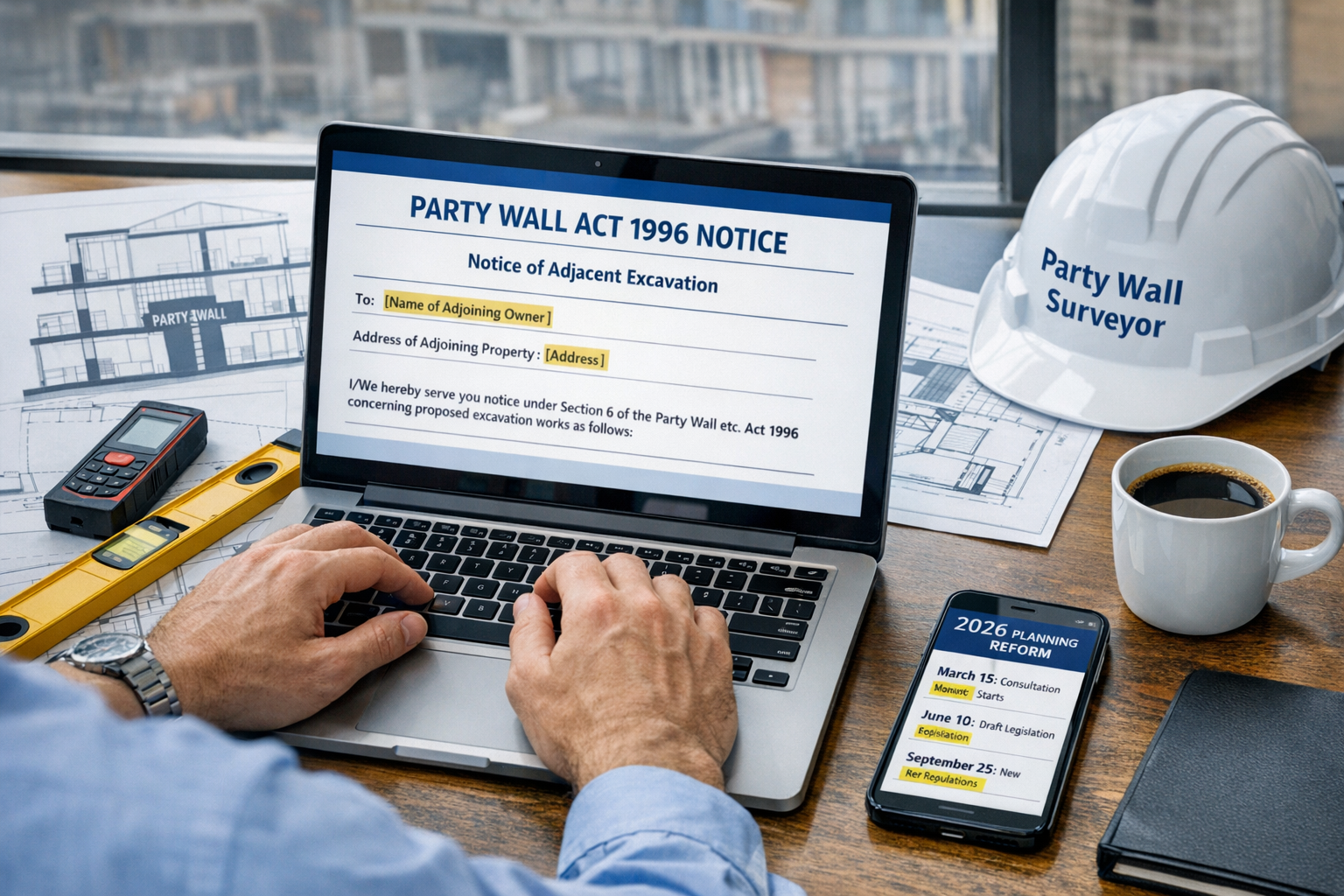
Managing the Party Wall Notice Process for Conversion Projects
Timeline Coordination with Planning Reforms
The 2026 planning reforms have streamlined the approval process for office-to-residential conversions, but party wall procedures still require careful timing. Property owners must serve notices at least two months before starting work on party walls or one month before excavation work begins.
Critical timeline considerations:
| Project Phase | Party Wall Requirement | Minimum Notice Period |
|---|---|---|
| Pre-planning | Initial party wall assessment | N/A |
| Planning approval | Identify notifiable works | N/A |
| Pre-construction | Serve Section 2 notices | 2 months |
| Pre-excavation | Serve Section 6 notices | 1 month |
| Construction start | Party wall award in place | Before work begins |
Smart developers integrate party wall notice periods into their overall project timelines, serving notices immediately after securing planning permission to avoid construction delays.
Drafting Effective Party Wall Notices
Professional party wall surveyors understand that well-drafted notices prevent disputes and facilitate smooth neighbour relationships. Effective notices for office-to-resi conversions must include:
✅ Detailed descriptions of proposed structural works
✅ Accurate technical drawings showing party wall locations
✅ Clear timelines for commencement and completion
✅ Contact information for the building owner's surveyor
✅ Explanation of adjoining owners' rights under the Act
Office-to-residential conversions often involve complex structural modifications that require more detailed explanations than typical residential projects. Party wall surveyors with experience in commercial conversions can articulate technical requirements in accessible language that helps adjoining owners understand the scope of work.
Acoustic Separation: A Critical Conversion Challenge
One of the most significant differences in Party Wall Surveying for Office-to-Resi Conversions in 2026: Managing Notifying Works Under Planning Reforms involves acoustic performance. Office-to-residential conversions require acoustic separation assessments because office buildings often lack adequate sound insulation for residential use[2].
Sound insulation requirements for converted residential units include:
- Airborne sound insulation: Minimum 45 dB reduction between dwellings
- Impact sound insulation: Maximum 62 dB for footfall noise
- Party wall upgrades: Additional mass, resilient layers, or independent stud walls
- Floor-ceiling assemblies: Acoustic underlays and floating floors
Party wall awards for conversion projects must specify acoustic upgrade requirements and establish baseline sound measurements to protect adjoining owners from increased noise disturbance.
Neighbour Negotiations and Award Drafting for Urban Retrofits
Building Consensus in Dense Urban Environments
Urban office buildings often share party walls with multiple adjoining properties—residential flats, other commercial units, and mixed-use developments. Successful conversions require skilled negotiation to address concerns from diverse stakeholders.
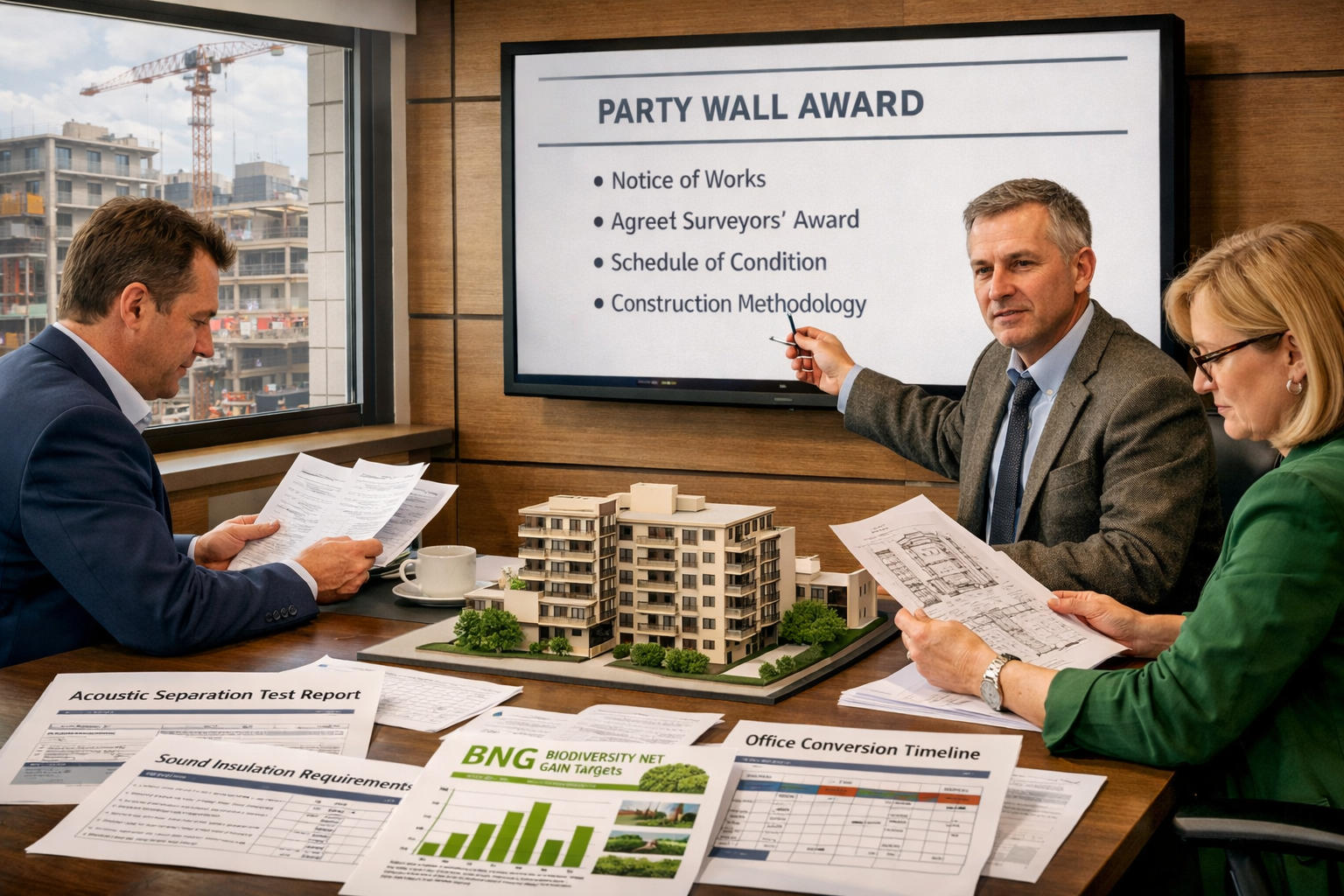
Common neighbour concerns in conversion projects include:
🏗️ Construction disruption: Extended timelines, noise, and access issues
🔊 Acoustic privacy: Concerns about sound transmission from new residential units
🏠 Property values: Impact on adjoining property marketability
⚖️ Structural integrity: Safety of shared walls during major alterations
💰 Compensation: Potential damage and inconvenience payments
Experienced party wall surveyors act as neutral intermediaries, facilitating productive discussions that balance conversion project requirements with legitimate adjoining owner protections. This diplomatic role becomes particularly important when resolving party wall disputes that arise from complex conversion projects.
Drafting Comprehensive Party Wall Awards
A party wall award serves as the legally binding agreement governing conversion work affecting shared structures. Awards for office-to-residential conversions must address unique considerations beyond typical residential projects.
Essential award components include:
1. Scope of Notifiable Works
- Detailed descriptions of all structural alterations
- Phasing plans for multi-stage conversions
- Specific methods for party wall modifications
- Acoustic upgrade specifications
2. Access Rights and Working Hours
- Reasonable access provisions for adjoining properties
- Restricted working hours to minimize disruption
- Notification requirements for different work phases
- Emergency access procedures
3. Condition Schedules
- Comprehensive photographic records of adjoining properties
- Detailed descriptions of existing party wall conditions
- Baseline measurements for settlement monitoring
- Pre-existing defects documentation
4. Dispute Resolution Mechanisms
- Procedures for addressing unexpected issues
- Surveyor communication protocols
- Amendment processes for design changes
- Third surveyor appointment provisions
Understanding what a party wall award entails helps all parties appreciate the comprehensive protection these documents provide.
Integration with BNG Requirements
The 2026 planning reforms introduce Biodiversity Net Gain (BNG) requirements for many development projects, including office-to-residential conversions. Party wall surveyors must now consider how conversion projects integrate environmental obligations into their planning.
BNG considerations affecting party wall works include:
🌿 Green wall installations on party walls requiring structural assessments
🌳 Rooftop gardens involving party wall raising or strengthening
🦋 Habitat creation affecting shared external walls and boundaries
💧 Sustainable drainage requiring excavation near party walls
Party wall awards may need to accommodate future BNG installations or specify how environmental features integrate with shared structures. This forward-thinking approach prevents subsequent disputes when developers implement sustainability measures.
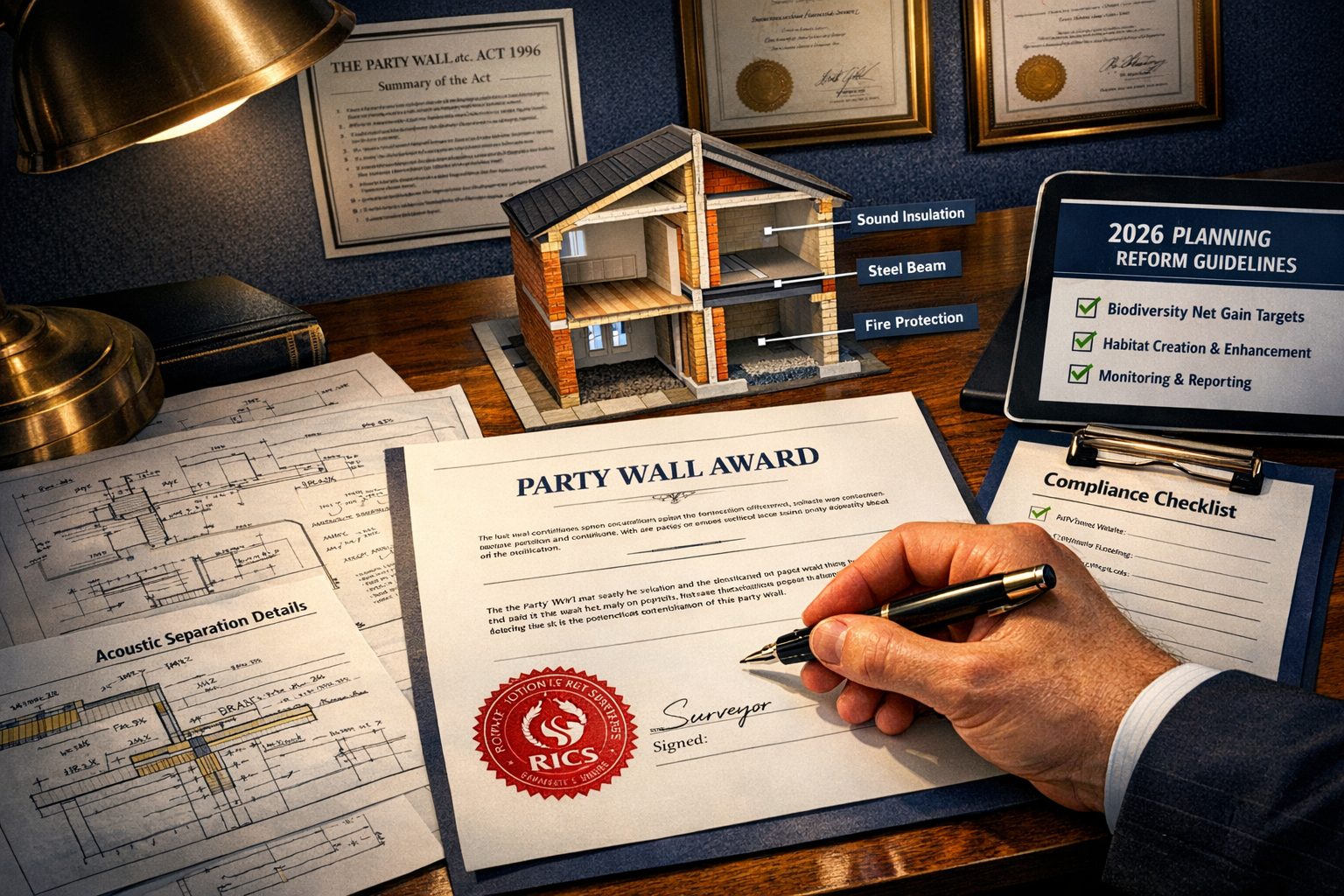
Best Practices for Party Wall Surveying in 2026 Conversions
Early Engagement and Proactive Planning
Successful conversion projects begin with early party wall assessment during feasibility studies. Developers should:
- Commission preliminary party wall surveys before purchasing conversion properties
- Identify all potential adjoining owners and shared structures
- Budget adequately for party wall surveyor fees and potential awards
- Build realistic notice periods into project timelines
- Engage experienced surveyors with conversion project expertise
Early identification of party wall requirements prevents costly surprises and allows developers to negotiate property purchases with full knowledge of compliance obligations.
Selecting Qualified Party Wall Surveyors
Office-to-residential conversions demand surveyors with specialized expertise beyond standard residential party wall work. Key qualifications include:
✓ RICS accreditation and party wall specialization
✓ Commercial conversion experience with similar projects
✓ Acoustic engineering knowledge for sound insulation requirements
✓ Structural engineering understanding for complex alterations
✓ Dispute resolution skills for multi-party negotiations
✓ BNG awareness for environmental integration
Finding qualified party wall surveyors with conversion project experience significantly improves project outcomes and reduces dispute risks.
Documentation and Record-Keeping
Comprehensive documentation protects all parties throughout conversion projects. Essential records include:
📸 Photographic evidence: Time-stamped images of existing conditions
📐 Structural drawings: Detailed plans showing party wall locations
📋 Correspondence logs: All communications with adjoining owners
🔍 Inspection reports: Regular monitoring during construction
📊 Acoustic test results: Pre and post-conversion sound measurements
✅ Completion certificates: Final confirmation of compliant work
Proper documentation proves invaluable if disputes arise or if adjoining owners claim damage from conversion work. Understanding party wall dispute resolution emphasizes the importance of maintaining detailed records throughout the process.
Managing Construction Phase Compliance
Party wall awards establish requirements, but active management during construction ensures compliance. Building owners should:
- Appoint a dedicated project manager for party wall compliance
- Schedule regular surveyor inspections during critical work phases
- Maintain open communication channels with adjoining owners
- Address concerns promptly before they escalate into formal disputes
- Document any deviations from approved methods with surveyor agreement
Proactive construction management prevents the common scenario where no party wall notice was served, which can result in injunctions, work stoppages, and costly retrospective compliance procedures.
Common Challenges and Solutions in Conversion Projects
Challenge 1: Multiple Adjoining Owners
Office buildings in urban areas often share party walls with numerous properties, each requiring separate notices and potentially separate surveyors.
Solution: Engage a single experienced surveyor who can serve as the agreed surveyor for multiple parties, streamlining the process and reducing costs while maintaining impartiality.
Challenge 2: Unexpected Structural Conditions
Conversion projects frequently uncover hidden structural issues in party walls—deterioration, non-standard construction, or undocumented modifications.
Solution: Include contingency provisions in party wall awards allowing for design modifications, establish clear communication protocols for unexpected discoveries, and maintain flexible construction schedules.
Challenge 3: Acoustic Upgrade Costs
Meeting residential acoustic standards in converted office buildings can require expensive party wall modifications beyond initial budgets.
Solution: Commission acoustic assessments during feasibility studies, budget conservatively for sound insulation upgrades, and explore cost-effective solutions like resilient wall linings or independent stud walls.
Challenge 4: Extended Project Timelines
Complex party wall negotiations and award preparations can delay conversion project commencements.
Solution: Serve party wall notices immediately after securing planning permission, engage surveyors early in the process, and maintain realistic project timelines that accommodate statutory notice periods.
Cost Considerations for Party Wall Surveying in Conversions
Understanding the cost of party wall procedures helps developers budget accurately for conversion projects. Typical expenses include:
Building Owner's Costs:
- Party wall surveyor fees: £1,500-£5,000+ depending on project complexity
- Award preparation and administration: £500-£2,000
- Condition surveys and monitoring: £800-£2,500
- Acoustic testing and reports: £1,000-£3,000
Adjoining Owner's Costs (typically paid by building owner):
- Adjoining owner's surveyor fees: £1,200-£4,000
- Independent technical advice: £500-£1,500
- Legal review of awards: £300-£1,000
Additional Expenses:
- Third surveyor fees (if required): £2,000-£5,000
- Dispute resolution costs: Variable
- Remedial work for damage: As required
- Enhanced acoustic upgrades: £5,000-£25,000+ per party wall
Large conversion projects with multiple party walls and numerous adjoining owners can incur substantial party wall costs, making early budgeting essential for project viability.
Conclusion
Party Wall Surveying for Office-to-Resi Conversions in 2026: Managing Notifying Works Under Planning Reforms represents a critical intersection of urban development, legal compliance, and neighbour relations. As planning reforms continue to facilitate the transformation of underutilized commercial spaces into residential units, professional party wall surveying becomes increasingly essential for project success.
The complexity of converting office buildings—with their unique structural configurations, acoustic challenges, and dense urban contexts—demands specialized expertise beyond standard residential party wall work. Developers who invest in early party wall assessment, engage qualified surveyors, and prioritize transparent neighbour communication position their projects for smooth execution and successful completion.
Actionable Next Steps
For developers and building owners planning office-to-residential conversions in 2026:
- Commission a preliminary party wall assessment during property acquisition or feasibility studies
- Engage RICS-accredited surveyors with specific conversion project experience
- Serve party wall notices immediately after securing planning permission
- Budget comprehensively for party wall costs, acoustic upgrades, and potential contingencies
- Maintain detailed documentation throughout the notice, award, and construction phases
- Prioritize neighbour relations through transparent communication and professional surveyor mediation
The 2026 planning reforms have created unprecedented opportunities for urban regeneration through office conversions, but success requires careful navigation of party wall obligations. By understanding the requirements, engaging qualified professionals, and following best practices, developers can transform commercial spaces into thriving residential communities while protecting the rights and interests of all property owners involved.
For expert guidance on your office-to-residential conversion project, consider consulting with experienced party wall surveyors who understand the unique challenges of commercial retrofits in urban environments. Professional support ensures compliance, prevents disputes, and facilitates the smooth execution of these transformative development projects.
References
[1] Party Wall Surveying Surge In 2026 Loft Conversions Navigating High Demand Compliance During Housing Uptick – https://nottinghillsurveyors.com/blog/party-wall-surveying-surge-in-2026-loft-conversions-navigating-high-demand-compliance-during-housing-uptick
[2] Building Survey Checklists For Office To Resi Conversions Under 2026 Planning Reforms – https://nottinghillsurveyors.com/blog/building-survey-checklists-for-office-to-resi-conversions-under-2026-planning-reforms
