
The property market landscape across the United Kingdom is experiencing a remarkable transformation in 2026, with Northern England emerging as an unexpected leader in price recovery. While southern regions continue to struggle with negative sentiment and declining values, Scotland, Northern Ireland, and the North of England are reporting prices on an upward trajectory that demands specialized valuation approaches. Understanding Valuation Strategies for Northern England's 2026 Price Surge: RICS Techniques Amid Regional Recovery has become essential for chartered surveyors navigating this regional divergence.
This shift represents more than a temporary market fluctuation—it signals a fundamental rebalancing of the UK property market that requires valuers to adapt their methodologies, embrace new technologies, and apply RICS-compliant techniques specifically tailored to Northern England's unique recovery dynamics.
Key Takeaways
- 🏘️ Northern regions are outperforming southern markets in 2026, with Scotland, Northern Ireland, and Northern England showing upward price trajectories while London and the South experience negative sentiment
- 📊 RICS has introduced mandatory AI standards effective March 2026, requiring written assessments and bias mitigation protocols for all AI-assisted valuations
- 💼 Regional divergence demands specialized valuation approaches that account for local market conditions, competitive pricing strategies, and post-Budget 2026 tax implications
- 🔍 Accurate market pricing is critical for converting buyer interest into completed transactions in Northern England's price-sensitive recovery market
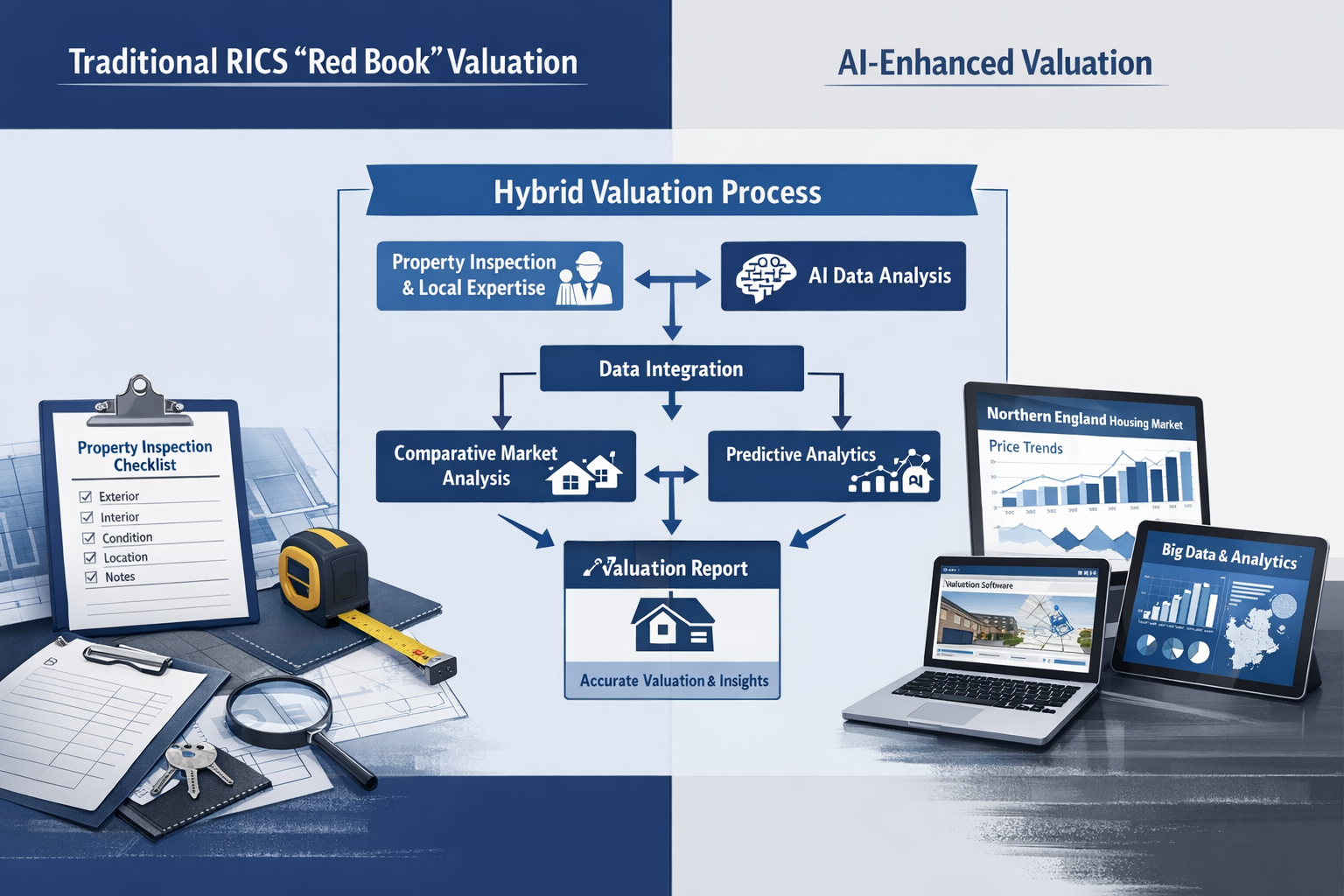
- ⚖️ Hybrid valuation methodologies combining traditional RICS Red Book standards with AI-enhanced data analysis are becoming the professional standard
Understanding Northern England's 2026 Market Divergence
The Regional Recovery Pattern
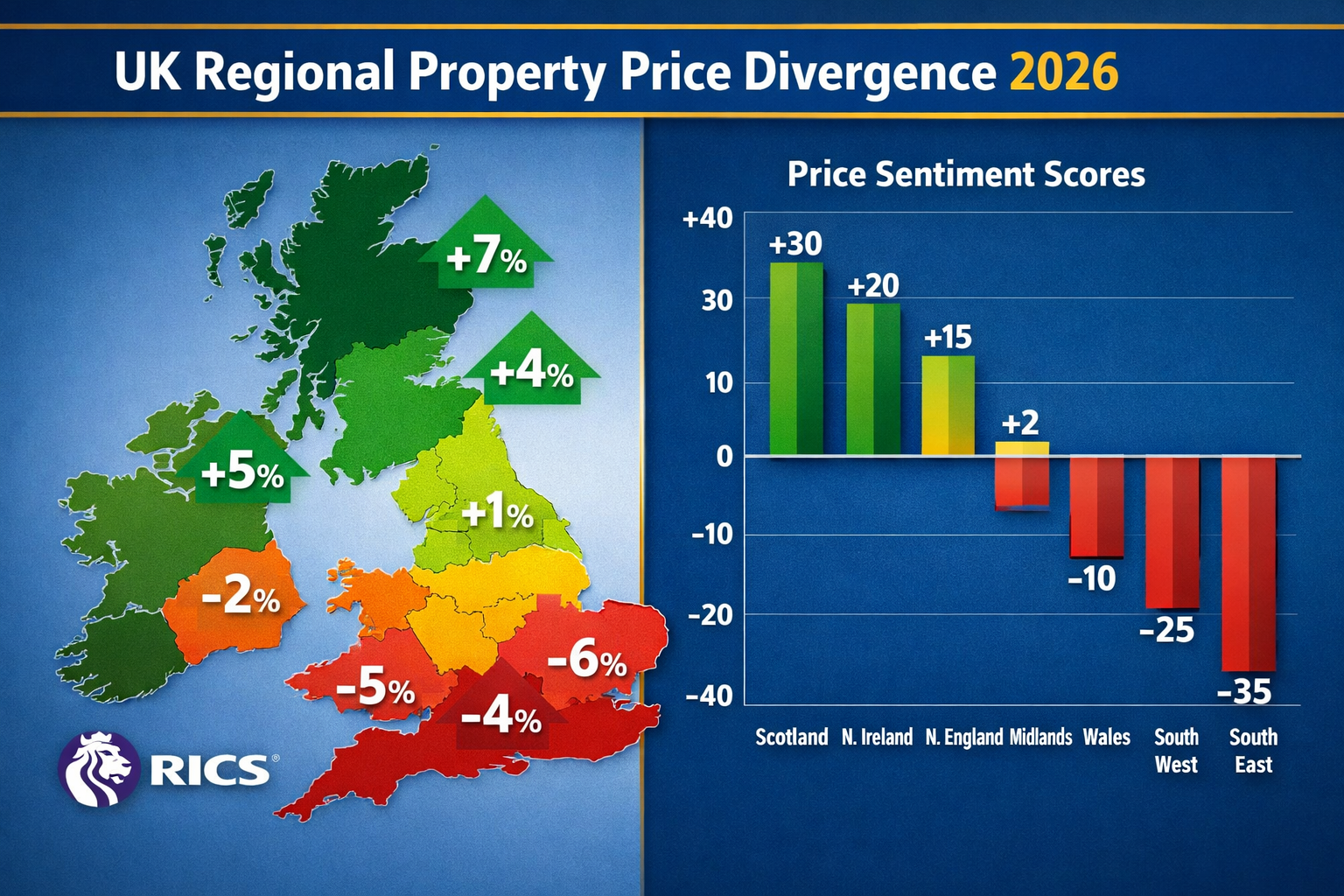
The January 2026 RICS Residential Market Survey reveals a striking pattern that has caught many industry professionals by surprise. While traditional property hotspots in London, the South West, South East, and East Anglia continue to report negative sentiment and declining activity, Northern England is experiencing genuine price momentum[1].
This regional divergence represents the most significant geographic split in UK property performance since the post-financial crisis recovery. Surveyors working across Northern England are reporting:
- Increased appraisal requests following the post-Christmas period
- Rising buyer confidence in regional markets
- Competitive bidding situations for well-priced properties
- Improved mortgage availability for Northern buyers
The market appears to be "starting to turn a corner," with activity-related measures showing potential positive momentum after significant declines observed in October 2025[1]. This recovery creates both opportunities and challenges for valuation professionals.
Why Northern England Is Outperforming
Several fundamental factors are driving Northern England's price surge:
Economic Rebalancing: Government infrastructure investments and corporate relocations to Northern cities have strengthened local employment markets, creating sustainable demand for housing.
Affordability Advantage: With property prices significantly lower than southern equivalents, Northern England offers better value propositions for first-time buyers and investors seeking rental yields.
Lifestyle Migration: Post-pandemic remote working trends continue to drive migration from expensive southern cities to more affordable Northern locations with improved quality of life.
Regional Development Initiatives: Major urban regeneration projects in Manchester, Leeds, Liverpool, and Newcastle are attracting both domestic and international investment.
Understanding these drivers is essential when conducting RICS homebuyer surveys and valuations in the region, as they influence long-term value projections.
Market Sentiment Indicators
The RICS survey data provides concrete evidence of this divergence through several key metrics:
| Region | Price Sentiment | Sales Activity | Buyer Enquiries |
|---|---|---|---|
| Northern England | ⬆️ Positive | ⬆️ Increasing | ⬆️ Strong |
| Scotland | ⬆️ Positive | ⬆️ Increasing | ⬆️ Growing |
| Northern Ireland | ⬆️ Positive | ⬆️ Stable | ⬆️ Steady |
| London | ⬇️ Negative | ⬇️ Declining | ⬇️ Weak |
| South East | ⬇️ Negative | ⬇️ Declining | ⬇️ Weak |
| South West | ⬇️ Negative | ⬇️ Declining | ⬇️ Weak |
These indicators demonstrate that Valuation Strategies for Northern England's 2026 Price Surge: RICS Techniques Amid Regional Recovery must account for fundamentally different market dynamics than those applied in southern regions.
RICS-Compliant Valuation Techniques for Regional Price Variations

Traditional RICS Red Book Methodology
The RICS Valuation – Global Standards (Red Book) remains the foundation for all professional property valuations in the UK. However, applying these standards in Northern England's recovering market requires careful consideration of regional factors.
Key Red Book principles that take on special significance in Northern England include:
Market Value Definition: Understanding that market value reflects "the estimated amount for which an asset should exchange on the valuation date between a willing buyer and a willing seller in an arm's length transaction" requires deep knowledge of local Northern market conditions[2].
Comparable Evidence: Identifying truly comparable properties becomes more challenging in rapidly appreciating markets. Valuers must adjust for time differences between comparable sales and the valuation date, with particular attention to the acceleration of price growth in early 2026.
Assumptions and Special Assumptions: Regional recovery markets may require specific assumptions about continued infrastructure investment, employment growth, and migration patterns that wouldn't apply in stagnant or declining markets.
When conducting freehold valuations in Northern England, these principles must be applied with regional market intelligence.
Adapting Valuation Methods for Rising Markets
Three primary valuation approaches require modification for Northern England's 2026 conditions:
1. Comparative Method (Market Approach)
The comparative method relies on recent sales of similar properties. In Northern England's rising market, valuers must:
- Apply time adjustments to comparable evidence, recognizing that sales from even 3-6 months ago may undervalue current market conditions
- Weight recent transactions more heavily than historical data
- Consider off-market transactions and accepted offers, not just completed sales
- Adjust for property-specific improvements that reflect regional renovation trends
2. Investment Method (Income Approach)
For buy-to-let properties and commercial valuations, the investment method takes on particular importance in Northern England where rental yields remain attractive:
- Calculate capitalization rates based on regional rental growth projections
- Factor in Northern England's lower void periods compared to southern markets
- Consider the impact of corporate relocations on rental demand
- Adjust for regional differences in tenant quality and lease terms
3. Residual Method (Development Approach)
Development valuations in Northern England must account for:
- Rising land values in regeneration areas
- Regional construction cost variations
- Local planning authority priorities and timeframes
- Infrastructure improvement impacts on development viability
Post-Budget 2026 Considerations
The 2026 Budget introduced specific challenges for high-value property assessments, particularly those exceeding £2 million. While Northern England has fewer properties in this bracket than southern regions, valuers must still understand the implications for premium properties in cities like Manchester and Leeds[2].
RICS-compliant techniques now require:
- Enhanced documentation of valuation methodology for properties approaching tax thresholds
- Careful consideration of how regional price growth may push previously mid-market properties into higher tax bands
- Clear communication with clients about tax implications of valuation figures
- Specialist knowledge of capital gains tax valuation requirements
Implementing AI-Enhanced RICS Valuation Strategies
The New RICS AI Professional Standard
On March 9, 2026, RICS implemented a groundbreaking Professional Standard on "Responsible use of artificial intelligence in surveying practice" that fundamentally changes how valuers can deploy technology in their assessments[3]. This standard directly impacts Valuation Strategies for Northern England's 2026 Price Surge: RICS Techniques Amid Regional Recovery by establishing baseline requirements for AI use.
The standard recognizes that AI tools offer tremendous potential for analyzing regional market data, identifying comparable properties, and detecting pricing trends—all particularly valuable in Northern England's dynamic market. However, it also establishes mandatory safeguards.
Mandatory AI Due Diligence Requirements
Before using any AI system with material impact on a valuation, RICS members must now complete and document a written assessment covering[3]:
✅ Appropriateness Evaluation: Is AI the most suitable tool for this specific valuation task, or would traditional methods be more appropriate?
✅ Alternative Tool Consideration: What other tools (AI or non-AI) were considered, and why was this particular system selected?
✅ Data Risk Assessment: What are the potential risks associated with the data sources the AI system uses?
✅ Bias Potential: Could the AI system produce biased outputs based on its training data or algorithms?
This documentation requirement ensures that valuers remain professionally accountable for AI-assisted valuations, rather than simply accepting automated outputs without critical analysis.
Critical Bias Mitigation for Regional Valuations
Perhaps the most significant concern for Northern England valuations is regional bias in AI training data. The RICS guidance specifically warns that valuation models trained on biased data may generate inaccurate outputs[3].
For example:
- An AI model trained predominantly on London property data may undervalue Northern England properties by failing to recognize regional market dynamics
- Conversely, models with insufficient Northern data may misinterpret price increases as anomalies rather than genuine market trends
- Historical data from pre-recovery periods may anchor valuations too low if not properly weighted
Valuers must therefore:
🔍 Verify training data sources to ensure adequate Northern England representation
🔍 Test AI outputs against manual valuations for a sample of properties
🔍 Document regional adjustments made to AI-generated figures
🔍 Maintain professional skepticism when AI outputs diverge significantly from market intelligence
AI Output Reliability Documentation
Before relying on AI-generated valuations, the RICS standard requires written decisions that include[3]:
- Assumptions made by the AI system and whether they're appropriate for Northern England markets
- Key concerns identified during the assessment process
- Mitigation strategies implemented to reduce identified risks
- Professional judgment on whether the AI output can reasonably be used for its intended purpose
All such documentation must be prepared under the supervision of a qualified surveyor who takes professional responsibility for the final valuation.
This requirement ensures that AI serves as a tool to enhance professional judgment rather than replace it—particularly important when valuing properties in Northern England's rapidly evolving market where historical patterns may not predict future performance.
Hybrid Valuation Workflows
The most effective approach for Northern England valuations in 2026 combines traditional RICS methodology with AI-enhanced data analysis:
Step 1: AI-Assisted Market Analysis
- Use AI tools to identify comparable properties across Northern regions
- Analyze pricing trends and velocity of sales
- Generate preliminary value ranges based on regional data
Step 2: Professional Verification
- Manually review AI-selected comparables for true similarity
- Apply professional judgment to time adjustments
- Consider qualitative factors AI may miss (neighborhood dynamics, property condition nuances)
Step 3: Regional Context Integration
- Incorporate local market intelligence from estate agents and other professionals
- Adjust for specific Northern England factors (regeneration projects, infrastructure improvements)
- Consider forward-looking indicators not captured in historical data
Step 4: Documentation and Compliance
- Complete required AI assessment documentation
- Record all adjustments made to AI outputs
- Ensure final valuation meets RICS Red Book standards
This hybrid approach leverages AI's data processing capabilities while maintaining the professional judgment essential for accurate regional valuations.
Practical Valuation Strategies for Northern England's Recovery Market
Competitive Pricing Analysis
Field reports from Northern surveyors consistently emphasize that accurate market pricing is critical to converting buyer interest into completed transactions[1]. In a price-sensitive recovery market, even small valuation errors can result in properties languishing unsold or sellers missing opportunities.
Effective competitive pricing strategies include:
Micro-Market Segmentation: Northern England encompasses diverse submarkets from Manchester's urban core to Yorkshire's rural properties. Valuers must segment analysis by:
- Specific neighborhoods within cities
- Property types and age bands
- Proximity to transport links and amenities
- School catchment areas
Price Point Sensitivity Analysis: Certain price thresholds trigger different buyer behaviors. Understanding where these psychological barriers exist in Northern markets helps optimize valuations for marketability.
Time-on-Market Correlation: Analyzing how pricing relative to valuation affects sales velocity provides crucial feedback for refining valuation approaches.
When conducting homebuyer surveys, valuers should provide clients with this competitive context to support informed decision-making.
Handling High-Value Properties in Northern Markets
While Northern England has fewer ultra-high-value properties than London, the region's recovery is creating more properties in the £1-2 million range, particularly in premium Manchester, Leeds, and Cheshire locations.
These valuations require:
- Enhanced comparable analysis drawing from regional and national databases
- Consideration of unique property features that may have limited local comparables
- Understanding of the high-net-worth buyer profile migrating to Northern regions
- Specialist knowledge of tax implications and probate valuation requirements
The cost of valuation for these properties reflects the additional expertise required.
New Build and Development Valuations
Northern England's recovery has stimulated significant new construction, particularly in urban regeneration zones. Valuing new builds requires specialized approaches:
Development Stage Considerations:
- Off-plan valuations based on comparable new builds and location premiums
- Practical completion valuations accounting for market changes during construction
- Post-completion valuations reflecting actual build quality and snagging issues
Help to Buy and Shared Ownership: Many Northern new builds involve government schemes requiring shared ownership valuation expertise.
Build Quality Assessment: New builds require evaluation of construction standards, warranties, and long-term maintenance implications—factors that significantly impact value in Northern markets where buyers are particularly quality-conscious.
Mortgage and Remortgage Valuations
Lender-instructed valuations in Northern England's rising market present specific challenges:
Conservative Lending Criteria: Despite price growth, lenders may apply cautious valuation approaches in historically lower-value regions. Valuers must balance market reality with lender risk appetite.
Loan-to-Value Considerations: Rising prices improve LTV ratios for existing owners seeking to remortgage, but valuers must ensure figures reflect sustainable values rather than temporary peaks.
Regional Lender Knowledge: Some national lenders have limited Northern England experience, making clear valuation reporting and regional context explanation essential.
Insurance and Reinstatement Valuations
The rising property values in Northern England also affect insurance reinstatement valuations. As property values increase:
- Reinstatement costs may not rise proportionally with market values
- Regional construction cost variations must be accurately reflected
- Property improvements during the recovery period need documentation
- Adequate coverage becomes more critical as values appreciate
Professional reinstatement cost assessments protect property owners from underinsurance in the improving market.
Regional Market Intelligence and Data Sources
Building Local Expertise
Successful Valuation Strategies for Northern England's 2026 Price Surge: RICS Techniques Amid Regional Recovery depend on deep local market knowledge. Valuers should:
Cultivate Regional Networks:
- Develop relationships with Northern England estate agents
- Participate in regional RICS chapters and professional groups
- Attend local property market events and auctions
- Monitor regional property development announcements
Track Local Economic Indicators:
- Employment statistics for major Northern cities
- Corporate relocation announcements
- Infrastructure project timelines
- Regional government investment programs
Monitor Planning and Development:
- Local authority planning applications and approvals
- Regeneration zone designations
- Transport infrastructure improvements
- School ratings and catchment changes
Data Sources for Northern England Valuations
Reliable data sources include:
📊 Land Registry Price Paid Data: Free, comprehensive transaction data with regional filtering capabilities
📊 RICS Residential Market Surveys: Monthly regional sentiment and activity indicators[1]
📊 Regional Property Indices: Track Northern England-specific price movements
📊 Local Authority Data: Planning permissions, council tax bands, demographic information
📊 Commercial Data Providers: Subscription services offering detailed comparable analysis
📊 Estate Agent Reports: Regional market updates from major agencies operating in Northern England
Quality Assurance and Peer Review
Given the significance of regional divergence in 2026, implementing quality assurance processes is essential:
- Peer review of valuations by colleagues with Northern England experience
- Regular calibration of valuation approaches against actual transaction outcomes
- Continuous professional development focused on regional market dynamics
- Client feedback on valuation accuracy and usefulness
Working with established chartered surveyors who maintain these quality standards ensures valuation reliability.
Future Outlook and Emerging Trends
Sustainability and Energy Efficiency Impact
Northern England's recovering market is increasingly influenced by energy efficiency considerations:
- EPC ratings are becoming significant value differentiators
- Retrofit potential affects valuation of older properties
- Green mortgage products create premium demand for energy-efficient homes
- Government incentives for energy improvements influence investment decisions
Valuers must factor these sustainability considerations into Northern England assessments, particularly as the region's older housing stock presents both challenges and opportunities.
Technology Integration Trends
Beyond AI, several technology trends are reshaping Northern England valuations:
Virtual Inspection Tools: Drone surveys and 3D imaging enable more efficient property assessment, particularly valuable across Northern England's geographic spread.
Blockchain and Property Records: Emerging technologies may streamline transaction verification and comparable evidence gathering.
Predictive Analytics: Advanced modeling tools help forecast regional price trajectories based on economic indicators and demographic trends.
Digital Collaboration Platforms: Cloud-based systems facilitate multi-party valuations and improve documentation standards.
Regulatory Developments
Valuers should monitor potential regulatory changes affecting Northern England:
- Regional planning reforms that may accelerate development
- Tax policy adjustments affecting property investment decisions
- Mortgage market regulations influencing lending practices
- Professional standards updates from RICS and other bodies
Staying informed about these developments ensures valuation strategies remain compliant and relevant.
Conclusion
The Valuation Strategies for Northern England's 2026 Price Surge: RICS Techniques Amid Regional Recovery represent a fundamental shift in how property professionals approach their work across the UK. The regional divergence between Northern England's upward trajectory and southern market struggles demands specialized expertise, localized knowledge, and adaptive methodologies.
RICS-compliant valuation techniques remain the foundation of professional practice, but successful valuers in 2026 must enhance these traditional approaches with:
✅ Regional market intelligence that recognizes Northern England's unique recovery dynamics
✅ AI-enhanced data analysis implemented within the new RICS professional standards framework
✅ Bias mitigation protocols ensuring technology serves rather than distorts professional judgment
✅ Competitive pricing strategies that convert buyer interest into completed transactions
✅ Continuous professional development focused on emerging trends and regulatory changes
The January 2026 RICS data confirms that the market is "starting to turn a corner," with Northern regions leading this recovery. Valuers who adapt their strategies to this new reality—combining traditional RICS Red Book methodology with modern technology and deep regional expertise—will provide the most valuable service to clients navigating this transformed landscape.
Actionable Next Steps
For property professionals working in Northern England:
- Review and update your AI assessment documentation to comply with the March 2026 RICS standard
- Strengthen regional networks with Northern England estate agents, developers, and fellow surveyors
- Invest in training on regional market dynamics and emerging valuation technologies
- Implement quality assurance processes including peer review of regional valuations
- Monitor RICS guidance for updates on AI standards and valuation best practices
- Communicate clearly with clients about regional market conditions and valuation methodology
The Northern England property market's 2026 recovery presents significant opportunities for valuers who approach it with the right combination of professional standards, technological capability, and regional expertise. By implementing these strategies, property professionals can deliver accurate, compliant, and valuable assessments that serve clients effectively in this dynamic market environment.
References
[1] UK Residential Market Survey January 2026 – https://www.rics.org/content/dam/ricsglobal/documents/market-surveys/uk-residential-market-survey/UK-Residential-Market-Survey_January-2026.pdf
[2] Post Budget 2026 Valuation Challenges Surveyor Strategies For High Value Properties Over 2 Million – https://nottinghillsurveyors.com/blog/post-budget-2026-valuation-challenges-surveyor-strategies-for-high-value-properties-over-2-million
[3] RICS APC Hot Topics 2026 Q&A Practice – https://resources.apcguide.com/rics-apc-hot-topics-2026-qa-practice/
