
The UK housing market in 2026 is experiencing a remarkable recovery, with transaction volumes surging and regional price disparities reaching unprecedented levels. As property disputes multiply across England, Expert Witness Valuations in 2026 Housing Disputes: RICS Protocols for North-South Price Divergence Cases have become critical tools for resolving conflicts where regional market variations create valuation challenges. With the RICS 5th Edition Expert Witness Standard now in effect following its 2025 consultation period, surveyors face enhanced requirements for substantiating regional differentials in court proceedings.[1]
The growing gap between northern and southern property values has transformed routine valuation work into complex legal territory. Expert witnesses must now navigate stricter protocols while defending their professional opinions against increasingly sophisticated cross-examination. Understanding these evolving standards isn't just about compliance—it's about protecting professional credibility in high-stakes litigation.
Key Takeaways
- 📋 RICS 5th Edition Standard introduces stricter conflict of interest disclosure requirements and reinforces the expert witness's primary duty to the tribunal rather than the instructing party[1]
- 🏘️ North-South price divergence cases require comprehensive regional market analysis with robust comparable evidence to withstand legal scrutiny
- ⚖️ Enhanced independence protocols now include clear guidance on conditional fees and risk mitigation strategies for high-volume dispute cases[1]
- 🤖 Technology integration provisions cover AI-assisted valuations and digital evidence presentation in modern court proceedings[1]
- 📊 Regional differential substantiation demands detailed methodology documentation explaining how local market factors influence property values
Understanding RICS Expert Witness Protocols for 2026 Housing Disputes
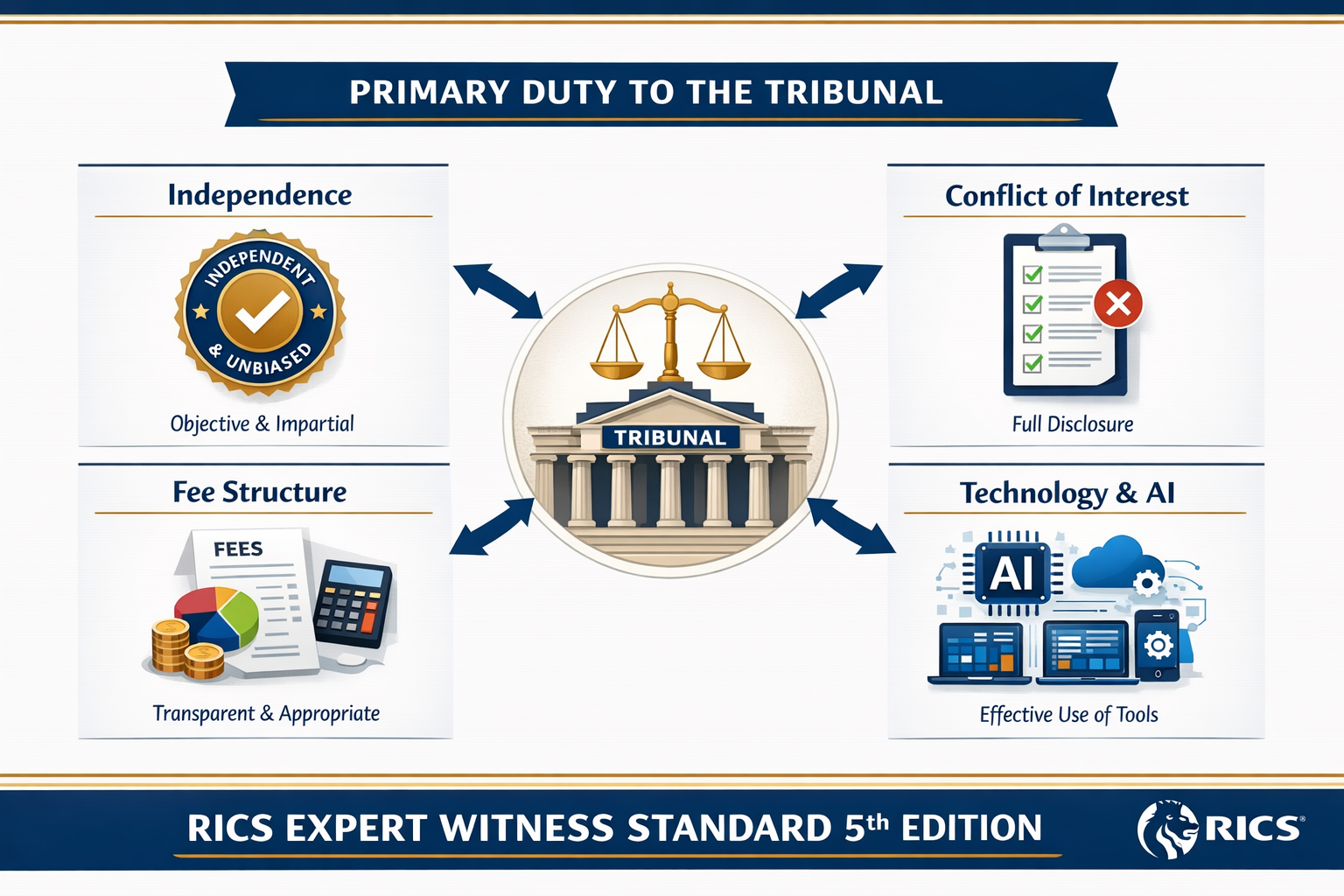
The landscape of Expert Witness Valuations in 2026 Housing Disputes: RICS Protocols for North-South Price Divergence Cases has fundamentally shifted with the implementation of the updated RICS expert witness standard. Following a comprehensive consultation launched in August 2025, the 5th Edition represents the first major overhaul since 2014, bringing global relevance to members providing expert evidence in civil proceedings before tribunals worldwide.[1]
Primary Duty to the Tribunal
The cornerstone principle remains unchanged yet reinforced: expert witnesses owe their primary duty to the tribunal, not the client. This fundamental obligation requires all reports and evidence to be independent, unbiased, and strictly within the surveyor's area of genuine expertise.[1] In housing disputes involving regional price variations, this means resisting pressure from instructing parties to overemphasize factors that favor their position.
For surveyors working on valuation reports, this duty extends beyond simply stating an opinion. Expert witnesses must:
- ✅ Provide balanced analysis of all relevant market factors
- ✅ Acknowledge limitations in available data
- ✅ Present alternative viewpoints where professional disagreement exists
- ✅ Avoid advocacy for the instructing party's position
Enhanced Conflict of Interest Requirements
The 5th Edition introduces clearer requirements for identifying and disclosing conflicts of interest, accompanied by explicit explanations of legal consequences for non-compliance.[1] This proves particularly relevant in north-south price divergence cases where surveyors may have prior relationships with parties in concentrated regional markets.
Common Conflict Scenarios:
| Conflict Type | Example | Disclosure Requirement |
|---|---|---|
| Prior valuation work | Previously valued same property for one party | Full disclosure before accepting instruction |
| Regional concentration | Regular client in local market | Declare ongoing relationship and assess independence |
| Financial interest | Investment in similar properties in area | Must decline instruction |
| Personal relationships | Social connection with instructing party | Full disclosure and potential recusal |
When handling shared ownership valuations or complex ownership structures, conflicts become more nuanced and require careful professional judgment.
Conditional Fee Guidance and Professional Independence
One of the most significant updates addresses fee arrangements that could compromise independence. The standard provides clear guidance on conditional and deferred fees, establishing protective measures for professional integrity.[1] This becomes critical in housing disputes where outcomes significantly impact financial stakes.
"Expert witnesses must never allow fee arrangements to influence their professional opinions or the content of their reports. Independence is non-negotiable."
Acceptable Fee Structures:
- Fixed fees agreed upfront regardless of outcome
- Hourly rates with capped maximums
- Staged payments linked to work completion (not case outcomes)
Prohibited Arrangements:
- Success-based fees contingent on favorable tribunal decisions
- Percentage-based fees tied to valuation amounts
- Bonus payments for "winning" cases
For surveyors considering freehold valuation work in dispute contexts, understanding these fee restrictions prevents ethical violations that could undermine testimony credibility.
Modern Technology Integration in Expert Evidence
The 2026 protocols embrace technological advancement while maintaining quality standards. The updated standard covers provisions for AI use, digital evidence, and new legal procedures, emphasizing that technology must enhance rather than replace professional judgment.[1]
Technology Applications in Housing Dispute Valuations:
🖥️ AI-Assisted Comparable Analysis: Machine learning tools can identify relevant comparable transactions across regions, but expert witnesses must validate selections and explain why certain comparables were included or excluded.
📱 Digital Evidence Presentation: Virtual tribunal hearings require experts to present complex regional market data through screen-sharing platforms, demanding new presentation skills.
📊 Automated Valuation Models (AVMs): While AVMs provide useful data points, experts must explain their limitations in capturing unique property characteristics and local market nuances.
🗺️ Geographic Information Systems (GIS): Mapping tools help visualize regional price patterns, particularly valuable in demonstrating north-south divergence to tribunals.
When preparing Level 2 or Level 3 surveys that may later support expert witness work, documenting the technology used and its limitations becomes essential for defensibility.
Compliance with Evolving Housing Legislation
Expert witnesses must remain current with housing disrepair legislation, including Awaab's Law (effective October 2025) and the Housing Health and Safety Rating System (HHSRS).[1] These regulatory changes impact valuation methodologies, particularly when disputes involve property condition affecting regional price comparisons.
Legislative Impacts on Valuations:
- Properties failing HHSRS standards may require valuation adjustments
- Awaab's Law compliance affects rental property valuations
- Building safety regulations influence comparable selection
- Energy performance requirements create regional variation factors
Understanding these legal frameworks ensures expert witness reports meet current standards and withstand cross-examination on regulatory compliance issues.
North-South Price Divergence: Substantiating Regional Differentials in Court
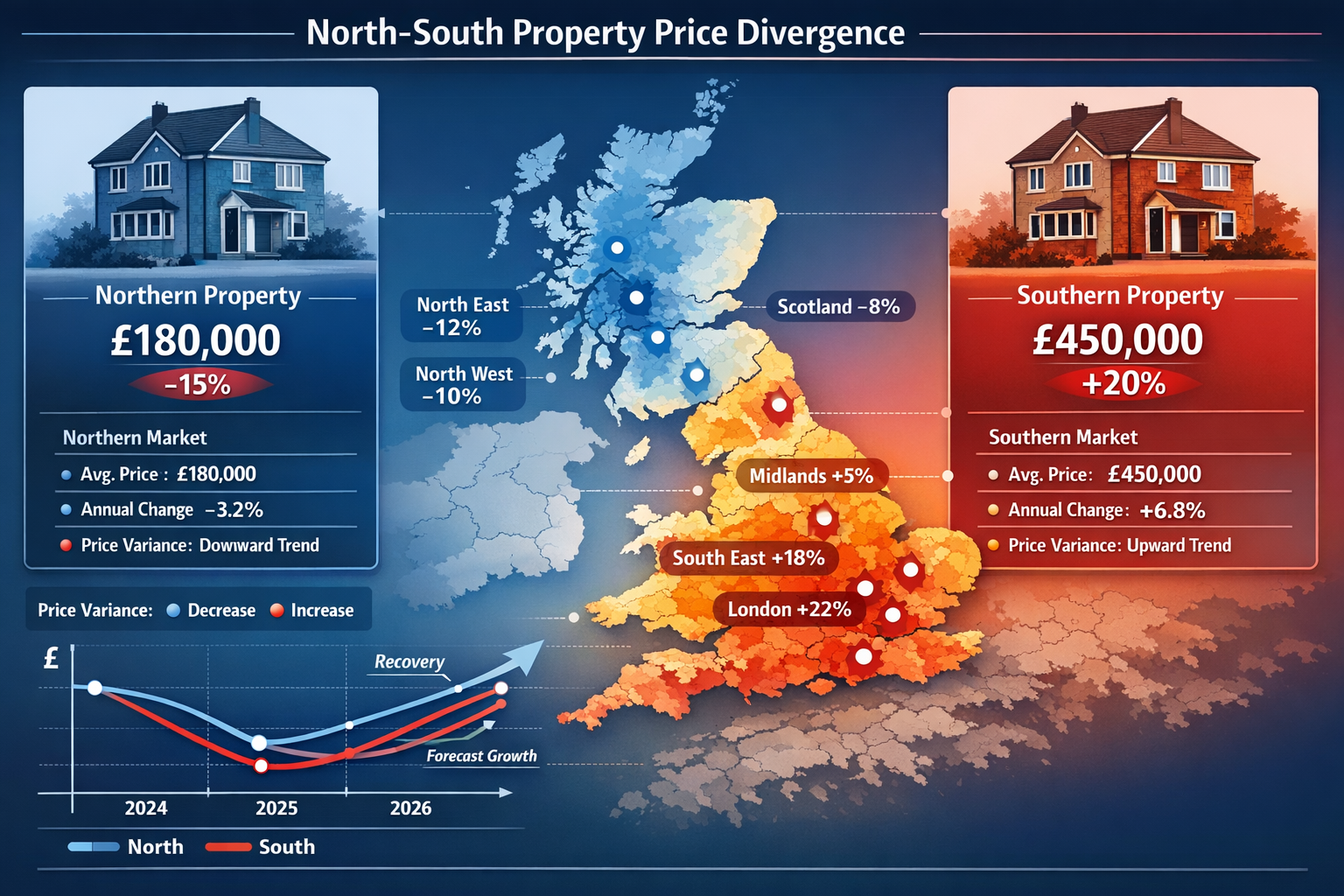
Expert Witness Valuations in 2026 Housing Disputes: RICS Protocols for North-South Price Divergence Cases require meticulous methodology when regional price variations form the dispute's core. The persistent gap between northern and southern property markets creates unique challenges for expert witnesses who must defend valuation differentials that can exceed 100% for comparable property types.
Understanding Regional Market Dynamics
The north-south divide in UK property prices reflects fundamental economic differences that expert witnesses must articulate clearly to tribunals. Simply stating that "London properties cost more" lacks the analytical depth required under RICS protocols.[2]
Key Regional Factors Requiring Analysis:
📈 Economic Performance Indicators
- Employment rates and job market strength
- Average household income levels
- Industry concentration and economic diversity
- Infrastructure investment and connectivity
🏘️ Supply and Demand Dynamics
- Housing stock availability relative to population
- New construction rates and planning constraints
- Migration patterns and population growth
- Rental yield differentials
🌆 Amenity and Lifestyle Factors
- Access to quality schools and healthcare
- Cultural and recreational facilities
- Transport links and commuting options
- Environmental quality and green spaces
When working with chartered surveyors across different London regions, understanding these micro-market variations within the broader north-south context becomes essential.
Comparable Evidence Selection Methodology
The foundation of defensible expert witness testimony lies in robust comparable evidence that withstands cross-examination. RICS residential valuation standards require systematic approaches to comparable selection, particularly when regional variations complicate direct comparisons.[4]
Comparable Selection Criteria:
| Criterion | Weight | Application in Regional Cases |
|---|---|---|
| Location proximity | High | Must account for regional market boundaries |
| Property type match | High | Identical characteristics where possible |
| Transaction timing | Medium | Adjust for market movement between regions |
| Condition similarity | Medium | Document condition differences explicitly |
| Size equivalence | Medium | Apply appropriate adjustments for variance |
| Tenure type | High | Freehold vs leasehold significantly impacts value |
For properties requiring RICS Homebuyer surveys, the condition assessment becomes crucial when selecting comparables across regions with different property age profiles.
Quantifying Regional Adjustment Factors
Expert witnesses must quantify and justify adjustment factors applied when comparing properties across northern and southern markets. Vague assertions about regional differences undermine credibility under cross-examination.
Adjustment Methodology Framework:
1️⃣ Establish Base Value: Identify the most comparable transaction in the subject property's immediate market
2️⃣ Identify Differences: Document specific variations between comparable and subject property
3️⃣ Calculate Adjustments: Apply percentage or monetary adjustments with clear rationale
4️⃣ Cross-Check Results: Verify adjusted values align with market expectations
5️⃣ Sensitivity Analysis: Test how varying adjustment assumptions impact final opinion
Example Adjustment Table:
Subject Property: 3-bed semi-detached, Manchester
Comparable: 3-bed semi-detached, Surrey

Base Comparable Value: £650,000
Less: Regional market differential (-55%): -£357,500
Plus: Superior condition (+8%): +£23,400
Less: Smaller plot (-3%): -£8,775
Adjusted Comparable Value: £307,125
This transparent methodology demonstrates professional rigor expected under RICS protocols and helps tribunals understand complex regional variations.
Addressing Extreme Conditions and Market Volatility
RICS recognizes that extreme market conditions require enhanced professional judgment, though no dedicated protocol specifically addresses regional price divergence cases.[3] The 2026 market recovery presents unique challenges as regional markets recover at different rates.
Market Volatility Considerations:
⚠️ Transaction Volume Fluctuations: Limited comparable evidence in recovering markets requires wider search parameters
⚠️ Price Trajectory Uncertainty: Expert witnesses must acknowledge market direction uncertainty when valuing at specific dates
⚠️ Regional Recovery Disparities: Northern markets may lag southern recovery, affecting comparable reliability
⚠️ Buyer Sentiment Variations: Regional confidence levels impact achievable prices beyond fundamental value drivers
When instructed on valuation cost assessments, experts should clarify how market conditions impact the complexity and therefore cost of defensible valuation work.
Documentation Standards for Court Proceedings
Expert witness reports must meet strict documentation standards that allow tribunals to follow the valuation logic independently. RICS protocols require comprehensive explanation of methodology, assumptions, and limitations.[2]
Essential Report Components:
📋 Executive Summary: Clear statement of opinion with key assumptions
📋 Property Description: Detailed specification with photographs and plans
📋 Market Context: Regional market analysis with supporting data
📋 Comparable Evidence: Full details of transactions relied upon
📋 Valuation Methodology: Step-by-step explanation of approach
📋 Adjustments Schedule: Transparent calculation of all adjustments
📋 Limitations and Caveats: Clear statement of report constraints
📋 Declaration of Independence: Confirmation of duty to tribunal
For surveyors who typically prepare structural surveys, transitioning to expert witness work requires additional documentation rigor focused on legal defensibility rather than purely technical assessment.
Handling Challenges to Regional Assumptions
Cross-examination frequently targets the assumptions underlying regional differential calculations. Expert witnesses must anticipate challenges and prepare robust defenses of their methodology.
Common Challenge Areas:
❓ "Why did you select those specific comparables?"
- Prepare detailed selection criteria documentation
- Explain rejected comparables and reasoning
- Demonstrate systematic search methodology
❓ "How do you know that adjustment percentage is accurate?"
- Reference market evidence supporting adjustment rates
- Cite published research on regional differentials
- Acknowledge adjustment estimation limitations
❓ "Couldn't alternative methodology produce different results?"
- Acknowledge alternative approaches exist
- Explain why chosen method suits this case
- Perform sensitivity analysis showing result ranges
❓ "Are you biased toward the instructing party's position?"
- Demonstrate balanced consideration of all factors
- Highlight concessions unfavorable to instructing party
- Reference independence declaration and RICS obligations
Preparation for these challenges separates competent expert witnesses from those whose testimony crumbles under pressure.
Preparing Expert Witness Testimony for Housing Dispute Tribunals
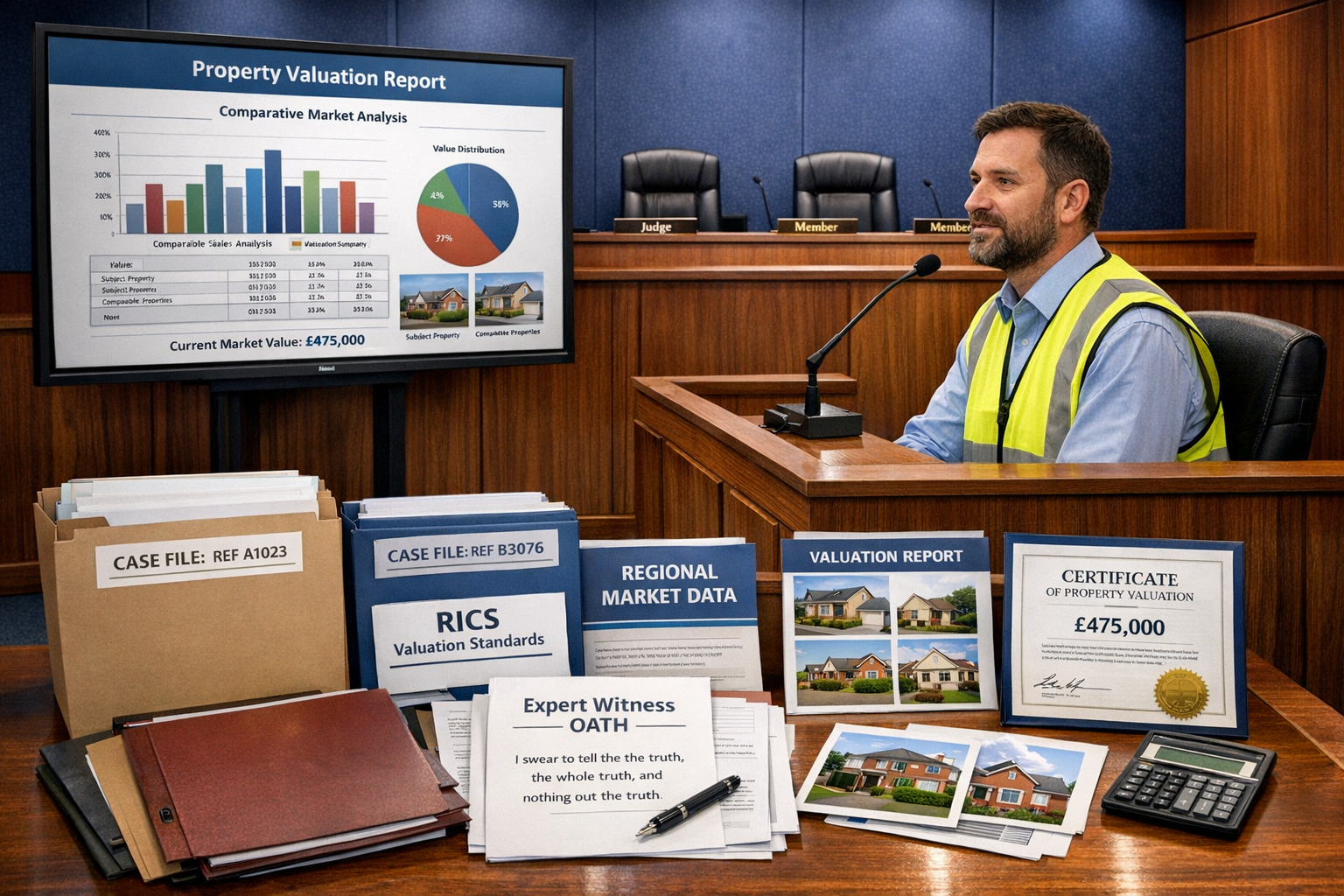
The transition from written report to live testimony represents a critical juncture in Expert Witness Valuations in 2026 Housing Disputes: RICS Protocols for North-South Price Divergence Cases. Even the most meticulously prepared valuation report loses impact if the expert witness cannot effectively communicate their opinions under tribunal scrutiny.
Pre-Hearing Preparation Strategies
Effective testimony preparation extends far beyond reviewing your own report. Expert witnesses must anticipate opposing arguments, understand legal context, and develop clear communication strategies for complex technical concepts.
Comprehensive Preparation Checklist:
✅ Master Your Report: Know every figure, assumption, and conclusion without constant reference to documents
✅ Review All Case Materials: Understand the broader dispute context beyond valuation issues
✅ Analyze Opposing Expert's Report: Identify disagreements and prepare responses to contrary opinions
✅ Prepare Visual Aids: Develop clear charts, maps, and diagrams explaining regional differentials
✅ Rehearse Testimony: Practice explaining complex concepts in plain language
✅ Anticipate Weak Points: Identify potential vulnerabilities in your methodology and prepare defenses
✅ Update Market Knowledge: Ensure awareness of recent transactions and market movements
For surveyors accustomed to party wall procedures, the adversarial nature of expert witness testimony requires different skills focused on persuasive communication rather than negotiated resolution.
Communicating Complex Regional Data to Non-Technical Tribunals
Tribunal members typically lack specialized surveying knowledge, requiring experts to translate technical analysis into accessible explanations without oversimplifying or patronizing.
Effective Communication Techniques:
🗣️ Use Analogies: "The north-south price difference works like comparing car prices in different countries—the same model costs more in some markets due to local economic conditions."
📊 Visual Presentation: Maps showing regional price gradients communicate more effectively than tables of numbers
🎯 Focus on Key Points: Tribunals remember three main arguments better than ten minor ones
⏱️ Pace Appropriately: Allow time for tribunal members to absorb complex information
❓ Invite Questions: Encourage clarification requests to ensure understanding
Example Explanation Structure:
"I valued this Manchester property at £310,000 compared to the opposing expert's £380,000 opinion. The difference stems from our regional market analysis. I relied on actual Manchester transactions from the past six months showing £300-320k for comparable properties. The opposing expert used Surrey comparables adjusted downward, but those adjustments underestimate the fundamental economic differences between regions. Manchester's average household income is 42% lower than Surrey's, directly impacting achievable property prices."
This approach clearly states the disagreement, explains the methodology difference, and provides concrete supporting evidence without technical jargon.
Handling Cross-Examination on Regional Assumptions
Cross-examination aims to undermine expert credibility by exposing methodology weaknesses, bias, or inconsistencies. Preparation and composure determine testimony effectiveness.
Cross-Examination Survival Strategies:
💼 Maintain Professional Demeanor: Never become defensive or argumentative regardless of questioning tone
⏸️ Pause Before Answering: Take time to formulate clear responses rather than rushing
🎯 Answer Only What's Asked: Avoid volunteering additional information that creates new attack vectors
📝 Reference Your Report: Direct questioners to specific report sections supporting your position
🤝 Acknowledge Limitations: Admitting reasonable uncertainties enhances rather than undermines credibility
🚫 Never Speculate: If you don't know something, say so rather than guessing
Sample Cross-Examination Exchange:
Opposing Counsel: "Mr. Smith, you valued this property £70,000 lower than my expert. Isn't that because you were instructed to minimize value?"
Expert Response: "No. My valuation reflects actual transaction evidence in the Manchester market during the relevant period. My primary duty is to this tribunal, not the instructing party. I've detailed my methodology in paragraphs 4.2 through 4.7 of my report, which shows I considered all relevant factors objectively."
This response directly refutes the bias suggestion, reasserts independence, and grounds the answer in documented methodology.
Joint Expert Meetings and Statement Preparation
Many housing disputes involve joint expert meetings where opposing valuers attempt to narrow disagreement areas before final hearings. These meetings require diplomatic skills while maintaining professional positions.
Joint Meeting Best Practices:
🤝 Professional Courtesy: Treat opposing experts with respect regardless of opinion differences
📋 Clear Position Statements: Articulate your methodology and conclusions precisely
🔍 Identify True Disagreements: Distinguish fundamental methodology differences from minor calculation variations
📊 Agree Where Possible: Conceding non-essential points demonstrates objectivity
📝 Document Everything: Ensure joint statements accurately reflect your position
❌ Never Compromise Core Opinions: Maintain professional judgment despite pressure to reach agreement
Joint Statement Structure:
- Agreed Facts: Property details, market context, legal framework
- Agreed Methodology: Valuation approach and general principles
- Disagreement Areas: Specific comparable selection, adjustment rates, final values
- Reasons for Disagreement: Clear explanation of why experts reached different conclusions
Understanding the complete guide to home surveying helps experts explain to tribunals how professional surveyors can reasonably disagree on valuation while both following RICS standards.
Technology in Virtual Tribunal Proceedings
The 2026 landscape includes significant virtual hearing components, requiring expert witnesses to master remote testimony technology while maintaining professional presence.[1]
Virtual Testimony Considerations:
💻 Technical Setup: Professional lighting, clear audio, neutral background, reliable internet connection
📱 Screen Sharing Proficiency: Ability to navigate documents and visual aids smoothly during testimony
👁️ Camera Engagement: Maintain eye contact with camera rather than screen for connection with tribunal
🎤 Clear Audio: Speak distinctly and at appropriate volume for remote participants
📋 Document Organization: Quick access to all materials without fumbling through files
⚡ Backup Plans: Alternative connection methods if technology fails
When working across different regions, from chartered surveyors in Fulham to chartered surveyors in Bromley, virtual proceedings enable efficient expert witness participation without extensive travel.
Post-Testimony Considerations and Professional Development
The expert witness role extends beyond testimony completion. Professional development and case reflection improve future performance.
Continuous Improvement Strategies:
📚 Case Review: Analyze what worked well and what could improve in each case
🎓 Training Updates: Attend RICS expert witness training as protocols evolve
👥 Peer Discussion: Discuss challenging cases with experienced expert witness colleagues (maintaining confidentiality)
📖 Legal Knowledge: Stay current with housing legislation and tribunal procedures
✍️ Writing Skills: Continuously refine report writing for clarity and persuasiveness
🎯 Specialization: Develop recognized expertise in specific dispute types or regions
For surveyors handling dilapidations surveys or other specialized work, expert witness development represents valuable professional diversification while enhancing core valuation skills.
Ethical Boundaries and Professional Integrity
The updated RICS standards emphasize that professional integrity cannot be compromised regardless of case pressures or client expectations.[1] Expert witnesses must recognize and resist situations that threaten independence.
Red Flag Scenarios Requiring Action:
🚩 Pressure to Change Opinions: Instructing parties requesting valuation adjustments to support their case
🚩 Selective Evidence Requests: Clients asking experts to ignore unfavorable comparable evidence
🚩 Outcome-Based Fee Suggestions: Payment structures linking compensation to case results
🚩 Testimony Coaching: Attorneys suggesting specific answers to anticipated questions
🚩 Conflict Concealment: Pressure to minimize or hide potential conflicts of interest
Appropriate Responses:
- Firmly decline requests that compromise independence
- Document any pressure attempts for potential disciplinary proceedings
- Withdraw from instruction if integrity cannot be maintained
- Report serious ethical violations to RICS if appropriate
- Seek guidance from professional indemnity insurers when uncertain
Maintaining these boundaries protects both individual professional reputations and the broader credibility of surveying expert witnesses in legal proceedings.
Conclusion
Expert Witness Valuations in 2026 Housing Disputes: RICS Protocols for North-South Price Divergence Cases represent a sophisticated intersection of professional valuation expertise, legal procedure, and regional market analysis. The implementation of the RICS 5th Edition Expert Witness Standard has raised the bar for independence, transparency, and methodological rigor that tribunals expect from surveying professionals.[1]
As the UK housing market continues its 2026 recovery with persistent regional disparities, expert witnesses play an increasingly vital role in resolving valuation disputes. Success requires more than technical competence—it demands unwavering commitment to the primary duty to tribunals, meticulous documentation of regional differential analysis, and effective communication of complex market dynamics to non-technical audiences.
The enhanced protocols around conflict disclosure, fee arrangements, and technology integration reflect the profession's evolution toward higher accountability standards.[1] Expert witnesses who embrace these requirements rather than viewing them as burdens will find their testimony carries greater weight and their professional reputations strengthen.
Actionable Next Steps
For surveyors preparing to undertake expert witness work in housing disputes involving regional price variations:
-
Review RICS 5th Edition Standards: Thoroughly familiarize yourself with updated requirements, particularly independence and conflict disclosure provisions[1]
-
Develop Regional Expertise: Build comprehensive knowledge of specific regional markets where you'll provide expert opinions, including economic drivers and transaction patterns
-
Enhance Documentation Practices: Implement systematic comparable selection and adjustment methodologies that withstand legal scrutiny
-
Invest in Communication Skills: Practice explaining complex valuation concepts in accessible language for tribunal audiences
-
Establish Ethical Boundaries: Create clear policies on acceptable fee arrangements and client interactions that protect professional independence
-
Pursue Specialized Training: Attend RICS expert witness courses and legal procedure training specific to housing disputes
-
Build Technology Competence: Master virtual testimony platforms and digital evidence presentation tools for modern tribunal proceedings[1]
The path to becoming a respected expert witness in housing valuation disputes requires dedication to continuous professional development and unwavering ethical standards. Those who meet these challenges will find rewarding opportunities to apply their expertise in resolving complex property disputes while advancing the profession's standing in legal proceedings.
For surveyors seeking to expand their practice into expert witness work, understanding these protocols represents not merely compliance with professional standards, but the foundation for building a reputation as a trusted, credible voice in housing dispute resolution throughout 2026 and beyond.
References
[1] Rics Launches Global Consultation On Updated Expert Witness Standard – https://www.rics.org/news-insights/rics-launches-global-consultation-on-updated-expert-witness-standard
[2] Surveyors Acting As Expert Witnesses – https://www.rics.org/profession-standards/rics-standards-and-guidance/sector-standards/dispute-resolution-standards/surveyors-acting-as-expert-witnesses
[3] Real Estate Valuation Extreme Conditions – https://ww3.rics.org/uk/en/journals/property-journal/real-estate-valuation-extreme-conditions.html
[4] Residential Valuations – https://www.rics.org/profession-standards/rics-standards-and-guidance/sector-standards/valuation-standards/residential-valuations
