
The UK property market faces unprecedented challenges as the government implements a new wealth tax targeting high-value homes. With the Valuation Office Agency currently assessing properties in 2026 ahead of the April 2028 implementation, property owners and surveyors must navigate complex valuation risks that could significantly impact tax liabilities and market dynamics. Understanding the Valuation Risks from New Wealth Taxes on £2M+ Properties: Surveyor Due Diligence in 2026 has become critical for anyone involved in the prime property sector.
The new High Value Council Tax Surcharge introduces annual charges ranging from £2,500 to £7,500 for properties valued above £2 million, affecting an estimated 200,000 homes across England.[3] This policy creates a critical 18-month window where accurate property valuations will determine long-term tax obligations, making professional surveyor due diligence more important than ever.

Key Takeaways
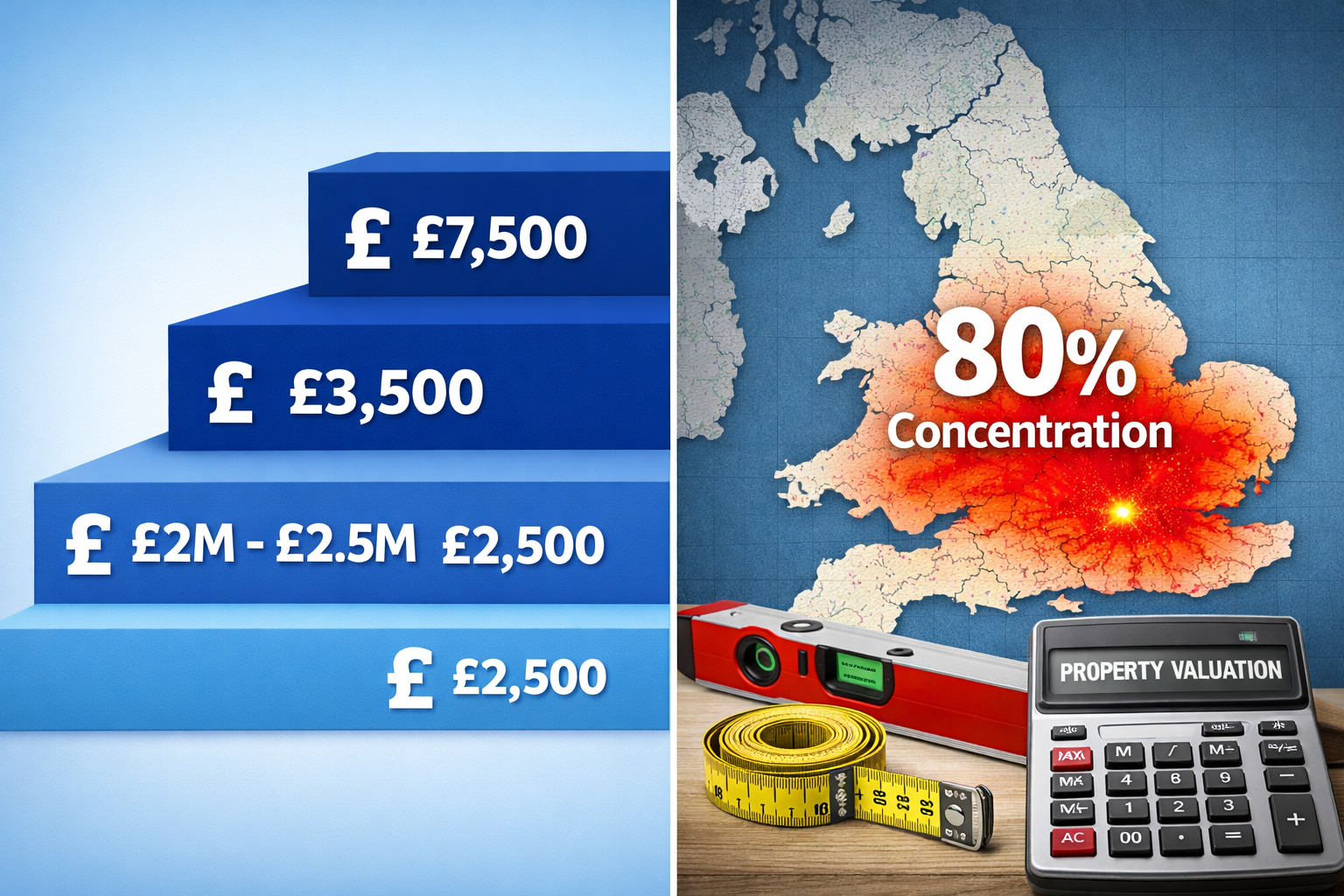
- 🏠 Tax bands begin at £2M with three tiers: £2,500 annually for £2M-£2.5M properties, £3,500 for £2.5M-£5M, and £7,500 for properties above £5M
- 📍 Geographic concentration means 80% of affected properties are located in London and the Southeast, creating regional valuation pressures
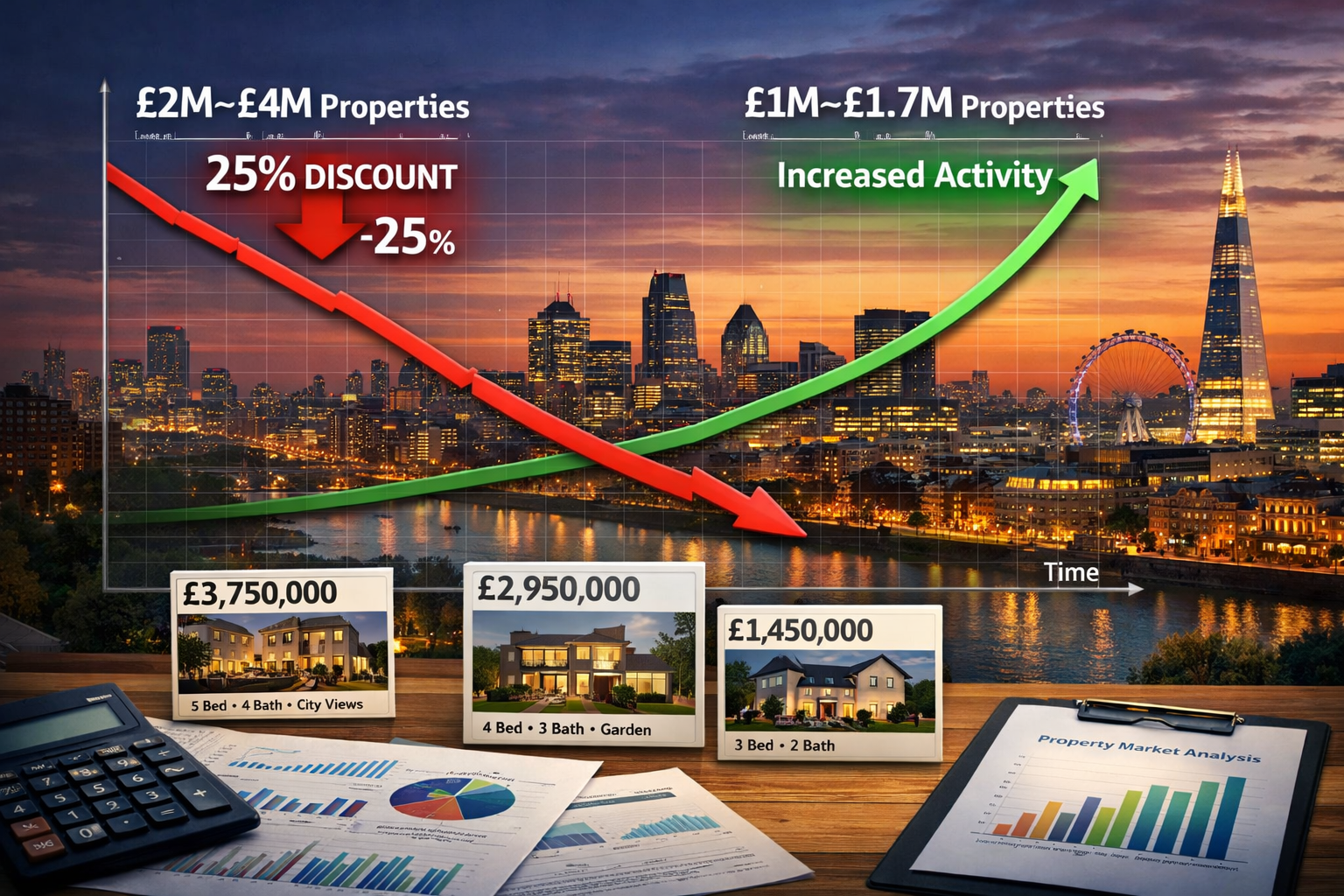
- 📉 Market distortions emerging with properties in the £2M-£4M range already experiencing discounts up to 25% ahead of implementation
- ⏰ Critical valuation window runs through 2026-2027 as the Valuation Office Agency completes assessments before April 2028 implementation
- ✅ Professional surveyor due diligence is essential to ensure accurate valuations and identify opportunities to contest marginal assessments
Understanding the New Wealth Tax Structure and Implementation Timeline
The High Value Council Tax Surcharge represents a significant shift in UK property taxation policy. Chancellor Rachel Reeves introduced this measure as part of a broader £26 billion tax package designed to generate £400 million in annual revenue by 2029-30.[2]
The Four-Band Surcharge System
The tax operates through a tiered structure designed to scale with property value:
| Property Value Range | Annual Surcharge | Cumulative Tax Burden (5 Years) |
|---|---|---|
| £2M – £2.5M | £2,500 | £12,500 |
| £2.5M – £5M | £3,500 | £17,500 |
| £5M+ | £7,500 | £37,500 |
| Below £2M | £0 | £0 |
Importantly, the Valuation Office Agency begins assessment at a £1.5 million threshold to ensure no qualifying properties slip through the net.[3] This creates a buffer zone where properties near the boundary require particularly careful valuation scrutiny.
Implementation Timeline and Critical Dates
The valuation process currently underway in 2026 establishes the foundation for tax liability beginning April 1, 2028.[1] This 18-month gap creates both opportunities and risks:
- 2026-2027: Valuation assessment period by VOA
- Late 2027: Property owners receive valuation notices
- Early 2028: Appeals and contestation window
- April 1, 2028: Tax collection begins
Professional Red Book valuation services become essential during this period to establish defensible property values and identify potential grounds for appeal.
Valuation Risks from New Wealth Taxes on £2M+ Properties: Geographic and Market Impacts
The geographic concentration of high-value properties creates uneven risk distribution across England. Jonathan Russell, Chief Executive of the Valuation Office Agency, confirms that fewer than 1% of all English properties will be affected, but these are heavily clustered in specific regions.[3]
The London "Terrace Tax" Phenomenon
Estate agents and property experts have raised concerns about what they term the "terrace tax" – the reality that the £2 million threshold captures ordinary London family homes rather than true mansions.[2] Standard three-bedroom Victorian terraced houses in areas like Chelsea, Fulham, and Hampstead now routinely exceed this threshold.
This creates several valuation challenges:
✅ Distinguishing property types: Surveyors must differentiate between genuine luxury estates and standard residential properties that have appreciated due to location
✅ Comparable evidence complexity: Finding appropriate comparable sales becomes difficult when the market includes both true high-value properties and ordinary homes inflated by location
✅ Threshold sensitivity: Properties valued between £1.9M and £2.1M face the highest contestation risk, as small valuation adjustments create significant tax consequences
For property owners in West London and North West London, professional surveyor assessment is particularly critical given the concentration of properties near the threshold.
Regional Valuation Pressure Points
The 80% concentration in London and the Southeast creates regional variations in valuation risk:[2]
High-Risk Zones (greatest valuation scrutiny needed):
- Central London boroughs (Chelsea, Kensington, Westminster)
- Prime suburban areas (Hampstead, Richmond, Barnes)
- Southeast commuter towns (areas of Berkshire, Hampshire)
Moderate-Risk Zones:
- Outer London boroughs with selective high-value pockets
- Historic market towns in the Southeast
- Coastal premium locations
Property owners in areas like Chelsea, Fulham, and Barnes should prioritize early surveyor engagement to understand their potential exposure.
Surveyor Due Diligence Checklist for Valuation Risks from New Wealth Taxes on £2M+ Properties
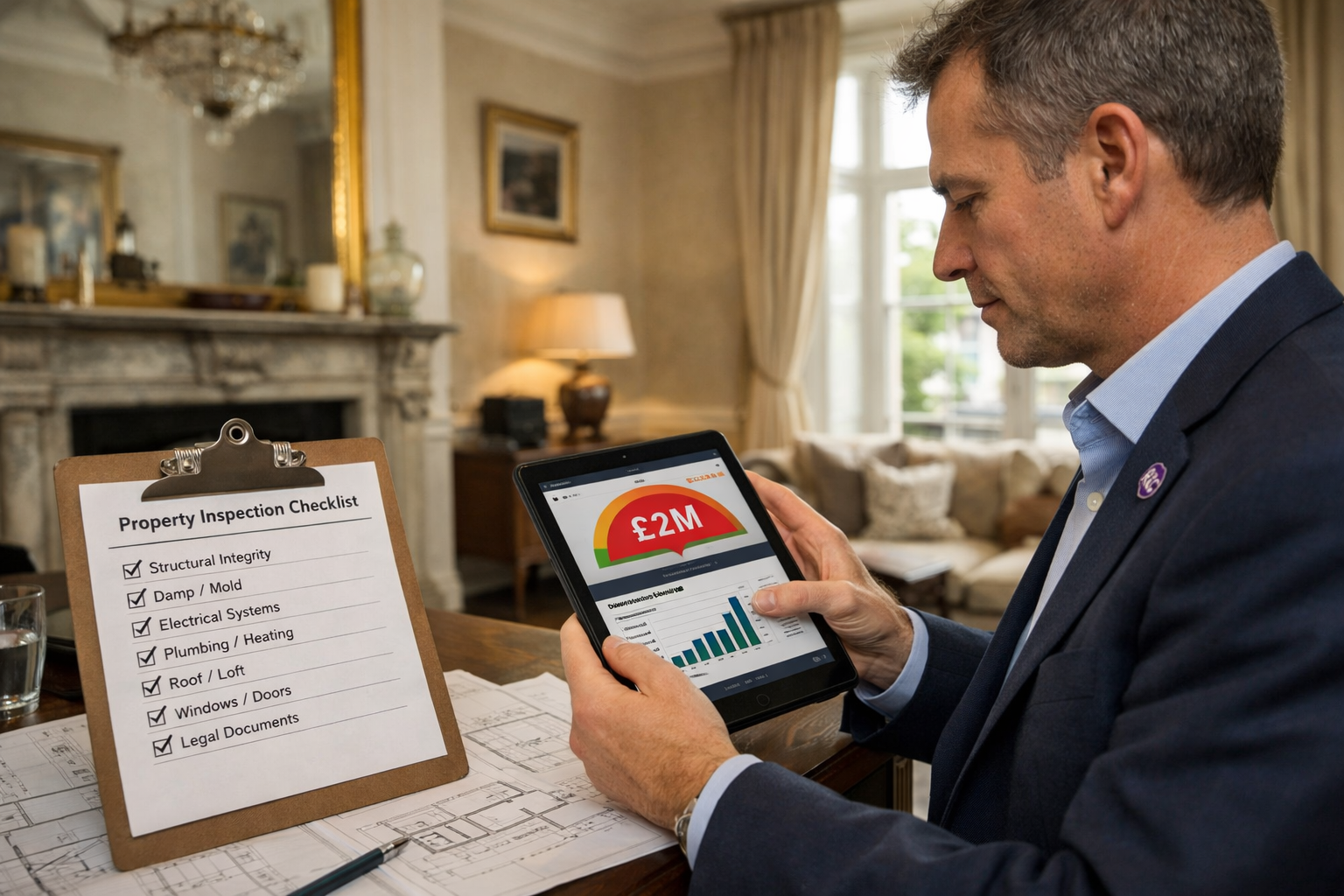
Professional surveyors face unprecedented responsibility in 2026 as their valuations will determine tax obligations for decades. The following comprehensive checklist ensures thorough due diligence when assessing properties near or above the £2 million threshold.
Pre-Valuation Assessment Phase
Property Classification and Context
- Identify property type (detached mansion vs. terraced family home)
- Document location premium factors (postcode, street, proximity to amenities)
- Assess whether property represents genuine luxury or location-driven value
- Review planning history and any permitted development rights
- Identify any unique features that affect comparability
Market Research and Comparable Analysis
- Gather minimum 5-7 comparable sales within 12 months
- Adjust comparables for market movement between sale dates
- Document any distressed sales or outlier transactions
- Identify emerging market trends affecting the £2M threshold
- Review asking prices vs. achieved prices for market sentiment
Detailed Property Inspection
Physical Condition Assessment
- Complete comprehensive structural survey (consider Level 3 Building Survey standards)
- Document all defects that may affect value
- Assess quality of renovations and extensions
- Evaluate remaining useful life of major components
- Identify deferred maintenance issues
Value-Adding and Value-Detracting Features
- Measure and verify gross internal area (GIA)
- Document premium features (period details, modern amenities)
- Assess garden size and quality relative to comparable properties
- Evaluate parking provision and garage facilities
- Consider energy efficiency and sustainability features
Expert Insight: "Properties valued between £1.95M and £2.05M require the most rigorous due diligence, as even small valuation adjustments can mean the difference between zero tax liability and £2,500 annual charges." – RICS Valuation Standards
Threshold Management Considerations
For properties near critical price bands, surveyors must exercise particular care:
£1.9M – £2.1M Range (Zero tax vs. £2,500 annual charge)
- Apply conservative valuation methodology
- Document all value-detracting factors thoroughly
- Consider multiple valuation approaches for triangulation
- Prepare detailed justification for final valuation figure
£2.4M – £2.6M Range (£2,500 vs. £3,500 annual charge)
- Similar rigorous approach with £1,000 annual tax difference
- Consider impact of market timing on valuation date
£4.9M – £5.1M Range (£3,500 vs. £7,500 annual charge)
- Highest stakes with £4,000 annual differential
- May justify multiple independent valuations
Understanding valuation factors becomes crucial when properties sit near these critical thresholds.
Documentation and Reporting Requirements
Comprehensive Valuation Report Must Include:
- Executive summary with clear valuation figure and confidence level
- Detailed methodology explanation
- Comprehensive comparable evidence schedule
- Photographic documentation of key features and defects
- Market context analysis
- Assumptions and limitations clearly stated
- Professional indemnity insurance confirmation
Tax-Specific Considerations:
- Explicit reference to High Value Council Tax Surcharge context
- Analysis of valuation relative to critical tax thresholds
- Discussion of valuation uncertainty and potential range
- Recommendations for appeal strategy if appropriate
For complex situations involving freehold valuation or mixed-use properties, additional specialist input may be required.
Market Distortions and Emerging Valuation Challenges in 2026
The announcement and implementation timeline of the wealth tax has already created significant market distortions that complicate the valuation process. Understanding these dynamics is essential for accurate surveyor due diligence.
Pre-Implementation Price Adjustments
Property specialist Jennie Hancock reports that homes priced between £2 million and £4 million are already experiencing discounts of up to 25% with very little buyer interest.[2] This dramatic price adjustment creates several valuation challenges:
Comparable Evidence Reliability Issues:
- Sales from 2024-2025 may not reflect post-tax market reality
- Recent transactions may include distressed sellers pricing ahead of tax
- Asking prices increasingly diverge from achieved prices
- Transaction volume decline reduces available comparable data
Temporal Valuation Challenges:
- Properties valued in 2026 must reflect 2028 market conditions
- Anticipatory price adjustments complicate current value assessment
- Market sentiment shifts create valuation uncertainty
The Two-Tiered Market Development
Market analysts predict increasingly divergent performance between property price segments:[2]
£1M – £1.7M Segment (Below tax threshold)
- ✅ Increased buyer demand as purchasers avoid tax exposure
- ✅ Price stability or modest appreciation expected
- ✅ Higher transaction velocity
- ✅ Stronger negotiating position for sellers
£2M – £4M Segment (Tax-affected range)
- ⚠️ Significant buyer resistance and reduced demand
- ⚠️ Downward price pressure to reach sub-£2M threshold
- ⚠️ Extended marketing periods
- ⚠️ Increased negotiation leverage for buyers
£5M+ Segment (Highest tax band)
- 🔍 Ultra-prime market with different dynamics
- 🔍 International buyer considerations
- 🔍 Tax impact proportionally smaller relative to property value
This bifurcation creates particular challenges for surveyors conducting capital gains tax valuation or matrimonial valuation where accurate market value assessment is legally required.
Vulnerable Owner Populations and Valuation Pressure
OnTheMarket's President Jason Tebb highlights that certain property owner groups face disproportionate impact:[2]
Long-Term Owners and Retirees
- Purchased properties decades ago at lower prices
- Property values may have doubled or tripled
- Fixed pension incomes cannot absorb new tax burden
- May contest valuations aggressively to reduce liability
Leveraged Recent Buyers
- Purchased near market peak with high mortgages
- Additional tax burden strains affordability
- May seek valuation reductions to minimize costs
Inherited Properties
- Beneficiaries may lack liquidity for ongoing tax charges
- Pressure to sell or contest valuations
- Emotional attachment complicates rational decision-making
Surveyors must anticipate potential challenges and contestation from these owner groups, ensuring valuations are defensible and well-documented. Understanding what a surveyor checks during assessment helps owners prepare for the process.
Strategic Recommendations for Property Owners and Surveyors
As the 2026 valuation window progresses, both property owners and professional surveyors must take proactive steps to manage valuation risks effectively.
For Property Owners: Action Plan
Immediate Actions (2026)
-
Engage Professional Surveyor Early
- Commission independent valuation assessment before VOA valuation
- Identify potential grounds for appeal
- Understand realistic valuation range for your property
- Consider engaging chartered surveyors with specific wealth tax experience
-
Document Property Defects and Issues
- Compile comprehensive list of maintenance issues
- Obtain repair cost estimates for significant defects
- Photograph evidence of condition issues
- Consider formal building survey documentation
-
Gather Market Evidence
- Research recent sales of comparable properties
- Document properties with longer marketing periods
- Track asking price reductions in your area
- Monitor market sentiment and buyer demand
-
Consider Strategic Options
- Evaluate whether pre-2028 sale makes financial sense
- Assess renovation investment impact on value and tax liability
- Explore potential for property subdivision or conversion
- Review ownership structure implications
Preparation for VOA Valuation (Late 2026-2027)
- Respond promptly to any VOA information requests
- Provide comprehensive property information
- Highlight any factors that reduce value
- Maintain professional, factual communication
- Keep detailed records of all correspondence
Appeal Preparation (2027-2028)
- Review VOA valuation against independent assessment
- Calculate financial impact of potential appeal
- Gather additional comparable evidence if needed
- Engage specialist valuation surveyor for appeal representation
- Understand appeal timelines and procedures
For Professional Surveyors: Best Practice Guidelines
Technical Excellence
📋 Maintain RICS Red Book Compliance
- Follow RICS Valuation – Global Standards (Red Book) rigorously
- Document compliance with all mandatory requirements
- Ensure appropriate professional indemnity insurance
- Maintain continuing professional development in tax valuation
📋 Develop Wealth Tax Specialization
- Study VOA valuation methodology and precedents
- Understand tax legislation nuances and implications
- Build expertise in threshold-sensitive valuations
- Develop relationships with tax advisors and legal specialists
📋 Enhanced Quality Assurance
- Implement peer review for valuations near thresholds
- Maintain detailed working papers and audit trails
- Use multiple valuation approaches for triangulation
- Document professional judgment clearly
Client Communication and Management
- Set realistic expectations about valuation outcomes
- Explain uncertainty ranges and confidence levels
- Discuss potential appeal strategies and success likelihood
- Provide clear fee structures for valuation and appeal work
- Manage emotional aspects of tax-driven valuations
Market Intelligence and Research
- Monitor emerging case law and VOA decisions
- Track market trends in affected price segments
- Build comprehensive comparable evidence databases
- Network with other professionals handling similar cases
- Contribute to industry guidance development
Conclusion
The Valuation Risks from New Wealth Taxes on £2M+ Properties: Surveyor Due Diligence in 2026 represent a critical challenge for property owners and valuation professionals across England. With up to 200,000 properties potentially affected and £400 million in annual tax revenue at stake, the accuracy and defensibility of property valuations conducted during the 2026-2027 assessment period will have long-lasting financial implications.
The geographic concentration of affected properties in London and the Southeast, combined with emerging market distortions and the "terrace tax" phenomenon, creates unprecedented complexity in the valuation process. Properties near critical thresholds—particularly the £2 million, £2.5 million, and £5 million bands—require exceptional due diligence and rigorous methodology to ensure fair and accurate assessment.
Key Success Factors
✅ Early engagement with qualified chartered surveyors who understand wealth tax implications
✅ Comprehensive documentation of property condition, market context, and comparable evidence
✅ Strategic awareness of market timing and threshold management opportunities
✅ Professional rigor in applying RICS standards and maintaining defensible valuations
✅ Proactive preparation for potential appeals and contestation processes
Next Steps
For Property Owners:
- Commission an independent professional valuation assessment now
- Document all property defects and value-detracting factors
- Research comparable sales and market trends in your area
- Develop a strategic plan for managing potential tax liability
For Surveyors:
- Enhance technical expertise in tax-related valuations
- Implement enhanced quality assurance for threshold-sensitive properties
- Build comprehensive market intelligence for affected areas
- Prepare for increased demand for valuation and appeal services
The 18-month window between the 2026 assessment period and April 2028 implementation provides a critical opportunity for property owners to ensure accurate valuations and surveyors to deliver exceptional professional service. Those who approach this challenge with thorough preparation, technical excellence, and strategic awareness will be best positioned to navigate the complexities of the new wealth tax regime successfully.
For expert guidance on property valuation in the context of the new wealth taxes, consider consulting with experienced professionals who can provide tailored advice for your specific circumstances and location.
References
[1] economictimes – https://economictimes.com/nri/invest/uk-will-now-tax-mansions-worth-more-than-2-million/articleshow/125631005.cms
[2] Uk Budget Introduces Mansion Tax On Homes Worth 2 Million – https://www.thenationalnews.com/news/uk/2025/11/26/uk-budget-introduces-mansion-tax-on-homes-worth-2-million/
[3] Uk Wealth Tax To Hit As Many As 200 000 Homes Official Says – https://news.bloombergtax.com/daily-tax-report-international/uk-wealth-tax-to-hit-as-many-as-200-000-homes-official-says
[5] Wealth Taxes – https://www.instituteforgovernment.org.uk/explainer/wealth-taxes
