
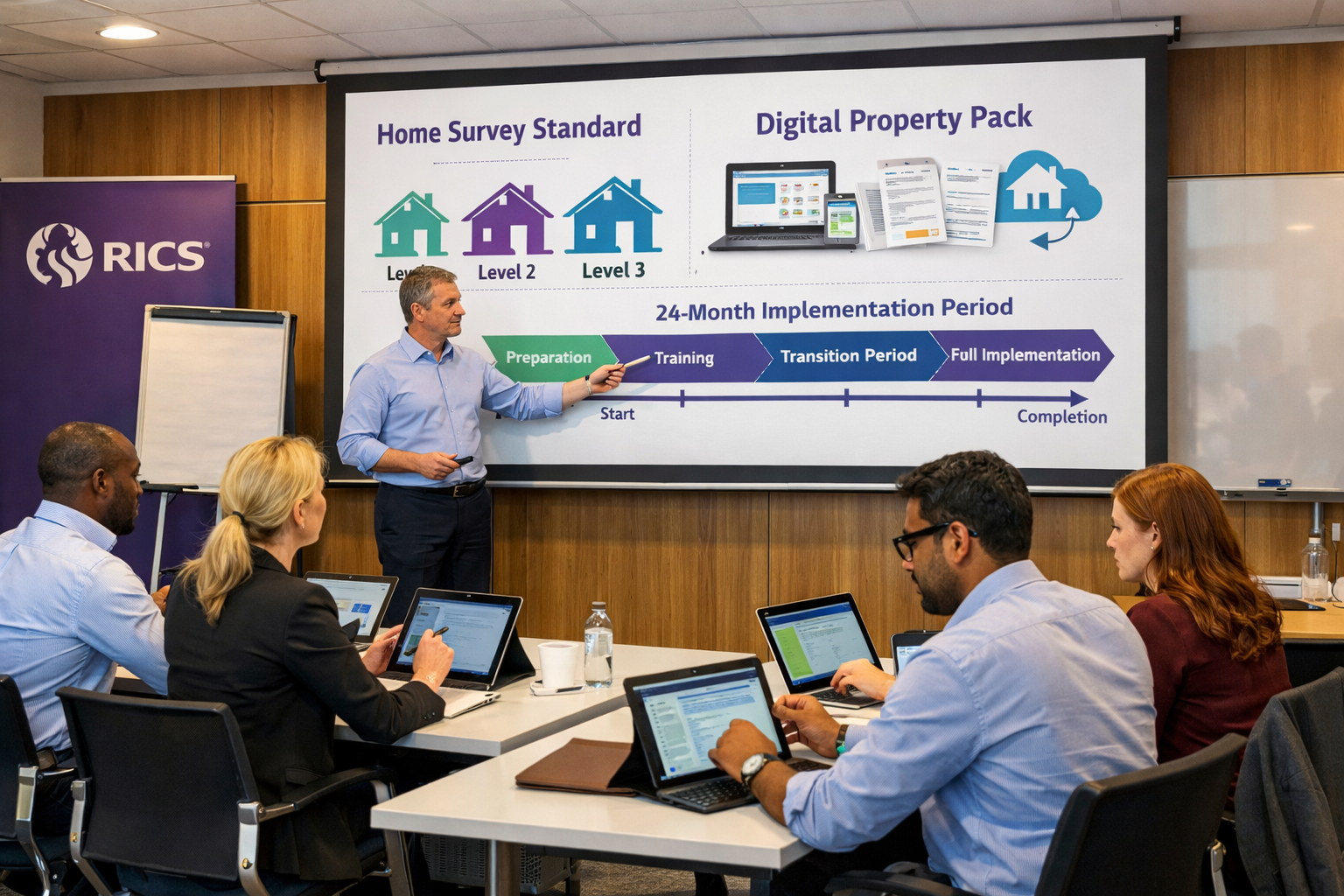
The UK property market stands on the brink of its most significant transformation in decades. With government reforms proposing mandatory upfront property condition assessments, building surveyors face a fundamental shift in how, when, and for whom they conduct their work. Preparing Building Surveyors for 2026 Homebuying Reforms: RICS Training and Compliance Essentials has become critical as the industry navigates a 24-month implementation timeline that will reshape professional standards, digital capabilities, and business models across the sector.
Nearly one in three agreed property sales currently collapse before completion, causing financial and emotional strain for all parties involved.[3] Average transaction times stretch to 5-6 months in England and Wales, creating inefficiencies that the new reforms aim to eliminate.[3] For surveyors, this represents both challenge and opportunity—a chance to position themselves at the forefront of a modernized homebuying process while meeting new compliance requirements and adapting to digital-first workflows.
Key Takeaways
- 🕐 24-month implementation period provides essential time for capacity building, standards development, and professional indemnity insurance adjustments
- 📋 Digital Property Packs will be required at point of listing, fundamentally changing when surveyors are instructed and how reports are delivered
- 🔄 Shift from buyer-instructed to seller-instructed models raises critical questions about surveyor independence and duty of care
- 💻 Digital Property Information Protocol (DPIP) will require machine-readable survey reports using standardized data formats
- 📚 Mandatory qualifications and updated Code of Practice will enhance professional standards and consumer protection
Understanding the 2026 Homebuying Reform Timeline
The Non-Negotiable 24-Month Window
RICS has explicitly stated that the 24-month implementation requirement is non-negotiable and essential for the industry's successful transition.[1][3] This timeline isn't arbitrary—it provides the critical buffer needed for:
- Capacity building across the surveying profession
- Development of new technical standards and protocols
- Professional indemnity insurance (PII) adjustments to accommodate new risk profiles
- Digital infrastructure development for standardized reporting
- Training and certification programs for existing practitioners
The phased approach recognizes that transforming an entire industry requires more than regulatory change—it demands comprehensive professional development and technological investment.
What Changes at Point of Listing
The core government vision requires upfront property information to reduce transaction fall-throughs, fundamentally altering the traditional surveying timeline.[1] Under the new system:
Traditional Model:
- Property listed for sale
- Buyer makes offer
- Buyer instructs surveyor
- Survey conducted (weeks later)
- Issues discovered may derail sale
Reformed Model:
- Seller commissions survey before listing
- Digital Property Pack available immediately
- Buyers review condition assessment upfront
- Informed offers reduce fall-through risk
- Faster, more transparent transactions
This shift means surveyors will experience surging early-stage demand as sellers must obtain assessments before marketing properties. Understanding when to conduct RICS building surveys becomes crucial for both professionals and property owners navigating this new landscape.
Preparing Building Surveyors for 2026 Homebuying Reforms: Essential Training Pathways
Current Standards and Upcoming Updates
The Home Survey Standard (1st edition) remains the current effective standard for RICS professionals as of 2026.[1] Despite consultation in 2025 on potential updates, this foundational document continues to govern professional practice. Surveyors must maintain compliance with existing requirements while preparing for anticipated revisions.
Key areas of focus include:
- Condition assessment methodologies aligned with digital reporting
- Risk identification and communication standards
- Photographic documentation requirements for digital integration
- Defect categorization systems compatible with machine-readable formats
For those seeking comprehensive understanding of current requirements, reviewing Level 3 building survey examples provides practical insight into professional standards.
RICS Code of Practice and Mandatory Qualifications
RICS has developed a Code of Practice in collaboration with The Property Ombudsman, positioning it for incorporation into future regulatory frameworks.[3] This code establishes:
✅ Professional conduct standards for seller-instructed surveys
✅ Conflict of interest management protocols
✅ Quality assurance requirements for digital deliverables
✅ Consumer protection measures ensuring transparency
✅ Continuing professional development (CPD) obligations
Mandatory qualifications will enhance professional standards across the sector, creating clearer pathways for practitioners and greater confidence for consumers. Surveyors should proactively engage with RICS training programs to stay ahead of compliance requirements.
Digital Competency Development
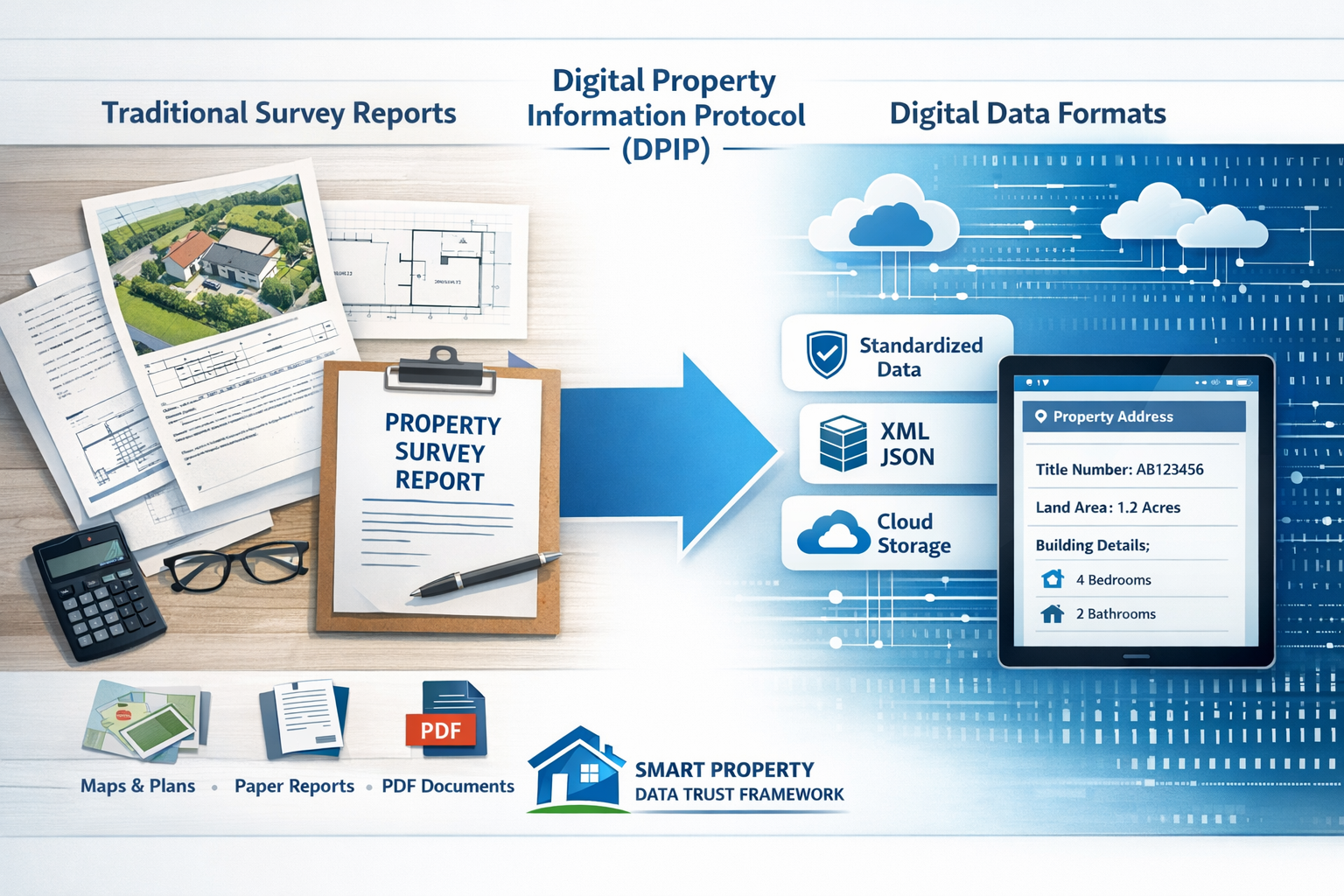
The Digital Property Information Protocol (DPIP) under development will define data requirements ensuring surveyors use standardized digital language, making survey reports "machine-readable."[1] This represents a fundamental shift from narrative reports to structured data outputs.
Essential digital skills for 2026 compliance:
| Competency Area | Required Skills | Training Resources |
|---|---|---|
| Data Standardization | DPIP format compliance, structured reporting | RICS digital training modules |
| Software Proficiency | Survey software with digital output capabilities | Vendor-specific certification |
| Cloud Integration | Secure data storage, Smart Property Data Trust Framework | Cybersecurity and data management courses |
| Mobile Technology | Tablet-based field assessment, real-time data capture | Field technology workshops |
| Quality Assurance | Digital report validation, error checking protocols | RICS QA certification programs |
The Smart Property Data Trust Framework creates open standards for data sharing, meaning survey report data will eventually integrate into wider property logs through this "sandbox" project.[1] Surveyors must understand not just how to create digital reports, but how their data contributes to long-term property information ecosystems.
Navigating the Seller-Instructed Model: Independence and Duty of Care

The Independence Question
The transition from buyer-instructed to seller-instructed surveys raises significant questions about surveyor independence and duty of care to the ultimate buyer—issues RICS is actively addressing with the Ministry of Housing.[1] This represents one of the most complex aspects of preparing building surveyors for 2026 homebuying reforms.
Key concerns:
🔍 Who is the client? While the seller pays for the survey, the buyer relies on its accuracy
⚖️ Conflict management: How to balance seller interests with buyer protection
📊 Liability frameworks: Who can pursue claims if defects are missed
🛡️ Professional standards: Maintaining objectivity regardless of instruction source
RICS is developing clear guidance on these matters, but surveyors should already be considering how seller instruction affects their professional obligations and risk exposure.
Lessons from the Scottish Model
Scotland's "Home Report" system provides valuable insights into seller-instructed survey models. RICS has highlighted SME risks observed in the Scottish market, where larger firms expanded coverage, potentially squeezing smaller practices.[1]
Scottish experience reveals:
- Market concentration favoring larger surveying firms with capacity for rapid turnaround
- Commoditization pressures driving down fees and potentially quality
- Geographic coverage gaps in rural or less profitable areas
- Consumer confusion about the scope and limitations of mandatory reports
RICS is advocating for protections ensuring upfront reforms don't become "commoditised," preserving professional standards and market diversity.[1] Small and medium-sized practices should develop strategies to remain competitive while maintaining quality.
The Valuation Debate
Current proposals exclude residential property valuations from mandatory upfront information, diverging from the Scottish model.[1] RICS has challenged this approach, arguing that condition assessment without valuation provides an incomplete consumer picture.
This creates both challenges and opportunities:
Challenges:
- Buyers may still need separate valuations for mortgage purposes
- Potential for two-stage assessment processes
- Confusion about what the Digital Property Pack actually contains
Opportunities:
- Additional revenue stream for RICS valuations beyond mandatory assessments
- Differentiation through comprehensive service packages
- Value-added consulting on property investment decisions
Surveyors should prepare to clearly communicate the difference between condition assessments and valuations, potentially offering bundled services that address both needs.
Professional Indemnity Insurance and Risk Management
PII Adaptation for New Models
Initial industry engagement suggests professional indemnity insurance will remain available under new proposals, provided reforms bring uniformity and clear regulation.[1] However, insurers will need to adapt coverage to reflect:
- Dual-duty scenarios where sellers instruct but buyers rely
- Digital data liability for machine-readable reports integrated into property logs
- Extended timeframes for claims as reports remain accessible longer
- Standardized risk profiles emerging from mandatory qualifications
Surveyors should engage with PII providers early to understand how coverage terms may evolve and ensure adequate protection under reformed models.
Risk Mitigation Strategies
Best practices for managing liability in the reformed environment:
- Clear engagement letters defining scope, limitations, and intended users
- Robust quality assurance processes for digital report accuracy
- Comprehensive documentation of site conditions and assessment methodology
- Regular CPD participation demonstrating competency maintenance
- Professional membership compliance with RICS standards and codes
- Cybersecurity measures protecting sensitive property data
- Record retention protocols aligned with extended liability periods
Understanding what property surveyors do in this new context helps both professionals and clients appreciate the enhanced responsibilities and risk management requirements.
Building Capacity for Increased Demand
Workforce Planning and Scaling
The shift to mandatory upfront surveys will create significant demand surges, particularly at the point of listing. Surveying practices must plan for:
📈 Volume increases as every listed property requires assessment
⏱️ Tighter turnaround expectations from sellers eager to market quickly
🌍 Geographic coverage requirements for comprehensive market service
👥 Staffing strategies balancing permanent and flexible capacity
Firms should model demand scenarios based on local property market activity and develop scalable operational models. Those offering building surveys across multiple regions may need to establish partnerships or expand geographic presence.
Technology Investment Priorities
Critical technology investments for 2026 readiness:
| Investment Area | Purpose | Expected ROI |
|---|---|---|
| Mobile survey platforms | Field data capture, photo documentation | High – efficiency gains |
| Report automation software | DPIP-compliant digital outputs | High – reduced report time |
| Cloud infrastructure | Secure storage, client access portals | Medium – operational necessity |
| CRM and scheduling systems | Capacity management, client communication | Medium – improved workflow |
| Quality assurance tools | Automated report checking, compliance validation | High – risk reduction |
| Training management platforms | CPD tracking, certification management | Low – regulatory compliance |
Early adoption of digital tools provides competitive advantage and smoother transition when reforms take effect.
Compliance Essentials: Checklist for 2026 Readiness
Regulatory Compliance Roadmap
12-18 Months Before Implementation:
- ✅ Complete RICS digital competency training
- ✅ Review and update professional indemnity insurance
- ✅ Invest in DPIP-compatible survey software
- ✅ Establish quality assurance protocols for digital reports
- ✅ Develop seller-instructed survey engagement templates
6-12 Months Before Implementation:
- ✅ Participate in RICS Code of Practice training
- ✅ Test digital reporting workflows with pilot projects
- ✅ Build capacity through hiring or partnerships
- ✅ Update marketing materials for reformed market
- ✅ Establish data security and retention policies
0-6 Months Before Implementation:
- ✅ Obtain any new mandatory certifications
- ✅ Conduct full system testing of digital platforms
- ✅ Brief all staff on new procedures and standards
- ✅ Establish relationships with Digital Property Pack platforms
- ✅ Prepare client education materials explaining reforms
Continuing Professional Development Focus
RICS members should prioritize CPD in these areas:
🎓 Digital reporting standards and DPIP compliance
🎓 Seller-instructed survey ethics and independence
🎓 Risk management under reformed liability frameworks
🎓 Data security and privacy for digital property information
🎓 Quality assurance methodologies for standardized outputs
Regular engagement with RICS training resources and industry forums ensures surveyors remain current with evolving requirements. Those specializing in particular property types should also pursue relevant technical training—for example, understanding the difference between Level 2 and Level 3 surveys becomes even more important when advising sellers on appropriate assessment levels.
Strategic Positioning for the Reformed Market
Service Differentiation Opportunities
While reforms may create commoditization pressures, surveyors can differentiate through:
🌟 Comprehensive service packages combining condition assessment, valuation, and advisory services
🌟 Specialized expertise in particular property types (period properties, new builds, commercial)
🌟 Enhanced digital deliverables with interactive reports and ongoing support
🌟 Rapid turnaround capabilities for time-sensitive seller needs
🌟 Geographic specialization with deep local market knowledge
Understanding whether Level 3 surveys are worth it helps position appropriate service levels for different property scenarios under the reformed system.
Business Model Adaptation
Potential business model evolutions:
- Seller-focused marketing targeting estate agents and property owners
- Subscription services for property management companies with regular listing needs
- Technology partnerships with Digital Property Pack platform providers
- Training and consultancy for other surveyors adapting to reforms
- Data analytics services leveraging accumulated property information
Forward-thinking practices will view reforms not as compliance burdens but as opportunities to reimagine service delivery and value creation.
Regional Considerations and Market Variations
Geographic Compliance Differences
While reforms apply across England and Wales, regional property market characteristics will influence implementation:
London and Southeast:
- Higher property values justify comprehensive assessments
- Greater digital infrastructure readiness
- Competitive market with established surveying capacity
- Chartered surveyors in Fulham, Chelsea, and Richmond already serve sophisticated markets
Regional Markets:
- Potential capacity constraints requiring workforce development
- Different property types and construction methods
- Varying consumer familiarity with survey processes
- Opportunities for practices in West London, North London, and beyond
Rural Areas:
- Geographic coverage challenges
- Specialist property types (agricultural, heritage)
- Potential for mobile/remote assessment technologies
- Service areas like Sussex, Buckinghamshire, and Berkshire requiring adapted approaches
Understanding local market dynamics helps tailor compliance strategies and service delivery models to regional needs.
Consumer Education and Market Communication
Explaining the Reformed Process
Surveyors play a crucial educational role in helping sellers and buyers understand reformed homebuying processes. Clear communication should address:
For Sellers:
- Why upfront surveys are now required
- What the Digital Property Pack contains
- How to select appropriate survey levels
- Cost implications and market positioning benefits
- Timeline expectations from instruction to listing
For Buyers:
- How to interpret Digital Property Pack information
- Limitations of seller-instructed surveys
- When additional independent assessment may be valuable
- Rights and protections under reformed system
- Whether homebuyers surveys are worth it in the new context
Developing accessible educational materials positions surveyors as trusted advisors navigating market transformation.
Managing Expectations and Anxiety
Property transactions generate significant stress for all parties. The reformed process introduces new elements that may create house survey anxiety requiring professional management:
Anxiety reduction strategies:
- 📞 Clear, jargon-free communication about process and timelines
- 📱 Regular updates during survey and reporting phases
- 📋 Comprehensive explanations of findings and implications
- 🤝 Accessible follow-up for questions and clarifications
- 💡 Proactive guidance on next steps and decision-making
Professional, empathetic communication differentiates quality surveyors in competitive reformed markets.
Conclusion: Embracing Transformation with Professional Excellence
Preparing building surveyors for 2026 homebuying reforms represents both the industry's greatest challenge and most significant opportunity in recent memory. The 24-month implementation timeline provides essential breathing room, but successful adaptation requires proactive engagement starting now.
The shift to mandatory upfront Digital Property Packs, seller-instructed models, and machine-readable reporting fundamentally transforms when, how, and for whom surveyors work. Yet these changes aim to solve real problems—the nearly one-third of sales that collapse and the months-long transaction timelines that frustrate all parties.[3]
Immediate action steps for surveying professionals:
- Engage with RICS training programs focusing on digital competency and reformed standards
- Invest in technology infrastructure supporting DPIP-compliant reporting
- Review professional indemnity insurance to ensure adequate coverage under new models
- Develop seller-focused marketing strategies for the reformed instruction model
- Build operational capacity to handle anticipated demand surges
- Participate in industry consultations shaping final implementation details
- Educate clients and stakeholders about reformed processes and expectations
The surveyors who thrive in the reformed market will be those who view compliance not as burden but as foundation—building upon mandatory requirements with exceptional service, clear communication, and genuine value creation. By embracing digital transformation, maintaining professional independence, and positioning themselves as trusted advisors, building surveyors can lead the UK property market into a more efficient, transparent, and consumer-focused future.
The 2026 reforms are coming. The question isn't whether to prepare, but how comprehensively and strategically to position your practice for success in the transformed landscape. Start now, engage deeply with RICS resources, and commit to professional excellence that serves clients, protects consumers, and elevates the entire surveying profession.
References
[1] What The Rics Home Buying And Selling Reform Hub Means For Surveyors – https://www.surventrix.com/blog/what-the-rics-home-buying-and-selling-reform-hub-means-for-surveyors
[2] Home Buying And Selling Reform Hub – https://www.rics.org/news-insights/current-topics-campaigns/home-buying-and-selling-reform-hub
[3] Rics Responds To Major Changes In Home Buying And Selling – https://www.rics.org/news-insights/rics-responds-to-major-changes-in-home-buying-and-selling
