
The UK government's decision to remove the 1,500 m² floor space cap for Class MA conversions has unleashed a wave of large-scale office-to-residential transformations across British cities.[2] This regulatory shift means entire office blocks can now convert to apartments under permitted development rights—but the structural and legal complexities multiply exponentially when party walls separate your conversion project from neighbouring commercial tenants, residential occupants, or mixed-use properties.
Party Wall Surveys for Commercial-to-Residential Conversions: Managing Structural Complexity and Neighbour Disputes requires navigating a labyrinth of engineering challenges, regulatory compliance, and neighbour coordination that differs fundamentally from standard residential extensions. When converting commercial spaces into homes, developers face unique obstacles: load-bearing walls that once supported open-plan offices must be reconfigured for multiple dwelling units, shared structural elements cross property boundaries, and neighbours on the other side of party walls may still be operating businesses with zero tolerance for disruption.
Key Takeaways
- 🏢 Regulatory Changes: The removal of the 1,500 m² cap for Class MA conversions enables large-scale office-to-residential projects, but prior approval conditions and building code compliance remain mandatory
- ⚖️ Structural Complexity: Commercial-to-residential conversions trigger current building codes (NBC2023-AE standards) requiring modern structural, fire protection, and mechanical performance for residential occupancy[3]
- 🤝 Neighbour Coordination: Multi-unit conversions require sophisticated party wall management when neighbouring properties remain commercial or mixed-use, with 2026 legislative changes prioritizing tenant rights[1]
- 🔧 Front-Loaded Engineering: Successful conversions demand engineering involvement from project inception, with code triggers and structural modifications mapped before design advances[3]
- 📋 Legal Due Diligence: Zoning requirements, title issues, and municipal coordination must be thoroughly evaluated at project outset to avoid costly delays[4]
Understanding the Unique Party Wall Challenges in Commercial Conversions
Commercial-to-residential conversions present party wall complexities that dwarf typical residential projects. Unlike a homeowner adding a loft conversion, developers transforming office buildings into apartments must contend with multiple adjoining owners, varied property uses, and structural systems designed for entirely different loads and occupancy patterns.
The Multi-Party Challenge
Traditional residential party wall work typically involves two parties: the building owner and one neighbour. Commercial conversions can involve:
- Adjacent office tenants who depend on uninterrupted business operations
- Ground-floor retail units sharing structural elements with upper-floor conversions
- Neighbouring residential properties with established rights and expectations
- Multiple leaseholders within the same building structure
- Commercial landlords with institutional portfolios and strict operational requirements
The 2026 legislative changes have repositioned tenant rights as central to all party wall procedures, particularly affecting institutional buy-to-let properties.[1] This means landlord-initiated conversion works now face new Section 8 ground requirements, adding another layer of complexity to party wall notices and procedures.
Structural Systems Built for Different Purposes
Commercial buildings were engineered for open-plan flexibility, not residential subdivision. Key structural differences include:
| Commercial Design | Residential Requirements | Party Wall Implications |
|---|---|---|
| Wide column spacing (6-9m) | Load-bearing walls every 3-5m | New structural walls may cross party boundaries |
| Heavy floor loads (5+ kPa) | Lighter residential loads (1.5-2 kPa) | Potential to reduce structural elements, affecting shared walls |
| Central core services | Distributed services per unit | New penetrations through party walls for utilities |
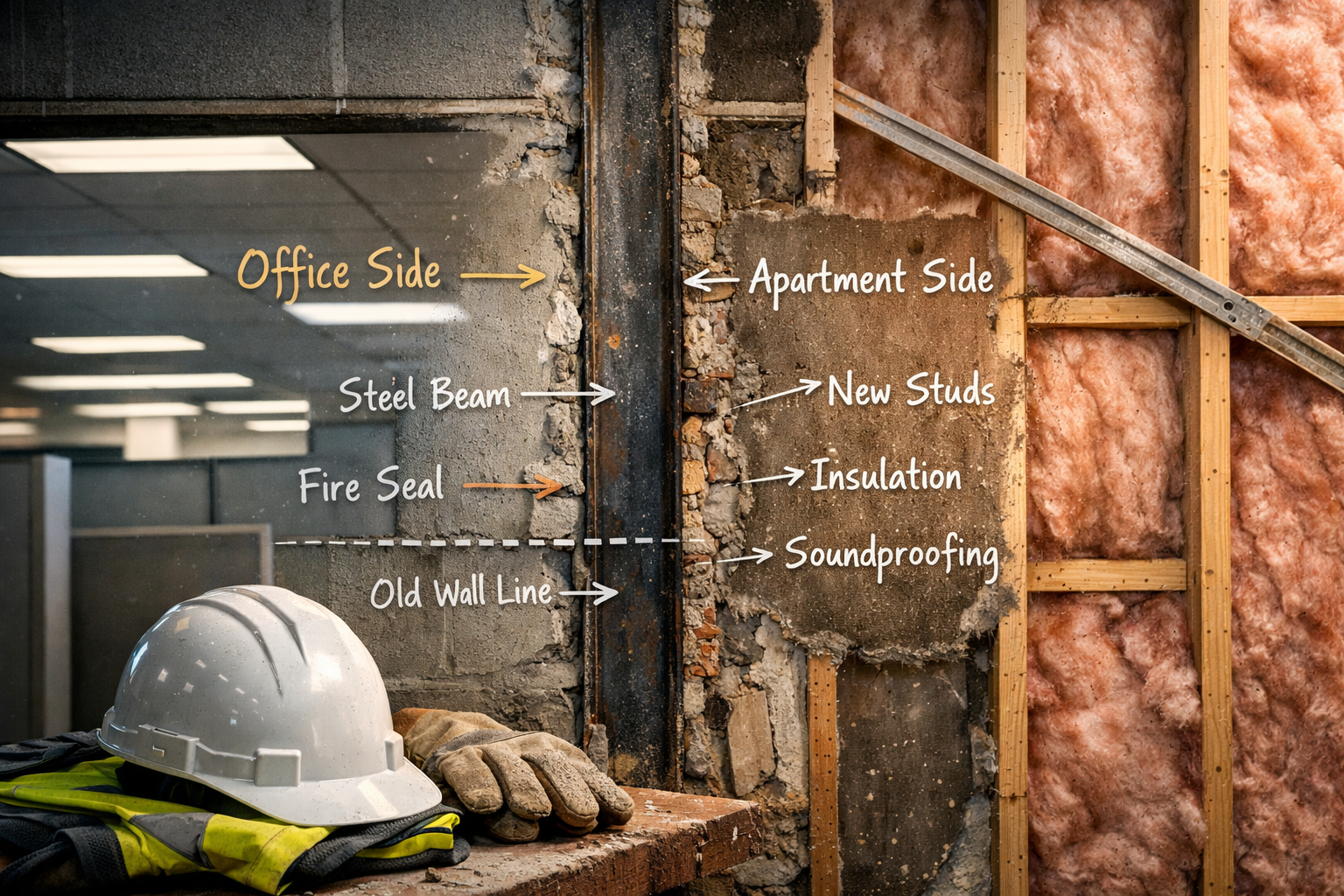
| Single fire compartment | Multiple compartments per floor | Fire-rated party wall upgrades required |
| Minimal acoustic separation | Enhanced sound insulation | Significant party wall modifications for noise control |
When these structural modifications intersect with party walls, the complexity escalates dramatically. Understanding what party wall surveyors do becomes essential for managing these technical challenges.
Party Wall Surveys for Commercial-to-Residential Conversions: Structural Engineering Requirements

The change of use from commercial to residential automatically triggers current building codes under NBC2023-AE standards, requiring projects to satisfy modern standards for the new residential occupancy.[3] This isn't optional—failure to comply means the conversion cannot proceed legally.
Building Code Triggers That Impact Party Walls
Strong conversion projects in 2026 require engineering involvement built into the project from the start, with code triggers mapped before design advances.[3] Critical building code areas affecting party walls include:
Structural Performance
- Residential occupancy requires different load calculations than commercial use
- Load-bearing party walls may need reinforcement or modification
- Floor joists bearing on party walls require structural assessment
- Settlement monitoring becomes essential when modifying shared foundations
Fire Protection Standards
- Party walls must achieve minimum 60-minute fire resistance (often 120 minutes for multi-storey conversions)
- New fire compartmentation may require party wall upgrades
- Penetrations for services through party walls need proper fire-stopping
- Escape routes cannot compromise party wall integrity
Acoustic Insulation
- Residential standards demand significantly higher acoustic performance than commercial
- Party walls between units require minimum 45 dB airborne sound insulation
- Impact sound insulation for party floors typically requires 62 dB rating
- Existing commercial party walls rarely meet residential acoustic standards
Mechanical and Electrical Systems
- New HVAC systems may require party wall penetrations
- Electrical distribution to individual units often crosses party boundaries
- Plumbing risers frequently run along or through party walls
- Each penetration requires proper sealing and neighbour consent
For comprehensive guidance on managing these technical requirements, review our complete guide to party wall surveys.
Load-Bearing Wall Modifications
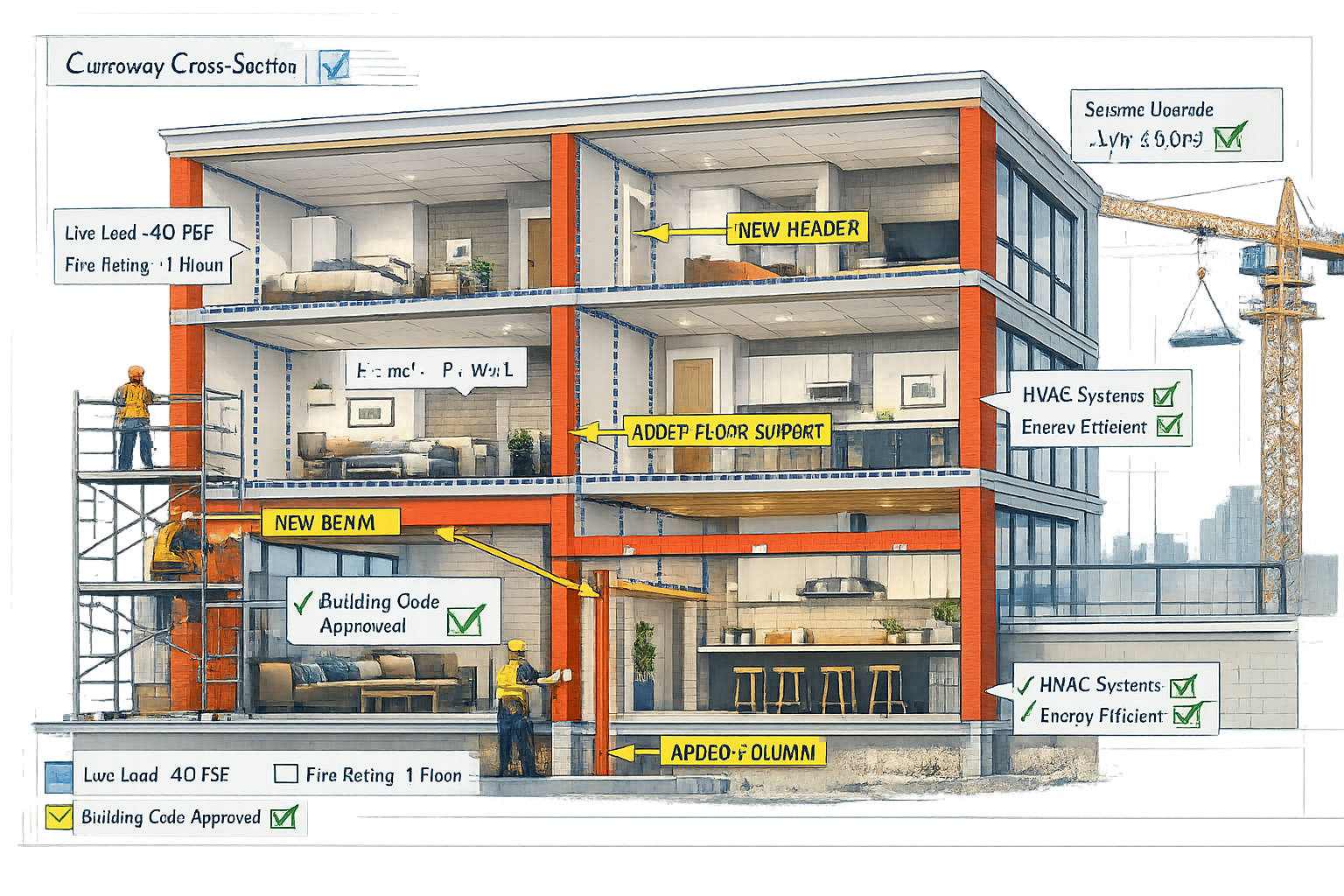
Converting open-plan commercial space into multiple residential units inevitably requires creating new internal walls—and many of these become load-bearing. When new structural walls approach or intersect party boundaries, several scenarios emerge:
- New walls perpendicular to party walls: These transfer loads to foundations and may increase stress on shared structural elements
- New walls parallel to party walls: These may require connection points or support from the party wall itself
- Removal of existing structural elements: Redistributing loads can affect party wall loading patterns
- Steel beam installations: Often necessary to create open living spaces, but may require party wall support
Each scenario demands careful structural analysis and typically requires Party Structure Notices under the Party Wall etc. Act 1996. Neighbours have the right to understand how structural modifications will affect their property, and surveyors must document pre-existing conditions thoroughly.
Front-Loading Engineering Involvement
The research is unequivocal: engineering involvement must be front-loaded into conversion projects.[3] Treating building code compliance as a last-minute fix results in:
- Project delays when structural issues emerge late in design
- Cost overruns from redesigning around party wall constraints
- Neighbour disputes when modifications weren't properly communicated
- Regulatory failures when prior approval conditions aren't satisfied
Successful developers engage structural engineers during feasibility studies, not after purchasing the property. This early involvement identifies party wall constraints that may affect project viability or require specific commercial building survey assessments.
Managing Neighbour Disputes in Multi-Unit Commercial Conversions
Party Wall Surveys for Commercial-to-Residential Conversions: Managing Structural Complexity and Neighbour Disputes reaches its most challenging phase when multiple neighbours with different interests must coordinate. Unlike single-family residential projects, commercial conversions often involve:
- Neighbours who are commercial tenants with lease obligations and business continuity requirements
- Mixed-use properties where ground-floor businesses coexist with upper-floor residential
- Multiple residential units within the conversion itself, each with separate owners or tenants
- Institutional landlords with standardized procedures and risk management protocols
The 2026 Tenant Rights Landscape
The 2026 legislative changes have fundamentally altered how party wall procedures interact with tenant rights.[1] Under new Section 8 ground requirements, landlord-initiated works affecting tenanted properties face heightened scrutiny. This particularly impacts:
Institutional Buy-to-Let Conversions
When converting commercial buildings into buy-to-let residential portfolios, landlords must now demonstrate that party wall works won't create grounds for tenant complaints or lease violations. This requires:
- More detailed Schedule of Condition surveys before works commence
- Enhanced communication protocols with affected tenants
- Specific provisions for temporary accommodation if works create uninhabitable conditions
- Clear documentation of noise, dust, and access limitations
Tenant Notification Requirements
Party wall notices must now reach not just property owners but also tenants who may be affected by the works. This creates additional administrative burden but reduces the risk of disputes arising from uninformed occupants.
For detailed guidance on tenant rights and party wall procedures, see our guide on resolving party wall disputes.
Prior Approval Conditions and Party Wall Coordination
Even with the increased size flexibility for Class MA conversions, projects must still satisfy prior approval conditions including transport, contamination, flood risk, noise, and natural light assessments.[2] Failure on any single condition means the entire project fails.
Party wall works can directly impact several prior approval conditions:
Noise Impact
- Construction noise from party wall modifications must be assessed against neighbouring uses
- Commercial neighbours may have stricter noise tolerance than residential
- Works schedules must accommodate business hours and operational requirements
- Acoustic testing during and after works may be required
Contamination Risk
- Opening party walls in former industrial or commercial buildings may expose contamination
- Asbestos, lead paint, and other hazardous materials require specialist handling
- Neighbours have the right to know about contamination risks affecting shared structures
Natural Light
- Modifications to party walls with windows require daylight/sunlight assessments
- Neighbours' right to light becomes a critical consideration
- Changes to party wall height or configuration may affect light access
Multi-Party Surveyor Coordination
Complex commercial conversions often require appointing multiple surveyors:
- Building Owner's Surveyor: Represents the developer's interests
- Adjoining Owner's Surveyor(s): Each affected neighbour may appoint their own surveyor
- Agreed Surveyor: In some cases, parties may agree to a single surveyor acting for all
- Third Surveyor: Appointed to resolve disputes between the building owner's and adjoining owner's surveyors
Understanding who pays for party wall surveyors becomes critical when multiple surveyors are involved, as costs can escalate quickly.
Practical Strategies for Minimizing Disputes
1. Early Engagement
Begin neighbour consultations before formal party wall notices. Informal discussions help identify concerns early and demonstrate good faith.
2. Comprehensive Documentation
Detailed Schedule of Condition surveys protect all parties. Document:
- Existing cracks, settlement, and structural defects
- Current acoustic and vibration levels
- Photographic evidence of all party wall conditions
- Utility locations and penetrations
3. Clear Communication Protocols
Establish regular communication channels:
- Weekly progress updates during active works
- Named contact persons for urgent issues
- Documented response times for complaints
- Transparent work schedules shared in advance
4. Realistic Timelines
Commercial conversion timelines often underestimate party wall coordination. Build in:
- 2-3 months for party wall notice periods and responses
- Additional time if disputes require Third Surveyor appointment
- Contingency for unexpected structural discoveries
- Seasonal considerations (avoiding peak business periods for commercial neighbours)
For situations where neighbours are uncooperative, our guide on what happens when there's no party wall agreement provides essential information.
Zoning, Title, and Municipal Coordination Challenges
Beyond structural and neighbour issues, Party Wall Surveys for Commercial-to-Residential Conversions: Managing Structural Complexity and Neighbour Disputes must address fundamental legal and regulatory complexities that can derail projects before construction begins.
Zoning and Title Due Diligence
Zoning requirements, building code compliance, and title issues must be thoroughly evaluated at project outset.[4] Failure to do so results in costly delays and prolonged timelines.
Title Complications in Commercial Properties
Commercial properties often have complex title arrangements:
- Restrictive covenants limiting residential use
- Easements for utilities or access crossing party boundaries
- Rights of light agreements affecting party wall modifications
- Shared ownership structures requiring unanimous consent for changes
Party Wall Implications of Title Issues
Title complications directly affect party wall procedures:
- Restrictive covenants may prohibit the structural modifications necessary for conversion
- Easements may limit where party walls can be modified or penetrated
- Shared ownership structures multiply the number of parties requiring notice
- Rights of light agreements may constrain party wall height modifications
Municipal Coordination and Building Control
Proactive coordination with local municipalities is critical for keeping projects on track.[4] This coordination intersects with party wall procedures in several ways:
Building Control Inspections
Party wall works require Building Control approval at multiple stages:
- Foundation works affecting party walls
- Structural modifications to load-bearing party walls
- Fire protection upgrades to party walls
- Acoustic insulation installations
Planning Conditions
Even under permitted development rights, prior approval conditions may impose requirements affecting party walls:
- Specific construction methods to minimize neighbour impact
- Noise monitoring during party wall works
- Vibration limits for works near party boundaries
- Hours of operation restrictions
Conservation Area Considerations
Many commercial buildings suitable for conversion sit in conservation areas, adding another layer of complexity:
- External party wall modifications may require conservation consent
- Materials and methods must respect historic character
- Neighbour consultation may be more extensive in conservation areas
For guidance on working with surveyors in regulated areas, see our resource on finding qualified party wall surveyors.
Cost Considerations and Risk Management
Commercial conversion projects involve significant party wall costs that must be factored into feasibility studies:
Typical Party Wall Costs for Commercial Conversions
| Cost Category | Typical Range | Notes |
|---|---|---|
| Party Wall Surveyor (Building Owner) | £2,000-£8,000 | Depends on project complexity and number of neighbours |
| Party Wall Surveyor (Adjoining Owners) | £1,500-£5,000 per neighbour | Building owner typically pays |
| Schedule of Condition surveys | £800-£2,500 per property | Essential for protecting all parties |
| Third Surveyor fees | £3,000-£10,000 | If disputes arise |
| Structural engineering for party walls | £5,000-£20,000 | Front-loaded engineering essential |
| Party wall modifications | £15,000-£100,000+ | Highly variable based on scope |
These costs multiply with each additional adjoining owner. A conversion affecting five neighbouring properties could easily incur £50,000+ in party wall-related professional fees alone—before any construction costs.
Risk Mitigation Strategies
Insurance Considerations
Standard commercial insurance may not cover party wall disputes or damage claims. Consider:
- Party wall insurance specifically covering dispute costs
- Contractor's all risks insurance with party wall extensions
- Professional indemnity insurance for surveyors and engineers
- Defects insurance covering party wall works for 10+ years
Contingency Planning
Build substantial contingencies into project budgets:
- 15-20% contingency for party wall works (vs. 10% for standard construction)
- Time contingency of 3-6 months for party wall procedures
- Dispute resolution fund separate from construction budget
- Alternative design options if party wall constraints emerge
Phasing Strategies
Large conversions can phase works to manage party wall complexity:
- Complete party wall procedures for one phase before starting the next
- Sequence works to minimize simultaneous impact on multiple neighbours
- Use completed residential units as buffer zones before proceeding to next phase
- Establish operational track record before tackling most complex party wall areas
Best Practices for Successful Commercial-to-Residential Conversions
Drawing together the structural, legal, and interpersonal dimensions of Party Wall Surveys for Commercial-to-Residential Conversions: Managing Structural Complexity and Neighbour Disputes, several best practices emerge:
1. Assemble the Right Professional Team Early
Don't wait until you've purchased the property to engage specialists:
✅ Structural Engineer with commercial conversion experience
✅ Party Wall Surveyor familiar with multi-party coordination
✅ Planning Consultant understanding permitted development nuances
✅ Building Control Surveyor (or Approved Inspector) from project inception
✅ Legal Counsel experienced in property development and title issues
2. Conduct Comprehensive Due Diligence
Before committing to a conversion project:
- Title search identifying all restrictive covenants, easements, and rights
- Structural survey assessing party wall conditions and modification requirements
- Neighbour mapping identifying all potentially affected parties
- Code compliance review mapping all building regulation triggers
- Prior approval pre-application testing municipal receptiveness
3. Prioritize Neighbour Relations
Successful conversions depend on cooperative neighbours:
- Pre-notice consultation explaining project benefits and addressing concerns
- Professional presentation materials showing proposed works clearly
- Transparent communication throughout the process
- Reasonable accommodation of neighbour preferences where feasible
- Prompt response to issues and complaints
4. Document Everything
In complex multi-party projects, documentation prevents disputes:
- Photographic records of all party wall conditions before works
- Written correspondence with all neighbours and their surveyors
- Meeting minutes from all coordination discussions
- Progress reports shared with all parties regularly
- Completion certificates and final condition surveys
5. Build Realistic Timelines and Budgets
Optimistic planning leads to project failure:
- Add 6-12 months to standard conversion timelines for party wall procedures
- Budget 20-30% above initial estimates for party wall-related costs
- Plan for disputes even with cooperative neighbours
- Maintain liquidity to handle unexpected issues without project delays
Conclusion
Commercial-to-residential conversions represent a vital solution to the UK's housing shortage, particularly with the removal of the 1,500 m² floor space cap for Class MA conversions.[2] However, the structural complexity and neighbour coordination challenges demand a sophisticated approach to party wall management that goes far beyond typical residential projects.
Party Wall Surveys for Commercial-to-Residential Conversions: Managing Structural Complexity and Neighbour Disputes requires recognizing that these projects sit at the intersection of structural engineering, building regulations, property law, and interpersonal negotiation. The 2026 legislative changes emphasizing tenant rights[1] and the automatic triggering of current building codes for change of use[3] have raised the bar for what constitutes adequate preparation and execution.
Success depends on front-loading engineering involvement, conducting thorough legal and title due diligence, engaging professional party wall surveyors early, and maintaining transparent communication with all affected parties. The costs—both financial and temporal—of party wall procedures in commercial conversions are substantial, but they pale in comparison to the costs of disputes, delays, and regulatory failures.
Next Steps for Developers and Property Owners
If you're considering a commercial-to-residential conversion project:
- Engage a qualified party wall surveyor experienced in commercial conversions for an initial consultation
- Commission a structural survey specifically assessing party wall implications
- Conduct title searches identifying all potential legal constraints
- Map all adjoining owners and assess the complexity of multi-party coordination
- Develop a comprehensive budget including realistic party wall cost estimates
- Create a detailed timeline accounting for party wall notice periods and potential disputes
For expert guidance on navigating the complexities of party wall procedures in commercial conversions, consider consulting with specialists who understand both the technical engineering requirements and the legal frameworks governing these transformative projects. The investment in professional expertise at the project's outset will pay dividends in smoother execution, reduced disputes, and successful delivery of much-needed residential accommodation.
References
[1] Party Wall Surveys For Renters Rights Act Compliance Managing Notices When Landlord Initiated Works Face New Section 8 Ground Requirements – https://nottinghillsurveyors.com/blog/party-wall-surveys-for-renters-rights-act-compliance-managing-notices-when-landlord-initiated-works-face-new-section-8-ground-requirements
[2] Watch – https://www.youtube.com/watch?v=TS_wfPyRgwQ
[3] Engineering Requirements For Converting Commercial Spaces In 2026 What Most Teams Dont See Coming – https://mnaquality.com/engineering-requirements-for-converting-commercial-spaces-in-2026-what-most-teams-dont-see-coming/
[4] Office To Residential Conversion Legal Considerations – https://darroweverett.com/office-to-residential-conversion-legal-considerations/
