
The UK's AI revolution is reshaping more than just technology—it's transforming the physical landscape of property boundaries. As hyperscale data centres emerge across urban and industrial zones in 2026, Party Wall Surveys for AI Data Centre Developments: RICS Protocols Amid 2026 Infrastructure Demand have become critical safeguards for developers and neighbouring property owners alike. With construction projects now incorporating Building Information Modelling (BIM) and geospatial data to navigate complex boundary disputes, the traditional party wall process is evolving to meet unprecedented infrastructure challenges.

The surge in AI-driven infrastructure has created a perfect storm of regulatory compliance, structural complexity, and neighbour relations. Data centre developers must now navigate intricate party wall protocols while managing massive electrical loads, cooling systems, and vibration-sensitive equipment—all within metres of existing structures. Understanding how Party Wall Surveys for AI Data Centre Developments: RICS Protocols Amid 2026 Infrastructure Demand intersect with cutting-edge technology is no longer optional for stakeholders in this rapidly expanding sector.
Key Takeaways
- 🏗️ AI data centre construction in 2026 requires enhanced party wall surveys that integrate BIM technology and geospatial boundary data to manage high-stakes structural assessments
- 📋 RICS protocols are evolving with the new Data, Analytics and Intelligence pathway launching in 2026, bringing digital competencies to traditional party wall surveying practices[1]
- ⚡ Infrastructure demands from AI facilities—including heavy electrical systems, cooling towers, and vibration management—create unique party wall challenges requiring specialist surveyor expertise
- 🤝 Early engagement with RICS-qualified party wall surveyors prevents costly disputes and project delays in data centre developments
- 📊 Digital documentation and real-time monitoring systems are becoming standard practice for managing party wall agreements in complex infrastructure projects
Understanding Party Wall Surveys in the Context of AI Data Centre Developments
What Makes Data Centre Party Wall Surveys Unique?
Traditional party wall surveys assess structural impacts from residential extensions or commercial renovations. However, Party Wall Surveys for AI Data Centre Developments: RICS Protocols Amid 2026 Infrastructure Demand involve significantly more complex considerations. Data centres require massive foundations to support server racks weighing hundreds of tonnes, extensive excavation for underground cooling systems, and continuous vibration from backup generators and HVAC equipment[5].
The Party Wall etc. Act 1996 governs these interactions, but its application to modern AI infrastructure presents novel challenges. Data centre developers must serve proper party wall notices for:
- Deep excavations for power substations and cooling infrastructure
- Structural modifications to shared walls or boundaries
- Foundation work within three or six metres of neighbouring structures
- Vibration-generating equipment that may affect adjacent properties
The 2026 Infrastructure Boom and Party Wall Implications
The UK's AI infrastructure expansion in 2026 has created unprecedented demand for data centre facilities, particularly in urban areas where land is scarce and boundaries are tight[2]. This growth coincides with intensifying compliance requirements across sustainability reporting, cybersecurity documentation, and local permitting[2].
According to recent industry analysis, site selection for AI data centres now prioritises locations with adequate power supply—often requiring 50-100 megawatts per facility[3]. These power-hungry developments frequently occupy industrial sites adjacent to existing commercial or residential properties, making party wall considerations unavoidable.
Key statistics for 2026:
| Factor | Impact on Party Wall Surveys |
|---|---|
| Average data centre footprint | 100,000+ sq ft requiring extensive boundary assessments |
| Power requirements | 50-100 MW necessitating substation excavations near boundaries |
| Construction timeline | 18-24 months with continuous party wall monitoring needed |
| Cooling infrastructure | Deep excavations for underground systems affecting neighbouring foundations |
The complexity of these projects demands RICS party wall surveyors with specialist knowledge of both traditional building practices and modern data centre engineering requirements.
RICS Protocols and Professional Standards for Data Centre Party Wall Surveys
The New RICS Data Analytics and Intelligence Pathway
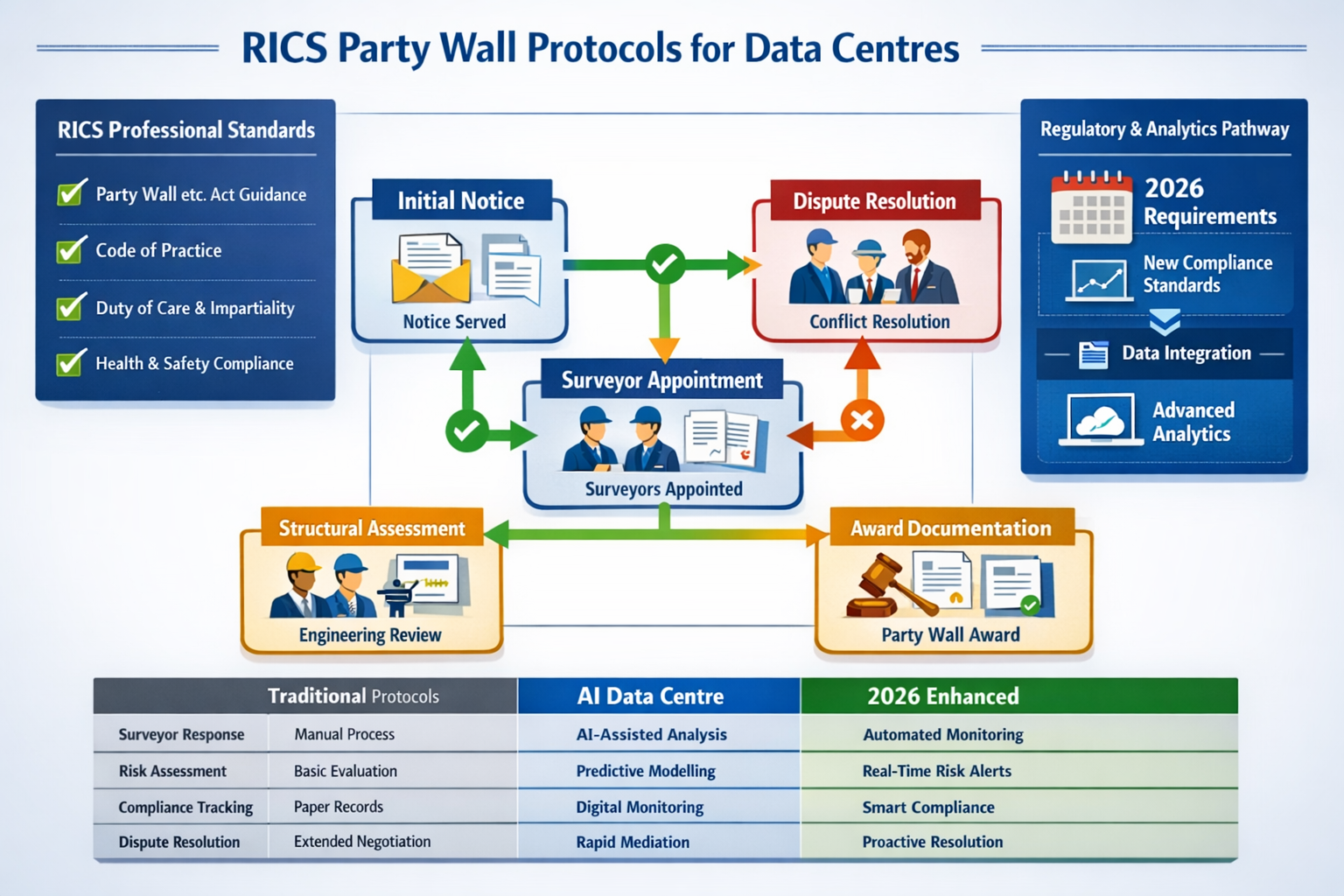
In a groundbreaking development for the profession, RICS announced in 2026 the launch of its Data, Analytics and Intelligence (MRICS) pathway for chartered surveyors[1]. This innovative qualification pathway addresses the growing demand for advanced digital and data-driven expertise across the built environment, covering critical competencies including:
- Data management for complex infrastructure projects
- Cyber security considerations in digital documentation
- Digital governance frameworks for party wall agreements
- BIM integration for structural assessments
- Geospatial analysis for boundary disputes
This pathway represents a significant evolution in how party wall surveyors approach data centre developments. Traditional methods of measuring, documenting, and monitoring party wall works are being enhanced with digital tools that provide real-time data, predictive analytics, and comprehensive audit trails[1].
Core RICS Party Wall Protocols for AI Infrastructure
When conducting Party Wall Surveys for AI Data Centre Developments: RICS Protocols Amid 2026 Infrastructure Demand, qualified surveyors must adhere to established professional standards while adapting to unique project requirements:
1. Initial Assessment and Notice Procedures
The process begins with proper notification to adjoining owners. For data centre developments, this involves:
- Serving comprehensive party wall notices detailing all proposed works
- Providing technical specifications for heavy equipment installations
- Explaining potential vibration and noise impacts
- Outlining excavation depths and foundation requirements
Adjoining owners have 14 days to respond. If they consent, work may proceed with agreed precautions. If they dissent or fail to respond, party wall surveyors must be appointed to prepare a party wall award.
2. Pre-Construction Condition Surveys
Before any data centre construction begins, RICS-qualified surveyors conduct detailed condition surveys of neighbouring properties. For AI infrastructure projects, these surveys now incorporate:
- High-resolution photography and videography
- Laser scanning to create detailed 3D models
- Structural monitoring equipment installation for continuous tracking
- Vibration baseline measurements to establish pre-construction levels
- Thermal imaging to identify existing structural issues
This documentation protects both developers and neighbours by establishing clear evidence of pre-existing conditions[5].
3. The Party Wall Award
A party wall award is a legally binding document that sets out:
- Scope of permitted works with technical specifications
- Working hours and access arrangements
- Protective measures required during construction
- Monitoring protocols for vibration and movement
- Dispute resolution procedures if issues arise
- Cost allocation between parties
For data centre developments, awards typically include specific provisions for:
- Maximum vibration thresholds during excavation
- Noise limits for 24/7 operational equipment
- Emergency access protocols for critical infrastructure
- Long-term monitoring arrangements post-construction
Who Pays for Party Wall Surveys in Data Centre Projects?
A common question developers face is "who pays for a party wall surveyor?" In data centre developments, the building owner (developer) typically bears all reasonable costs, including:
- Their own surveyor's fees
- The adjoining owner's surveyor's fees
- Any agreed surveyor acting for both parties
- Condition survey costs
- Monitoring equipment installation and maintenance
Given the scale of AI infrastructure projects, these costs can be substantial but are essential for maintaining good neighbour relations and legal compliance.
Integrating BIM and Geospatial Data in Party Wall Management
Digital Transformation of Party Wall Surveys
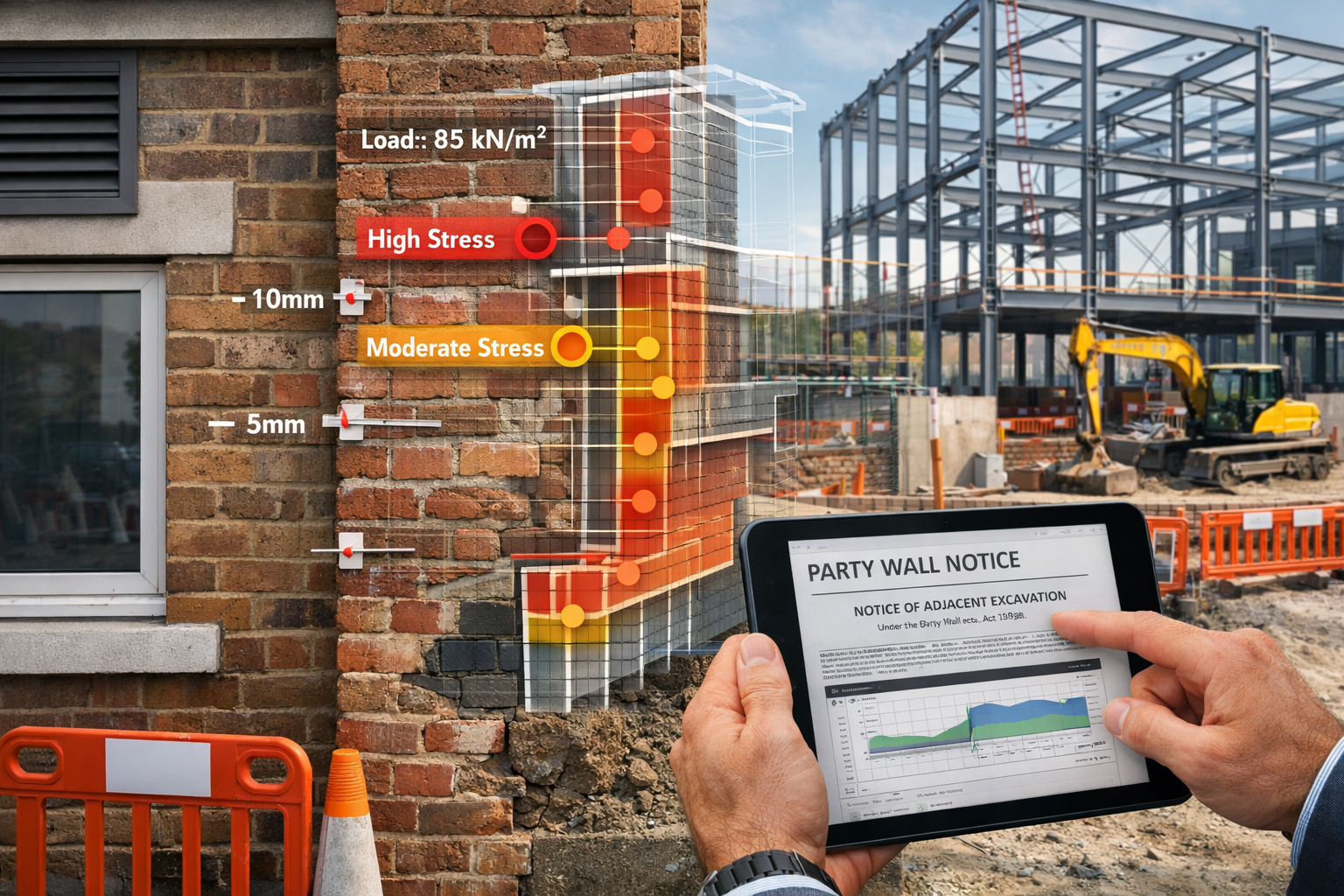
The integration of Building Information Modelling (BIM) and geospatial data represents a paradigm shift in how Party Wall Surveys for AI Data Centre Developments: RICS Protocols Amid 2026 Infrastructure Demand are conducted. These technologies enable surveyors to:
BIM Applications in Party Wall Surveys
Building Information Modelling creates comprehensive digital representations of physical and functional characteristics. For data centre party wall work, BIM provides:
- 3D visualisation of proposed works in relation to party walls
- Clash detection identifying potential conflicts with neighbouring structures
- Load analysis showing stress distribution on shared walls
- Timeline simulation demonstrating construction phases and impacts
- Collaborative platforms where all stakeholders access real-time project data
When developers submit party wall notices, BIM models can be shared with adjoining owners and their surveyors, providing unprecedented transparency about proposed works. This reduces misunderstandings and accelerates the consent process.
Geospatial Data for Boundary Disputes
Geospatial technology brings precision to boundary identification and dispute resolution:
- LiDAR scanning creates accurate 3D point clouds of existing structures
- GPS surveying establishes precise property boundaries
- GIS mapping overlays historical boundary data with current conditions
- Drone photogrammetry captures aerial perspectives of complex sites
- Augmented reality allows stakeholders to visualise proposed changes on-site
For AI data centre developments in urban areas where boundaries may be contested or unclear, geospatial data provides objective evidence that supports resolving party wall disputes efficiently.
Real-Time Monitoring and Compliance Tracking
Modern party wall agreements for data centres increasingly incorporate continuous monitoring systems:
Vibration Monitoring: Sensors installed on party walls and neighbouring structures track vibration levels in real-time, alerting project managers if thresholds are exceeded during excavation or piling works.
Movement Monitoring: Automated total stations and tilt sensors measure structural movement with millimetre precision, providing early warning of settlement or displacement issues.
Environmental Monitoring: Temperature, humidity, and noise sensors ensure construction activities comply with agreed parameters, particularly important for 24/7 data centre operations.
Digital Dashboards: Cloud-based platforms aggregate monitoring data, making it accessible to all parties. Developers, surveyors, and adjoining owners can view live data streams, historical trends, and automated compliance reports.
This digital infrastructure transforms party wall management from a reactive, dispute-driven process into a proactive, data-informed collaboration.
Case Study: Urban Data Centre Expansion
Consider a typical 2026 scenario: A hyperscale AI data centre operator plans to expand an existing facility in an industrial area of London. The expansion requires excavation within three metres of a neighbouring warehouse's foundations for a new cooling plant and backup generator installation.
Traditional Approach Challenges:
- Manual condition surveys prone to disputes over pre-existing damage
- Limited documentation of vibration impacts
- Reactive response to structural movement
- Adversarial relationships between parties
Enhanced 2026 Approach with BIM and Geospatial Data:
- Comprehensive 3D laser scan establishes baseline conditions
- BIM model shared with neighbour showing exact excavation plans
- Real-time vibration monitoring with automated alerts
- Weekly digital reports accessible to all stakeholders
- Predictive analytics identify potential issues before they occur
The result: The project proceeded without disputes, completed on schedule, and established a positive relationship with the neighbouring property owner—who later consented to additional works for a future expansion phase.
Managing High-Stakes Boundary Disputes in Expanding UK Data Centre Projects
Common Dispute Triggers in Data Centre Developments
Despite best practices, disputes can arise during Party Wall Surveys for AI Data Centre Developments: RICS Protocols Amid 2026 Infrastructure Demand. Understanding common triggers helps developers implement preventive measures:
1. Inadequate Initial Consultation
Many disputes stem from insufficient engagement with neighbours before serving formal notices. Data centre developers should:
- Conduct informal pre-notice meetings explaining the project
- Provide visual materials showing proposed works
- Address concerns proactively before formal procedures begin
- Offer direct contact with project managers for ongoing communication
2. Vibration and Noise Impacts
AI data centres operate 24/7 with significant mechanical equipment. Common issues include:
- Construction phase: Piling, excavation, and heavy machinery vibration
- Operational phase: Cooling systems, backup generators, and transformer hum
- Access arrangements: Delivery vehicles and maintenance activities
Establishing clear thresholds in the party wall award and implementing continuous monitoring prevents disputes from escalating.
3. Structural Damage Claims
When neighbouring properties experience cracks, settlement, or other structural issues during data centre construction, determining causation becomes critical. This is where comprehensive pre-construction condition surveys and continuous monitoring prove invaluable.
Evidence-based dispute resolution requires:
- Detailed photographic records of pre-existing conditions
- Continuous monitoring data showing movement patterns
- Expert structural engineering analysis
- Comparison with vibration thresholds in the party wall award
The Role of RICS Surveyors in Dispute Resolution
When disputes arise, RICS party wall surveyors serve as impartial professionals balancing the interests of both building owners and adjoining owners. Their responsibilities include:
Investigation and Assessment:
- Site inspections to verify claimed damage
- Review of monitoring data and construction records
- Consultation with structural engineers and specialists
- Analysis of causation using technical evidence
Mediation and Resolution:
- Facilitating discussions between parties
- Proposing remedial solutions
- Negotiating compensation where appropriate
- Amending party wall awards to address unforeseen circumstances
Formal Determination:
- Issuing supplemental awards if agreement cannot be reached
- Determining liability and cost allocation
- Establishing timelines for remedial works
- Documenting resolution for future reference
The RICS professional standards ensure surveyors maintain independence and act in accordance with their duty to both parties, not just the appointing party.
Cost Considerations and Financial Planning
Understanding how much a party wall surveyor costs is essential for data centre development budgeting. In 2026, typical fees for complex infrastructure projects include:
| Service | Typical Cost Range |
|---|---|
| Initial party wall notice preparation | £1,500 – £3,000 |
| Condition survey (per property) | £800 – £2,500 |
| Party wall award preparation | £2,000 – £5,000 |
| Monitoring equipment installation | £3,000 – £8,000 |
| Ongoing monitoring (per month) | £500 – £1,500 |
| Dispute resolution services | £150 – £300 per hour |
For major data centre developments affecting multiple neighbouring properties, total party wall costs can reach £50,000-£150,000 or more. However, this investment prevents far costlier construction delays, litigation, and reputational damage.
Developers should also budget for potential remedial works if damage occurs, typically including:
- Structural repairs to neighbouring properties
- Redecoration following crack repairs
- Alternative accommodation if displacement is necessary
- Compensation for business interruption (for commercial neighbours)
Best Practices for Developers and Property Owners
For Data Centre Developers
1. Early Engagement Strategy
Begin party wall planning during site selection, not after contracts are signed. Identify all potentially affected neighbours and assess likely concerns.
2. Appoint Specialist Surveyors
Select RICS-qualified party wall surveyors with data centre experience. Generic residential surveyors may lack the technical knowledge required for complex infrastructure projects.
3. Invest in Digital Documentation
Implement BIM and geospatial systems from project inception. The upfront cost is offset by reduced disputes and faster approvals.
4. Maintain Transparent Communication
Establish regular update mechanisms for neighbours, including:
- Monthly construction progress reports
- Access to monitoring dashboards
- Dedicated liaison officer contact details
- Advance notice of particularly disruptive activities
5. Build Contingency Time
Allow 3-4 months for the party wall process in project timelines. Rushed notices and inadequate consultation increase dispute risk.
For Adjoining Property Owners
1. Understand Your Rights
Familiarise yourself with the Party Wall Act and your entitlements. You have the right to:
- Appoint your own surveyor at the building owner's expense
- Request detailed information about proposed works
- Access monitoring data during construction
- Claim compensation for proven damage
2. Respond Promptly to Notices
You have 14 days to respond to a party wall notice. Failing to respond results in deemed dissent, triggering surveyor appointment. Consider whether to:
- Consent to the works (potentially with agreed conditions)
- Dissent and appoint a surveyor to protect your interests
3. Document Everything
Take comprehensive photographs and videos of your property before works begin. Note any existing cracks, settlement, or structural issues.
4. Appoint an Independent Surveyor
While developers offer to use an "agreed surveyor" acting for both parties, adjoining owners often benefit from appointing their own surveyor to ensure their interests receive dedicated attention.
5. Request Ongoing Monitoring
Insist that the party wall award includes provisions for continuous monitoring, regular inspections, and clear procedures if concerns arise during construction.
The Future of Party Wall Surveys in AI Infrastructure
Emerging Trends for 2026 and Beyond
The intersection of Party Wall Surveys for AI Data Centre Developments: RICS Protocols Amid 2026 Infrastructure Demand with emerging technologies suggests several trends:
Artificial Intelligence in Surveying: AI algorithms are beginning to analyse monitoring data, predict potential issues, and recommend preventive measures before problems manifest. Machine learning models trained on thousands of construction projects can identify patterns that human surveyors might miss.
Blockchain for Documentation: Some developers are experimenting with blockchain-based systems for party wall documentation, creating immutable records of agreements, condition surveys, and monitoring data that prevent disputes over evidence.
Virtual Reality Consultations: VR technology allows adjoining owners to experience proposed works virtually, improving understanding and consent rates. Neighbours can "walk through" the planned construction and see exactly how party walls will be affected.
Automated Compliance Reporting: Smart contracts automatically generate compliance reports based on monitoring data, alerting all parties when thresholds are approached and documenting adherence to party wall awards.
Regulatory Evolution
As AI data centre construction continues to accelerate, regulatory frameworks are adapting. Potential developments include:
- Enhanced notification requirements for infrastructure projects above certain power or size thresholds
- Mandatory digital monitoring for developments affecting multiple party walls
- Specialist accreditation for surveyors working on critical infrastructure projects
- Streamlined dispute resolution mechanisms for complex technical disagreements
The RICS Data, Analytics and Intelligence pathway represents the profession's proactive response to these evolving demands[1], ensuring chartered surveyors possess the digital competencies required for modern infrastructure challenges.
Sustainability and Party Wall Considerations
Data centre sustainability initiatives in 2026 also intersect with party wall matters. Developments incorporating:
- Ground source heat pumps requiring deep excavations near boundaries
- Rainwater harvesting systems with underground storage tanks
- Green roofs and walls potentially affecting shared structures
- Solar panel installations on party walls or shared roofs
All require careful party wall assessment to ensure sustainability features don't compromise structural integrity or neighbour relations.
Conclusion
Party Wall Surveys for AI Data Centre Developments: RICS Protocols Amid 2026 Infrastructure Demand represent a critical convergence of traditional property law, modern engineering challenges, and cutting-edge digital technology. As the UK's AI infrastructure boom continues, developers and property owners must navigate increasingly complex boundary relationships with professionalism, transparency, and technical expertise.
The evolution of RICS professional standards—particularly the new Data, Analytics and Intelligence pathway—equips chartered surveyors with the digital competencies necessary to manage these high-stakes projects[1]. By integrating BIM, geospatial data, and real-time monitoring into traditional party wall processes, stakeholders can transform potential conflicts into collaborative relationships that support essential infrastructure development.
Actionable Next Steps
For Data Centre Developers:
- Engage RICS-qualified party wall surveyors with infrastructure experience during the site selection phase
- Implement digital documentation systems including BIM and geospatial tools from project inception
- Budget appropriately for comprehensive party wall processes, including monitoring and potential remediation
- Establish proactive communication with neighbours before serving formal notices
- Consult our complete guide to party wall agreements for detailed procedural information
For Property Owners Adjacent to Data Centre Developments:
- Understand your rights under the Party Wall etc. Act 1996 and respond promptly to notices
- Appoint an independent surveyor to protect your interests at the developer's expense
- Document your property's condition thoroughly before construction begins
- Request digital monitoring access and regular progress updates
- Review our guide on understanding party wall awards to know what to expect
For Professional Surveyors:
- Explore the RICS Data, Analytics and Intelligence pathway to enhance digital competencies[1]
- Invest in training on BIM, geospatial technologies, and data centre engineering principles
- Develop specialist expertise in infrastructure projects to meet growing market demand
- Adopt digital monitoring and documentation tools as standard practice
- Network with structural engineers and data centre specialists to build collaborative teams
The AI infrastructure revolution is reshaping the UK's built environment at unprecedented speed. By embracing enhanced party wall protocols that combine RICS professional standards with digital innovation, all stakeholders can ensure this critical infrastructure development proceeds smoothly, legally, and with respect for property rights and neighbour relationships.
References
[1] Rics Calls For Expressions Of Interest In New Data Analytics And Intelligence Pathway – https://www.rics.org/news-insights/rics-calls-for-expressions-of-interest-in-new-data-analytics-and-intelligence-pathway
[2] Data Center Compliance In 2026 What Changed What S Next And How To Prepare – https://www.datacenterknowledge.com/compliance/data-center-compliance-in-2026-what-changed-what-s-next-and-how-to-prepare
[3] Ai Data Center Power Crisis Site Selection Cre Investors 2026 – https://www.theaiconsultingnetwork.com/blog/ai-data-center-power-crisis-site-selection-cre-investors-2026
[4] Party Wall Agreements In Data Centre Developments 2026 Compliance Amid Ai Driven Uk Demand – https://nottinghillsurveyors.com/blog/party-wall-agreements-in-data-centre-developments-2026-compliance-amid-ai-driven-uk-demand
[5] Building Surveys For Data Centre Expansions Structural Assessments Amid 2026 Ai Infrastructure Boom – https://nottinghillsurveyors.com/blog/building-surveys-for-data-centre-expansions-structural-assessments-amid-2026-ai-infrastructure-boom
